Gender Role Presentation 
CARLEEN HORTON 
UNIVERSITY OF PHOENIX
Gender Role 
Gender role is a theoretical 
construct in the social 
sciences and humanities 
that refers to a set of social 
and behavioral norms
Gender Role Development 
 Gender-role development begins at conception 
 At around week six of gestation, the hormone 
testosterone will stimulate the tissues into 
developing into the male internal organs; 
otherwise, the organs will become part of the 
female reproductive system 
 “It’s a Boy or It’s a Girl, happens at birth and then 
the process of socialization begins
Gender Roles Adopted 
 Between ages 2 to 6 children to where gender roles 
are adopted. 
 Children start to recognize “ I am a girl or I am a 
boy” . 
 Stereotyping by age 3 or 4 
 Personality traits by age 5
Gender Roles through Cognitive Theory 
 Lawrence Kohlberg 
 Believed that children’s understanding of gender goes through 
stages as they mature. 
 First stage: Gender Identity 
 At age two: I am a boy or I am a girl 
 Second Stage: Gender Stability 
 Begins at age 3 when children understand that their gender is 
constant over time 
 Third Stage: Gender Constancy 
 Begins at age 5 children understand that gender remains 
constant even with external changes
Gender Roles 
 Around age six boys want to be like their father 
 Around age six girl develop their gender identity by 
identifying with their mothers 
 Infants develop a sense of self as they separate from their 
mother. 
 Boys move away from their mother 
 Girls stay close to their mother
Influences that Shape Gender Roles 
 Behaviorist: Gender identity results from direct 
and indirect reinforcement of gender roles and 
activities 
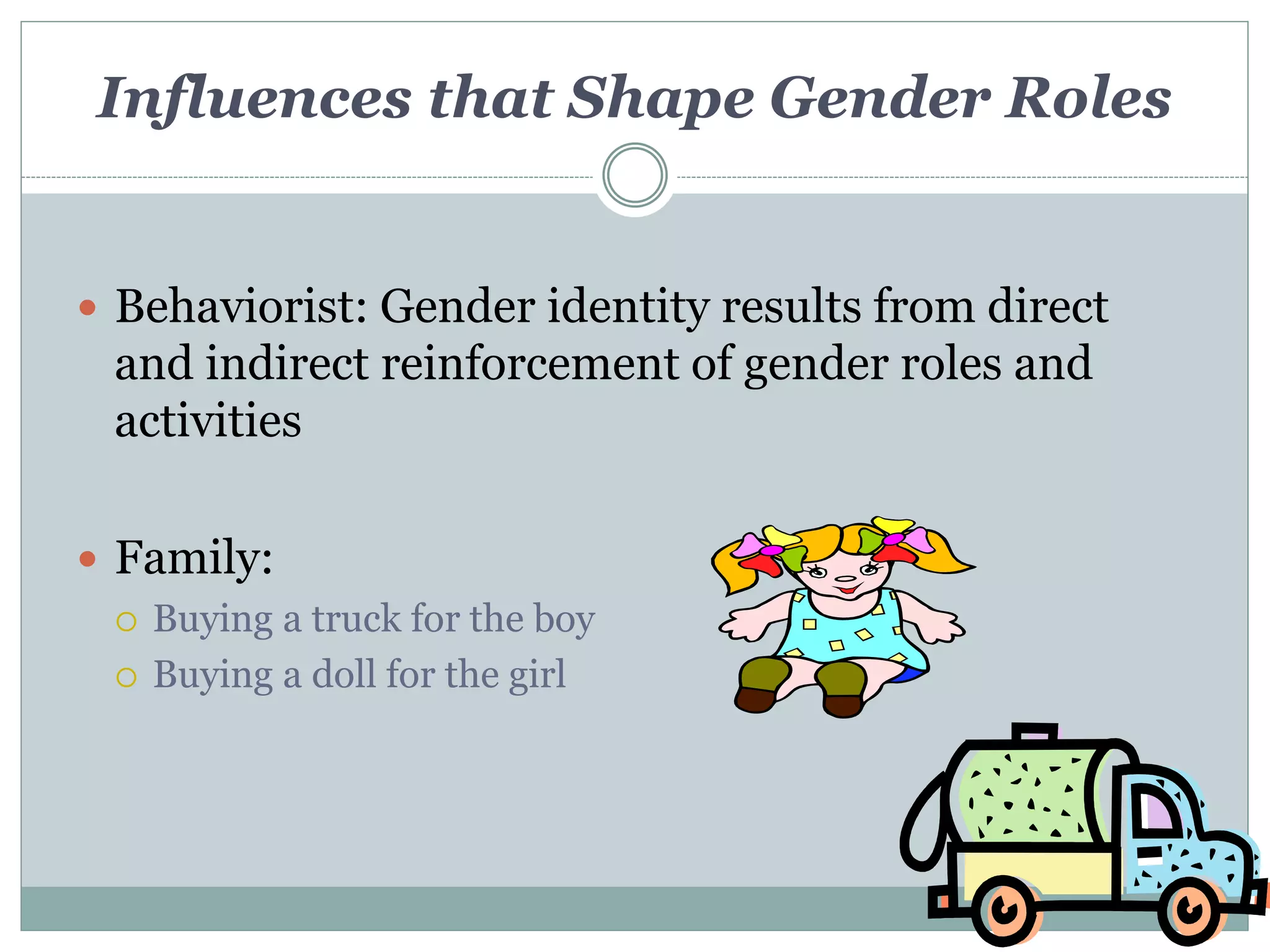
 Family: 
 Buying a truck for the boy 
 Buying a doll for the girl
Gender Changes from Early Childhood 
through Adolescence 
 Children enter puberty 
 Girls will start to do more girly activities 
 Lean more to a feminine appearance 
 Guys will start to do more guy activities 
 Lean more to a masculine appearance
Observable Changes in Gender Identity 
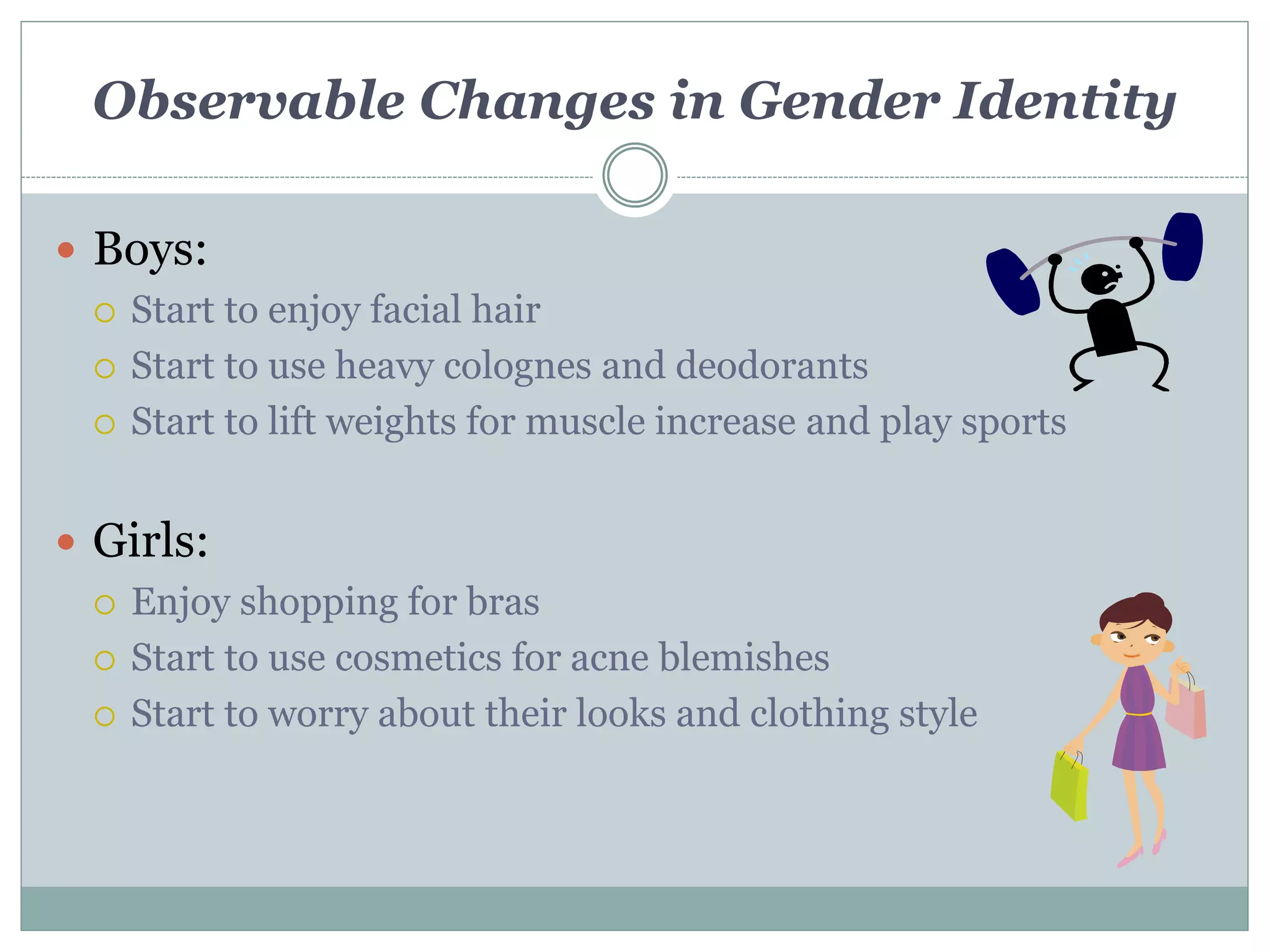
 Boys: 
 Start to enjoy facial hair 
 Start to use heavy colognes and deodorants 
 Start to lift weights for muscle increase and play sports 
 Girls: 
 Enjoy shopping for bras 
 Start to use cosmetics for acne blemishes 
 Start to worry about their looks and clothing style

Gender role presentation

  • 1.
    Gender Role Presentation CARLEEN HORTON UNIVERSITY OF PHOENIX
  • 2.
    Gender Role Genderrole is a theoretical construct in the social sciences and humanities that refers to a set of social and behavioral norms
  • 3.
    Gender Role Development  Gender-role development begins at conception  At around week six of gestation, the hormone testosterone will stimulate the tissues into developing into the male internal organs; otherwise, the organs will become part of the female reproductive system  “It’s a Boy or It’s a Girl, happens at birth and then the process of socialization begins
  • 4.
    Gender Roles Adopted  Between ages 2 to 6 children to where gender roles are adopted.  Children start to recognize “ I am a girl or I am a boy” .  Stereotyping by age 3 or 4  Personality traits by age 5
  • 5.
    Gender Roles throughCognitive Theory  Lawrence Kohlberg  Believed that children’s understanding of gender goes through stages as they mature.  First stage: Gender Identity  At age two: I am a boy or I am a girl  Second Stage: Gender Stability  Begins at age 3 when children understand that their gender is constant over time  Third Stage: Gender Constancy  Begins at age 5 children understand that gender remains constant even with external changes
  • 6.
    Gender Roles Around age six boys want to be like their father  Around age six girl develop their gender identity by identifying with their mothers  Infants develop a sense of self as they separate from their mother.  Boys move away from their mother  Girls stay close to their mother
  • 7.
    Influences that ShapeGender Roles  Behaviorist: Gender identity results from direct and indirect reinforcement of gender roles and activities  Family:  Buying a truck for the boy  Buying a doll for the girl
  • 8.
    Gender Changes fromEarly Childhood through Adolescence  Children enter puberty  Girls will start to do more girly activities  Lean more to a feminine appearance  Guys will start to do more guy activities  Lean more to a masculine appearance
  • 9.
    Observable Changes inGender Identity  Boys:  Start to enjoy facial hair  Start to use heavy colognes and deodorants  Start to lift weights for muscle increase and play sports  Girls:  Enjoy shopping for bras  Start to use cosmetics for acne blemishes  Start to worry about their looks and clothing style