1 c) Emergence of gender specific roles: sociological and psychological perspectives.
•Dr. Saramma
Mathew
Gender roles
• Gender refers to the roles and responsibilities
of men and women that are created in our
families, our societies and our cultures.
• Gender includes the expectations held about
the characteristics, aptitudes and likely
behaviours of both women and men.
Gender roles
• Gender roles and expectations are learned.
They can change over time and they vary
within and between cultures..
Gender roles
• A gender role is a set of behavioral norms
associated particularly with males or females
in a given social group or system,
• includes division of labor between men and
women
• child-rearing and socialization processes
Gender roles
• Leads youth toward maturing to perpetuate
the same pattern.
• Gender-based roles coincident with sex-based
roles have been the norm in many traditional
societies,
• specific components and workings of the
gender/sex system of role division vary from
society to society
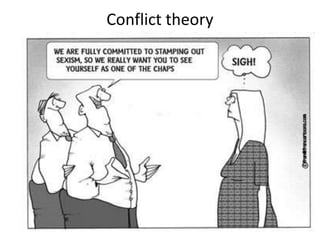
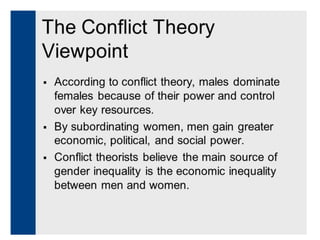
Conflict theory
Gender schema theory
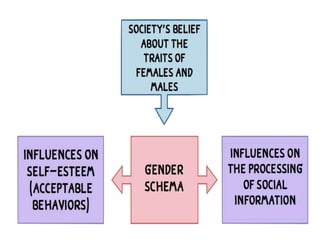
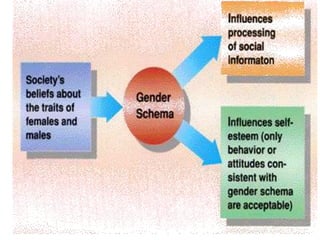
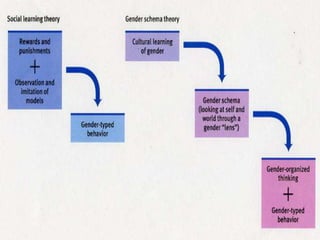
Gender schema theory refers to the theory that
children learn about what it means to be male
and female from the culture in which they live.
According to this theory, children adjust their
behavior to fit in with the gender norms and
expectations of their culture.
Gender schema theory
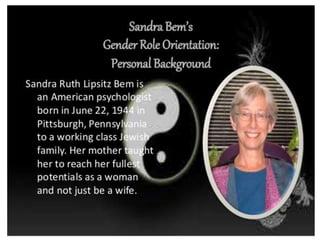
• Sandra Bem in 1981
• A cognitive theory to explain how individuals
become gendered in society, and how sex-linked
characteristics are maintained and transmitted to
other members of a culture.
• Bem believed that these gender schema were
limiting for men, women, and society as a whole.
• Raising children free from these gender schema
and gender stereotypes would lead to greater
freedom and fewer restrictions.
Gender schema theory
• individuals could fall into one of four different gender
categories.
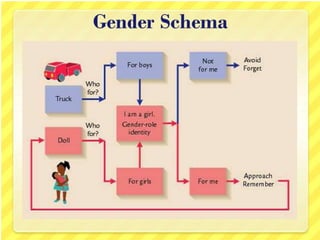
• Sex-typed individuals identify with their gender and
process information through the lens of that gender
schema.
• Cross-typed individuals, she suggested, process
information through the lens of the opposite gender.
• Androgynous individuals exhibit both masculine and
feminine thinking.
• Undifferentiated individuals do not show a consistent
use of sex-typed processing.
Gender role
Gender role
Gender role

Gender role

  • 1.
    1 c) Emergenceof gender specific roles: sociological and psychological perspectives. •Dr. Saramma Mathew
  • 2.
    Gender roles • Genderrefers to the roles and responsibilities of men and women that are created in our families, our societies and our cultures. • Gender includes the expectations held about the characteristics, aptitudes and likely behaviours of both women and men.
  • 3.
    Gender roles • Genderroles and expectations are learned. They can change over time and they vary within and between cultures..
  • 4.
    Gender roles • Agender role is a set of behavioral norms associated particularly with males or females in a given social group or system, • includes division of labor between men and women • child-rearing and socialization processes
  • 5.
    Gender roles • Leadsyouth toward maturing to perpetuate the same pattern. • Gender-based roles coincident with sex-based roles have been the norm in many traditional societies, • specific components and workings of the gender/sex system of role division vary from society to society
  • 7.
  • 20.
    Gender schema theory Genderschema theory refers to the theory that children learn about what it means to be male and female from the culture in which they live. According to this theory, children adjust their behavior to fit in with the gender norms and expectations of their culture.
  • 23.
    Gender schema theory •Sandra Bem in 1981 • A cognitive theory to explain how individuals become gendered in society, and how sex-linked characteristics are maintained and transmitted to other members of a culture. • Bem believed that these gender schema were limiting for men, women, and society as a whole. • Raising children free from these gender schema and gender stereotypes would lead to greater freedom and fewer restrictions.
  • 24.
    Gender schema theory •individuals could fall into one of four different gender categories. • Sex-typed individuals identify with their gender and process information through the lens of that gender schema. • Cross-typed individuals, she suggested, process information through the lens of the opposite gender. • Androgynous individuals exhibit both masculine and feminine thinking. • Undifferentiated individuals do not show a consistent use of sex-typed processing.