By: Denzel, jomi, clark, renzel
Elaiza, venice, michelle, francine,
             & gillian
There are many ways in which
   societies distinguish their
           members
GEND
 ER                        AGE
            Rich
                   Poor


         NATION           RELIGI
What are the Differences that may affect the
          expectations of society:
             × Gender & age
A. ALL MEN SHOULD BE MASCULINE
× MEN BE THE BREADWINNERS OF
THEIR FAMILIES
   B. ALL WOMEN SHOULD BE FEMININE
 × WOMEN BE THE HOUSEKEEPERS
              OF THEIR FAMILIES
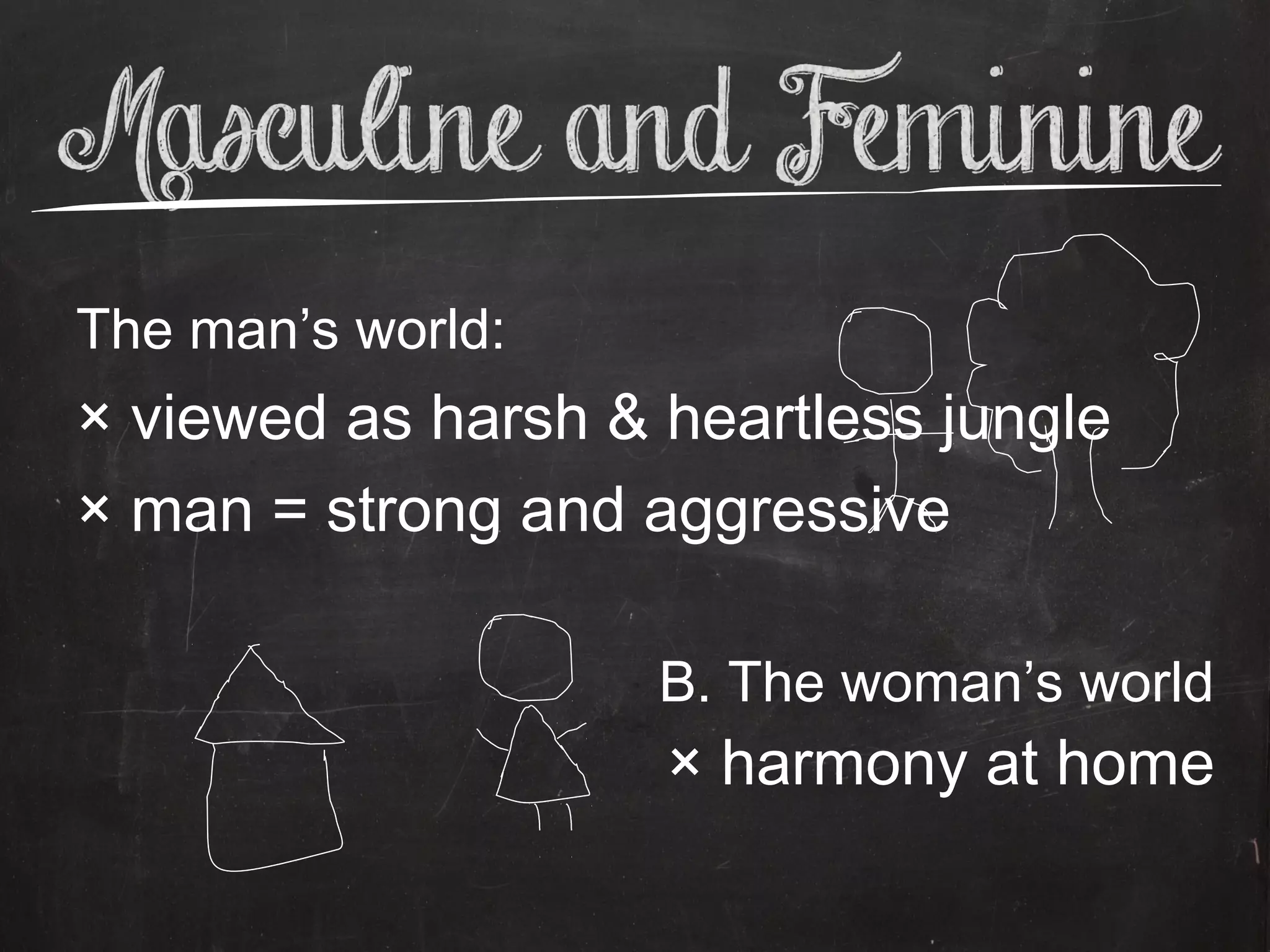
The man’s world:
× viewed as harsh & heartless jungle
× man = strong and aggressive

                    B. The woman’s world
                    × harmony at home
The division of labor
× men   = ambitious and aggressive

× women   = shy, passive, and easily
              intimidated Malakas at
          Mahina at
          mahinhin         magilas
Urban vs. rural
Urban:
× urabnized men tend to be open-minded
and ignorant towards gender roles
× in most cases, women work to provide
for their families while men stay at home
to handle house chores bread winner of
                 Woman =
              family
Urban vs. rural
rural:
× men still tend to be traditional ; they take
the roles of having to provide for their
families through fishing, farming, etc.
× women stay at home where they fulfill
their duties as a mother and as a wife
Man vs. woman
                (social aspect)
The man :
× initiates interactions between the sexes
× more likely to touch the women
× aggressive
× more practical in orientation
×Opening doors for women = customary
The man according to women
× success objects


             The woman according to men
                             × sex objects
× People have gender roles
  × each society posses a
   particular gender role
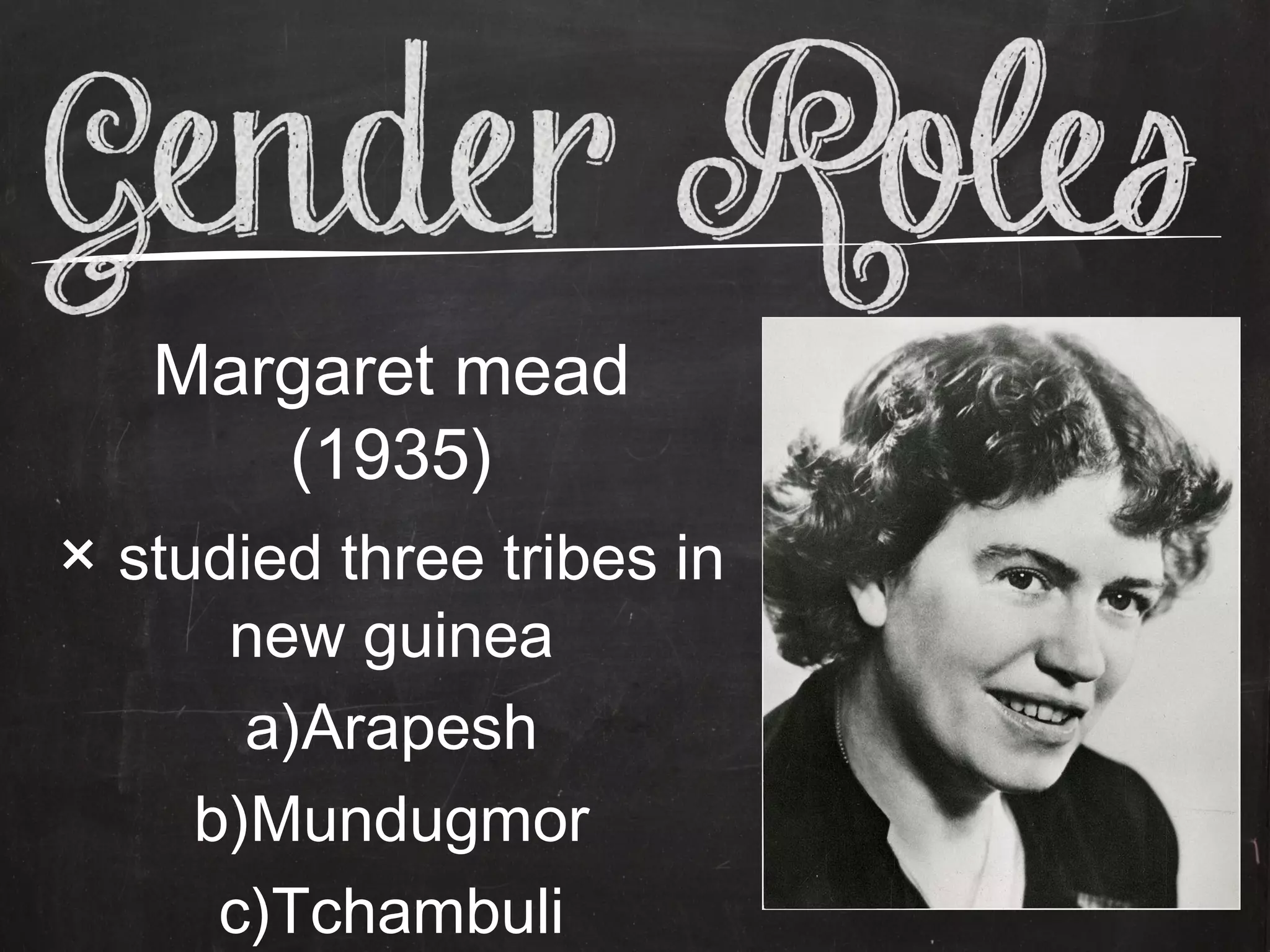
Margaret mead
      (1935)
× studied three tribes in
      new guinea
       a)Arapesh
     b)Mundugmor
      c)Tchambuli
× in most societies,
 men’s work is highly
valued compared to the
    women’s work.
   × kay martin and
   barbara voorhies
Men > women
                       woMen are viewed negatively:

                         × submissive
Men are viewed positively:
                         × dependent
   × independent       × unadventurous
    × courageous      × easily influenced
   × more positive× excitable in minor crises
       traits... × susceptible to hurt feeling
                          × conceited
Men > women

Studies show that…
× least preferable as friends or
romantic partners
× more likely to have marital
problems
× female managers = unfeminine
Men > women
                  Low status
                  gestures:
                  × smiling
                  × nodding
High status       × holding arms to
gestures:         the body
× Smiling         × keeping legs
occasionally      together
× Holding hands
still
× Assuming
asymmetrical
Women:
× deprived of opportunities for higher
education
× barred from many colleges &
universities
× receive less attention from teachers
                    Faculties/administrations
× suffer dramatic drop in self-esteem
    × there is a gender gap in the nation’s
during high school
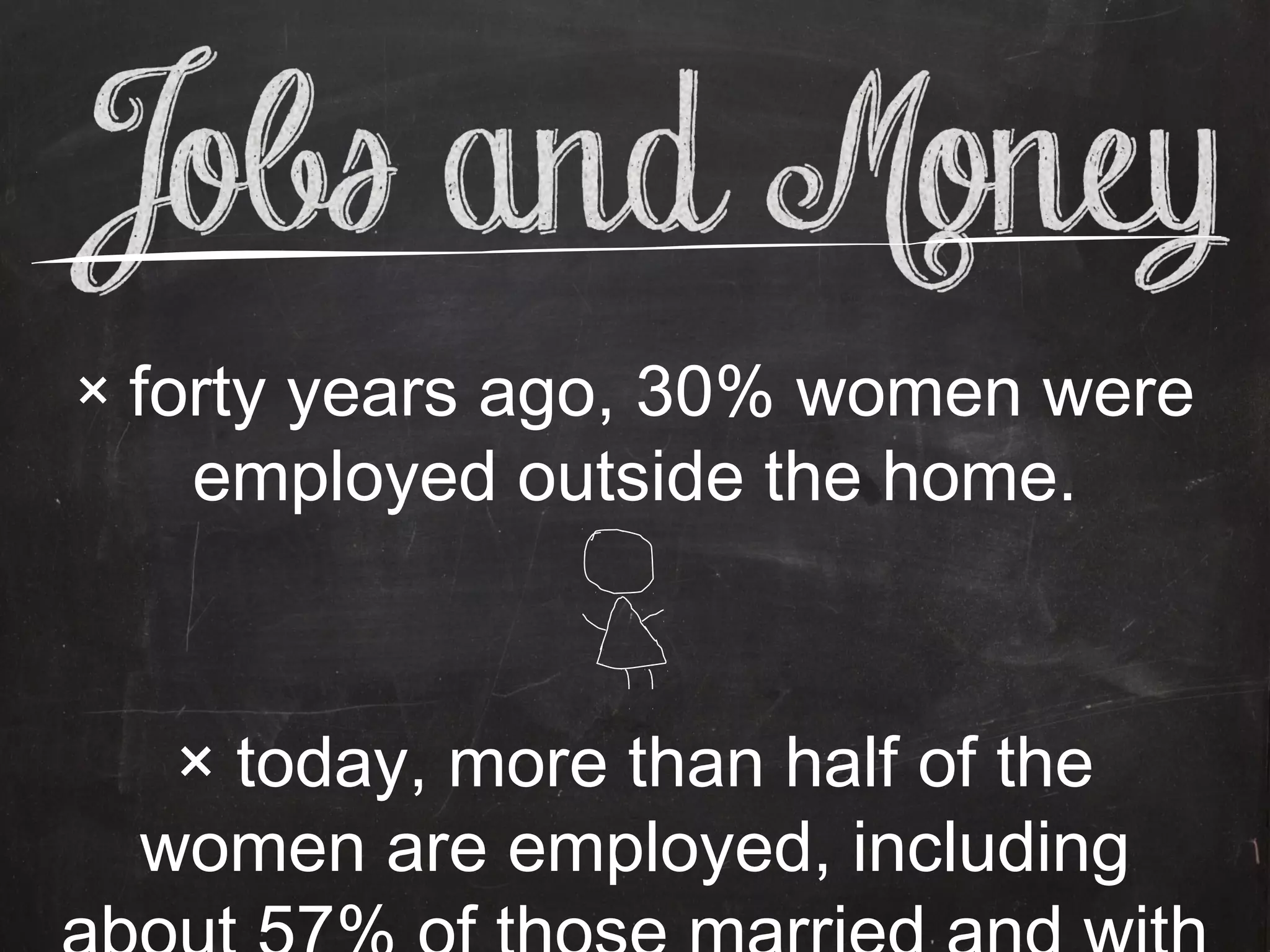
× forty years ago, 30% women were
   employed outside the home.


  × today, more than half of the
 women are employed, including
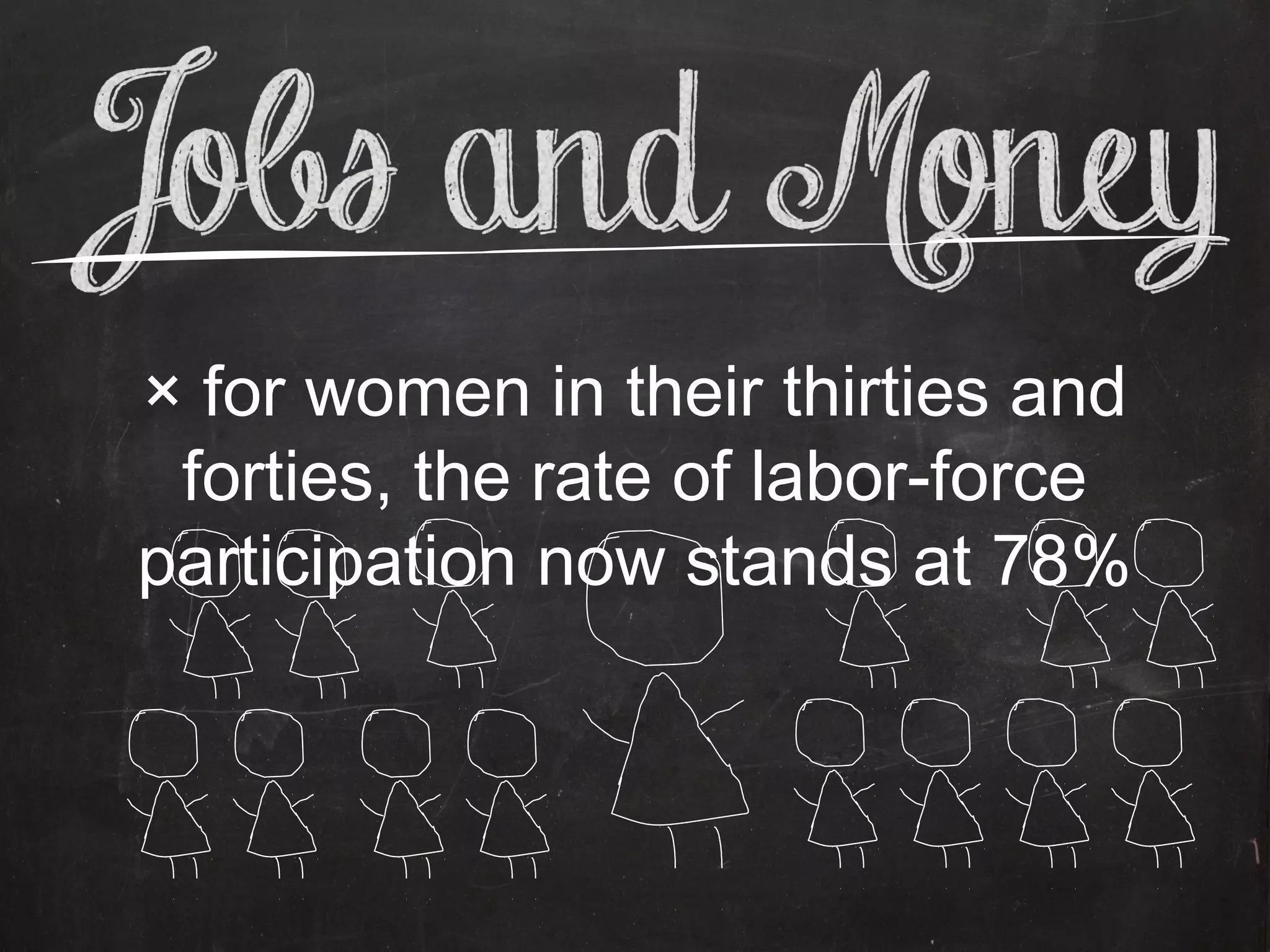
× for women in their thirties and
 forties, the rate of labor-force
participation now stands at 78%
× women typically hold lower status
 and lower paying jobs than men.
 × in the us, men made up of 75%
managers in companies with 100 or
more employees but women
       only accounted for 25%
× women are over represented in such
 low-paying jobs: public school teaching,
secretarial work, receptionists, billing clerks,
             child-care workers

  × woman’s ghettos: the traditional
   occupations mentioned above are
subordinate to positions usually held by
Why do women who hold the same jobs
 as men or have comparable skills /
       training still earn less?
 × more women hold lower-level jobs
× more women have less seniority than
                  men
× men are their families’ principal wage
In the Philippines :
    × The philippine government
legislated a standard policy on wage
and salary regardless of gender
  but base on merits and ranks.
Before:
        × mentality
         × Sexism
    × Roles in the family
                         todaY:
 ballot        × voting patterns
wom
an     wom     ×Presently rising
  × an
man more women running for office
A system wherein people believe in god or gods
                Buddhism and Confucianism:
      × instruct wives to obey husbands
                               Iglesia ni kristo:
 × female members are barred to occupy
× Men are superior to women as minister
                      positions on account
 of the qualities in which God has given
× sexism isthem preeminence
            not confined to sacred texts.
FEMAL
                         × They have two similar chromos
                            × more resistant to pain and m
                                     × They bear and suck
 onal, social and economic activities may be periodically
    × more evenly balanced between left and right-brain
t to be slightly more intuitive and sometimes better com
ouch with their feelings and are better at expressing the
                                   × better at connecting w
                       × more prone to different types of
MALES
× They have two dissimilar chromosomes (XY).
× The male’s lack of a second X chromosome makes
him the weaker sex
× Male infants are more likely to be malformed.
× Hemophilia and webbing of toes are found only in
men.
× Proportion of hormones is greater.
× biological involvement in reproduction begins and
ends with a brief act of insemination.
Men and women are different in many ways

MALE traits
× dominance
× emotional stability
× rule consciousness
× vigilance
× openness to change
× social boldness
× privateness
× perfectionism
Men and women are different in many ways

feMALE traits
× sensitivity
× warmth
× apprehension
× tension
× self-reliance
× liveliness
× abstractedness
Men and women are different in many ways

Gender roles

  • 1.
    By: Denzel, jomi,clark, renzel Elaiza, venice, michelle, francine, & gillian
  • 2.
    There are manyways in which societies distinguish their members GEND ER AGE Rich Poor NATION RELIGI
  • 3.
    What are theDifferences that may affect the expectations of society: × Gender & age A. ALL MEN SHOULD BE MASCULINE × MEN BE THE BREADWINNERS OF THEIR FAMILIES B. ALL WOMEN SHOULD BE FEMININE × WOMEN BE THE HOUSEKEEPERS OF THEIR FAMILIES
  • 4.
    The man’s world: ×viewed as harsh & heartless jungle × man = strong and aggressive B. The woman’s world × harmony at home
  • 5.
    The division oflabor × men = ambitious and aggressive × women = shy, passive, and easily intimidated Malakas at Mahina at mahinhin magilas
  • 6.
    Urban vs. rural Urban: ×urabnized men tend to be open-minded and ignorant towards gender roles × in most cases, women work to provide for their families while men stay at home to handle house chores bread winner of Woman = family
  • 7.
    Urban vs. rural rural: ×men still tend to be traditional ; they take the roles of having to provide for their families through fishing, farming, etc. × women stay at home where they fulfill their duties as a mother and as a wife
  • 8.
    Man vs. woman (social aspect) The man : × initiates interactions between the sexes × more likely to touch the women × aggressive × more practical in orientation ×Opening doors for women = customary
  • 9.
    The man accordingto women × success objects The woman according to men × sex objects
  • 10.
    × People havegender roles × each society posses a particular gender role
  • 11.
    Margaret mead (1935) × studied three tribes in new guinea a)Arapesh b)Mundugmor c)Tchambuli
  • 12.
    × in mostsocieties, men’s work is highly valued compared to the women’s work. × kay martin and barbara voorhies
  • 14.
    Men > women woMen are viewed negatively: × submissive Men are viewed positively: × dependent × independent × unadventurous × courageous × easily influenced × more positive× excitable in minor crises traits... × susceptible to hurt feeling × conceited
  • 15.
    Men > women Studiesshow that… × least preferable as friends or romantic partners × more likely to have marital problems × female managers = unfeminine
  • 16.
    Men > women Low status gestures: × smiling × nodding High status × holding arms to gestures: the body × Smiling × keeping legs occasionally together × Holding hands still × Assuming asymmetrical
  • 17.
    Women: × deprived ofopportunities for higher education × barred from many colleges & universities × receive less attention from teachers Faculties/administrations × suffer dramatic drop in self-esteem × there is a gender gap in the nation’s during high school
  • 18.
    × forty yearsago, 30% women were employed outside the home. × today, more than half of the women are employed, including
  • 19.
    × for womenin their thirties and forties, the rate of labor-force participation now stands at 78%
  • 20.
    × women typicallyhold lower status and lower paying jobs than men. × in the us, men made up of 75% managers in companies with 100 or more employees but women only accounted for 25%
  • 21.
    × women areover represented in such low-paying jobs: public school teaching, secretarial work, receptionists, billing clerks, child-care workers × woman’s ghettos: the traditional occupations mentioned above are subordinate to positions usually held by
  • 22.
    Why do womenwho hold the same jobs as men or have comparable skills / training still earn less? × more women hold lower-level jobs × more women have less seniority than men × men are their families’ principal wage
  • 23.
    In the Philippines: × The philippine government legislated a standard policy on wage and salary regardless of gender but base on merits and ranks.
  • 24.
    Before: × mentality × Sexism × Roles in the family todaY: ballot × voting patterns wom an wom ×Presently rising × an man more women running for office
  • 25.
    A system whereinpeople believe in god or gods Buddhism and Confucianism: × instruct wives to obey husbands Iglesia ni kristo: × female members are barred to occupy × Men are superior to women as minister positions on account of the qualities in which God has given × sexism isthem preeminence not confined to sacred texts.
  • 27.
    FEMAL × They have two similar chromos × more resistant to pain and m × They bear and suck onal, social and economic activities may be periodically × more evenly balanced between left and right-brain t to be slightly more intuitive and sometimes better com ouch with their feelings and are better at expressing the × better at connecting w × more prone to different types of
  • 28.
    MALES × They havetwo dissimilar chromosomes (XY). × The male’s lack of a second X chromosome makes him the weaker sex × Male infants are more likely to be malformed. × Hemophilia and webbing of toes are found only in men. × Proportion of hormones is greater. × biological involvement in reproduction begins and ends with a brief act of insemination.
  • 29.
    Men and womenare different in many ways MALE traits × dominance × emotional stability × rule consciousness × vigilance × openness to change × social boldness × privateness × perfectionism
  • 30.
    Men and womenare different in many ways feMALE traits × sensitivity × warmth × apprehension × tension × self-reliance × liveliness × abstractedness
  • 32.
    Men and womenare different in many ways