GELATIN
. EMTIAZ AHMED NISSAN (2014-3-70-066)
.NADIA YEASMINE ( 2014-3-70-050 )
.RAZIBUL ISLAM (2014-3-70-065)
.TASLIMAAKTER (2014-3-70-063)
.KAMRUL ISLAM (2014-3-70-051)
Submitted by
 Introduction
 Source
 Structure
 Manufacturing process
 Medicinal uses
CONTENTS
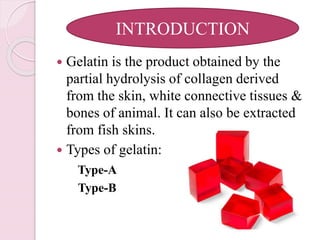
 Gelatin is the product obtained by the
partial hydrolysis of collagen derived
from the skin, white connective tissues &
bones of animal. It can also be extracted
from fish skins.
 Types of gelatin:
Type-A
Type-B
INTRODUCTION
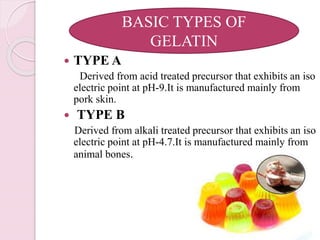
 TYPE A
Derived from acid treated precursor that exhibits an iso
electric point at pH-9.It is manufactured mainly from
pork skin.
 TYPE B
Derived from alkali treated precursor that exhibits an iso
electric point at pH-4.7.It is manufactured mainly from
animal bones.
BASIC TYPES OF
GELATIN
SOURCES
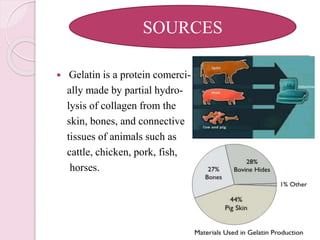
 Gelatin is a protein comerci-
ally made by partial hydro-
lysis of collagen from the
skin, bones, and connective
tissues of animals such as
cattle, chicken, pork, fish,
horses.
 In the manufacturing industry there is no distinction as
to the source of gelatin present in the food products .
SOURCES(continued)
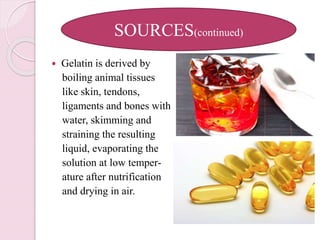
 Gelatin is derived by
boiling animal tissues
like skin, tendons,
ligaments and bones with
water, skimming and
straining the resulting
liquid, evaporating the
solution at low temper-
ature after nutrification
and drying in air.
SOURCES(continued)
 Gelatin contains many glycine (almost 1 in 3 residues,
arranged every third residues), proline and 4 hydroxy
proline residues.
STRUCTURE
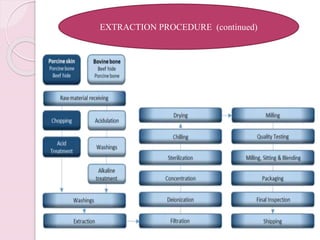
ACIDULATION:
 Produce ossein by removing the mineral content of the
bone
 Initiate the hydrolysis of collagen
 Remove non collagen impurities
WASHING:
 Rinse up to 24 hours to remove acid salts, fat and other
impurities.
EXTRACTION
PROCEDURE
LIMING:
 Continue to hydrolyze collagen
 Continue to remove non collagen impurities
 Convert asparagine and glutamine to their respective
acids.
WASHING:
 Remove and neutralize excess lime
 Remove non collagen impurities
 Adjust pH of the ossein
EXTRACTION PROCEDURE (continued)
GELATIN EXTRACTION:
 Solubilize hydrolyzed collagen (gelatin) from the ossein
FINAL FILTRATION:
 Clarify concentration gelatin solution
 Remove additional coagulation protein and particulate
 Plate and flame pressure filters.
EXTRACTION PROCEDURE (continued)
pH ADJUSTMENT:
 Adjustment of the product pH (5-7)
FINAL CONCENTRATION:
 Concentrate the thick gelatin liquor (25 t0 50%
viscosity)
STERALIZATION:
 Ensure microbiological purity product hygiene
EXTRACTION PROCEDURE (continued)
 Formation of hard and
soft gelatin capsules
 Tablet coating
 Microencapsulation
 Suppositories
 Tablet binder
 Viscosity increasing
agent for solutions and
semisolids
MEDICINAL USES
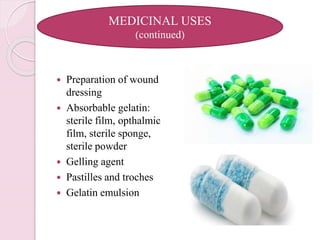
 Preparation of wound
dressing
 Absorbable gelatin:
sterile film, opthalmic
film, sterile sponge,
sterile powder
 Gelling agent
 Pastilles and troches
 Gelatin emulsion
MEDICINAL USES
(continued)
 Targeted drug delivery
system
 Controlled drug delivery
system
MEDICINAL USES (continued)
Gelatin

Gelatin

  • 1.
  • 2.
    . EMTIAZ AHMEDNISSAN (2014-3-70-066) .NADIA YEASMINE ( 2014-3-70-050 ) .RAZIBUL ISLAM (2014-3-70-065) .TASLIMAAKTER (2014-3-70-063) .KAMRUL ISLAM (2014-3-70-051) Submitted by
  • 3.
     Introduction  Source Structure  Manufacturing process  Medicinal uses CONTENTS
  • 4.
     Gelatin isthe product obtained by the partial hydrolysis of collagen derived from the skin, white connective tissues & bones of animal. It can also be extracted from fish skins.  Types of gelatin: Type-A Type-B INTRODUCTION
  • 5.
     TYPE A Derivedfrom acid treated precursor that exhibits an iso electric point at pH-9.It is manufactured mainly from pork skin.  TYPE B Derived from alkali treated precursor that exhibits an iso electric point at pH-4.7.It is manufactured mainly from animal bones. BASIC TYPES OF GELATIN
  • 6.
    SOURCES  Gelatin isa protein comerci- ally made by partial hydro- lysis of collagen from the skin, bones, and connective tissues of animals such as cattle, chicken, pork, fish, horses.
  • 7.
     In themanufacturing industry there is no distinction as to the source of gelatin present in the food products . SOURCES(continued)
  • 8.
     Gelatin isderived by boiling animal tissues like skin, tendons, ligaments and bones with water, skimming and straining the resulting liquid, evaporating the solution at low temper- ature after nutrification and drying in air. SOURCES(continued)
  • 9.
     Gelatin containsmany glycine (almost 1 in 3 residues, arranged every third residues), proline and 4 hydroxy proline residues. STRUCTURE
  • 10.
    ACIDULATION:  Produce osseinby removing the mineral content of the bone  Initiate the hydrolysis of collagen  Remove non collagen impurities WASHING:  Rinse up to 24 hours to remove acid salts, fat and other impurities. EXTRACTION PROCEDURE
  • 11.
    LIMING:  Continue tohydrolyze collagen  Continue to remove non collagen impurities  Convert asparagine and glutamine to their respective acids. WASHING:  Remove and neutralize excess lime  Remove non collagen impurities  Adjust pH of the ossein EXTRACTION PROCEDURE (continued)
  • 12.
    GELATIN EXTRACTION:  Solubilizehydrolyzed collagen (gelatin) from the ossein FINAL FILTRATION:  Clarify concentration gelatin solution  Remove additional coagulation protein and particulate  Plate and flame pressure filters. EXTRACTION PROCEDURE (continued)
  • 13.
    pH ADJUSTMENT:  Adjustmentof the product pH (5-7) FINAL CONCENTRATION:  Concentrate the thick gelatin liquor (25 t0 50% viscosity) STERALIZATION:  Ensure microbiological purity product hygiene EXTRACTION PROCEDURE (continued)
  • 14.
  • 15.
     Formation ofhard and soft gelatin capsules  Tablet coating  Microencapsulation  Suppositories  Tablet binder  Viscosity increasing agent for solutions and semisolids MEDICINAL USES
  • 16.
     Preparation ofwound dressing  Absorbable gelatin: sterile film, opthalmic film, sterile sponge, sterile powder  Gelling agent  Pastilles and troches  Gelatin emulsion MEDICINAL USES (continued)
  • 17.
     Targeted drugdelivery system  Controlled drug delivery system MEDICINAL USES (continued)