




GCSE Physical Education
Methods of Training
Methods of Training
There are 6 different training methods:








Interval
Continuous
Fartlek
Circuit
Weight
Cross

Learning mat
Learning Objectives
By the end of this lesson pupils should:

 Be able to identify the 6 methods of
training
 Describe the key characteristics of each
method of training
 explain how methods/ components /
principles link together.
Methods of Training
Fitness is very important to all
physical activities. In some
sports, fitness can be the difference
between elite level and performance
level.

A number of training methods can be
used to improve fitness. Each is
designed for a specific purpose, to
improve a specific aspect of
fitness, and therefore each suits
different sports and activities.
Methods of Training
There are 6 different training methods:
 Interval
 Continuous
 Fartlek
 Circuit
 Weight
 Cross
Interval Training

Why would these athletes use interval training?
Interval Training
Defined as high intensity periods of
work followed by periods of rest
(jogging, walking, or stopping).
Aim of interval training is to have a
high quality workout.
Mainly designed to improve
speed, but will also improve
cardiovascular fitness; it is high
intensity and always done at a fast
pace.
Interval Training
‘Work’ period (interval) maybe a distance
to run, such as 100m. This will be
determined by the sport being
trained, using the principle of specificity.
‘Rest’ period (interval) maybe a walk
back to the start or simply not working.
The number or repetitions of work and
rest periods is important in interval
training.
Interval Training - Advantages
 Includes repeated sprint running or
swimming,
which is anaerobic
 It includes a rest period (interval) which
allows
recovery
 Heart rates can be measured, evaluated and
compared
 It takes place over short periods/bursts

 Repetitions of high quality work, raising pulse
rate to near max
Continuous Training

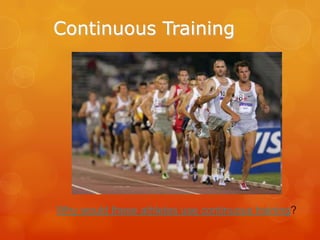
Why would these athletes use continuous training?
Continuous Training
Continuous training is steady training.
The heart rate intensity will not be very
high, there are no rest periods, and a
session usually last for atleast 20
minutes.

Continuous training is suitable to
improve cardiovascular endurance. It is
appropriate where high intensity exercise
might be unwise.
Continuous Training
Continuous training is appropriate for
pre-season and off-season training.
Long distance athletes, cyclists and
swimmers may use continuous training
as it resembles their competitive activity.
However continuous training is usually
used as well as other methods of
training.
Continuous Training Advantages
 Improves aerobic fitness, as it includes long,
slow intensity activity

 It is suitable for improving general health and
fitness
 Can be done in a variety of places
 Can be adapted for individual needs using fit
principle
 Wide range of activities can be used
(running,
cycling, rowing machines, etc.)
Fartlek Training

What do you think Fartlek Training is?
Fartlek Training
Fartlek training is suitable for games
such as football, netball, and
hockey, because it includes short bursts
of activity - including starting and
stopping and fast sprinting by a short
rest.
Fartlek originated in Sweden. Fartlek is a
combination of fast and slow running.
Takes place over countryside, forest, and
hills.
Fartlek Training
In many ways it resembles interval
training; like interval training, it
includes periods of work followed by
periods of rest (or lighter work).

However Fartlek includes sprinting for
various distances, not measured
distances like interval training.
Fartlek Training - Advantages
 Takes place away from the track
 Can be done in a variety of places
 Can include repetition (up/down the same
hill)
 PEP can be flexible
 Rest periods can be included, but content of
training is very flexible
 It is suited to game players as well as for
general fitness programmes
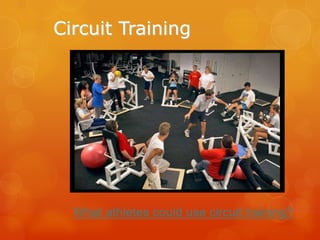
Circuit Training

What athletes could use circuit training?
Circuit Training
Circuit training involves a number of
exercises, arranged so the same muscles
groups aren’t being worked all the time.
Each exercise takes place at a ‘station’ in
the circuit. Circuit training develops
general fitness, working both the
muscles and the cardiovascular system
Circuit Training
Stations may be carried out for either a
set length of time or a set number of
repetitions, according to the fitness level
of the participant.

Another way of circuit training is a ‘skills
circuit’ for a particular activity. Like all
methods of training, it must be specific
and catered for the individual’s needs.
Circuit Training - Advantages
 It works a variety of components of fitness in one
training session

 Low cost
 All abilities can take part (individual needs)
 Wide range of exercises makes session interesting
 Rest periods can be included, but content of
training
is very flexible
 Uses principle of progressive overload
Weight Training

Weight training improves which components of fitness?
Weight Training
Weight training uses progressive
resistance, leading to progressive overload. This
resistance is either the amount of weight or the
amount of times it is lifted (repetitions).
It is used to:
 Increase muscular strength
 Increase muscular endurance
 Increase speed
 Develop muscle bulk (size)
Weight Training
Weight training is suitable for a number of strength
events. A PEP that uses weight training will require
specific individual needs, this includes:
 Number of exercises (6-8 exercises)
 Exercises for each muscle group
 Weight used

(activity specific)

(repetition max - RM)

 Number of repetitions
 Number of sets

(10 repetitions per set)

(3 sets of 10 reps)

 How fast the exercise is done

 Length of rest between sets
 Frequency of training

(1-2 seconds)

(1-2 minutes)

(1 day rest between sessions)
Weight Training - Advantages
 Used to improve muscular strength,
muscular endurance or speed
 All abilities can take part (individual needs)
 Wide range of exercises makes session
interesting
 Can be made specific to the individual
 It is easy to monitor progress and overload
(progressive overload)
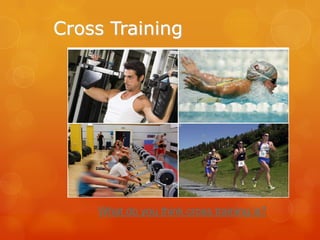
Cross Training

What do you think cross training is?
Thank you

Any questions, please do not
hesitate to ask
Gcse physical education

Gcse physical education

  • 1.
  • 2.
    Methods of Training Thereare 6 different training methods:       Interval Continuous Fartlek Circuit Weight Cross Learning mat
  • 3.
    Learning Objectives By theend of this lesson pupils should:  Be able to identify the 6 methods of training  Describe the key characteristics of each method of training  explain how methods/ components / principles link together.
  • 4.
    Methods of Training Fitnessis very important to all physical activities. In some sports, fitness can be the difference between elite level and performance level. A number of training methods can be used to improve fitness. Each is designed for a specific purpose, to improve a specific aspect of fitness, and therefore each suits different sports and activities.
  • 5.
    Methods of Training Thereare 6 different training methods:  Interval  Continuous  Fartlek  Circuit  Weight  Cross
  • 6.
    Interval Training Why wouldthese athletes use interval training?
  • 7.
    Interval Training Defined ashigh intensity periods of work followed by periods of rest (jogging, walking, or stopping). Aim of interval training is to have a high quality workout. Mainly designed to improve speed, but will also improve cardiovascular fitness; it is high intensity and always done at a fast pace.
  • 8.
    Interval Training ‘Work’ period(interval) maybe a distance to run, such as 100m. This will be determined by the sport being trained, using the principle of specificity. ‘Rest’ period (interval) maybe a walk back to the start or simply not working. The number or repetitions of work and rest periods is important in interval training.
  • 9.
    Interval Training -Advantages  Includes repeated sprint running or swimming, which is anaerobic  It includes a rest period (interval) which allows recovery  Heart rates can be measured, evaluated and compared  It takes place over short periods/bursts  Repetitions of high quality work, raising pulse rate to near max
  • 10.
    Continuous Training Why wouldthese athletes use continuous training?
  • 11.
    Continuous Training Continuous trainingis steady training. The heart rate intensity will not be very high, there are no rest periods, and a session usually last for atleast 20 minutes. Continuous training is suitable to improve cardiovascular endurance. It is appropriate where high intensity exercise might be unwise.
  • 12.
    Continuous Training Continuous trainingis appropriate for pre-season and off-season training. Long distance athletes, cyclists and swimmers may use continuous training as it resembles their competitive activity. However continuous training is usually used as well as other methods of training.
  • 13.
    Continuous Training Advantages Improves aerobic fitness, as it includes long, slow intensity activity  It is suitable for improving general health and fitness  Can be done in a variety of places  Can be adapted for individual needs using fit principle  Wide range of activities can be used (running, cycling, rowing machines, etc.)
  • 14.
    Fartlek Training What doyou think Fartlek Training is?
  • 15.
    Fartlek Training Fartlek trainingis suitable for games such as football, netball, and hockey, because it includes short bursts of activity - including starting and stopping and fast sprinting by a short rest. Fartlek originated in Sweden. Fartlek is a combination of fast and slow running. Takes place over countryside, forest, and hills.
  • 16.
    Fartlek Training In manyways it resembles interval training; like interval training, it includes periods of work followed by periods of rest (or lighter work). However Fartlek includes sprinting for various distances, not measured distances like interval training.
  • 17.
    Fartlek Training -Advantages  Takes place away from the track  Can be done in a variety of places  Can include repetition (up/down the same hill)  PEP can be flexible  Rest periods can be included, but content of training is very flexible  It is suited to game players as well as for general fitness programmes
  • 18.
    Circuit Training What athletescould use circuit training?
  • 19.
    Circuit Training Circuit traininginvolves a number of exercises, arranged so the same muscles groups aren’t being worked all the time. Each exercise takes place at a ‘station’ in the circuit. Circuit training develops general fitness, working both the muscles and the cardiovascular system
  • 20.
    Circuit Training Stations maybe carried out for either a set length of time or a set number of repetitions, according to the fitness level of the participant. Another way of circuit training is a ‘skills circuit’ for a particular activity. Like all methods of training, it must be specific and catered for the individual’s needs.
  • 21.
    Circuit Training -Advantages  It works a variety of components of fitness in one training session  Low cost  All abilities can take part (individual needs)  Wide range of exercises makes session interesting  Rest periods can be included, but content of training is very flexible  Uses principle of progressive overload
  • 22.
    Weight Training Weight trainingimproves which components of fitness?
  • 23.
    Weight Training Weight traininguses progressive resistance, leading to progressive overload. This resistance is either the amount of weight or the amount of times it is lifted (repetitions). It is used to:  Increase muscular strength  Increase muscular endurance  Increase speed  Develop muscle bulk (size)
  • 24.
    Weight Training Weight trainingis suitable for a number of strength events. A PEP that uses weight training will require specific individual needs, this includes:  Number of exercises (6-8 exercises)  Exercises for each muscle group  Weight used (activity specific) (repetition max - RM)  Number of repetitions  Number of sets (10 repetitions per set) (3 sets of 10 reps)  How fast the exercise is done  Length of rest between sets  Frequency of training (1-2 seconds) (1-2 minutes) (1 day rest between sessions)
  • 25.
    Weight Training -Advantages  Used to improve muscular strength, muscular endurance or speed  All abilities can take part (individual needs)  Wide range of exercises makes session interesting  Can be made specific to the individual  It is easy to monitor progress and overload (progressive overload)
  • 26.
    Cross Training What doyou think cross training is?
  • 27.
    Thank you Any questions,please do not hesitate to ask