Lesson Two
Thursday 8th
September
The Key Concepts
• Doctor Who 2005 trailer
• https://www.youtube.com/watch?v=1hQyujVvRcY
Connect the Learning
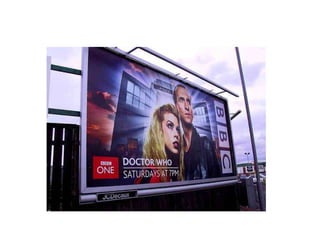
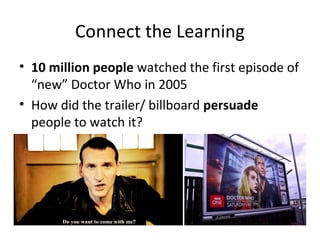
• 10 million people watched the first episode of
“new” Doctor Who in 2005
• How did the trailer/ billboard persuade
people to watch it?
Learning Intentions/ Progress Criteria
• Learning intentions
– To outline key concepts of media studies
– To understand how these can be applied to all media
products
• Progress criteria
• We will
– Know what the four key concepts are
– Understand how each of them can be used to explain
why media products are the way that they are
Key Concepts
• Foundation for Media Studies
• Used throughout course
• Essential to understand what they are and
how to use them to analyse media texts/
products
• Help explain relationships between media
and audience
Media Language
• How media producers communicate with
audience
• Words, visual images and sounds used to
create meaning in media products
• What you see/ hear
• Title sequence – Justified (2011-2015)
• https://www.youtube.com/watch?v=MR_2WcMjO6w
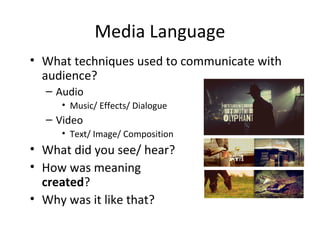
Media Language
• What techniques used to communicate with
audience?
– Audio
• Music/ Effects/ Dialogue
– Video
• Text/ Image/ Composition
• What did you see/ hear?
• How was meaning
created?
• Why was it like that?
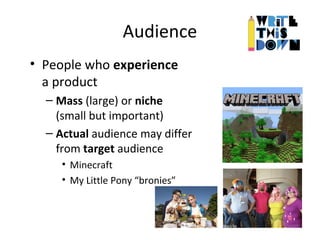
Audience
• People who experience
a product
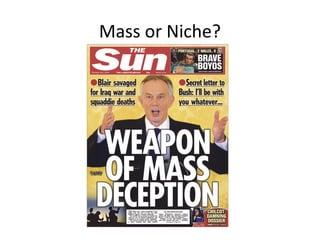
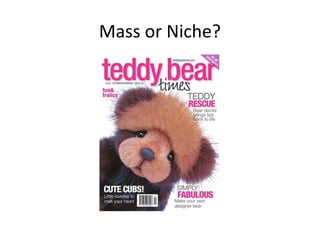
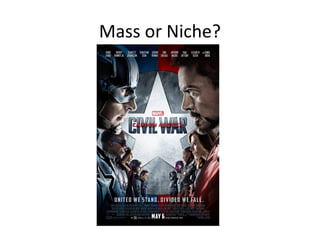
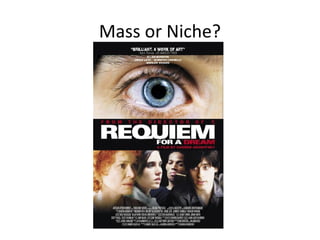
– Mass (large) or niche
(small but important)
– Actual audience may differ
from target audience
• Minecraft
• My Little Pony “bronies”
Mass or Niche?
Mass or Niche?
Mass or Niche?
Mass or Niche?
Mass or Niche?
Mass or Niche?
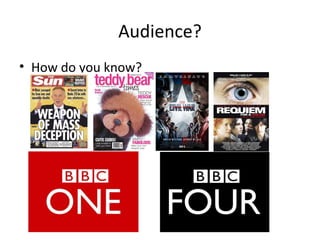
Audience?
• How do you know?
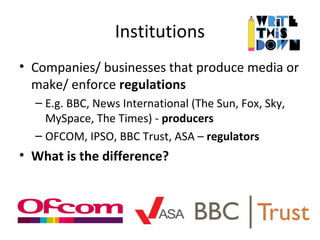
Institutions
• Companies/ businesses that produce media or
make/ enforce regulations
– E.g. BBC, News International (The Sun, Fox, Sky,
MySpace, The Times) - producers
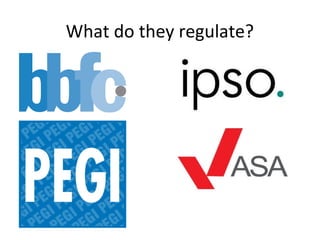
– OFCOM, IPSO, BBC Trust, ASA – regulators
• What is the difference?
What do they make?
What do they make?
What do they regulate?
Representation
• How people or places portrayed
– Way in which media constructs its own version of
reality
– Way in which people, places, issues etc. shown in
the media
• E.g. gender, race, age, class
• The Guardian, Points of View advert (1986)
• https://www.youtube.com/watch?v=_SsccRkLLzU
Representation
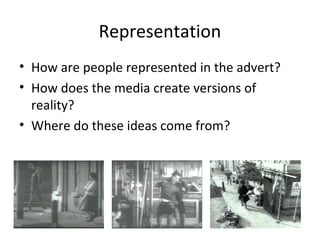
• How are people represented in the advert?
• How does the media create versions of
reality?
• Where do these ideas come from?
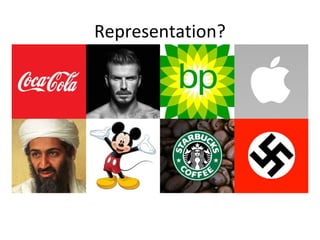
Representation?
To review…
Language
• How ideas are communicated
– How we “read” the media
– How we describe the media
• Different products described in different ways
using different terminology
– Codes and Conventions
• How the “message” is sent
Audiences
• People targeted by media products
– Many different audiences
– Audiences broken up into groups
(mass/ niche)
• Audiences interaction with media
– Interpretation
– Distribution
• Relationship is complicated
• Who the message is for
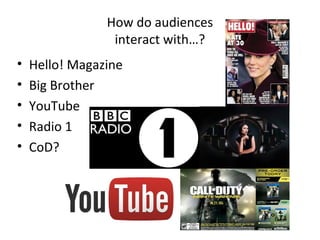
How do audiences
interact with…?
• Hello! Magazine
• Big Brother
• YouTube
• Radio 1
• CoD?
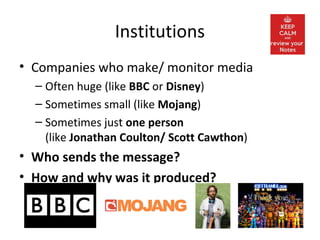
Institutions
• Companies who make/ monitor media
– Often huge (like BBC or Disney)
– Sometimes small (like Mojang)
– Sometimes just one person
(like Jonathan Coulton/ Scott Cawthon)
• Who sends the message?
• How and why was it produced?
Name some institutions
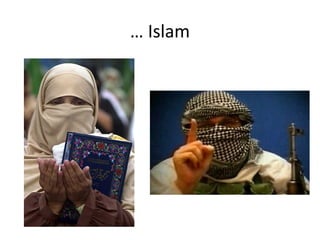
Representation
• How groups/ places/ ideas/ values
presented (or not presented)
• How this affects how we see the world
• How this changes over time (hegemony)
– Can be negative or stereotypical
– Can be positive or countertypical
• Helps explain audience response
• What does the message say/ mean?
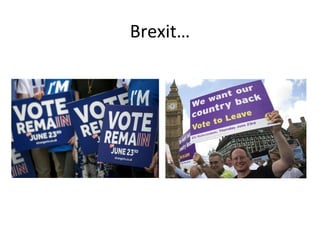
Brexit…
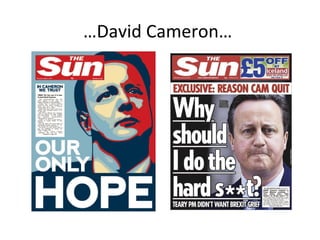
…David Cameron…
… Islam
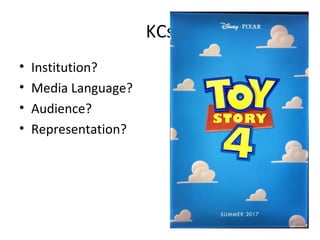
KCs
• Institution?
• Media Language?
• Audience?
• Representation?
Homework Task
• To understand the media, you need to
understand your own use of it
• Create your own ‘timeline’
– Choose a day this week
– Note all your activities that day (including those
where you use no media products)
– Create a chart in your book presenting your
findings
– Deadline: Monday 12th
September
End of Lesson Two

Gcse media intro - edit - l2 print - 2016

  • 1.
  • 2.
    • Doctor Who2005 trailer • https://www.youtube.com/watch?v=1hQyujVvRcY
  • 4.
    Connect the Learning •10 million people watched the first episode of “new” Doctor Who in 2005 • How did the trailer/ billboard persuade people to watch it?
  • 5.
    Learning Intentions/ ProgressCriteria • Learning intentions – To outline key concepts of media studies – To understand how these can be applied to all media products • Progress criteria • We will – Know what the four key concepts are – Understand how each of them can be used to explain why media products are the way that they are
  • 6.
    Key Concepts • Foundationfor Media Studies • Used throughout course • Essential to understand what they are and how to use them to analyse media texts/ products • Help explain relationships between media and audience
  • 7.
    Media Language • Howmedia producers communicate with audience • Words, visual images and sounds used to create meaning in media products • What you see/ hear
  • 8.
    • Title sequence– Justified (2011-2015) • https://www.youtube.com/watch?v=MR_2WcMjO6w
  • 9.
    Media Language • Whattechniques used to communicate with audience? – Audio • Music/ Effects/ Dialogue – Video • Text/ Image/ Composition • What did you see/ hear? • How was meaning created? • Why was it like that?
  • 10.
    Audience • People whoexperience a product – Mass (large) or niche (small but important) – Actual audience may differ from target audience • Minecraft • My Little Pony “bronies”
  • 11.
  • 12.
  • 13.
  • 14.
  • 15.
  • 16.
  • 17.
  • 18.
    Institutions • Companies/ businessesthat produce media or make/ enforce regulations – E.g. BBC, News International (The Sun, Fox, Sky, MySpace, The Times) - producers – OFCOM, IPSO, BBC Trust, ASA – regulators • What is the difference?
  • 19.
  • 20.
  • 23.
    What do theyregulate?
  • 24.
    Representation • How peopleor places portrayed – Way in which media constructs its own version of reality – Way in which people, places, issues etc. shown in the media • E.g. gender, race, age, class
  • 25.
    • The Guardian,Points of View advert (1986) • https://www.youtube.com/watch?v=_SsccRkLLzU
  • 26.
    Representation • How arepeople represented in the advert? • How does the media create versions of reality? • Where do these ideas come from?
  • 27.
  • 28.
  • 29.
    Language • How ideasare communicated – How we “read” the media – How we describe the media • Different products described in different ways using different terminology – Codes and Conventions • How the “message” is sent
  • 31.
    Audiences • People targetedby media products – Many different audiences – Audiences broken up into groups (mass/ niche) • Audiences interaction with media – Interpretation – Distribution • Relationship is complicated • Who the message is for
  • 32.
    How do audiences interactwith…? • Hello! Magazine • Big Brother • YouTube • Radio 1 • CoD?
  • 33.
    Institutions • Companies whomake/ monitor media – Often huge (like BBC or Disney) – Sometimes small (like Mojang) – Sometimes just one person (like Jonathan Coulton/ Scott Cawthon) • Who sends the message? • How and why was it produced?
  • 34.
  • 35.
    Representation • How groups/places/ ideas/ values presented (or not presented) • How this affects how we see the world • How this changes over time (hegemony) – Can be negative or stereotypical – Can be positive or countertypical • Helps explain audience response • What does the message say/ mean?
  • 36.
  • 37.
  • 38.
  • 39.
    KCs • Institution? • MediaLanguage? • Audience? • Representation?
  • 40.
    Homework Task • Tounderstand the media, you need to understand your own use of it • Create your own ‘timeline’ – Choose a day this week – Note all your activities that day (including those where you use no media products) – Create a chart in your book presenting your findings – Deadline: Monday 12th September
  • 41.