Future-Focused Academic Planning

Susan Senese, MLS         Rebecca Jones, MLS
Associate Librarian       Dysart & Jones Associates
                          rebecca@dysartjones.com
Research & Information    www.dysartjones.com
Technology,
University of Toronto
Mississauga Library
Susan.senese@utoronto.c
Our base assumptions
Libraries’ future is not informed by other libraries. A
Library’s future must be to ensure the success of
organization in which it exists – university, community,
government or corporation.

Our focus must be on the indicators & developments
influencing the organization’s future.


And then we can design our future.
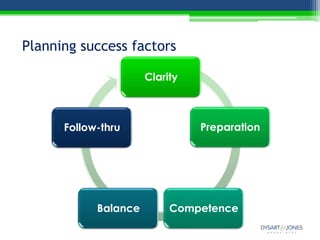
Planning success factors

                      Clarity


      Follow-thru               Preparation


            Balance        Competence
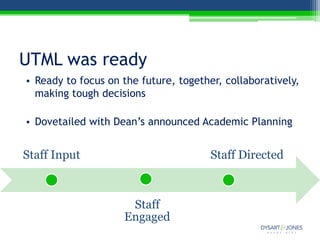
UTML was ready
• Ready to focus on the future, together, collaboratively,
  making tough decisions

• Dovetailed with Dean’s announced Academic Planning


Staff Input                            Staff Directed


                     Staff
                    Engaged
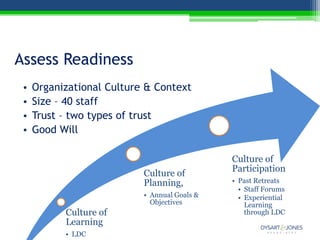
Assess Readiness
 •   Organizational Culture & Context
 •   Size – 40 staff
 •   Trust – two types of trust
 •   Good Will

                                              Culture of
                                              Participation
                           Culture of
                           Planning,          • Past Retreats
                                                • Staff Forums
                           • Annual Goals &     • Experiential
                             Objectives           Learning
           Culture of                             through LDC
           Learning
           • LDC
Staff-Directed: Benefits
• Capacity-building – Developing leaders throughout
  organization
• Ownership – process, outcomes
• Oneness – esprit-de-corps with planning teams
• Insight &empathy
• No sitting on the sidelines
• Experiential learning
• Letting go….leads to trust
Staff-Directed – Risks
•   Can go awry if structure is not moderated
•   Potential for weak volunteers/weak teams
•   Accurate assessment of organizational readiness
•   Leadership unable to “let go”
•   Poor communication
•   Time and resource-intensive
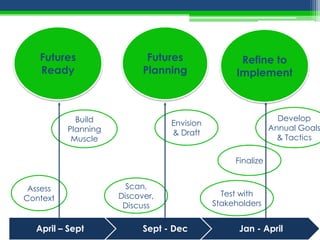
Futures                  Futures               Refine to
   Ready                   Planning              Implement


            Build                                             Develop
                                 Envision
          Planning                                          Annual Goals
                                 & Draft
           Muscle                                             & Tactics

                                                 Finalize


 Assess                Scan,
                     Discover,                Test with
Context
                      Discuss               Stakeholders


  April – Sept             Sept - Dec             Jan - April
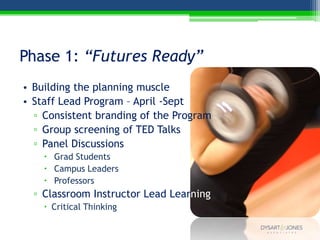
Phase 1: “Futures Ready”
• Building the planning muscle
• Staff Lead Program – April -Sept
  ▫ Consistent branding of the Program
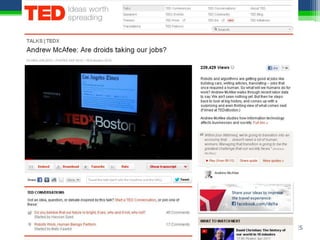
  ▫ Group screening of TED Talks
  ▫ Panel Discussions
     Grad Students
     Campus Leaders
     Professors
  ▫ Classroom Instructor Lead Learning
     Critical Thinking
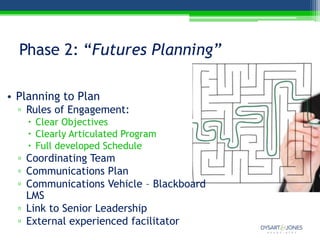
Phase 2: “Futures Planning”

• Planning to Plan
  ▫ Rules of Engagement:
     Clear Objectives
     Clearly Articulated Program
     Full developed Schedule
  ▫ Coordinating Team
  ▫ Communications Plan
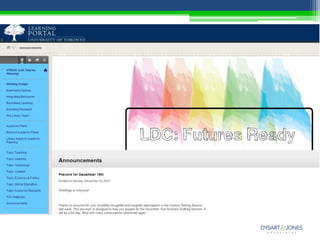
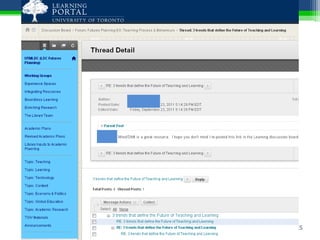
  ▫ Communications Vehicle – Blackboard
    LMS
  ▫ Link to Senior Leadership
  ▫ External experienced facilitator
Future? Explore, Discover & Discuss
• Exploration Groups:
 ▫ 6-8 members
    mix of functions, roles &
     experiences
 ▫ Set out to discover & discuss
   trends, issues & indicators in:
    teaching, learning,
     economic/political scene,
     technology, content, global
     education & academic research
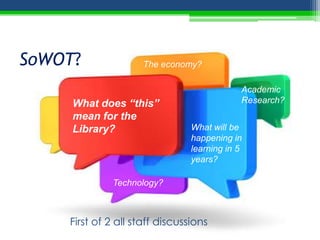
SoWOT?              The economy?

                                            Academic
     What does “this”                       Research?
     mean for the
     Library?                   What will be
                                happening in
                                learning in 5
                                years?

             Technology?


    First of 2 all staff discussions
Envisioning the Future People Want
• Pre-work for all
• A draft for reaction & refinement
• “Stand in that Future”
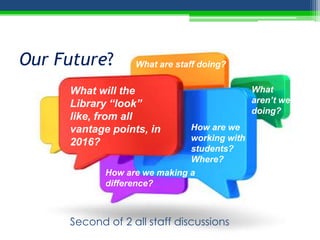
Our Future?       What are staff doing?


     What will the                           What
     Library “look”                          aren’t we
                                             doing?
     like, from all
     vantage points, in       How are we
                              working with
     2016?
                              students?
                              Where?
            How are we making a
            difference?


     Second of 2 all staff discussions
Watchpoints
•   Need structures to support – role of consultant
•   Ongoing communication – multiple channels
•   Meeting preparation
•   Requires time and effort
•   Disconnects and misses
Thank you!
Let us know how you are doing!

       Susan & Rebecca

Future-Focused & Staff-Directed Strategic Planning

  • 1.
    Future-Focused Academic Planning SusanSenese, MLS Rebecca Jones, MLS Associate Librarian Dysart & Jones Associates rebecca@dysartjones.com Research & Information www.dysartjones.com Technology, University of Toronto Mississauga Library Susan.senese@utoronto.c
  • 2.
  • 3.
    Libraries’ future isnot informed by other libraries. A Library’s future must be to ensure the success of organization in which it exists – university, community, government or corporation. Our focus must be on the indicators & developments influencing the organization’s future. And then we can design our future.
  • 4.
    Planning success factors Clarity Follow-thru Preparation Balance Competence
  • 5.
    UTML was ready •Ready to focus on the future, together, collaboratively, making tough decisions • Dovetailed with Dean’s announced Academic Planning Staff Input Staff Directed Staff Engaged
  • 6.
    Assess Readiness • Organizational Culture & Context • Size – 40 staff • Trust – two types of trust • Good Will Culture of Participation Culture of Planning, • Past Retreats • Staff Forums • Annual Goals & • Experiential Objectives Learning Culture of through LDC Learning • LDC
  • 7.
    Staff-Directed: Benefits • Capacity-building– Developing leaders throughout organization • Ownership – process, outcomes • Oneness – esprit-de-corps with planning teams • Insight &empathy • No sitting on the sidelines • Experiential learning • Letting go….leads to trust
  • 8.
    Staff-Directed – Risks • Can go awry if structure is not moderated • Potential for weak volunteers/weak teams • Accurate assessment of organizational readiness • Leadership unable to “let go” • Poor communication • Time and resource-intensive
  • 9.
    Futures Futures Refine to Ready Planning Implement Build Develop Envision Planning Annual Goals & Draft Muscle & Tactics Finalize Assess Scan, Discover, Test with Context Discuss Stakeholders April – Sept Sept - Dec Jan - April
  • 10.
    Phase 1: “FuturesReady” • Building the planning muscle • Staff Lead Program – April -Sept ▫ Consistent branding of the Program ▫ Group screening of TED Talks ▫ Panel Discussions  Grad Students  Campus Leaders  Professors ▫ Classroom Instructor Lead Learning  Critical Thinking
  • 12.
    Phase 2: “FuturesPlanning” • Planning to Plan ▫ Rules of Engagement:  Clear Objectives  Clearly Articulated Program  Full developed Schedule ▫ Coordinating Team ▫ Communications Plan ▫ Communications Vehicle – Blackboard LMS ▫ Link to Senior Leadership ▫ External experienced facilitator
  • 13.
    Future? Explore, Discover& Discuss • Exploration Groups: ▫ 6-8 members  mix of functions, roles & experiences ▫ Set out to discover & discuss trends, issues & indicators in:  teaching, learning, economic/political scene, technology, content, global education & academic research
  • 16.
    SoWOT? The economy? Academic What does “this” Research? mean for the Library? What will be happening in learning in 5 years? Technology? First of 2 all staff discussions
  • 17.
    Envisioning the FuturePeople Want • Pre-work for all • A draft for reaction & refinement • “Stand in that Future”
  • 18.
    Our Future? What are staff doing? What will the What Library “look” aren’t we doing? like, from all vantage points, in How are we working with 2016? students? Where? How are we making a difference? Second of 2 all staff discussions
  • 19.
    Watchpoints • Need structures to support – role of consultant • Ongoing communication – multiple channels • Meeting preparation • Requires time and effort • Disconnects and misses
  • 20.
    Thank you! Let usknow how you are doing! Susan & Rebecca

Editor's Notes

  • #2 D302 – Future-Focused Academic Planning11:30 AM – 12:15 PMSusan Senese, Associate Librarian, Research and Information Technology, University of Toronto Mississauga LibraryRebecca Jones, Managing Partner, Dysart & Jones AssociatesUTML has successfully developed and implemented futures and academic plans to ensure their services and technologies are aligned with the ever-progressing student, faculty, and researchers’ needs. As the bar for successful futures and academic plans keeps rising, UTML knew the traditional planning approach wasn’t in sync with where it is today or where it needs to be in the future. Hear how a staff-directed approach benefited both the planning and the staff; the plan’s richness attests to all staff’s combined knowledge and energy, and the staff continued to grow their insights into the trends impacting their academy and the library’s critical role in the academy’s sustained success.
  • #5 Planning is about making decisions
  • #6 What’s the difference?Continuum…..Staff-engaged – Led by senior administration. Aim: inclusive, engaged. Outcomes embraced by organization.Staff-Directed – Led by staff and senior administrationAim: scaffolding, structures to support and “rules of engagement” led by senior administration. Planning and outcomes directed by staff. Outcomes owned by organization.
  • #14 Literature scans & interviews1 group/topic