Applied Growth Transitions
www.appliedgrowth.com
Leadership
Cultural Intercepts
implications for operations
Salvador Z. Zamudio, MBA
Why Do it?
• Labor Management
Make the best use of available labor 60%-70%
is at stake
• Planning Short Term-Long Term-Strategic
Create effectiveness by design
• Succession Planning
Who is your leadership base Manager-
Supervisor-Team Lead
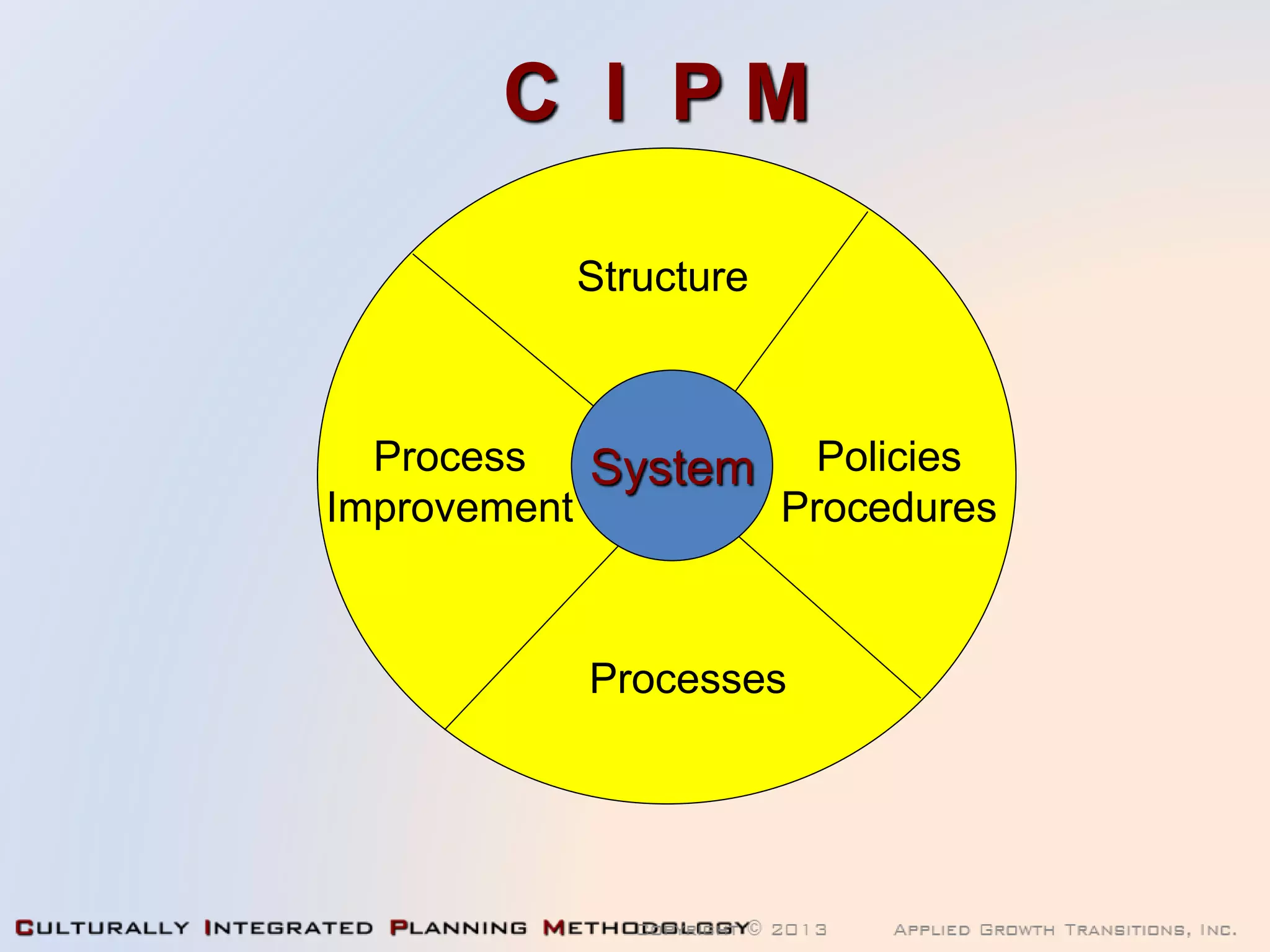
C I P M
Policies
Procedures
Structure
Process
Improvement
Processes
System
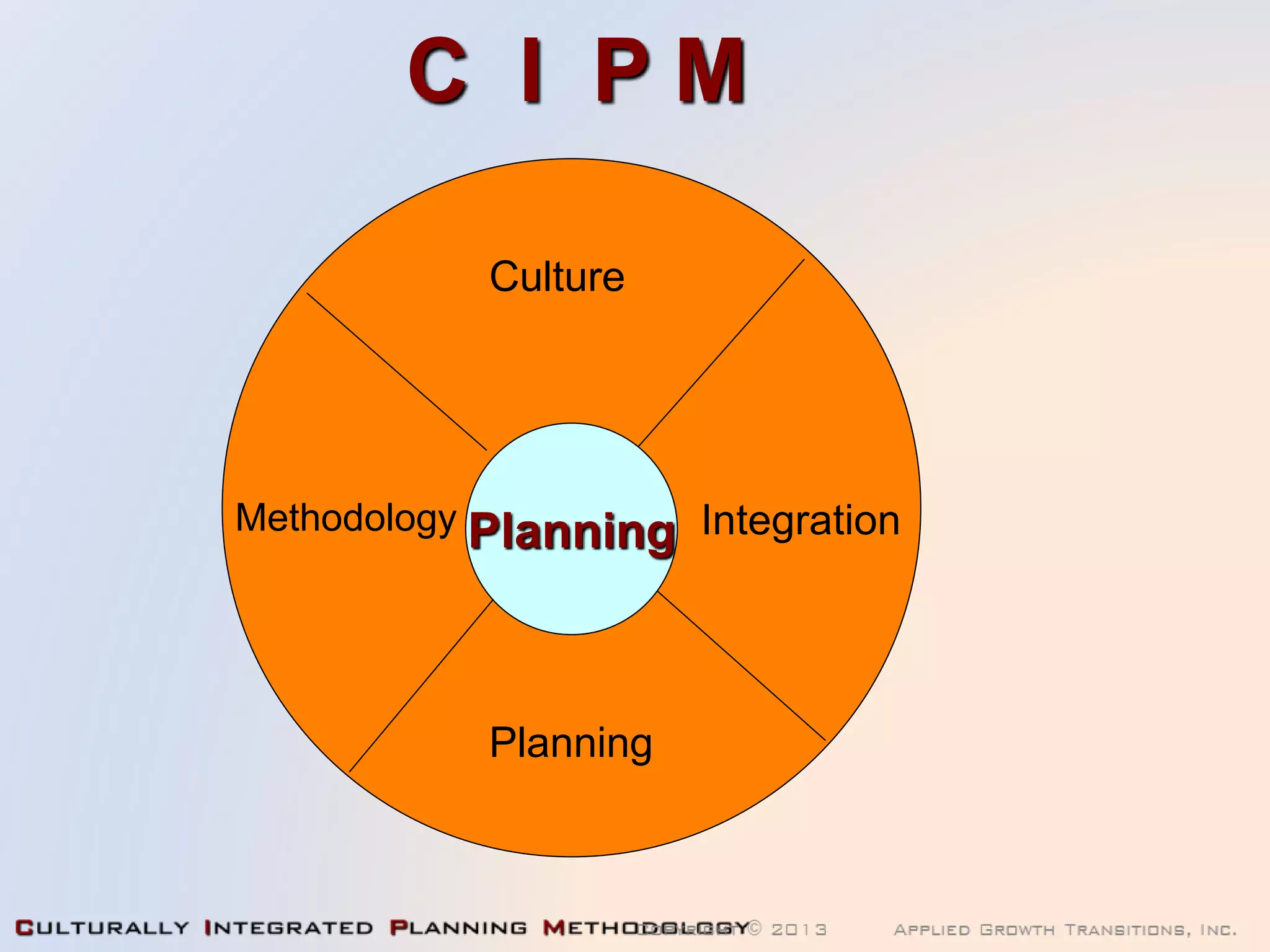
C I P M
Integration
Culture
Methodology
Planning
Planning
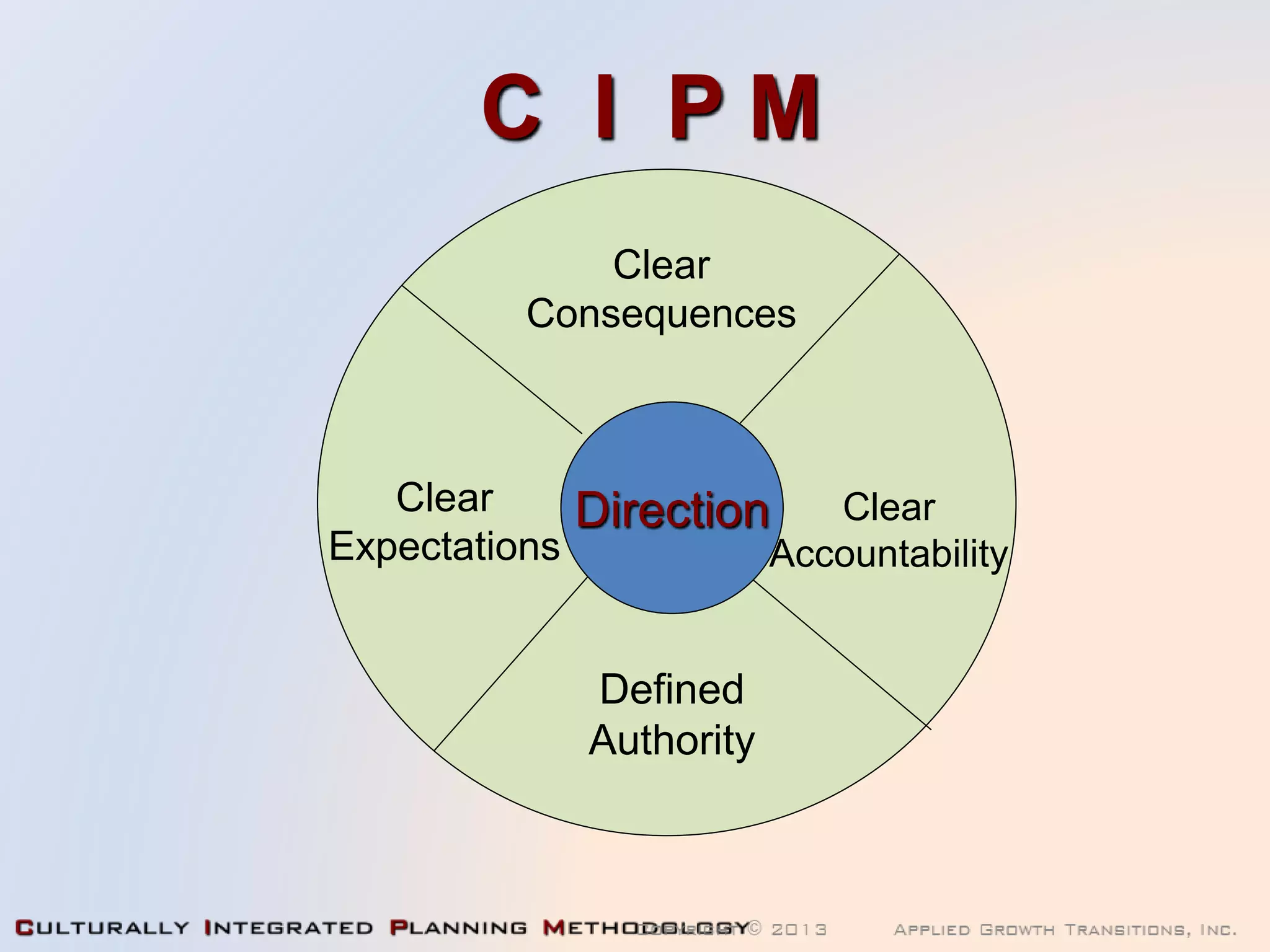
C I P M
Clear
Accountability
Clear
Consequences
Clear
Expectations
Defined
Authority
Direction
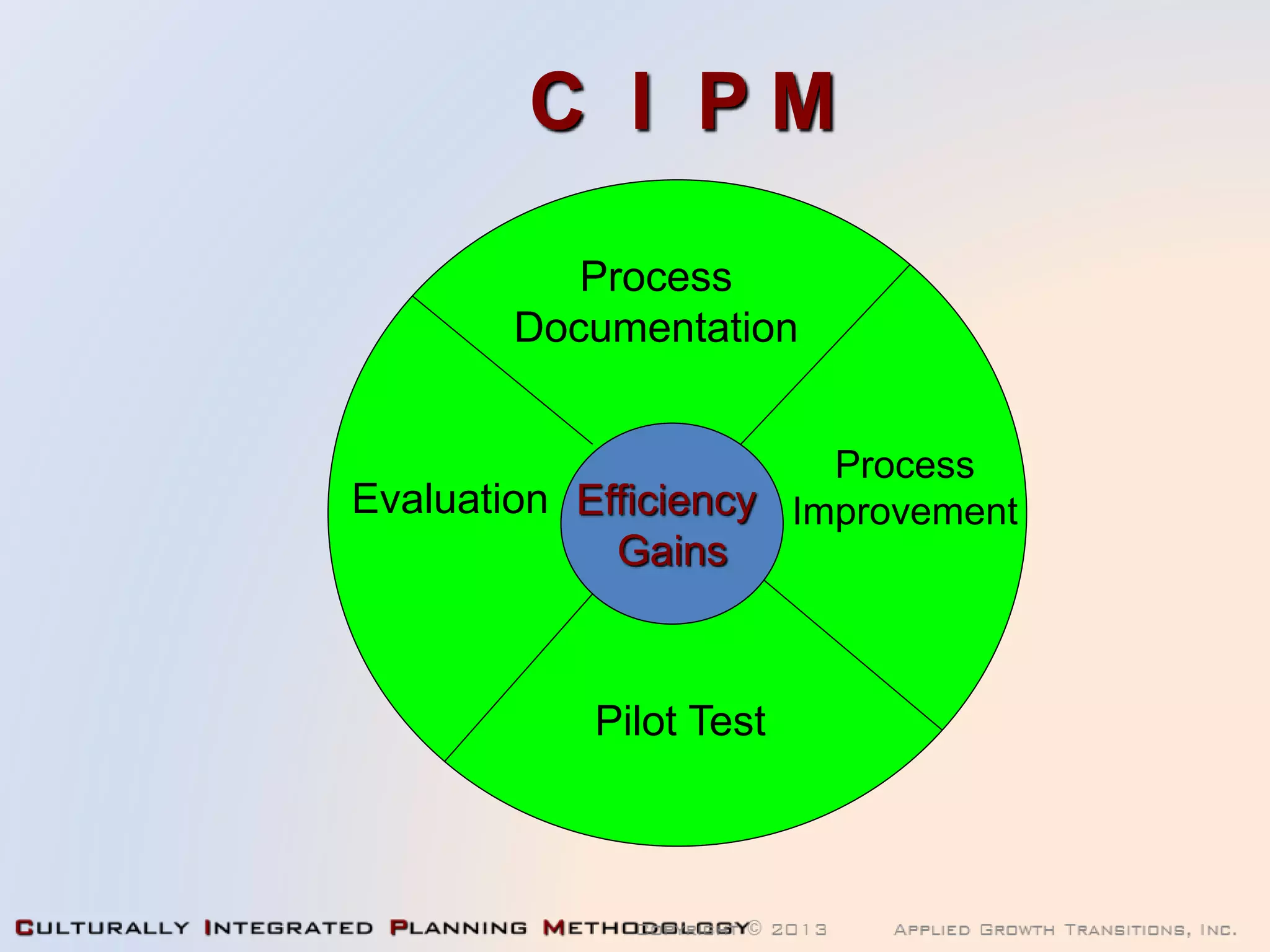
C I P M
Process
Improvement
Process
Documentation
Evaluation
Pilot Test
Efficiency
Gains
C I P M
Cultural Attitudes Towards Planning
• Planning - mostly short term
• Spontaneous activity - modus operandi
• Time - valued differently
• Pervasive Concept -“It’s good enough”
• Power Distance - huge barriers
• Group - more important than self
C I P M
Cultural Attitudes towards Planning
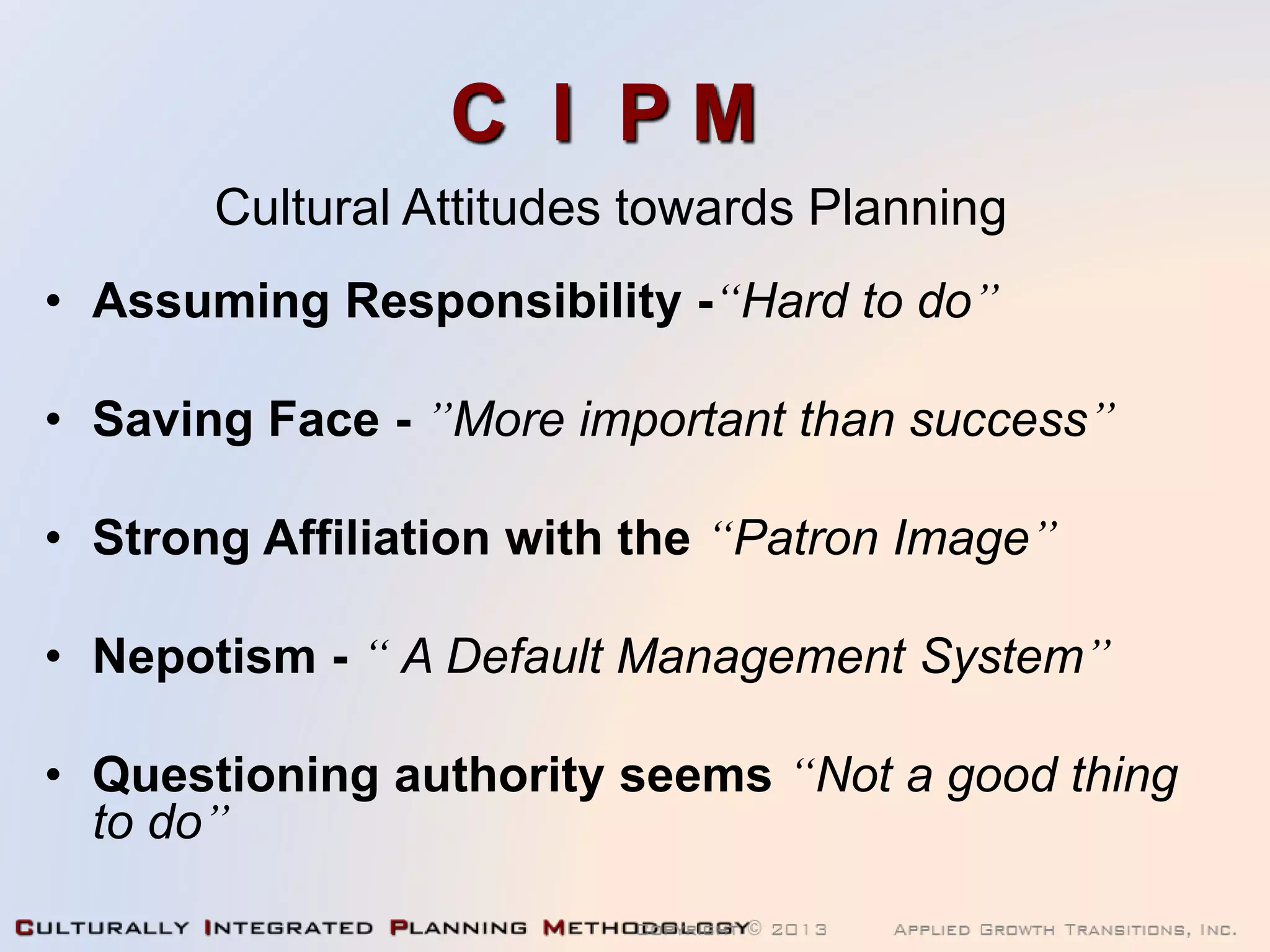
• Assuming Responsibility -“Hard to do”
• Saving Face - ”More important than success”
• Strong Affiliation with the “Patron Image”
• Nepotism - “ A Default Management System”
• Questioning authority seems “Not a good thing
to do”
C I P M
Cultural Attitudes towards Planning
• Planning - “is for the Jefes”
• Self initiative - “not a strong suit, without trust”
• Doers - “not planners”
• Fatalistic view of the future -“So why plan ahead?”
• Cultural and language barriers - Critical issues
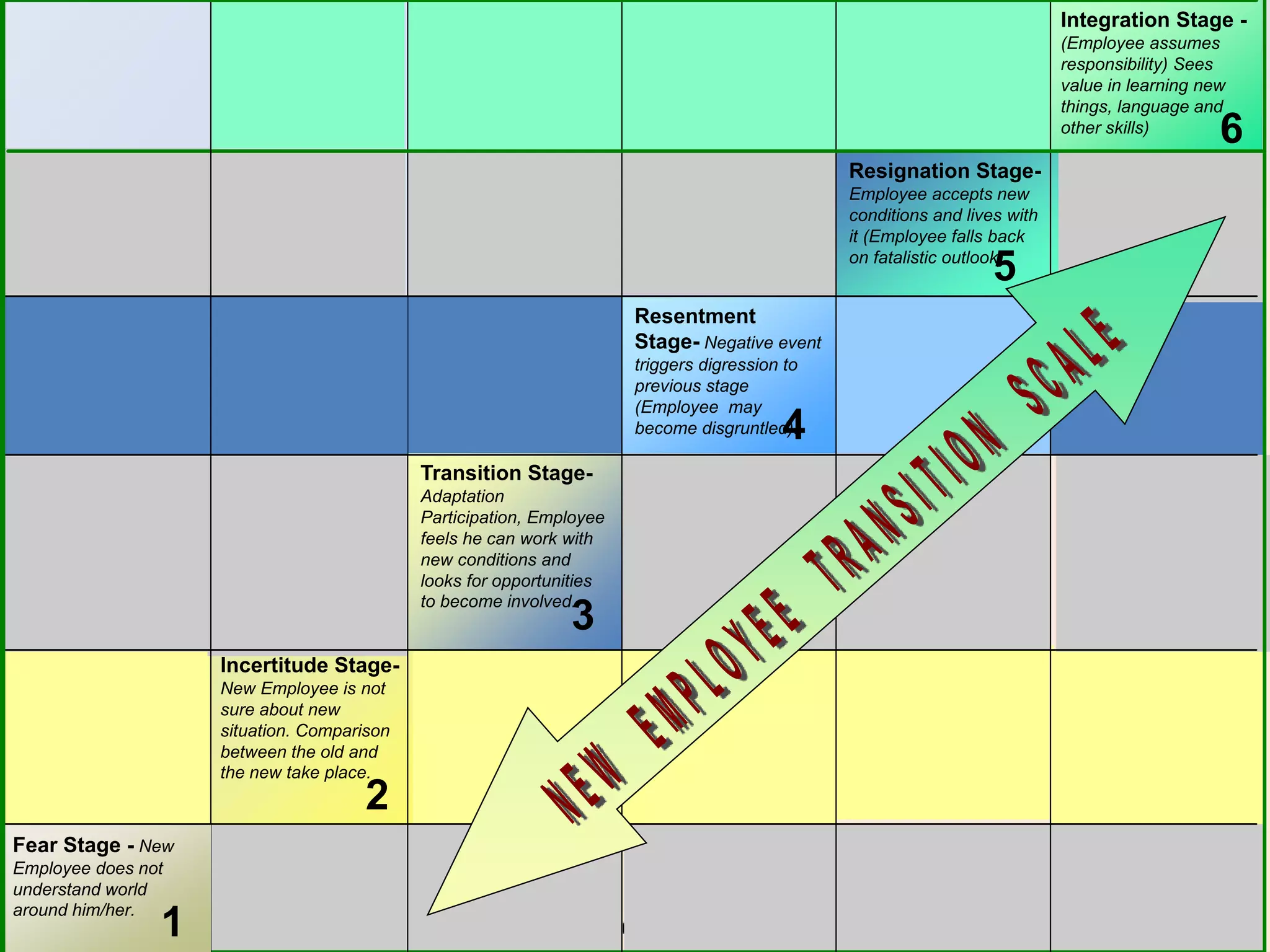
Incertitude Stage-
New Employee is not
sure about new
situation. Comparison
between the old and
the new take place.
Transition Stage-
Adaptation
Participation, Employee
feels he can work with
new conditions and
looks for opportunities
to become involved.
Resentment
Stage- Negative event
triggers digression to
previous stage
(Employee may
become disgruntled).
Resignation Stage-
Employee accepts new
conditions and lives with
it (Employee falls back
on fatalistic outlook).
Integration Stage -
(Employee assumes
responsibility) Sees
value in learning new
things, language and
other skills)
2
4
5
3
6
Fear Stage - New
Employee does not
understand world
around him/her.
1
Leadership Cultural Intercepts
Leadership
Solutions
Questions
and
Feedback
Resources
Balogh, A., Gaál, Z., & Szabó, L. (2011). RELATIONSHIP BETWEEN ORGANIZATIONAL
CULTURE AND CULTURAL INTELLIGENCE. Management & Marketing, 6(1), 95-
110. Retrieved from http://search.proquest.com/docview/859007562?accountid=39364
Dolores Sánchez Bengoa, Hans, R. K., & Vrontis, D. (2012). A new organisational memory for
cross-cultural knowledge management. Cross Cultural Management, 19(3), 336-351.
doi:http://dx.doi.org/10.1108/13527601211247080
Emmerling, R. J., & Boyatzis, R. E. (2012). Emotional and social intelligence competencies:
Cross cultural implications. Cross Cultural Management, 19(1), 4-18.
doi:http://dx.doi.org/10.1108/13527601211195592
Kohnen, J. (2012). Leading with cultural intelligence: The new secret to success. The Quality
Management Journal, 19(3), 70-71. Retrieved from
http://search.proquest.com/docview/1028011021?accountid=39364
Mouton, N., Sine Nørholm Just, & Gabrielsen, J. (2012). Creating organizational
cultures. Journal of Organizational Change Management, 25(2), 315-331.
doi:http://dx.doi.org/10.1108/09534811211213973
Nongo, E. S., & Ikyanyon, D. N. (2012). The influence of corporate culture on employee
commitment to the organization.International Journal of Business and
Management, 7(22), 21-28. Retrieved from
http://search.proquest.com/docview/1353608739?accountid=39364
Orij, R. (2010). Corporate social disclosures in the context of national cultures and stakeholder
theory. Accounting, Auditing & Accountability Journal, 23(7), 868-889.
doi:http://dx.doi.org/10.1108/09513571011080162
Salvador Z. Zamudio
www.appliedgrowth.com

Agt planning methodology

  • 1.
    Applied Growth Transitions www.appliedgrowth.com Leadership CulturalIntercepts implications for operations Salvador Z. Zamudio, MBA
  • 2.
    Why Do it? •Labor Management Make the best use of available labor 60%-70% is at stake • Planning Short Term-Long Term-Strategic Create effectiveness by design • Succession Planning Who is your leadership base Manager- Supervisor-Team Lead
  • 3.
    C I PM Policies Procedures Structure Process Improvement Processes System
  • 4.
    C I PM Integration Culture Methodology Planning Planning
  • 5.
    C I PM Clear Accountability Clear Consequences Clear Expectations Defined Authority Direction
  • 6.
    C I PM Process Improvement Process Documentation Evaluation Pilot Test Efficiency Gains
  • 7.
    C I PM Cultural Attitudes Towards Planning • Planning - mostly short term • Spontaneous activity - modus operandi • Time - valued differently • Pervasive Concept -“It’s good enough” • Power Distance - huge barriers • Group - more important than self
  • 8.
    C I PM Cultural Attitudes towards Planning • Assuming Responsibility -“Hard to do” • Saving Face - ”More important than success” • Strong Affiliation with the “Patron Image” • Nepotism - “ A Default Management System” • Questioning authority seems “Not a good thing to do”
  • 9.
    C I PM Cultural Attitudes towards Planning • Planning - “is for the Jefes” • Self initiative - “not a strong suit, without trust” • Doers - “not planners” • Fatalistic view of the future -“So why plan ahead?” • Cultural and language barriers - Critical issues
  • 11.
    Incertitude Stage- New Employeeis not sure about new situation. Comparison between the old and the new take place. Transition Stage- Adaptation Participation, Employee feels he can work with new conditions and looks for opportunities to become involved. Resentment Stage- Negative event triggers digression to previous stage (Employee may become disgruntled). Resignation Stage- Employee accepts new conditions and lives with it (Employee falls back on fatalistic outlook). Integration Stage - (Employee assumes responsibility) Sees value in learning new things, language and other skills) 2 4 5 3 6 Fear Stage - New Employee does not understand world around him/her. 1
  • 12.
  • 13.
  • 14.
  • 15.
  • 16.
  • 17.
  • 18.
  • 19.
  • 20.
  • 21.
  • 22.
  • 23.
  • 25.
  • 26.
  • 27.
  • 28.
    Balogh, A., Gaál,Z., & Szabó, L. (2011). RELATIONSHIP BETWEEN ORGANIZATIONAL CULTURE AND CULTURAL INTELLIGENCE. Management & Marketing, 6(1), 95- 110. Retrieved from http://search.proquest.com/docview/859007562?accountid=39364 Dolores Sánchez Bengoa, Hans, R. K., & Vrontis, D. (2012). A new organisational memory for cross-cultural knowledge management. Cross Cultural Management, 19(3), 336-351. doi:http://dx.doi.org/10.1108/13527601211247080 Emmerling, R. J., & Boyatzis, R. E. (2012). Emotional and social intelligence competencies: Cross cultural implications. Cross Cultural Management, 19(1), 4-18. doi:http://dx.doi.org/10.1108/13527601211195592 Kohnen, J. (2012). Leading with cultural intelligence: The new secret to success. The Quality Management Journal, 19(3), 70-71. Retrieved from http://search.proquest.com/docview/1028011021?accountid=39364 Mouton, N., Sine Nørholm Just, & Gabrielsen, J. (2012). Creating organizational cultures. Journal of Organizational Change Management, 25(2), 315-331. doi:http://dx.doi.org/10.1108/09534811211213973 Nongo, E. S., & Ikyanyon, D. N. (2012). The influence of corporate culture on employee commitment to the organization.International Journal of Business and Management, 7(22), 21-28. Retrieved from http://search.proquest.com/docview/1353608739?accountid=39364 Orij, R. (2010). Corporate social disclosures in the context of national cultures and stakeholder theory. Accounting, Auditing & Accountability Journal, 23(7), 868-889. doi:http://dx.doi.org/10.1108/09513571011080162
  • 29.