1
THERMODYNAMICS LAB PRESENTATION
PRESENTED BY :- MOIN ZEB & TAUSEEF KHAN
CLASS NO:- 118 & 125
DEPARTMENT OF MECHANICAL ENGINEERING
2
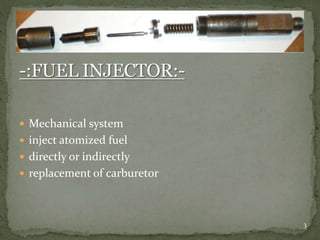
 Mechanical system
 inject atomized fuel
 directly or indirectly
 replacement of carburetor
3
 Background
 Types Of Fuel Injectors
 Mechanical Fuel Injector
 Electronic Fuel Injector
 Types Of Injections
 Direct injection
 Indirect Injection
 Parts Of Fuel Injector
 Types of Nozzle
 It’s Working
 Advantages and Disadvantages of Fuel Injection
 Conclusion
4
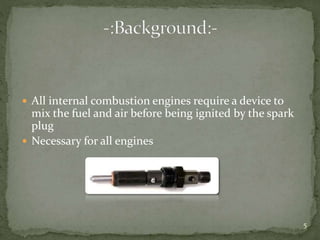
 All internal combustion engines require a device to
mix the fuel and air before being ignited by the spark
plug
 Necessary for all engines
5
 Mechanical Fuel Injector :-
pressure of the fluid overcome the elastic pressure of
spring and fuel in injected.
• Electrical Fuel Injector:-
Several sensor are used that are controlled by ECU
(electronic control unit).
6
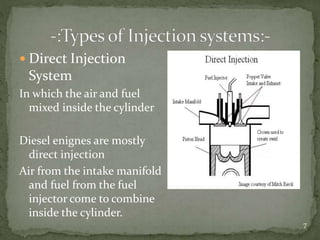
 Direct Injection
System
In which the air and fuel
mixed inside the cylinder
Diesel enignes are mostly
direct injection
Air from the intake manifold
and fuel from the fuel
injector come to combine
inside the cylinder.
7
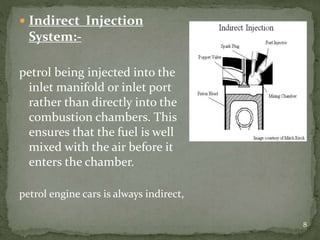
 Indirect Injection
System:-
petrol being injected into the
inlet manifold or inlet port
rather than directly into the
combustion chambers. This
ensures that the fuel is well
mixed with the air before it
enters the chamber.
petrol engine cars is always indirect,
8
 Nozzle
 Needle nozzle
 Valve control plunger
 Solenoid valve
 Inlet hole
 Outlet hole
 Valve control chamber
 overflow
9
10
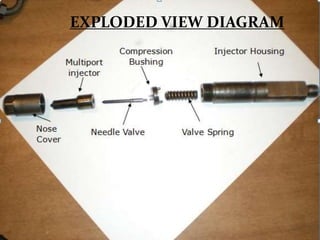
EXPLODED VIEW DIAGRAM
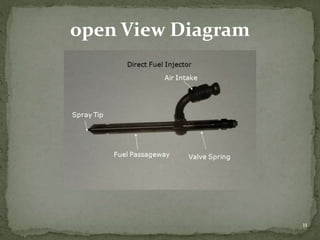
open View Diagram
11
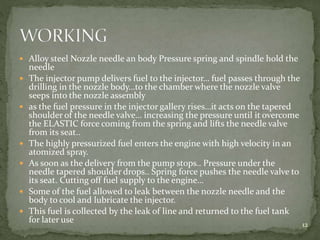
 Alloy steel Nozzle needle an body Pressure spring and spindle hold the
needle
 The injector pump delivers fuel to the injector… fuel passes through the
drilling in the nozzle body…to the chamber where the nozzle valve
seeps into the nozzle assembly
 as the fuel pressure in the injector gallery rises…it acts on the tapered
shoulder of the needle valve… increasing the pressure until it overcome
the ELASTIC force coming from the spring and lifts the needle valve
from its seat..
 The highly pressurized fuel enters the engine with high velocity in an
atomized spray.
 As soon as the delivery from the pump stops.. Pressure under the
needle tapered shoulder drops.. Spring force pushes the needle valve to
its seat. Cutting off fuel supply to the engine…
 Some of the fuel allowed to leak between the nozzle needle and the
body to cool and lubricate the injector.
 This fuel is collected by the leak of line and returned to the fuel tank
for later use 12
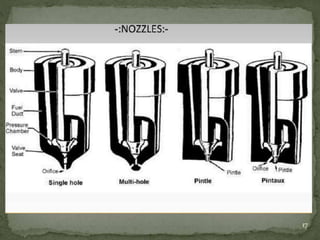
 Pintle nozzle:
 Stem of nozzle valve is extended to form a pin or
Pintle which protrudes through the mouth of
nozzle.
 Provides a spray operating at low pressure, 8-10
MPa. Spray cone angle is generally 60 degree.
 It avoids weak injection and dribbling.
13
 Pintaux nozzle:
 Similar to Pintle nozzle but a auxiliary hole is
drilled in the nozzle body. Hence it helps in
injection of small amount of fuel through it
slightly before the main injection.
 The needle valve does not open fully at low speed
and most of fuel is injected through the auxiliary
hole.

 Provides better cold starting of engine.
14
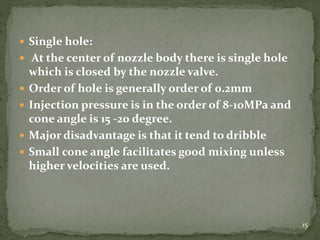
 Single hole:
 At the center of nozzle body there is single hole
which is closed by the nozzle valve.
 Order of hole is generally order of 0.2mm
 Injection pressure is in the order of 8-10MPa and
cone angle is 15 -20 degree.
 Major disadvantage is that it tend to dribble
 Small cone angle facilitates good mixing unless
higher velocities are used.
15
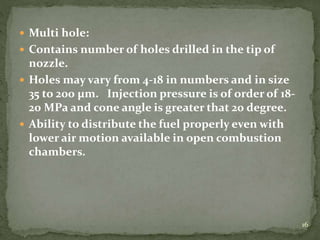
 Multi hole:
 Contains number of holes drilled in the tip of
nozzle.
 Holes may vary from 4-18 in numbers and in size
35 to 200 µm. Injection pressure is of order of 18-
20 MPa and cone angle is greater that 20 degree.
 Ability to distribute the fuel properly even with
lower air motion available in open combustion
chambers.
16
17
 Engine performance viz. power output, economy
(equivalence ratio is maintained )
 Accurate metering (errors may cause drastic variation from the desired output.)
 Proper atomization of fuel
 equal quantity of metered fuel (in case of multi cylinder engines)
18
 Injection is superior to carburetion
 Indirect injection is easier and therefore more
common to implement
 Direct injection is more efficient
 Increasing the pressure differential across a fuel
injector is the most effective way to improve
performance
 Increasing the nozzle area is the easiest
19

Fuel injection

  • 1.
  • 2.
    THERMODYNAMICS LAB PRESENTATION PRESENTEDBY :- MOIN ZEB & TAUSEEF KHAN CLASS NO:- 118 & 125 DEPARTMENT OF MECHANICAL ENGINEERING 2
  • 3.
     Mechanical system inject atomized fuel  directly or indirectly  replacement of carburetor 3
  • 4.
     Background  TypesOf Fuel Injectors  Mechanical Fuel Injector  Electronic Fuel Injector  Types Of Injections  Direct injection  Indirect Injection  Parts Of Fuel Injector  Types of Nozzle  It’s Working  Advantages and Disadvantages of Fuel Injection  Conclusion 4
  • 5.
     All internalcombustion engines require a device to mix the fuel and air before being ignited by the spark plug  Necessary for all engines 5
  • 6.
     Mechanical FuelInjector :- pressure of the fluid overcome the elastic pressure of spring and fuel in injected. • Electrical Fuel Injector:- Several sensor are used that are controlled by ECU (electronic control unit). 6
  • 7.
     Direct Injection System Inwhich the air and fuel mixed inside the cylinder Diesel enignes are mostly direct injection Air from the intake manifold and fuel from the fuel injector come to combine inside the cylinder. 7
  • 8.
     Indirect Injection System:- petrolbeing injected into the inlet manifold or inlet port rather than directly into the combustion chambers. This ensures that the fuel is well mixed with the air before it enters the chamber. petrol engine cars is always indirect, 8
  • 9.
     Nozzle  Needlenozzle  Valve control plunger  Solenoid valve  Inlet hole  Outlet hole  Valve control chamber  overflow 9
  • 10.
  • 11.
  • 12.
     Alloy steelNozzle needle an body Pressure spring and spindle hold the needle  The injector pump delivers fuel to the injector… fuel passes through the drilling in the nozzle body…to the chamber where the nozzle valve seeps into the nozzle assembly  as the fuel pressure in the injector gallery rises…it acts on the tapered shoulder of the needle valve… increasing the pressure until it overcome the ELASTIC force coming from the spring and lifts the needle valve from its seat..  The highly pressurized fuel enters the engine with high velocity in an atomized spray.  As soon as the delivery from the pump stops.. Pressure under the needle tapered shoulder drops.. Spring force pushes the needle valve to its seat. Cutting off fuel supply to the engine…  Some of the fuel allowed to leak between the nozzle needle and the body to cool and lubricate the injector.  This fuel is collected by the leak of line and returned to the fuel tank for later use 12
  • 13.
     Pintle nozzle: Stem of nozzle valve is extended to form a pin or Pintle which protrudes through the mouth of nozzle.  Provides a spray operating at low pressure, 8-10 MPa. Spray cone angle is generally 60 degree.  It avoids weak injection and dribbling. 13
  • 14.
     Pintaux nozzle: Similar to Pintle nozzle but a auxiliary hole is drilled in the nozzle body. Hence it helps in injection of small amount of fuel through it slightly before the main injection.  The needle valve does not open fully at low speed and most of fuel is injected through the auxiliary hole.   Provides better cold starting of engine. 14
  • 15.
     Single hole: At the center of nozzle body there is single hole which is closed by the nozzle valve.  Order of hole is generally order of 0.2mm  Injection pressure is in the order of 8-10MPa and cone angle is 15 -20 degree.  Major disadvantage is that it tend to dribble  Small cone angle facilitates good mixing unless higher velocities are used. 15
  • 16.
     Multi hole: Contains number of holes drilled in the tip of nozzle.  Holes may vary from 4-18 in numbers and in size 35 to 200 µm. Injection pressure is of order of 18- 20 MPa and cone angle is greater that 20 degree.  Ability to distribute the fuel properly even with lower air motion available in open combustion chambers. 16
  • 17.
  • 18.
     Engine performanceviz. power output, economy (equivalence ratio is maintained )  Accurate metering (errors may cause drastic variation from the desired output.)  Proper atomization of fuel  equal quantity of metered fuel (in case of multi cylinder engines) 18
  • 19.
     Injection issuperior to carburetion  Indirect injection is easier and therefore more common to implement  Direct injection is more efficient  Increasing the pressure differential across a fuel injector is the most effective way to improve performance  Increasing the nozzle area is the easiest 19