Piston Engine Propulsion
Oil
• Lubrication oil is often considered to be the life
blood of an engine. Without it, the friction and
wear produced between moving parts would
cause an engine to wear at a very rapid rate.
• In addition to reducing friction, lubricating oil is
responsible for removing a great deal of engine
heat.
• In fact, without an ample supply of oil, most
reciprocating engines will overheat. Additional
functions of lubricating oils include creating a seal
between moving parts, cushioning impact forces
created by combustion, cleaning the engine, and
protecting against corrosion.
• The purpose of a lubrication system is to
supply oil at the correct pressure and volume
to provide adequate lubrication and cooling
for all parts of the engine, which are subject to
the effects of friction.
• The lubrication is distributed to the engine
moving parts by pressure, splash, and spray.
• Pressure lubrication is the primary type of
lubrication used in reciprocating engines.
• All pressure lubrication systems rely on a
pump to supply pressurized oil to critical
engine parts.
• The movement of the internal components,
which splash oil around, produces splash
lubrication.
• Spray lubrication uses the same pressurized oil
in a pressure lubrication system, however,
instead of routing the oil to a component
through an oil passage, the oil is sprayed on to
a component through a nozzle.
• Reciprocating engine lubrication systems are
generally classified as either:
• wet-sump or
• dry-sump system
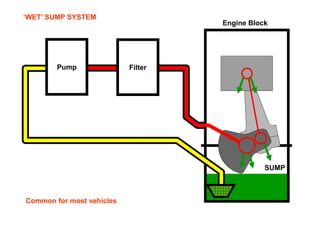
Wet Sump
• With a wet sump system, all the oil is carried
in the engine crankcase.
• With this type of system, the oil is picked up
by a pump and distributed throughout the
engine.
• Once the oil has circulated, it drains down into
the sump where it is picked up and
recirculated.
SUMP
Engine Block
‘WET’ SUMP SYSTEM
FilterPump
Common for most vehicles
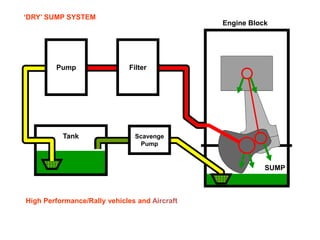
SUMP
Engine Block
‘DRY’ SUMP SYSTEM
FilterPump
High Performance/Rally vehicles and Aircraft
Tank Scavenge
Pump
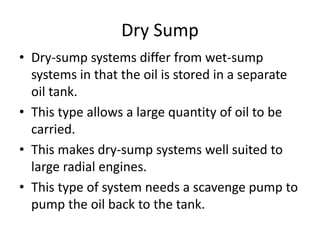
Dry Sump
• Dry-sump systems differ from wet-sump
systems in that the oil is stored in a separate
oil tank.
• This type allows a large quantity of oil to be
carried.
• This makes dry-sump systems well suited to
large radial engines.
• This type of system needs a scavenge pump to
pump the oil back to the tank.
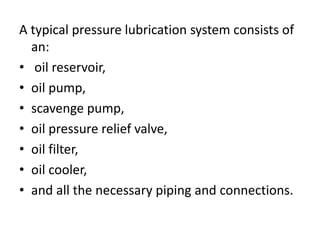
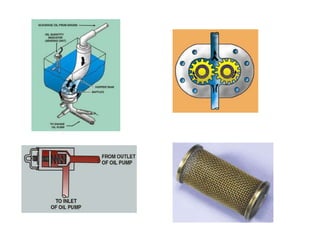
A typical pressure lubrication system consists of
an:
• oil reservoir,
• oil pump,
• scavenge pump,
• oil pressure relief valve,
• oil filter,
• oil cooler,
• and all the necessary piping and connections.
Filters
• There are two types of filtration systems that
may be installed in aircraft piston engines;
• They are the full flow filter system
• and the by-pass or partial flow system.
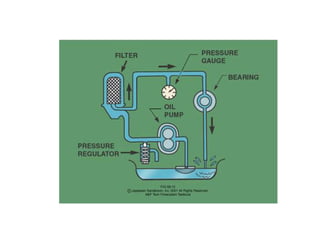
• With the full flow system all of the oil passes
though the filter each time it circulates the
engine.
• To accomplish this the filter is installed in
series between the pump and the bearings.
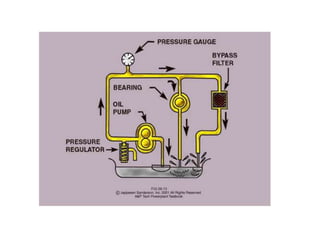
• The by-pass system is installed in parallel with
the engine bearings.
• In this type of system, only about 10 percent
of the oil is filtered each time the oil circulates
through the system.
• However over time, the entire oil supply will
pass through the filter
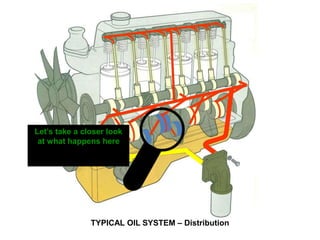
Let’s take a closer look
at what happens here
TYPICAL OIL SYSTEM – Distribution
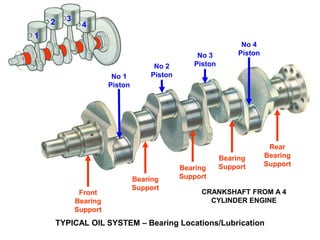
Front
Bearing
Support
Rear
Bearing
Support
Bearing
Support
Bearing
Support
Bearing
Support
TYPICAL OIL SYSTEM – Bearing Locations/Lubrication
No 1
Piston
1
No 2
Piston
2
No 3
Piston
3
No 4
Piston
4
CRANKSHAFT FROM A 4
CYLINDER ENGINE
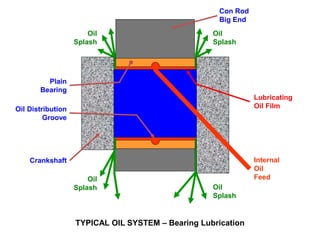
Oil
Splash
Oil
Splash
Oil
Splash Oil
Splash
Crankshaft Internal
Oil
Feed
Plain
Bearing
TYPICAL OIL SYSTEM – Bearing Lubrication
Oil Distribution
Groove
Lubricating
Oil Film
Con Rod
Big End

Piston Engines: Oil

  • 1.
  • 2.
    • Lubrication oilis often considered to be the life blood of an engine. Without it, the friction and wear produced between moving parts would cause an engine to wear at a very rapid rate. • In addition to reducing friction, lubricating oil is responsible for removing a great deal of engine heat. • In fact, without an ample supply of oil, most reciprocating engines will overheat. Additional functions of lubricating oils include creating a seal between moving parts, cushioning impact forces created by combustion, cleaning the engine, and protecting against corrosion.
  • 3.
    • The purposeof a lubrication system is to supply oil at the correct pressure and volume to provide adequate lubrication and cooling for all parts of the engine, which are subject to the effects of friction. • The lubrication is distributed to the engine moving parts by pressure, splash, and spray.
  • 5.
    • Pressure lubricationis the primary type of lubrication used in reciprocating engines. • All pressure lubrication systems rely on a pump to supply pressurized oil to critical engine parts.
  • 6.
    • The movementof the internal components, which splash oil around, produces splash lubrication. • Spray lubrication uses the same pressurized oil in a pressure lubrication system, however, instead of routing the oil to a component through an oil passage, the oil is sprayed on to a component through a nozzle.
  • 7.
    • Reciprocating enginelubrication systems are generally classified as either: • wet-sump or • dry-sump system
  • 8.
    Wet Sump • Witha wet sump system, all the oil is carried in the engine crankcase. • With this type of system, the oil is picked up by a pump and distributed throughout the engine. • Once the oil has circulated, it drains down into the sump where it is picked up and recirculated.
  • 9.
    SUMP Engine Block ‘WET’ SUMPSYSTEM FilterPump Common for most vehicles
  • 10.
    SUMP Engine Block ‘DRY’ SUMPSYSTEM FilterPump High Performance/Rally vehicles and Aircraft Tank Scavenge Pump
  • 11.
    Dry Sump • Dry-sumpsystems differ from wet-sump systems in that the oil is stored in a separate oil tank. • This type allows a large quantity of oil to be carried. • This makes dry-sump systems well suited to large radial engines. • This type of system needs a scavenge pump to pump the oil back to the tank.
  • 12.
    A typical pressurelubrication system consists of an: • oil reservoir, • oil pump, • scavenge pump, • oil pressure relief valve, • oil filter, • oil cooler, • and all the necessary piping and connections.
  • 14.
    Filters • There aretwo types of filtration systems that may be installed in aircraft piston engines; • They are the full flow filter system • and the by-pass or partial flow system.
  • 16.
    • With thefull flow system all of the oil passes though the filter each time it circulates the engine. • To accomplish this the filter is installed in series between the pump and the bearings.
  • 18.
    • The by-passsystem is installed in parallel with the engine bearings. • In this type of system, only about 10 percent of the oil is filtered each time the oil circulates through the system. • However over time, the entire oil supply will pass through the filter
  • 19.
    Let’s take acloser look at what happens here TYPICAL OIL SYSTEM – Distribution
  • 20.
    Front Bearing Support Rear Bearing Support Bearing Support Bearing Support Bearing Support TYPICAL OIL SYSTEM– Bearing Locations/Lubrication No 1 Piston 1 No 2 Piston 2 No 3 Piston 3 No 4 Piston 4 CRANKSHAFT FROM A 4 CYLINDER ENGINE
  • 21.
    Oil Splash Oil Splash Oil Splash Oil Splash Crankshaft Internal Oil Feed Plain Bearing TYPICALOIL SYSTEM – Bearing Lubrication Oil Distribution Groove Lubricating Oil Film Con Rod Big End