Faecal Sludge & Septic Management ( FSSM)
What is FSSM
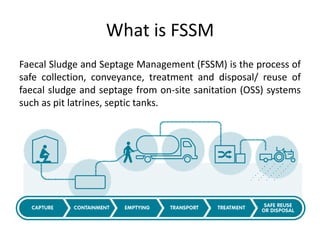
Faecal Sludge and Septage Management (FSSM) is the process of
safe collection, conveyance, treatment and disposal/ reuse of
faecal sludge and septage from on-site sanitation (OSS) systems
such as pit latrines, septic tanks.
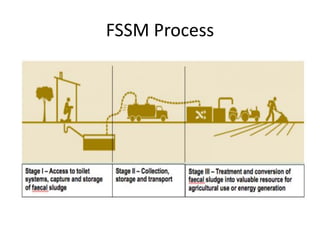
FSSM Process
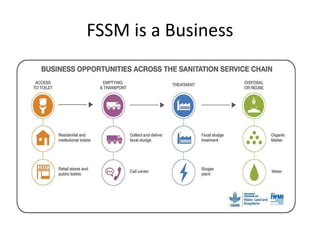
FSSM is a Business
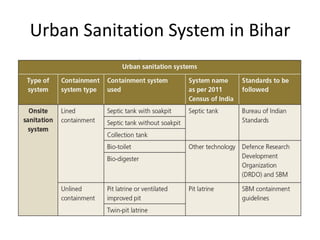
Urban Sanitation System in Bihar
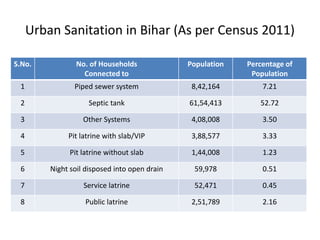
Urban Sanitation in Bihar (As per Census 2011)
S.No. No. of Households
Connected to
Population Percentage of
Population
1 Piped sewer system 8,42,164 7.21
2 Septic tank 61,54,413 52.72
3 Other Systems 4,08,008 3.50
4 Pit latrine with slab/VIP 3,88,577 3.33
5 Pit latrine without slab 1,44,008 1.23
6 Night soil disposed into open drain 59,978 0.51
7 Service latrine 52,471 0.45
8 Public latrine 2,51,789 2.16
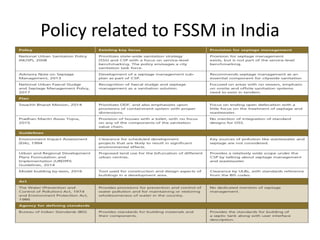
Policy related to FSSM in India
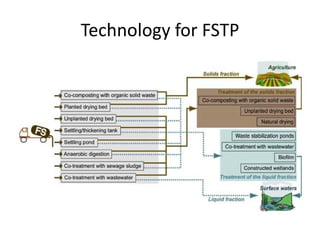
Technology for FSTP
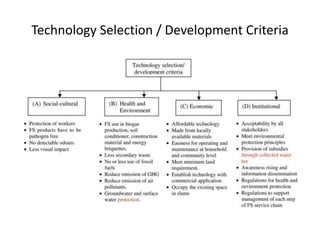
Technology Selection / Development Criteria
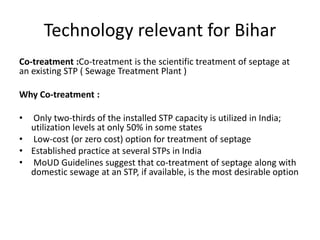
Technology relevant for Bihar
Co-treatment :Co-treatment is the scientific treatment of septage at
an existing STP ( Sewage Treatment Plant )
Why Co-treatment :
• Only two-thirds of the installed STP capacity is utilized in India;
utilization levels at only 50% in some states
• Low-cost (or zero cost) option for treatment of septage
• Established practice at several STPs in India
• MoUD Guidelines suggest that co-treatment of septage along with
domestic sewage at an STP, if available, is the most desirable option
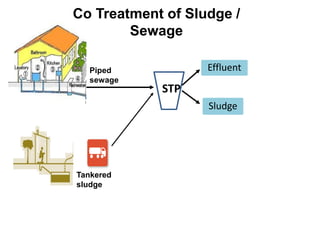
Tankered
sludge
Co Treatment of Sludge /
Sewage
Sludge
Effluent
STP
Piped
sewage
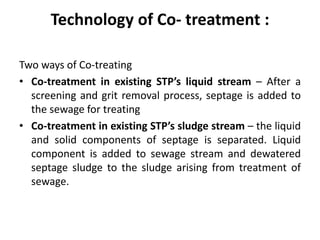
Technology of Co- treatment :
Two ways of Co-treating
• Co-treatment in existing STP’s liquid stream – After a
screening and grit removal process, septage is added to
the sewage for treating
• Co-treatment in existing STP’s sludge stream – the liquid
and solid components of septage is separated. Liquid
component is added to sewage stream and dewatered
septage sludge to the sludge arising from treatment of
sewage.
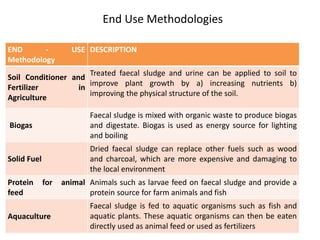
End Use Methodologies
END - USE
Methodology
DESCRIPTION
Soil Conditioner and
Fertilizer in
Agriculture
Treated faecal sludge and urine can be applied to soil to
improve plant growth by a) increasing nutrients b)
improving the physical structure of the soil.
Biogas
Faecal sludge is mixed with organic waste to produce biogas
and digestate. Biogas is used as energy source for lighting
and boiling
Solid Fuel
Dried faecal sludge can replace other fuels such as wood
and charcoal, which are more expensive and damaging to
the local environment
Protein for animal
feed
Animals such as larvae feed on faecal sludge and provide a
protein source for farm animals and fish
Aquaculture
Faecal sludge is fed to aquatic organisms such as fish and
aquatic plants. These aquatic organisms can then be eaten
directly used as animal feed or used as fertilizers
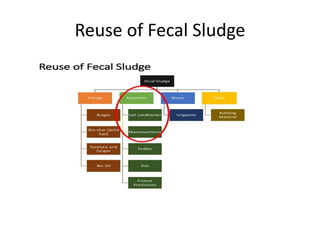
Reuse of Fecal Sludge
Thank You
Arvind Kumar
Sr Environment Planner
Bihar State Ganga River Conservation & Program Management Society
Email : jnu_arvind@rediffmail.com
M: 8294814574

Fssm in bihar

  • 1.
    Faecal Sludge &Septic Management ( FSSM)
  • 2.
    What is FSSM FaecalSludge and Septage Management (FSSM) is the process of safe collection, conveyance, treatment and disposal/ reuse of faecal sludge and septage from on-site sanitation (OSS) systems such as pit latrines, septic tanks.
  • 3.
  • 5.
    FSSM is aBusiness
  • 6.
  • 7.
    Urban Sanitation inBihar (As per Census 2011) S.No. No. of Households Connected to Population Percentage of Population 1 Piped sewer system 8,42,164 7.21 2 Septic tank 61,54,413 52.72 3 Other Systems 4,08,008 3.50 4 Pit latrine with slab/VIP 3,88,577 3.33 5 Pit latrine without slab 1,44,008 1.23 6 Night soil disposed into open drain 59,978 0.51 7 Service latrine 52,471 0.45 8 Public latrine 2,51,789 2.16
  • 8.
    Policy related toFSSM in India
  • 9.
  • 10.
    Technology Selection /Development Criteria
  • 11.
    Technology relevant forBihar Co-treatment :Co-treatment is the scientific treatment of septage at an existing STP ( Sewage Treatment Plant ) Why Co-treatment : • Only two-thirds of the installed STP capacity is utilized in India; utilization levels at only 50% in some states • Low-cost (or zero cost) option for treatment of septage • Established practice at several STPs in India • MoUD Guidelines suggest that co-treatment of septage along with domestic sewage at an STP, if available, is the most desirable option
  • 12.
    Tankered sludge Co Treatment ofSludge / Sewage Sludge Effluent STP Piped sewage
  • 13.
    Technology of Co-treatment : Two ways of Co-treating • Co-treatment in existing STP’s liquid stream – After a screening and grit removal process, septage is added to the sewage for treating • Co-treatment in existing STP’s sludge stream – the liquid and solid components of septage is separated. Liquid component is added to sewage stream and dewatered septage sludge to the sludge arising from treatment of sewage.
  • 14.
    End Use Methodologies END- USE Methodology DESCRIPTION Soil Conditioner and Fertilizer in Agriculture Treated faecal sludge and urine can be applied to soil to improve plant growth by a) increasing nutrients b) improving the physical structure of the soil. Biogas Faecal sludge is mixed with organic waste to produce biogas and digestate. Biogas is used as energy source for lighting and boiling Solid Fuel Dried faecal sludge can replace other fuels such as wood and charcoal, which are more expensive and damaging to the local environment Protein for animal feed Animals such as larvae feed on faecal sludge and provide a protein source for farm animals and fish Aquaculture Faecal sludge is fed to aquatic organisms such as fish and aquatic plants. These aquatic organisms can then be eaten directly used as animal feed or used as fertilizers
  • 15.
  • 16.
    Thank You Arvind Kumar SrEnvironment Planner Bihar State Ganga River Conservation & Program Management Society Email : jnu_arvind@rediffmail.com M: 8294814574