Operation and Maintenance of Septic Systems: Protect Your Investment
Please turn off or silence your cell phone Thanks!
Operation and Maintenance of Septic Systems: Protect Your Investment http://septic.umn.edu Sara Christopherson State Extension Specialist  Onsite Sewage Treatment Program 612-625-7243 [email_address] Doug Malchow Extension Educator OnSite Sewage Treatment Program 507-280-5575 [email_address]
Operation and Maintenance of Septic Systems: Protect Your Investment Doug Malchow Extension Educator On-Site Sewage Treatment Program 507-280-5575  [email_address] http://septic.umn.edu   (no www in front) Click on “Homeowner Information”
Professional Training – Designers,  Inspectors, Pumpers, Installers Research and Demonstration Homeowner Operation & Maintenance Small Community Wastewater Solutions
Why Are We Here? Learn how to use the Homeowner Operation and Maintenance Education (HOME) curriculum Discuss “good” teaching methods Discuss various venues to use HOME Practice and discuss HOME curriculum
These materials were developed by the  Onsite Sewage Treatment Program  at the University of Minnesota  and are the collective effort of numerous individuals. ©  2007, Regents of the University of Minnesota.  All rights reserved.
Before Session Know material Know location of venue Know venue Arrive early Prepare emergency kit – white sheet, extension cords, duct tape, tacks, etc. Sign-in sheet? Utilize observer the first few times you present Don’t assume projector works
Beginning session Turn down lights to direct attention to screen-  Can you hear me? Thank sponsors, restroom location, refreshments? Use slides as prompts for topics – introduction, topics, restrooms, cell phones Turn up lights so attendees can take notes Address questions throughout presentation Slow down, it gives attendees chance to think bout what you are saying, avoid ahhs Use humor
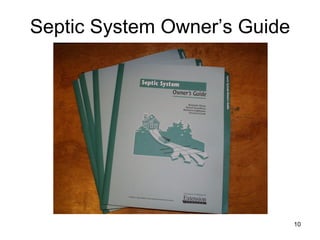
Septic System Owner’s Guide
Iowa Rules & Septic Systems Iowa Administrative Code (IAC) 567, Chapters 68 and 69 Undergoing an update local boards of health have primary responsibility for regulation of sewer systems serving less than 15 people, DNR larger systems  Counties have right to be more restrictive
Why Are We Here? To learn how a septic system works To potentially save  you  money by following some simple  practices Protect human health and environment
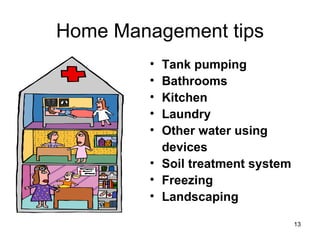
Home Management tips Tank pumping Bathrooms Kitchen Laundry Other water using  devices Soil treatment system Freezing Landscaping
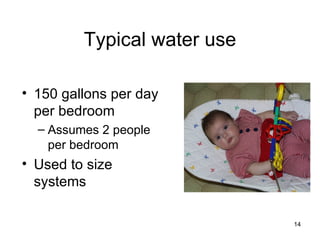
Typical water use 150 gallons per day per bedroom Assumes 2 people per bedroom Used to size systems
Definitions Pathogens: Disease-causing organisms, such as viruses, protozoa, and bacteria. Often measured as fecal coliform bacteria  Aerobic: Life that requires the presence of oxygen Anaerobic: Life that  does   not  require the presence of oxygen Retention time: the amount of time sewage spends in the septic tank
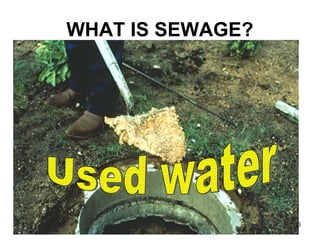
WHAT IS SEWAGE? Used water
What do we add to the water? Pathogens Virus, Bacteria (Human health)  Nutrients Phosphorus (Environment; weed & algal growth) Nitrogen (Blue Baby Syndrome, environment) Micro-nutrients (Human health and the environment)  Solids  –  Organic (biological oxygen demand (BOD) and its impact on the environment)  Inorganics  Chemicals   Cleaners Water treatment Medications
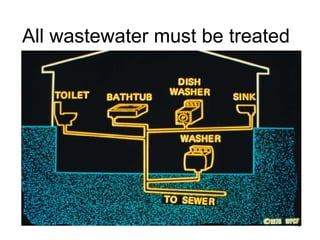
All wastewater must be treated
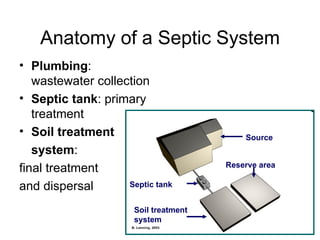
Anatomy of a Septic System Plumbing : wastewater collection Septic tank : primary treatment Soil treatment  system :  final treatment and dispersal Source Septic tank Soil treatment system Reserve area
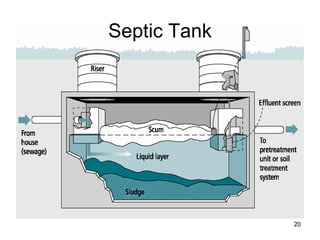
Septic Tank
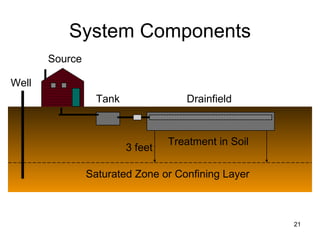
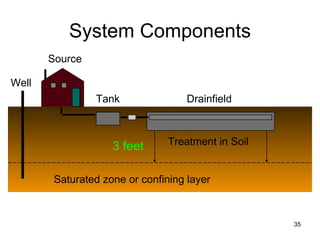
System Components Source Tank Drainfield Treatment in Soil Saturated Zone or Confining Layer Well 3 feet
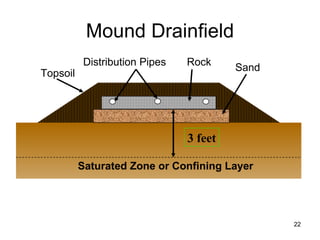
Mound Drainfield Saturated Zone or Confining Layer Distribution Pipes  Rock Topsoil Sand 3 feet
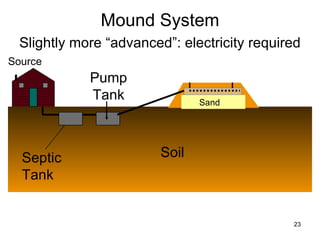
Mound System Slightly more “advanced”: electricity required   Source Septic Tank Soil Pump Tank Sand
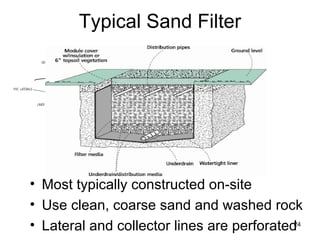
Typical Sand Filter Most typically constructed on-site Use clean, coarse sand and washed rock Lateral and collector lines are perforated
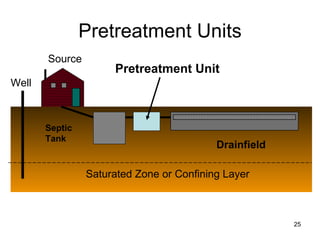
Pretreatment Units Source Drainfield Saturated Zone or Confining Layer Well Septic Tank Pretreatment Unit
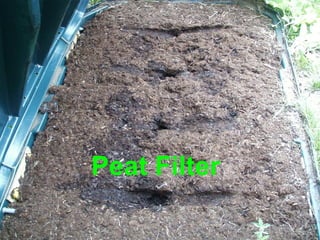
Peat Filter Peat Filter
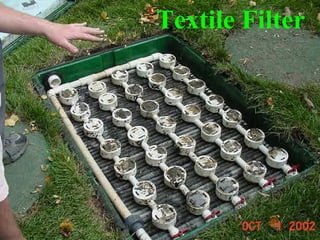
Textile Filter
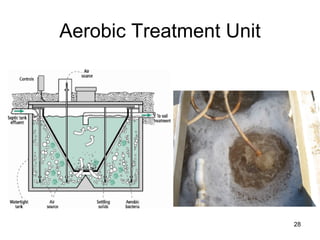
Aerobic Treatment Unit
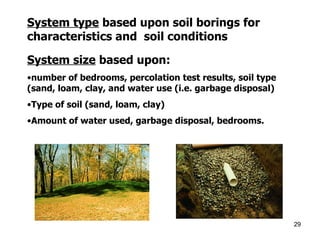
System type  based upon soil borings for characteristics and  soil conditions System size  based upon: number of bedrooms, percolation test results, soil type (sand, loam, clay, and water use (i.e. garbage disposal) Type of soil (sand, loam, clay) Amount of water used, garbage disposal, bedrooms.
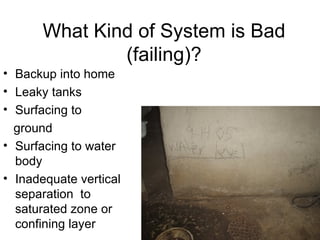
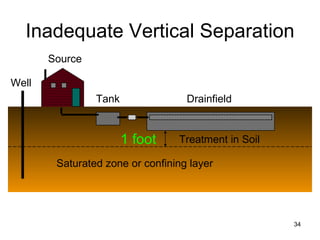
What Kind of System is Bad (failing)? Backup into home Leaky tanks Surfacing to ground Surfacing to water body Inadequate vertical separation  to saturated zone or confining layer
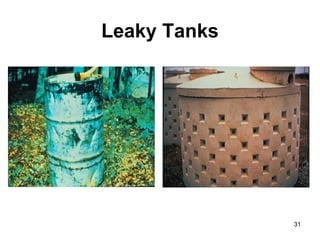
Leaky Tanks
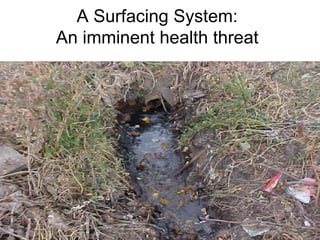
A Surfacing System: An imminent health threat
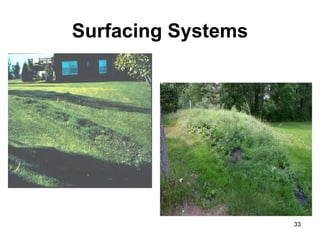
Surfacing Systems
Inadequate Vertical Separation Source Tank Drainfield Treatment in Soil Saturated zone or confining layer Well 1 foot
System Components Source Tank Drainfield Treatment in Soil Saturated zone or confining layer Well 3   feet
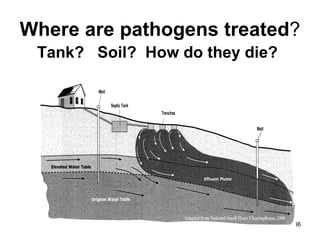
Where are pathogens treated ? Tank?  Soil?  How do they die?
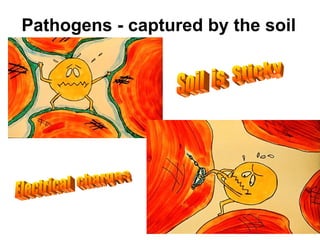
Pathogens - captured by the soil Soil  is  Sticky Electrical  charges
Aerobic  Soil  bacteria  snacks! Held  long  enough  to  starve!
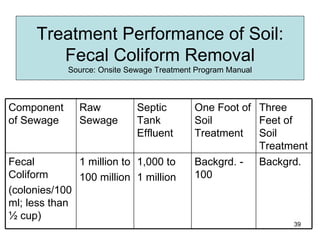
Treatment Performance of Soil: Fecal Coliform Removal Source: Onsite Sewage Treatment Program Manual Backgrd. Backgrd. - 100 1,000 to  1 million 1 million to  100 million Fecal Coliform (colonies/100ml; less than ½ cup) Three Feet of Soil Treatment One Foot of Soil Treatment Septic Tank Effluent Raw Sewage Component of Sewage
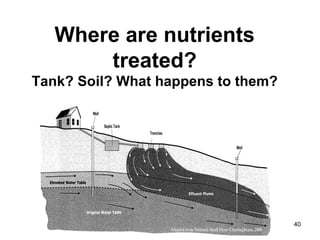
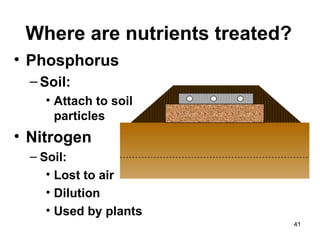
Where are nutrients treated? Tank? Soil? What happens to them?
Where are nutrients treated? Phosphorus Soil:  Attach to soil particles Nitrogen Soil:  Lost to air Dilution Used by plants
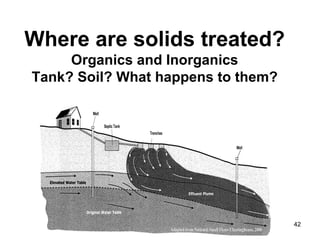
Where are solids treated? Organics and Inorganics Tank? Soil? What happens to them?
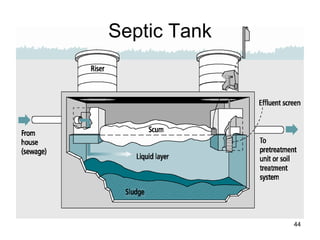
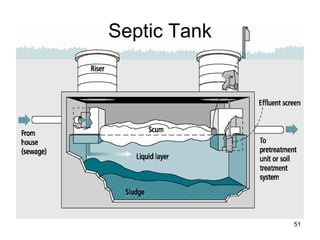
Septic Tank: Primary Treatment Job of tank: catch the solids Decompose organic solids Store inorganic solids Layers in tank Scum layer: floating soap, grease, toilet paper, etc Liquid layer:  water, liquid, and suspended solids Sludge:  heavy organic and inorganic materials in the bottom of the tank Anaerobic   bacteria  breakdown organic solids
Septic Tank
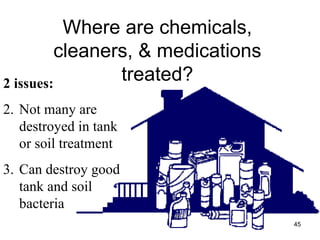
Where are chemicals, cleaners, & medications treated? 2 issues: Not many are destroyed in tank or soil treatment Can destroy good tank and soil bacteria
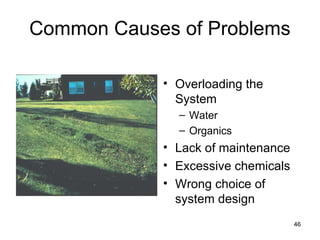
Common Causes of Problems Overloading the System Water Organics Lack of maintenance Excessive chemicals Wrong choice of system design
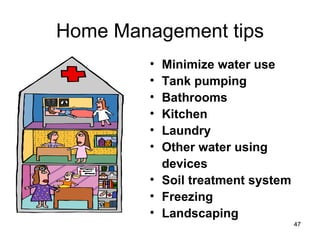
Home Management tips Minimize water use Tank pumping Bathrooms Kitchen Laundry Other water using  devices Soil treatment system Freezing Landscaping
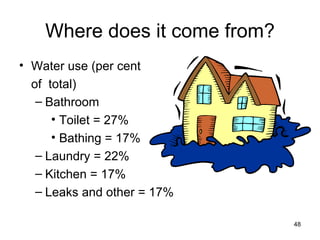
Where does it come from? Water use (per cent  of  total) Bathroom  Toilet = 27% Bathing = 17% Laundry = 22%  Kitchen = 17% Leaks and other = 17%
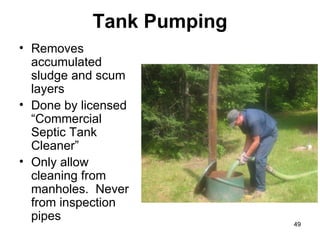
Tank Pumping Removes accumulated sludge and scum layers Done by licensed “Commercial Septic Tank Cleaner” Only allow cleaning from manholes.  Never from inspection pipes
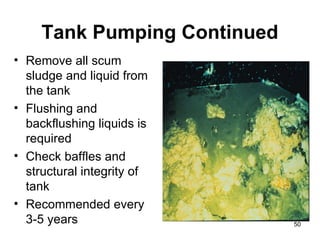
Tank Pumping Continued Remove all scum sludge and liquid from the tank Flushing and backflushing liquids is required Check baffles and structural integrity of tank Recommended every 3-5 years
Septic Tank
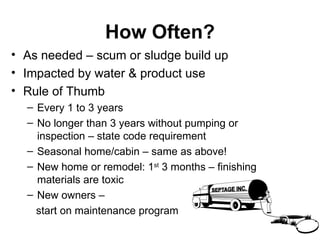
How Often? As needed – scum or sludge build up Impacted by water & product use Rule of Thumb Every 1 to 3 years No longer than 3 years without pumping or inspection – state code requirement  Seasonal home/cabin – same as above! New home or remodel: 1 st  3 months – finishing materials are toxic New owners – start on maintenance program
Additives:  Not needed!! Starters  - Bacteria are abundant in existing wastewater Feeders  – Wastewater contains a lot of food for bacteria Cleaners  –  Unnecessary and potentially hazardous Never  add these products to your system!  They can actually damage your soil treatment system.
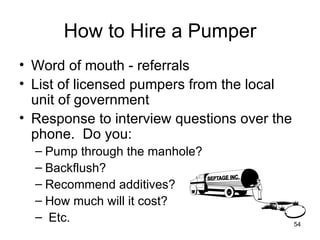
How to Hire a Pumper Word of mouth - referrals List of licensed pumpers from the local unit of government Response to interview questions over the phone.  Do you: Pump through the manhole? Backflush?  Recommend additives?  How much will it cost? Etc.
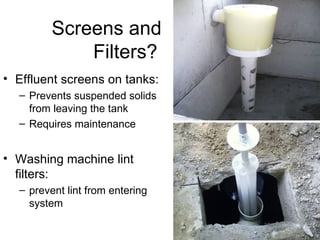
Screens and  Filters? Effluent screens on tanks: Prevents suspended solids from leaving the tank Requires maintenance Washing machine lint filters: prevent lint from entering system
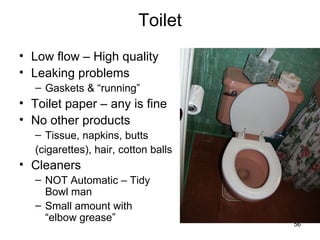
Toilet Low flow – High quality Leaking problems Gaskets & “running” Toilet paper – any is fine No other products Tissue, napkins, butts (cigarettes), hair, cotton balls Cleaners NOT Automatic – Tidy Bowl man Small amount with  “elbow grease”
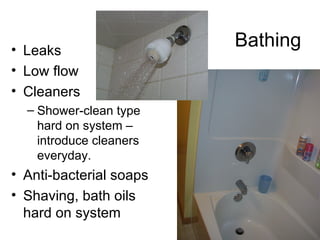
Bathing Leaks Low flow Cleaners Shower-clean type hard on system – introduce cleaners everyday. Anti-bacterial soaps Shaving, bath oils hard on system
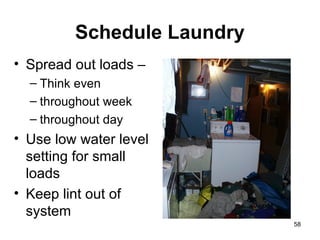
Schedule Laundry Spread out loads – Think even throughout week throughout day Use low water level setting for small loads Keep lint out of system
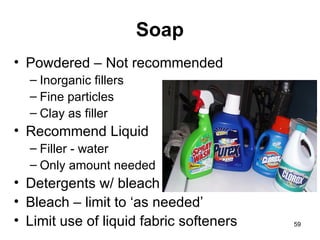
Soap Powdered – Not recommended Inorganic fillers Fine particles  Clay as filler Recommend Liquid Filler - water Only amount needed Detergents w/ bleach Bleach – limit to ‘as needed’ Limit use of liquid fabric softeners
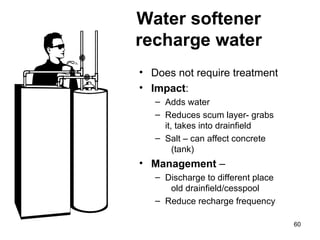
Water softener recharge water Does not require treatment Impact : Adds water Reduces scum layer- grabs it, takes into drainfield Salt – can affect concrete  (tank) Management  – Discharge to different place  old drainfield/cesspool Reduce recharge frequency
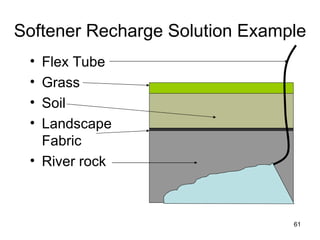
Softener Recharge Solution Example Flex Tube Grass Soil Landscape Fabric River rock
Other Sources of Water That Can Overload a System (and  don’t  need treatment) Sump pump/tile line discharge Lead or other water filters Dehumidifier discharge High efficiency furnace discharge Eves trough runoff Dripping faucets/”running toilets” Any other sources?
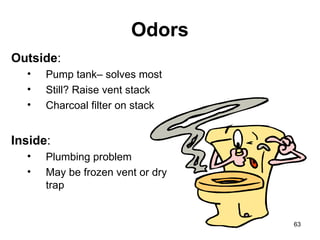
Odors Outside : Pump tank– solves most Still? Raise vent stack Charcoal filter on stack Inside : Plumbing problem May be frozen vent or dry trap
Continual  traffic  is  a  problem
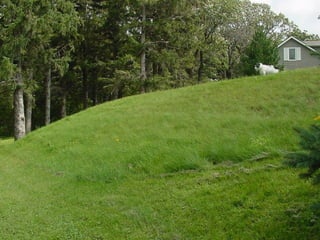
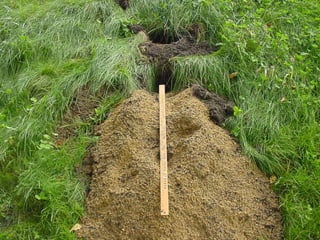
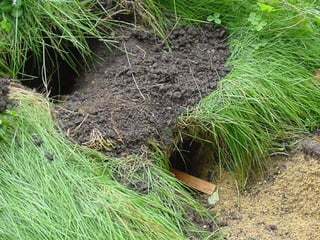
Soil Treatment System Maintenance Compaction is BAD – keep traffic off system Establish vegetative cover - Grass, mow regularly, no fertilizer, no deep rooted plants near system. Watch for gophers! Inspection pipes can be cut to ground level after finished grade is established
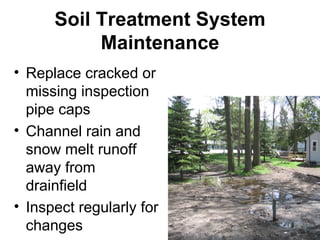
Soil Treatment System Maintenance Replace cracked or missing inspection pipe caps Channel rain and snow melt runoff away from drainfield Inspect regularly for changes


Freezing of Septic Systems Causes of Freezing  – lack of cover, compaction, irregular system use, leaking plumbing, cold air into system, poor drainage Remedies  – figure out why and where; fix the problem (or use tank as a holding tank) Prevention  – Let your grass grow, mulch (or styrofoam), use  extra  warm water, fix leaks
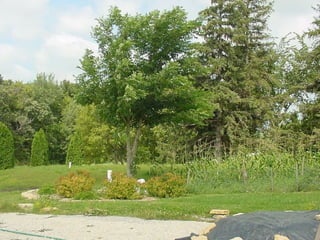
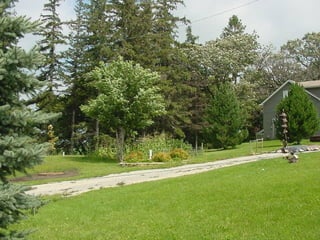
Landscaping
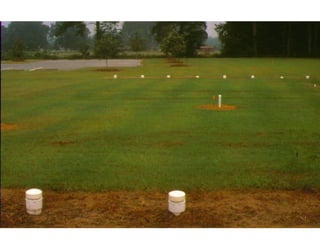
Photo:  Look for greener stripes
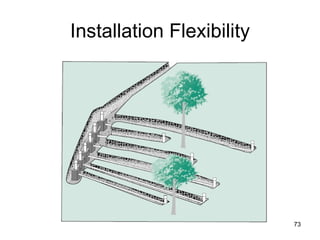
Installation Flexibility
 
 
Questions? http://septic. umn.edu  (no www in front) “Info for Homeowners” or “Publications” (on right side of page)
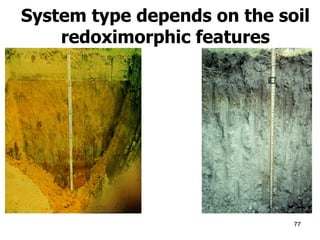
System type depends on the soil redoximorphic features

HOME Iowa / Operation and Maintenance of Septic Systems: Protect Your Investment

  • 1.
    Operation and Maintenanceof Septic Systems: Protect Your Investment
  • 2.
    Please turn offor silence your cell phone Thanks!
  • 3.
    Operation and Maintenanceof Septic Systems: Protect Your Investment http://septic.umn.edu Sara Christopherson State Extension Specialist Onsite Sewage Treatment Program 612-625-7243 [email_address] Doug Malchow Extension Educator OnSite Sewage Treatment Program 507-280-5575 [email_address]
  • 4.
    Operation and Maintenanceof Septic Systems: Protect Your Investment Doug Malchow Extension Educator On-Site Sewage Treatment Program 507-280-5575 [email_address] http://septic.umn.edu (no www in front) Click on “Homeowner Information”
  • 5.
    Professional Training –Designers, Inspectors, Pumpers, Installers Research and Demonstration Homeowner Operation & Maintenance Small Community Wastewater Solutions
  • 6.
    Why Are WeHere? Learn how to use the Homeowner Operation and Maintenance Education (HOME) curriculum Discuss “good” teaching methods Discuss various venues to use HOME Practice and discuss HOME curriculum
  • 7.
    These materials weredeveloped by the Onsite Sewage Treatment Program at the University of Minnesota and are the collective effort of numerous individuals. © 2007, Regents of the University of Minnesota. All rights reserved.
  • 8.
    Before Session Knowmaterial Know location of venue Know venue Arrive early Prepare emergency kit – white sheet, extension cords, duct tape, tacks, etc. Sign-in sheet? Utilize observer the first few times you present Don’t assume projector works
  • 9.
    Beginning session Turndown lights to direct attention to screen- Can you hear me? Thank sponsors, restroom location, refreshments? Use slides as prompts for topics – introduction, topics, restrooms, cell phones Turn up lights so attendees can take notes Address questions throughout presentation Slow down, it gives attendees chance to think bout what you are saying, avoid ahhs Use humor
  • 10.
  • 11.
    Iowa Rules &Septic Systems Iowa Administrative Code (IAC) 567, Chapters 68 and 69 Undergoing an update local boards of health have primary responsibility for regulation of sewer systems serving less than 15 people, DNR larger systems Counties have right to be more restrictive
  • 12.
    Why Are WeHere? To learn how a septic system works To potentially save you money by following some simple practices Protect human health and environment
  • 13.
    Home Management tipsTank pumping Bathrooms Kitchen Laundry Other water using devices Soil treatment system Freezing Landscaping
  • 14.
    Typical water use150 gallons per day per bedroom Assumes 2 people per bedroom Used to size systems
  • 15.
    Definitions Pathogens: Disease-causingorganisms, such as viruses, protozoa, and bacteria. Often measured as fecal coliform bacteria Aerobic: Life that requires the presence of oxygen Anaerobic: Life that does not require the presence of oxygen Retention time: the amount of time sewage spends in the septic tank
  • 16.
    WHAT IS SEWAGE?Used water
  • 17.
    What do weadd to the water? Pathogens Virus, Bacteria (Human health) Nutrients Phosphorus (Environment; weed & algal growth) Nitrogen (Blue Baby Syndrome, environment) Micro-nutrients (Human health and the environment) Solids – Organic (biological oxygen demand (BOD) and its impact on the environment) Inorganics Chemicals Cleaners Water treatment Medications
  • 18.
  • 19.
    Anatomy of aSeptic System Plumbing : wastewater collection Septic tank : primary treatment Soil treatment system : final treatment and dispersal Source Septic tank Soil treatment system Reserve area
  • 20.
  • 21.
    System Components SourceTank Drainfield Treatment in Soil Saturated Zone or Confining Layer Well 3 feet
  • 22.
    Mound Drainfield SaturatedZone or Confining Layer Distribution Pipes Rock Topsoil Sand 3 feet
  • 23.
    Mound System Slightlymore “advanced”: electricity required Source Septic Tank Soil Pump Tank Sand
  • 24.
    Typical Sand FilterMost typically constructed on-site Use clean, coarse sand and washed rock Lateral and collector lines are perforated
  • 25.
    Pretreatment Units SourceDrainfield Saturated Zone or Confining Layer Well Septic Tank Pretreatment Unit
  • 26.
  • 27.
  • 28.
  • 29.
    System type based upon soil borings for characteristics and soil conditions System size based upon: number of bedrooms, percolation test results, soil type (sand, loam, clay, and water use (i.e. garbage disposal) Type of soil (sand, loam, clay) Amount of water used, garbage disposal, bedrooms.
  • 30.
    What Kind ofSystem is Bad (failing)? Backup into home Leaky tanks Surfacing to ground Surfacing to water body Inadequate vertical separation to saturated zone or confining layer
  • 31.
  • 32.
    A Surfacing System:An imminent health threat
  • 33.
  • 34.
    Inadequate Vertical SeparationSource Tank Drainfield Treatment in Soil Saturated zone or confining layer Well 1 foot
  • 35.
    System Components SourceTank Drainfield Treatment in Soil Saturated zone or confining layer Well 3 feet
  • 36.
    Where are pathogenstreated ? Tank? Soil? How do they die?
  • 37.
    Pathogens - capturedby the soil Soil is Sticky Electrical charges
  • 38.
    Aerobic Soil bacteria snacks! Held long enough to starve!
  • 39.
    Treatment Performance ofSoil: Fecal Coliform Removal Source: Onsite Sewage Treatment Program Manual Backgrd. Backgrd. - 100 1,000 to 1 million 1 million to 100 million Fecal Coliform (colonies/100ml; less than ½ cup) Three Feet of Soil Treatment One Foot of Soil Treatment Septic Tank Effluent Raw Sewage Component of Sewage
  • 40.
    Where are nutrientstreated? Tank? Soil? What happens to them?
  • 41.
    Where are nutrientstreated? Phosphorus Soil: Attach to soil particles Nitrogen Soil: Lost to air Dilution Used by plants
  • 42.
    Where are solidstreated? Organics and Inorganics Tank? Soil? What happens to them?
  • 43.
    Septic Tank: PrimaryTreatment Job of tank: catch the solids Decompose organic solids Store inorganic solids Layers in tank Scum layer: floating soap, grease, toilet paper, etc Liquid layer: water, liquid, and suspended solids Sludge: heavy organic and inorganic materials in the bottom of the tank Anaerobic bacteria breakdown organic solids
  • 44.
  • 45.
    Where are chemicals,cleaners, & medications treated? 2 issues: Not many are destroyed in tank or soil treatment Can destroy good tank and soil bacteria
  • 46.
    Common Causes ofProblems Overloading the System Water Organics Lack of maintenance Excessive chemicals Wrong choice of system design
  • 47.
    Home Management tipsMinimize water use Tank pumping Bathrooms Kitchen Laundry Other water using devices Soil treatment system Freezing Landscaping
  • 48.
    Where does itcome from? Water use (per cent of total) Bathroom Toilet = 27% Bathing = 17% Laundry = 22% Kitchen = 17% Leaks and other = 17%
  • 49.
    Tank Pumping Removesaccumulated sludge and scum layers Done by licensed “Commercial Septic Tank Cleaner” Only allow cleaning from manholes. Never from inspection pipes
  • 50.
    Tank Pumping ContinuedRemove all scum sludge and liquid from the tank Flushing and backflushing liquids is required Check baffles and structural integrity of tank Recommended every 3-5 years
  • 51.
  • 52.
    How Often? Asneeded – scum or sludge build up Impacted by water & product use Rule of Thumb Every 1 to 3 years No longer than 3 years without pumping or inspection – state code requirement Seasonal home/cabin – same as above! New home or remodel: 1 st 3 months – finishing materials are toxic New owners – start on maintenance program
  • 53.
    Additives: Notneeded!! Starters - Bacteria are abundant in existing wastewater Feeders – Wastewater contains a lot of food for bacteria Cleaners – Unnecessary and potentially hazardous Never add these products to your system! They can actually damage your soil treatment system.
  • 54.
    How to Hirea Pumper Word of mouth - referrals List of licensed pumpers from the local unit of government Response to interview questions over the phone. Do you: Pump through the manhole? Backflush? Recommend additives? How much will it cost? Etc.
  • 55.
    Screens and Filters? Effluent screens on tanks: Prevents suspended solids from leaving the tank Requires maintenance Washing machine lint filters: prevent lint from entering system
  • 56.
    Toilet Low flow– High quality Leaking problems Gaskets & “running” Toilet paper – any is fine No other products Tissue, napkins, butts (cigarettes), hair, cotton balls Cleaners NOT Automatic – Tidy Bowl man Small amount with “elbow grease”
  • 57.
    Bathing Leaks Lowflow Cleaners Shower-clean type hard on system – introduce cleaners everyday. Anti-bacterial soaps Shaving, bath oils hard on system
  • 58.
    Schedule Laundry Spreadout loads – Think even throughout week throughout day Use low water level setting for small loads Keep lint out of system
  • 59.
    Soap Powdered –Not recommended Inorganic fillers Fine particles Clay as filler Recommend Liquid Filler - water Only amount needed Detergents w/ bleach Bleach – limit to ‘as needed’ Limit use of liquid fabric softeners
  • 60.
    Water softener rechargewater Does not require treatment Impact : Adds water Reduces scum layer- grabs it, takes into drainfield Salt – can affect concrete (tank) Management – Discharge to different place old drainfield/cesspool Reduce recharge frequency
  • 61.
    Softener Recharge SolutionExample Flex Tube Grass Soil Landscape Fabric River rock
  • 62.
    Other Sources ofWater That Can Overload a System (and don’t need treatment) Sump pump/tile line discharge Lead or other water filters Dehumidifier discharge High efficiency furnace discharge Eves trough runoff Dripping faucets/”running toilets” Any other sources?
  • 63.
    Odors Outside :Pump tank– solves most Still? Raise vent stack Charcoal filter on stack Inside : Plumbing problem May be frozen vent or dry trap
  • 64.
    Continual traffic is a problem
  • 65.
    Soil Treatment SystemMaintenance Compaction is BAD – keep traffic off system Establish vegetative cover - Grass, mow regularly, no fertilizer, no deep rooted plants near system. Watch for gophers! Inspection pipes can be cut to ground level after finished grade is established
  • 66.
    Soil Treatment SystemMaintenance Replace cracked or missing inspection pipe caps Channel rain and snow melt runoff away from drainfield Inspect regularly for changes
  • 67.
  • 68.
  • 69.
  • 70.
    Freezing of SepticSystems Causes of Freezing – lack of cover, compaction, irregular system use, leaking plumbing, cold air into system, poor drainage Remedies – figure out why and where; fix the problem (or use tank as a holding tank) Prevention – Let your grass grow, mulch (or styrofoam), use extra warm water, fix leaks
  • 71.
  • 72.
    Photo: Lookfor greener stripes
  • 73.
  • 74.
  • 75.
  • 76.
    Questions? http://septic. umn.edu (no www in front) “Info for Homeowners” or “Publications” (on right side of page)
  • 77.
    System type dependson the soil redoximorphic features

Editor's Notes

  • #2 Slide to have on the screen when attendees enter the room.