Downloaded 105 times
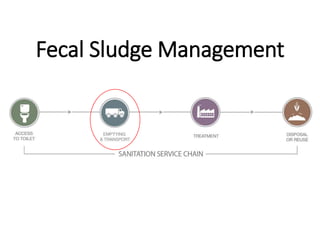


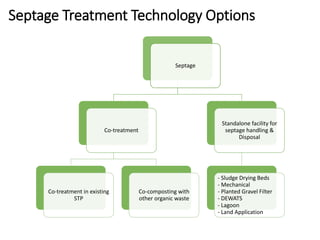


Fecal sludge management involves emptying and transporting septic tank waste. Several countries practice scheduled desludging funded by sanitation taxes. Tariffs in the Philippines, Vietnam, and Indonesia recover operation and maintenance costs within 8 years. Fecal sludge can be used to generate biogas, biochar, and nutrients for soil and fodder. It can also be co-composted with municipal solid waste to produce compost for sale. Septage can be co-treated in existing wastewater treatment plants or via dedicated treatment such as drying beds, mechanical treatment, or lagoons. Case studies show cost recovery from fecal sludge collection and compost sales can offset user charges for emptying


