1
A new trend?


               2
A new trend? Online > .com


                     3
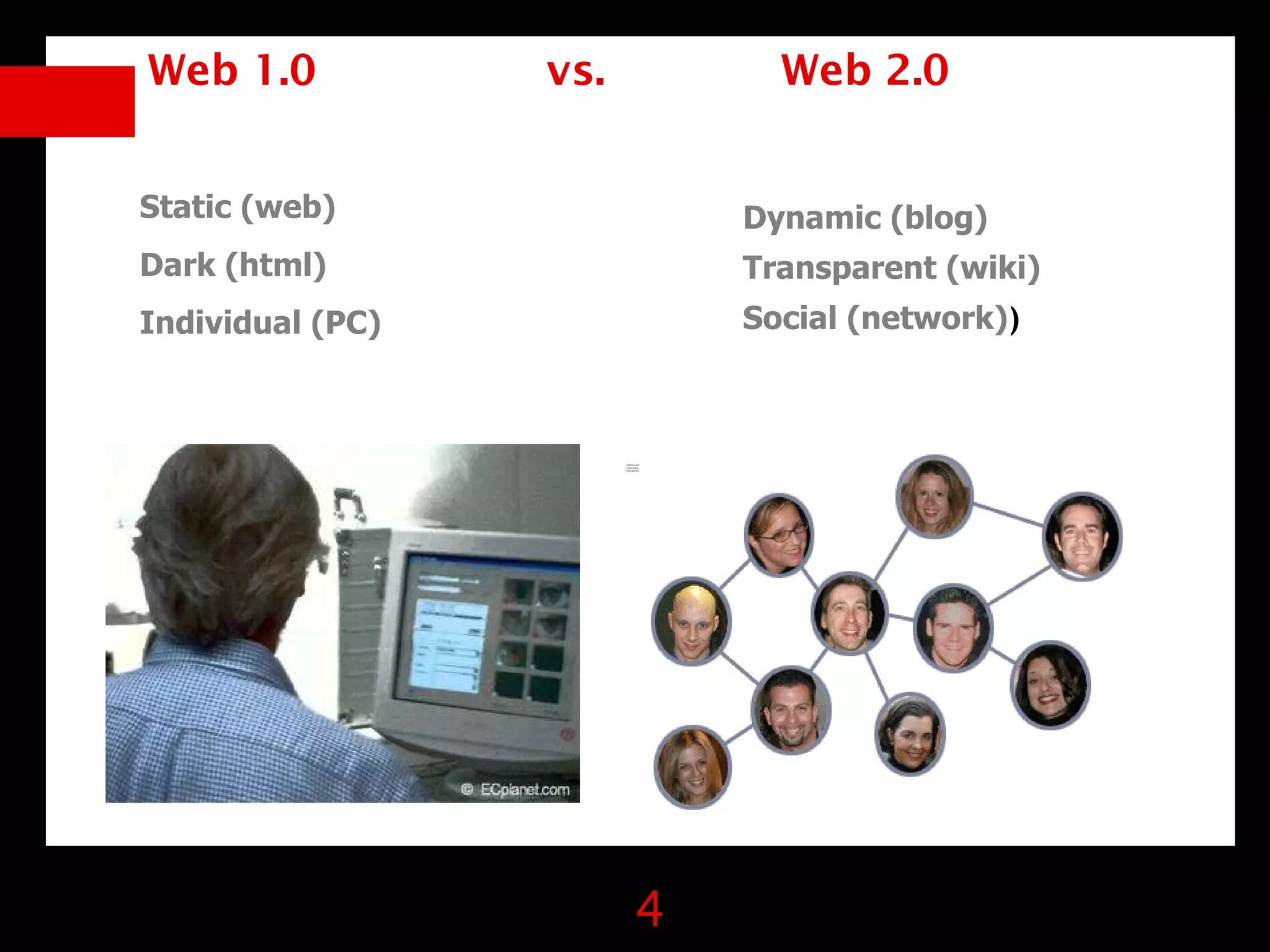
Web 1.0           vs.                         Web 2.0


Static (web)                                Dynamic (blog)
Dark (html)                                 Transparent (wiki)
Individual (PC)                             Social (network))


                        • Estática (web)
                        • Oscura (html)
                        • Individual (PC)


                                   4
Some changes on the Internet


•Fast connections: xDSL, UMTS
•New technologies: Ajax, HTML5, API...
•New standards: XML, Soap, OpenSocial...
•New services: wikis, blogs, networks...
•Open source: cheap and available
•More women: more e-commerce + more social
•Geolocation + mobility: iPhone, Android,
  Blackberry


                     5
Some concepts from O’Reilly


•The Web as a platform
•Collective intelligence
•Data bases as barriers to competition
•The end of phased development (permanent
 beta)
•Agile software development
•Software as a platform (SaaS) + cloud computing


                      6
Getting value out of data


                      7
The Cluetrain Manifesto
(1999)
•Markets are
conversations
• Hyperlinks subvert
hierarchy
• Organizations are
networks


                       8
The Cluetrain Manifesto and WikiLeaks


•#7: Hyperlinks subvert
hierarchy
•  #12: There are no
secrets
•  #41: Companies make
a religion of security, but
this is largely a red herring


                            9
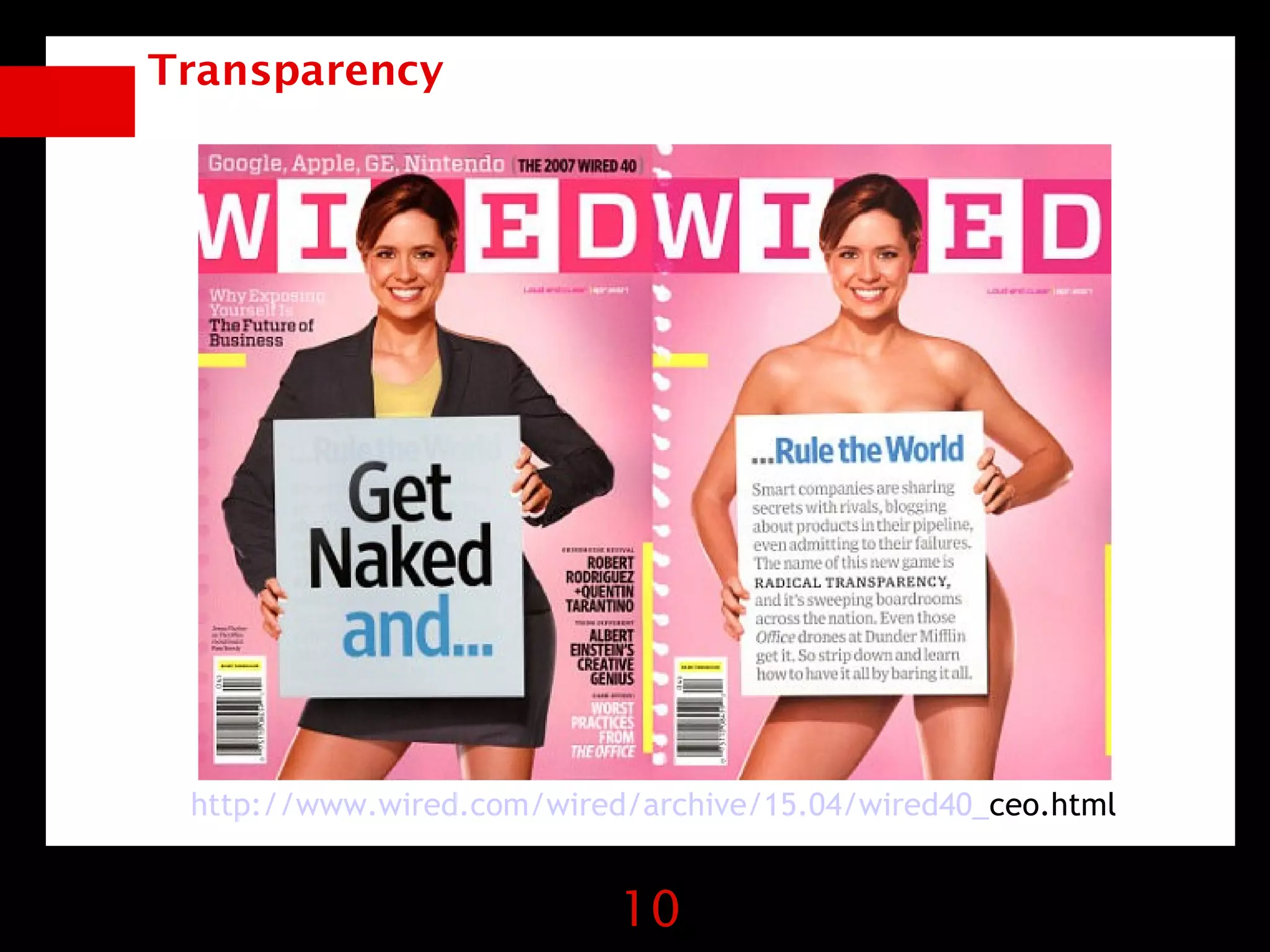
Transparency


 http://www.wired.com/wired/archive/15.04/wired40_ceo.html


                           10
You as a media


•You create content
•You socialize
•You choose/vote
•You recommend
•You filter
•You share


                      11
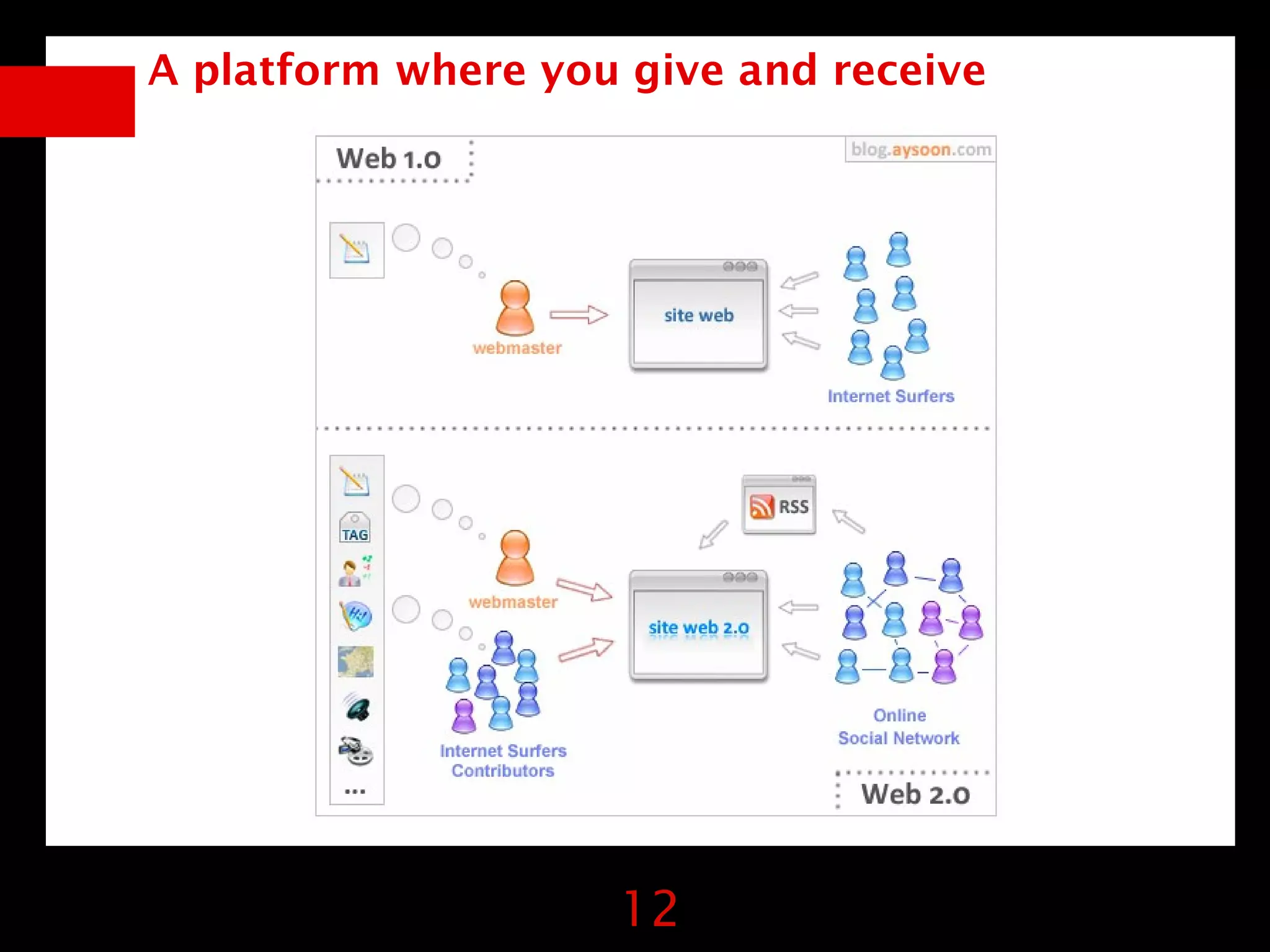
A platform where you give and receive


                    12
What’s happening


                   13
Social networks surpassing search engines?


                    14
Social professional networks bigger than
business newspapers


                     15
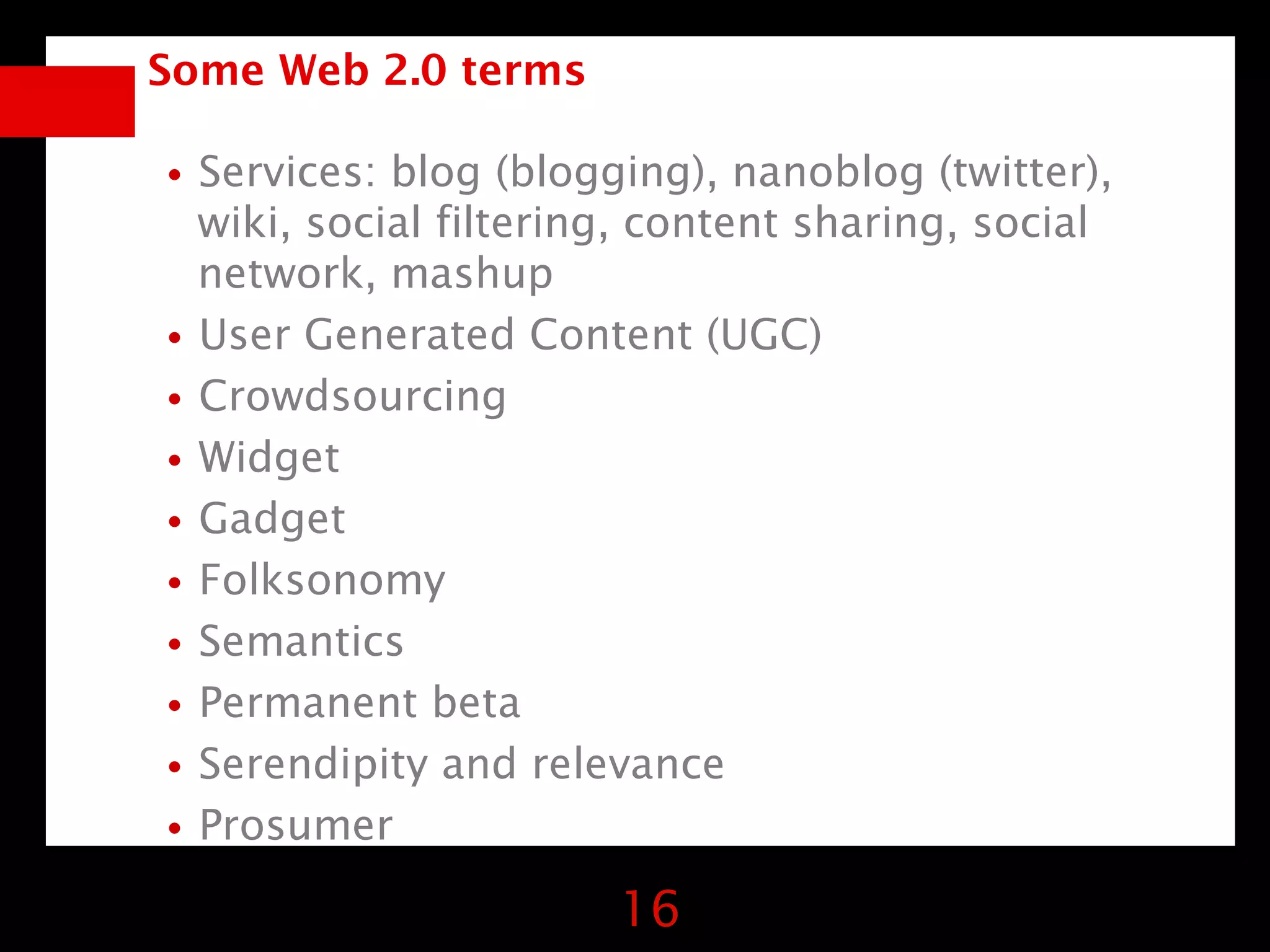
Some Web 2.0 terms

•Services: blog (blogging), nanoblog (twitter),
  wiki, social filtering, content sharing, social
  network, mashup
• User Generated Content (UGC)
• Crowdsourcing
• Widget
• Gadget
• Folksonomy
• Semantics
• Permanent beta
• Serendipity and relevance
• Prosumer

                        16
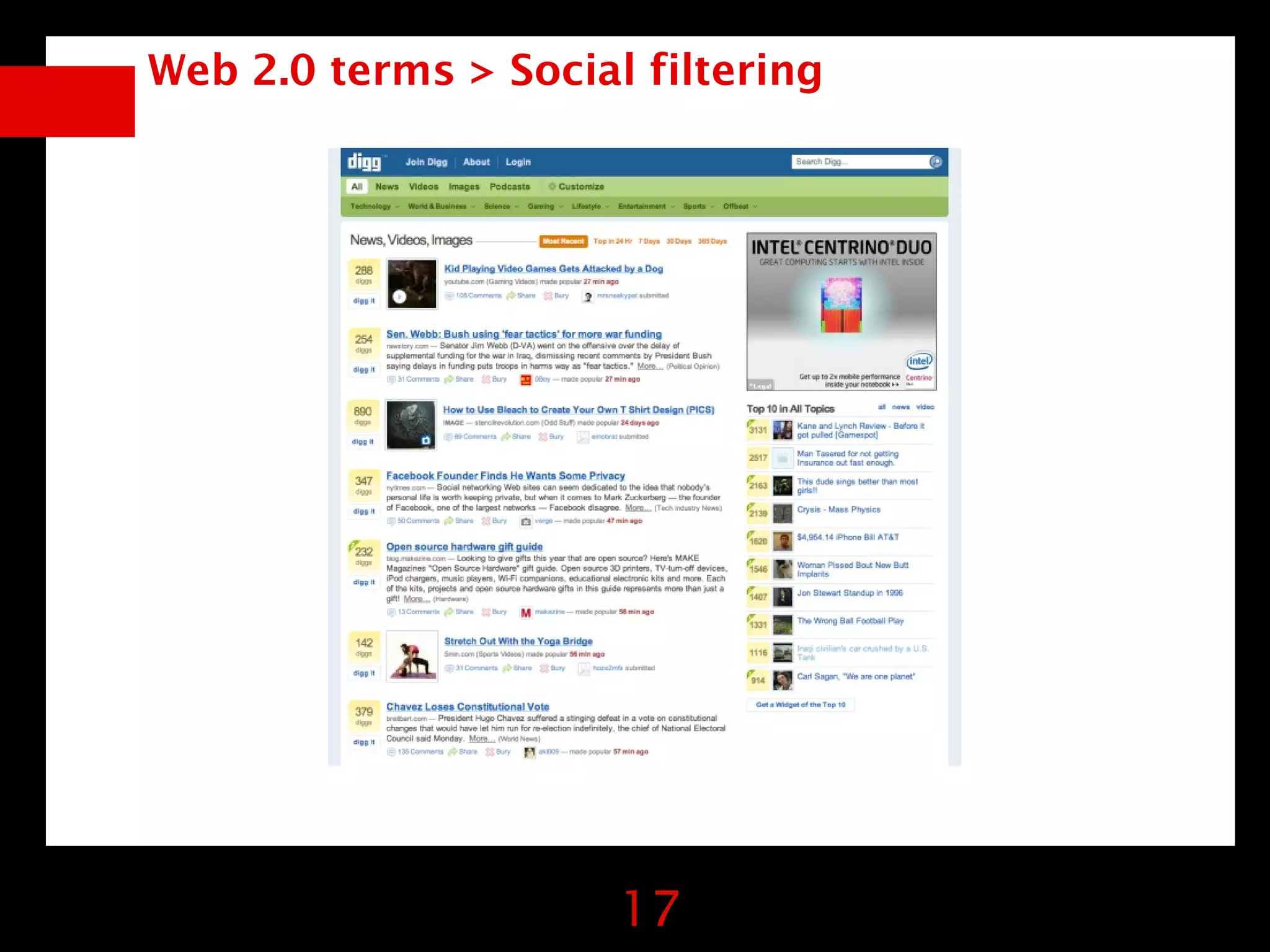
Web 2.0 terms > Social filtering


                      17
Web 2.0 terms > Mashup


                   18
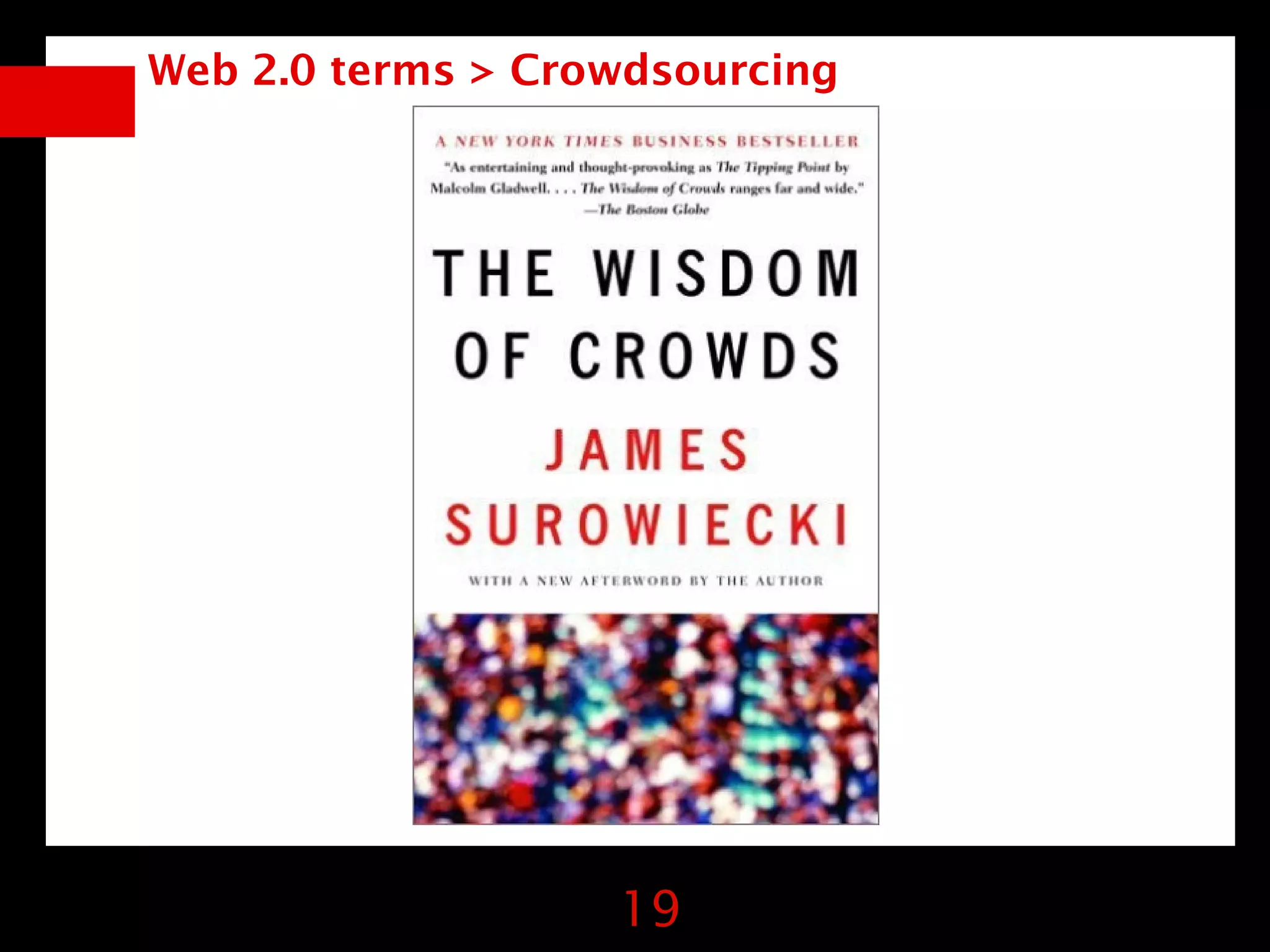
Web 2.0 terms > Crowdsourcing


                   19
Web 2.0 terms > Crowdsourcing


                   20
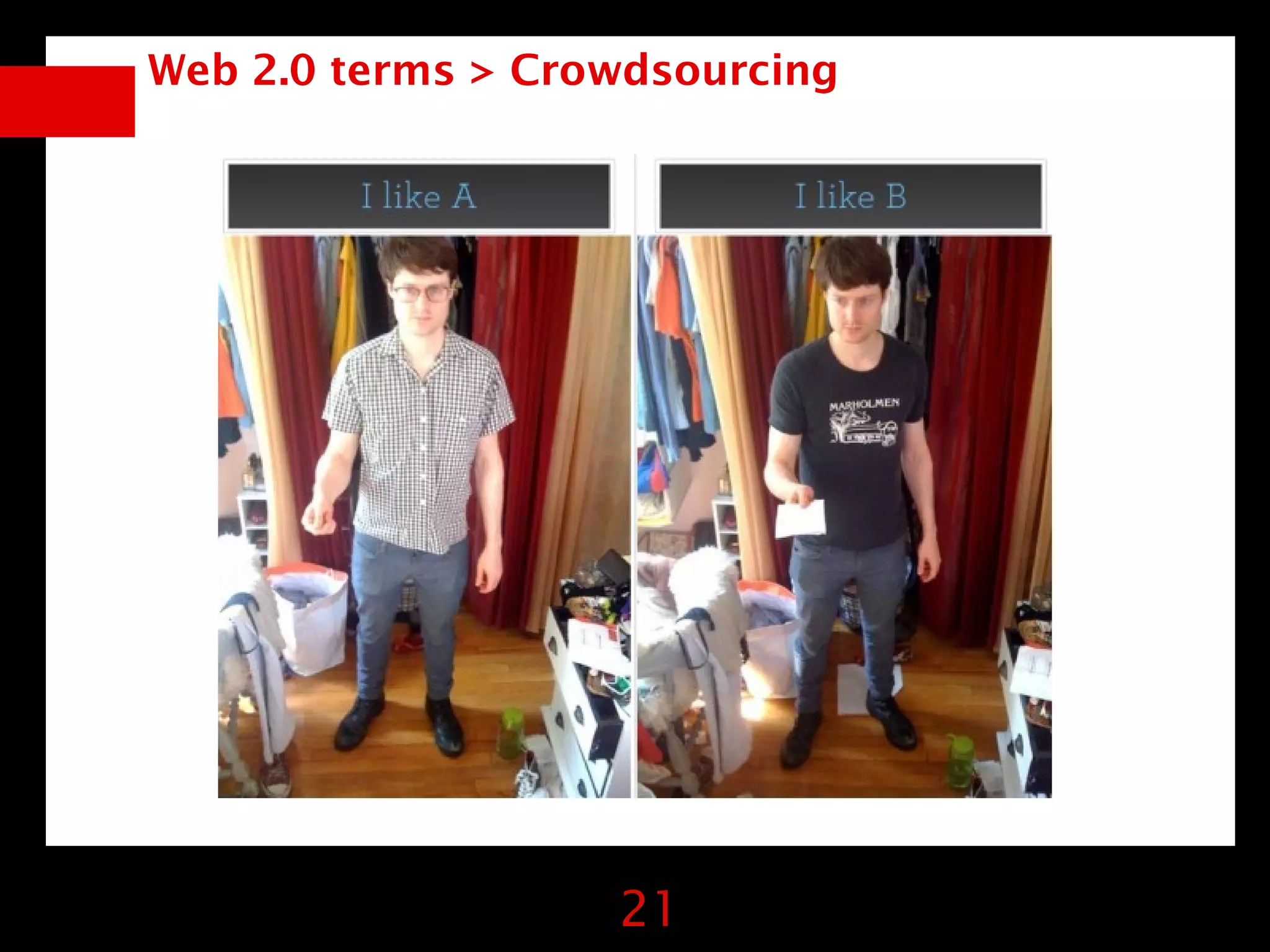
Web 2.0 terms > Crowdsourcing


                   21
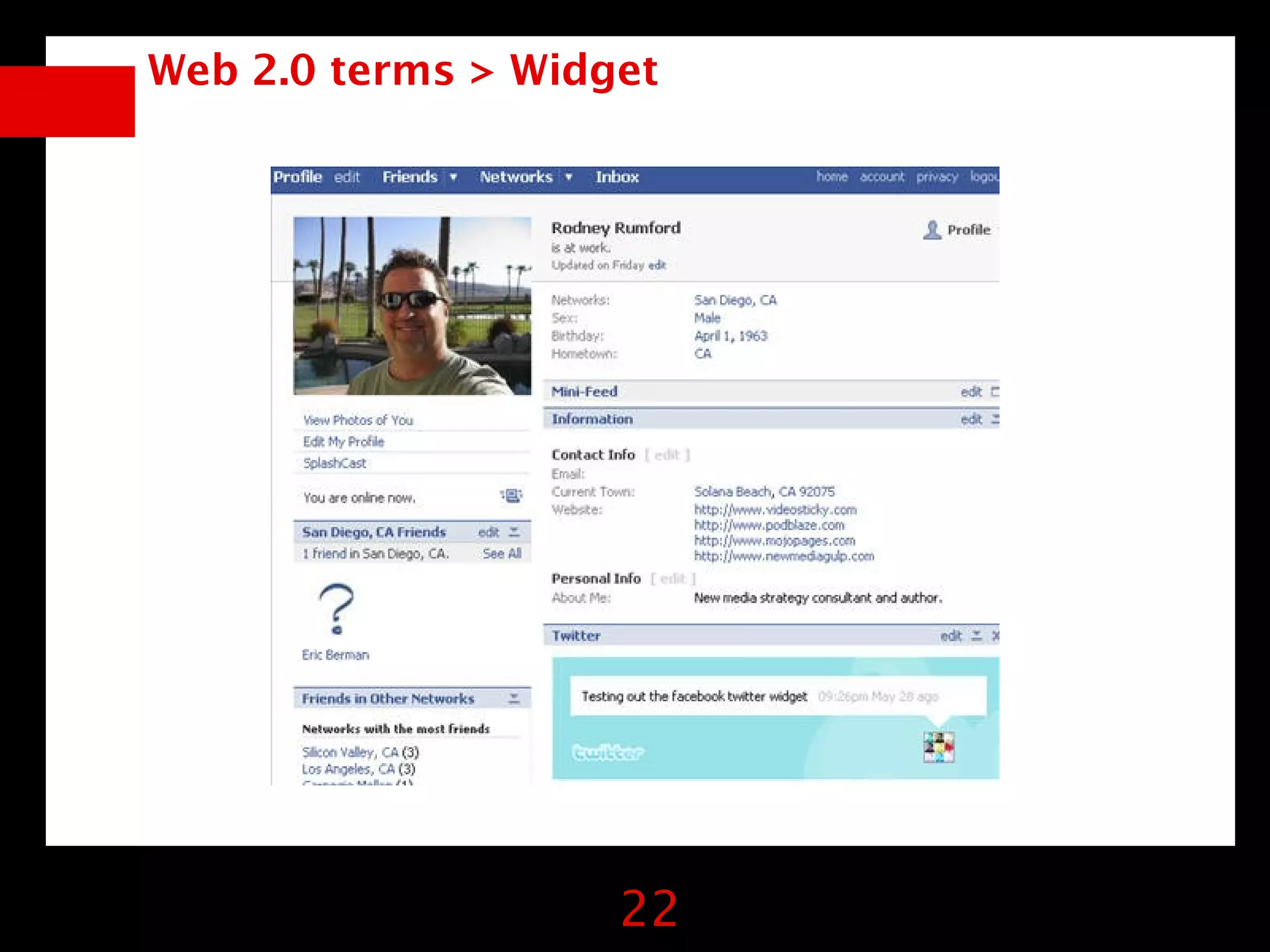
Web 2.0 terms > Widget


                    22
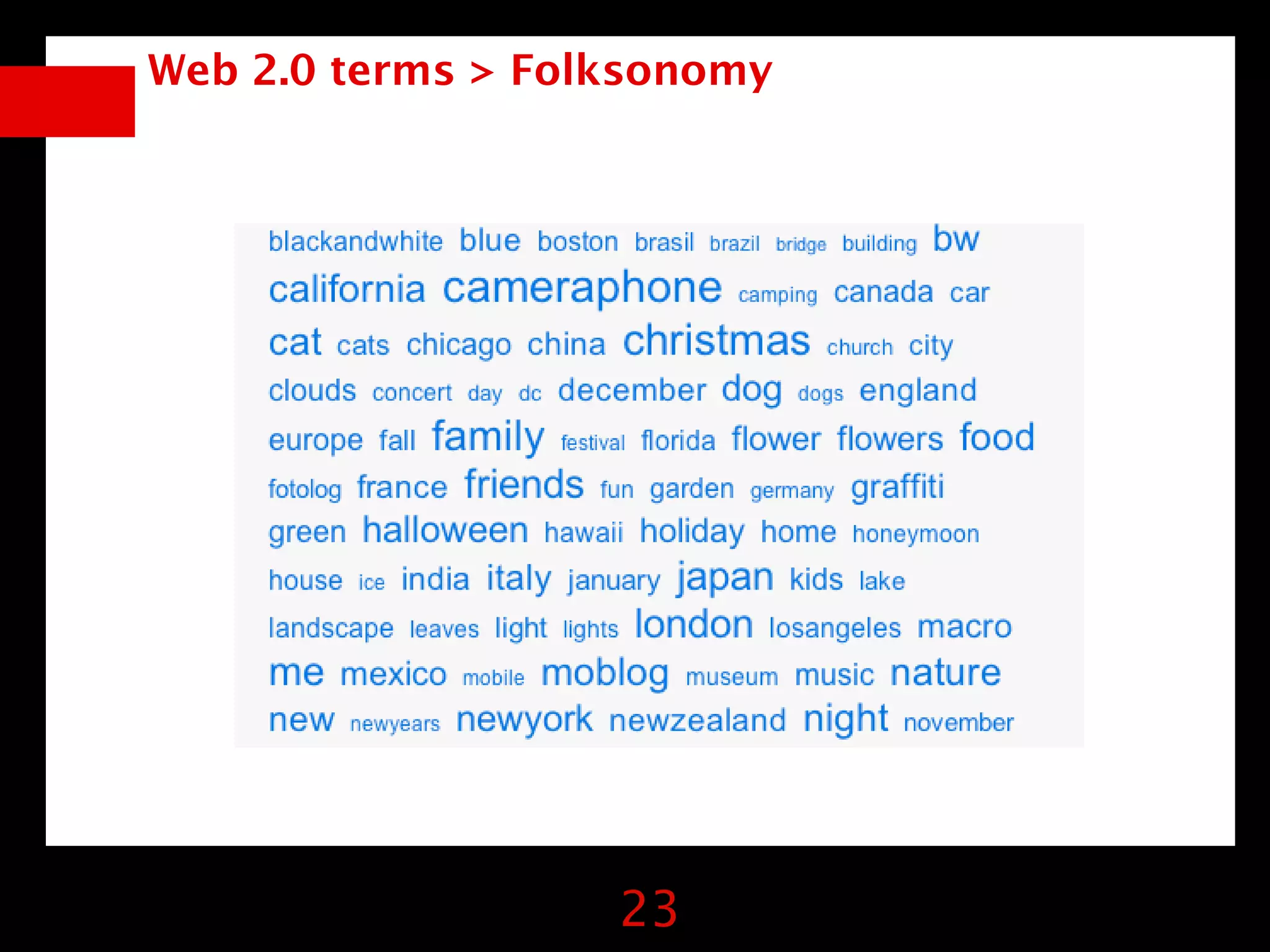
Web 2.0 terms > Folksonomy


                   23
Web 2.0 terms > Semantics


                    24
Web 2.0 terms > Serendipity


                    25
Social media landscape: 2009


                    26
Social media landscape: 2011


                    27
Social media landscape: 2011


•Publish: blogs, microblogs and wikis
•Share: videos, photos, links & docs
•Discuss: comments & social search
•Commerce: reviews & purchase sharing
•Location: local social networks & events sharing
•Network: professional & personal social
 networks
•Games: social waming & virtual worlds


                      28
Social media landscape: 2011


                    29
Social networks > Types


                    30
Social networks > Types


                    31
Location based social networks


                    32
Social networks > Where are they used

1.Russia: 6.6 hours
2.Brazil: 6.3
3.Canada: 5.6
4.Spain: 5.3
5.Finland: 4.7
6.UK: 4.6
7.Germany: 4.5
8.USA: 4.2
9.Colombia: 4.1
10.Worldwide: 3.7
           • Source: ComScore 2009


                        33
Social networks > MySpace vs. Facebook


                    34
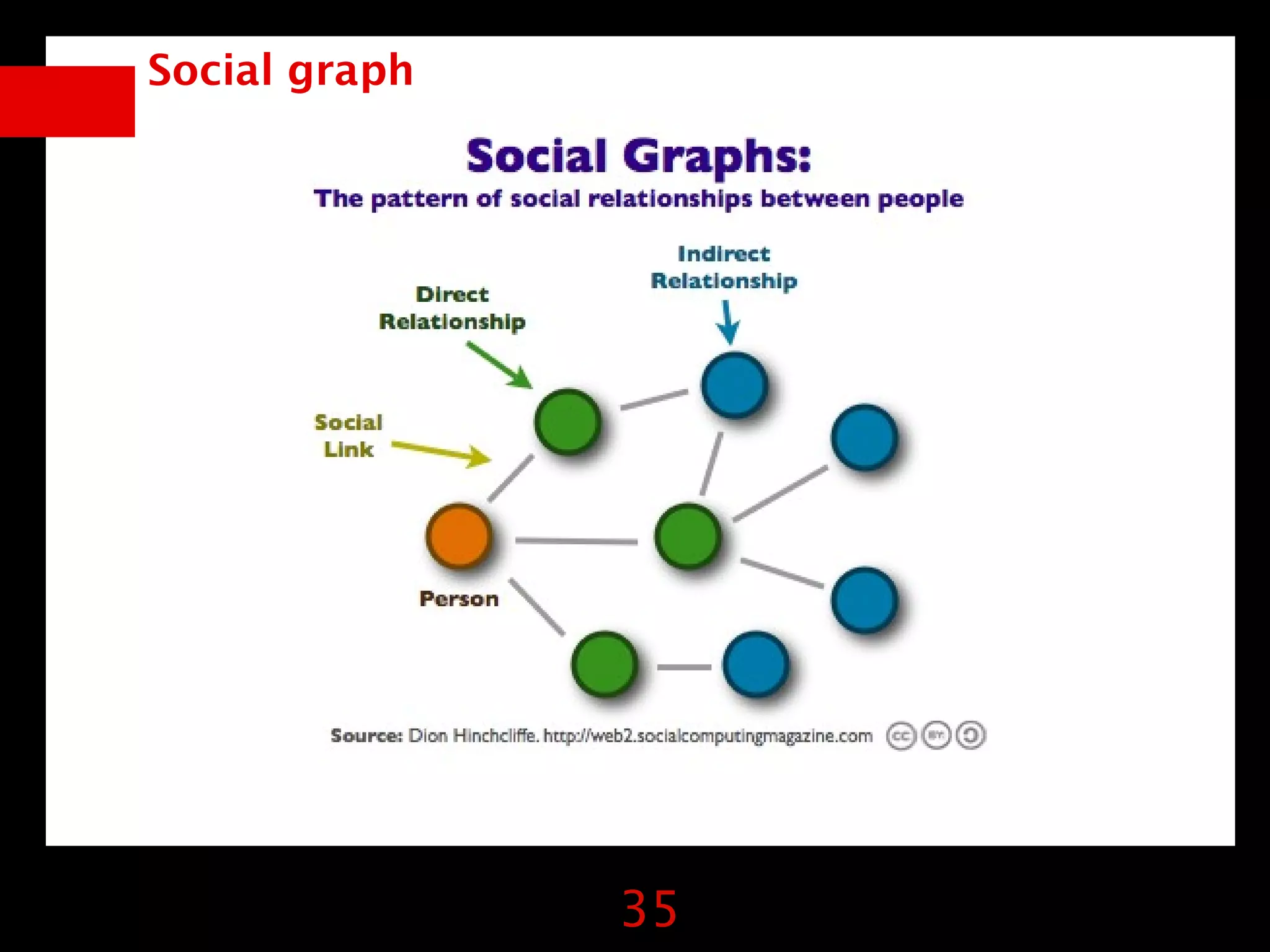
Social graph


               35
Social graph > Social sign on vs. Login

•“Users don’t have to register to your website in
 order to verify their identity”
•2/3 of 100 main US sites have integrated
 Facebook Connect. Also MS for MS Office Live
•oAuth (Twitter) is the second player
•OpenID (distributed and open) is not working
•Google has limited itself to email in the
  business area, in which Salesforce is also a
  growing player
• In mobile platforms, owning the operating
  system is strategic for Google (and Apple & MS)
• Companies have to decide whether to integrate
  on FB or use FB Connect on their sites

                      36
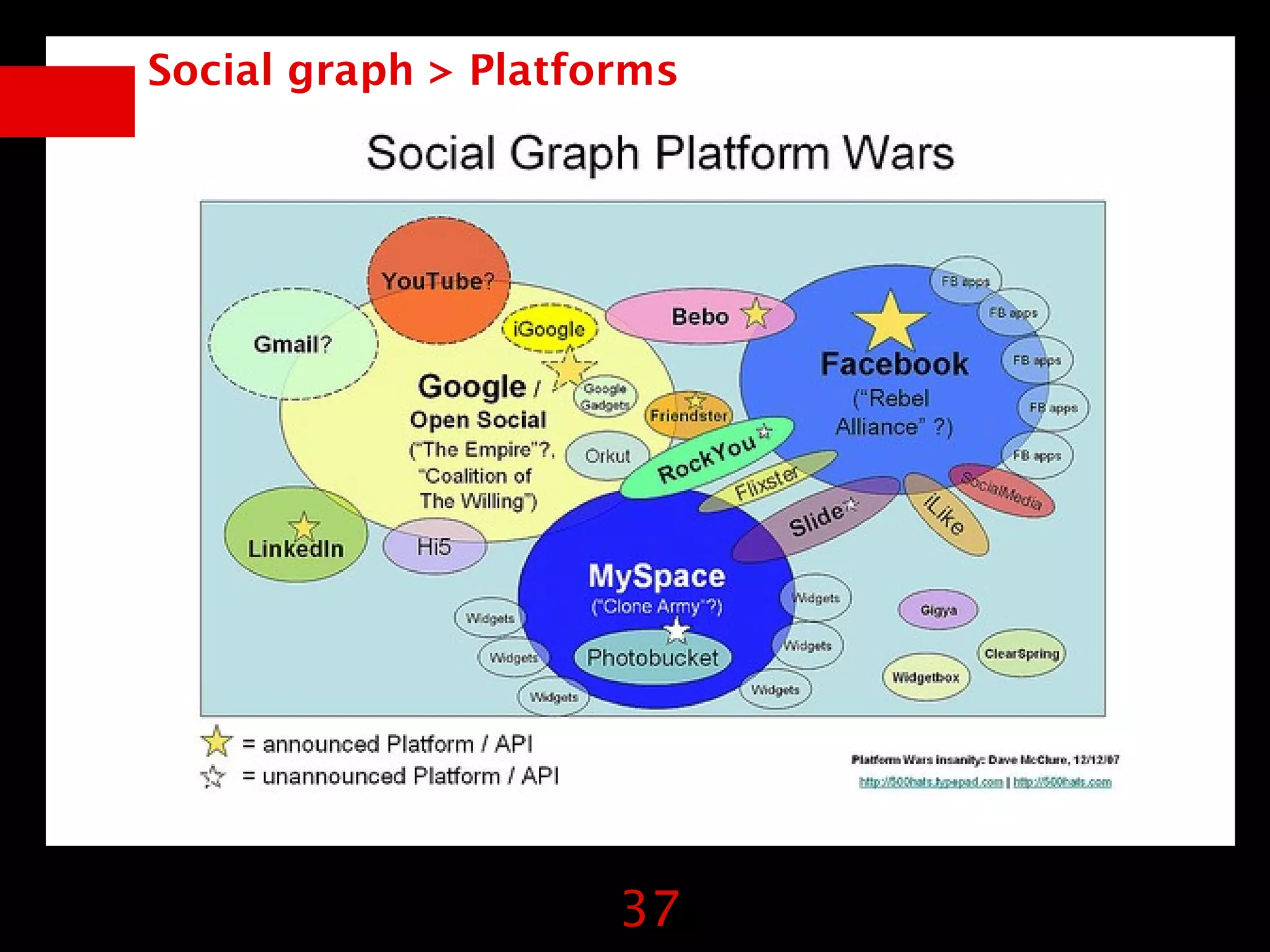
Social graph > Platforms


                     37
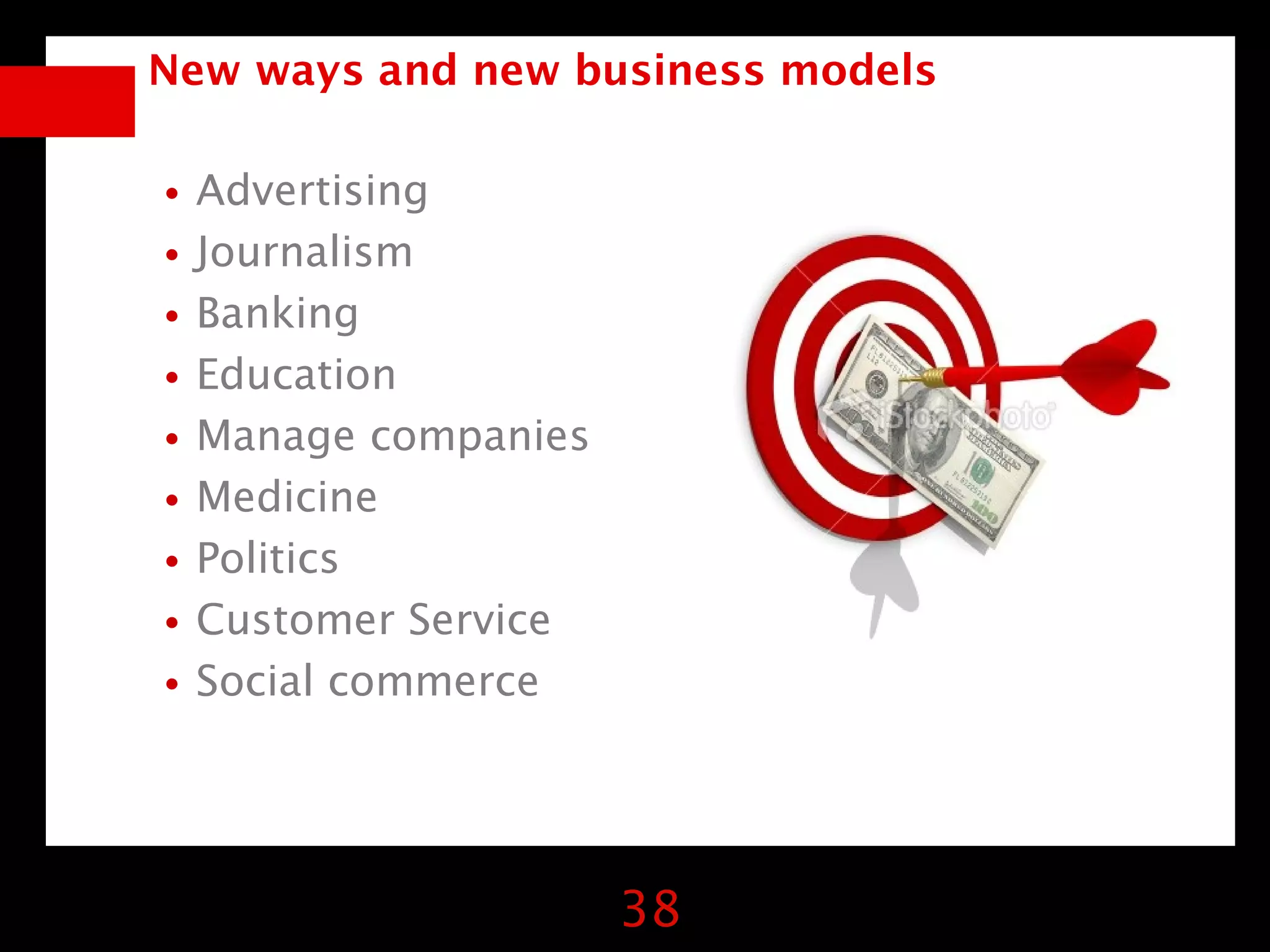
New ways and new business models


•Advertising
•Journalism
•Banking
•Education
•Manage companies
•Medicine
•Politics
•Customer Service
•Social commerce

                    38
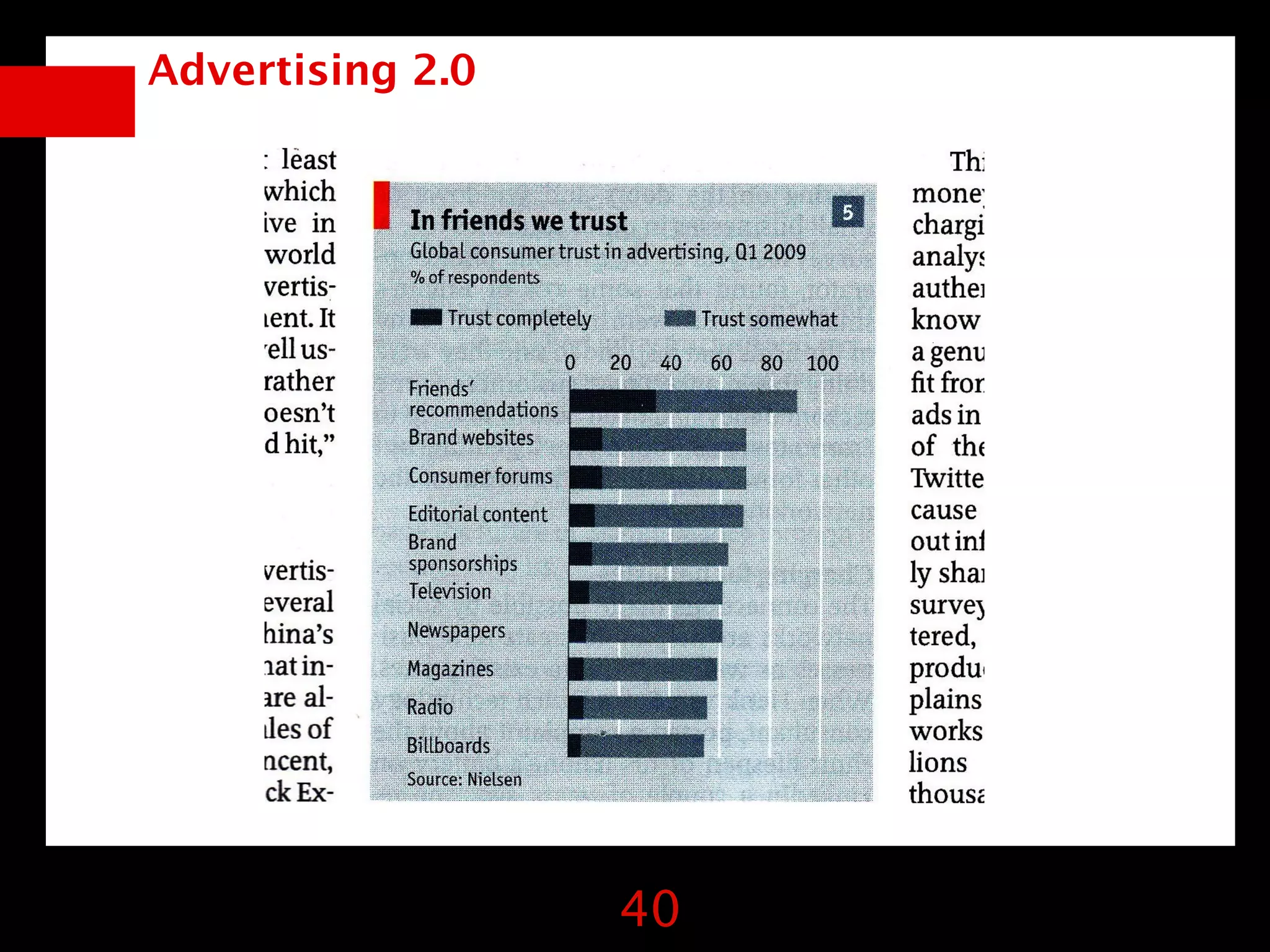
Advertising 2.0


                  39
Advertising 2.0


                  40
Media 2.0


            41
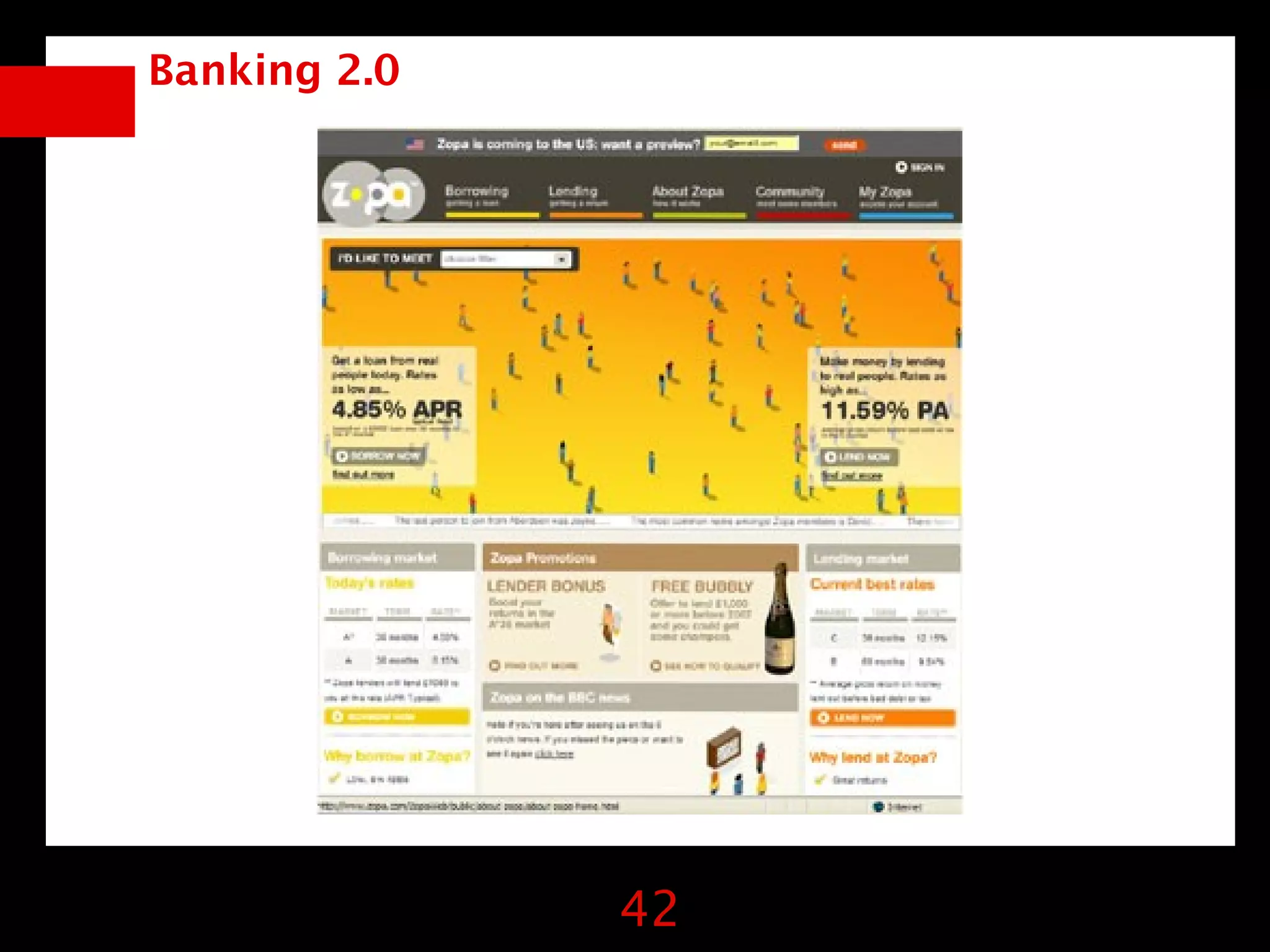
Banking 2.0


              42
Education 2.0


                43
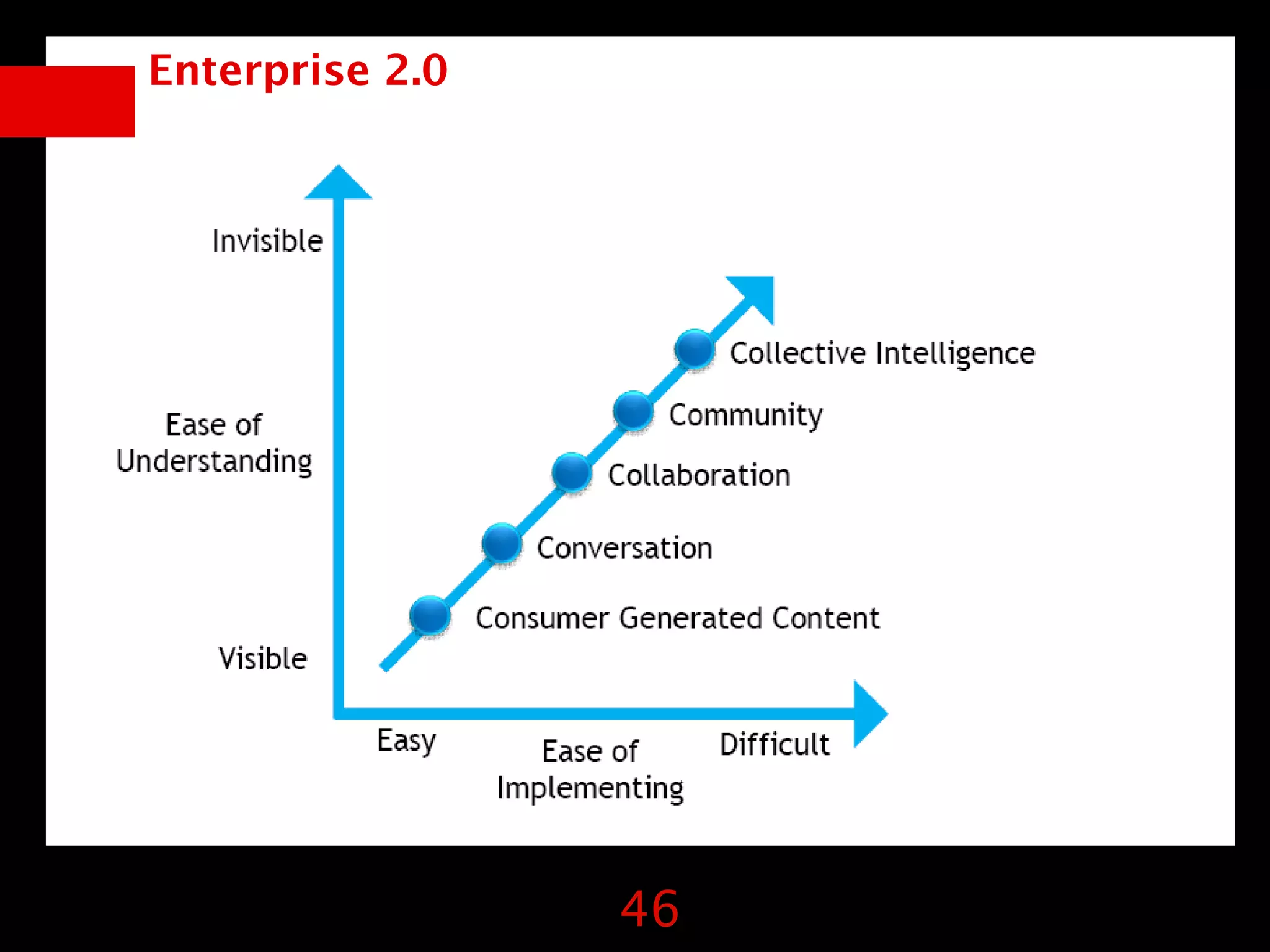
Enterprise 2.0


                 44
Enterprise 2.0 > Decoding social


                     45
Enterprise 2.0


                 46
Innovation 2.0


                 47
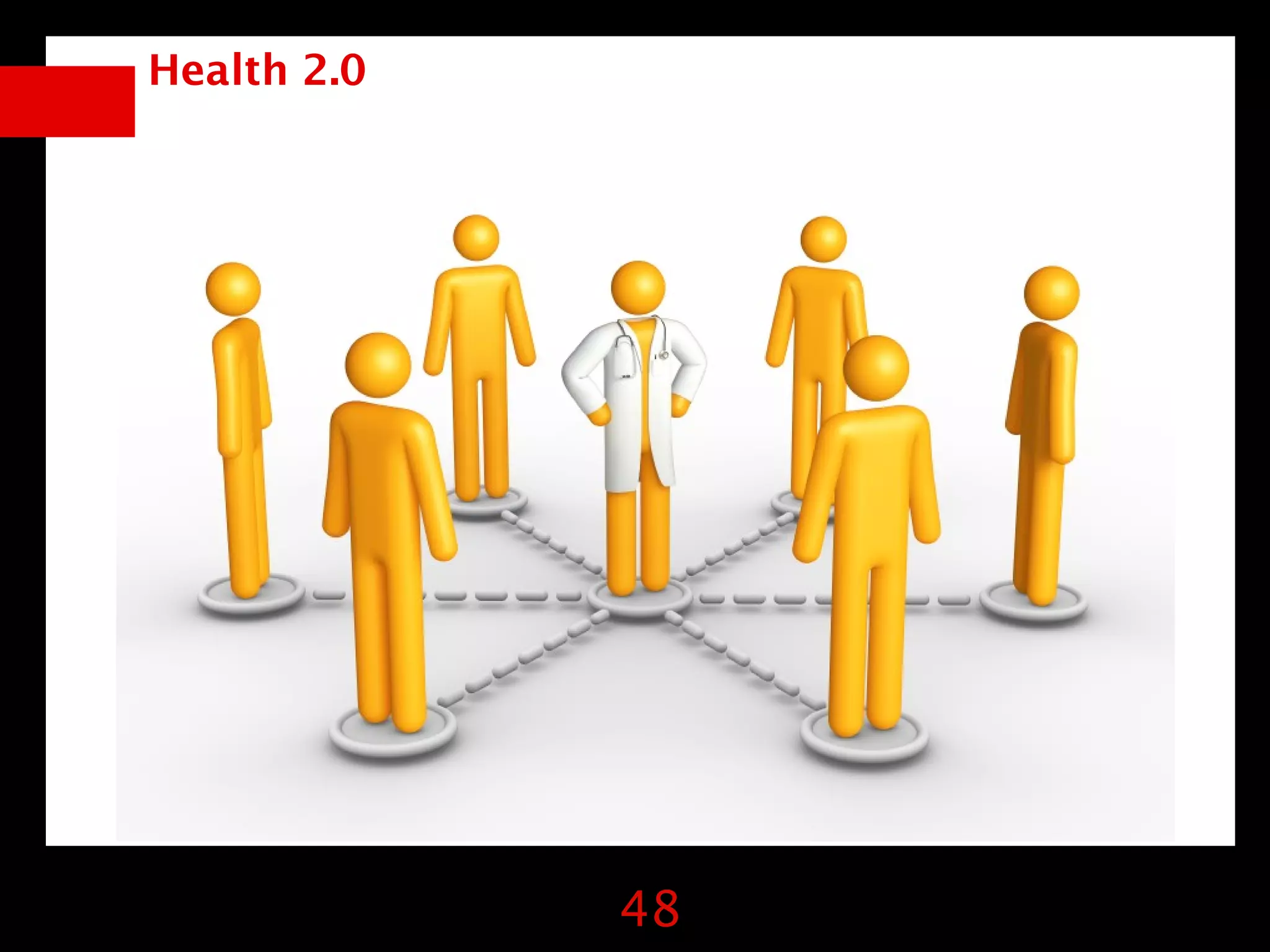
Health 2.0


             48
Politics 2.0


               49
Politics 2.0


               50
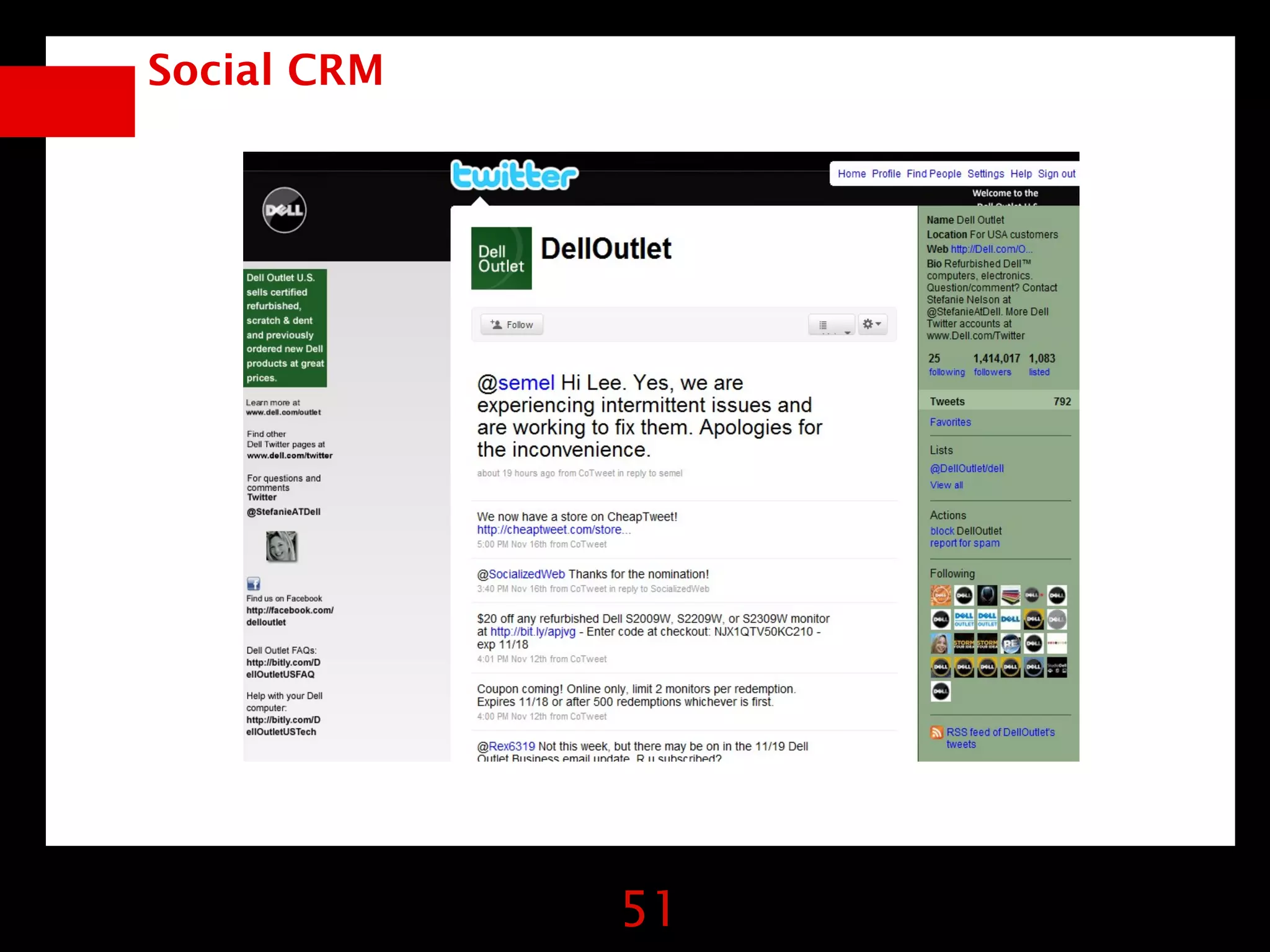
Social CRM


             51
Social commerce


                  52
Social commerce > Recommendations


                   53
Social commerce > Online communities


                   54
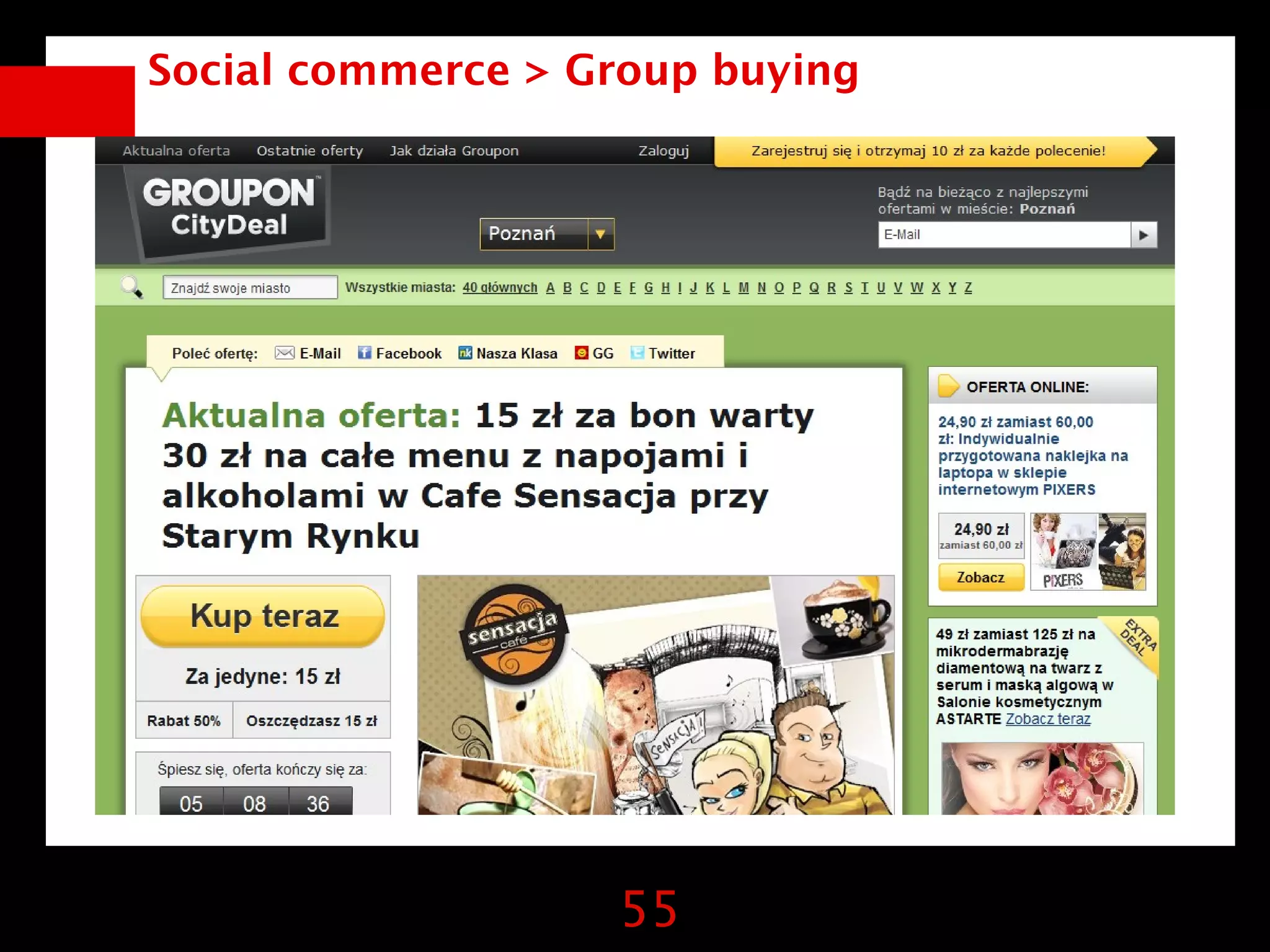
Social commerce > Group buying


                   55
Social commerce > Social styling platforms


                     56
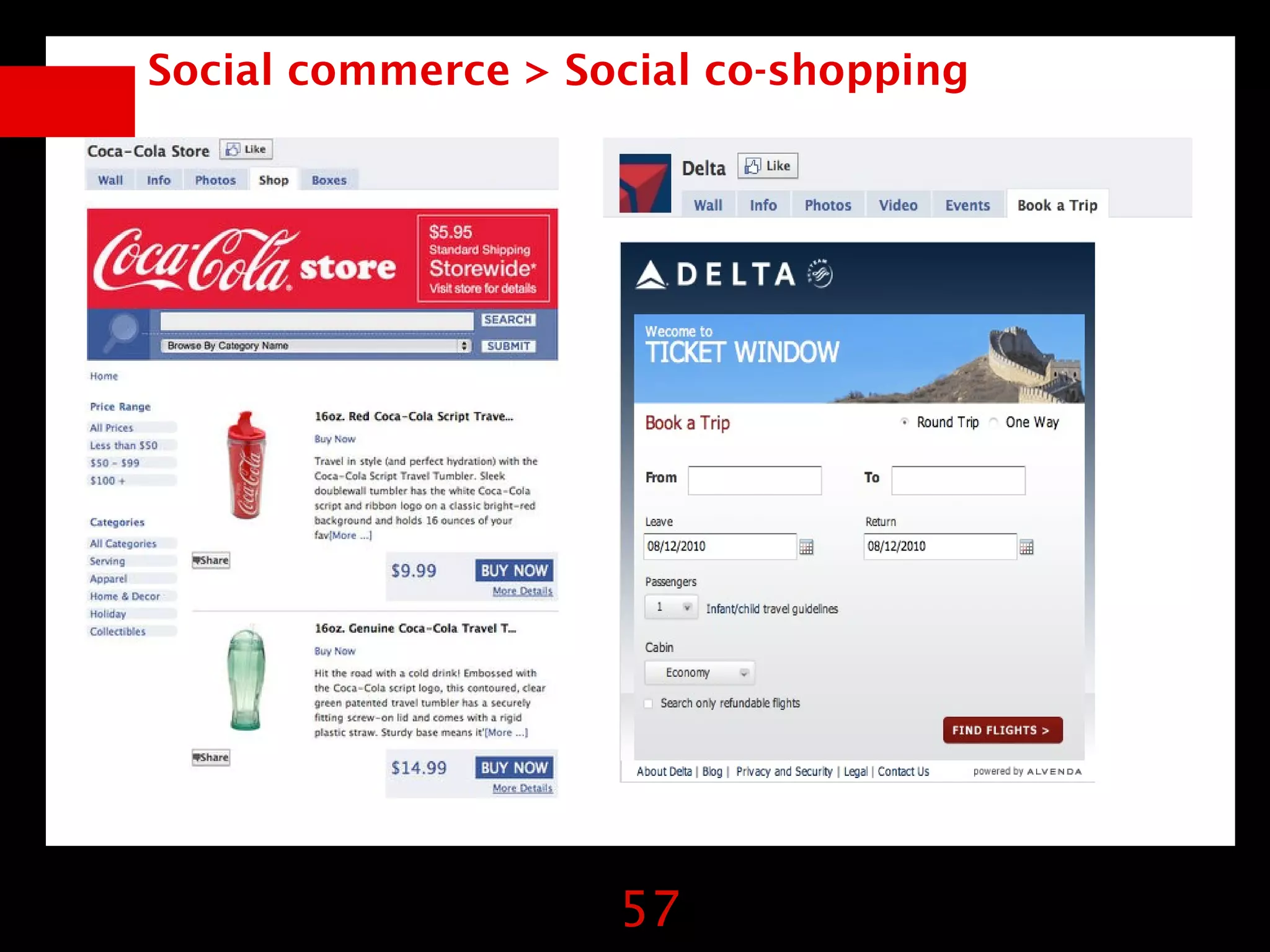
Social commerce > Social co-shopping


                    57
Social commerce > Social co-shopping


                    58
New rules for a new era


                     59
Long tail


            60
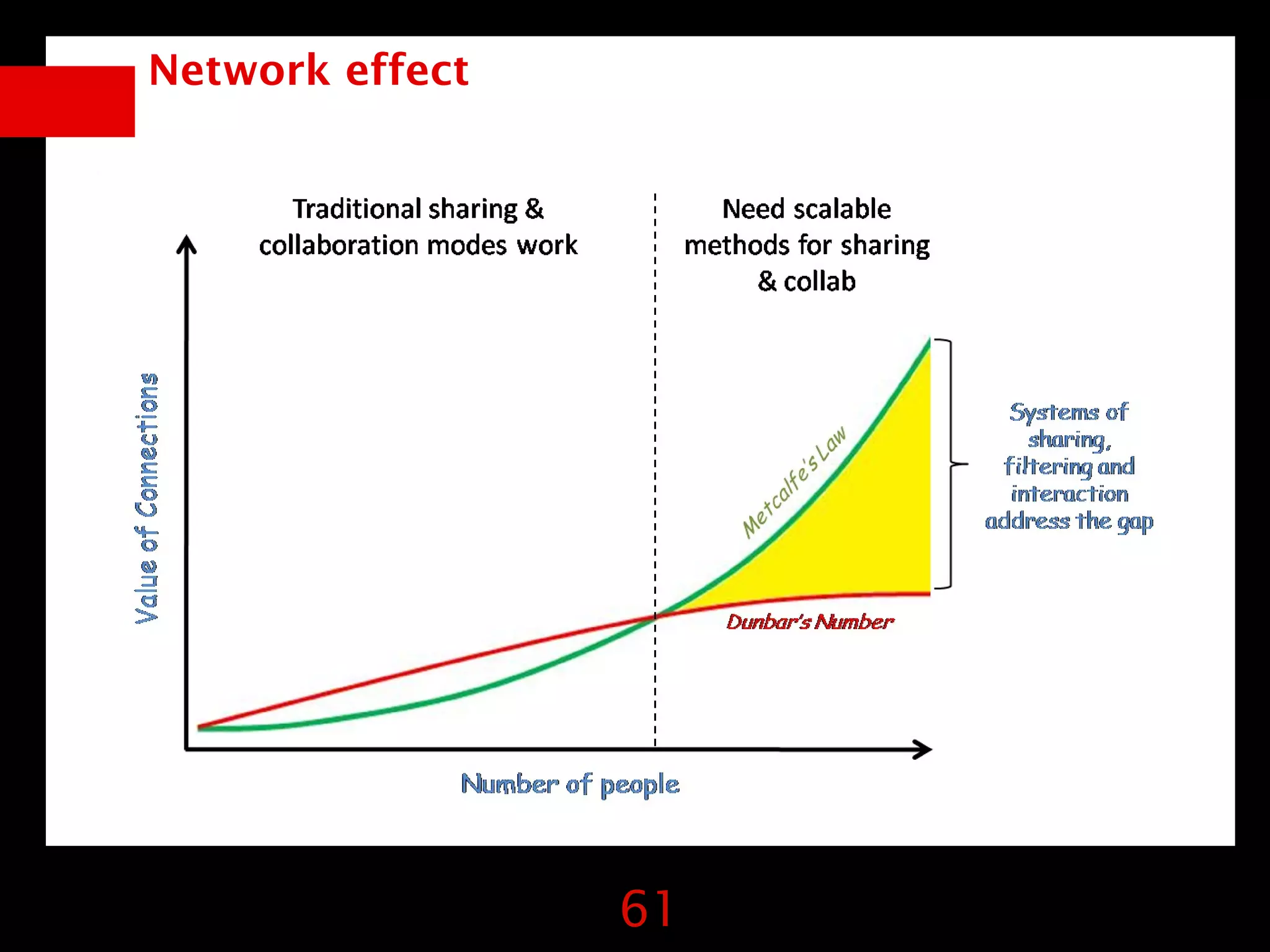
Network effect


                 61
Dunbar number


                62
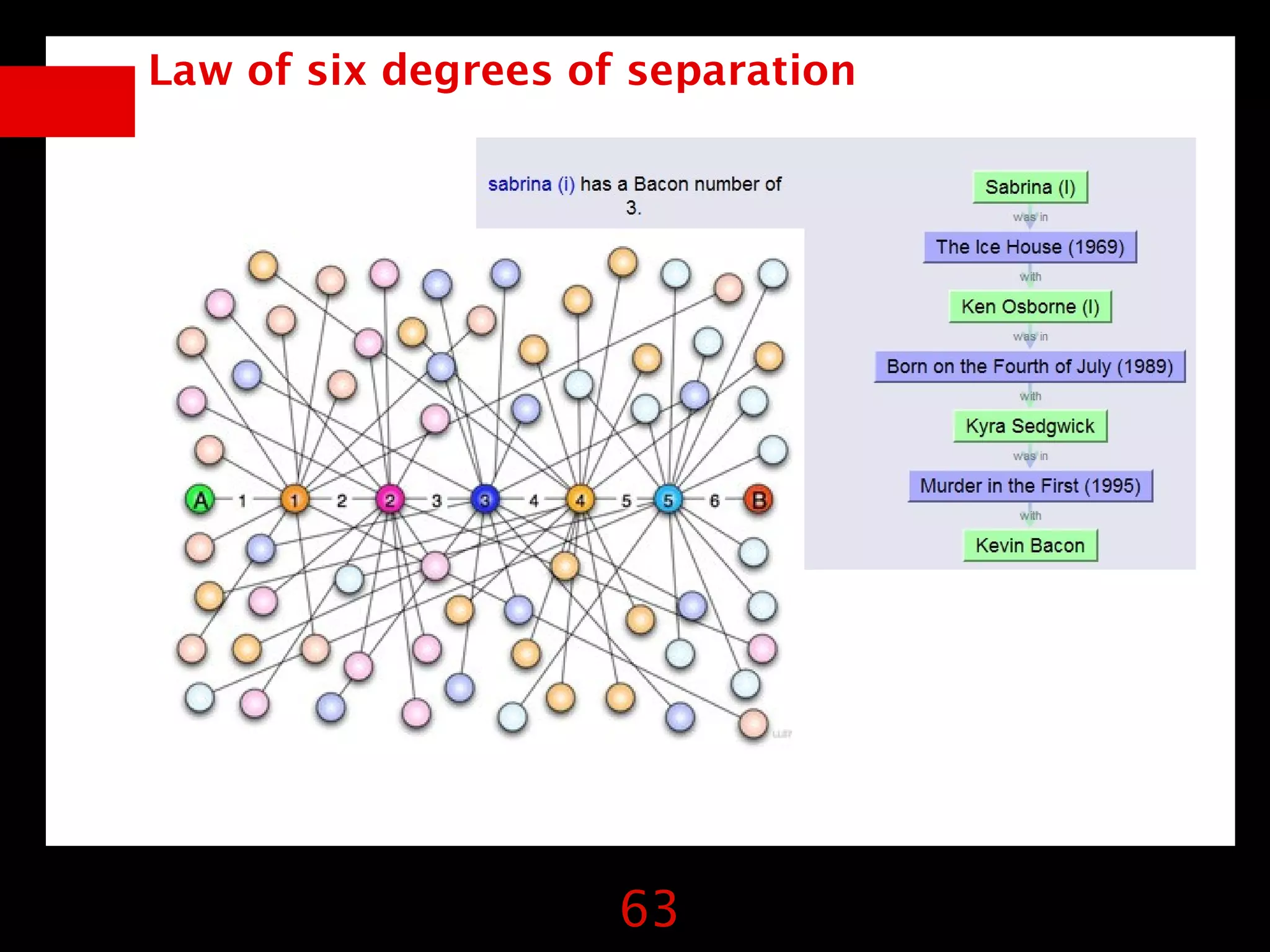
Law of six degrees of separation


                     63
Law of 3 degrees of influence


                     64
Zuckerberg’s law


                   65
Nielsen’s law (1/9)


                      66
Nielsen’s law (1/9)


•10% of Twitter users create 90% of content
•10% of Facebook users create 30% of content
•15% of Wikipedia editors do edit 90% entries
•5% of Internet users do blog
•On Youtube the creator to consumer ratio is
  0.5%


•Also the 1% rule by Charles Author (
  http://www.guardian.co.uk/technology/2006/jul/20/guardianweeklytechnolog
  )


                              67
Power law of participation


                     68
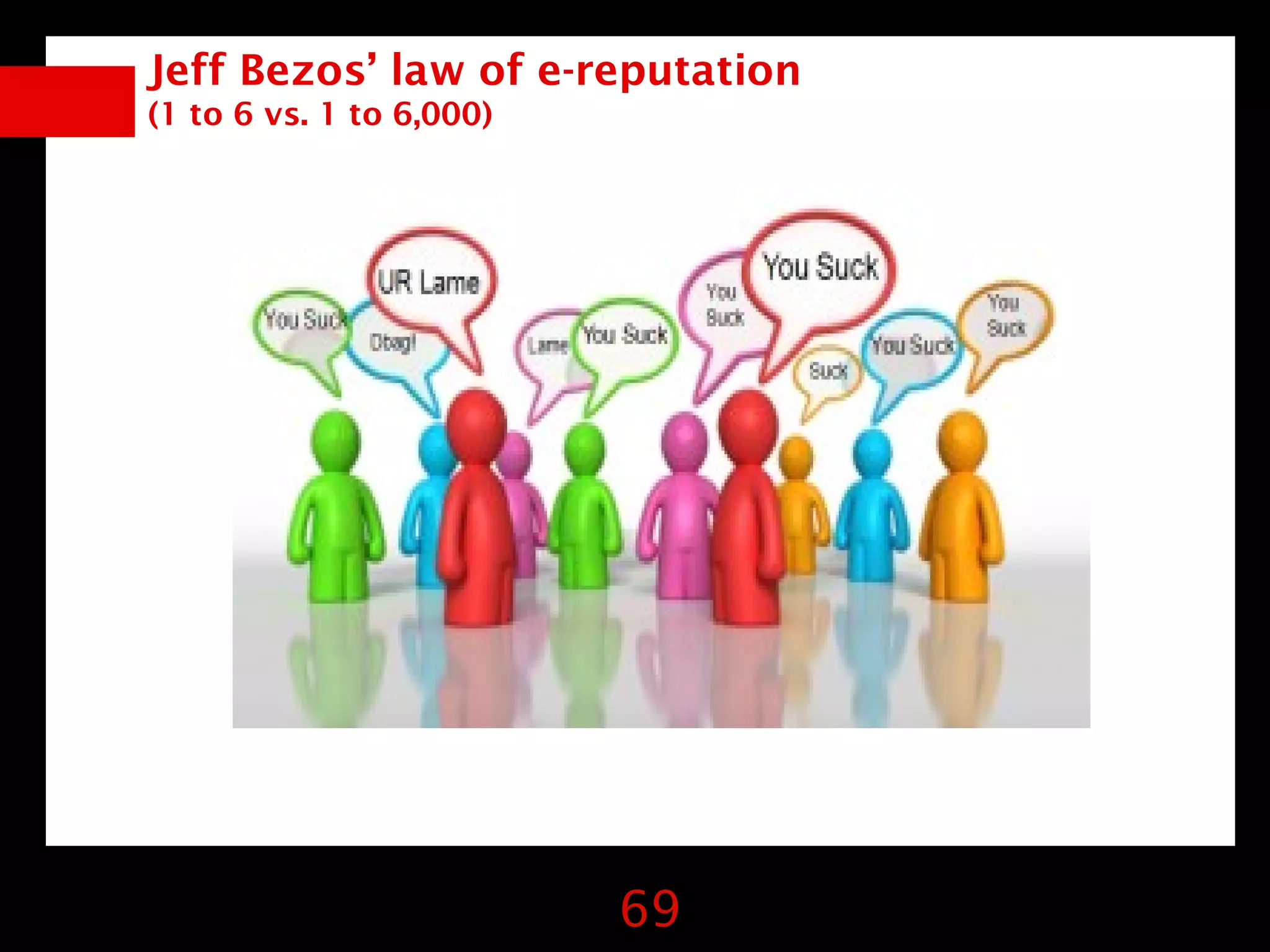
Jeff Bezos’ law of e-reputation
(1 to 6 vs. 1 to 6,000)


                          69
Law of scarcity


                  70
Freemium


           71
Transparency works


                     72
The Attention Economy


                   73
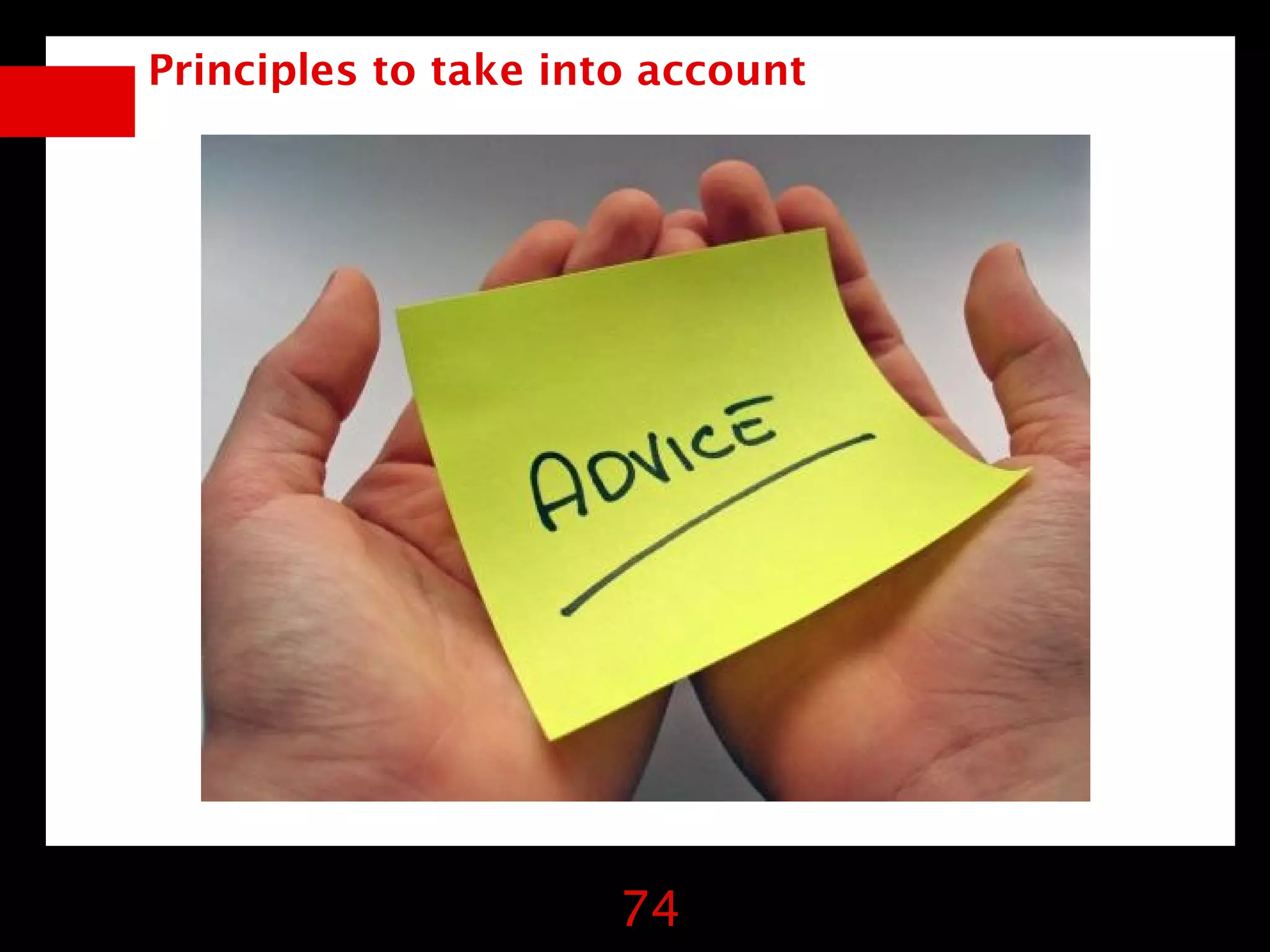
Principles to take into account


                      74
Design to matter in a world of infinite supply


                      75
Be the best at one thing


                     76
People want uniqueness


                   77
Focus on one interaction


                     78
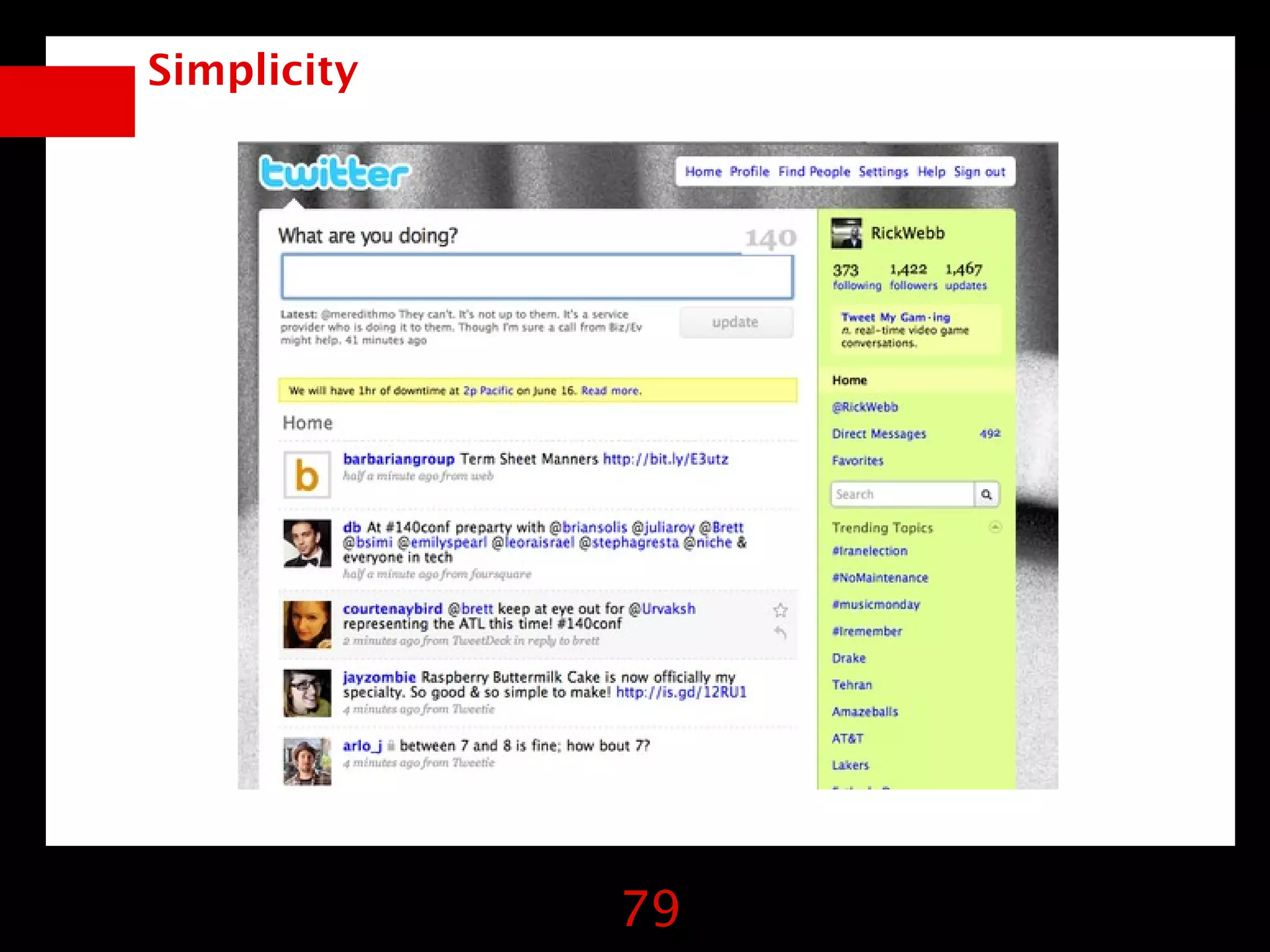
Simplicity


             79
Fast


       80
Develop relationships - Imitation effect


                      81
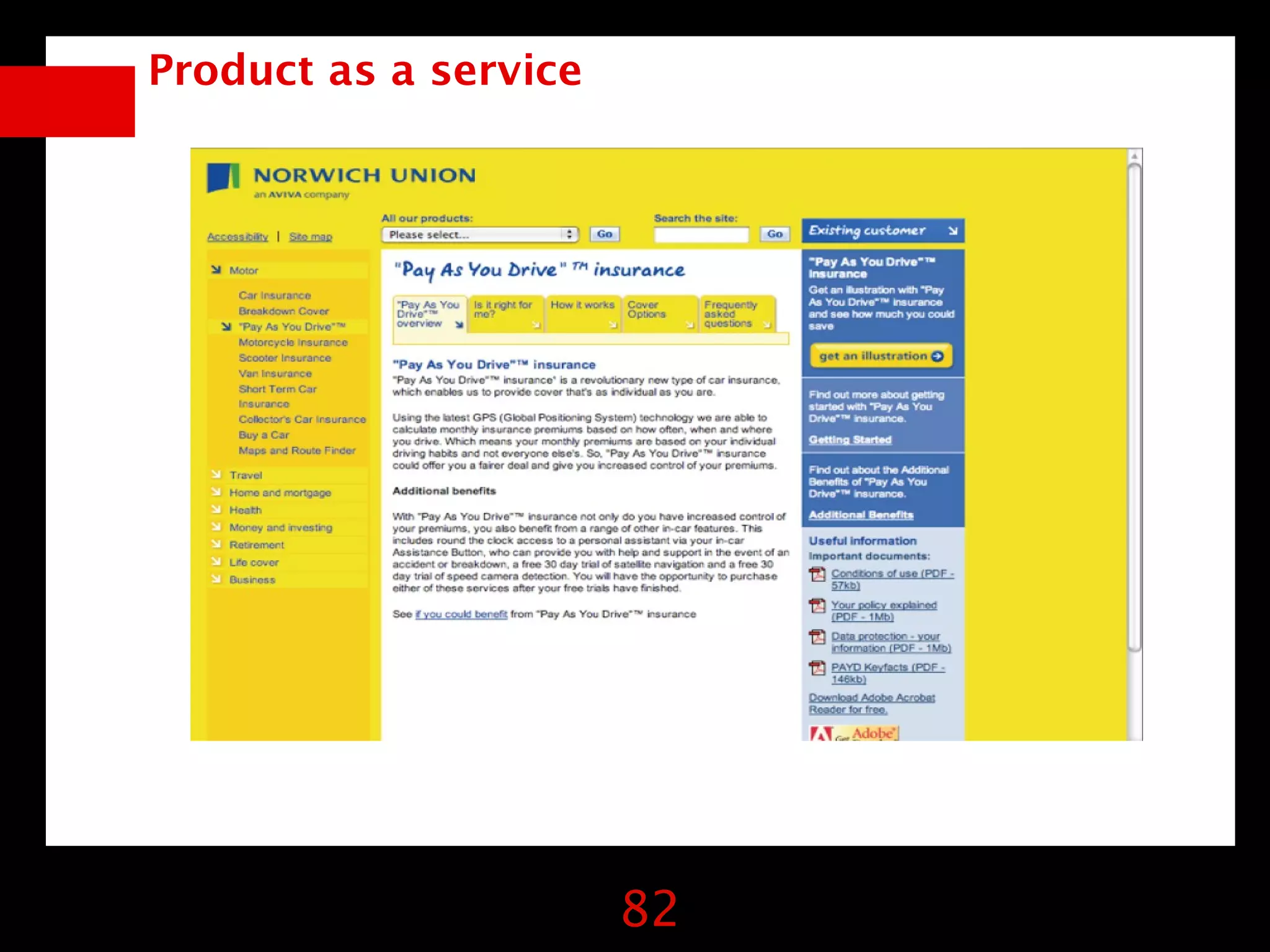
Product as a service


                       82
Community creation - Methodology
1.Fix goals (for members and owners) and
  differentiation
2.Set mission (backstory), vision, name, logo,
  taxonomy, relationships built as a result
3.Decide who can become member: nicks/real ?
4.Set behavioral rules: FAQ, privacy, terms of use
5.Tools: free (FB, Linkedin) + paid (ning, elgg)
6.Animation - Attract members: events, contests,
  board, education, viral (FB, Twitter), cooptation
7.Animation - Management: games, reputation
   system, prizes for first users, share
   blog/newsletter, internal democracy, exclusivity
8. Rituals: presentation, birthdays, remember mail

                      83
Community creation - Methodology


                   84
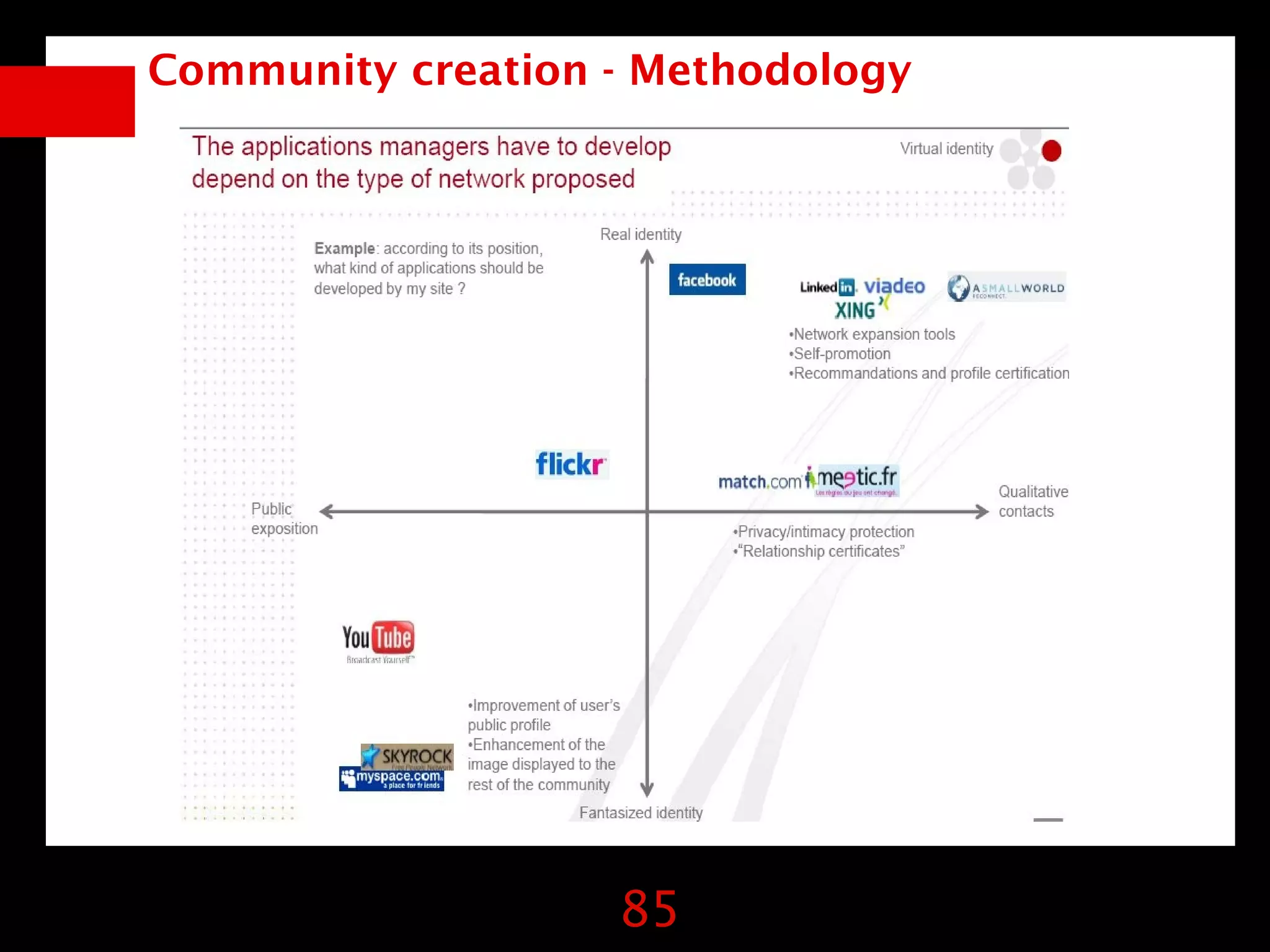
Community creation - Methodology


                   85
Community management


                11


                 86
Community management - Etiquette (1)


•Friending: you are not obligated to follow/friend
 anyone
•Appearance: avatar picture shouldn't be a
 company logo and it should be you
•Retweeting people’s praise of you comes off as
 jerky. Just thank them
•If you retweet something interesting, always give
 credit for who found it first
•Promote others more often than you promote
  yourself. My long-standing measure is 12:1


                       87
Community management - Etiquette (2)


•Links do matter to Google and to the people you
 care about. When you can, give them a link
•Disclosure: if you’re writing about a client, add
 (client) to the tweet/post/update
•You can tweet as often as you want, but people
 unfollow “noisy” tweeters
•Sharing is caring: the web thrives on links and
  social sharing. The more you do to participate, the
  more people will create material for free for you to
  enjoy


                        88
Community management - Animation


•From 4 P’s (Product, Price, Promotion, Place) to 4
  E’s (Engage, Experience, Enhance Emotion) and 4
  C’s (Content, Connectivity, Commerce,
  Community) -> Games create community
• Word of mouth -> Twitter
• Blog or exclusive newsletter + interview members
• Dynamic stream on home page
• Emails when users have not come lately
• Manage conversations: Encourage + Moderate
• Moderators + Subgroups -> Give power to leaders
• Analytics: comments, contributions...

                        89
Community management - Motivations to
 participate

•Return favor: reciprocity
•Friendship / Fans -> How to turn fans into brand
 advocates
•Self steem and public recognition -> Reputation ->
 Games
•Influence (Wikipedia)
•Money
•Learn
       http://buildingreputation.com/writings/2009/10/motivations_and_incentives.htmlhtml


                                               90
Community management - Reputation systems
 (Gaming systems)

•Altruistic participations don’t need them
•Non-altruistic participations get compensation
•Connectors (influencers) and mavens (info
 collectors) are very useful
•Reputation system should reward active users and
 penalize non-actives
•Trolls should be avoided
•Democratic reputation systems are very
 interesting
•First members should be honored
•Stakeholders should be redirected to a blog
                      91
Community management - Types of users


                   92
Community management - Types of users


                   93
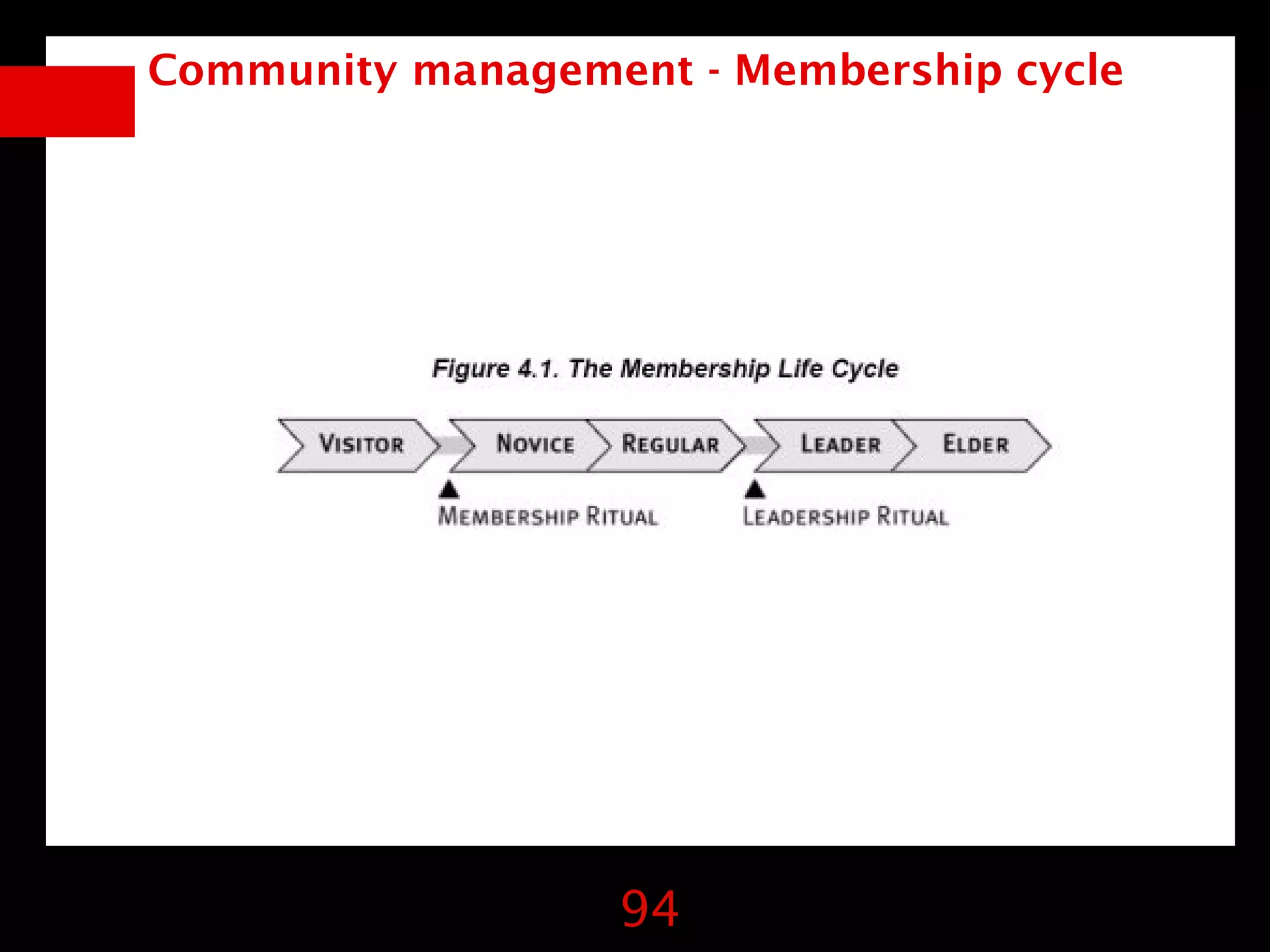
Community management - Membership cycle


                  94
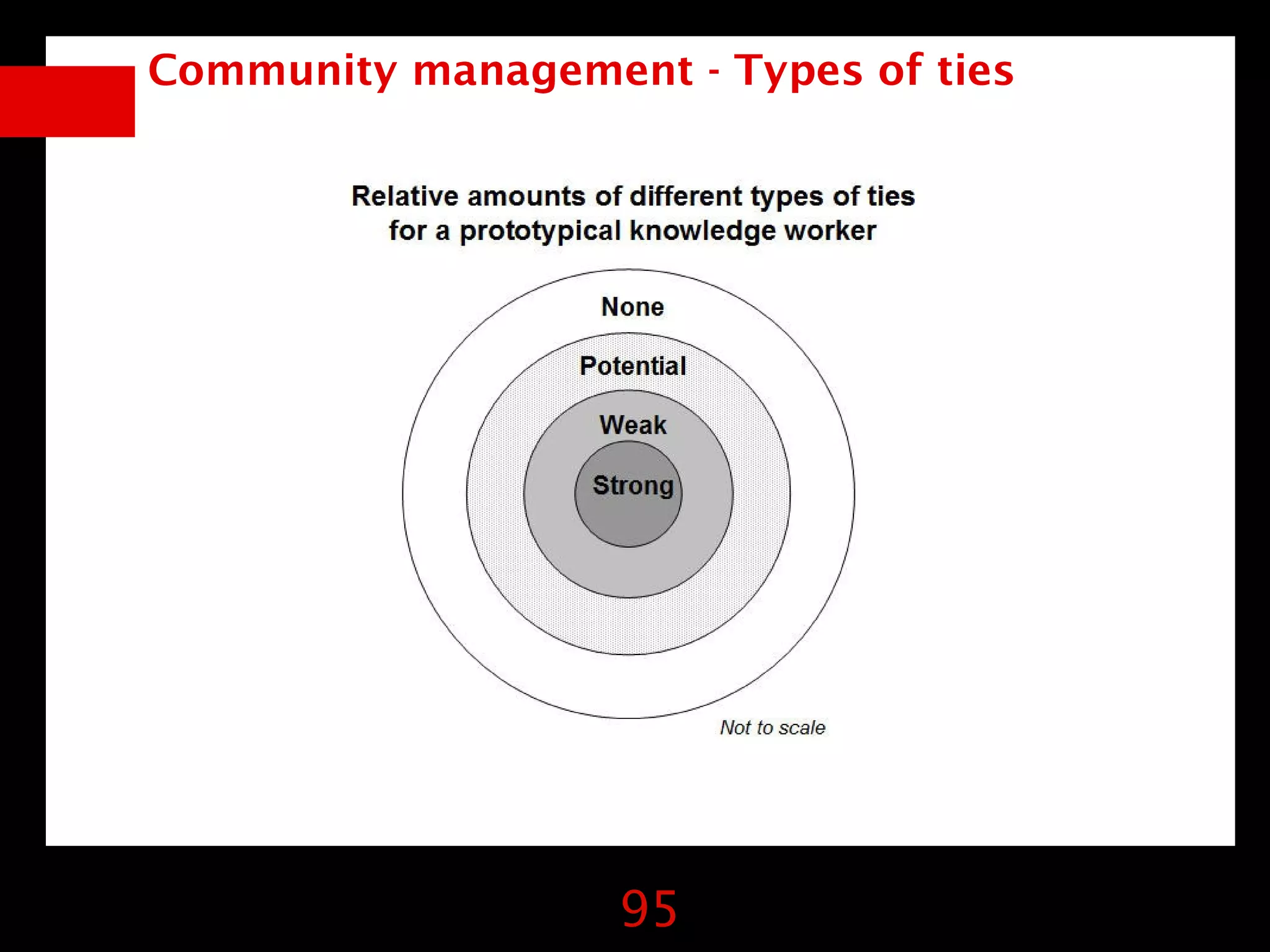
Community management - Types of ties


                   95
Community management - Online engagement


•Less talk about your products and more about
  lifestyle. Ex. Burberry’s FB page promotes
  emerging music artists.
• Promote product related material. Stimulates
  purchases but also criticism. Ex. BMW & Gucci.
• Use social media to promote real world events. Ex.
  Smirnoff with ideal night out ideas’ contest which
  later becomes a real party.
• Competitions and giveaways.
• Exclusive offers for Facebook fans. Ex. Panasonic


                       96
Community management - Success keys


•Choose a niche
•Be relevant in that niche
•Keep it simple
•Get a full bar
•Encourage people to post about their passions
•Make it a fun place
•Make each member feel special
•Keep in touch with members
•Reward members
Source:   http://www.communityspark.com/10-reasons-why-people-arent-contributing-to-your-online-community


                                                 97
Community management - Social Media
 Optimization (SMO)

•Make sharing easy: Twitter, FB (Likes) buttons
•Create shareable content: Blogging and status
 updates on Facebook and Twitter profiles
•Comment on other blogs
•Reward engagement and get new friends/fans and
 followers
•Encourage the mashup: RSS, API
•Get on people’s Facebook walls by using the
  Facebook Edgerank as well as possible (get many
  fans and likes)
• Don’t forget classic PR on events !!!


                       98
Community management - SMO on Facebook
 pages

•Provide fans with offers and discounts
•Don’t just focus on managing the negative
•Fans are better at responding than brands so
 empower them
•Fans prefer images over video
•Post a question with every post


                       99
Community management - Top reasons to
 follow a brand on Facebook

•To find offers and discounts (42%)
•Love of the product (33%)
•To get latest news about the brand (24%)
•To give them ideas on how to improve the product
 (12%)
•To get better customer service (12%)
•To complain (6%)


                     100
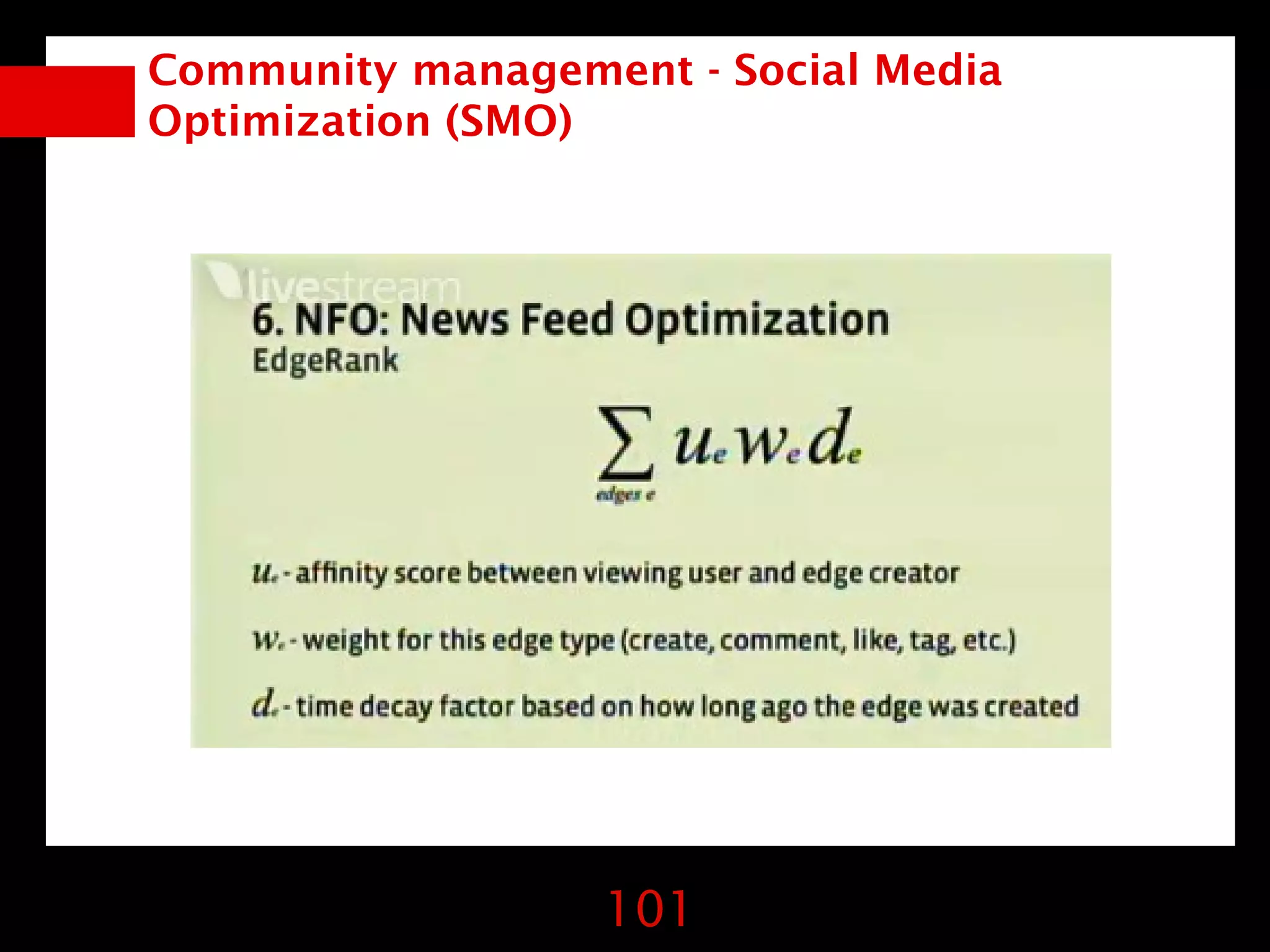
Community management - Social Media
Optimization (SMO)


                  101
Community management - Measurement tools


•Klout, Infinigraph: influencer identification tools
•Radian6 (bought by Salesforce)
•ScoutLabs
•Cymfony
•Nielsen Buzzmetrics
•Traackr
•Free ones: Visible Technologies
  (www.trureputationscore.com), Backtype, Trackur,
  Grader.com


                           102
Facebook > Some data


•More than 500 million users
•50% of them connect every day
•¼ of them access thru mobile (more on twitter)
 and they are twice more active
•Average user has 130 friends
•Average user stays 5 hours
•70% users are outside the US
           » Source: http://www.facebook.com/press/info.php?statistics


                           103
Facebook > Top countries


•USA: 126 M
•UK: 27
•Indonesia: 25
•Turkey: 23
•France: 19
•Italy: 16
•Canada: 16
•Philippines: 14
•Mexico: 12
•Spain: 10,4
           » June, 2010, Checkfacebook.com


                        104
Facebook > Some myths


•Used mostly by US kids? But 2/3 older than 26
•Will it replace e-mail?
•Keeps changing privacy to sell ads?
•Users are in arms over privacy?
•Zuckerberg was a bad kid and stole the idea
 from other kids?
•Facebook is temporal, as Friendster or
 MySpace?
•Does Facebook kill the Web?


                    105
Facebook > Profile, Page, Group, Place


•User Generated content
•Personal profile vs Business page
•Page vs. Group
•Places
•Proximity generates confidence
•Confidence & influence & visibility
•The power of virality/word of mouth
•Media brand
•Tips on turning fans into brand advocates
•Tips on updating a page regularly

                     106
Facebook > Some things

• Facebook vs. Google: People vs. Contents
• Facebook Ads vs. Google AdWords
• Tracking success: Page insights


                     107
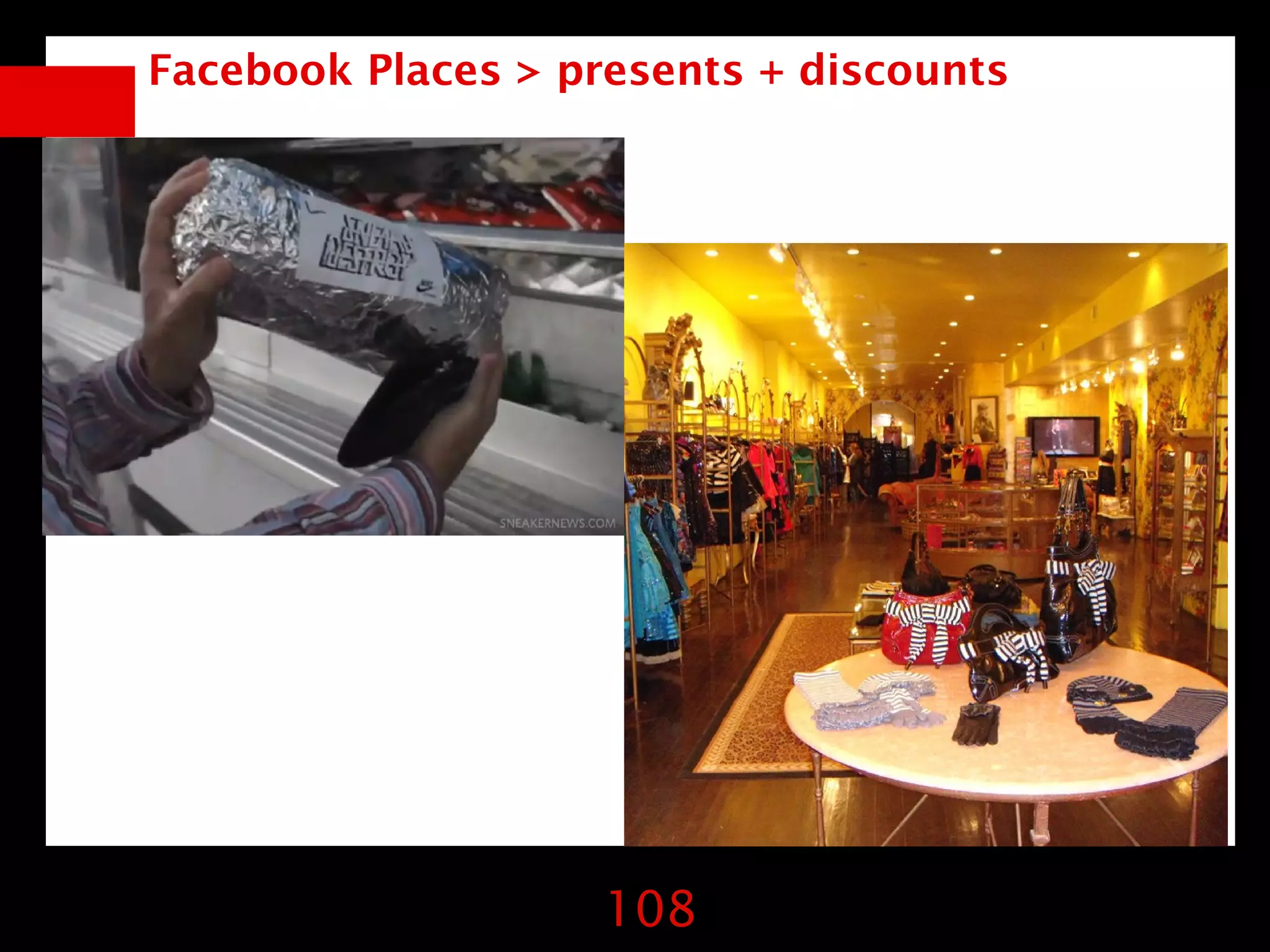
Facebook Places > presents + discounts


                    108
Facebook / VKontakte - Apps


                   109
Online videos


•Different than offline: shorter, interactive
•Platforms: Youtube, Vimeo, Facebook, Kewego
•Streaming platforms: Livestream, UStream
 (Watershed)
•Tools: dotSub (subtitles), flowplayer &
  PhpMotion (free video player), Windows Media
  Maker (alternativas: VirtualDub, Adobe
  Premiere, Pinnacle Studio, Sony Vegas), Audacity
  (para editar audio), Windows Media Encoder
  (streaming)
• Formats: AVI, MOV (Quicktime), MPEG, SWF
  (Flash), FLV (Flash), Real Media, WMV (Windows)

                     110
Youtube


•The Youtube Generation (Gen Y): attention just
 for 3 min.
•Introduction to the YouTube community
•Using YouTube channels, playlists, V-logs, and
 favorite videos for business
•Step by step guide to creating and customizing
 a YouTube channel
•Tips on building engagement and community
 around your brand
•Advertising on YouTube

                     111
Blogs > Advantages


•Google loves blogs
•Cheap
•Simple
•RSS for aggregation
•Credible, near and modern
•Easy feedback
•Buzz -> Viral marketing thru blogosphere
 (meme)
•Develops communities
•Difference with forums

                     112
Blogs > Parts


•Head: title and subject
•Colums: browsing guide, about (+FAQ),
  archives, categories, links, search, RSS, last
  comments
• Post: title, lead, text, permalink, trackbacks,
  pings
• RSS


                       113
Blogs > Parts


                114
Blogs > Types


•Personal: geeks, passions, entrepreneurs
•Corporate: corporate, consultant, brand
•Media: Weblogs SL, Escolar.net


                    115
Blogs > Tips


•Get as many links as possible (and link yourself)
•Write for geeks
•Use social sharing sites: Digg, Twitter
•Comment on other blogs
•Write about sex, science, weird things, current
 events...
•Create a classification of 10 things
•Review your analytics
•Platforms: Blogger, WordPress
•Comments: free/moderated
•Use copyleft licenses
                     116
Blogs > Editorial policy


•One blog/post, one subject
•Personal stuff matters
•Frequency: 1/2 times per week minimum
•Answer comments: develop community
•Title is so important
•Short texts: people do scan
•Paragraph every two sentences
•Lists instead of long explanations
•Transparency: also when erasing
•Ask for advice to readers
•Communicate passion
                     117
Blogs > Netiquette


•There is a human being on the other side
•Be careful when joking
•Be short
•Use descriptive titles
•Think on whomever is reading you
•Read all comments before answering
•Be careful with copyrights
•Quote
•Don’t criticize for ortography
•Don’t insult, threaten

                     118
Linkedin > Some data


•Over 80 million users
•Profitable since 2006. Future IPO
•Competitors: Xing (D), Viadeo (F)
•Each user has an average of 60 connections
•Average age of users is 39
•San Francisco-based executive headhunter Ron
  Bates has the most LinkedIn connections with
  33,540 direct contacts
• Average user of LinkedIn probably belongs to at
  least 3 to 4 groups


                     119
Linkedin > Features


•Profiles (personal and corporate): Visibility
•Job search and executive head hunting
•Commercial contacts: who knows whom
•Follow a company (new recruits)
•Ask for advice: Linkedin Answers
•Professional groups: Forum, news, jobs,
 members
•Polls
•Apps platform: Tripit, Twitter, Slideshare...
•Company products and services
•Premium services: InMail messages, CRM
                      120
Twitter


          121
Twitter > Some data


•At the beginning it was just a platform to send
 massive SMS messages
•150 million users
•300,000 new users every day
•50 million tweets every day
•75% traffic comes from outside twitter.com (3
 billion daily requests thru API)
•More than 300,000 oAuth apps
•37% active use mobile phone (mainly SMS and
  iPhone)


                      122
Twitter > Use cases


                      123
Twitter > Use cases


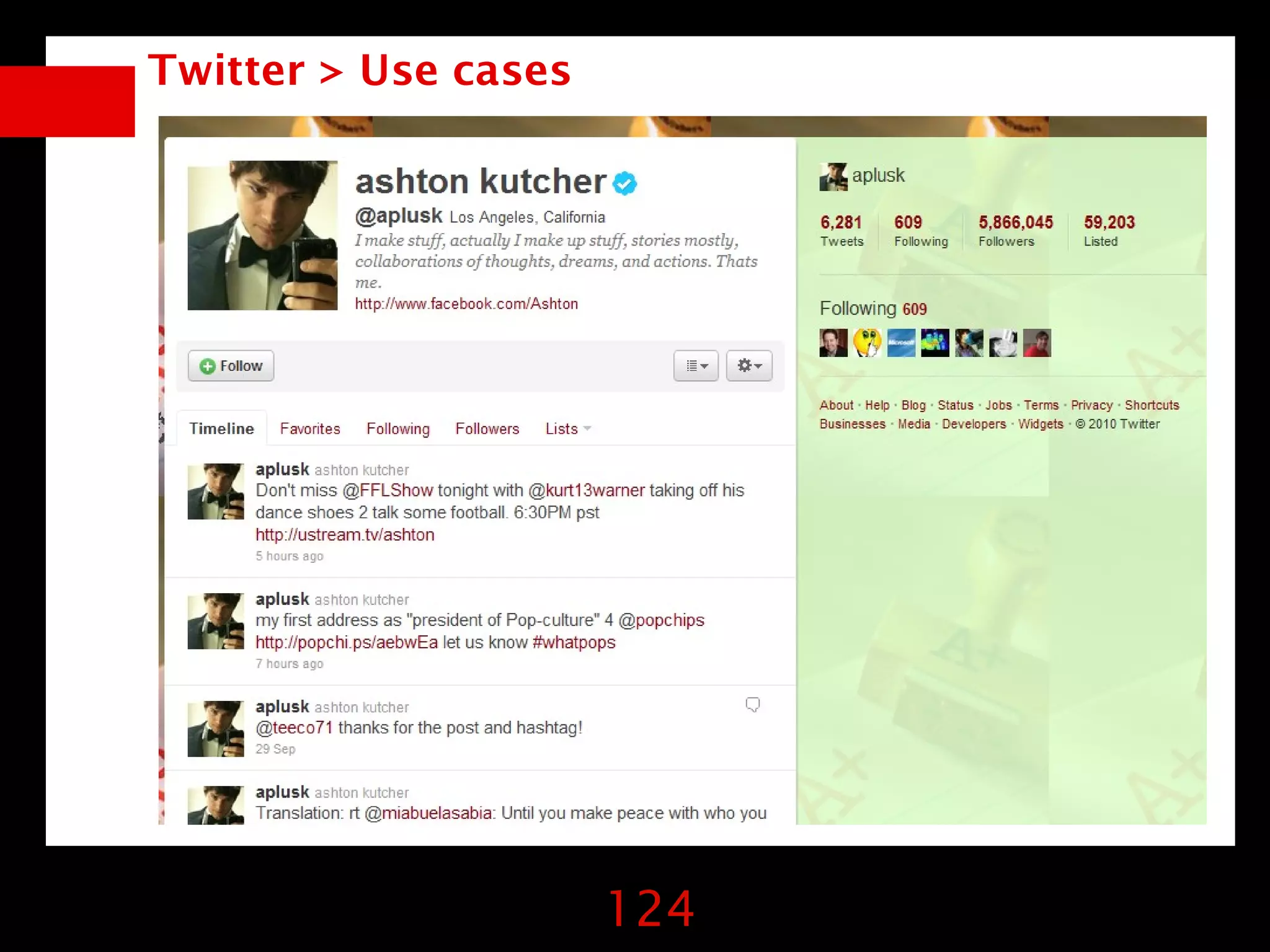
                      124
Twitter > Use cases


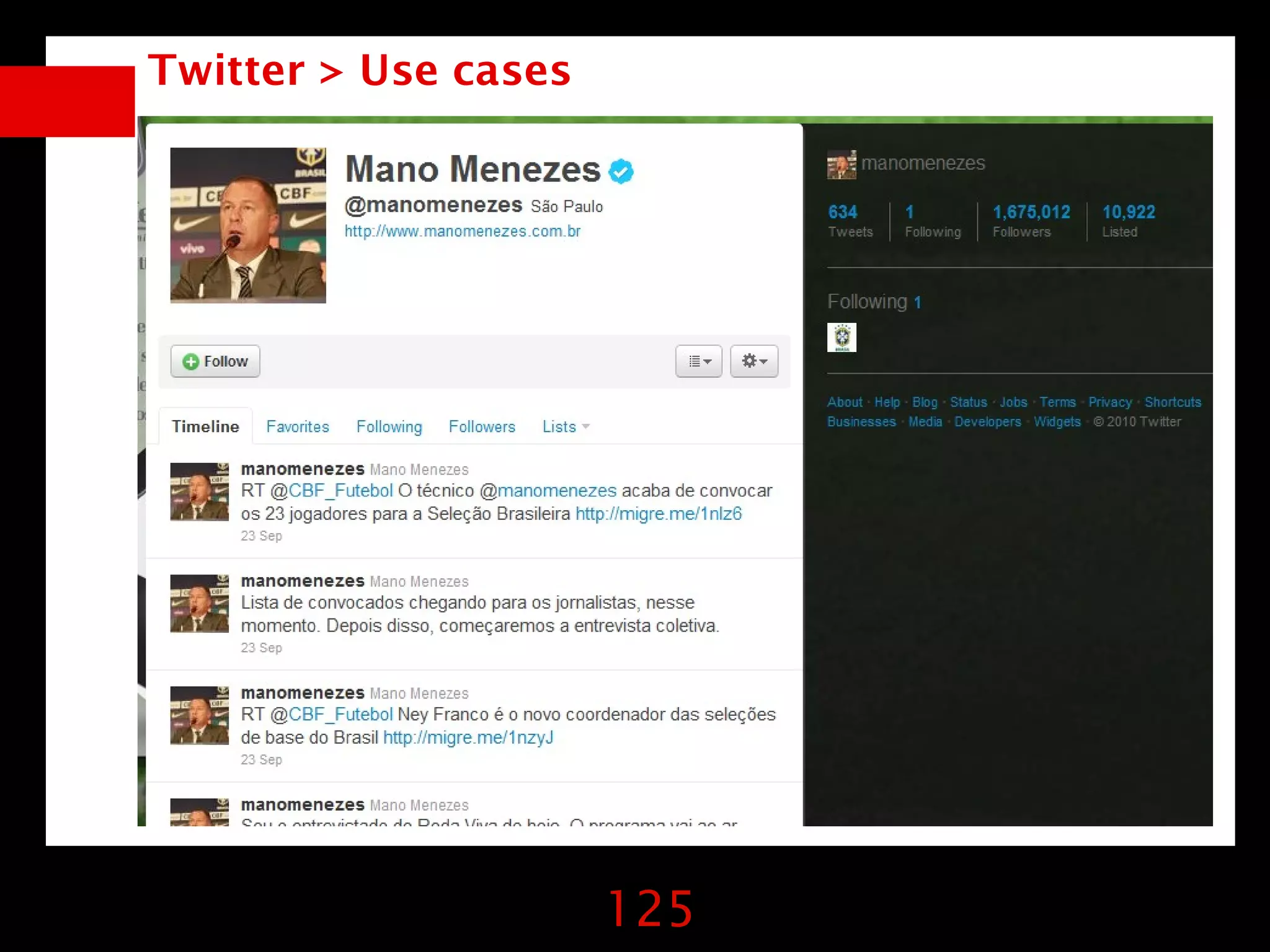
                      125
Twitter > Use cases


                      126
Twitter > Use cases


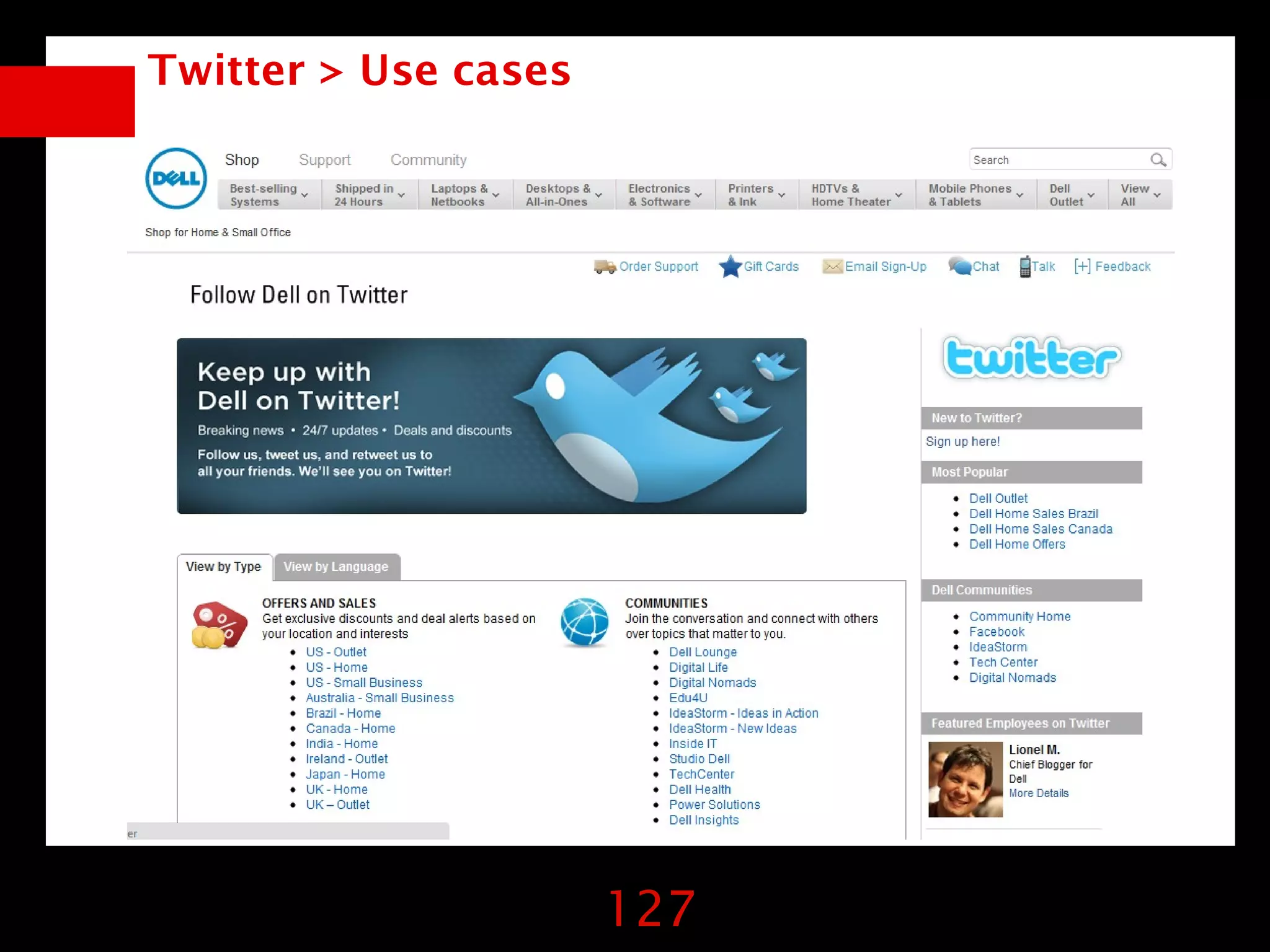
                      127
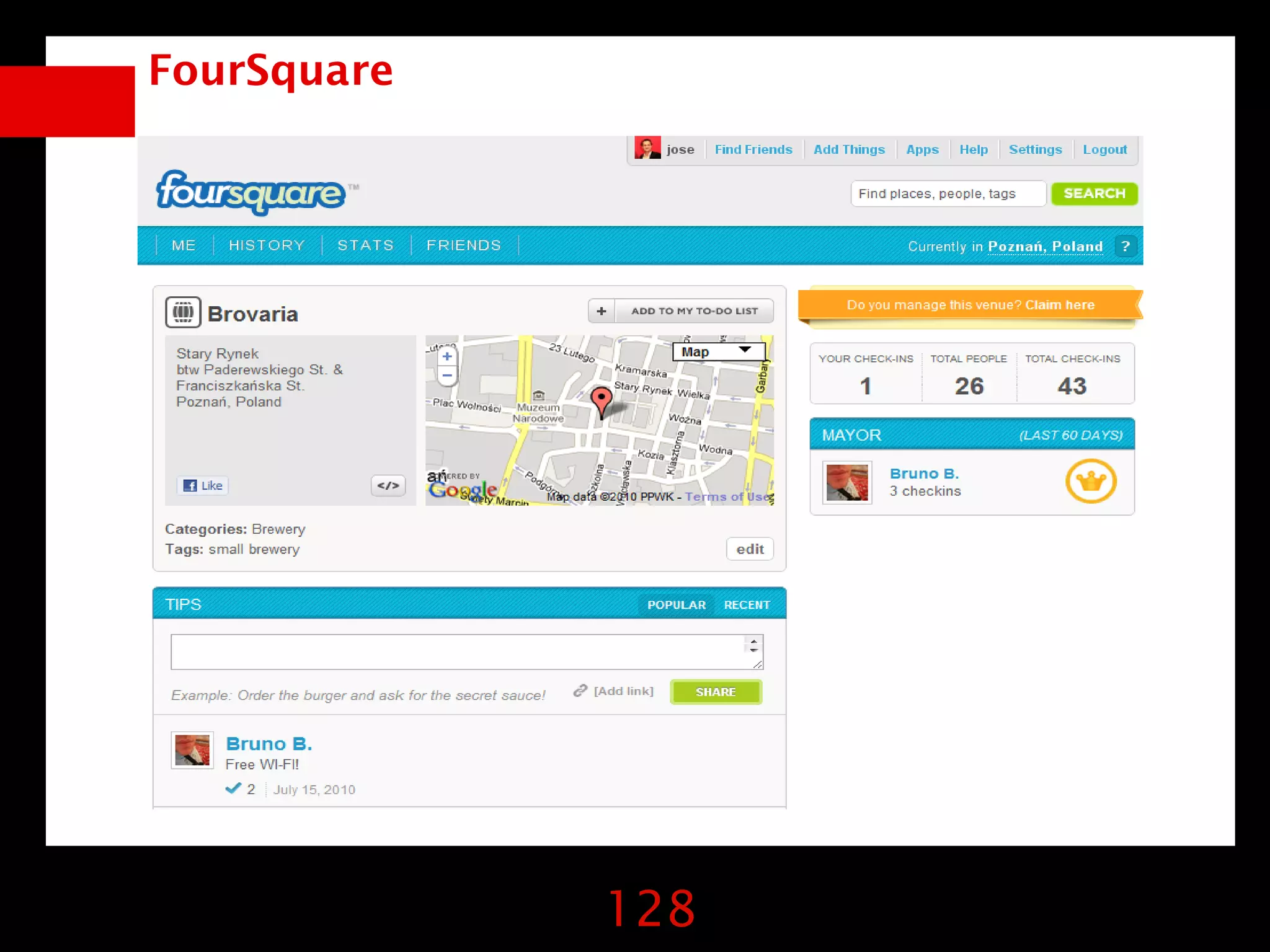
FourSquare


             128
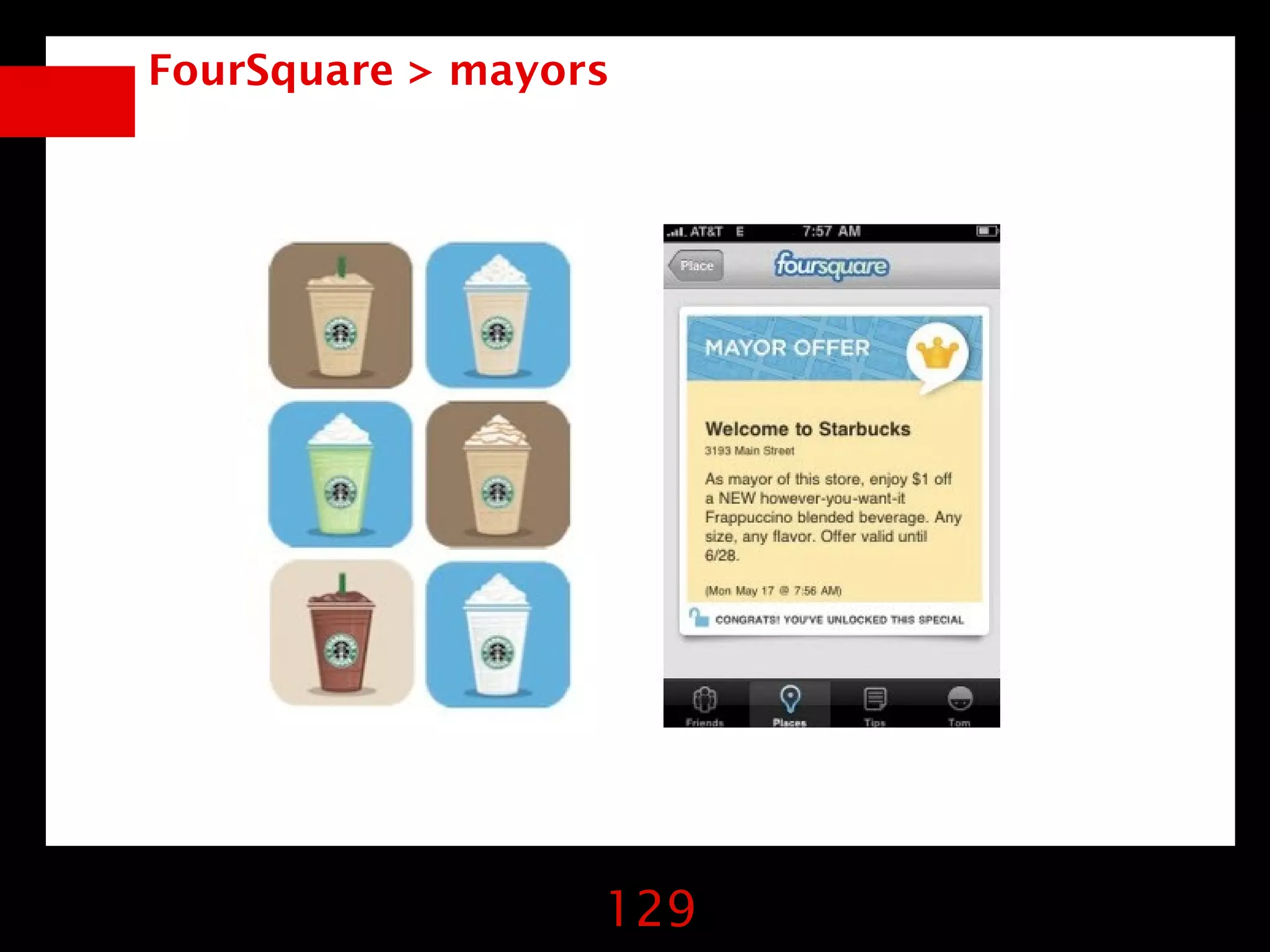
FourSquare > mayors


                  129
FourSquare > medals


                  130
Grand Guest > presents + discounts


                   131
Best Buy & Virgin > location-based offers


                     132
Marketing options for check-ins


•Virally market by giving out deals in exchange
 for single check-in (tell a friend)
•Loyalty program in which customers are
  rewarded with deals in exchange for multiple
  chek-ins
• Timed check-in deals during hours in which few
  people go shopping
• Deals if a group does
  check-in (swarm)


                     133
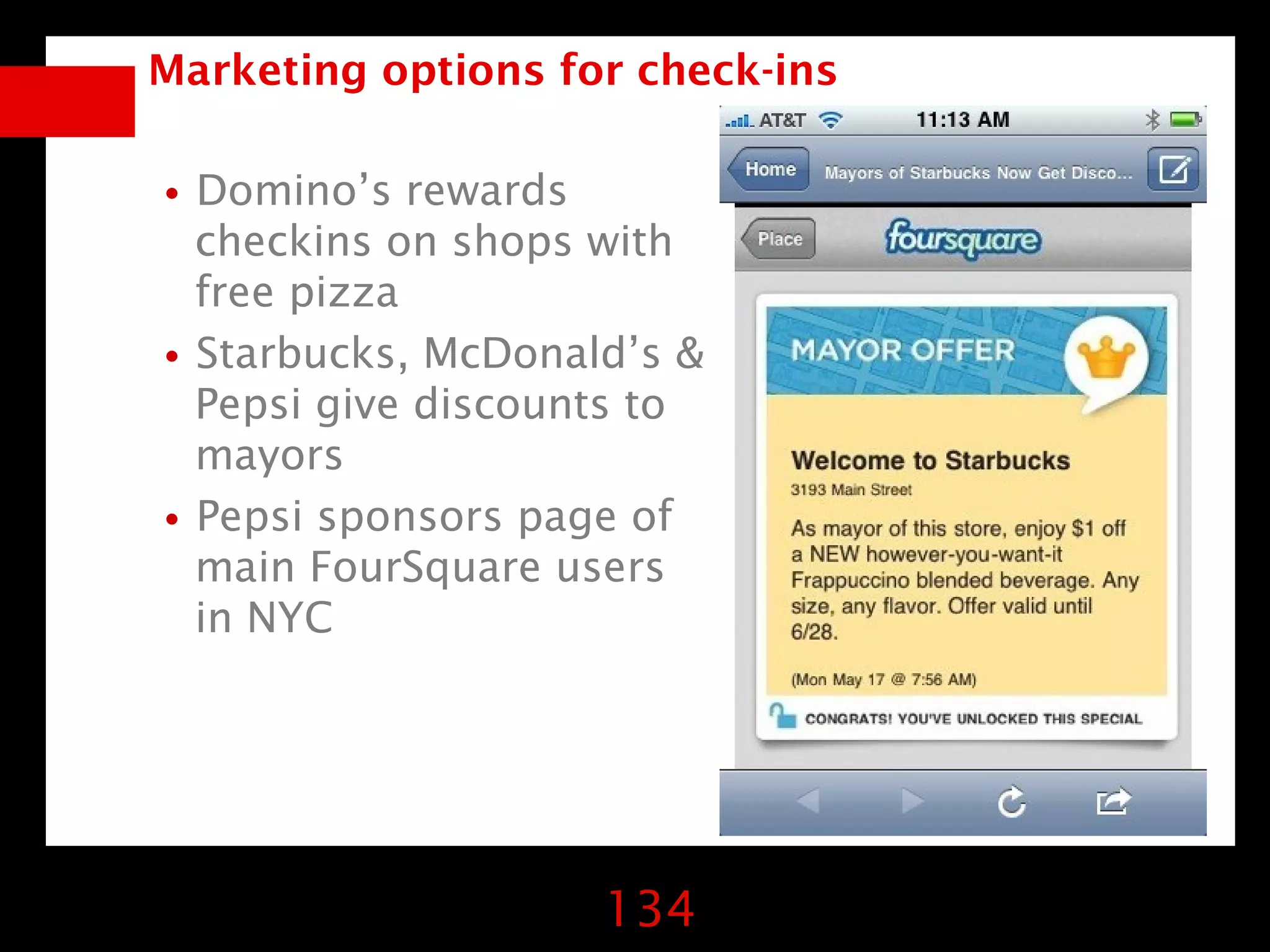
Marketing options for check-ins


•Domino’s rewards
  checkins on shops with
  free pizza
• Starbucks, McDonald’s &
  Pepsi give discounts to
  mayors
• Pepsi sponsors page of
  main FourSquare users
  in NYC


                    134
Marketing options for check-ins


•Jimmy Chao’s Pirate
  Treasure Hunting game
  in London’s streets thru
  Facebook, FourSquare
  and Twitter
• A guide of restaurants
  interviews FQ mayors
• Planet Hollywood Las
  Vegas announces names
  of mayors on screen


                     135
Marketing 2.0 strategy


•Fix goals
•Listening: online reputation and reactions
•Buzz marketing
•Activate: PR 2.0 with influentials and power
 users
•Support: community with fans, Facebook,
  Twitter (Conversational marketing and Brand
  media)
• Measure


                     136
Dell case


•Professor Jeff Jarvis complains in his blog as his
  computer crashes and customer service does
  not do a good job.
• The company reacts


                      137
Dell case > Social media evolution
(source: http://slideshare.net/Dell_Inc/blogwellcincinnati-
april-7-3678335)


                                              138
Dell case > Consumer Generated Contest


                   139
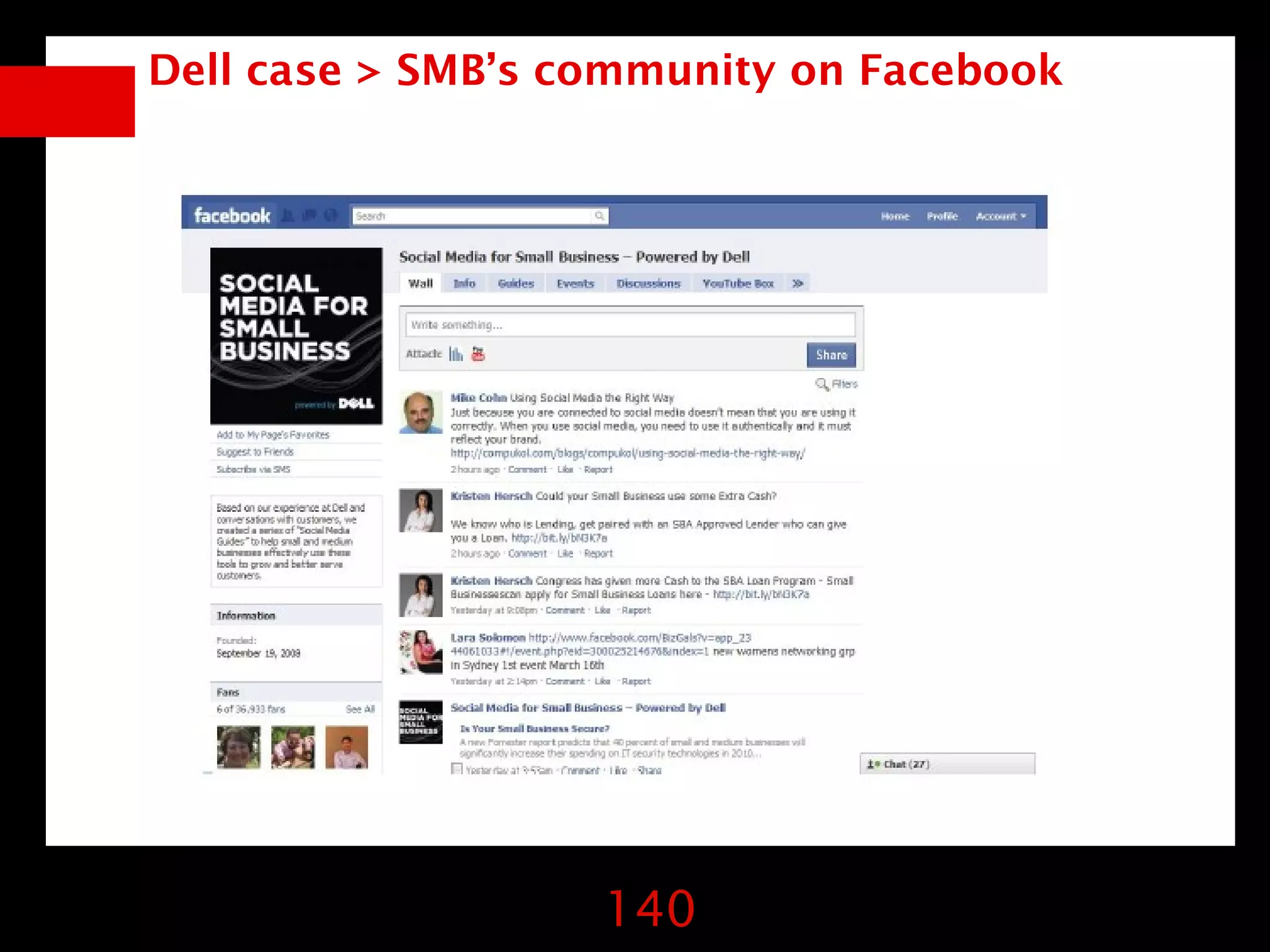
Dell case > SMB’s community on Facebook


                   140
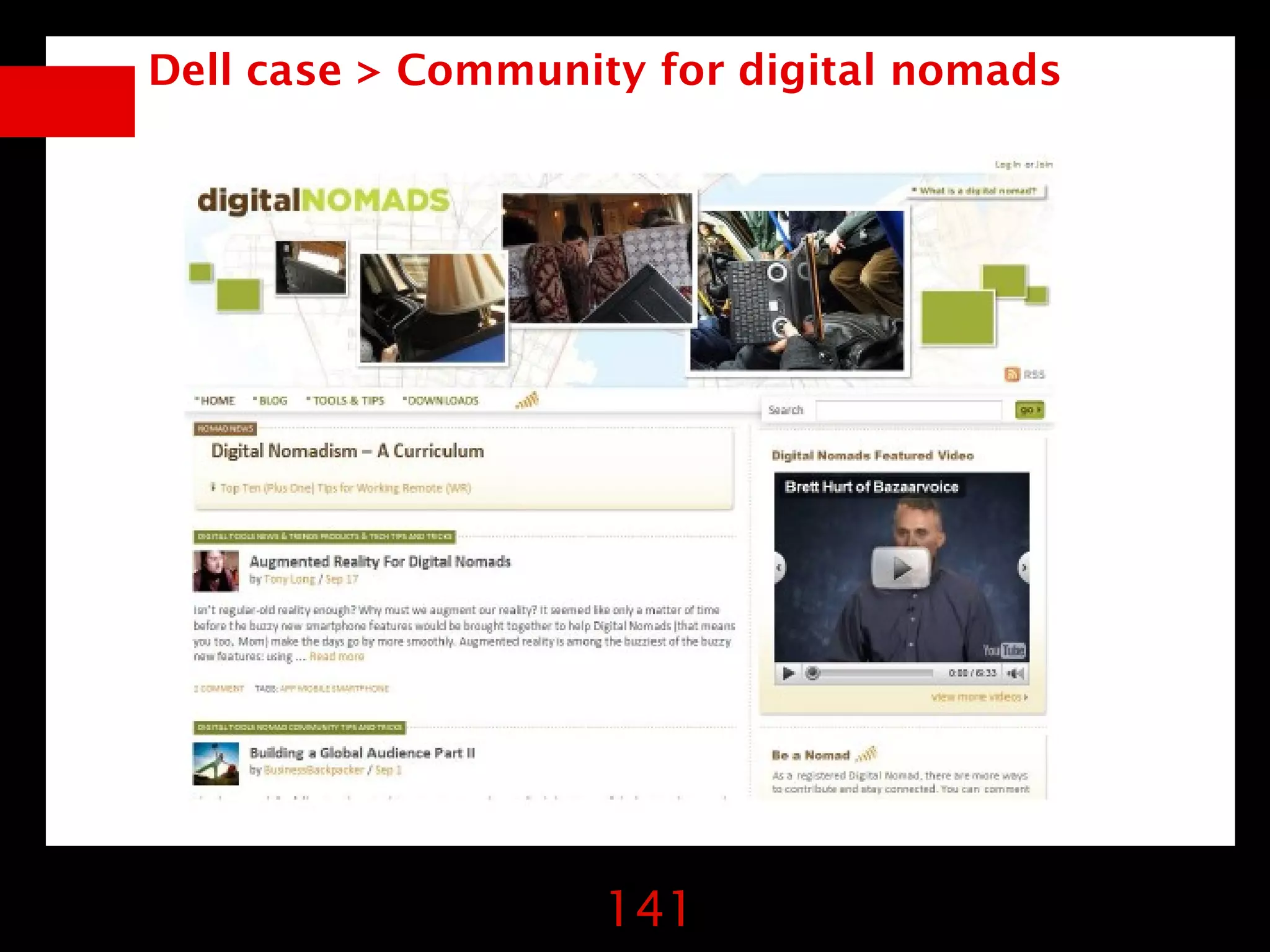
Dell case > Community for digital nomads


                   141
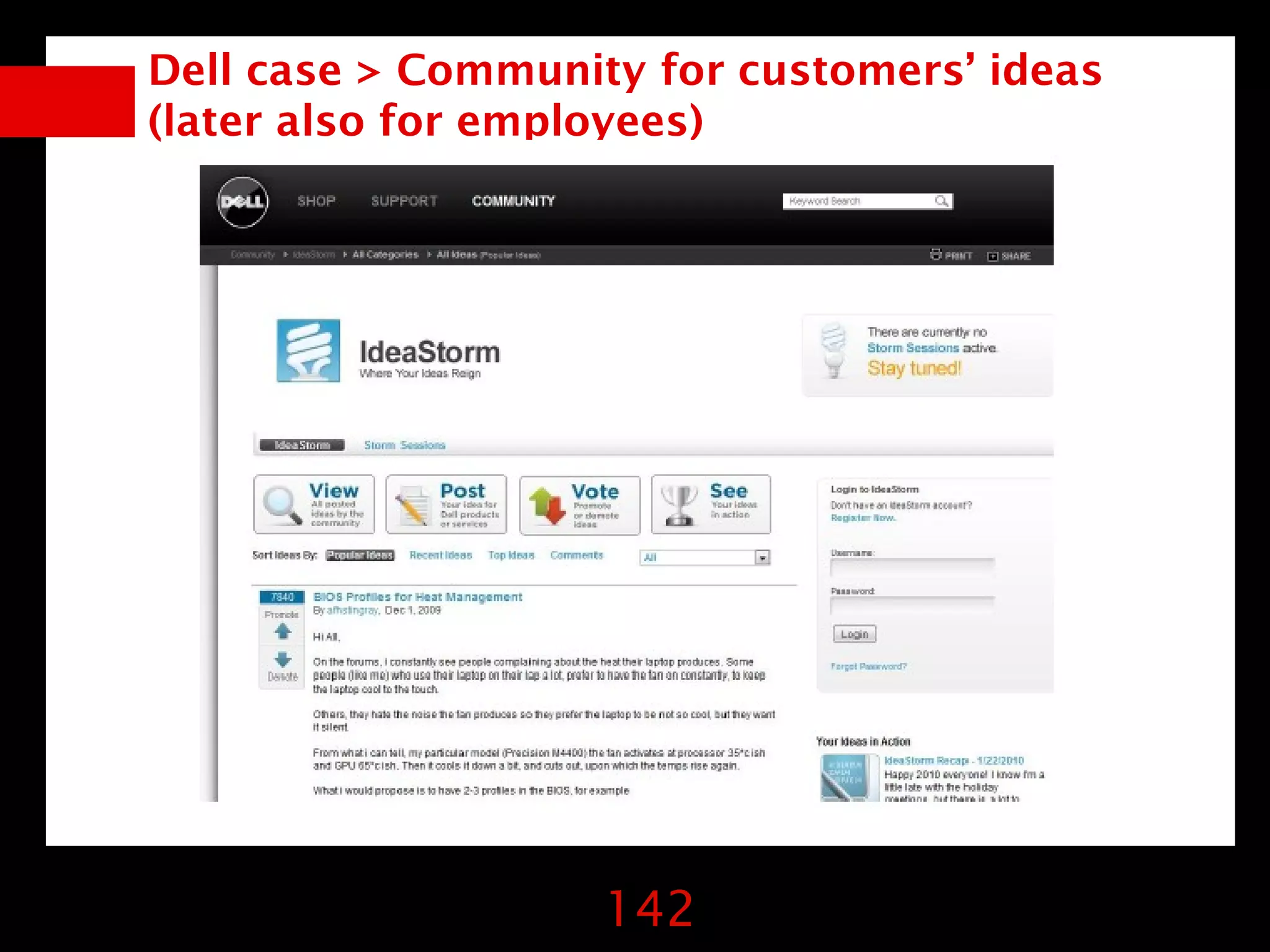
Dell case > Community for customers’ ideas
(later also for employees)


                    142
Dell case > Outlet on Twitter


                     143
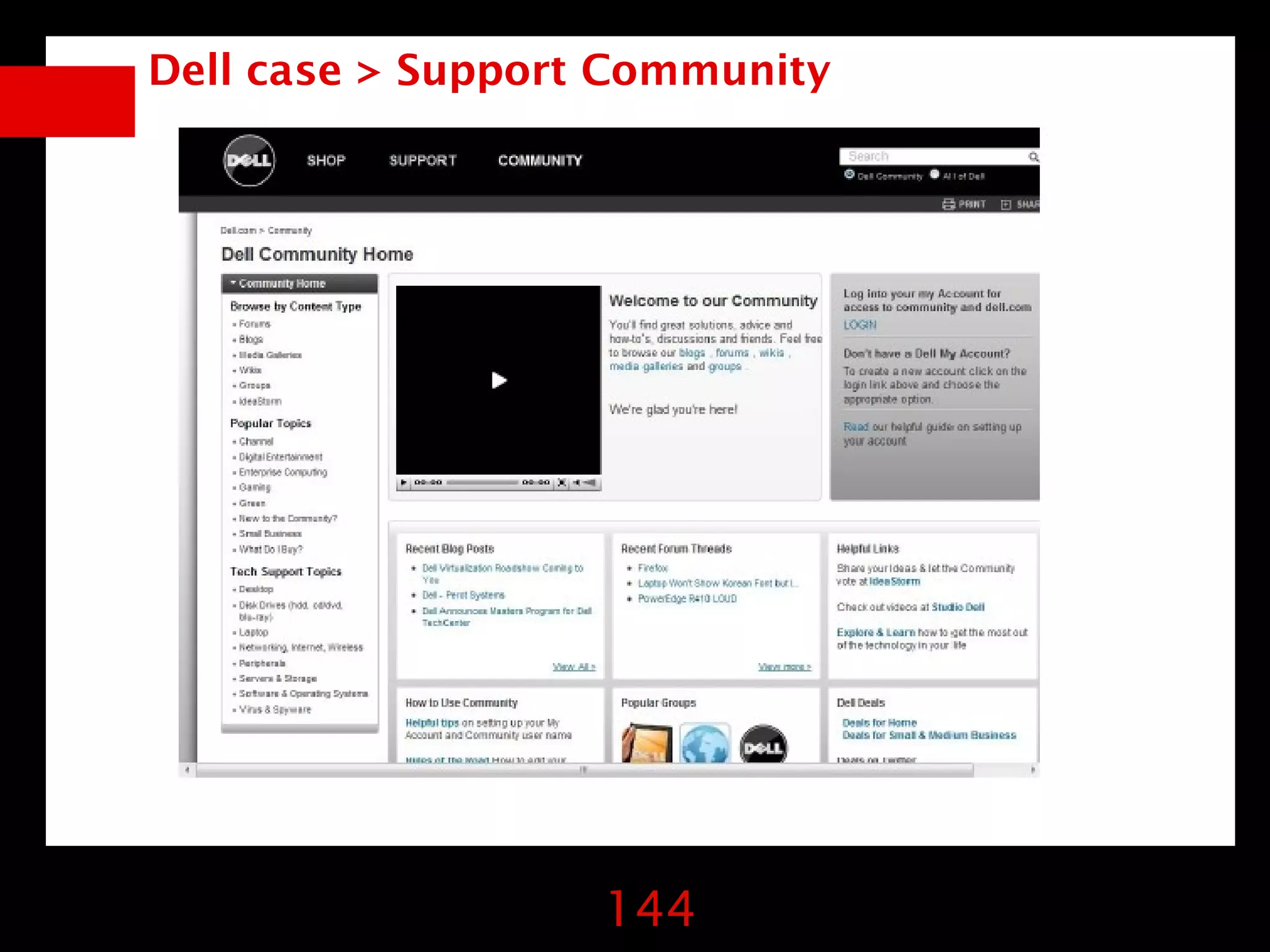
Dell case > Support Community


                   144
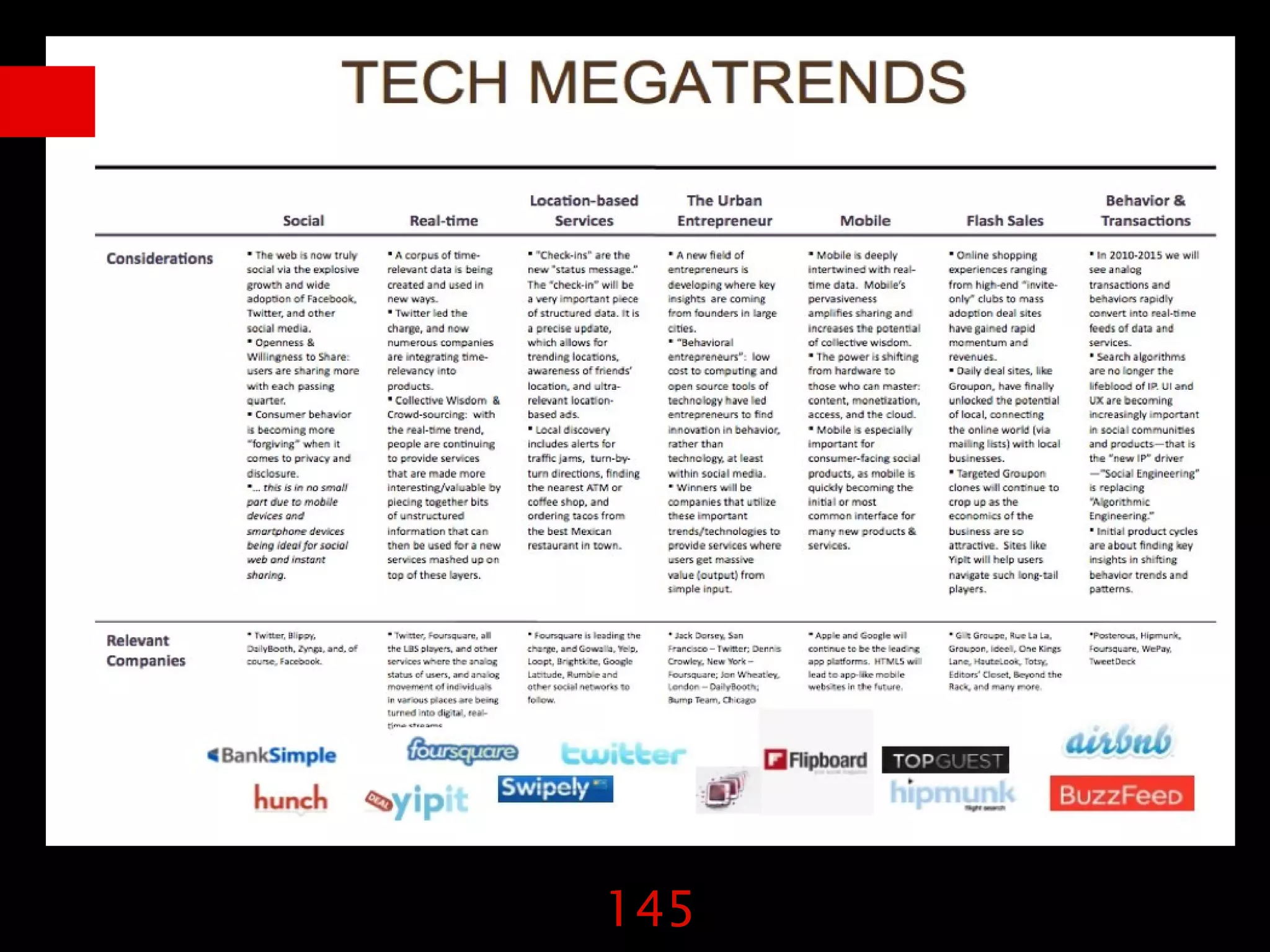
145
Some things never change


                   146

From Web 2.0 to Social Media

  • 1.
  • 2.
  • 3.
    A new trend?Online > .com 3
  • 4.
    Web 1.0 vs. Web 2.0 Static (web) Dynamic (blog) Dark (html) Transparent (wiki) Individual (PC) Social (network)) • Estática (web) • Oscura (html) • Individual (PC) 4
  • 5.
    Some changes onthe Internet •Fast connections: xDSL, UMTS •New technologies: Ajax, HTML5, API... •New standards: XML, Soap, OpenSocial... •New services: wikis, blogs, networks... •Open source: cheap and available •More women: more e-commerce + more social •Geolocation + mobility: iPhone, Android, Blackberry 5
  • 6.
    Some concepts fromO’Reilly •The Web as a platform •Collective intelligence •Data bases as barriers to competition •The end of phased development (permanent beta) •Agile software development •Software as a platform (SaaS) + cloud computing 6
  • 7.
  • 8.
    The Cluetrain Manifesto (1999) •Marketsare conversations • Hyperlinks subvert hierarchy • Organizations are networks 8
  • 9.
    The Cluetrain Manifestoand WikiLeaks •#7: Hyperlinks subvert hierarchy • #12: There are no secrets • #41: Companies make a religion of security, but this is largely a red herring 9
  • 10.
  • 11.
    You as amedia •You create content •You socialize •You choose/vote •You recommend •You filter •You share 11
  • 12.
    A platform whereyou give and receive 12
  • 13.
  • 14.
    Social networks surpassingsearch engines? 14
  • 15.
    Social professional networksbigger than business newspapers 15
  • 16.
    Some Web 2.0terms •Services: blog (blogging), nanoblog (twitter), wiki, social filtering, content sharing, social network, mashup • User Generated Content (UGC) • Crowdsourcing • Widget • Gadget • Folksonomy • Semantics • Permanent beta • Serendipity and relevance • Prosumer 16
  • 17.
    Web 2.0 terms> Social filtering 17
  • 18.
    Web 2.0 terms> Mashup 18
  • 19.
    Web 2.0 terms> Crowdsourcing 19
  • 20.
    Web 2.0 terms> Crowdsourcing 20
  • 21.
    Web 2.0 terms> Crowdsourcing 21
  • 22.
    Web 2.0 terms> Widget 22
  • 23.
    Web 2.0 terms> Folksonomy 23
  • 24.
    Web 2.0 terms> Semantics 24
  • 25.
    Web 2.0 terms> Serendipity 25
  • 26.
  • 27.
  • 28.
    Social media landscape:2011 •Publish: blogs, microblogs and wikis •Share: videos, photos, links & docs •Discuss: comments & social search •Commerce: reviews & purchase sharing •Location: local social networks & events sharing •Network: professional & personal social networks •Games: social waming & virtual worlds 28
  • 29.
  • 30.
  • 31.
  • 32.
  • 33.
    Social networks >Where are they used 1.Russia: 6.6 hours 2.Brazil: 6.3 3.Canada: 5.6 4.Spain: 5.3 5.Finland: 4.7 6.UK: 4.6 7.Germany: 4.5 8.USA: 4.2 9.Colombia: 4.1 10.Worldwide: 3.7 • Source: ComScore 2009 33
  • 34.
    Social networks >MySpace vs. Facebook 34
  • 35.
  • 36.
    Social graph >Social sign on vs. Login •“Users don’t have to register to your website in order to verify their identity” •2/3 of 100 main US sites have integrated Facebook Connect. Also MS for MS Office Live •oAuth (Twitter) is the second player •OpenID (distributed and open) is not working •Google has limited itself to email in the business area, in which Salesforce is also a growing player • In mobile platforms, owning the operating system is strategic for Google (and Apple & MS) • Companies have to decide whether to integrate on FB or use FB Connect on their sites 36
  • 37.
    Social graph >Platforms 37
  • 38.
    New ways andnew business models •Advertising •Journalism •Banking •Education •Manage companies •Medicine •Politics •Customer Service •Social commerce 38
  • 39.
  • 40.
  • 41.
  • 42.
  • 43.
  • 44.
  • 45.
    Enterprise 2.0 >Decoding social 45
  • 46.
  • 47.
  • 48.
  • 49.
  • 50.
  • 51.
  • 52.
  • 53.
    Social commerce >Recommendations 53
  • 54.
    Social commerce >Online communities 54
  • 55.
    Social commerce >Group buying 55
  • 56.
    Social commerce >Social styling platforms 56
  • 57.
    Social commerce >Social co-shopping 57
  • 58.
    Social commerce >Social co-shopping 58
  • 59.
    New rules fora new era 59
  • 60.
  • 61.
  • 62.
  • 63.
    Law of sixdegrees of separation 63
  • 64.
    Law of 3degrees of influence 64
  • 65.
  • 66.
  • 67.
    Nielsen’s law (1/9) •10%of Twitter users create 90% of content •10% of Facebook users create 30% of content •15% of Wikipedia editors do edit 90% entries •5% of Internet users do blog •On Youtube the creator to consumer ratio is 0.5% •Also the 1% rule by Charles Author ( http://www.guardian.co.uk/technology/2006/jul/20/guardianweeklytechnolog ) 67
  • 68.
    Power law ofparticipation 68
  • 69.
    Jeff Bezos’ lawof e-reputation (1 to 6 vs. 1 to 6,000) 69
  • 70.
  • 71.
  • 72.
  • 73.
  • 74.
    Principles to takeinto account 74
  • 75.
    Design to matterin a world of infinite supply 75
  • 76.
    Be the bestat one thing 76
  • 77.
  • 78.
    Focus on oneinteraction 78
  • 79.
  • 80.
  • 81.
    Develop relationships -Imitation effect 81
  • 82.
    Product as aservice 82
  • 83.
    Community creation -Methodology 1.Fix goals (for members and owners) and differentiation 2.Set mission (backstory), vision, name, logo, taxonomy, relationships built as a result 3.Decide who can become member: nicks/real ? 4.Set behavioral rules: FAQ, privacy, terms of use 5.Tools: free (FB, Linkedin) + paid (ning, elgg) 6.Animation - Attract members: events, contests, board, education, viral (FB, Twitter), cooptation 7.Animation - Management: games, reputation system, prizes for first users, share blog/newsletter, internal democracy, exclusivity 8. Rituals: presentation, birthdays, remember mail 83
  • 84.
    Community creation -Methodology 84
  • 85.
    Community creation -Methodology 85
  • 86.
  • 87.
    Community management -Etiquette (1) •Friending: you are not obligated to follow/friend anyone •Appearance: avatar picture shouldn't be a company logo and it should be you •Retweeting people’s praise of you comes off as jerky. Just thank them •If you retweet something interesting, always give credit for who found it first •Promote others more often than you promote yourself. My long-standing measure is 12:1 87
  • 88.
    Community management -Etiquette (2) •Links do matter to Google and to the people you care about. When you can, give them a link •Disclosure: if you’re writing about a client, add (client) to the tweet/post/update •You can tweet as often as you want, but people unfollow “noisy” tweeters •Sharing is caring: the web thrives on links and social sharing. The more you do to participate, the more people will create material for free for you to enjoy 88
  • 89.
    Community management -Animation •From 4 P’s (Product, Price, Promotion, Place) to 4 E’s (Engage, Experience, Enhance Emotion) and 4 C’s (Content, Connectivity, Commerce, Community) -> Games create community • Word of mouth -> Twitter • Blog or exclusive newsletter + interview members • Dynamic stream on home page • Emails when users have not come lately • Manage conversations: Encourage + Moderate • Moderators + Subgroups -> Give power to leaders • Analytics: comments, contributions... 89
  • 90.
    Community management -Motivations to participate •Return favor: reciprocity •Friendship / Fans -> How to turn fans into brand advocates •Self steem and public recognition -> Reputation -> Games •Influence (Wikipedia) •Money •Learn http://buildingreputation.com/writings/2009/10/motivations_and_incentives.htmlhtml 90
  • 91.
    Community management -Reputation systems (Gaming systems) •Altruistic participations don’t need them •Non-altruistic participations get compensation •Connectors (influencers) and mavens (info collectors) are very useful •Reputation system should reward active users and penalize non-actives •Trolls should be avoided •Democratic reputation systems are very interesting •First members should be honored •Stakeholders should be redirected to a blog 91
  • 92.
    Community management -Types of users 92
  • 93.
    Community management -Types of users 93
  • 94.
    Community management -Membership cycle 94
  • 95.
    Community management -Types of ties 95
  • 96.
    Community management -Online engagement •Less talk about your products and more about lifestyle. Ex. Burberry’s FB page promotes emerging music artists. • Promote product related material. Stimulates purchases but also criticism. Ex. BMW & Gucci. • Use social media to promote real world events. Ex. Smirnoff with ideal night out ideas’ contest which later becomes a real party. • Competitions and giveaways. • Exclusive offers for Facebook fans. Ex. Panasonic 96
  • 97.
    Community management -Success keys •Choose a niche •Be relevant in that niche •Keep it simple •Get a full bar •Encourage people to post about their passions •Make it a fun place •Make each member feel special •Keep in touch with members •Reward members Source: http://www.communityspark.com/10-reasons-why-people-arent-contributing-to-your-online-community 97
  • 98.
    Community management -Social Media Optimization (SMO) •Make sharing easy: Twitter, FB (Likes) buttons •Create shareable content: Blogging and status updates on Facebook and Twitter profiles •Comment on other blogs •Reward engagement and get new friends/fans and followers •Encourage the mashup: RSS, API •Get on people’s Facebook walls by using the Facebook Edgerank as well as possible (get many fans and likes) • Don’t forget classic PR on events !!! 98
  • 99.
    Community management -SMO on Facebook pages •Provide fans with offers and discounts •Don’t just focus on managing the negative •Fans are better at responding than brands so empower them •Fans prefer images over video •Post a question with every post 99
  • 100.
    Community management -Top reasons to follow a brand on Facebook •To find offers and discounts (42%) •Love of the product (33%) •To get latest news about the brand (24%) •To give them ideas on how to improve the product (12%) •To get better customer service (12%) •To complain (6%) 100
  • 101.
    Community management -Social Media Optimization (SMO) 101
  • 102.
    Community management -Measurement tools •Klout, Infinigraph: influencer identification tools •Radian6 (bought by Salesforce) •ScoutLabs •Cymfony •Nielsen Buzzmetrics •Traackr •Free ones: Visible Technologies (www.trureputationscore.com), Backtype, Trackur, Grader.com 102
  • 103.
    Facebook > Somedata •More than 500 million users •50% of them connect every day •¼ of them access thru mobile (more on twitter) and they are twice more active •Average user has 130 friends •Average user stays 5 hours •70% users are outside the US » Source: http://www.facebook.com/press/info.php?statistics 103
  • 104.
    Facebook > Topcountries •USA: 126 M •UK: 27 •Indonesia: 25 •Turkey: 23 •France: 19 •Italy: 16 •Canada: 16 •Philippines: 14 •Mexico: 12 •Spain: 10,4 » June, 2010, Checkfacebook.com 104
  • 105.
    Facebook > Somemyths •Used mostly by US kids? But 2/3 older than 26 •Will it replace e-mail? •Keeps changing privacy to sell ads? •Users are in arms over privacy? •Zuckerberg was a bad kid and stole the idea from other kids? •Facebook is temporal, as Friendster or MySpace? •Does Facebook kill the Web? 105
  • 106.
    Facebook > Profile,Page, Group, Place •User Generated content •Personal profile vs Business page •Page vs. Group •Places •Proximity generates confidence •Confidence & influence & visibility •The power of virality/word of mouth •Media brand •Tips on turning fans into brand advocates •Tips on updating a page regularly 106
  • 107.
    Facebook > Somethings • Facebook vs. Google: People vs. Contents • Facebook Ads vs. Google AdWords • Tracking success: Page insights 107
  • 108.
    Facebook Places >presents + discounts 108
  • 109.
  • 110.
    Online videos •Different thanoffline: shorter, interactive •Platforms: Youtube, Vimeo, Facebook, Kewego •Streaming platforms: Livestream, UStream (Watershed) •Tools: dotSub (subtitles), flowplayer & PhpMotion (free video player), Windows Media Maker (alternativas: VirtualDub, Adobe Premiere, Pinnacle Studio, Sony Vegas), Audacity (para editar audio), Windows Media Encoder (streaming) • Formats: AVI, MOV (Quicktime), MPEG, SWF (Flash), FLV (Flash), Real Media, WMV (Windows) 110
  • 111.
    Youtube •The Youtube Generation(Gen Y): attention just for 3 min. •Introduction to the YouTube community •Using YouTube channels, playlists, V-logs, and favorite videos for business •Step by step guide to creating and customizing a YouTube channel •Tips on building engagement and community around your brand •Advertising on YouTube 111
  • 112.
    Blogs > Advantages •Googleloves blogs •Cheap •Simple •RSS for aggregation •Credible, near and modern •Easy feedback •Buzz -> Viral marketing thru blogosphere (meme) •Develops communities •Difference with forums 112
  • 113.
    Blogs > Parts •Head:title and subject •Colums: browsing guide, about (+FAQ), archives, categories, links, search, RSS, last comments • Post: title, lead, text, permalink, trackbacks, pings • RSS 113
  • 114.
  • 115.
    Blogs > Types •Personal:geeks, passions, entrepreneurs •Corporate: corporate, consultant, brand •Media: Weblogs SL, Escolar.net 115
  • 116.
    Blogs > Tips •Getas many links as possible (and link yourself) •Write for geeks •Use social sharing sites: Digg, Twitter •Comment on other blogs •Write about sex, science, weird things, current events... •Create a classification of 10 things •Review your analytics •Platforms: Blogger, WordPress •Comments: free/moderated •Use copyleft licenses 116
  • 117.
    Blogs > Editorialpolicy •One blog/post, one subject •Personal stuff matters •Frequency: 1/2 times per week minimum •Answer comments: develop community •Title is so important •Short texts: people do scan •Paragraph every two sentences •Lists instead of long explanations •Transparency: also when erasing •Ask for advice to readers •Communicate passion 117
  • 118.
    Blogs > Netiquette •Thereis a human being on the other side •Be careful when joking •Be short •Use descriptive titles •Think on whomever is reading you •Read all comments before answering •Be careful with copyrights •Quote •Don’t criticize for ortography •Don’t insult, threaten 118
  • 119.
    Linkedin > Somedata •Over 80 million users •Profitable since 2006. Future IPO •Competitors: Xing (D), Viadeo (F) •Each user has an average of 60 connections •Average age of users is 39 •San Francisco-based executive headhunter Ron Bates has the most LinkedIn connections with 33,540 direct contacts • Average user of LinkedIn probably belongs to at least 3 to 4 groups 119
  • 120.
    Linkedin > Features •Profiles(personal and corporate): Visibility •Job search and executive head hunting •Commercial contacts: who knows whom •Follow a company (new recruits) •Ask for advice: Linkedin Answers •Professional groups: Forum, news, jobs, members •Polls •Apps platform: Tripit, Twitter, Slideshare... •Company products and services •Premium services: InMail messages, CRM 120
  • 121.
  • 122.
    Twitter > Somedata •At the beginning it was just a platform to send massive SMS messages •150 million users •300,000 new users every day •50 million tweets every day •75% traffic comes from outside twitter.com (3 billion daily requests thru API) •More than 300,000 oAuth apps •37% active use mobile phone (mainly SMS and iPhone) 122
  • 123.
    Twitter > Usecases 123
  • 124.
    Twitter > Usecases 124
  • 125.
    Twitter > Usecases 125
  • 126.
    Twitter > Usecases 126
  • 127.
    Twitter > Usecases 127
  • 128.
  • 129.
  • 130.
  • 131.
    Grand Guest >presents + discounts 131
  • 132.
    Best Buy &Virgin > location-based offers 132
  • 133.
    Marketing options forcheck-ins •Virally market by giving out deals in exchange for single check-in (tell a friend) •Loyalty program in which customers are rewarded with deals in exchange for multiple chek-ins • Timed check-in deals during hours in which few people go shopping • Deals if a group does check-in (swarm) 133
  • 134.
    Marketing options forcheck-ins •Domino’s rewards checkins on shops with free pizza • Starbucks, McDonald’s & Pepsi give discounts to mayors • Pepsi sponsors page of main FourSquare users in NYC 134
  • 135.
    Marketing options forcheck-ins •Jimmy Chao’s Pirate Treasure Hunting game in London’s streets thru Facebook, FourSquare and Twitter • A guide of restaurants interviews FQ mayors • Planet Hollywood Las Vegas announces names of mayors on screen 135
  • 136.
    Marketing 2.0 strategy •Fixgoals •Listening: online reputation and reactions •Buzz marketing •Activate: PR 2.0 with influentials and power users •Support: community with fans, Facebook, Twitter (Conversational marketing and Brand media) • Measure 136
  • 137.
    Dell case •Professor JeffJarvis complains in his blog as his computer crashes and customer service does not do a good job. • The company reacts 137
  • 138.
    Dell case >Social media evolution (source: http://slideshare.net/Dell_Inc/blogwellcincinnati- april-7-3678335) 138
  • 139.
    Dell case >Consumer Generated Contest 139
  • 140.
    Dell case >SMB’s community on Facebook 140
  • 141.
    Dell case >Community for digital nomads 141
  • 142.
    Dell case >Community for customers’ ideas (later also for employees) 142
  • 143.
    Dell case >Outlet on Twitter 143
  • 144.
    Dell case >Support Community 144
  • 145.
  • 146.