Dr. ASHUTOSH KUMAR SINGH
A fracture is a broken bone. It can range from a thin
crack to a complete break. Bone can fracture
crosswise, lengthwise, in several places, or into
many pieces. Most fractures happen when a bone is
impacted by more force or pressure than it can
support.
It is a medical condition in which there is a partial
or complete break in the continuity of the bone
1. COMPLETE
2. INCOMPLETE
3. OPEN
4. CLOSED
5. PATHALOGICAL
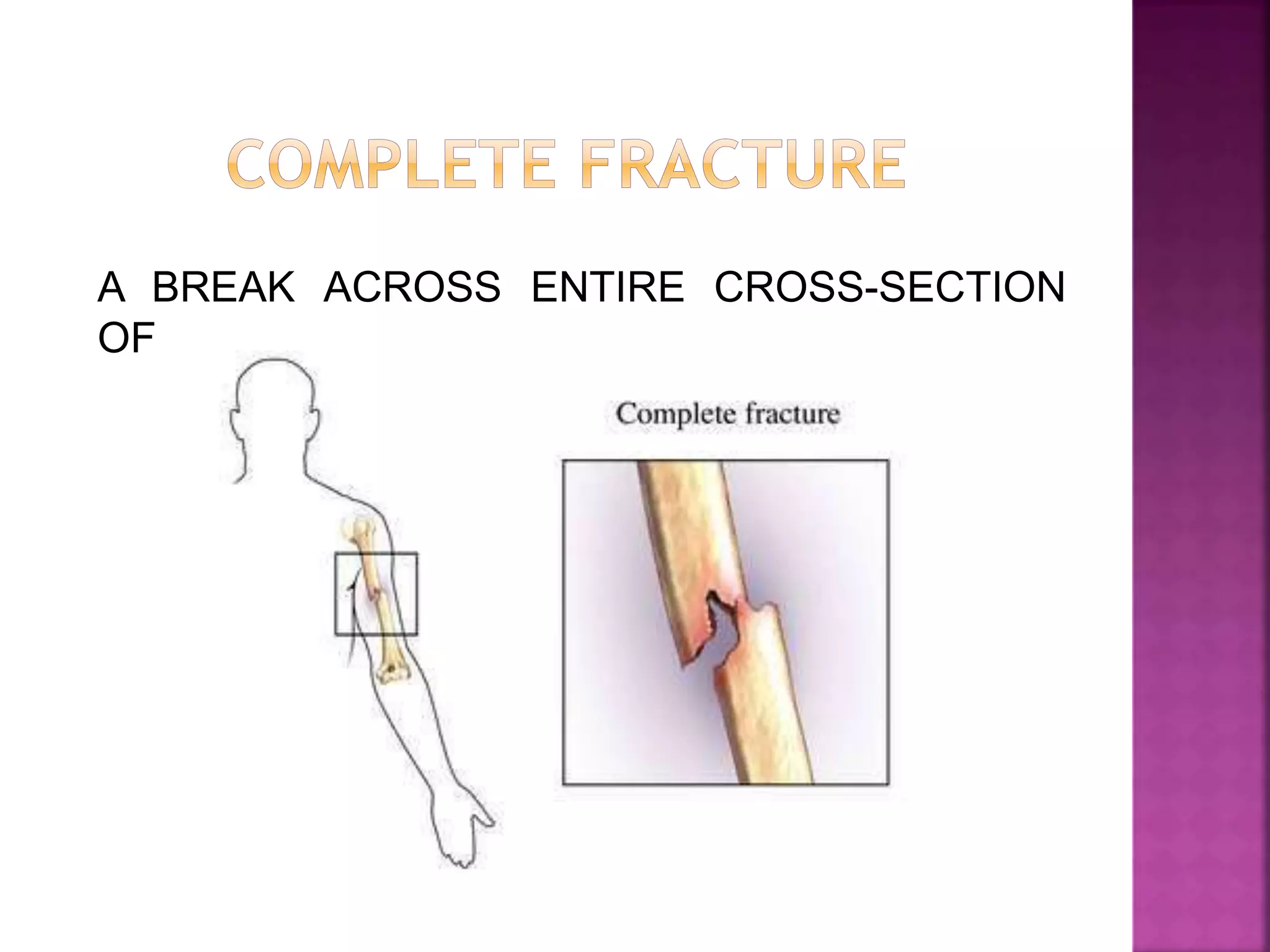
A BREAK ACROSS ENTIRE CROSS-SECTION
OF BONE
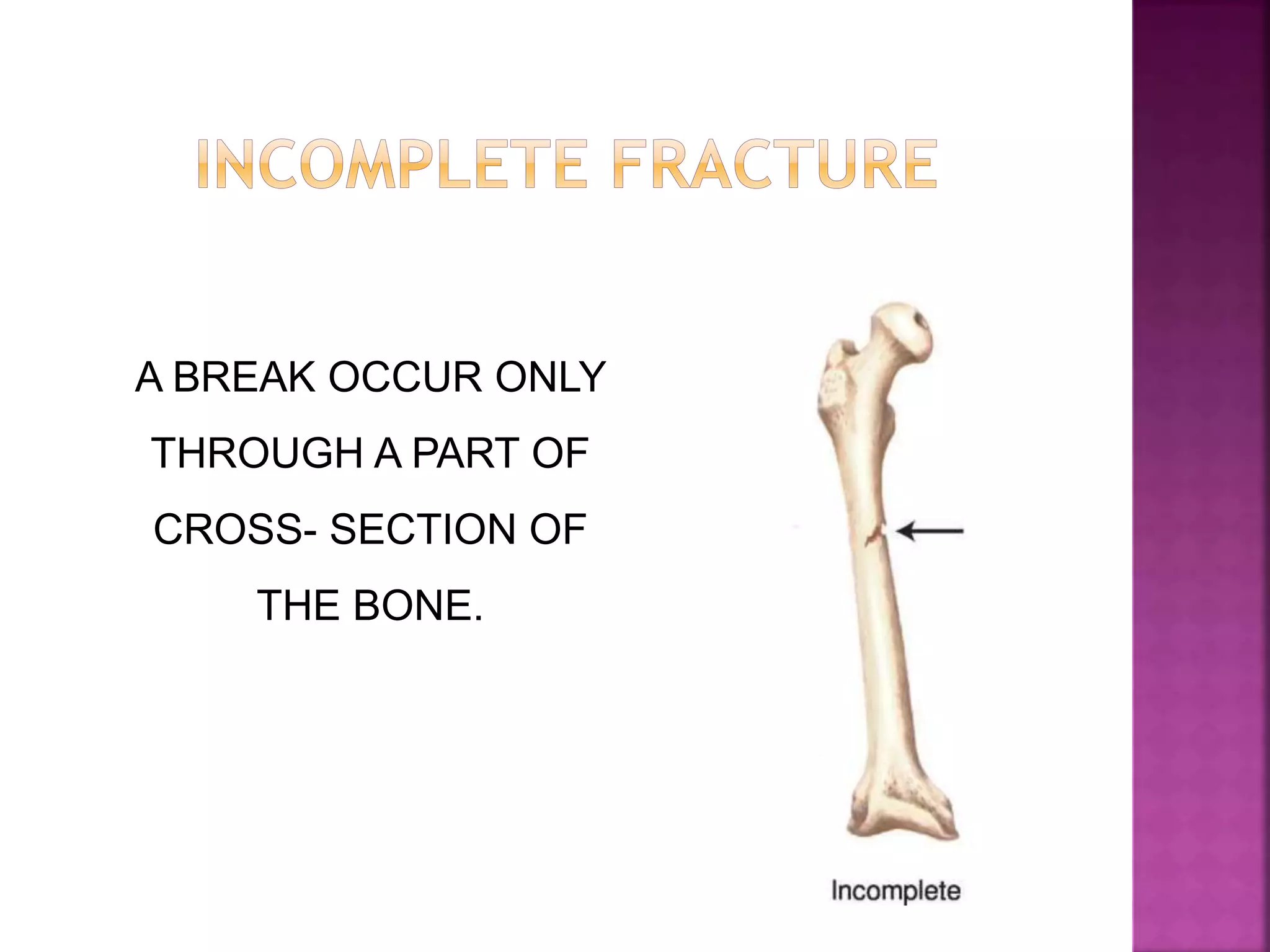
A BREAK OCCUR ONLY
THROUGH A PART OF
CROSS- SECTION OF
THE BONE.
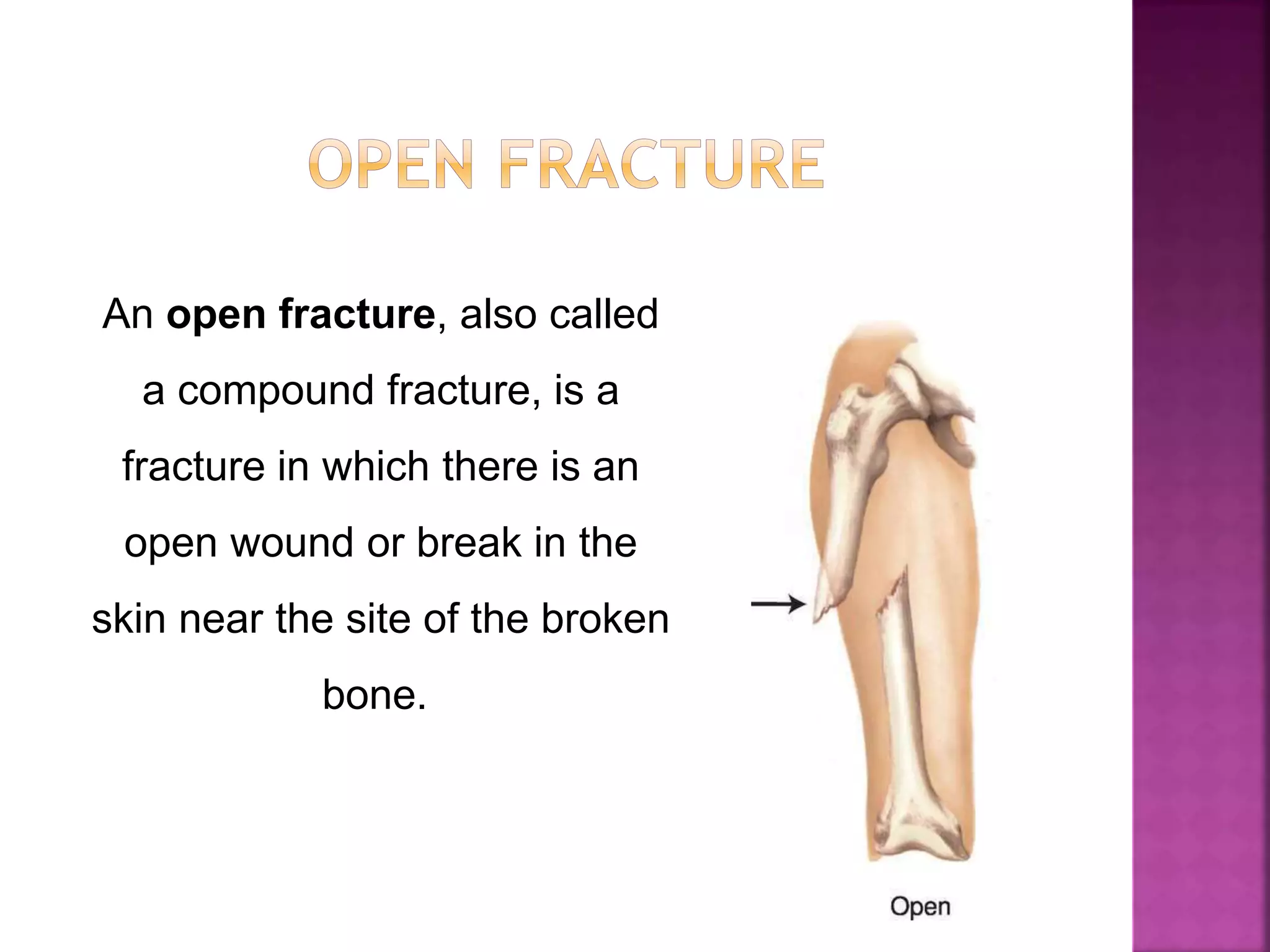
An open fracture, also called
a compound fracture, is a
fracture in which there is an
open wound or break in the
skin near the site of the broken
bone.
IS A SIMPLE FRACTURE THAT DOES NOT
CAUSE BREAK IN THE CONTINUITY OF THE
SKIN.
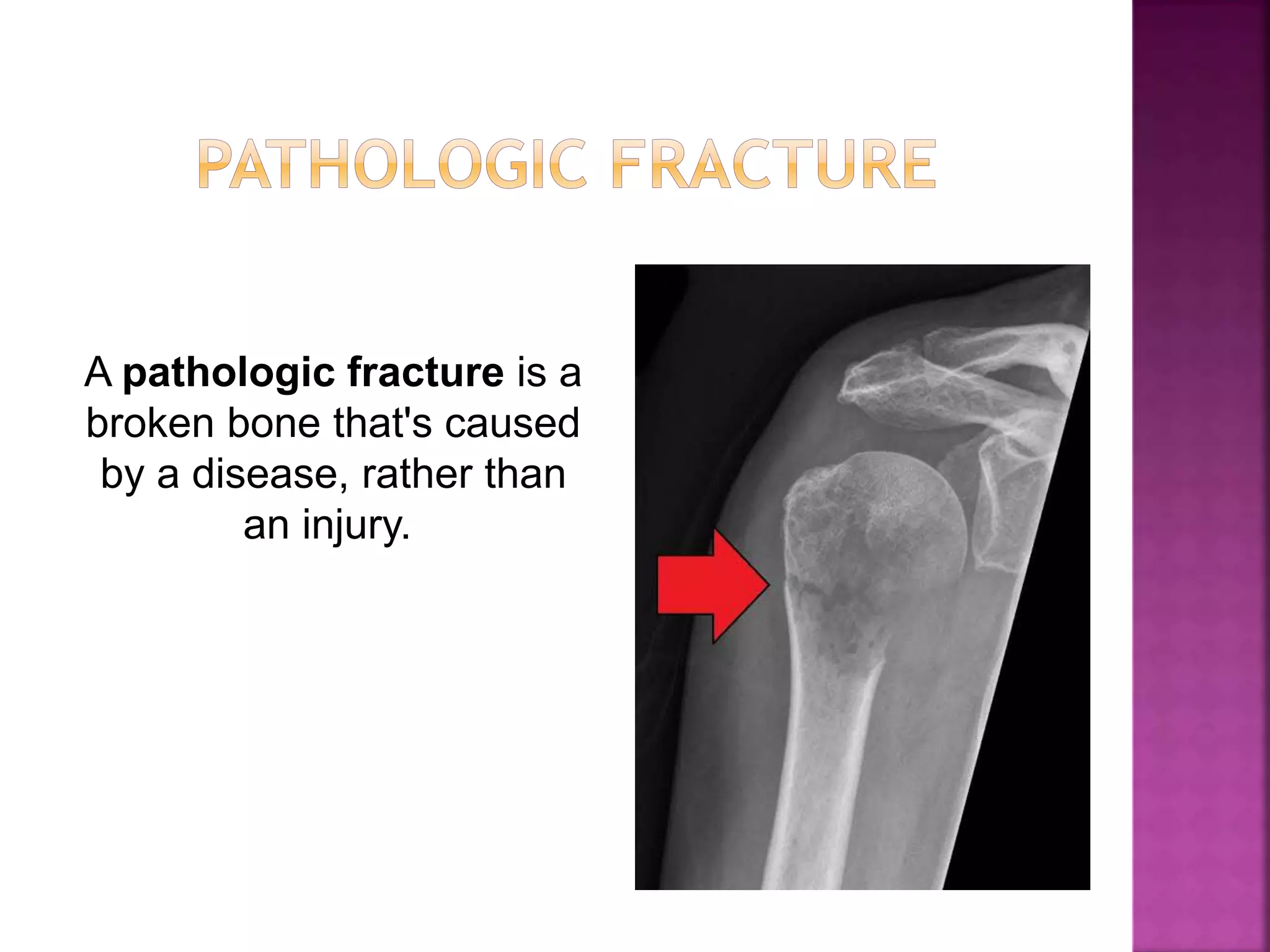
A pathologic fracture is a
broken bone that's caused
by a disease, rather than
an injury.
1. Greenstick fracture
2. Transverse fracture
3. Oblique fracture
4. Spiral fracture
5. Comminuted fracture
6. Depressed fracture
7. Avulsion fracture
8. Impacted fracture
9. Fracture dislocation
 A greenstick fracture is
a fracture in a young, soft
bone in which the bone
bends and breaks.
Greenstick fractures
usually occur most often
during infancy and
childhood when bones
are soft. The name is by
analogy with green (i.e.,
fresh) wood which
similarly breaks on the
outside when bent.
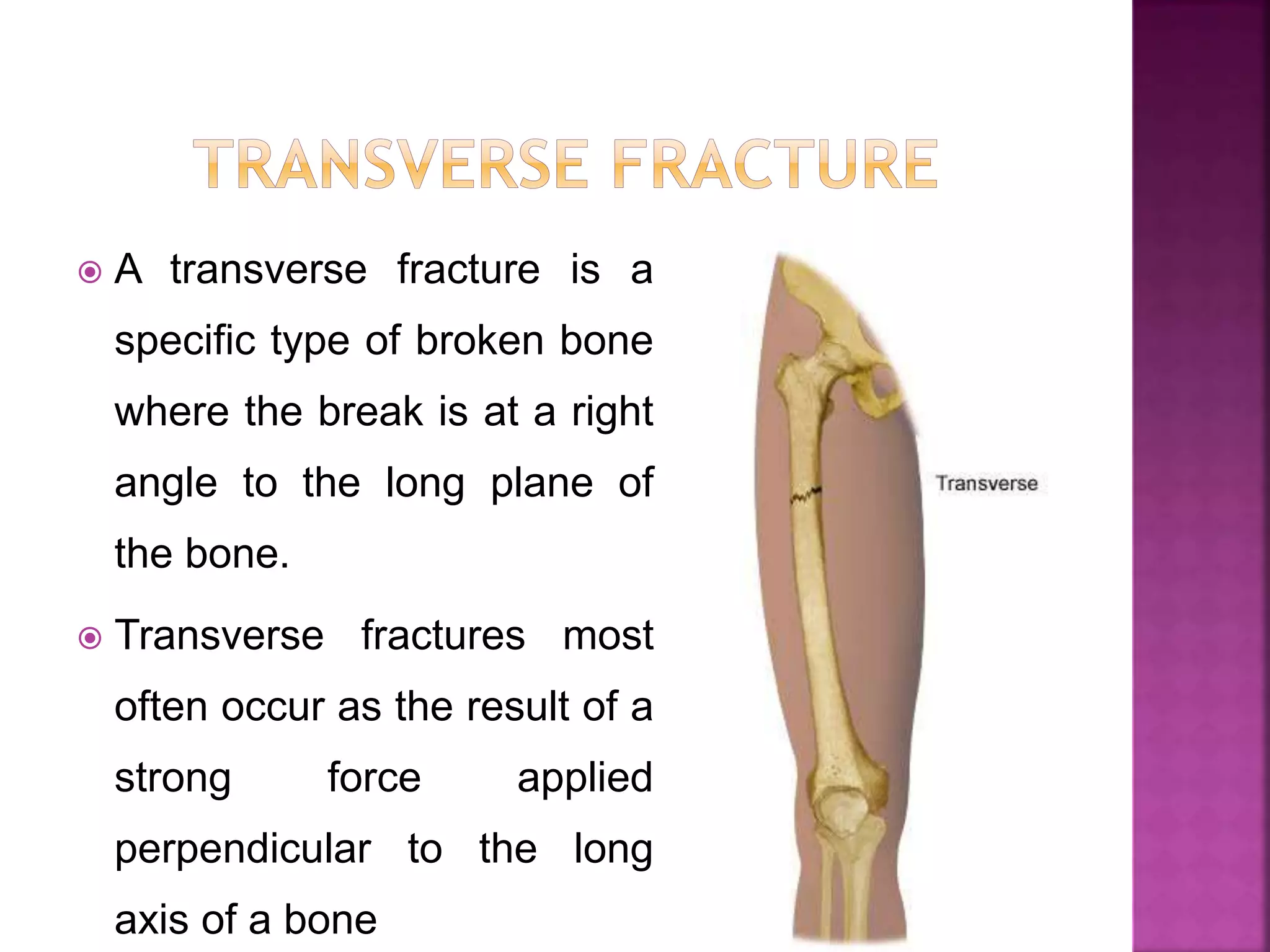
 A transverse fracture is a
specific type of broken bone
where the break is at a right
angle to the long plane of
the bone.
 Transverse fractures most
often occur as the result of a
strong force applied
perpendicular to the long
axis of a bone
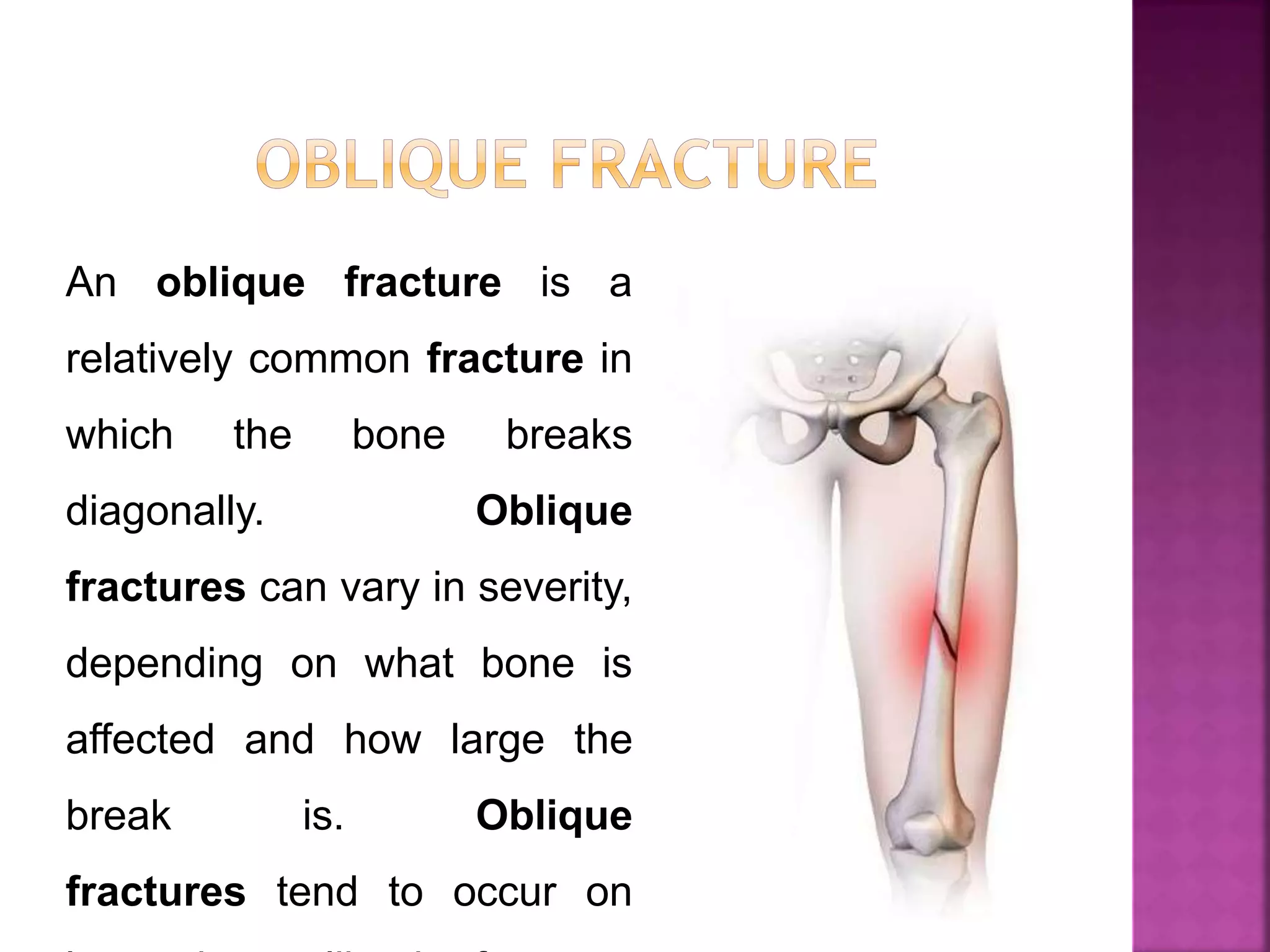
An oblique fracture is a
relatively common fracture in
which the bone breaks
diagonally. Oblique
fractures can vary in severity,
depending on what bone is
affected and how large the
break is. Oblique
fractures tend to occur on
A spiral fracture is a bone fracture that occurs when a long bone is
broken by a twisting force.
It usually takes a combination of surgery, rest, and physical therapy to
recover
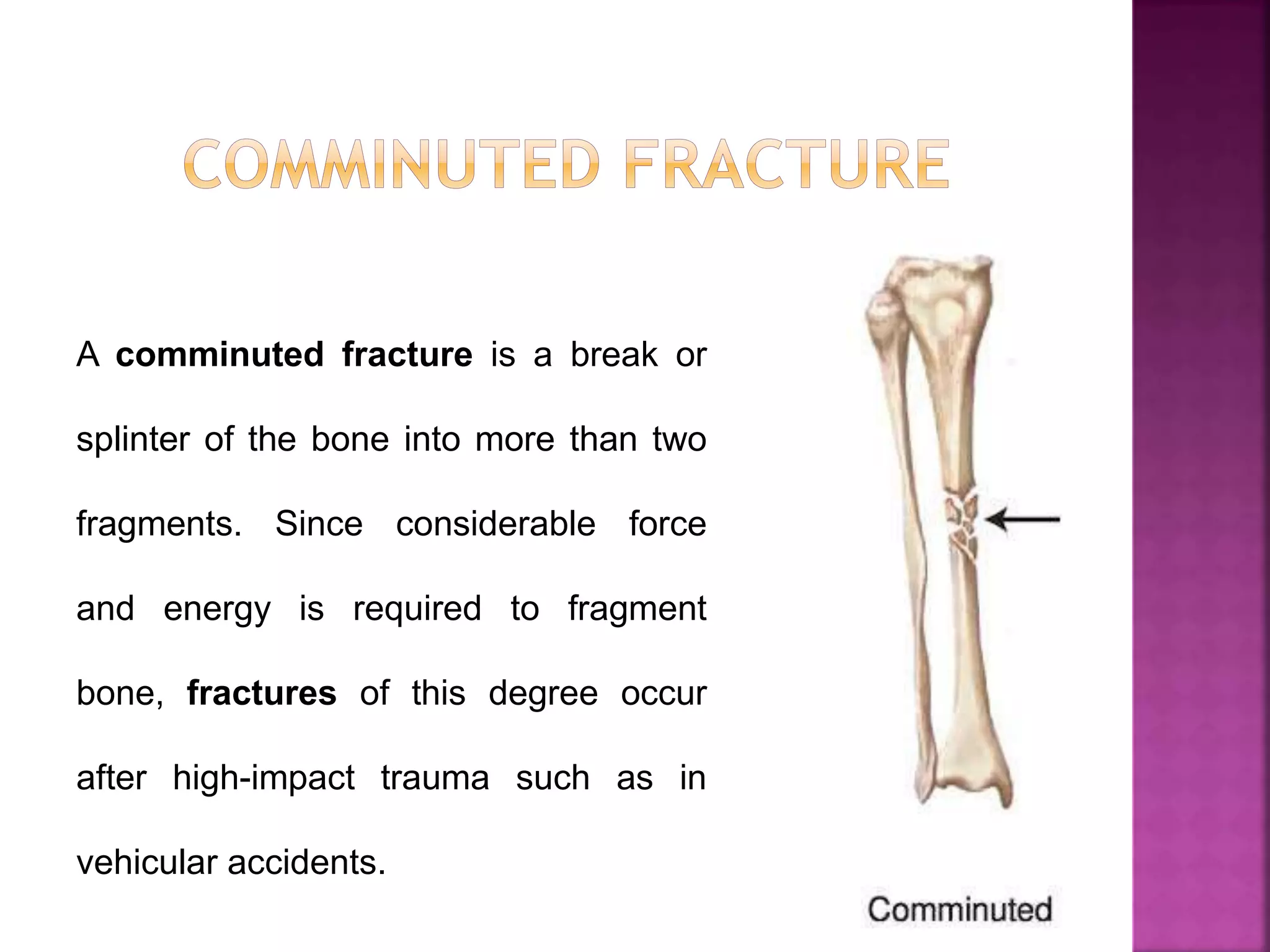
A comminuted fracture is a break or
splinter of the bone into more than two
fragments. Since considerable force
and energy is required to fragment
bone, fractures of this degree occur
after high-impact trauma such as in
vehicular accidents.
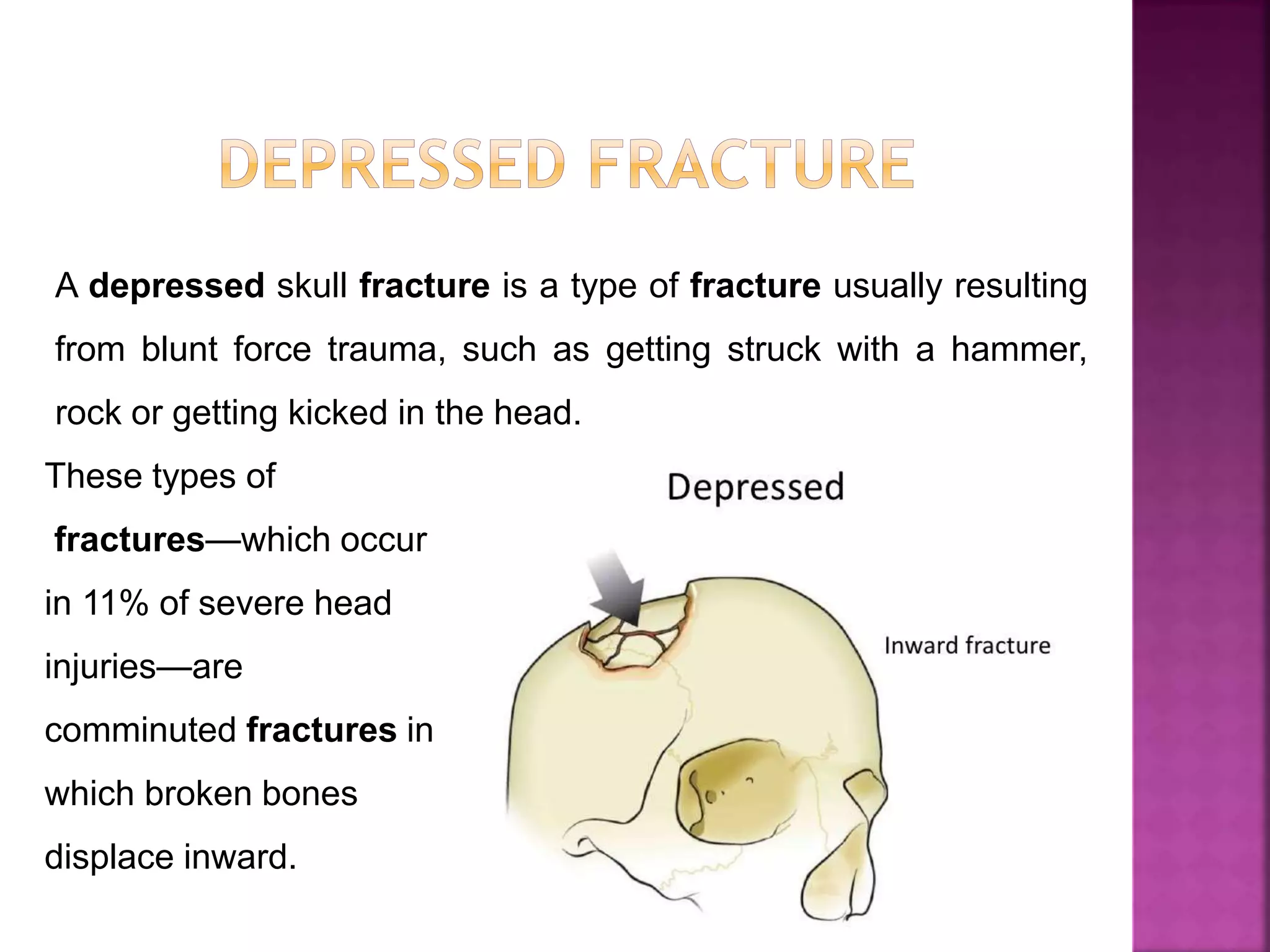
A depressed skull fracture is a type of fracture usually resulting
from blunt force trauma, such as getting struck with a hammer,
rock or getting kicked in the head.
These types of
fractures—which occur
in 11% of severe head
injuries—are
comminuted fractures in
which broken bones
displace inward.
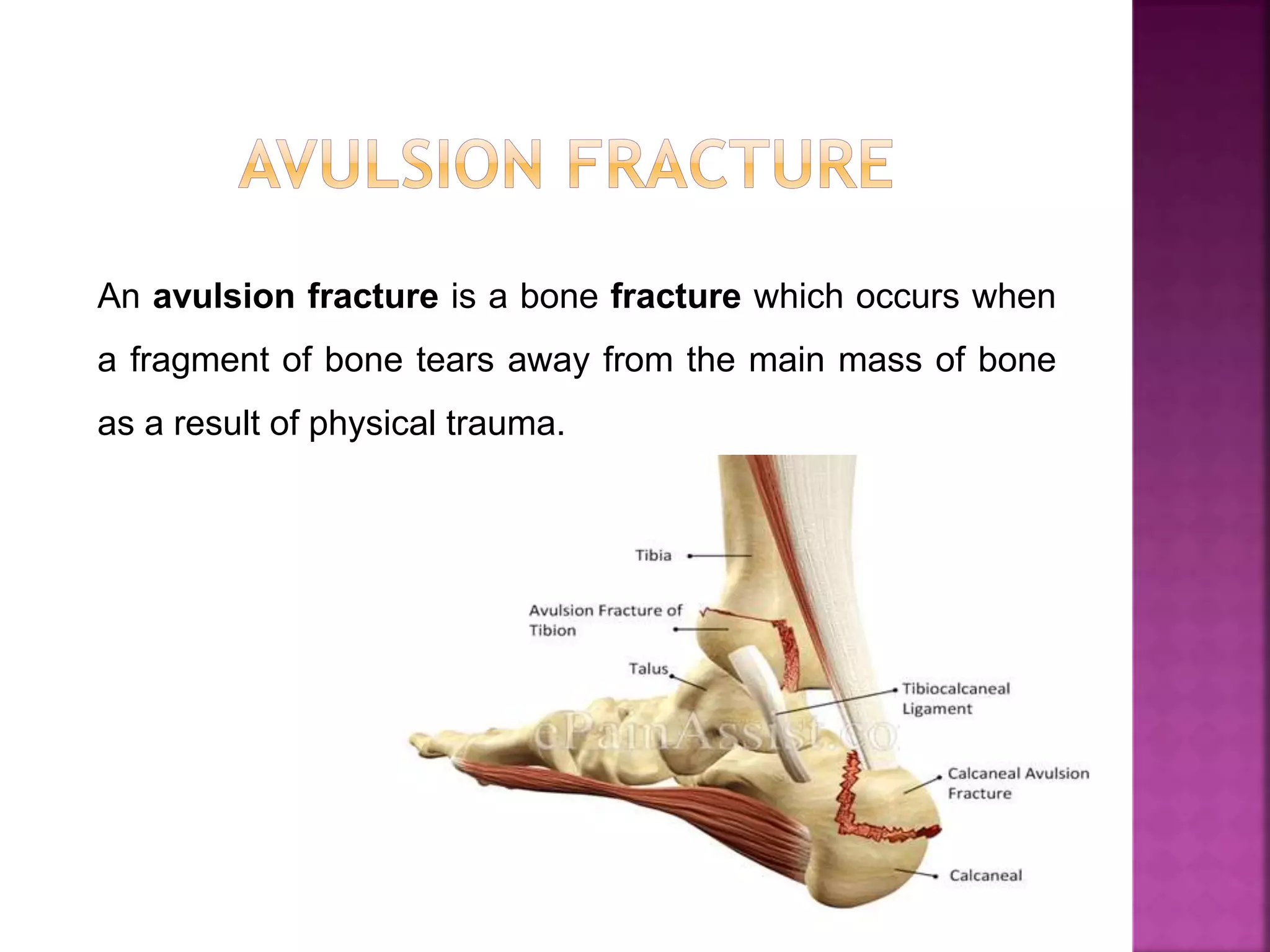
An avulsion fracture is a bone fracture which occurs when
a fragment of bone tears away from the main mass of bone
as a result of physical trauma.
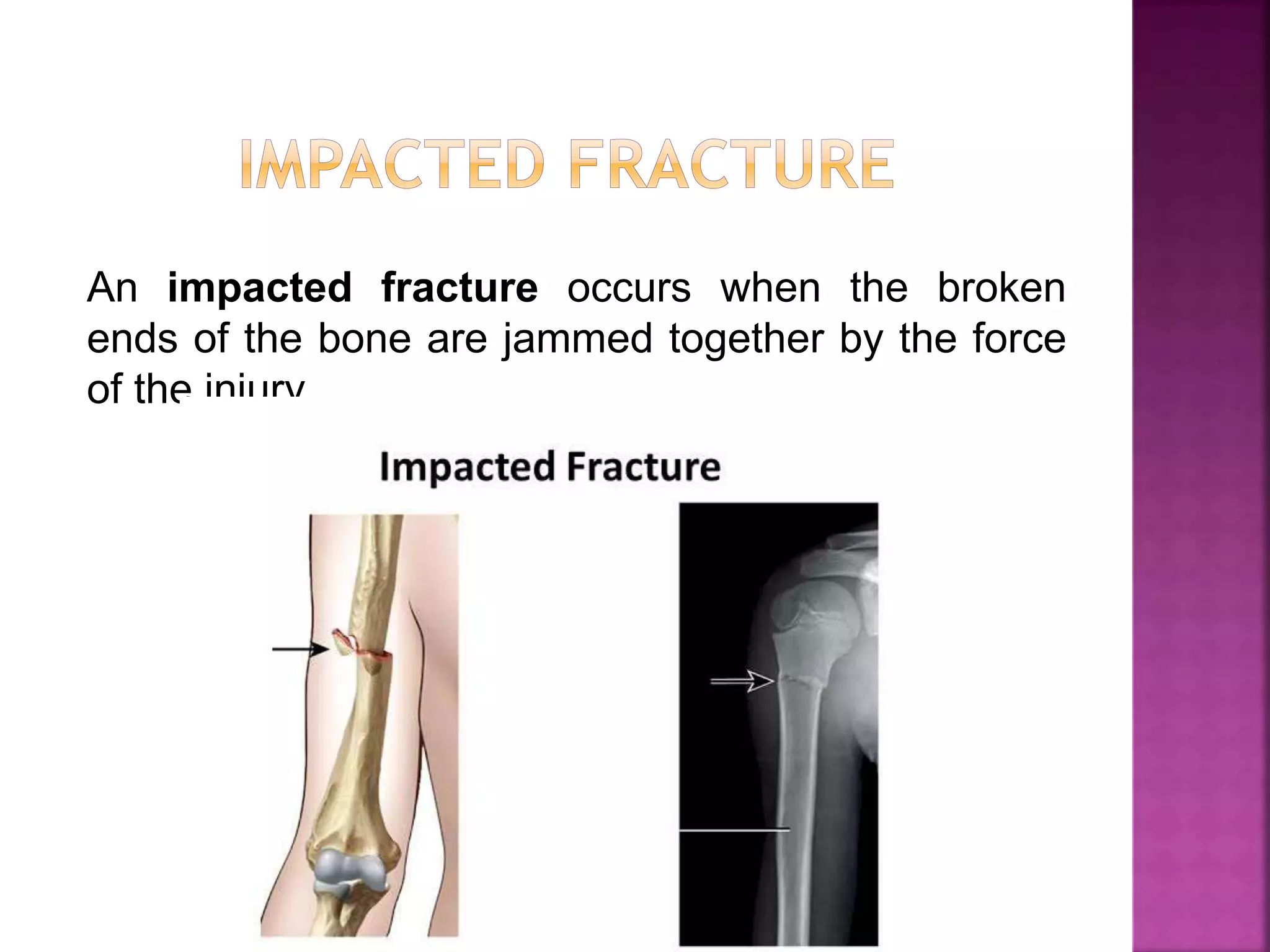
An impacted fracture occurs when the broken
ends of the bone are jammed together by the force
of the injury.
Fracture–dislocation, a severe injury in which
both fracture and dislocation take place
simultaneously.
Frequently, a
loose piece of
bone remains
jammed between
the ends of
the dislocated b
ones and may
have to be
removed
surgically before
the dislocation c
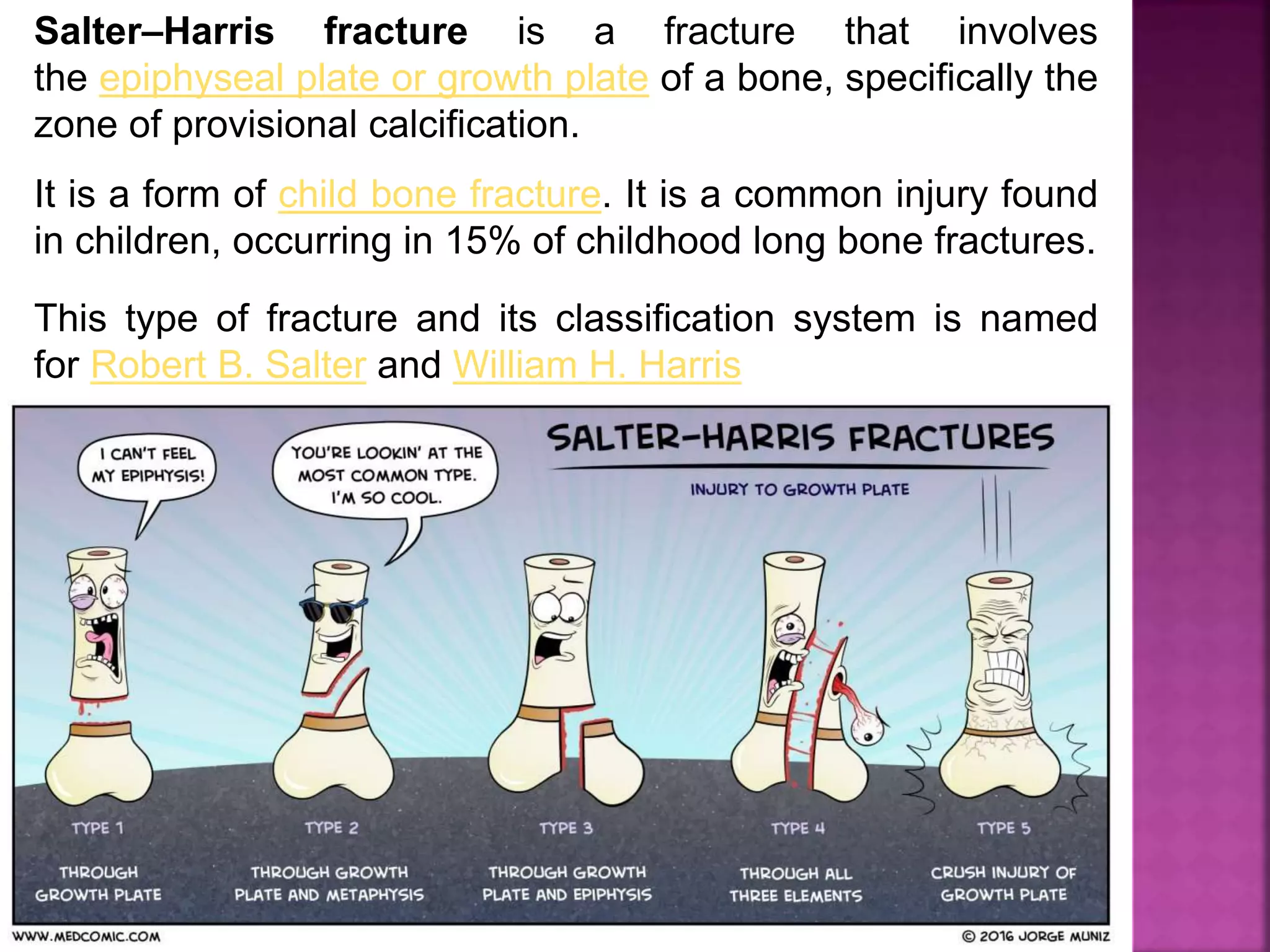
Salter–Harris fracture is a fracture that involves
the epiphyseal plate or growth plate of a bone, specifically the
zone of provisional calcification.
It is a form of child bone fracture. It is a common injury found
in children, occurring in 15% of childhood long bone fractures.
This type of fracture and its classification system is named
for Robert B. Salter and William H. Harris
OLD ACIDS
 FIRST AID
 ANALGESIA - PAIN MANAGEMENT
 STABLIZATION / IMMOBILISATION
 REDUCATION -IF DISPLACED.
 REPAIR
Fractures and types

Fractures and types

  • 1.
  • 2.
    A fracture isa broken bone. It can range from a thin crack to a complete break. Bone can fracture crosswise, lengthwise, in several places, or into many pieces. Most fractures happen when a bone is impacted by more force or pressure than it can support. It is a medical condition in which there is a partial or complete break in the continuity of the bone
  • 3.
    1. COMPLETE 2. INCOMPLETE 3.OPEN 4. CLOSED 5. PATHALOGICAL
  • 4.
    A BREAK ACROSSENTIRE CROSS-SECTION OF BONE
  • 5.
    A BREAK OCCURONLY THROUGH A PART OF CROSS- SECTION OF THE BONE.
  • 6.
    An open fracture,also called a compound fracture, is a fracture in which there is an open wound or break in the skin near the site of the broken bone.
  • 7.
    IS A SIMPLEFRACTURE THAT DOES NOT CAUSE BREAK IN THE CONTINUITY OF THE SKIN.
  • 8.
    A pathologic fractureis a broken bone that's caused by a disease, rather than an injury.
  • 9.
    1. Greenstick fracture 2.Transverse fracture 3. Oblique fracture 4. Spiral fracture 5. Comminuted fracture 6. Depressed fracture 7. Avulsion fracture 8. Impacted fracture 9. Fracture dislocation
  • 10.
     A greenstickfracture is a fracture in a young, soft bone in which the bone bends and breaks. Greenstick fractures usually occur most often during infancy and childhood when bones are soft. The name is by analogy with green (i.e., fresh) wood which similarly breaks on the outside when bent.
  • 11.
     A transversefracture is a specific type of broken bone where the break is at a right angle to the long plane of the bone.  Transverse fractures most often occur as the result of a strong force applied perpendicular to the long axis of a bone
  • 12.
    An oblique fractureis a relatively common fracture in which the bone breaks diagonally. Oblique fractures can vary in severity, depending on what bone is affected and how large the break is. Oblique fractures tend to occur on
  • 13.
    A spiral fractureis a bone fracture that occurs when a long bone is broken by a twisting force. It usually takes a combination of surgery, rest, and physical therapy to recover
  • 14.
    A comminuted fractureis a break or splinter of the bone into more than two fragments. Since considerable force and energy is required to fragment bone, fractures of this degree occur after high-impact trauma such as in vehicular accidents.
  • 15.
    A depressed skullfracture is a type of fracture usually resulting from blunt force trauma, such as getting struck with a hammer, rock or getting kicked in the head. These types of fractures—which occur in 11% of severe head injuries—are comminuted fractures in which broken bones displace inward.
  • 16.
    An avulsion fractureis a bone fracture which occurs when a fragment of bone tears away from the main mass of bone as a result of physical trauma.
  • 17.
    An impacted fractureoccurs when the broken ends of the bone are jammed together by the force of the injury.
  • 18.
    Fracture–dislocation, a severeinjury in which both fracture and dislocation take place simultaneously. Frequently, a loose piece of bone remains jammed between the ends of the dislocated b ones and may have to be removed surgically before the dislocation c
  • 20.
    Salter–Harris fracture isa fracture that involves the epiphyseal plate or growth plate of a bone, specifically the zone of provisional calcification. It is a form of child bone fracture. It is a common injury found in children, occurring in 15% of childhood long bone fractures. This type of fracture and its classification system is named for Robert B. Salter and William H. Harris
  • 24.
  • 25.
     FIRST AID ANALGESIA - PAIN MANAGEMENT  STABLIZATION / IMMOBILISATION  REDUCATION -IF DISPLACED.  REPAIR