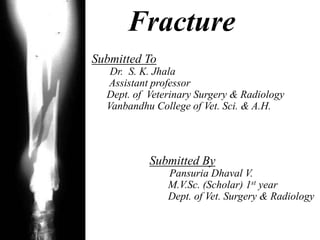
Fracture
Submitted To
   Dr. S. K. Jhala
  Assistant professor
  Dept. of Veterinary Surgery & Radiology
  Vanbandhu College of Vet. Sci. & A.H.


           Submitted By
               Pansuria Dhaval V.
               M.V.Sc. (Scholar) 1st year
               Dept. of Vet. Surgery & Radiology
 Definition

 Etiology

 Classification of   fracture

 Diagnosis

 Pathology Associated     with fracture

 Treatment

 Complication
Definition
 A fracture is a dissolution of bony continuity with
or without displacement of the fragments.

                         Or

  Fracture is a break in the continuity of hard
tissues like bone, cartilage, etc

 Always accompanied by soft tissue damage of
varying degrees.
Etiology
  Intrinsic causes

  • Muscular contraction
  • Pathological fracture


  Extrinsic causes

  • Direct violence
  • Indirect violence
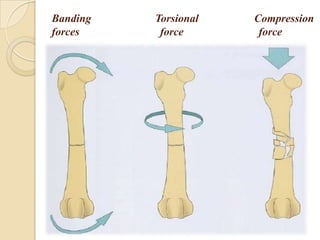
Banding   Torsional   Compression
forces     force       force
Force         Type of fracture
Compression   Short oblique
Tension       Transverse
Shear         Short oblique
Bending       Transverse, or short oblique with
              butterfly fragment
Torsion       Oblique spiral fracture
Classification

Broadly classified into 2 types

   • Simple fracture
   • Compound fracture
A- simple fracture   B- compound
Classification of fracture by TYPE

1.   Incomplete fracture


                           2.   Complete fracture
Incomplete fracture

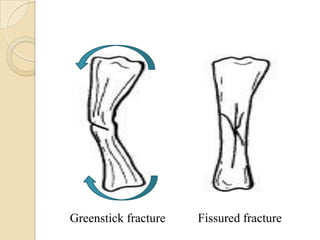
1.  Greenstick fracture
       Fracture in which the bone is partly broken
like a bent green stick.

2.  Fissured fracture
       Cracks or fissure lines will occur when
direct trauma is applied to any long or flat bone

3. Deferred fracture
      Depression fractures represent areas in
which multiple fissure fracture lines intersect
Greenstick fracture   Fissured fracture
Complete fracture
1.   Transverse fracture
       Fracture line runs transverse to the long axis
of the bone.

2.  Oblique fracture
      Fracture line runs oblique to the long axis of
the bone.

3.  Spiral fracture
      Fracture line spirals along the long axis of
the bone.
4. Comminuted fracture
       two or more fracture lines interconnect each
other at one point

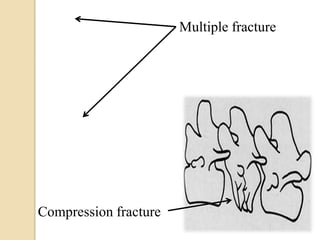
5.  Multiple fracture
       two or more fracture line but don’t
interconnect each other but divide a bone into 3 or
more fracture fragments

6. Compression fracture
       fractures where cancellous bone collapses
and compresses upon itself
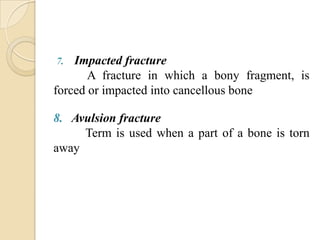
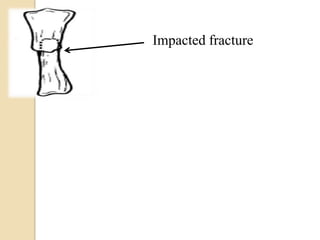
7.  Impacted fracture
       A fracture in which a bony fragment, is
forced or impacted into cancellous bone

8. Avulsion fracture
     Term is used when a part of a bone is torn
away
Transverse fracture


Oblique fracture
Spiral fracture


Comminuted fracture
Multiple fracture


Compression fracture
Impacted fracture
Classification of fracture by LOCATION
1.    Diaphyseal fracture
      Occur in the diaphysis of a long bone
      Further be described as proximal third,
        middle third, or distal third

2.    Metaphyseal fracture
      fracture within the metaphysis of a long bone
      Further described as distal or proximal
       metaphyseal fracture

3.    Epiphyseal fracture
      Fracture of the epiphyses
4.    Fracture of the Epiphyseal plate
      Fracture occurs in immature animals during
       that time the epiphyseal plate remains open
       and cartilaginous.
      In mature animals, such fractures are called
       physeal fractures.
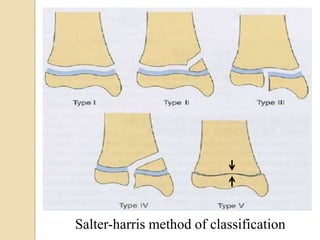
      Standard method for further classification is
       method of Salter- Harris
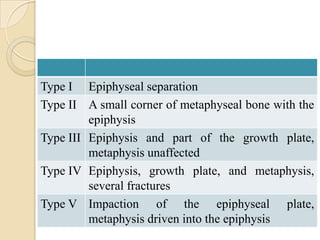
Type I Epiphyseal separation
Type II A small corner of metaphyseal bone with the
         epiphysis
Type III Epiphysis and part of the growth plate,
         metaphysis unaffected
Type IV Epiphysis, growth plate, and metaphysis,
         several fractures
Type V Impaction of the epiphyseal plate,
         metaphysis driven into the epiphysis
Salter-harris method of classification
5.   Condylar fracture
      Condylar fractures affect the distal ends of
       the humerus or femur, or the proximal tibia
      Further classified as medial or lateral
       condylar fracture

 Supracondylar fracture
    Both condyles fracture off the shaft as a unit

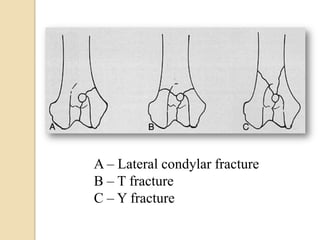
 Supracondylar-intercondylar fracture
      Further described as ‘V’, ‘T‘, or ‘Y‘
 fractures
A – Lateral condylar fracture
B – T fracture
C – Y fracture
6.   Articular fracture
      Fracture indicates that the subchondral bone
       and articular cartilage are involved in a
       fracture

7.   Periarticular fracture
      The term is used to describe the fractures
       close to joints
      However, such fractures don’t involve the
       joint
8.   Fracture dislocation
      Joint fractures that produce joint instability
       sufficient to result in simultaneous
       subluxation or luxation of the affected joint
Diagnosis
DYSFUNCTION
 It is most commonly exemplified by
  lameness
Complication

Fracture

  • 1.
    Fracture Submitted To Dr. S. K. Jhala Assistant professor Dept. of Veterinary Surgery & Radiology Vanbandhu College of Vet. Sci. & A.H. Submitted By Pansuria Dhaval V. M.V.Sc. (Scholar) 1st year Dept. of Vet. Surgery & Radiology
  • 2.
     Definition  Etiology Classification of fracture  Diagnosis  Pathology Associated with fracture  Treatment  Complication
  • 3.
    Definition  A fractureis a dissolution of bony continuity with or without displacement of the fragments. Or  Fracture is a break in the continuity of hard tissues like bone, cartilage, etc  Always accompanied by soft tissue damage of varying degrees.
  • 4.
    Etiology Intrinsiccauses • Muscular contraction • Pathological fracture Extrinsic causes • Direct violence • Indirect violence
  • 5.
    Banding Torsional Compression forces force force
  • 6.
    Force Type of fracture Compression Short oblique Tension Transverse Shear Short oblique Bending Transverse, or short oblique with butterfly fragment Torsion Oblique spiral fracture
  • 7.
    Classification Broadly classified into2 types • Simple fracture • Compound fracture
  • 8.
    A- simple fracture B- compound
  • 9.
    Classification of fractureby TYPE 1. Incomplete fracture 2. Complete fracture
  • 10.
    Incomplete fracture 1. Greenstick fracture Fracture in which the bone is partly broken like a bent green stick. 2. Fissured fracture Cracks or fissure lines will occur when direct trauma is applied to any long or flat bone 3. Deferred fracture Depression fractures represent areas in which multiple fissure fracture lines intersect
  • 11.
    Greenstick fracture Fissured fracture
  • 12.
    Complete fracture 1. Transverse fracture Fracture line runs transverse to the long axis of the bone. 2. Oblique fracture Fracture line runs oblique to the long axis of the bone. 3. Spiral fracture Fracture line spirals along the long axis of the bone.
  • 13.
    4. Comminuted fracture two or more fracture lines interconnect each other at one point 5. Multiple fracture two or more fracture line but don’t interconnect each other but divide a bone into 3 or more fracture fragments 6. Compression fracture fractures where cancellous bone collapses and compresses upon itself
  • 14.
    7. Impactedfracture A fracture in which a bony fragment, is forced or impacted into cancellous bone 8. Avulsion fracture Term is used when a part of a bone is torn away
  • 15.
  • 16.
  • 17.
  • 18.
  • 19.
  • 20.
    1. Diaphyseal fracture  Occur in the diaphysis of a long bone  Further be described as proximal third, middle third, or distal third 2. Metaphyseal fracture  fracture within the metaphysis of a long bone  Further described as distal or proximal metaphyseal fracture 3. Epiphyseal fracture  Fracture of the epiphyses
  • 21.
    4. Fracture of the Epiphyseal plate  Fracture occurs in immature animals during that time the epiphyseal plate remains open and cartilaginous.  In mature animals, such fractures are called physeal fractures.  Standard method for further classification is method of Salter- Harris
  • 22.
    Type I Epiphysealseparation Type II A small corner of metaphyseal bone with the epiphysis Type III Epiphysis and part of the growth plate, metaphysis unaffected Type IV Epiphysis, growth plate, and metaphysis, several fractures Type V Impaction of the epiphyseal plate, metaphysis driven into the epiphysis
  • 23.
  • 24.
    5. Condylar fracture  Condylar fractures affect the distal ends of the humerus or femur, or the proximal tibia  Further classified as medial or lateral condylar fracture  Supracondylar fracture Both condyles fracture off the shaft as a unit  Supracondylar-intercondylar fracture Further described as ‘V’, ‘T‘, or ‘Y‘ fractures
  • 25.
    A – Lateralcondylar fracture B – T fracture C – Y fracture
  • 26.
    6. Articular fracture  Fracture indicates that the subchondral bone and articular cartilage are involved in a fracture 7. Periarticular fracture  The term is used to describe the fractures close to joints  However, such fractures don’t involve the joint
  • 27.
    8. Fracture dislocation  Joint fractures that produce joint instability sufficient to result in simultaneous subluxation or luxation of the affected joint
  • 28.
    Diagnosis DYSFUNCTION  It ismost commonly exemplified by lameness
  • 29.

Editor's Notes

  • #4  there are torn vessels, bruised muscles, lacerated periosteum, contused nerves. Sometimes there are injured internal organs and lacerated skin. The trauma to soft tissue must always be taken into consideration and is often vitally more important than the fracture itself.
  • #5 Muscular contraction – sometimes skeleton muscles contract so violently that they chip off the bone from the point of their attachment. Such fracture are called avulsion fracture & are more common in immature animals. i.e. most prone sites are acromion, greater humoraltubercal, olecrenon, ischialtuberosity, trocentor major, cranial tibialtuberosity, & the calcaneus of the fibular tarsal bone.Pathological fracture – diseased condition may render the bone(s) abnormal & weak with higher susceptibility to fracture. In such condition weight of animal itself may cause fracture. i.e. osteoporosis, localized bone infection, rickets.
  • #10 Incompletefracvture - bone has not completely loss continuityComplete fracture -indicated by the complete loss of bony continuity, allowing overriding and deformation.Avulsion fracture -
  • #11 Partial / splintered fracture – when splinters of bone are separated from the main bone as a result of direct violence as may be caused firearms.
  • #13 Transverse fracture - Most are caused by bending forces.Oblique fracture - mostly bybanding with axial compression.Spiral fracture - caused by torsional & twisting forces.
  • #14 Comminuted fracture - Comminuted fractures are generally caused by high-energy trauma, as typified by automobile accidents, and are a common type of animal fractureMultiple fracture - Reduction and fixation of a multiple fracture requires two separate reductions and fixationsCompression fracture - Compression fractures are rarely reduced, since the bone within the fracture area has been destroyed by the crushing.shortening occurs as a result of compression i.e. maxilla, frontal bone
  • #15 Impacted fracture - seen at the junction of diaphysis and metaphysis of a long boneAvulsion fracture - when a part of a bone is torn away i.e. due to extensive pull of a tenson at the point of intertionorf attachment at the bone.
  • #21  Fractures may be classified by their anatomical location in relation to a specific bone. Identifying a fracture by location does not indicate whether the fracture is open or closed, nor does it indicate the type of fracture: transverse, oblique, spiral, or the like. The systems of classifying by type and classifying by location are compatible and should be used together.
  • #27 While describing articular fractures, the bone and joint involved are mentionedArticular fracture requires perfect anatomical reduction and fixation to prevent secondary degenerative joint disease