ALTERED MENTAL STATUS IN
CHILDREN
Dr. ASHUTOSH KUMARSINGH
EMERGENCY MEDICINE
Definition
• Failure to respond to verbal or physical stimulation appropriate to the
childs developmental level
• This condition is critical So it needs stabilization, diagnosis and treatment
simultaneously
• The aim of treatment is to sustain life & prevent
irreversible brain damage.
Pathophysiology
Dysfunction of ascending reticular system & cerebral hemisphere –
 Inadequate substrate for metabolic demand
 Insufficient blood flow
 Presence of toxins or metabolic waste products
 Alteration in body temperature
Clinicalfeatures
• Confusion- not alert to time and place and persons
• Delirium- abnormal perception, it is not common in children
• Lethargy- aroused with loud voice but go to sleep immediately
• Stupor- aroused with noxious stimulation, decreased motor activity, abnormal
vocalization
• Coma- can not be aroused with any stimulation like as phlebotomy, LP, arterial cath.
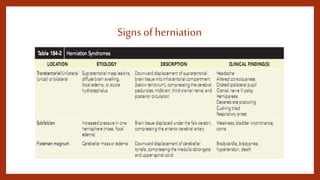
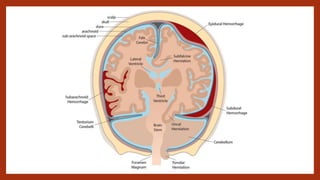
• Symptoms of increased intracranial pressure, Herniation
Important historical elements
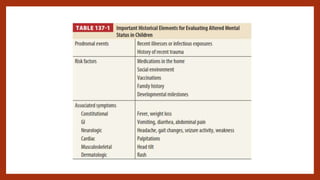
• Prodromal events (recent trauma, infections, illnesses)
• Medications available at home
• Vaccinations
• Developmental status (milestone)
• Social environment (abuse, neglect)
• Family history
• Associated symptoms (fever, weight loss, vomiting, diarrhea, gait changes,
abdominal pain, seizure or abnormal movement, weakness, palpitation, head tilt,
rash, hematuria)
Physical exam
• General physical exam (pulse rate, Respiratory Rate, Temp, Blood
Pressure)
• Neurological exam (determine level of consciousness, pupillary reflex,
pattern of respiration, motor activity)
• Signs of abuse
• Signs of intoxication
• Expose the child
• Check blood glucose
• Monitoring
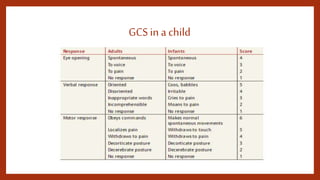
GCSin a child
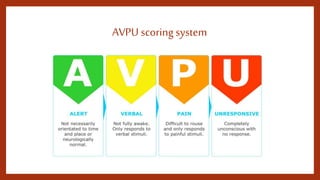
AVPU scoringsystem
Signs ofherniation
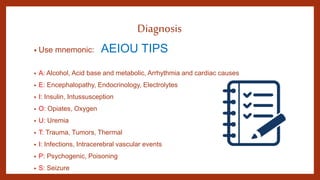
Diagnosis
• Use mnemonic: AEIOU TIPS
• A: Alcohol, Acid base and metabolic, Arrhythmia and cardiac causes
• E: Encephalopathy, Endocrinology, Electrolytes
• I: Insulin, Intussusception
• O: Opiates, Oxygen
• U: Uremia
• T: Trauma, Tumors, Thermal
• I: Infections, Intracerebral vascular events
• P: Psychogenic, Poisoning
• S: Seizure
Routinediagnostictests
• Glucose
• Na, K, Ca, Cl, HCO3, BUN, Cr
• ABG
• Serum ammonia
• AST, ALT
• Blood and urine screen for toxins
• CSF analysis
• Neuroimaging (CT, MRI, MRV, MRA)
• EEG
Orders
Secondarytests
• Serum lead level
• Serum lactate
• Serum amino acids
• Acylcarnitine profile
Orders
Commoncauses in childhood
• Toxins
• Infections
• Head trauma
• Hypoxia/Ischemia (near drowning, cardiac arrest)
• Seizure (post ictal phase, subclinical status epilepticus)
Transient& RecurrentLOC
• Seizure
• Migraine (basilar or confusional migraine, agitation, ataxia, cortical blindness,
vertigo, headache)
• Syncope (neurocardiogenic, arrhythmia, obstructive cardiomyopathy)
• Hypoglycemia
• Hyperammonemia
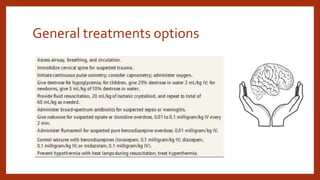
General treatments options
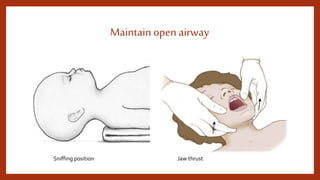
Maintainopen airway
Sniffing position Jaw thrust
Discharge& follow up
• Transient and reversible causes in emergency department
• Diseases specific discharge instruction
• An evaluation within 24 hours of discharge
• PICU admission in prolonged and/or critical cases
References
• Tintinallis emergency medicine chapter 137
THANK YOU !!!

Altered mental status in childrens

  • 1.
    ALTERED MENTAL STATUSIN CHILDREN Dr. ASHUTOSH KUMARSINGH EMERGENCY MEDICINE
  • 2.
    Definition • Failure torespond to verbal or physical stimulation appropriate to the childs developmental level • This condition is critical So it needs stabilization, diagnosis and treatment simultaneously • The aim of treatment is to sustain life & prevent irreversible brain damage.
  • 3.
    Pathophysiology Dysfunction of ascendingreticular system & cerebral hemisphere –  Inadequate substrate for metabolic demand  Insufficient blood flow  Presence of toxins or metabolic waste products  Alteration in body temperature
  • 4.
    Clinicalfeatures • Confusion- notalert to time and place and persons • Delirium- abnormal perception, it is not common in children • Lethargy- aroused with loud voice but go to sleep immediately • Stupor- aroused with noxious stimulation, decreased motor activity, abnormal vocalization • Coma- can not be aroused with any stimulation like as phlebotomy, LP, arterial cath. • Symptoms of increased intracranial pressure, Herniation
  • 5.
    Important historical elements •Prodromal events (recent trauma, infections, illnesses) • Medications available at home • Vaccinations • Developmental status (milestone) • Social environment (abuse, neglect) • Family history • Associated symptoms (fever, weight loss, vomiting, diarrhea, gait changes, abdominal pain, seizure or abnormal movement, weakness, palpitation, head tilt, rash, hematuria)
  • 7.
    Physical exam • Generalphysical exam (pulse rate, Respiratory Rate, Temp, Blood Pressure) • Neurological exam (determine level of consciousness, pupillary reflex, pattern of respiration, motor activity) • Signs of abuse • Signs of intoxication • Expose the child • Check blood glucose • Monitoring
  • 8.
  • 9.
  • 10.
  • 12.
    Diagnosis • Use mnemonic:AEIOU TIPS • A: Alcohol, Acid base and metabolic, Arrhythmia and cardiac causes • E: Encephalopathy, Endocrinology, Electrolytes • I: Insulin, Intussusception • O: Opiates, Oxygen • U: Uremia • T: Trauma, Tumors, Thermal • I: Infections, Intracerebral vascular events • P: Psychogenic, Poisoning • S: Seizure
  • 13.
    Routinediagnostictests • Glucose • Na,K, Ca, Cl, HCO3, BUN, Cr • ABG • Serum ammonia • AST, ALT • Blood and urine screen for toxins • CSF analysis • Neuroimaging (CT, MRI, MRV, MRA) • EEG Orders
  • 14.
    Secondarytests • Serum leadlevel • Serum lactate • Serum amino acids • Acylcarnitine profile Orders
  • 15.
    Commoncauses in childhood •Toxins • Infections • Head trauma • Hypoxia/Ischemia (near drowning, cardiac arrest) • Seizure (post ictal phase, subclinical status epilepticus)
  • 16.
    Transient& RecurrentLOC • Seizure •Migraine (basilar or confusional migraine, agitation, ataxia, cortical blindness, vertigo, headache) • Syncope (neurocardiogenic, arrhythmia, obstructive cardiomyopathy) • Hypoglycemia • Hyperammonemia
  • 17.
  • 18.
  • 19.
    Discharge& follow up •Transient and reversible causes in emergency department • Diseases specific discharge instruction • An evaluation within 24 hours of discharge • PICU admission in prolonged and/or critical cases
  • 20.
  • 22.