MIS Why study information systems and information technology? Foundations of Information Systems in Business
 
 
Information systems and technologies are a vital component of successful businesses and organizations. Information technologies, including Internet-based information systems, are playing a vital and expanding role in business.
Information technology can help all kinds of businesses improve the efficiency and effectiveness of their business processes, managerial decision making, and workgroup collaboration, thus strengthening their competitive positions in a rapidly changing marketplace.
This is true whether information technology is used to support product development teams, customer support processes, electronic commerce transactions, or any other business activity. Internet-based information technologies and systems have become a necessary ingredient for business success in today's dynamic global environment.
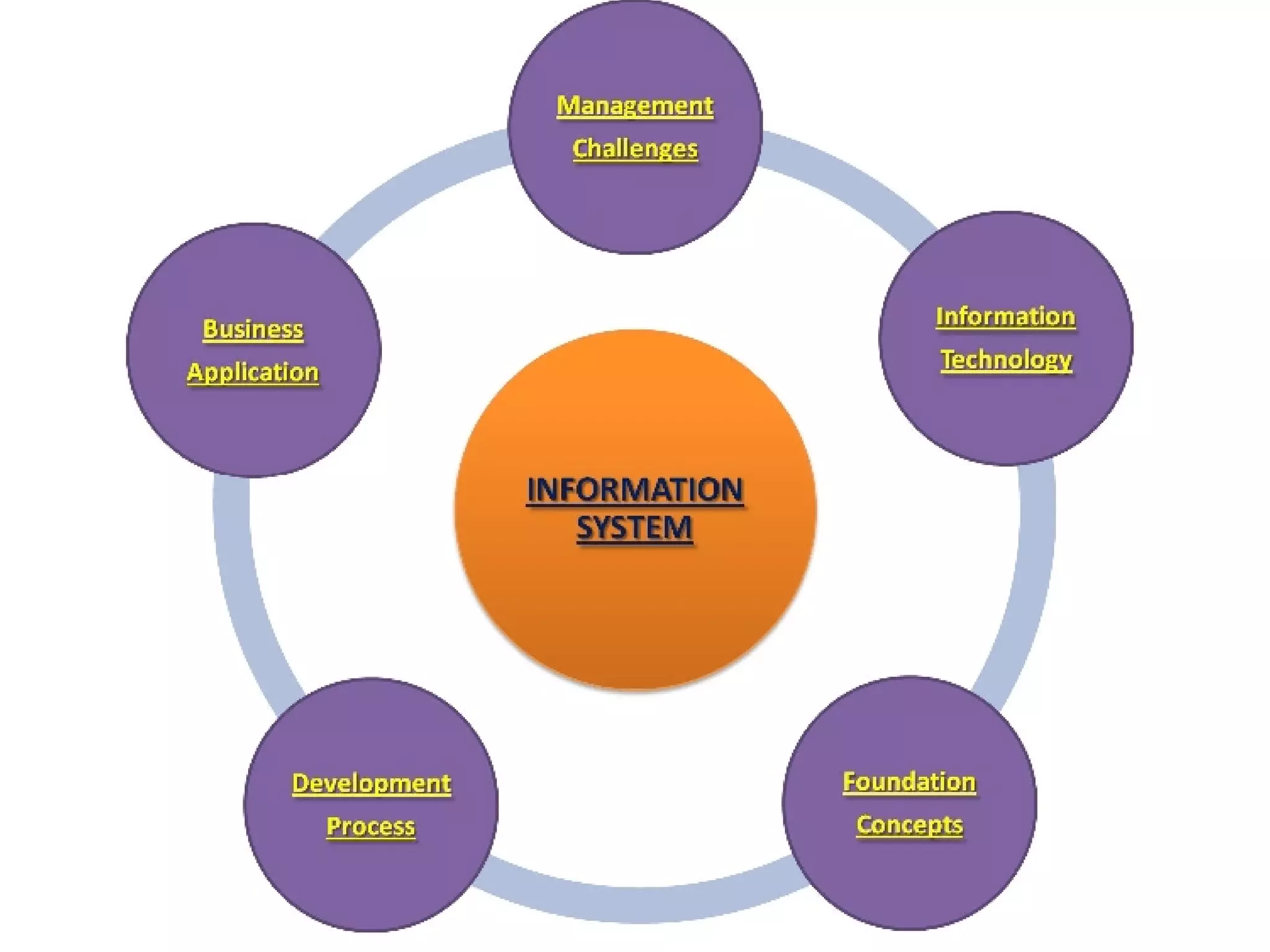
Learning Objectives Explain why knowledge of information systems is important for business professionals and identify  five areas of information systems  knowledge they need. Identify several challenges that a business manager might face in managing the successful and ethical development and use of information technology in a business.
Learning Objectives Illustrate that in an information system, people use hardware, software, data, and networks as resources to perform input, processing, output, storage, and control activities that transform data resources into information products.
Chapter Outline Section I Foundation Concepts: Information Systems and Technologies Why Information Systems Are Important The Real World of Information Systems Real World Case:  BellSouth Corporation: The Business Payback of Information Technology What You Need to Know An IS Framework for Business Professionals System Concepts: A Foundation Components of an Information System Information System Resources Information System Activities Recognizing Information Systems
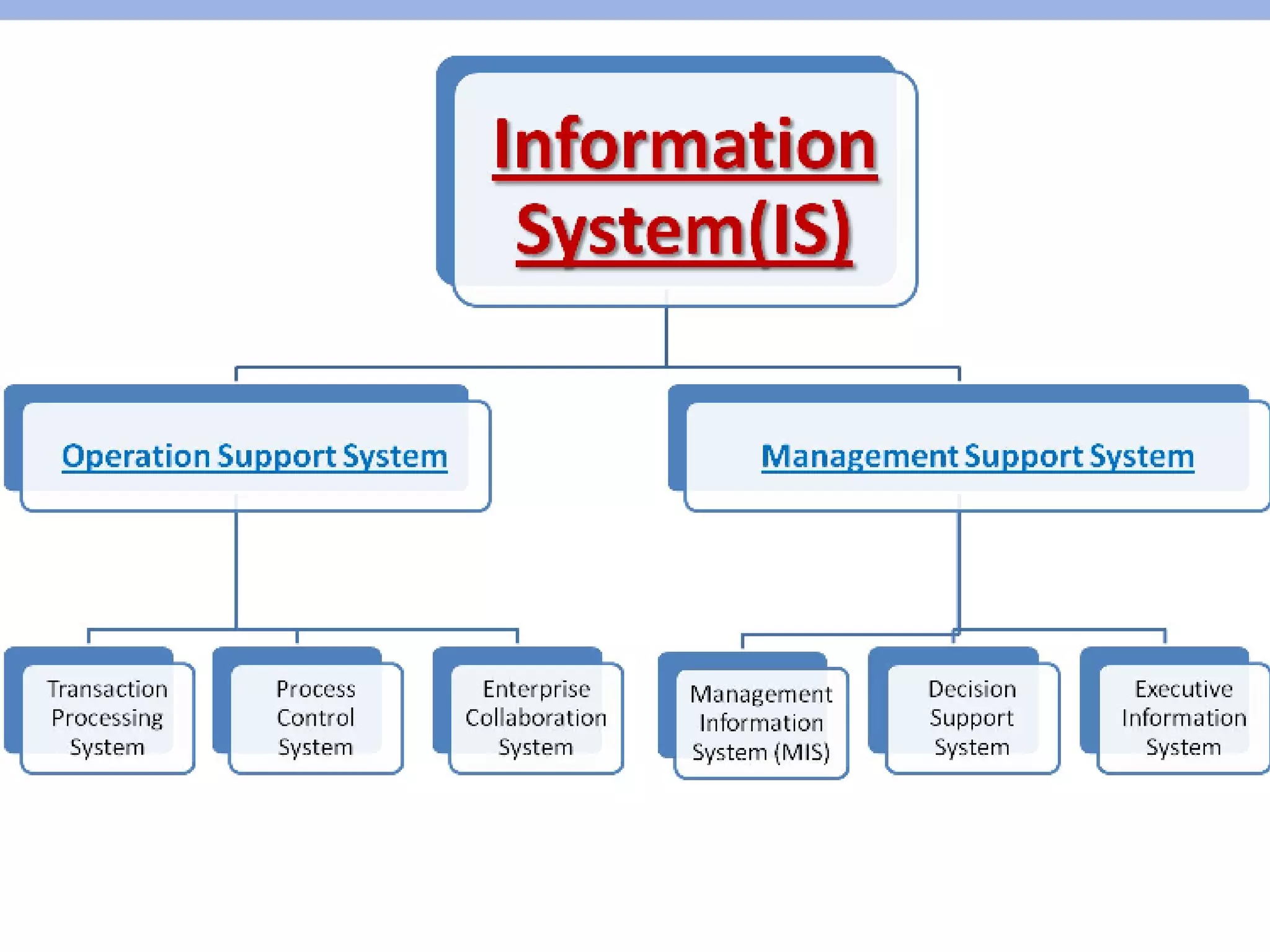
Chapter Outline Section II Foundation Concepts: Business Applications, Development, and Management The Fundamental Roles of IS Applications in Business Real World Case:  Royal Caribbean International: Renewing and Realigning IT with Business e-Business in Business Trends in Information Systems Types of Information Systems Managerial Challenges of Information Technology Success and Failure with IT Developing Business/IT Solutions Challanges of Ethics and IT Challenges of IT Careers
Chapter overview There are three fundamental reasons for all business applications of information technology. They are found in the three vital roles that information systems can perform for a business enterprise.  Support of its business processes and operations. Support of decision making by its employees and managers. Support of its strategies for competitive advantage.
Chapter overview The strategic applications of information systems for competitive advantage. Business applications of information technology for electronic business operations, electronic commerce, enterprise collaboration, and decision making
 
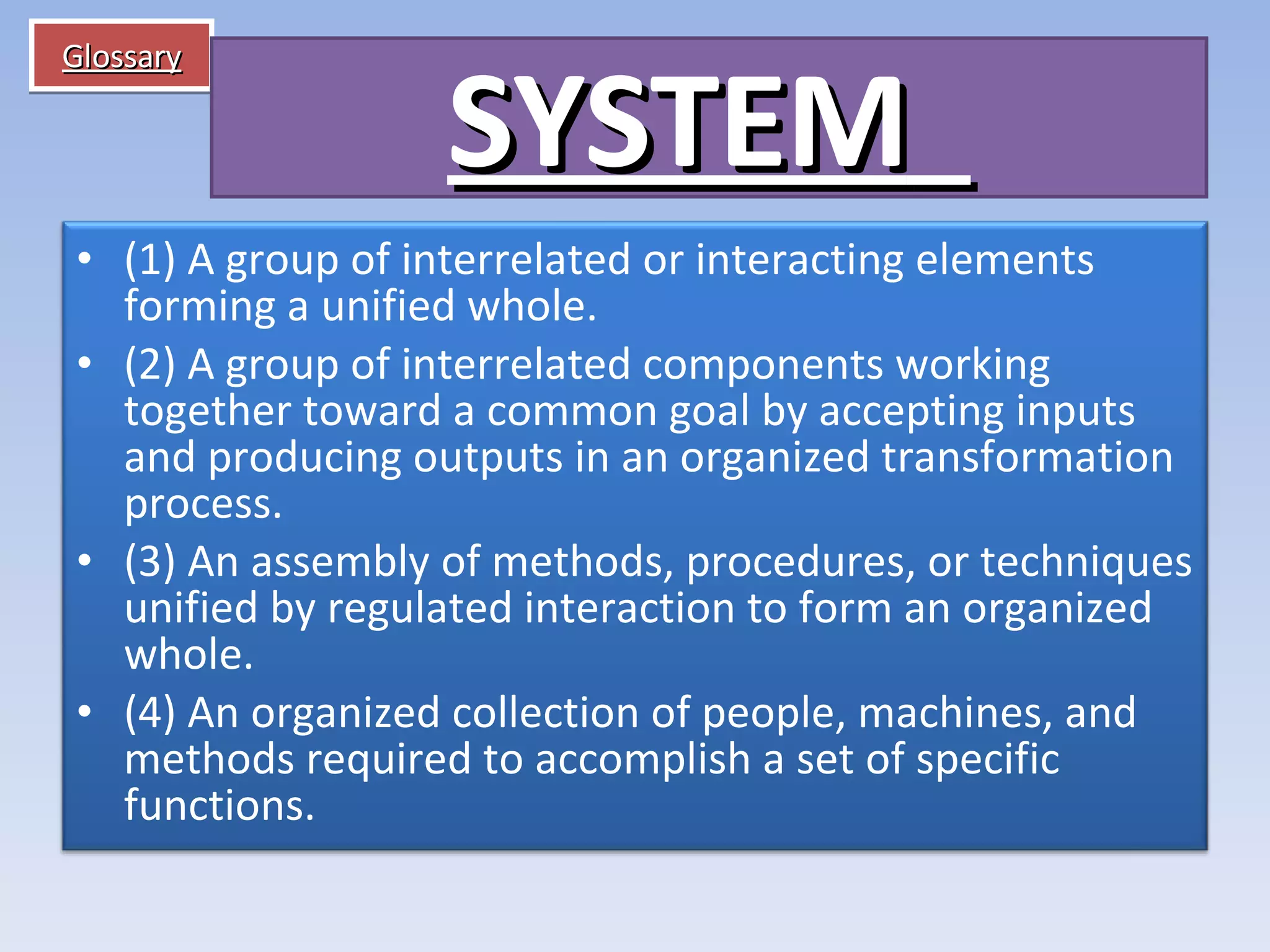
Glossary SYSTEM    (1) A group of interrelated or interacting elements forming a unified whole. (2) A group of interrelated components working together toward a common goal by accepting inputs and producing outputs in an organized transformation process. (3) An assembly of methods, procedures, or techniques unified by regulated interaction to form an organized whole. (4) An organized collection of people, machines, and methods required to accomplish a set of specific functions.
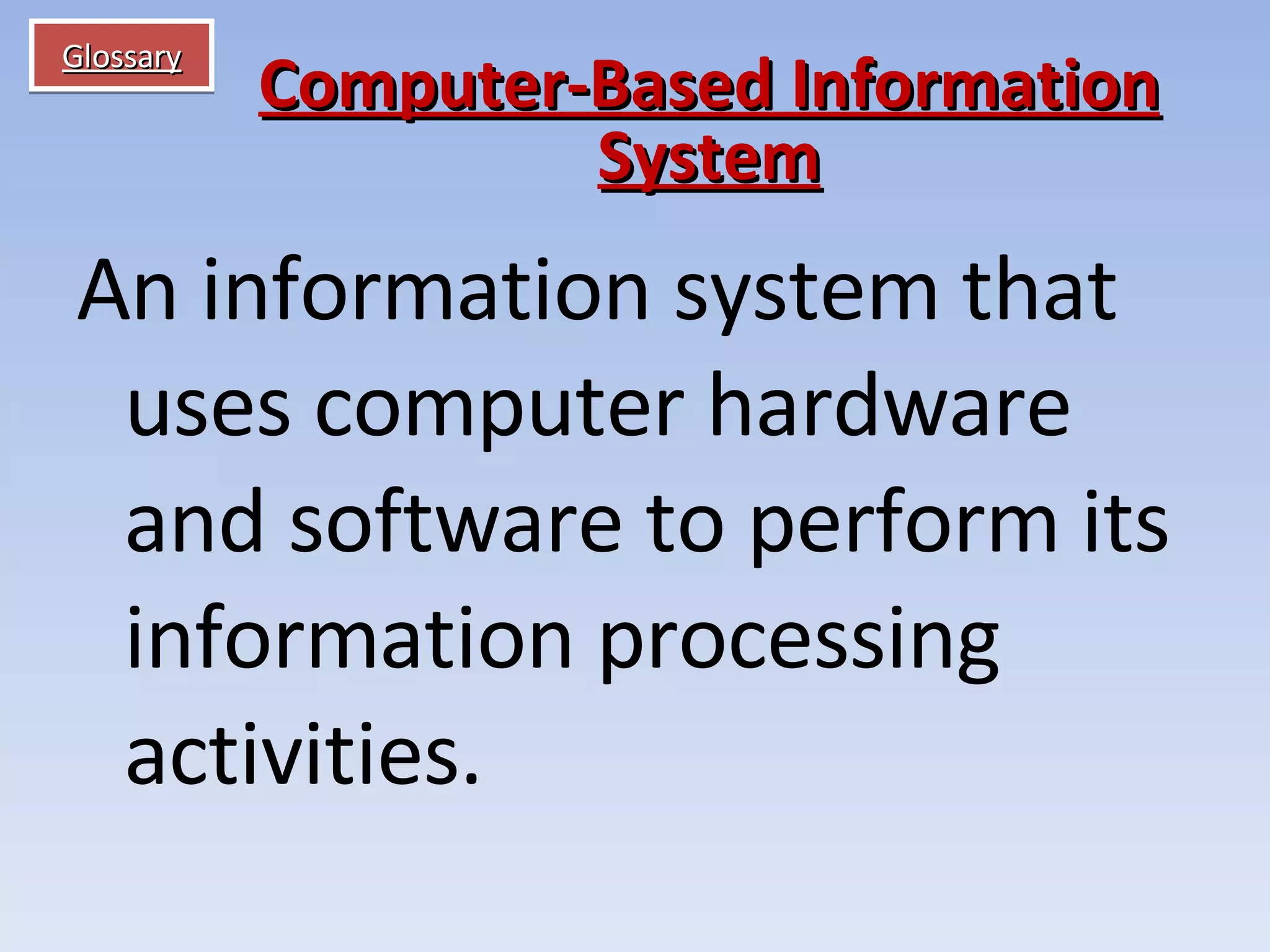
Glossary An information system that uses computer hardware and software to perform its information processing activities. Computer-Based Information System
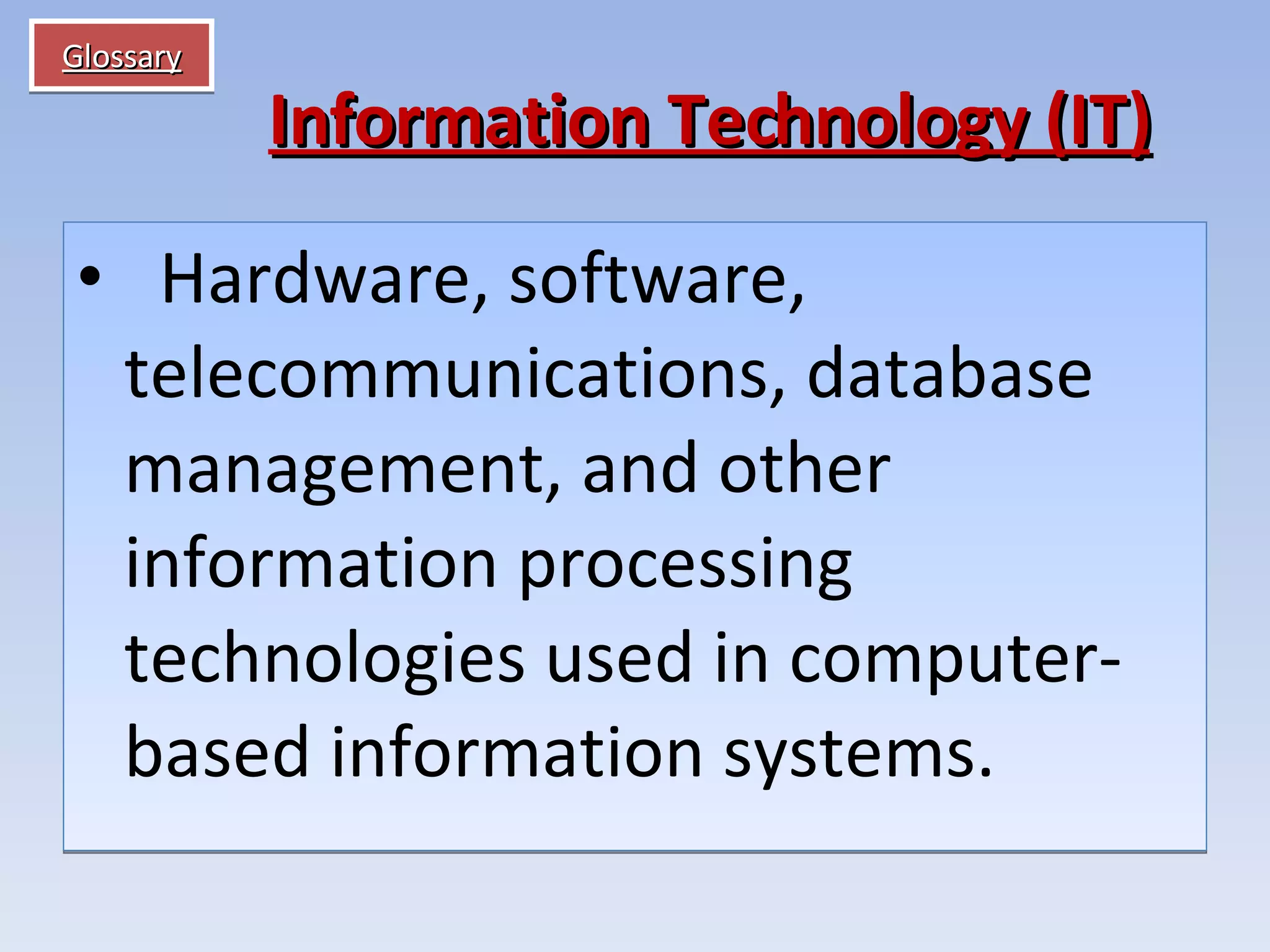
Glossary    Hardware, software, telecommunications, database management, and other information processing technologies used in computer-based information systems. Information Technology (IT)
Glossary The systems component that evaluates feedback to determine whether the system is moving toward the achievement of its goal and then makes any necessary adjustments to the input and processing components of the system to ensure that proper output is produced. A management function that involves observing and measuring organizational performance and environmental activities and modifying the plans and activities of the organization when necessary. Control  
Glossary   Facts or observations about physical phenomena or business transactions. More specifically, data are objective measurements of the attributes (characteristics) of entities such as people, places, things, and events. Data  
Glossary End User:-    Anyone who uses an information system or the information it produces. Information:-    Information is data placed in a meaningful and useful context for an end user. Feedback :- Data or information concerning the components and operations of a system. End User/ Information/ Feedback
Glossary   (1) A set of people, procedures, and resources that collects, transforms, and disseminates information in an organization.  (2) A system that accepts data resources as input and processes them into information products as output. Information System  
Glossary   A conceptual framework that views an information system as a system that uses the resources of hardware (machines and media), software (programs and procedures), people (users and specialists), and networks (communications media and network support) to perform input, processing, output, storage, and control activities that transform data resources (databases and knowledge bases) into information products. Information System Model  
Glossary    The use of groupware tools and the Internet, intranets, extranets, and other computer networks to support and enhance Enterprise Collaboration Systems
Glossary Electronic Business (e-Business)  :- The use of Internet technologies to internetwork and empower business. Electronic Commerce (e-Commerce)  :-  The buying and selling, marketing and servicing, and delivery and payment of products, services, and information over the Internet, intranets, extranets, and other networks, between an internetworked enterprise and its prospects, customers, suppliers, and other business partners. Includes business-to-consumer (B2C), business-to-business (B2B), and consumer-to-consumer (C2C) e-commerce.
Glossary   An Internet-like network within an organization. Web browser software provides easy access to internal websites established by business units, teams, and individuals, and other network resources and applications. Intranet  
Glossary A network that links selected resources of a company with its customers, suppliers, and other business partners, using the Internet or private networks to link the organizations’ intranets. Extranet   
Glossary    People whose primary work activities include creating, using, and distributing information. Knowledge Workers
 

Foundations Of Information Systems In Business(97 2003)

  • 1.
    MIS Why studyinformation systems and information technology? Foundations of Information Systems in Business
  • 2.
  • 3.
  • 4.
    Information systems andtechnologies are a vital component of successful businesses and organizations. Information technologies, including Internet-based information systems, are playing a vital and expanding role in business.
  • 5.
    Information technology canhelp all kinds of businesses improve the efficiency and effectiveness of their business processes, managerial decision making, and workgroup collaboration, thus strengthening their competitive positions in a rapidly changing marketplace.
  • 6.
    This is truewhether information technology is used to support product development teams, customer support processes, electronic commerce transactions, or any other business activity. Internet-based information technologies and systems have become a necessary ingredient for business success in today's dynamic global environment.
  • 7.
    Learning Objectives Explainwhy knowledge of information systems is important for business professionals and identify five areas of information systems knowledge they need. Identify several challenges that a business manager might face in managing the successful and ethical development and use of information technology in a business.
  • 8.
    Learning Objectives Illustratethat in an information system, people use hardware, software, data, and networks as resources to perform input, processing, output, storage, and control activities that transform data resources into information products.
  • 9.
    Chapter Outline SectionI Foundation Concepts: Information Systems and Technologies Why Information Systems Are Important The Real World of Information Systems Real World Case: BellSouth Corporation: The Business Payback of Information Technology What You Need to Know An IS Framework for Business Professionals System Concepts: A Foundation Components of an Information System Information System Resources Information System Activities Recognizing Information Systems
  • 10.
    Chapter Outline SectionII Foundation Concepts: Business Applications, Development, and Management The Fundamental Roles of IS Applications in Business Real World Case: Royal Caribbean International: Renewing and Realigning IT with Business e-Business in Business Trends in Information Systems Types of Information Systems Managerial Challenges of Information Technology Success and Failure with IT Developing Business/IT Solutions Challanges of Ethics and IT Challenges of IT Careers
  • 11.
    Chapter overview Thereare three fundamental reasons for all business applications of information technology. They are found in the three vital roles that information systems can perform for a business enterprise. Support of its business processes and operations. Support of decision making by its employees and managers. Support of its strategies for competitive advantage.
  • 12.
    Chapter overview Thestrategic applications of information systems for competitive advantage. Business applications of information technology for electronic business operations, electronic commerce, enterprise collaboration, and decision making
  • 13.
  • 14.
    Glossary SYSTEM   (1) A group of interrelated or interacting elements forming a unified whole. (2) A group of interrelated components working together toward a common goal by accepting inputs and producing outputs in an organized transformation process. (3) An assembly of methods, procedures, or techniques unified by regulated interaction to form an organized whole. (4) An organized collection of people, machines, and methods required to accomplish a set of specific functions.
  • 15.
    Glossary An informationsystem that uses computer hardware and software to perform its information processing activities. Computer-Based Information System
  • 16.
    Glossary    Hardware,software, telecommunications, database management, and other information processing technologies used in computer-based information systems. Information Technology (IT)
  • 17.
    Glossary The systemscomponent that evaluates feedback to determine whether the system is moving toward the achievement of its goal and then makes any necessary adjustments to the input and processing components of the system to ensure that proper output is produced. A management function that involves observing and measuring organizational performance and environmental activities and modifying the plans and activities of the organization when necessary. Control  
  • 18.
    Glossary   Factsor observations about physical phenomena or business transactions. More specifically, data are objective measurements of the attributes (characteristics) of entities such as people, places, things, and events. Data  
  • 19.
    Glossary End User:-   Anyone who uses an information system or the information it produces. Information:-    Information is data placed in a meaningful and useful context for an end user. Feedback :- Data or information concerning the components and operations of a system. End User/ Information/ Feedback
  • 20.
    Glossary   (1)A set of people, procedures, and resources that collects, transforms, and disseminates information in an organization. (2) A system that accepts data resources as input and processes them into information products as output. Information System  
  • 21.
    Glossary   Aconceptual framework that views an information system as a system that uses the resources of hardware (machines and media), software (programs and procedures), people (users and specialists), and networks (communications media and network support) to perform input, processing, output, storage, and control activities that transform data resources (databases and knowledge bases) into information products. Information System Model  
  • 22.
    Glossary    Theuse of groupware tools and the Internet, intranets, extranets, and other computer networks to support and enhance Enterprise Collaboration Systems
  • 23.
    Glossary Electronic Business(e-Business)  :- The use of Internet technologies to internetwork and empower business. Electronic Commerce (e-Commerce)  :-  The buying and selling, marketing and servicing, and delivery and payment of products, services, and information over the Internet, intranets, extranets, and other networks, between an internetworked enterprise and its prospects, customers, suppliers, and other business partners. Includes business-to-consumer (B2C), business-to-business (B2B), and consumer-to-consumer (C2C) e-commerce.
  • 24.
    Glossary   AnInternet-like network within an organization. Web browser software provides easy access to internal websites established by business units, teams, and individuals, and other network resources and applications. Intranet  
  • 25.
    Glossary A networkthat links selected resources of a company with its customers, suppliers, and other business partners, using the Internet or private networks to link the organizations’ intranets. Extranet   
  • 26.
    Glossary    Peoplewhose primary work activities include creating, using, and distributing information. Knowledge Workers
  • 27.