E-Learning Geography Project Name: Kurt Muscat Class: Form 3.02
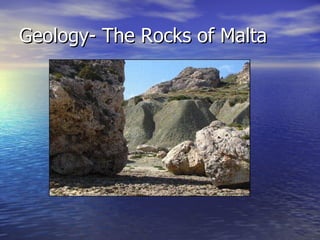
Geology- The Rocks of Malta
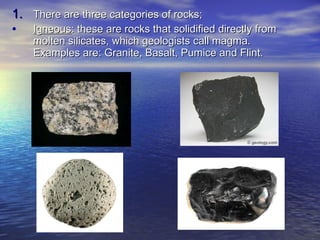
There are three categories of rocks; Igneous : these are rocks that solidified directly from molten silicates, which geologists call magma. Examples are: Granite, Basalt, Pumice and Flint.
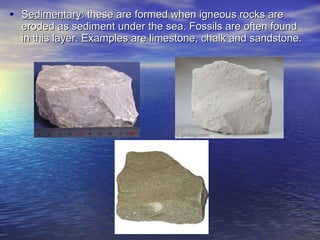
Sedimentary : these are formed when igneous rocks are eroded as sediment under the sea. Fossils are often found in this layer. Examples are limestone, chalk and sandstone.
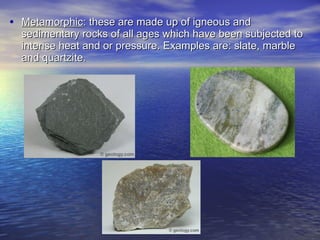
Metamorphic : these are made up of igneous and sedimentary rocks of all ages which have been subjected to intense heat and or pressure. Examples are: slate, marble and quartzite.
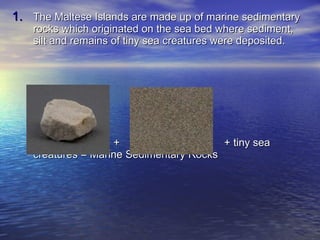
The Maltese Islands are made up of marine sedimentary rocks which originated on the sea bed where sediment, silt and remains of tiny sea creatures were deposited. +  + tiny sea creatures = Marine Sedimentary Rocks
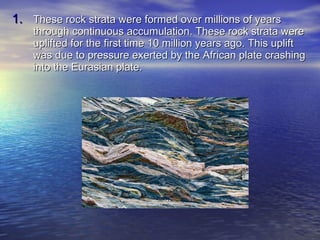
These rock strata were formed over millions of years through continuous accumulation. These rock strata were uplifted for the first time 10 million years ago. This uplift was due to pressure exerted by the African plate crashing into the Eurasian plate.
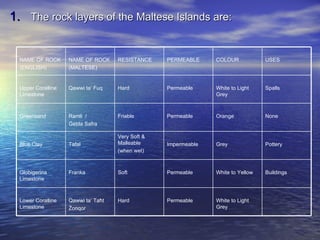
The rock layers of the Maltese Islands are: White to Light Grey Permeable Hard Qawwi ta’ Taħt Żonqor Lower Coralline Limestone Buildings White to Yellow Permeable Soft Franka Globigerina Limestone Pottery Grey Impermeable Very Soft & Malleable  (when wet) Tafal Blue Clay None Orange Permeable Friable Ramli  / Ġebla Safra Greensand Spalls White to Light Grey Permeable Hard Qawwi ta’ Fuq Upper Coralline Limestone USES COLOUR PERMEABLE RESISTANCE NAME OF ROCK (MALTESE) NAME OF ROCK (ENGLISH)
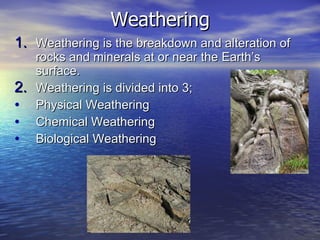
Weathering Weathering is the breakdown and alteration of rocks and minerals at or near the Earth’s surface. Weathering is divided into 3; Physical Weathering Chemical Weathering Biological Weathering
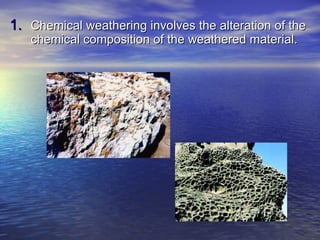
Chemical weathering involves the alteration of the chemical composition of the weathered material.
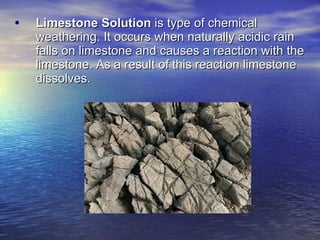
Limestone Solution  is type of chemical weathering. It occurs when naturally acidic rain falls on limestone and causes a reaction with the limestone. As a result of this reaction limestone dissolves.
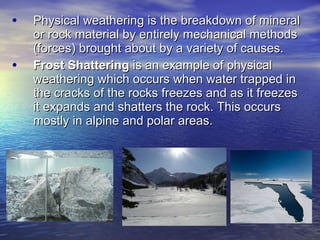
Physical weathering is the breakdown of mineral or rock material by entirely mechanical methods (forces) brought about by a variety of causes. Frost Shattering  is an example of physical weathering which occurs when water trapped in the cracks of the rocks freezes and as it freezes it expands and shatters the rock. This occurs mostly in alpine and polar areas.
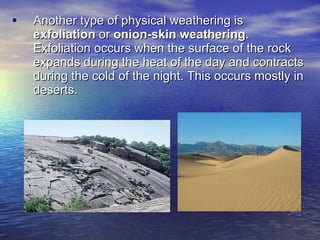
Another type of physical weathering is  exfoliation  or  onion-skin   weathering . Exfoliation occurs when the surface of the rock expands during the heat of the day and contracts during the cold of the night. This occurs mostly in deserts.
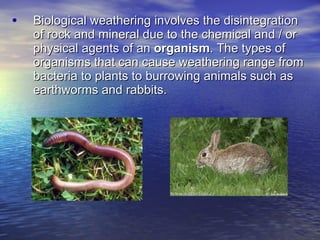
Biological weathering involves the disintegration of rock and mineral due to the chemical and / or physical agents of an  organism . The types of organisms that can cause weathering range from bacteria to plants to burrowing animals such as earthworms and rabbits.
 

E learning geography project by Kurt Muscat, 3.02

  • 1.
    E-Learning Geography ProjectName: Kurt Muscat Class: Form 3.02
  • 2.
  • 3.
    There are threecategories of rocks; Igneous : these are rocks that solidified directly from molten silicates, which geologists call magma. Examples are: Granite, Basalt, Pumice and Flint.
  • 4.
    Sedimentary : theseare formed when igneous rocks are eroded as sediment under the sea. Fossils are often found in this layer. Examples are limestone, chalk and sandstone.
  • 5.
    Metamorphic : theseare made up of igneous and sedimentary rocks of all ages which have been subjected to intense heat and or pressure. Examples are: slate, marble and quartzite.
  • 6.
    The Maltese Islandsare made up of marine sedimentary rocks which originated on the sea bed where sediment, silt and remains of tiny sea creatures were deposited. + + tiny sea creatures = Marine Sedimentary Rocks
  • 7.
    These rock stratawere formed over millions of years through continuous accumulation. These rock strata were uplifted for the first time 10 million years ago. This uplift was due to pressure exerted by the African plate crashing into the Eurasian plate.
  • 8.
    The rock layersof the Maltese Islands are: White to Light Grey Permeable Hard Qawwi ta’ Taħt Żonqor Lower Coralline Limestone Buildings White to Yellow Permeable Soft Franka Globigerina Limestone Pottery Grey Impermeable Very Soft & Malleable (when wet) Tafal Blue Clay None Orange Permeable Friable Ramli / Ġebla Safra Greensand Spalls White to Light Grey Permeable Hard Qawwi ta’ Fuq Upper Coralline Limestone USES COLOUR PERMEABLE RESISTANCE NAME OF ROCK (MALTESE) NAME OF ROCK (ENGLISH)
  • 9.
    Weathering Weathering isthe breakdown and alteration of rocks and minerals at or near the Earth’s surface. Weathering is divided into 3; Physical Weathering Chemical Weathering Biological Weathering
  • 10.
    Chemical weathering involvesthe alteration of the chemical composition of the weathered material.
  • 11.
    Limestone Solution is type of chemical weathering. It occurs when naturally acidic rain falls on limestone and causes a reaction with the limestone. As a result of this reaction limestone dissolves.
  • 12.
    Physical weathering isthe breakdown of mineral or rock material by entirely mechanical methods (forces) brought about by a variety of causes. Frost Shattering is an example of physical weathering which occurs when water trapped in the cracks of the rocks freezes and as it freezes it expands and shatters the rock. This occurs mostly in alpine and polar areas.
  • 13.
    Another type ofphysical weathering is exfoliation or onion-skin weathering . Exfoliation occurs when the surface of the rock expands during the heat of the day and contracts during the cold of the night. This occurs mostly in deserts.
  • 14.
    Biological weathering involvesthe disintegration of rock and mineral due to the chemical and / or physical agents of an organism . The types of organisms that can cause weathering range from bacteria to plants to burrowing animals such as earthworms and rabbits.
  • 15.