1
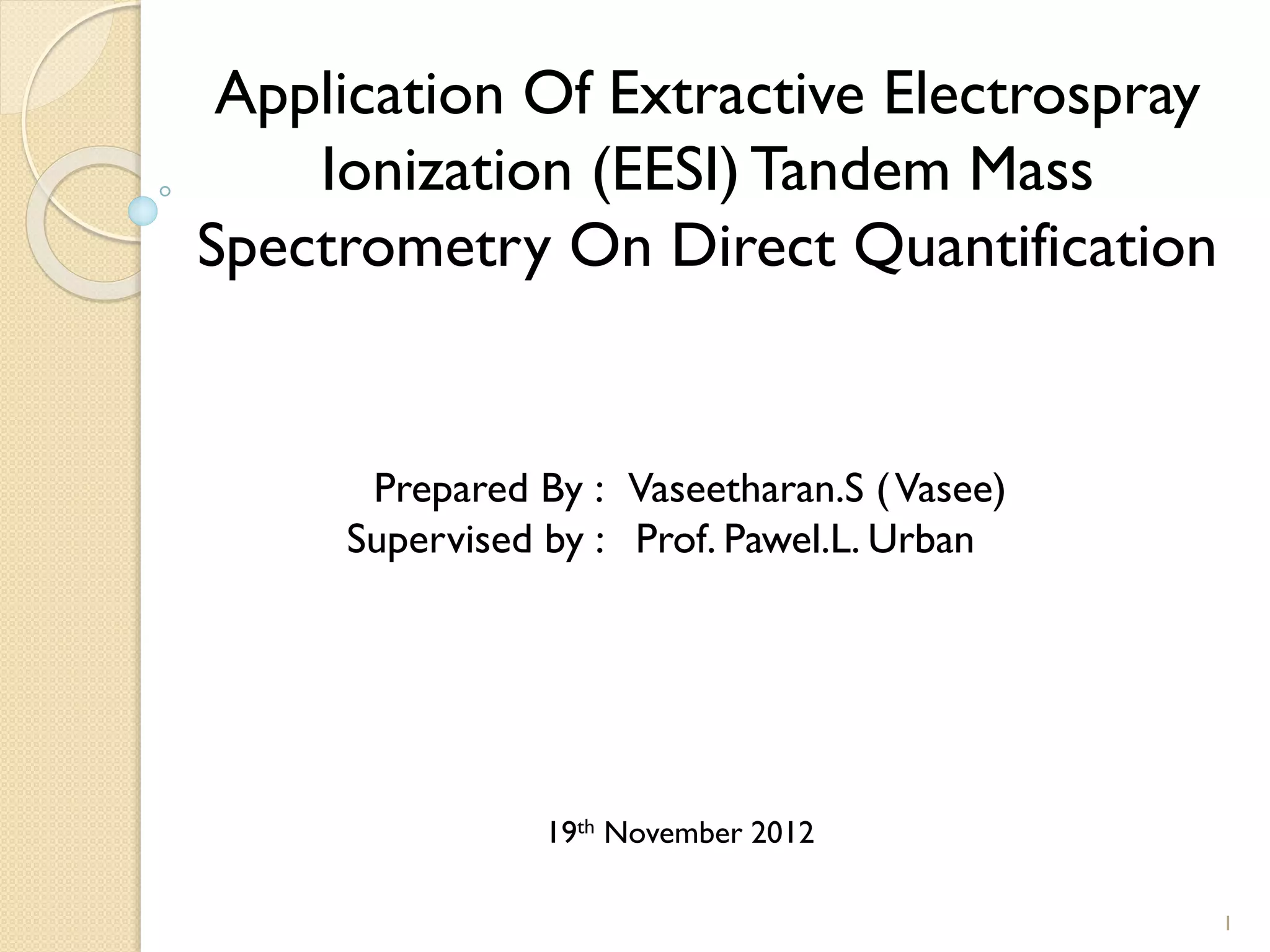
Application Of Extractive Electrospray
Ionization (EESI) Tandem Mass
Spectrometry On Direct Quantification
Prepared By : Vaseetharan.S (Vasee)
Supervised by : Prof. Pawel.L. Urban
19th November 2012
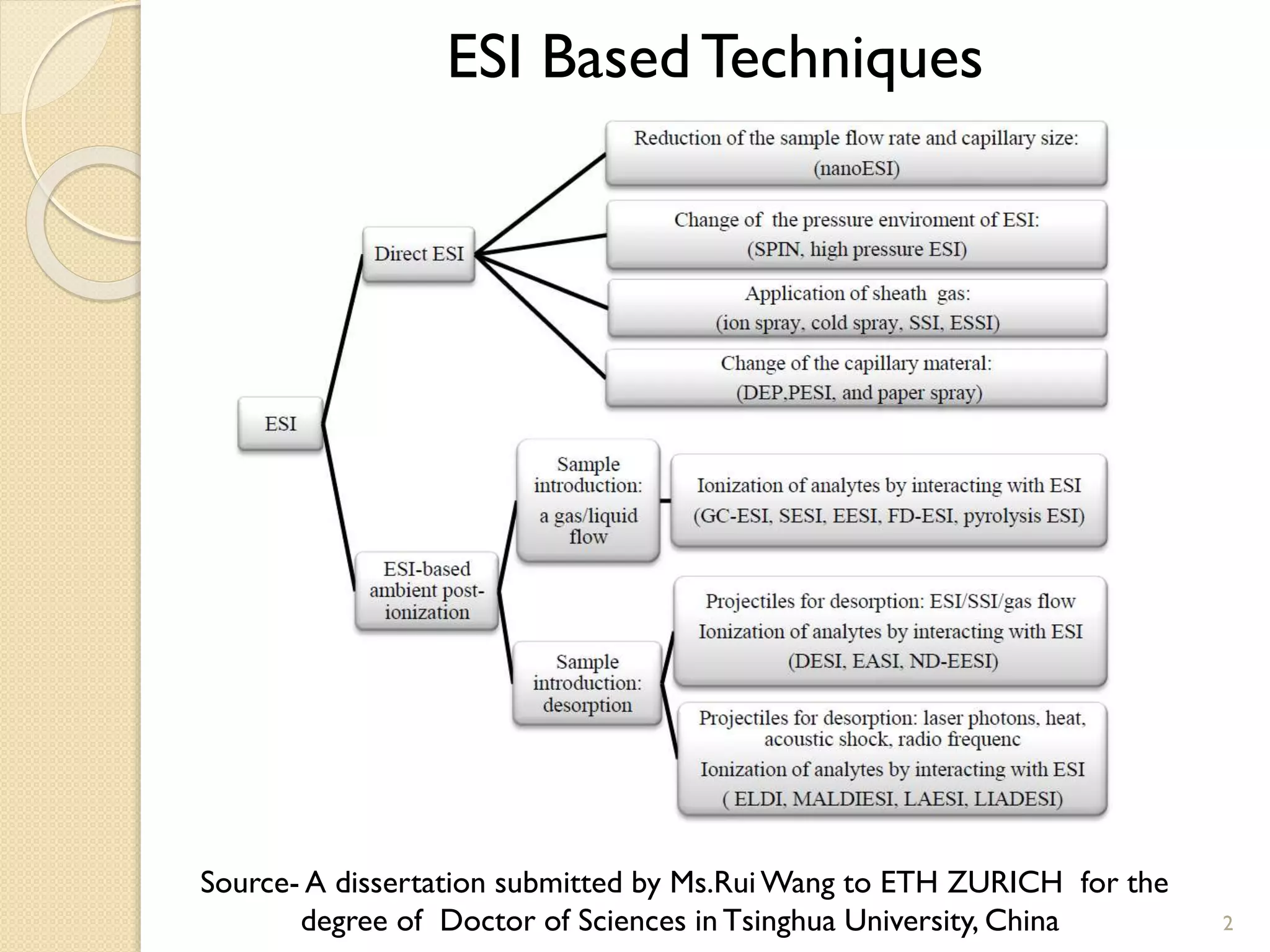
ESI Based Techniques
2
Source- A dissertation submitted by Ms.RuiWang to ETH ZURICH for the
degree of Doctor of Sciences in Tsinghua University, China
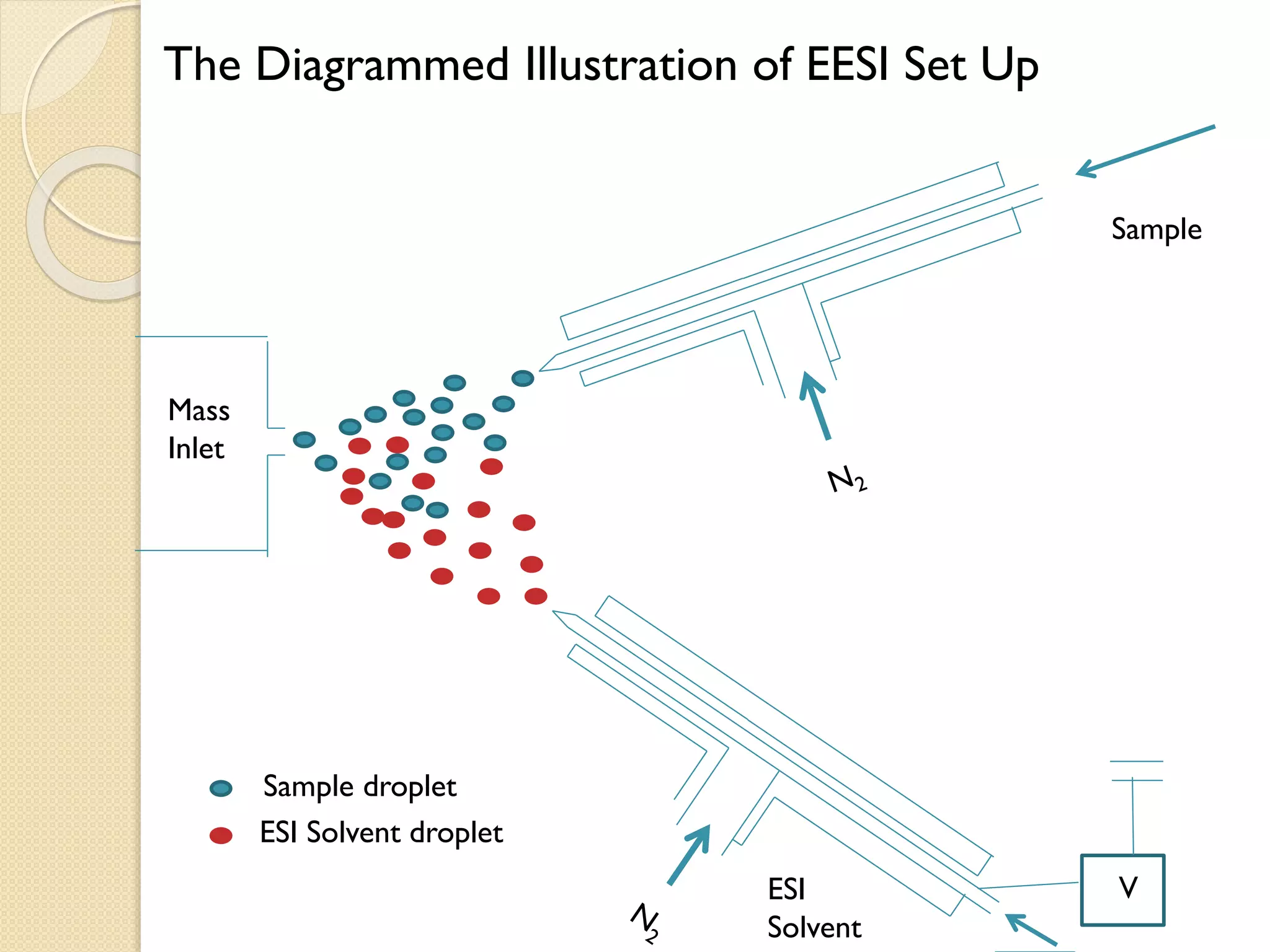
The Diagrammed Illustration of EESI Set Up
Mass
Inlet
ESI Solvent droplet
Sample droplet
ESI
Solvent
Sample
V
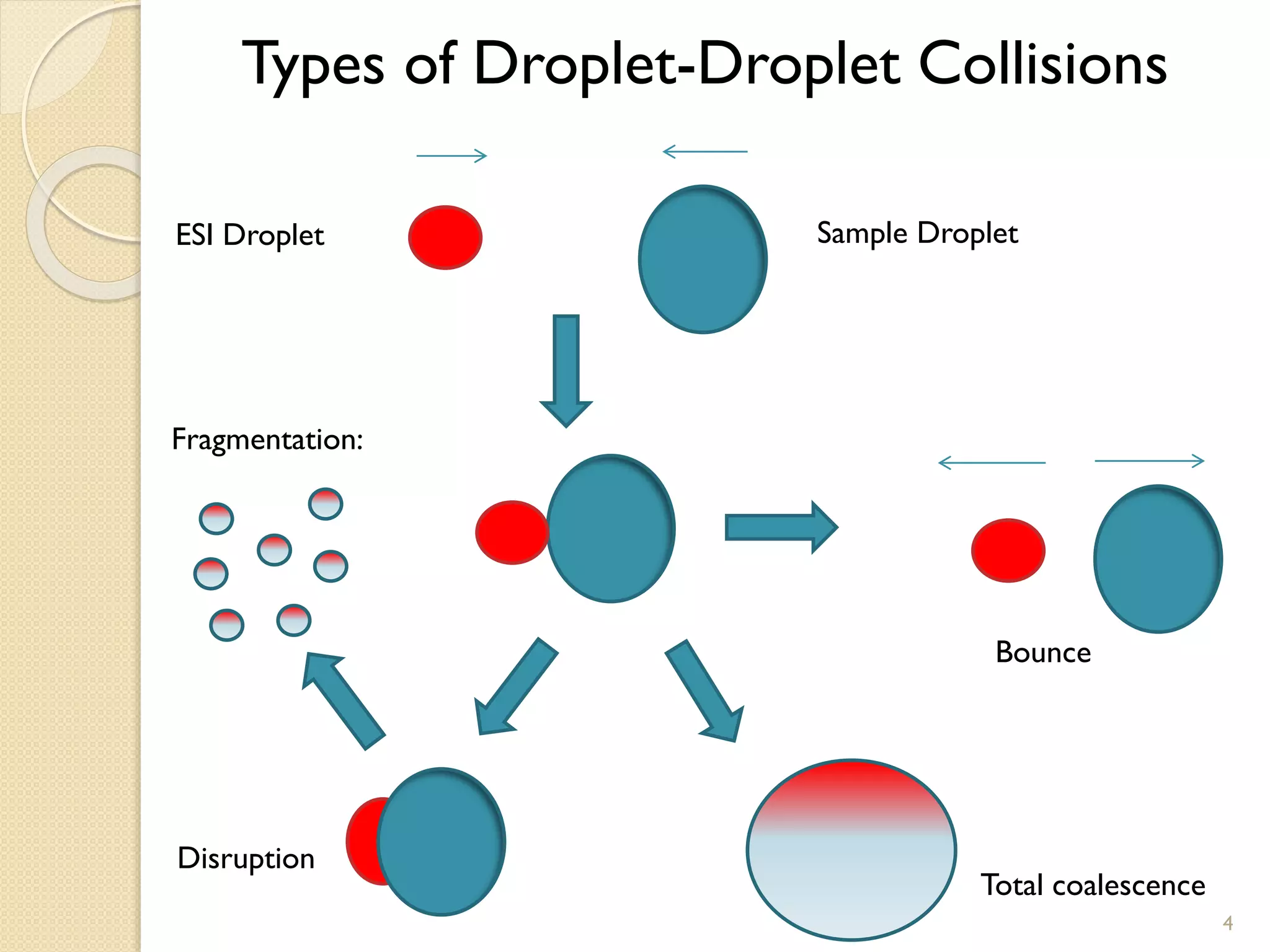
Types of Droplet-Droplet Collisions
4
Sample DropletESI Droplet
Bounce
Total coalescence
Disruption
Fragmentation:
 Application 1
5
6
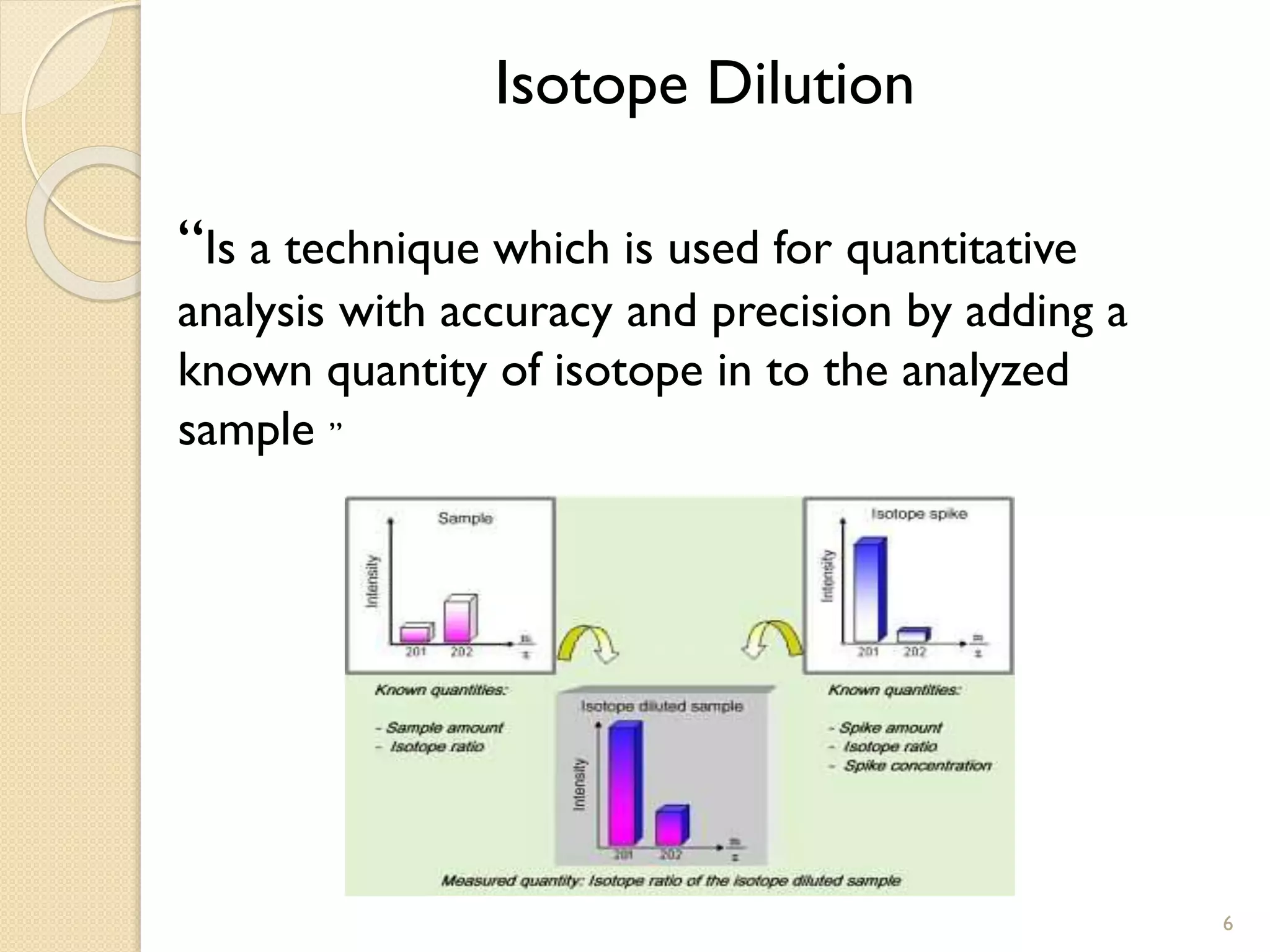
Isotope Dilution
“Is a technique which is used for quantitative
analysis with accuracy and precision by adding a
known quantity of isotope in to the analyzed
sample ”
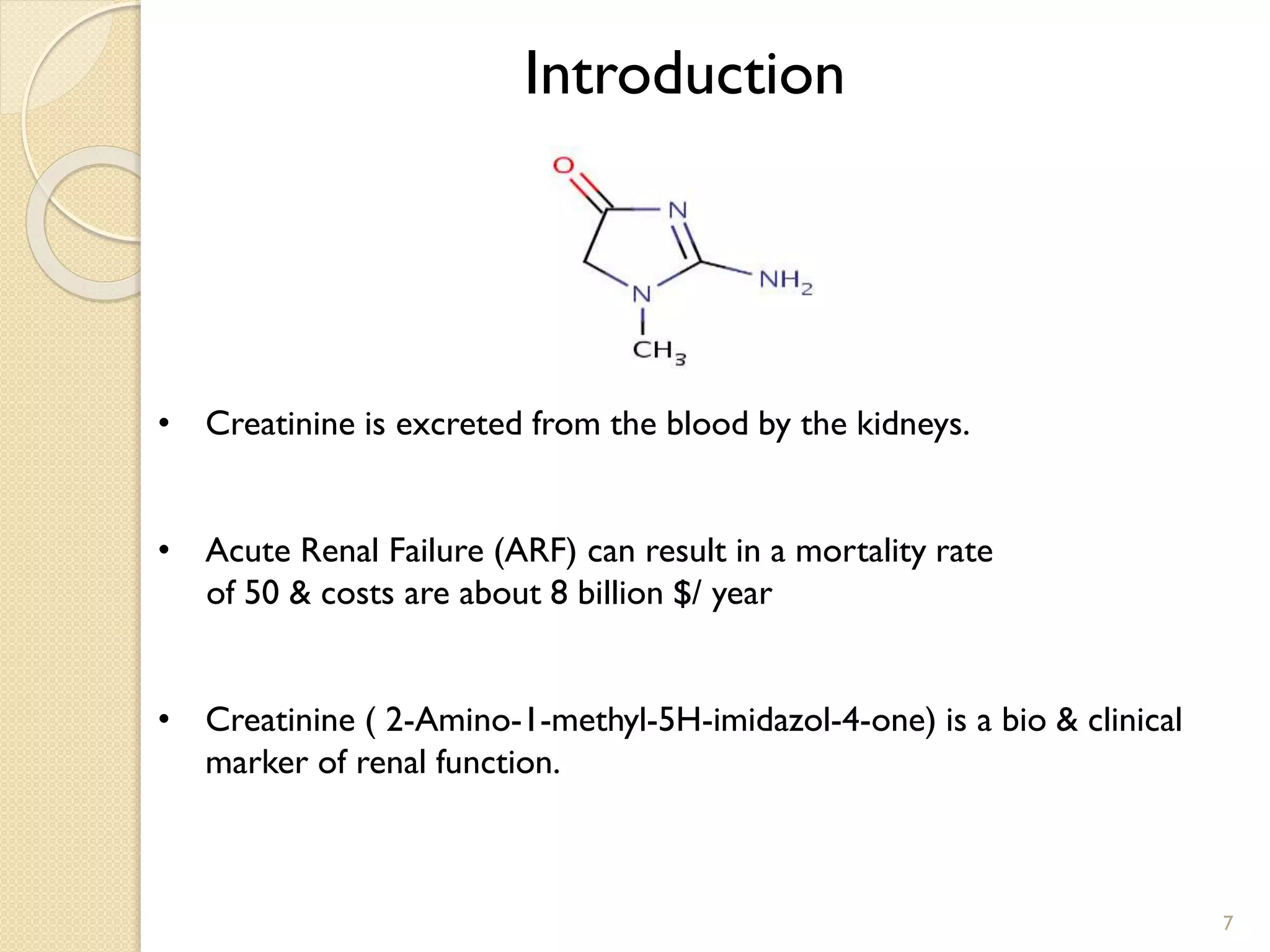
Introduction
• Creatinine is excreted from the blood by the kidneys.
• Acute Renal Failure (ARF) can result in a mortality rate
of 50 & costs are about 8 billion $/ year
• Creatinine ( 2-Amino-1-methyl-5H-imidazol-4-one) is a bio & clinical
marker of renal function.
7
8
Preparation of Standard Solution and
Spiked Sample
10.0 mg of
Creatinine
Dissolved in
H2O (100 mL)
Stored in brown
vials (20mL) in dark
(4◦C.)
10.0 mg of
Creatinine -d3
Dissolved in
H2O (100 mL)
Stored in brown
vials (20mL) in
dark (4 ◦C.)
 Preparation of Creatinine (100 mg/L)
 Preparation of Creatinine -d3 (100 mg/L)
A series of Creatinine standards (0–10 mg/L) were prepared by diluting the
Creatinine stock solution with H2O by keeping [Creatinine -d3]-100 μg/L
9
Preparation of Spiked Urine Sample
Raw urine
sample
Diluted by 1:500
with ultrapure H2O
Urine samples were
spiked with Creatinine
and Creatinine-d3
• [Creatinine] in spiked urine is 1.5–3 times > Creatinie in unspiked urine
based on standard addition method
• Urine donators were 6 healthy males & females
[Creatinine] mg/L
[Creatinine-d3] mg/L
0.5 1 1.5 2 4
11 1 11
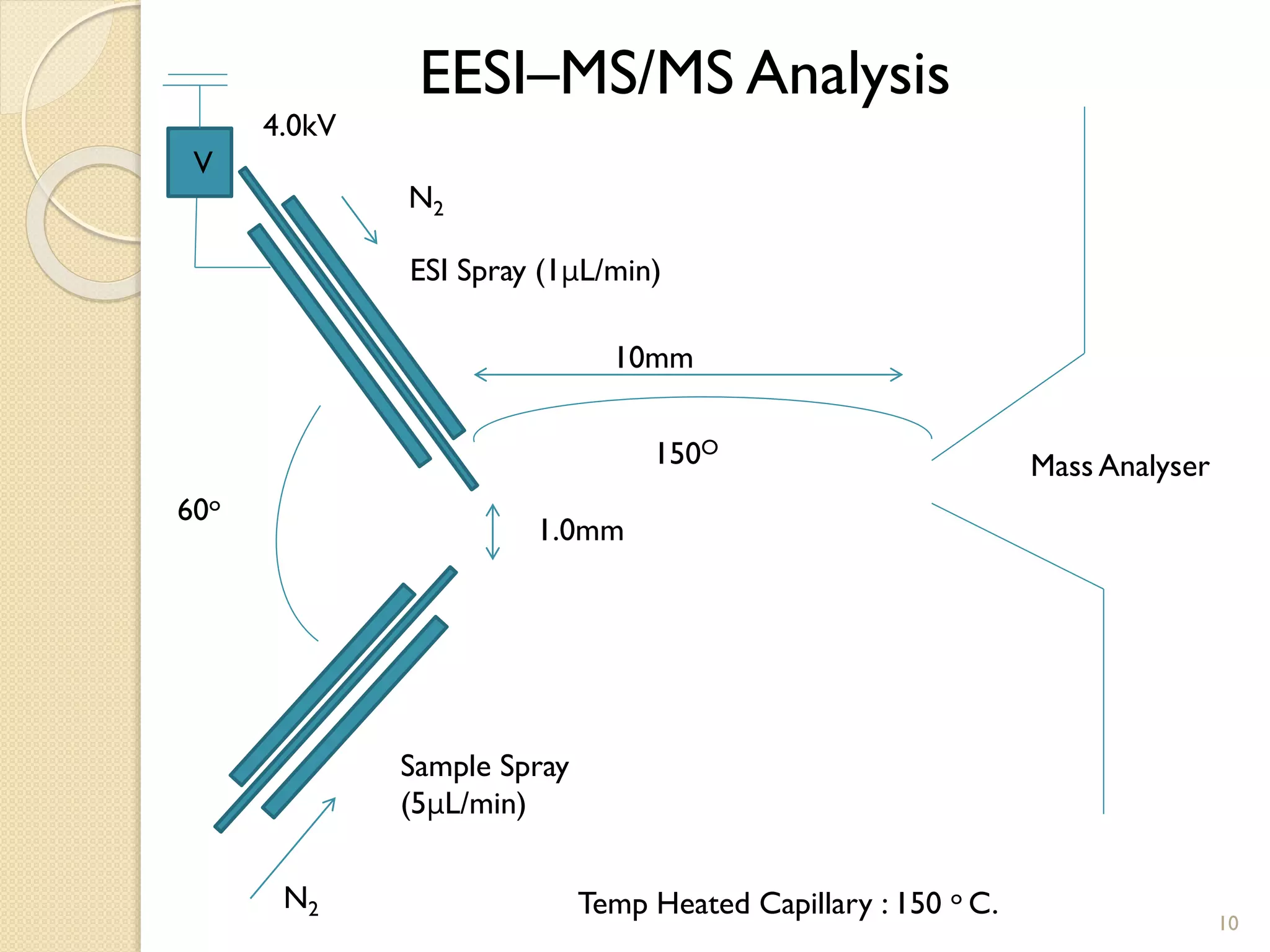
EESI–MS/MS Analysis
Mass Analyser
60o
1.0mm
10mm
ESI Spray (1μL/min)
Sample Spray
(5μL/min)
N2
V
N2
150O
Temp Heated Capillary : 150 o C.
4.0kV
10
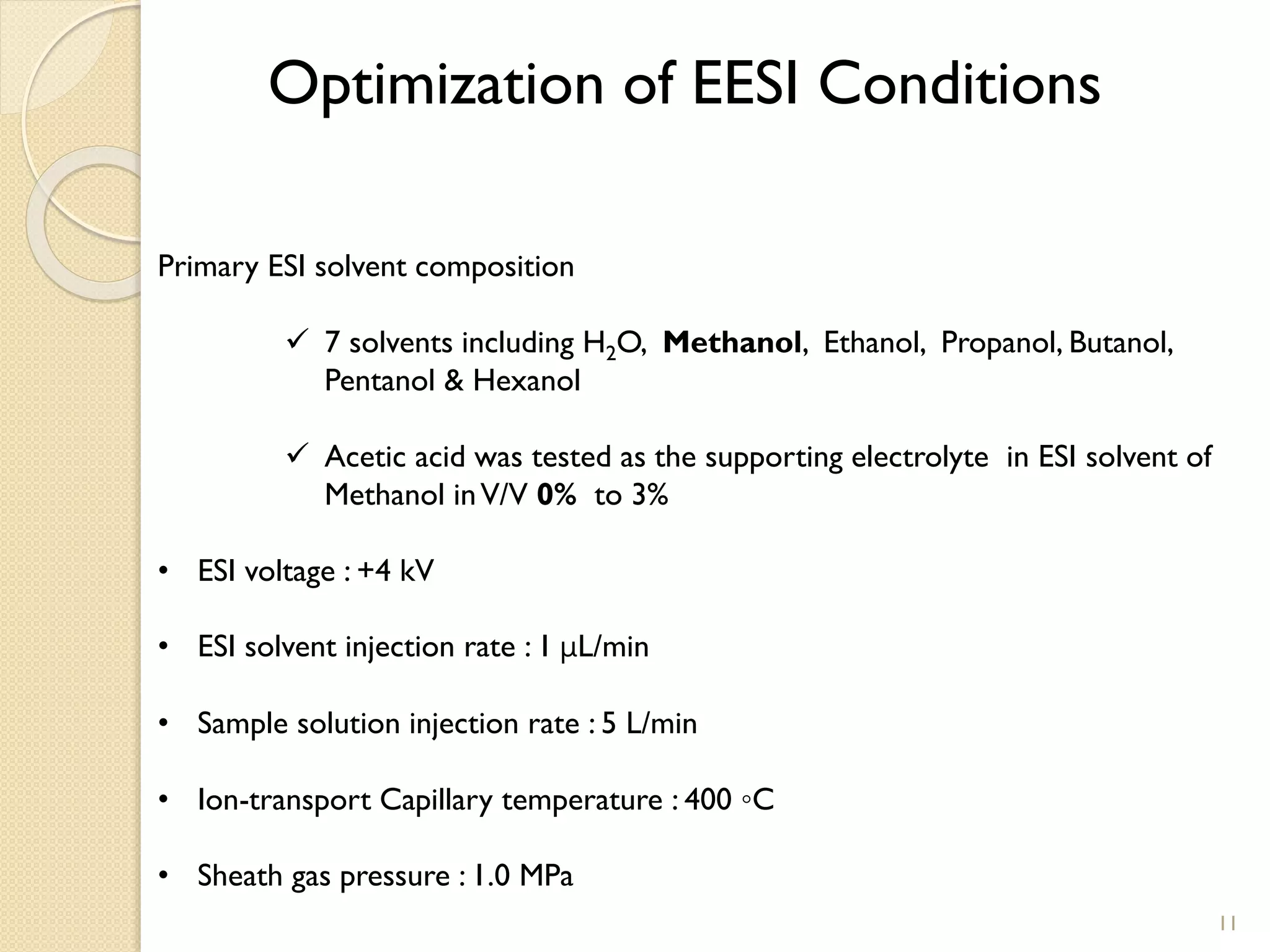
Optimization of EESI Conditions
Primary ESI solvent composition
 7 solvents including H2O, Methanol, Ethanol, Propanol, Butanol,
Pentanol & Hexanol
 Acetic acid was tested as the supporting electrolyte in ESI solvent of
Methanol inV/V 0% to 3%
• ESI voltage : +4 kV
• ESI solvent injection rate : 1 μL/min
• Sample solution injection rate : 5 L/min
• Ion-transport Capillary temperature : 400 ◦C
• Sheath gas pressure : 1.0 MPa
11
EESI–MS/MS (+Ve Mode) spectrum of Creatinine protonated molecular ion at m/z
114 obtainedby analyzing a Creatinine standard solution (100 g/L) (NCE = 25% @
AQ = 0.30)
The isolation width -2.0Da
Activation time-30ms
m/z range -15–200
Maximum ion injection time- 200ms
Instrument was checked by-100 g/L of Creatinine standard solution
6 Independent Analysis for
each sample
12
[M+H]+
[CH3NCH3]+
[M+H−CO]+
EESI-MS/MS Spectrum
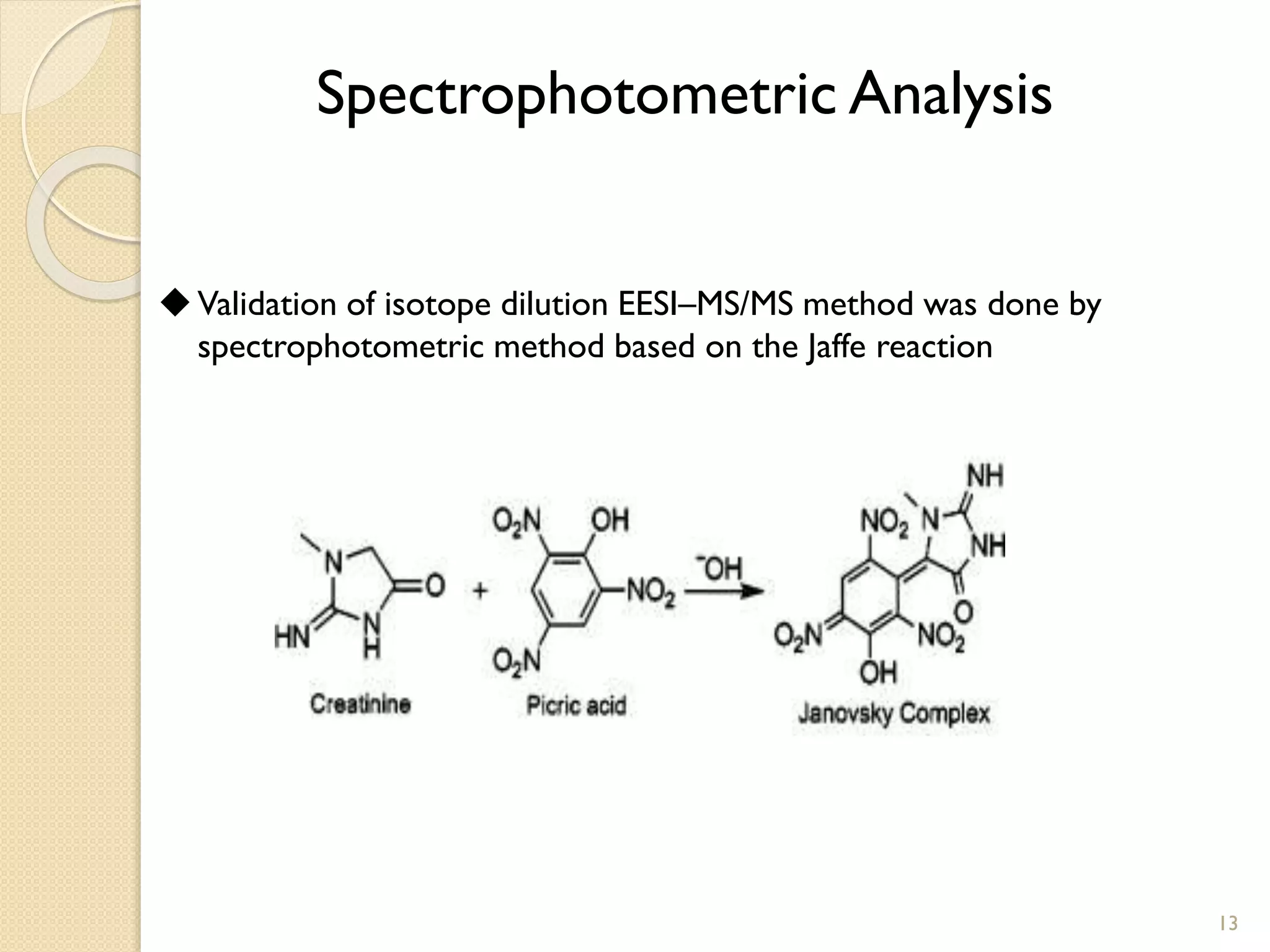
Spectrophotometric Analysis
Validation of isotope dilution EESI–MS/MS method was done by
spectrophotometric method based on the Jaffe reaction
13
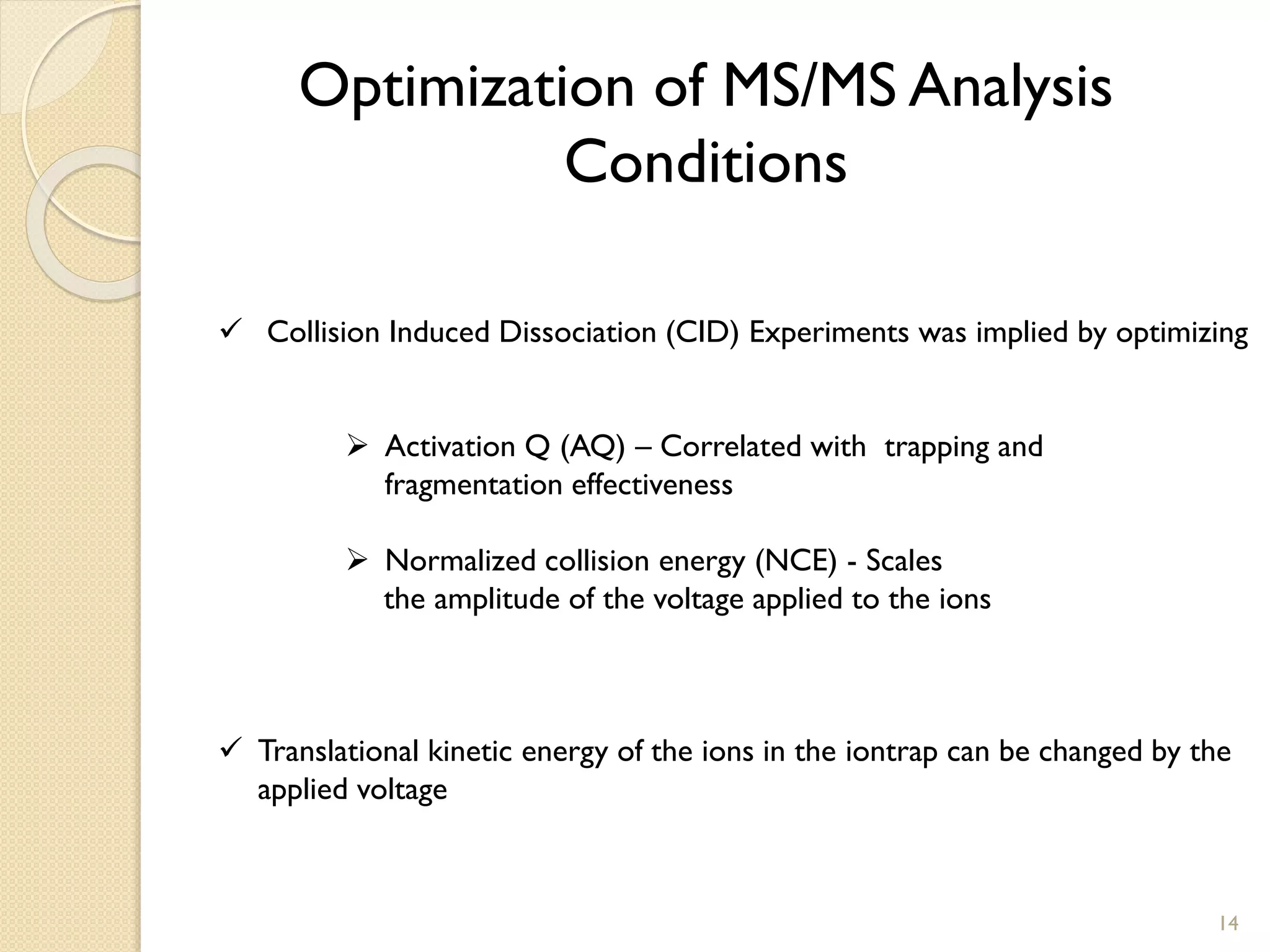
Optimization of MS/MS Analysis
Conditions
 Collision Induced Dissociation (CID) Experiments was implied by optimizing
 Activation Q (AQ) – Correlated with trapping and
fragmentation effectiveness
 Normalized collision energy (NCE) - Scales
the amplitude of the voltage applied to the ions
 Translational kinetic energy of the ions in the iontrap can be changed by the
applied voltage
14
15
Optimization of MS/MS analysis
Conditions
AQValue NCE Peak Behaviour
0.1 & 0.2 NCE - 0-100% [M+H]+ (m/z 114)
0.25 & 0.30 NCE ≥ 20% [CH3NCH3]+ (m/z 44), [M+H−CO]+ (m/z 86)
0.35 - 0.6 NCE ≥ 20% Only the peak at m/z 86
≥ 0.65 NCE ≥ 20% No peaks at m/z 44 & m/z 86
0.25-0.35 NCE = 25% Intensity of m/z 86 increased by a factor 6
 The peak (m/z 86) was selected for optimizing analytical parameters
Lowest m/z = [Parent Mass]×[AQ]
0.908
Quantification of Urinary Creatinine
• Creatinine-d3 was the isotopic internal standard to correct the variations
in [Creatinie]
• Creatinine-d3 was quantified by - [M+H−CO]+ (m/z 89)
• The intensity ratio of Creatinine and Creatinine -d3 was plotted as a
function of [Creatinine ]in the standard solutions
16
Dependence of Creatinine signal
intensity on [Creatinine] in ultrapure
water
Quantification of [Creatinine]in urine by
using the standard addition method
17
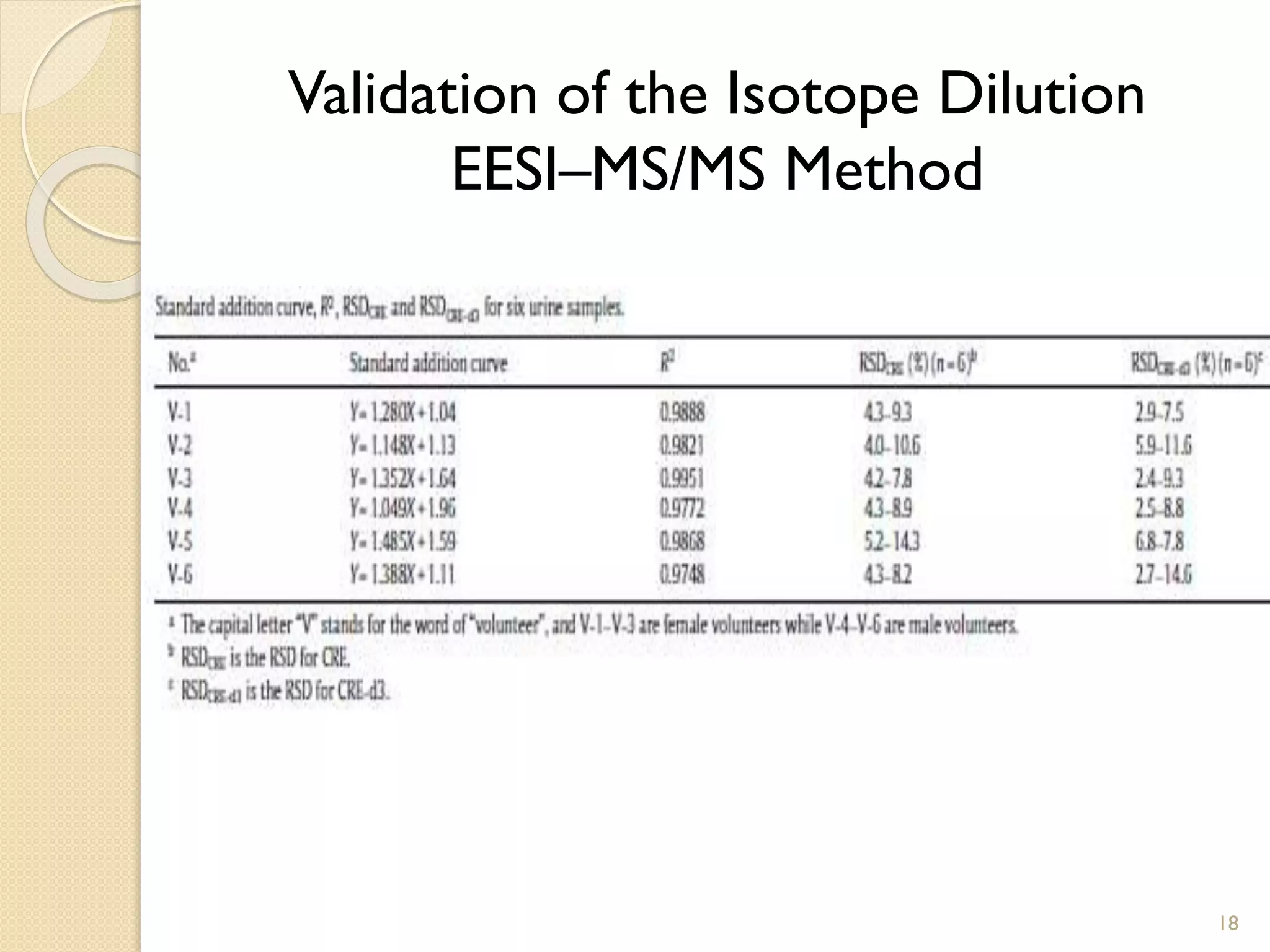
• The RSDValues……
• The % Recovery was calculated by using equation below
[Creatinine]Spec : 367mg/L
[Creatinine]MS/MS : 417mg/L
R(%) :114%
Quantification of Urinary Creatinine
18
Validation of the Isotope Dilution
EESI–MS/MS Method
Validation of the Isotope Dilution
EESI–MS/MS Method
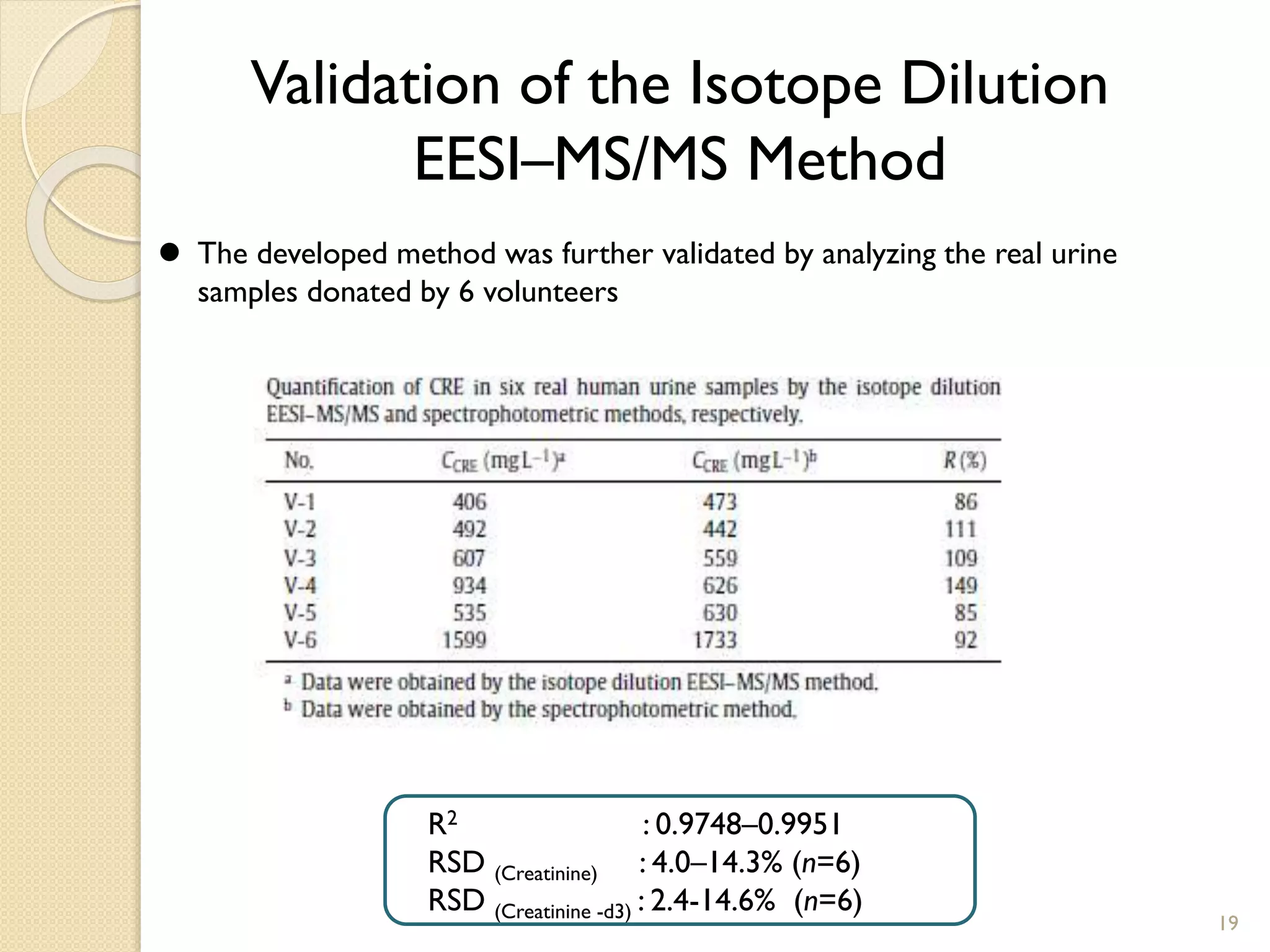
 The developed method was further validated by analyzing the real urine
samples donated by 6 volunteers
R2 : 0.9748–0.9951
RSD (Creatinine) : 4.0–14.3% (n=6)
RSD (Creatinine -d3) : 2.4-14.6% (n=6)
19
Summary
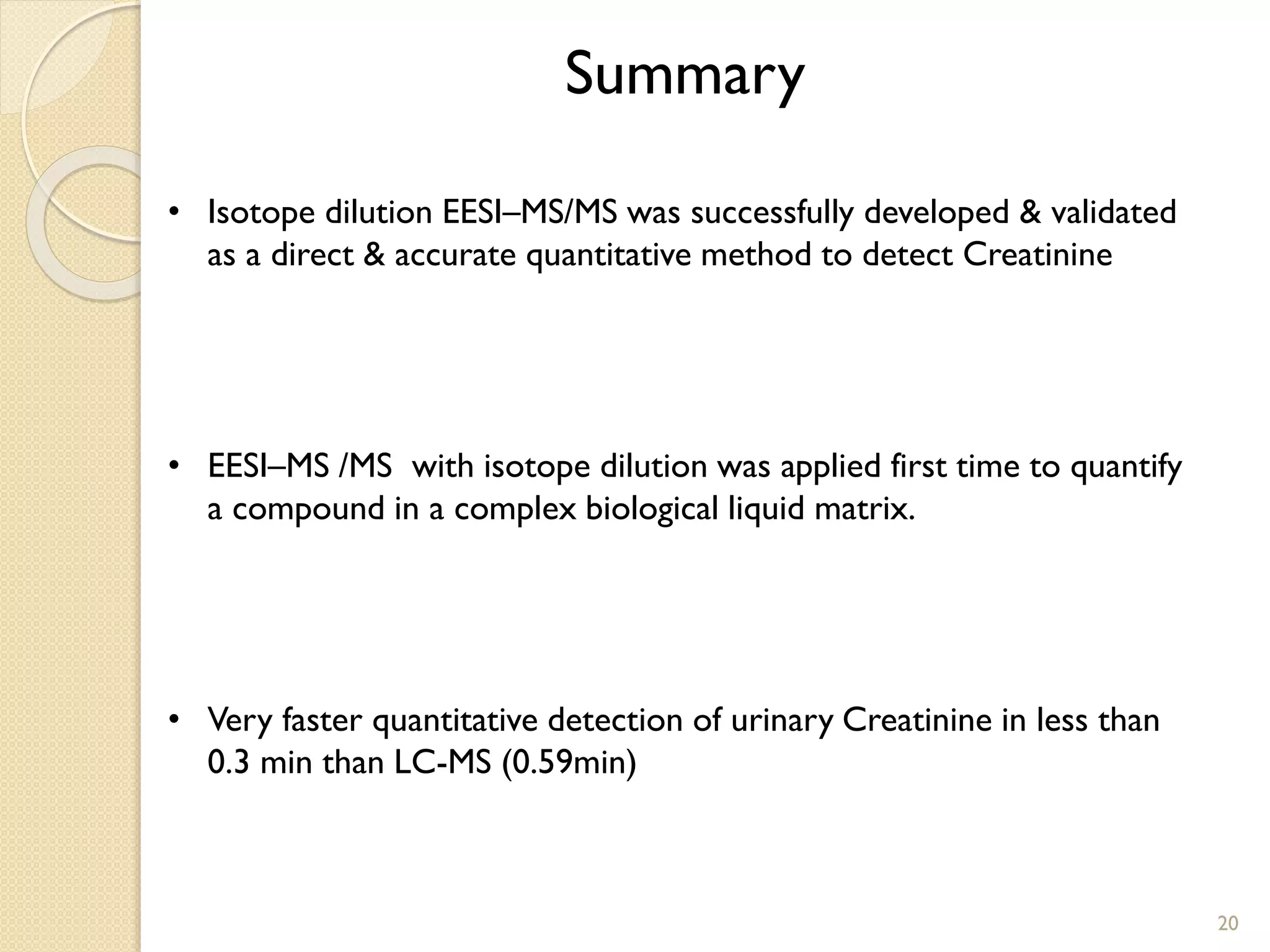
• Isotope dilution EESI–MS/MS was successfully developed & validated
as a direct & accurate quantitative method to detect Creatinine
• EESI–MS /MS with isotope dilution was applied first time to quantify
a compound in a complex biological liquid matrix.
• Very faster quantitative detection of urinary Creatinine in less than
0.3 min than LC-MS (0.59min)
20
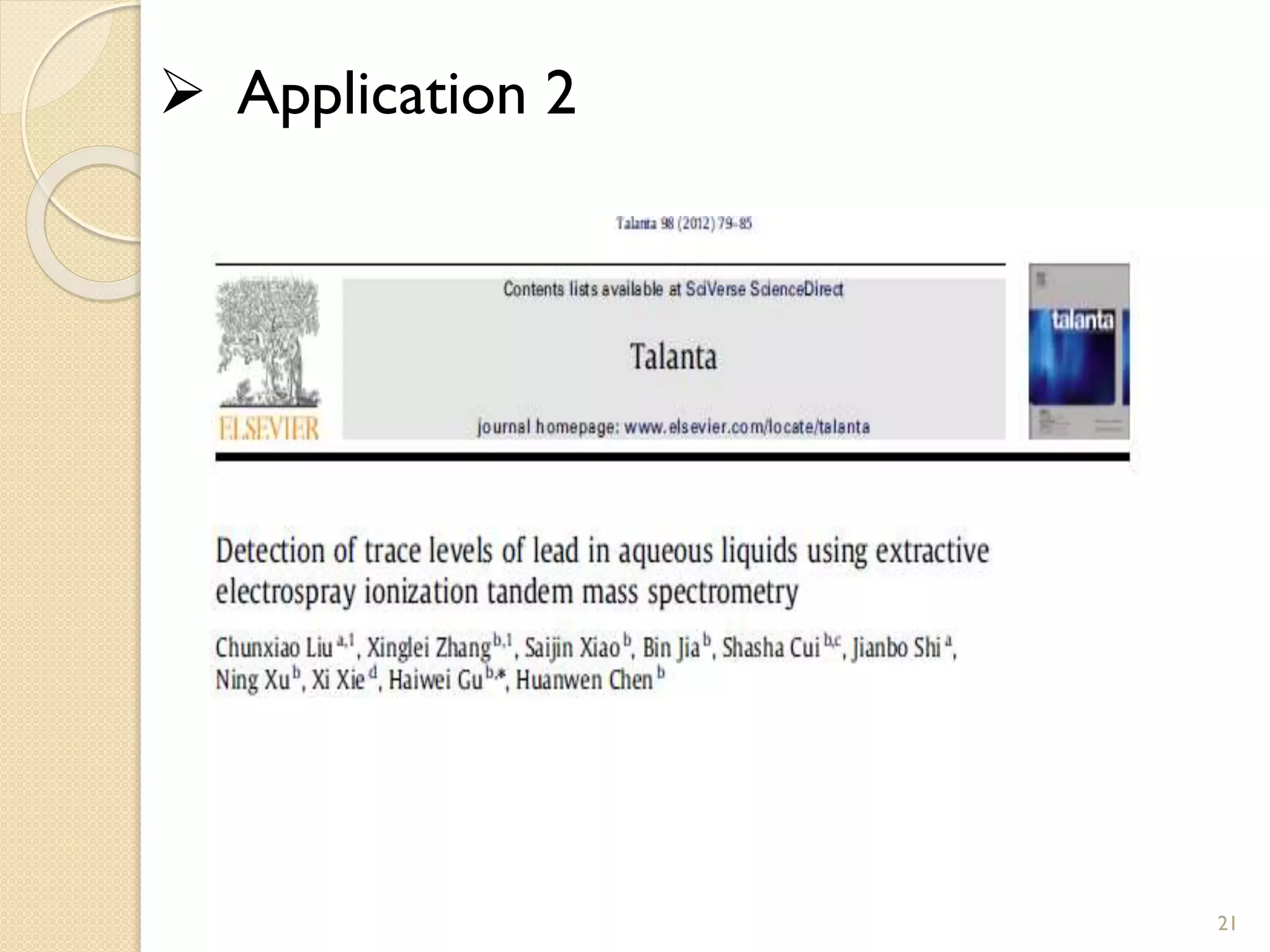
 Application 2
21
22
Importance of the Research
• Lead is being toxic to human beings beyond a certain exposure
• Lead in beverages may come from contaminated water, fruit, land..etc
• It is useful to develop a fast, sensitive, and reliable determination of lead
• Most traditional analytical techniques do not allow direct analysis of lead
in complex media.
• Time consuming pretreatments are generally required
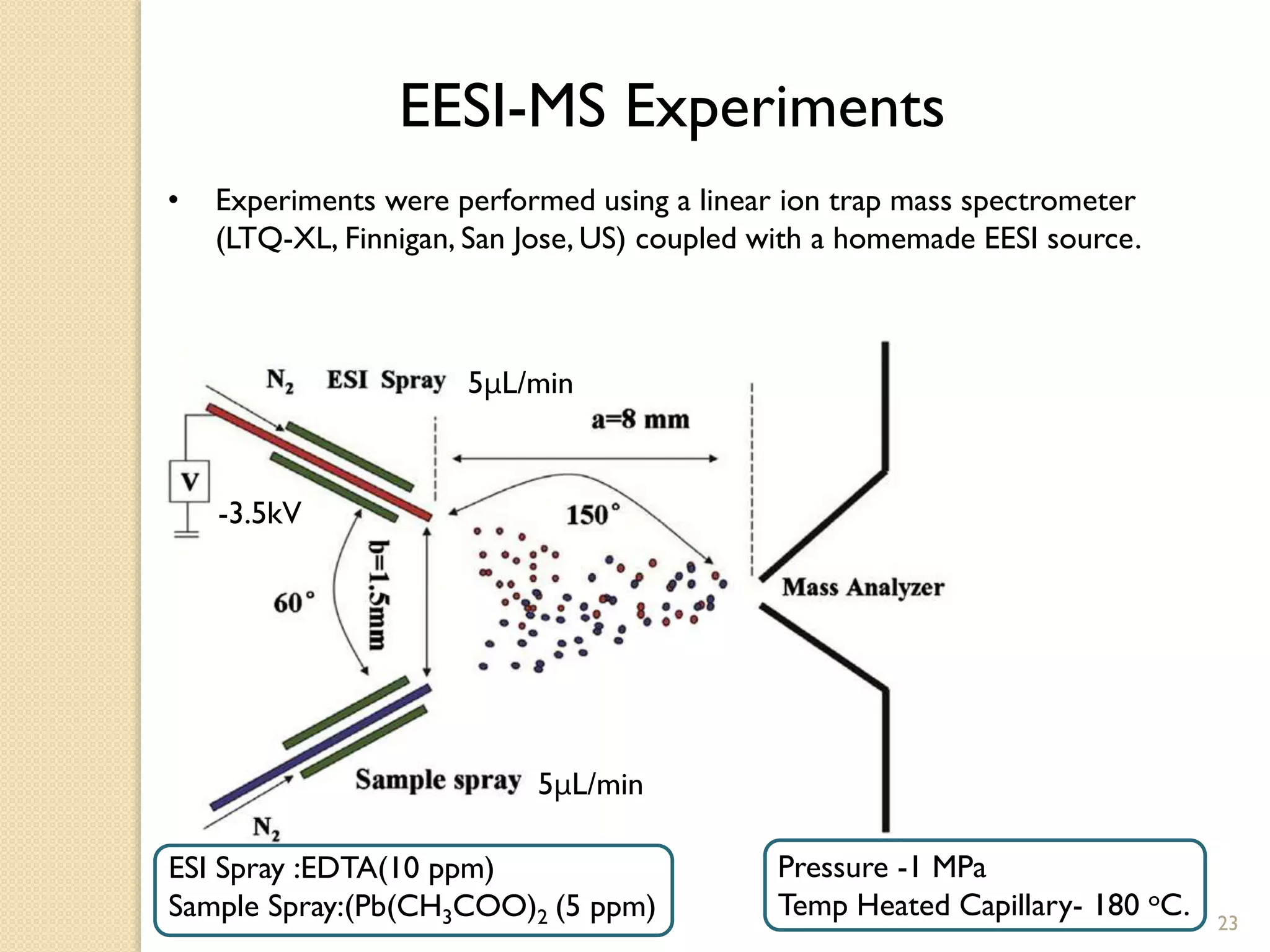
EESI-MS Experiments
• Experiments were performed using a linear ion trap mass spectrometer
(LTQ-XL, Finnigan, San Jose, US) coupled with a homemade EESI source.
Pressure -1 MPa
Temp Heated Capillary- 180 oC.
-3.5kV
5μL/min
5μL/min
23
ESI Spray :EDTA(10 ppm)
Sample Spray:(Pb(CH3COO)2 (5 ppm)
The Results and Discussion
A typical EESI-MS spectrum (-Ve Mode) of EDTA-Pb(II) complexes.
24
[EDTA+208Pb-4H]2-
-CH2COO
Qualitative characterization of EDTA signals observed in the EESI-MS/MS
(a) Deprotonated EDTA of m/z 291
(b) [EDTA+Na-2H]- ions of m/z 313
(c) [EDTA+2Na-3H]- ions of m/z 335 25
[EDTA-H]-
[EDTA+Na-2H]-
[EDTA+2Na-3H]-
-H2O
-CO2
-CO2, H2O, CO
-H2O
-CO2
-Na,CO2, H2O
-H2O
-H2O
a)
b)
c)
EESI-MS/MS spectra of anions of EDTA-Pb (II) complexes.
(a) Anions of EDTA-208Pb complex of m/z 497
(b) Anions of EDTA-207Pb complex of m/z 496
(c) Anions of EDTA-206Pb complex of m/z 495
26
[EDTA+208Pb-3H]-
-H2O
-2CO
-2CO2
-CO
-CO2
[EDTA+207Pb-3H]-
[EDTA+206Pb-3H]-
a)
b)
c)
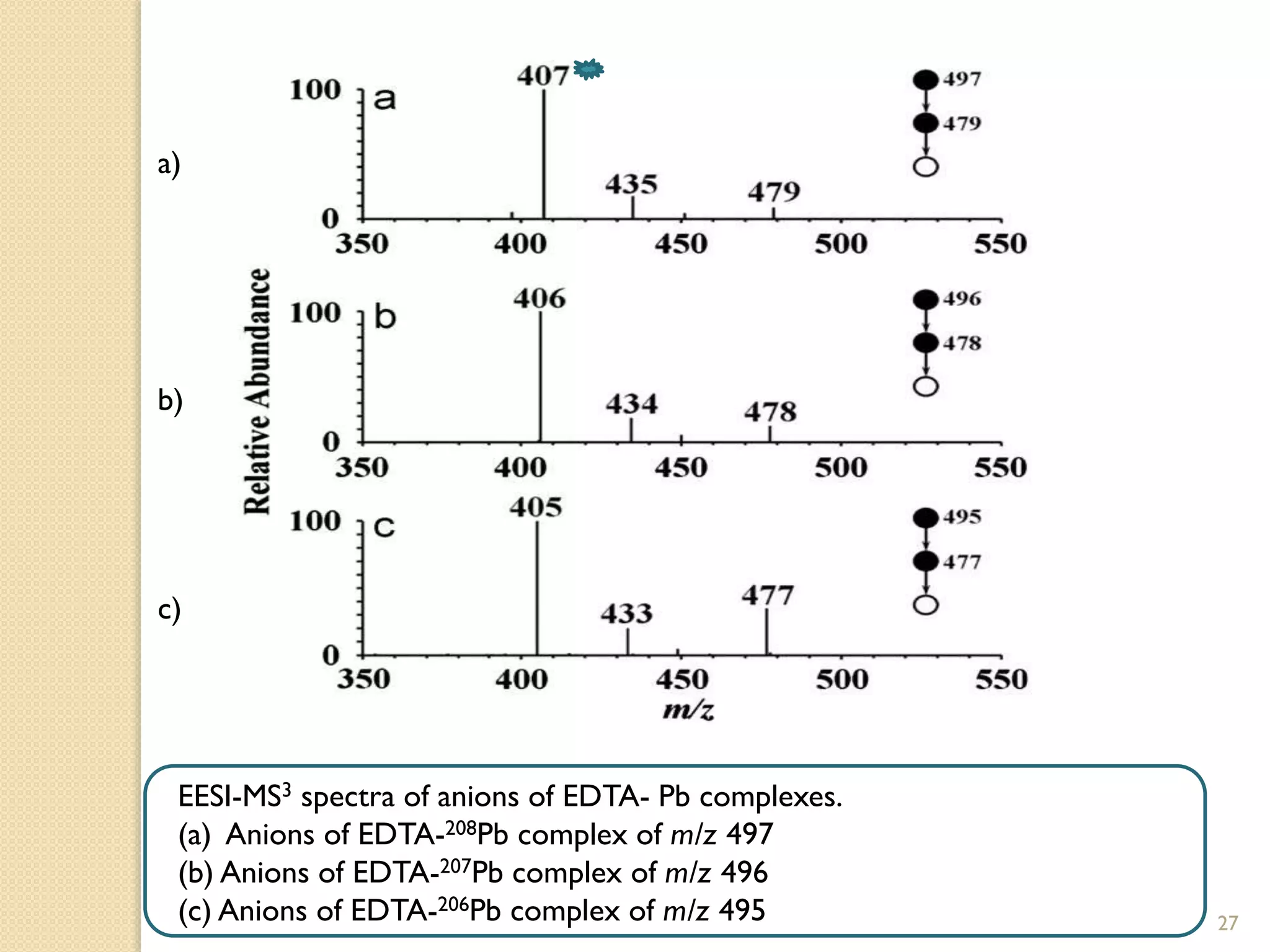
EESI-MS3 spectra of anions of EDTA- Pb complexes.
(a) Anions of EDTA-208Pb complex of m/z 497
(b) Anions of EDTA-207Pb complex of m/z 496
(c) Anions of EDTA-206Pb complex of m/z 495 27
a)
b)
c)
Direct and Semi-Quantitative
Measurement Using EESI
• Pb (II) quantification was based on fragments at m/z 407 in the EESI-MS3
experiments of [EDTA+208Pb-3H]- ions, which were generated from the online
ion /molecule reaction in the EESI source
• The quantitative performance of EESI-MS3 was better than that of EESI-MS2 in
this study
• Semi-quantitative measurement of lead was performed using several water-
based samples
• Calibration curve had a linear signal response range of 1–100 ppt concentration
range
• Pure deionized water was spiked with Pb(CH3COO)2 to obtain a
concentration of 5x10-12 g/mL with recovery rate of 100%
28
(a) De ionized water, (b) Nongfu Spring mineral water, (c) Jinggang green tea
(d) Master Kang mineral water.
29
Calibration Curves
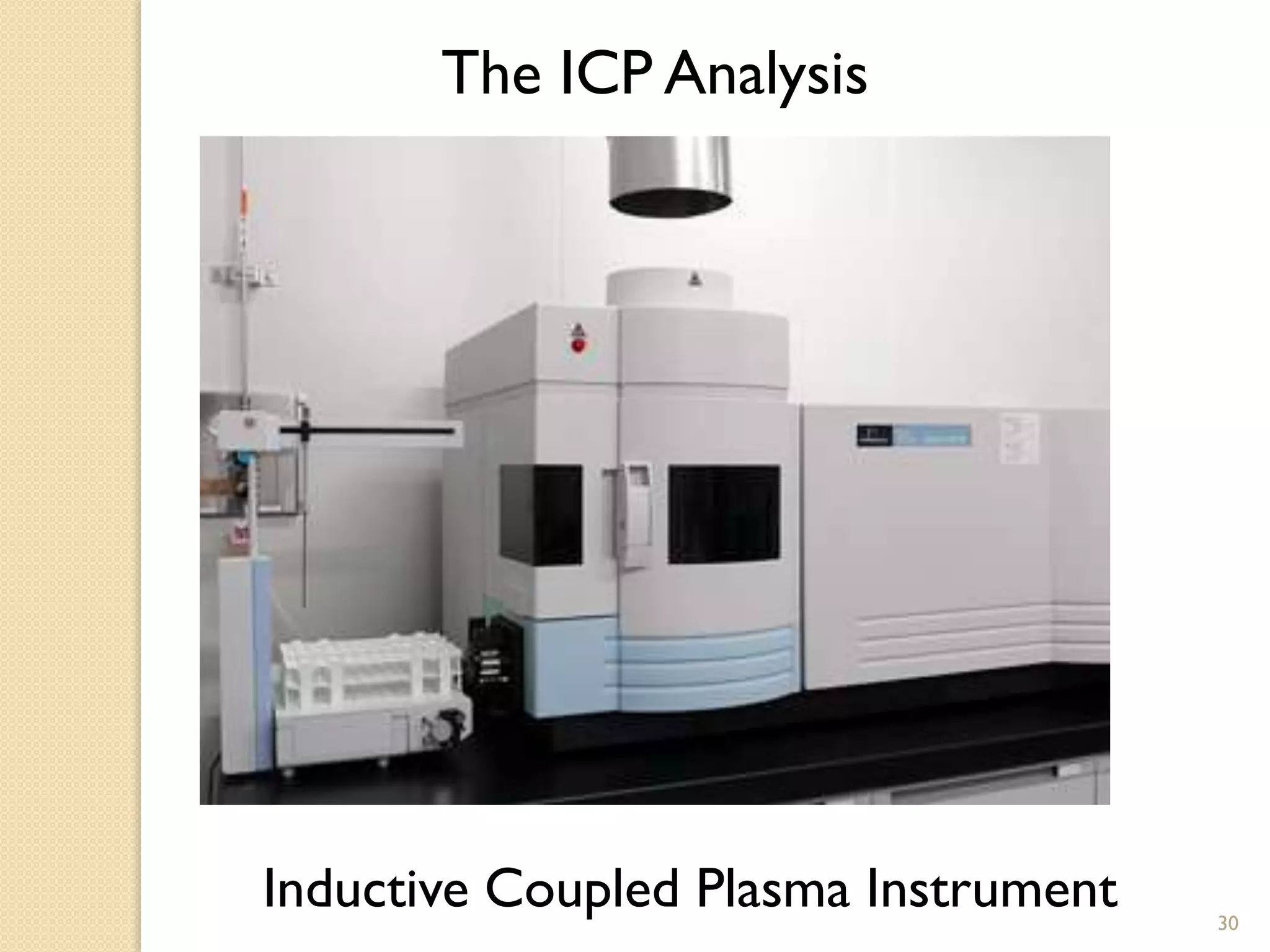
The ICP Analysis
30
Inductive Coupled Plasma Instrument
31
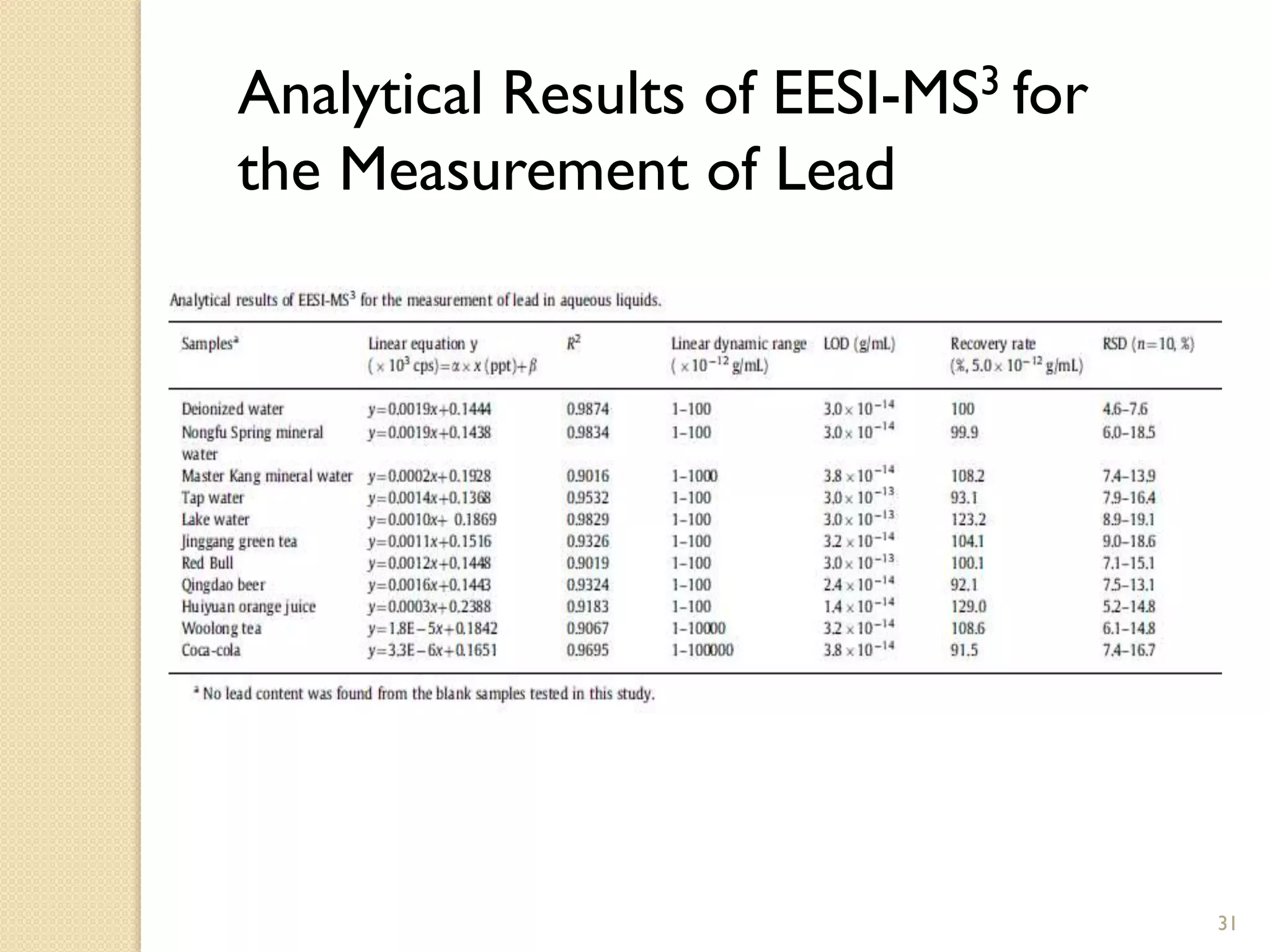
Analytical Results of EESI-MS3 for
the Measurement of Lead
Summary
• A sensitive approach based on EESI tandem mass spectrometry for
the rapid detection of trace levels of lead was developed.
• Semi-quantitative analysis of lead in various aqueous liquid samples
has been demonstrated
• The Pb quantification performance by EESI-MS3 was investigated,
providing reasonable Linear Dynamic Range, low RSDs, low Limit of
Detection (LOD) values, and acceptable recovery rates.
• High speed analysis within 2 min( ICP MS analysis consumes 30 min) 32
Conclusions
 EESI’s been used as an effective & efficient tool without sample pretreatment
in qualitative & quantitative analysis
 Accuracy in results and good Lowest Detection Limits can be achieved by
varying many parameters in both ESI & Sample spray set up.
 High speed detection & quantification of biological & inorganic samples has
been successfully carried out
 Intraday CoefficientValues (CV) are higher in this method compare to LCMS
method
• EESI : 7.1-11.8%
• LCMS : < 8%
33
34
ThankYou

EESI

  • 1.
    1 Application Of ExtractiveElectrospray Ionization (EESI) Tandem Mass Spectrometry On Direct Quantification Prepared By : Vaseetharan.S (Vasee) Supervised by : Prof. Pawel.L. Urban 19th November 2012
  • 2.
    ESI Based Techniques 2 Source-A dissertation submitted by Ms.RuiWang to ETH ZURICH for the degree of Doctor of Sciences in Tsinghua University, China
  • 3.
    The Diagrammed Illustrationof EESI Set Up Mass Inlet ESI Solvent droplet Sample droplet ESI Solvent Sample V
  • 4.
    Types of Droplet-DropletCollisions 4 Sample DropletESI Droplet Bounce Total coalescence Disruption Fragmentation:
  • 5.
  • 6.
    6 Isotope Dilution “Is atechnique which is used for quantitative analysis with accuracy and precision by adding a known quantity of isotope in to the analyzed sample ”
  • 7.
    Introduction • Creatinine isexcreted from the blood by the kidneys. • Acute Renal Failure (ARF) can result in a mortality rate of 50 & costs are about 8 billion $/ year • Creatinine ( 2-Amino-1-methyl-5H-imidazol-4-one) is a bio & clinical marker of renal function. 7
  • 8.
    8 Preparation of StandardSolution and Spiked Sample 10.0 mg of Creatinine Dissolved in H2O (100 mL) Stored in brown vials (20mL) in dark (4◦C.) 10.0 mg of Creatinine -d3 Dissolved in H2O (100 mL) Stored in brown vials (20mL) in dark (4 ◦C.)  Preparation of Creatinine (100 mg/L)  Preparation of Creatinine -d3 (100 mg/L) A series of Creatinine standards (0–10 mg/L) were prepared by diluting the Creatinine stock solution with H2O by keeping [Creatinine -d3]-100 μg/L
  • 9.
    9 Preparation of SpikedUrine Sample Raw urine sample Diluted by 1:500 with ultrapure H2O Urine samples were spiked with Creatinine and Creatinine-d3 • [Creatinine] in spiked urine is 1.5–3 times > Creatinie in unspiked urine based on standard addition method • Urine donators were 6 healthy males & females [Creatinine] mg/L [Creatinine-d3] mg/L 0.5 1 1.5 2 4 11 1 11
  • 10.
    EESI–MS/MS Analysis Mass Analyser 60o 1.0mm 10mm ESISpray (1μL/min) Sample Spray (5μL/min) N2 V N2 150O Temp Heated Capillary : 150 o C. 4.0kV 10
  • 11.
    Optimization of EESIConditions Primary ESI solvent composition  7 solvents including H2O, Methanol, Ethanol, Propanol, Butanol, Pentanol & Hexanol  Acetic acid was tested as the supporting electrolyte in ESI solvent of Methanol inV/V 0% to 3% • ESI voltage : +4 kV • ESI solvent injection rate : 1 μL/min • Sample solution injection rate : 5 L/min • Ion-transport Capillary temperature : 400 ◦C • Sheath gas pressure : 1.0 MPa 11
  • 12.
    EESI–MS/MS (+Ve Mode)spectrum of Creatinine protonated molecular ion at m/z 114 obtainedby analyzing a Creatinine standard solution (100 g/L) (NCE = 25% @ AQ = 0.30) The isolation width -2.0Da Activation time-30ms m/z range -15–200 Maximum ion injection time- 200ms Instrument was checked by-100 g/L of Creatinine standard solution 6 Independent Analysis for each sample 12 [M+H]+ [CH3NCH3]+ [M+H−CO]+ EESI-MS/MS Spectrum
  • 13.
    Spectrophotometric Analysis Validation ofisotope dilution EESI–MS/MS method was done by spectrophotometric method based on the Jaffe reaction 13
  • 14.
    Optimization of MS/MSAnalysis Conditions  Collision Induced Dissociation (CID) Experiments was implied by optimizing  Activation Q (AQ) – Correlated with trapping and fragmentation effectiveness  Normalized collision energy (NCE) - Scales the amplitude of the voltage applied to the ions  Translational kinetic energy of the ions in the iontrap can be changed by the applied voltage 14
  • 15.
    15 Optimization of MS/MSanalysis Conditions AQValue NCE Peak Behaviour 0.1 & 0.2 NCE - 0-100% [M+H]+ (m/z 114) 0.25 & 0.30 NCE ≥ 20% [CH3NCH3]+ (m/z 44), [M+H−CO]+ (m/z 86) 0.35 - 0.6 NCE ≥ 20% Only the peak at m/z 86 ≥ 0.65 NCE ≥ 20% No peaks at m/z 44 & m/z 86 0.25-0.35 NCE = 25% Intensity of m/z 86 increased by a factor 6  The peak (m/z 86) was selected for optimizing analytical parameters Lowest m/z = [Parent Mass]×[AQ] 0.908
  • 16.
    Quantification of UrinaryCreatinine • Creatinine-d3 was the isotopic internal standard to correct the variations in [Creatinie] • Creatinine-d3 was quantified by - [M+H−CO]+ (m/z 89) • The intensity ratio of Creatinine and Creatinine -d3 was plotted as a function of [Creatinine ]in the standard solutions 16 Dependence of Creatinine signal intensity on [Creatinine] in ultrapure water Quantification of [Creatinine]in urine by using the standard addition method
  • 17.
    17 • The RSDValues…… •The % Recovery was calculated by using equation below [Creatinine]Spec : 367mg/L [Creatinine]MS/MS : 417mg/L R(%) :114% Quantification of Urinary Creatinine
  • 18.
    18 Validation of theIsotope Dilution EESI–MS/MS Method
  • 19.
    Validation of theIsotope Dilution EESI–MS/MS Method  The developed method was further validated by analyzing the real urine samples donated by 6 volunteers R2 : 0.9748–0.9951 RSD (Creatinine) : 4.0–14.3% (n=6) RSD (Creatinine -d3) : 2.4-14.6% (n=6) 19
  • 20.
    Summary • Isotope dilutionEESI–MS/MS was successfully developed & validated as a direct & accurate quantitative method to detect Creatinine • EESI–MS /MS with isotope dilution was applied first time to quantify a compound in a complex biological liquid matrix. • Very faster quantitative detection of urinary Creatinine in less than 0.3 min than LC-MS (0.59min) 20
  • 21.
  • 22.
    22 Importance of theResearch • Lead is being toxic to human beings beyond a certain exposure • Lead in beverages may come from contaminated water, fruit, land..etc • It is useful to develop a fast, sensitive, and reliable determination of lead • Most traditional analytical techniques do not allow direct analysis of lead in complex media. • Time consuming pretreatments are generally required
  • 23.
    EESI-MS Experiments • Experimentswere performed using a linear ion trap mass spectrometer (LTQ-XL, Finnigan, San Jose, US) coupled with a homemade EESI source. Pressure -1 MPa Temp Heated Capillary- 180 oC. -3.5kV 5μL/min 5μL/min 23 ESI Spray :EDTA(10 ppm) Sample Spray:(Pb(CH3COO)2 (5 ppm)
  • 24.
    The Results andDiscussion A typical EESI-MS spectrum (-Ve Mode) of EDTA-Pb(II) complexes. 24 [EDTA+208Pb-4H]2- -CH2COO
  • 25.
    Qualitative characterization ofEDTA signals observed in the EESI-MS/MS (a) Deprotonated EDTA of m/z 291 (b) [EDTA+Na-2H]- ions of m/z 313 (c) [EDTA+2Na-3H]- ions of m/z 335 25 [EDTA-H]- [EDTA+Na-2H]- [EDTA+2Na-3H]- -H2O -CO2 -CO2, H2O, CO -H2O -CO2 -Na,CO2, H2O -H2O -H2O a) b) c)
  • 26.
    EESI-MS/MS spectra ofanions of EDTA-Pb (II) complexes. (a) Anions of EDTA-208Pb complex of m/z 497 (b) Anions of EDTA-207Pb complex of m/z 496 (c) Anions of EDTA-206Pb complex of m/z 495 26 [EDTA+208Pb-3H]- -H2O -2CO -2CO2 -CO -CO2 [EDTA+207Pb-3H]- [EDTA+206Pb-3H]- a) b) c)
  • 27.
    EESI-MS3 spectra ofanions of EDTA- Pb complexes. (a) Anions of EDTA-208Pb complex of m/z 497 (b) Anions of EDTA-207Pb complex of m/z 496 (c) Anions of EDTA-206Pb complex of m/z 495 27 a) b) c)
  • 28.
    Direct and Semi-Quantitative MeasurementUsing EESI • Pb (II) quantification was based on fragments at m/z 407 in the EESI-MS3 experiments of [EDTA+208Pb-3H]- ions, which were generated from the online ion /molecule reaction in the EESI source • The quantitative performance of EESI-MS3 was better than that of EESI-MS2 in this study • Semi-quantitative measurement of lead was performed using several water- based samples • Calibration curve had a linear signal response range of 1–100 ppt concentration range • Pure deionized water was spiked with Pb(CH3COO)2 to obtain a concentration of 5x10-12 g/mL with recovery rate of 100% 28
  • 29.
    (a) De ionizedwater, (b) Nongfu Spring mineral water, (c) Jinggang green tea (d) Master Kang mineral water. 29 Calibration Curves
  • 30.
    The ICP Analysis 30 InductiveCoupled Plasma Instrument
  • 31.
    31 Analytical Results ofEESI-MS3 for the Measurement of Lead
  • 32.
    Summary • A sensitiveapproach based on EESI tandem mass spectrometry for the rapid detection of trace levels of lead was developed. • Semi-quantitative analysis of lead in various aqueous liquid samples has been demonstrated • The Pb quantification performance by EESI-MS3 was investigated, providing reasonable Linear Dynamic Range, low RSDs, low Limit of Detection (LOD) values, and acceptable recovery rates. • High speed analysis within 2 min( ICP MS analysis consumes 30 min) 32
  • 33.
    Conclusions  EESI’s beenused as an effective & efficient tool without sample pretreatment in qualitative & quantitative analysis  Accuracy in results and good Lowest Detection Limits can be achieved by varying many parameters in both ESI & Sample spray set up.  High speed detection & quantification of biological & inorganic samples has been successfully carried out  Intraday CoefficientValues (CV) are higher in this method compare to LCMS method • EESI : 7.1-11.8% • LCMS : < 8% 33
  • 34.