Chp. 9 Internal and External
Communication
😁 😇😡 ✌️
👌
Definition:
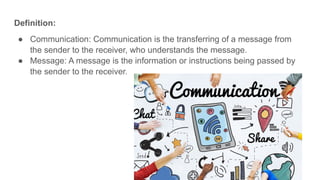
● Communication: Communication is the transferring of a message from
the sender to the receiver, who understands the message.
● Message: A message is the information or instructions being passed by
the sender to the receiver.
Types of Communication
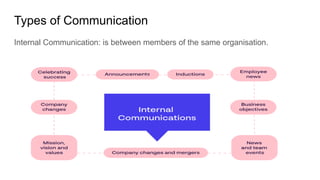
Internal Communication: is between members of the same organisation.
External Communication: is between the organisation and other organisations or
individuals.
Examples of external communication in a business include:
● Advertising campaigns: A visible way to engage customers, reach new audiences, and
increase sales.
● Press releases: A way to communicate with external stakeholders.
● Social media posts: A way to communicate with external stakeholders.
● Customer service interactions: A way to communicate with external stakeholders.
● Public relations efforts: A way to communicate with external stakeholders.
● Website or blog: A way to share important details and information about the company
and products.
Process of communication
Transmitter or Sender: Is the person starting off the process of by sending the
message.
Medium of communication: is the method used to send a message, for
example, a letter is a method of written communication and a meeting is a method
of verbal communication.
Receiver: is the person who receives the message.
Feedback: is the reply from the receiver which shows whether the message has
arrived, been understood and, if necessary, acted upon.
Classification of business communication :
One- way- communication: One-way communication is a method of sending
a message from a sender to a receiver without expecting a response. It can
be used to inform, entertain, persuade, or command an audience.
Here are some examples of one-way communication in business:
● Corporate announcements: Management uses memos, newsletters, and
announcements to share important information with employees.
● Advertising: Companies use TV commercials, billboards, and online ads to
promote products and services.
● Websites: Websites are often created to communicate information to an
audience without expecting a response.
● Email newsletters: Companies send newsletters to employees, but they don't
intend to receive feedback.
Two - way- communication: Two-way communication is a method of exchanging information
between two or more parties where both the sender and receiver can offer and receive
feedback. It's a common practice in organizations that value effective communication.
Two-way communication in business can take many forms, including:
● Team meetings: A forum for exchanging ideas, providing updates, and making decisions.
Team members should listen attentively, ask questions, and provide feedback.
● Performance reviews: A meeting where employees provide updates on their work and
future goals, and managers give constructive feedback.
● Customer service interactions: A collaborative dialogue where customers explain issues
and service agents actively listen and respond.
● Feedback: A two-way street where employees are asked for feedback on how to improve
the workplace.
● Leadership communication: An effective leader listens and receives information as well as
gives orders and makes announcements.
● Corporate communication:Involves communicating with stakeholders about the
organization's mission, values, and goals.
The advantages of two way communication:
● Understanding and responding.
● Contribution to the topic being discussed or communicated.
● Helps to motivate the receiver.
Communication Methods:
● Verbal Methods: (Speaking) Telephonic Conversation, face to face/ one to
one talks/ meetings in person or video conferencing, team briefings.
● Written Methods: Business Letters, Memos, Reports, Notice, Text
Messages, Email
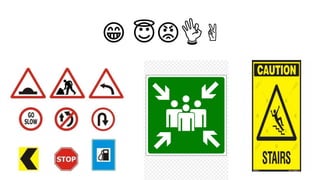
● Visual Methods: Films, Posters, Charts & diagrams, Photographs &
cartoons.
Advantages of verbal communication:
● Information given out quickly, quick response.
● Efficient way of communicating with larger audience.
● The body language of the speaker, how they stand and their facial expressions can
help to put the message across effectively.
Disadvantages of verbal communication:
● In a big meeting, there is no way of telling whether everybody is listening or has
understood the message.
● It can take longer to use verbal methods when feedback occurs than to use a
written form of communication.
● When an accurate and permanent record of the message is needed, such as a
warning to a worker, a verbal method is inappropriate.
Advantages of written communication:
● Hard evidence of the message which can be referred to in the future.
● It is essential for certain messages involving complicated details which might
be misunderstood.
● A written message can be copied and sent to many people.
Disadvantages of written communication:
● “Information overload”, meaning people are unable to pick out the really
important messages from the many that might be received.
● It is not so easy to check that the message has been received and acted upon
as with verbal messages.
● The language used can be difficult for some receivers to understand.
● No opportunity for body language to be used to reinforce the message.
Advantages of visual communication:
● Presents information in an appealing and attractive way. People are often
more prepared to look at films or posters than to read letters.
● Used to make a written message clearer by adding a chart or diagram.
Disadvantages of visual communication:
● No feedback and the sender of the message may need to use other
forms of communication to check for understanding.
● Charts & graphs are difficult for some people to interpret. Receiver might
misunderstood if he/she is unsure to read values or technical diagrams.
Choosing the appropriate communication method
● Speed (quickly)
● Cost (effectively, regardless of cost)
● Message details
● Leadership style
● The receiver (target receiver)
● Importance of a written record
● Importance of feedback
Formal & Informal Communication
Formal Communication: is when messages are sent through established
channels using professional language.
Informal Communication: is when information is sent and received casually
using everyday language.
Direction of Communication:
● Upward (feedback)
● Downward (information or decision)
● Horizontal (same level)
Identify the communication flow:
● An employee asking for sick leave from the team Manager.
● HOD directing the team.
● Sales Manager having a discussion with the Store Manager.
● General Manager directing the HOD’s to arrange a meeting with the team
Think & Share Possible Barriers of Communication
Sender ?
Message?
Medium?
Receiver?
Feedback?
Barriers in communication
Communication barriers are factors that stop effective communication messages.
Problems with the sender:
● Jargons or technical terms, language is difficult to understand.
● Sender speaks to fast or not clear enough.
● Wrong message to wrong receiver
● The message is too long, chances of losing main message or pointers.
Solution:
● Selection of language, Jargons or technical terms should be feasible and easy to
understand to avoid confusion or misunderstanding.
● Should ask for feedback for effective communication.
● Make sure that right person is receiving the message.
● Message should be as brief as possible.
Problem with the medium:
● The message may be lost so the receiver does not see it.
● Selection of wrong channel.
● If the message is sent down a long chain of command, the original meaning of
the message may be lost.
● No feedback is received.
● Breakdown of the medium.
Solution:
● It is important to insist for feedback.
● Selecting appropriate channel
● The shortest possible channel should be used to avoid this problem.
● Other form of communication should be made available if possible.
Problem with the receiver:
● They might not be listening or paying attention.
● The receiver might not like or trust the sender. Unwilling to act upon his
message.
Solution:
● Importance of the message should be emphasised.the receiver should be ask
for feedback for better understanding.
● There should be trust between sender and receiver for effective
communication. Or else some other sender can be used to send the message
on whom receiver have faith.
Problems with feedback:
● No feedback
● Received slowly or to distorted.
● Perhaps the feedback is passed from to many people before being received
by the original sender of the message.
Solution:
● Perhaps no feedback was asked or such method of communication was used
where feedback is not allowed.
● Direct lines of communication between all the levels must be available.
9. Internal and External Communication.pptx

  • 1.
    Chp. 9 Internaland External Communication
  • 2.
  • 3.
    Definition: ● Communication: Communicationis the transferring of a message from the sender to the receiver, who understands the message. ● Message: A message is the information or instructions being passed by the sender to the receiver.
  • 4.
    Types of Communication InternalCommunication: is between members of the same organisation.
  • 5.
    External Communication: isbetween the organisation and other organisations or individuals. Examples of external communication in a business include: ● Advertising campaigns: A visible way to engage customers, reach new audiences, and increase sales. ● Press releases: A way to communicate with external stakeholders. ● Social media posts: A way to communicate with external stakeholders. ● Customer service interactions: A way to communicate with external stakeholders. ● Public relations efforts: A way to communicate with external stakeholders. ● Website or blog: A way to share important details and information about the company and products.
  • 6.
    Process of communication Transmitteror Sender: Is the person starting off the process of by sending the message. Medium of communication: is the method used to send a message, for example, a letter is a method of written communication and a meeting is a method of verbal communication. Receiver: is the person who receives the message. Feedback: is the reply from the receiver which shows whether the message has arrived, been understood and, if necessary, acted upon.
  • 7.
    Classification of businesscommunication : One- way- communication: One-way communication is a method of sending a message from a sender to a receiver without expecting a response. It can be used to inform, entertain, persuade, or command an audience. Here are some examples of one-way communication in business: ● Corporate announcements: Management uses memos, newsletters, and announcements to share important information with employees. ● Advertising: Companies use TV commercials, billboards, and online ads to promote products and services. ● Websites: Websites are often created to communicate information to an audience without expecting a response. ● Email newsletters: Companies send newsletters to employees, but they don't intend to receive feedback.
  • 8.
    Two - way-communication: Two-way communication is a method of exchanging information between two or more parties where both the sender and receiver can offer and receive feedback. It's a common practice in organizations that value effective communication. Two-way communication in business can take many forms, including: ● Team meetings: A forum for exchanging ideas, providing updates, and making decisions. Team members should listen attentively, ask questions, and provide feedback. ● Performance reviews: A meeting where employees provide updates on their work and future goals, and managers give constructive feedback. ● Customer service interactions: A collaborative dialogue where customers explain issues and service agents actively listen and respond. ● Feedback: A two-way street where employees are asked for feedback on how to improve the workplace. ● Leadership communication: An effective leader listens and receives information as well as gives orders and makes announcements. ● Corporate communication:Involves communicating with stakeholders about the organization's mission, values, and goals.
  • 9.
    The advantages oftwo way communication: ● Understanding and responding. ● Contribution to the topic being discussed or communicated. ● Helps to motivate the receiver. Communication Methods: ● Verbal Methods: (Speaking) Telephonic Conversation, face to face/ one to one talks/ meetings in person or video conferencing, team briefings. ● Written Methods: Business Letters, Memos, Reports, Notice, Text Messages, Email ● Visual Methods: Films, Posters, Charts & diagrams, Photographs & cartoons.
  • 11.
    Advantages of verbalcommunication: ● Information given out quickly, quick response. ● Efficient way of communicating with larger audience. ● The body language of the speaker, how they stand and their facial expressions can help to put the message across effectively. Disadvantages of verbal communication: ● In a big meeting, there is no way of telling whether everybody is listening or has understood the message. ● It can take longer to use verbal methods when feedback occurs than to use a written form of communication. ● When an accurate and permanent record of the message is needed, such as a warning to a worker, a verbal method is inappropriate.
  • 12.
    Advantages of writtencommunication: ● Hard evidence of the message which can be referred to in the future. ● It is essential for certain messages involving complicated details which might be misunderstood. ● A written message can be copied and sent to many people. Disadvantages of written communication: ● “Information overload”, meaning people are unable to pick out the really important messages from the many that might be received. ● It is not so easy to check that the message has been received and acted upon as with verbal messages. ● The language used can be difficult for some receivers to understand. ● No opportunity for body language to be used to reinforce the message.
  • 13.
    Advantages of visualcommunication: ● Presents information in an appealing and attractive way. People are often more prepared to look at films or posters than to read letters. ● Used to make a written message clearer by adding a chart or diagram. Disadvantages of visual communication: ● No feedback and the sender of the message may need to use other forms of communication to check for understanding. ● Charts & graphs are difficult for some people to interpret. Receiver might misunderstood if he/she is unsure to read values or technical diagrams.
  • 14.
    Choosing the appropriatecommunication method ● Speed (quickly) ● Cost (effectively, regardless of cost) ● Message details ● Leadership style ● The receiver (target receiver) ● Importance of a written record ● Importance of feedback
  • 15.
    Formal & InformalCommunication Formal Communication: is when messages are sent through established channels using professional language. Informal Communication: is when information is sent and received casually using everyday language. Direction of Communication: ● Upward (feedback) ● Downward (information or decision) ● Horizontal (same level)
  • 16.
    Identify the communicationflow: ● An employee asking for sick leave from the team Manager. ● HOD directing the team. ● Sales Manager having a discussion with the Store Manager. ● General Manager directing the HOD’s to arrange a meeting with the team
  • 17.
    Think & SharePossible Barriers of Communication Sender ? Message? Medium? Receiver? Feedback?
  • 18.
    Barriers in communication Communicationbarriers are factors that stop effective communication messages. Problems with the sender: ● Jargons or technical terms, language is difficult to understand. ● Sender speaks to fast or not clear enough. ● Wrong message to wrong receiver ● The message is too long, chances of losing main message or pointers. Solution: ● Selection of language, Jargons or technical terms should be feasible and easy to understand to avoid confusion or misunderstanding. ● Should ask for feedback for effective communication. ● Make sure that right person is receiving the message. ● Message should be as brief as possible.
  • 19.
    Problem with themedium: ● The message may be lost so the receiver does not see it. ● Selection of wrong channel. ● If the message is sent down a long chain of command, the original meaning of the message may be lost. ● No feedback is received. ● Breakdown of the medium. Solution: ● It is important to insist for feedback. ● Selecting appropriate channel ● The shortest possible channel should be used to avoid this problem. ● Other form of communication should be made available if possible.
  • 20.
    Problem with thereceiver: ● They might not be listening or paying attention. ● The receiver might not like or trust the sender. Unwilling to act upon his message. Solution: ● Importance of the message should be emphasised.the receiver should be ask for feedback for better understanding. ● There should be trust between sender and receiver for effective communication. Or else some other sender can be used to send the message on whom receiver have faith.
  • 21.
    Problems with feedback: ●No feedback ● Received slowly or to distorted. ● Perhaps the feedback is passed from to many people before being received by the original sender of the message. Solution: ● Perhaps no feedback was asked or such method of communication was used where feedback is not allowed. ● Direct lines of communication between all the levels must be available.