INTER ORGANIZATIONAL
COMMUNICATION
JAYCEE SANTOS HIPOLITO, RN, OSHN
REFERENCES
• Shumate, M. & O’Connor A. (2010) the
symbiotic sustainability model.
• Taylor, M. & Doerfel M.L (2003) Building Inter
organizational relationship that builds nations.
• Uzzi B. (1997) Social Structure and competition in
interfirm networks
• Adams J.S (1980) Inter organizational process and
organizational boundary activities.
TOPICS
• Definition
• Theories of Inter
organizational
Communication
• Types of Inter organizational
Communication
INTER ORGANIZATIONAL
COMMUNICATION
• Is an umbrella term for the study of a
variety of entities and organizing acts,
• These entities includes
– Alliances
– Collaborations
– Networks
– Coalitions
– Consortiums
– Partnership
– Joint ventures
– Relationship
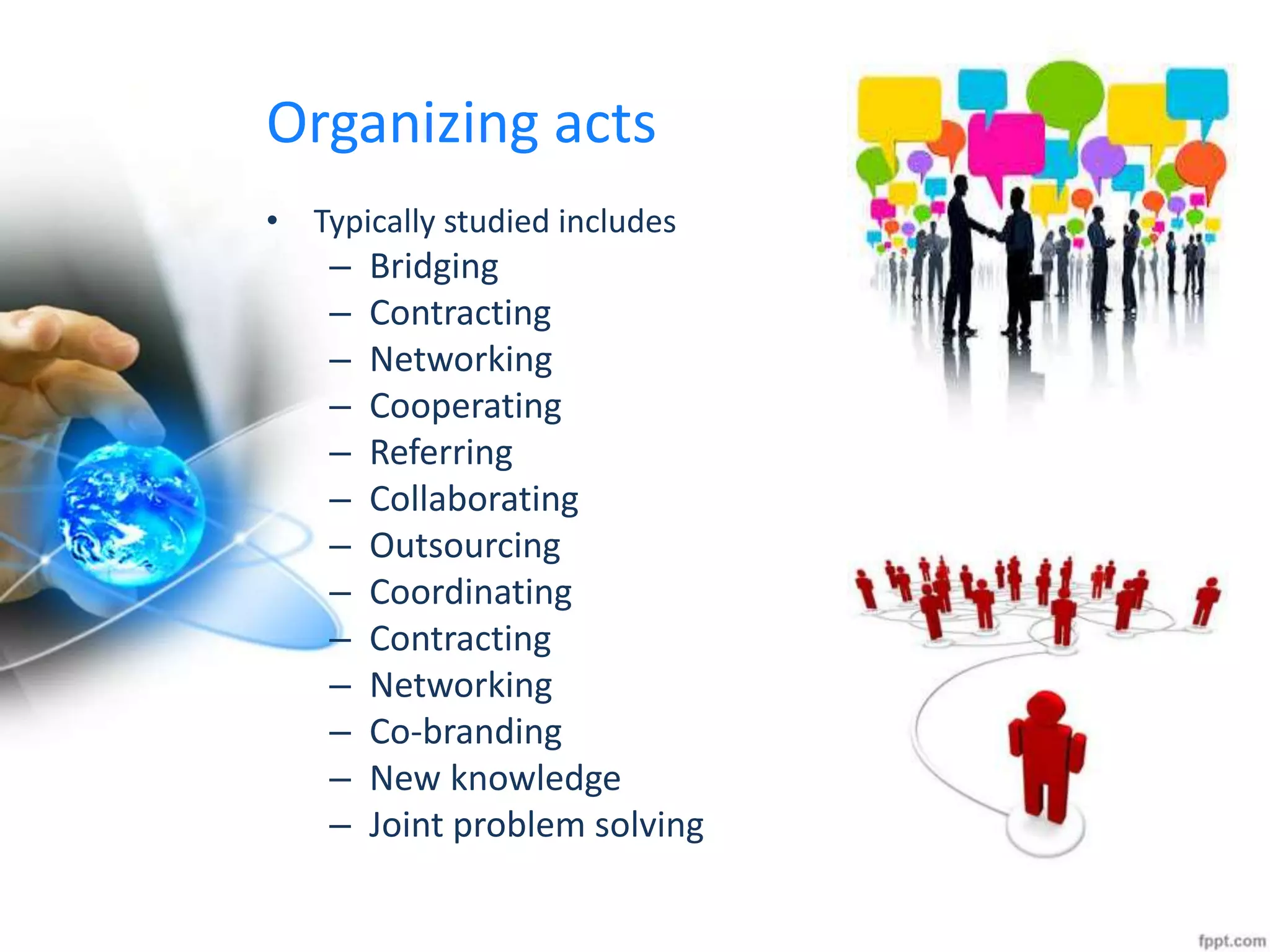
Organizing acts
• Typically studied includes
– Bridging
– Contracting
– Networking
– Cooperating
– Referring
– Collaborating
– Outsourcing
– Coordinating
– Contracting
– Networking
– Co-branding
– New knowledge
– Joint problem solving
INTERORGANIZATIONAL
COMMUNICATION
• Is define as the structures, forms and
processes created by the exchange of
messages, and the co-creation of
meaning among organizations and
their stakeholders.
• Each part of the definition
encapsulates important dimensions
research on the topic
DIMENSIONS
• FIRST
It examines the STRUCTURES, FORMS and
PROCESSES of Inter organizational
relationships.
• The STRUCTURE includes the ICT
(Information communication Technology)
that is used to maintain
– Collaborations
– Communication flow
– Structure of the group
– Network linkages (Interdependence)
FORMS
• Range from communities of practice where
they share information to an alliance
relationship where resources, outcomes are
shared.
PROCESSES
• Include the identification of potential
partners, the creation of messages,
maintenance of relationship and the
dissolution of relationship.
SECOND
• Examines the exchange of messages not only
between representative of organization but also
between AGENTS and ICT System, as well as
between organization and their stakeholders.
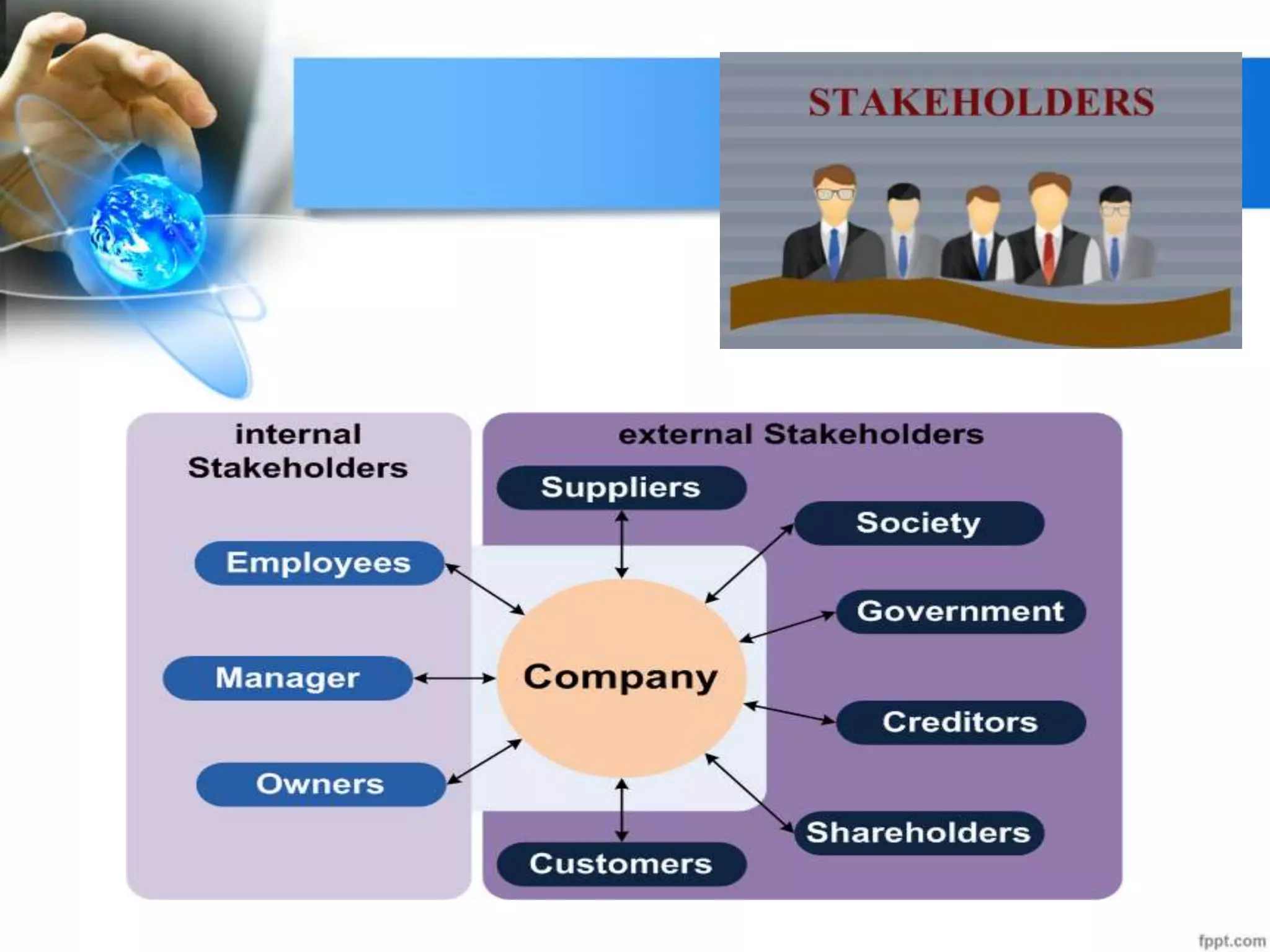
STAKEHOLDERS: stake·hold·er
ˈstākˌhōldər/
noun
plural noun: stakeholders
• a person with an interest or concern in
something, especially a business.
SECOND
• Examines the exchange of messages not only
between representative of organization but also
between AGENTS and ICT System, as well as
between organization and their stakeholders.
STAKEHOLDERS: stake·hold·er
ˈstākˌhōldər/
noun
plural noun: stakeholders
• a person with an interest or concern in
something, especially a business.
THIRD
• It Examines the co-creation of
meaning not only between
organizational representative but
also between public and
organization about the existence
and character of the relationship.
LASTLY
• It includes not just organizational
leaders and employees.
• It also includes the stakeholders,
or people who are invited and
affected by organization, receive
and co-construct message about
its affiliations.
THEORIES OF INTER ORG. COM.
• Resource Dependence (Pfeffer & Salancik
1978)
• Is based on the assumptions that the most
important goal of an organization is to
SURVIVE, and the survival requires different
types of RESOURCES that cannot all be
generated internally.
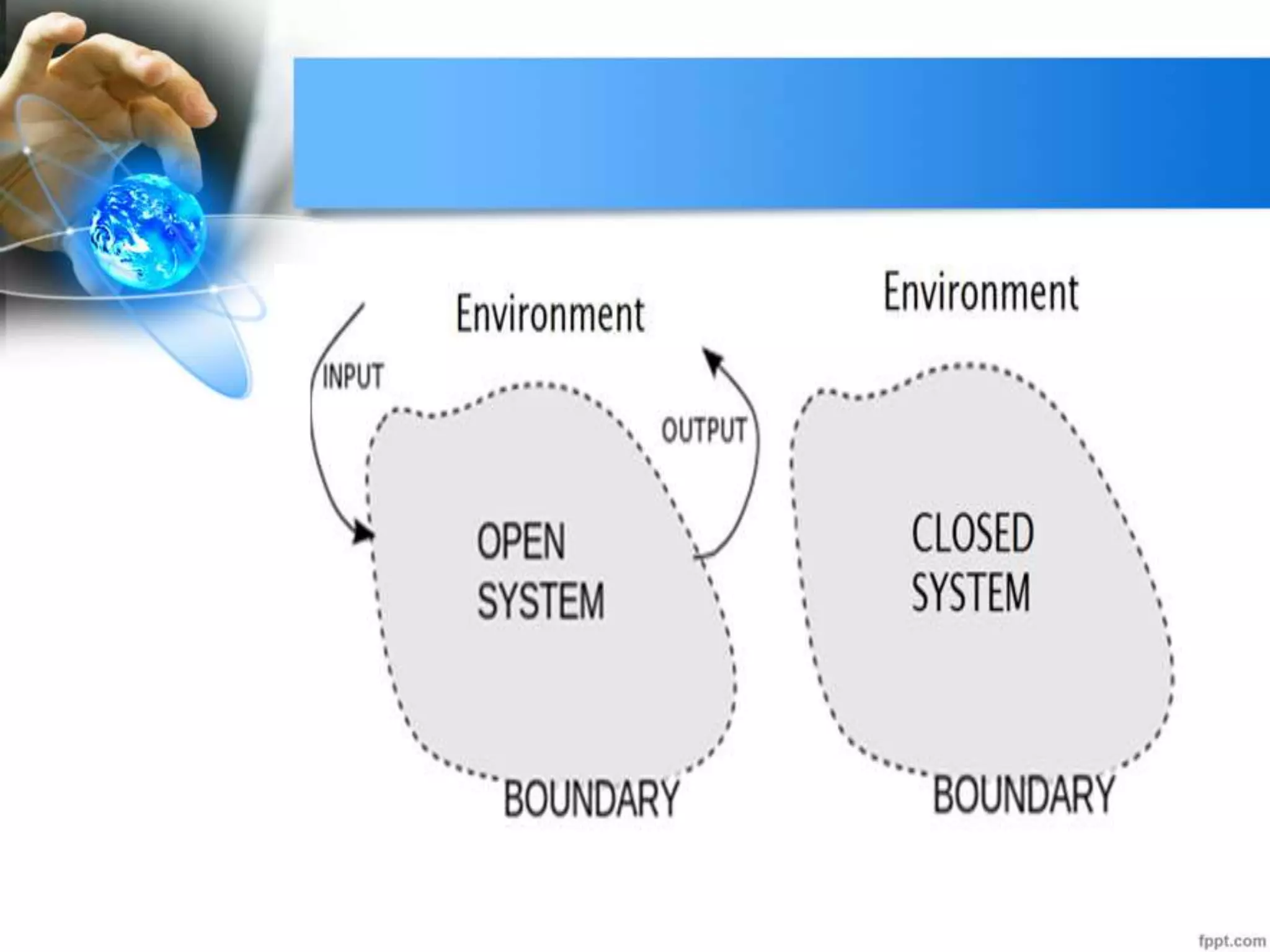
• OPEN SYSTEM FRAMEWORK
• Organization voluntarily involve
themselves in collaborative
relationship to gain resources or
advantages offered by other
organizations
• Organization form relationship with
other organization in order to obtain
access to critical resources and to
increase their power relative to other
organization in their environment
OPEN SYSTEM FRAMEWORK
• DOMAIN APPROACHES (Emery & Trist 1965)
• Emphasizes the dynamics of inter
organizational domains which are define in
terms of set of common problems facing
organizations.
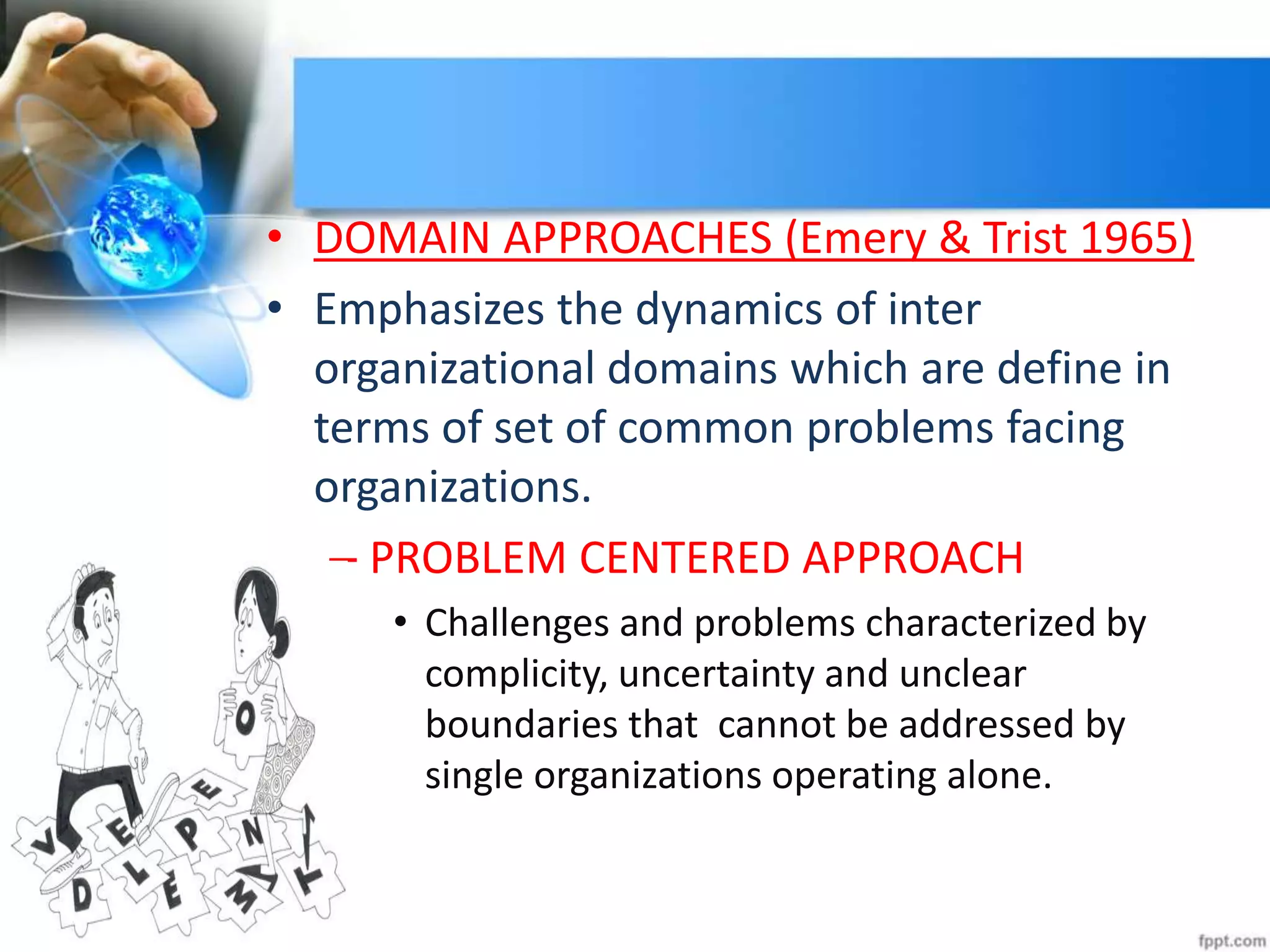
– PROBLEM CENTERED APPROACH
• Challenges and problems characterized by
complicity, uncertainty and unclear
boundaries that cannot be addressed by
single organizations operating alone.
• TRANSACTION COST ECONOMICS
– As alternative organizational forms to the
more traditional markets & hierarchies.
– Transactions are aligned with
organizational structures so as to effect a
cost economizing match.
– Production cost may vary depending on
• Scale of operations
• Sizes, geographical location
• Learning/experiences
• HOMOPHILY
– One of the most important factor
influencing the pattern of relationship
– “similarity breeds”
– That contact or relationship between
similar organization occur at a higher rate
than among dissimilar organization
TYPES OF INTERORGANIZATIONAL
COMMUNICATION
AFFINITY
• Refers to socially constructed relationships that
have either negative or positive valence
• It refers to a more enduring connections among
organizations and communication is assumed to
be implicit in those relations.
af·fin·i·ty
noun
a spontaneous or natural liking or sympathy for
someone or something.
synonyms: empathy for, rapport with, sympathy
for, accord with, harmony with, relationship with,
bond with, fellow feeling for, closeness with/to,
understanding
FLOW
• Examines complex transactions of
information, messages and data that are
sent and receive between organizations
• Also known as “INFORMATION
TRANSMISSION”
• Is a pipeline between organization that is
characterized by connections that serves as
avenue for information, messages and data
flow from one org to another.
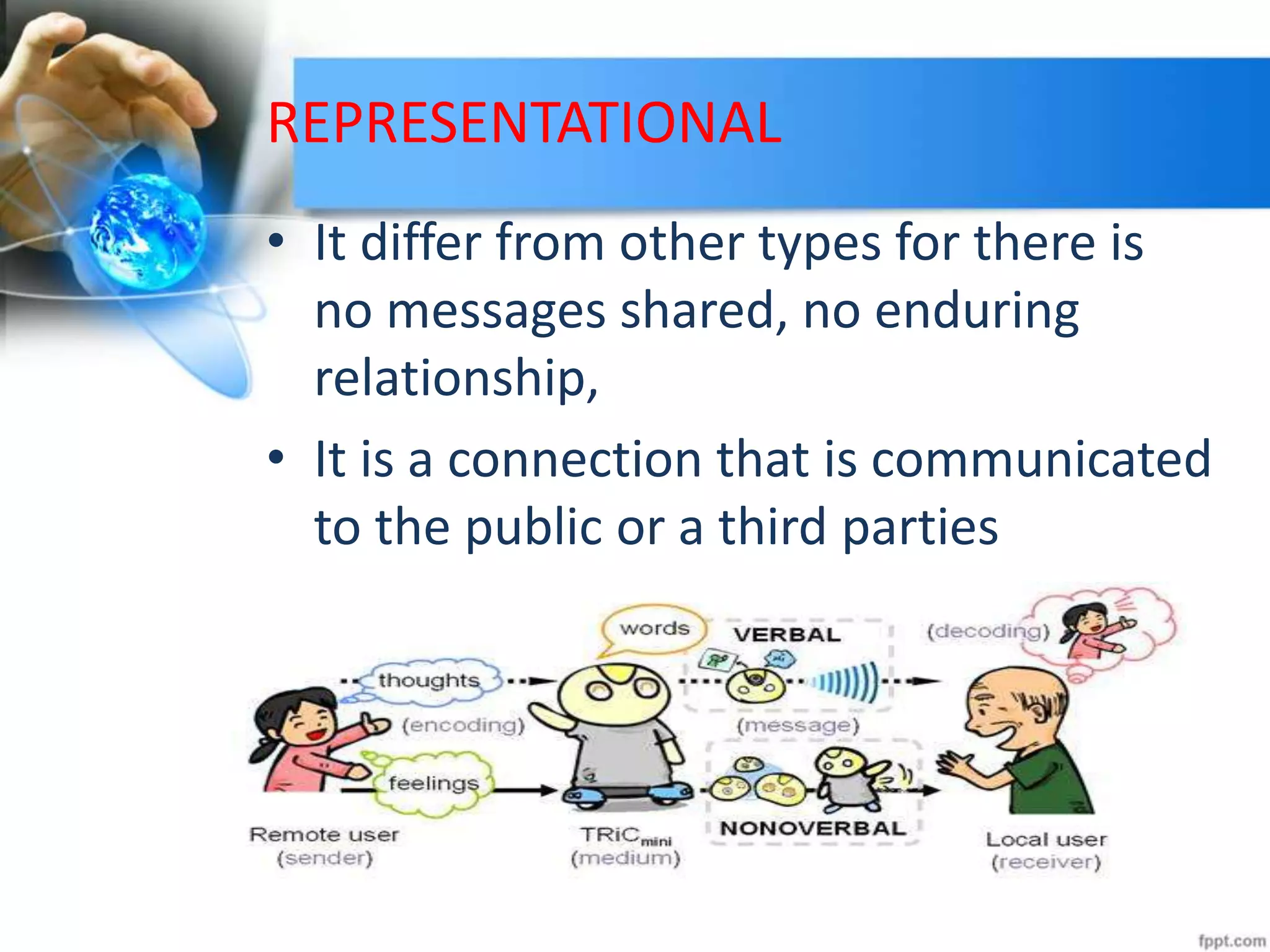
REPRESENTATIONAL
• It differ from other types for there is
no messages shared, no enduring
relationship,
• It is a connection that is communicated
to the public or a third parties
SEMANTIC
• Focuses on shared meaning or symbol
use among organization.
• These demonstrate that shared
meaning positively influences the
formation of both affinity and
representational relationship
GROUP EXERCISES
• OPEN SYSTEM
FRAMEWORK
• PROBLEM CENTERED
APPROACH
THANK YOU SO MUCH !

Inter organizational communication

  • 1.
  • 2.
    REFERENCES • Shumate, M.& O’Connor A. (2010) the symbiotic sustainability model. • Taylor, M. & Doerfel M.L (2003) Building Inter organizational relationship that builds nations. • Uzzi B. (1997) Social Structure and competition in interfirm networks • Adams J.S (1980) Inter organizational process and organizational boundary activities.
  • 3.
    TOPICS • Definition • Theoriesof Inter organizational Communication • Types of Inter organizational Communication
  • 4.
    INTER ORGANIZATIONAL COMMUNICATION • Isan umbrella term for the study of a variety of entities and organizing acts, • These entities includes – Alliances – Collaborations – Networks – Coalitions – Consortiums – Partnership – Joint ventures – Relationship
  • 5.
    Organizing acts • Typicallystudied includes – Bridging – Contracting – Networking – Cooperating – Referring – Collaborating – Outsourcing – Coordinating – Contracting – Networking – Co-branding – New knowledge – Joint problem solving
  • 6.
    INTERORGANIZATIONAL COMMUNICATION • Is defineas the structures, forms and processes created by the exchange of messages, and the co-creation of meaning among organizations and their stakeholders. • Each part of the definition encapsulates important dimensions research on the topic
  • 7.
    DIMENSIONS • FIRST It examinesthe STRUCTURES, FORMS and PROCESSES of Inter organizational relationships. • The STRUCTURE includes the ICT (Information communication Technology) that is used to maintain – Collaborations – Communication flow – Structure of the group – Network linkages (Interdependence)
  • 8.
    FORMS • Range fromcommunities of practice where they share information to an alliance relationship where resources, outcomes are shared. PROCESSES • Include the identification of potential partners, the creation of messages, maintenance of relationship and the dissolution of relationship.
  • 9.
    SECOND • Examines theexchange of messages not only between representative of organization but also between AGENTS and ICT System, as well as between organization and their stakeholders. STAKEHOLDERS: stake·hold·er ˈstākˌhōldər/ noun plural noun: stakeholders • a person with an interest or concern in something, especially a business.
  • 10.
    SECOND • Examines theexchange of messages not only between representative of organization but also between AGENTS and ICT System, as well as between organization and their stakeholders. STAKEHOLDERS: stake·hold·er ˈstākˌhōldər/ noun plural noun: stakeholders • a person with an interest or concern in something, especially a business.
  • 12.
    THIRD • It Examinesthe co-creation of meaning not only between organizational representative but also between public and organization about the existence and character of the relationship.
  • 13.
    LASTLY • It includesnot just organizational leaders and employees. • It also includes the stakeholders, or people who are invited and affected by organization, receive and co-construct message about its affiliations.
  • 14.
    THEORIES OF INTERORG. COM. • Resource Dependence (Pfeffer & Salancik 1978) • Is based on the assumptions that the most important goal of an organization is to SURVIVE, and the survival requires different types of RESOURCES that cannot all be generated internally. • OPEN SYSTEM FRAMEWORK
  • 15.
    • Organization voluntarilyinvolve themselves in collaborative relationship to gain resources or advantages offered by other organizations • Organization form relationship with other organization in order to obtain access to critical resources and to increase their power relative to other organization in their environment
  • 16.
  • 18.
    • DOMAIN APPROACHES(Emery & Trist 1965) • Emphasizes the dynamics of inter organizational domains which are define in terms of set of common problems facing organizations. – PROBLEM CENTERED APPROACH • Challenges and problems characterized by complicity, uncertainty and unclear boundaries that cannot be addressed by single organizations operating alone.
  • 21.
    • TRANSACTION COSTECONOMICS – As alternative organizational forms to the more traditional markets & hierarchies. – Transactions are aligned with organizational structures so as to effect a cost economizing match. – Production cost may vary depending on • Scale of operations • Sizes, geographical location • Learning/experiences
  • 23.
    • HOMOPHILY – Oneof the most important factor influencing the pattern of relationship – “similarity breeds” – That contact or relationship between similar organization occur at a higher rate than among dissimilar organization
  • 24.
  • 25.
    AFFINITY • Refers tosocially constructed relationships that have either negative or positive valence • It refers to a more enduring connections among organizations and communication is assumed to be implicit in those relations. af·fin·i·ty noun a spontaneous or natural liking or sympathy for someone or something. synonyms: empathy for, rapport with, sympathy for, accord with, harmony with, relationship with, bond with, fellow feeling for, closeness with/to, understanding
  • 26.
    FLOW • Examines complextransactions of information, messages and data that are sent and receive between organizations • Also known as “INFORMATION TRANSMISSION” • Is a pipeline between organization that is characterized by connections that serves as avenue for information, messages and data flow from one org to another.
  • 28.
    REPRESENTATIONAL • It differfrom other types for there is no messages shared, no enduring relationship, • It is a connection that is communicated to the public or a third parties
  • 30.
    SEMANTIC • Focuses onshared meaning or symbol use among organization. • These demonstrate that shared meaning positively influences the formation of both affinity and representational relationship
  • 32.
  • 33.
    • OPEN SYSTEM FRAMEWORK •PROBLEM CENTERED APPROACH
  • 34.