Forest & Water Climate 
Adaptation 
A Plan for the Nisqually Watershed
 Adaptation planning 
 Nisqually Watershed – context 
 Forest resources & threats 
 Water resources & threats 
 Goals for resiliency 
 Mechanisms for adaptation 
 Implementation 
 Questions 
Overview
Adaptation Planning 
 Model Forest Policy Program’s Climate Solutions 
University 
 Adaptation vs. mitigation 
 Planning team 
 CAC Members: Jean Shaffer, Fred Michelson, Phyllis 
Farrell 
 Mount Rainier Nat’l Park: Roger Andrascik 
 JBLM: Nate Waldren
Nisqually Watershed 
 239,000 acres of 
forestland 
 59,000 acres JBLM 
 39,900 acres Parks 
 80% of mainstem 
protected 
 $287 million - $4.1 billion 
in Ecosystem Services 
 80,000+ residents 
 43,000 water users in 
Olympia 
 41,000 homes powered 
in Tacoma 
 Threatened/endangered 
species 
 20,000+ people 
expected by 2020s
Nisqually Community 
 Nisqually Tribe – sustenance, culture, economy 
 Timber economy – 11% of Lewis County private 
employment (0.6% nationally) 
 Homeowners – Wildland Urban Interface; 
floodplains
Forest resources 
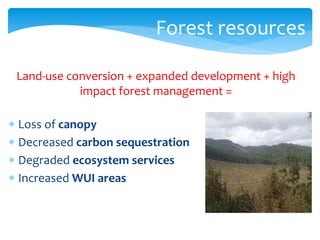
Land-use conversion + expanded development + high 
impact forest management = 
 Loss of canopy 
 Decreased carbon sequestration 
 Degraded ecosystem services 
 Increased WUI areas
Forests & climate change 
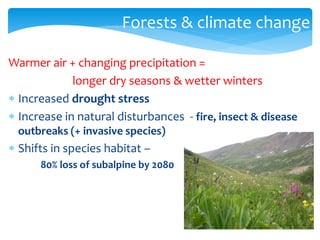
Warmer air + changing precipitation = 
longer dry seasons & wetter winters 
 Increased drought stress 
 Increase in natural disturbances - fire, insect & disease 
outbreaks (+ invasive species) 
 Shifts in species habitat – 
80% loss of subalpine by 2080
Water resources 
 Restoration efforts underway = high baseline 
 Drinking water, agricultural uses, 
hydroelectricity, salmon habitat, recreation, 
aesthetics… 
 Surface water & aquifers 
 20,000+ people expected by 2020s
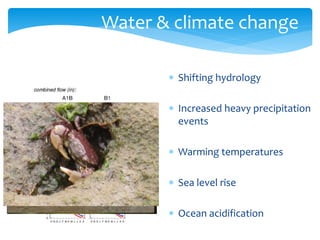
Water & climate change 
 Shifting hydrology 
 Increased heavy precipitation 
events 
 Warming temperatures 
 Sea level rise 
 Ocean acidification
Goals for resiliency 
 Restore and maintain forest cover that is healthy, resilient and 
widespread so that it provides cultural, recreational, ecological and 
economic benefits 
 Maintain healthy freshwater ecosystems support thriving native fish 
populations while providing cultural, economic and social benefits 
 Promote adaptation in the river delta environment by restoring it to a 
fully functioning ecosystem that is resilient to changing conditions and 
provides cultural, social, ecological and economic benefits 
 Provide sustainable funding and strong, engaged partnerships in order 
to successfully implement climate adaptation activities
Mechanisms of adaptation 
 Planning 
 Include climate language in guiding documents – NWSP 
 Prepare for changing fire regimes & increased winter 
flooding 
 Policy 
 Update plans, regulations to include climate projections 
 Increase resiliency in WUI and floodplain developments 
 Monitoring 
 Establish/continue watershed-wide forest and water 
monitoring 
 Annual adaptive management review
Mechanisms of adaptation 
 On-the-ground Actions 
 Restore tree canopy, especially in areas with snowpack 
 Continue to restore riparian areas 
 Reduce storm water runoff & increase tree cover in 
developed areas 
 Education/Outreach 
 Work with citizen scientists to include climate change 
 Citizen scientists & community forest? 
 Urban center connections: importance of healthy headwaters 
 Payment for ecosystem services?
Implementation 
Climate change is happening now. Adaptation efforts will 
increase resiliency in forest & water resources; local 
economies 
 December RFP 
 CSU Implementation Program 
 NRC Input: 
 Finalize action plan 
 Update NWSP 
 Include climate projections in current projects?
Questions?

Forest & water climate adaptation

  • 1.
    Forest & WaterClimate Adaptation A Plan for the Nisqually Watershed
  • 2.
     Adaptation planning  Nisqually Watershed – context  Forest resources & threats  Water resources & threats  Goals for resiliency  Mechanisms for adaptation  Implementation  Questions Overview
  • 3.
    Adaptation Planning Model Forest Policy Program’s Climate Solutions University  Adaptation vs. mitigation  Planning team  CAC Members: Jean Shaffer, Fred Michelson, Phyllis Farrell  Mount Rainier Nat’l Park: Roger Andrascik  JBLM: Nate Waldren
  • 5.
    Nisqually Watershed 239,000 acres of forestland  59,000 acres JBLM  39,900 acres Parks  80% of mainstem protected  $287 million - $4.1 billion in Ecosystem Services  80,000+ residents  43,000 water users in Olympia  41,000 homes powered in Tacoma  Threatened/endangered species  20,000+ people expected by 2020s
  • 6.
    Nisqually Community Nisqually Tribe – sustenance, culture, economy  Timber economy – 11% of Lewis County private employment (0.6% nationally)  Homeowners – Wildland Urban Interface; floodplains
  • 7.
    Forest resources Land-useconversion + expanded development + high impact forest management =  Loss of canopy  Decreased carbon sequestration  Degraded ecosystem services  Increased WUI areas
  • 8.
    Forests & climatechange Warmer air + changing precipitation = longer dry seasons & wetter winters  Increased drought stress  Increase in natural disturbances - fire, insect & disease outbreaks (+ invasive species)  Shifts in species habitat – 80% loss of subalpine by 2080
  • 9.
    Water resources Restoration efforts underway = high baseline  Drinking water, agricultural uses, hydroelectricity, salmon habitat, recreation, aesthetics…  Surface water & aquifers  20,000+ people expected by 2020s
  • 10.
    Water & climatechange  Shifting hydrology  Increased heavy precipitation events  Warming temperatures  Sea level rise  Ocean acidification
  • 11.
    Goals for resiliency  Restore and maintain forest cover that is healthy, resilient and widespread so that it provides cultural, recreational, ecological and economic benefits  Maintain healthy freshwater ecosystems support thriving native fish populations while providing cultural, economic and social benefits  Promote adaptation in the river delta environment by restoring it to a fully functioning ecosystem that is resilient to changing conditions and provides cultural, social, ecological and economic benefits  Provide sustainable funding and strong, engaged partnerships in order to successfully implement climate adaptation activities
  • 12.
    Mechanisms of adaptation  Planning  Include climate language in guiding documents – NWSP  Prepare for changing fire regimes & increased winter flooding  Policy  Update plans, regulations to include climate projections  Increase resiliency in WUI and floodplain developments  Monitoring  Establish/continue watershed-wide forest and water monitoring  Annual adaptive management review
  • 13.
    Mechanisms of adaptation  On-the-ground Actions  Restore tree canopy, especially in areas with snowpack  Continue to restore riparian areas  Reduce storm water runoff & increase tree cover in developed areas  Education/Outreach  Work with citizen scientists to include climate change  Citizen scientists & community forest?  Urban center connections: importance of healthy headwaters  Payment for ecosystem services?
  • 14.
    Implementation Climate changeis happening now. Adaptation efforts will increase resiliency in forest & water resources; local economies  December RFP  CSU Implementation Program  NRC Input:  Finalize action plan  Update NWSP  Include climate projections in current projects?
  • 15.

Editor's Notes

  • #2 Hello everyone! I’d like to take this time to give you an overview of the climate adaptation planning process I’ve been working on since February of this year. I’m excited to announce that the planning portion is almost over, and that implementation will begin soon!
  • #3 Here’s a quick overview of today’s talk. I’ll start by speaking a little bit about the adaptation planning process, and then will go into the meat of what we discovered during the course of the planning year. I’ll end with some suggestions on adaptation activities and a look at what’s next.
  • #4 This year, the NRF was a part of the MFPP’s CSU program. CSU is a virtual distance-learning course that helps communities research climate impacts and develop community based solutions in fostering resiliency. This year, Nisqually was one of 5 communities that participated in the program. It’s also important to understand what adaptation is. Mitigation is very important—it’s the process of reducing greenhouse gas emissions and slowing the process of climate change. However, climate change is happening now and many impacts are already being felt. So, adaptation activities works to minimize the consequences of climate change today. I’d like to give a special thanks to the planning team. We had many people involved in the planning process, but Jean, Fred, Roger, Phyllis and Nate Waldren from JBLM were deeply involved from the start. They attended all the planning meetings, reviewed the plan, and helped me pull it all together.
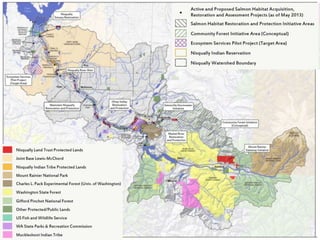
  • #5 Most of you are very familiar with the Nisqually Watershed, but I want to give a little bit of background information in the context of planning for climate adaptation. To start, we are very lucky to have a relatively healthy watershed. The amount of protected land – both private and public – is huge, and the number of restoration initiatives is astounding. This map shows the protected lands in the watershed, along with a number of restoration projects. As we have noted at these meetings before, the health of the Nisqually Watershed is high, and is what enables our streams to have salmon populations.
  • #6 A few other details about the watershed that were important to consider was the amount of forestland present. According to Ecology, over 239,000 acres are classified as forestland, which does not include the 59,000 acres of FSC certified JBLM, and 39,900 acres of Park land. Both of these land use designations are heavily forested. Forests are important because they sequester carbon, purify air and water, provide fuel/timber and other resources to communities, and more reasons. Additionally, over 80% of the Nisqually mainstem is protected. Portions of the Mashel and Ohop are also being protected. The restored floodplains reduce erosion, protect salmon habiat, lower stream temperatures and improve water quality. Lastly, according to the Earth Economics report for the Nisqually Watershed, our forests and waters provide between $287 million and $4.1 billion in ecosystem services each year. Although that’s a huge range in benefits, the bottomline is that our natural resources are important for increasing the quality of life of local residents and downstream communities. Ecosystem services include timber and food, along with things like air purification, water purification, flood regulation, carbon sequestration and more. Although the watershed is in a relatively healthy condition, there are certain challenges that had to be considered in this planning process. Today, there are around 83,000 people living in the watershed boundaries. Additionally, the city of Olympia takes most of it’s water from aquifers within the watershed. TPU provides power to 41,000 homes in Tacoma. Besides the human uses, the watershed must provide for countless plant and animal species, including several endangered species. Furthermore, around 20,000 additional people are expected to move to the watershed in the coming decades. It’s important to provide high quality water to residents, while also considering the needs of plants and animals.