DYNAMIC HABITAT MODELS FOR
ESTUARY-DEPENDENT SPECIES
Melanie Davis
University of Washington School of Aquatic and Fishery Sciences, USGSWestern
Ecological Research Center
With collaborators:
IsaWoo, Susan De La Cruz (USGS)
Glynnis Nakai (USFWS)
Chris Ellings, Sayre Hodgson (NisquallyTribe)
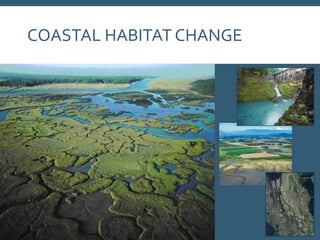
COASTAL HABITAT CHANGE
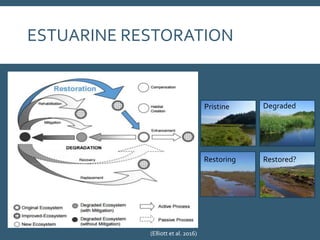
ESTUARINE RESTORATION
(Elliott et al. 2016)
Pristine Degraded
Restoring Restored?
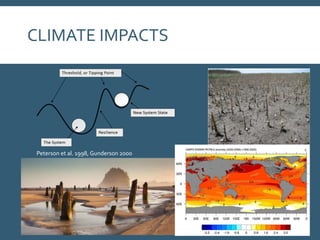
CLIMATE IMPACTS
Peterson et al. 1998, Gunderson 2000
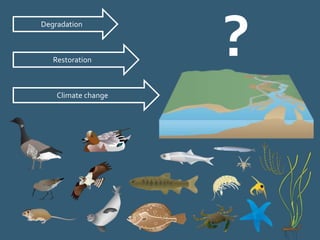
Restoration
?Degradation
Climate change
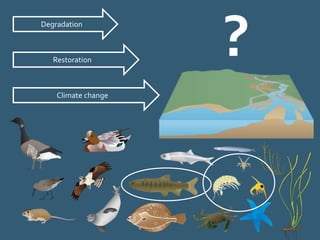
Restoration
?Degradation
Climate change
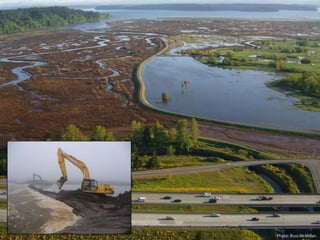
Photo: Russ McMillan
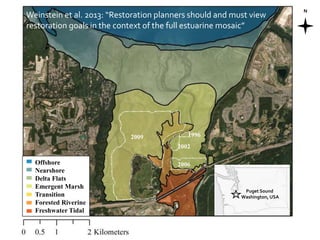
Offshore
Nearshore
Delta Flats
Emergent Marsh
Transition
Forested Riverine
Freshwater Tidal
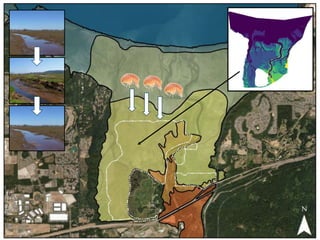
2009
2002
1996
2006
Puget Sound
Washington, USA
N
Weinstein et al. 2013: ā€œRestoration planners should and must view
restoration goals in the context of the full estuarine mosaicā€
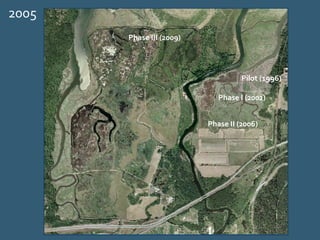
Pilot (1996)
Phase I (2002)
Phase III (2009)
Phase II (2006)
2005
Pilot (1996)
Phase I (2002)
Phase III (2009)
Phase II (2006)
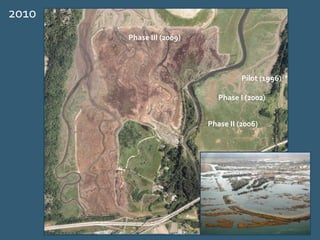
2010
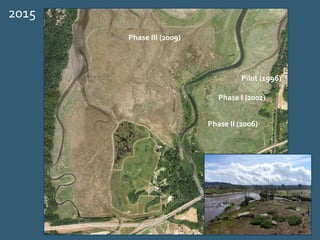
Pilot (1996)
Phase I (2002)
Phase III (2009)
Phase II (2006)
2015
OBJECTIVES
ļ‚  1) Model change in the restoring habitat mosaic through time
ļ‚  2) Determine prey availability in each habitat type
ļ‚  3) Figure out which prey taxa are being consumed by juvenile
Chinook salmon and in what quantity
ļ‚  4) Use a bioenergetics model to estimate the ā€œqualityā€ of
estuarine habitat as the mosaic shifts
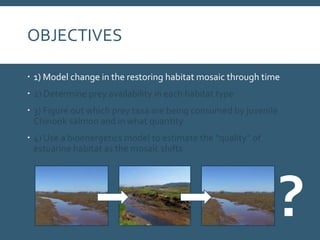
OBJECTIVES
ļ‚  1) Model change in the restoring habitat mosaic through time
ļ‚  2) Determine prey availability in each habitat type
ļ‚  3) Figure out which prey taxa are being consumed by juvenile
Chinook salmon and in what quantity
ļ‚  4) Use a bioenergetics model to estimate the ā€œqualityā€ of
estuarine habitat as the mosaic shifts
?
CHAPTE
R 1
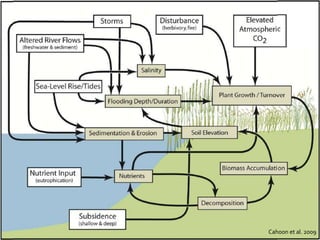
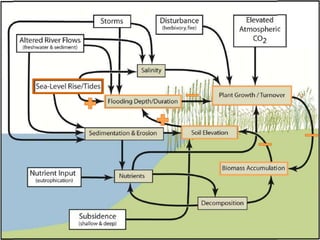
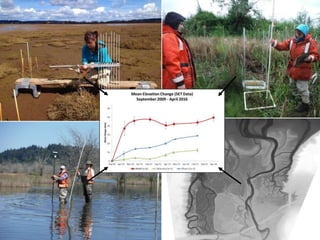
Cahoon et al. 2009
Chapter 1
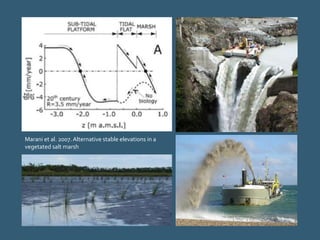
Marani et al. 2007. Alternative stable elevations in a
vegetated salt marsh
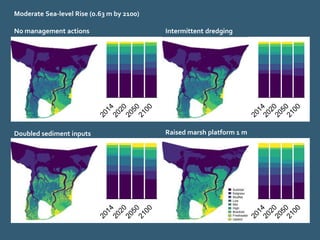
No management actions Intermittent dredging
Raised marsh platform 1 m
Moderate Sea-level Rise (0.63 m by 2100)
Doubled sediment inputs
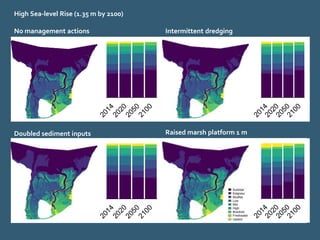
No management actions Intermittent dredging
Doubled sediment inputs Raised marsh platform 1 m
High Sea-level Rise (1.35 m by 2100)
OBJECTIVES
ļ‚  1) Model change in the restoring habitat mosaic through time
ļ‚  2) Determine prey availability in each habitat type
ļ‚  3) Figure out which prey taxa are being consumed by juvenile
Chinook salmon and in what quantity
ļ‚  4) Use a bioenergetics model to estimate the ā€œqualityā€ of
estuarine habitat as the mosaic shifts
Plum Island LTER
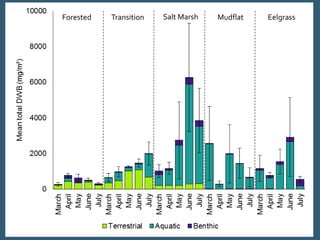
Salt MarshForested Transition Mudflat Eelgrass
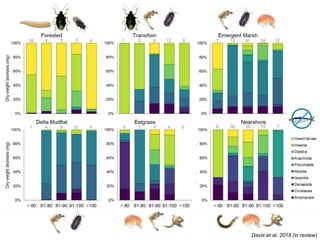
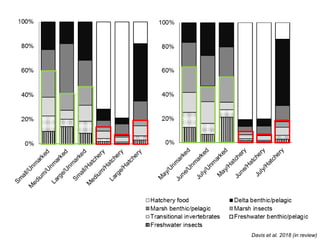
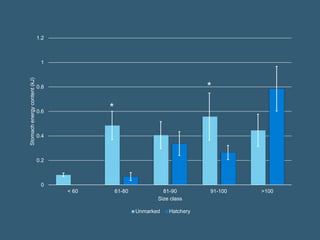
Davis et al. 2018 (in review)
0
0.2
0.4
0.6
0.8
1
1.2
< 60 61-80 81-90 91-100 >100
Stomachenergycontent(kJ)
Size class
Unmarked Hatchery
*
*
OBJECTIVES
ļ‚  1) Model change in the restoring habitat mosaic through time
ļ‚  2) Determine prey availability in each habitat type
ļ‚  3) Figure out which prey taxa are being consumed by juvenile
Chinook salmon and in what quantity
ļ‚  4) Use a bioenergetics model to estimate the ā€œqualityā€ of
estuarine habitat as the mosaic shifts
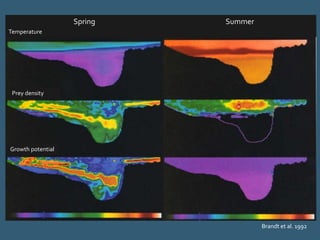
Brandt et al. 1992
Temperature
Prey density
Growth potential
Spring Summer
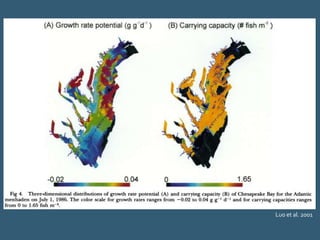
Luo et al. 2001
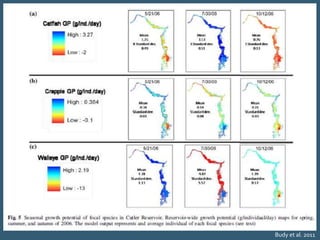
Budy et al. 2011
CHAPTER 4
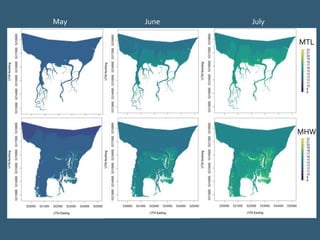
May June July
MTL
MHW
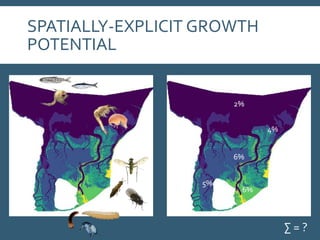
2%
6%
4%
6%
5%
āˆ‘ = ?
SPATIALLY-EXPLICIT GROWTH
POTENTIAL
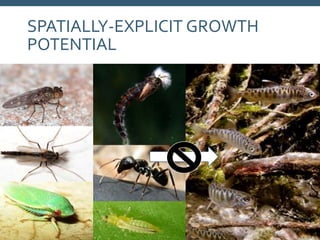
SPATIALLY-EXPLICIT GROWTH
POTENTIAL
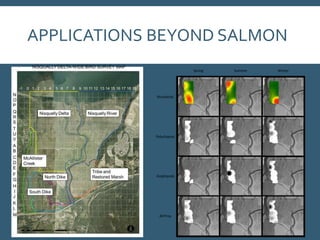
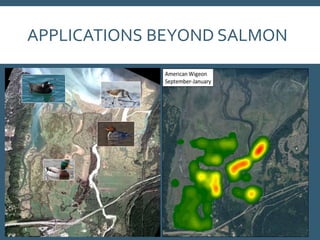
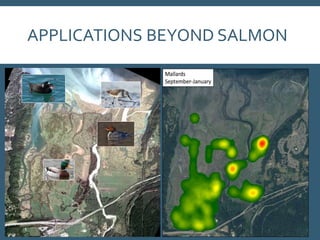
APPLICATIONS BEYOND SALMON
PARTNERS AND COLLABORATORS
USGSWERC: Lennah Shakeri, Sierra Blakely,Angie Munguia, Larisa Lamere, Anna Hissem,
Chase Freeman, KelleyTurner, Lisa Belleveau, Sam Kaviar, JohnTakekawa, Ashley Smith,
Jessica Donald, William Chan, Charlie Norton
USGSWFRC: Kim Larsen, Angie Lind-Null, LisaWetzel, Karl Stenberg, Steve Rubin
Nisqually IndianTribe: Chris Ellings, Sayre Hodgson, Jennifer Cutler,Walker Duval, Emilio
Perez, Aaron David
USFWS: Glynnis Nakai, Jesse Barham, Doug Roster, Marian Bailey, JeanTakekawa
Graduate Supervisory Committee: Dave Beauchamp, Julian Olden, Si Simenstad, Christian
Torgersen

Dynamic Habitat Models for Estuary-Dependent Species

Editor's Notes

  • #33Ā Encroachment of mudflat into low marsh estuarine habitat/restoration area may encourage expansion of low energy prey BUT if productivity is increased there may also be more of it.