
Downloaded 41 times


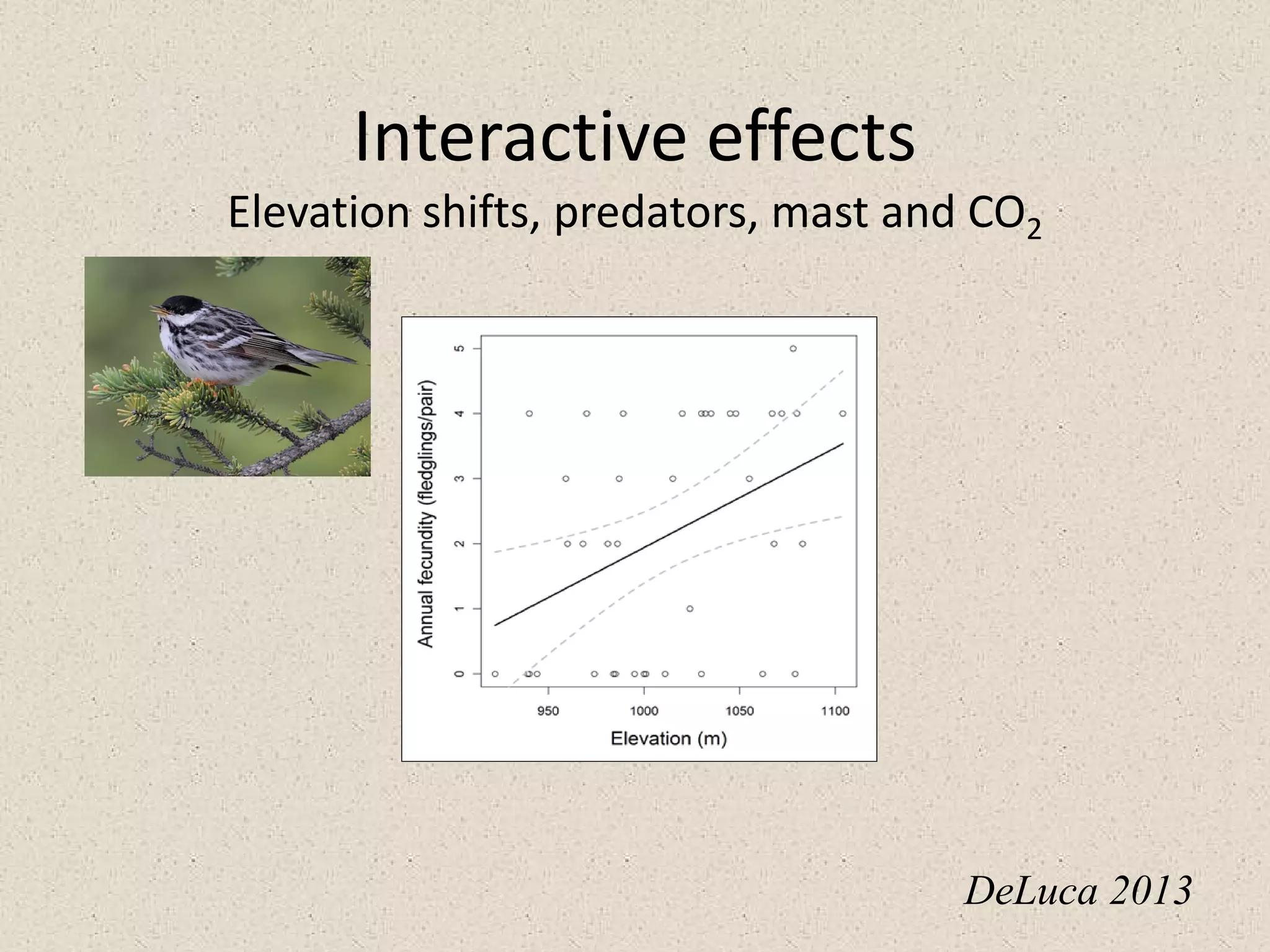


This document summarizes the effects of climate change on wildlife in New England. It discusses how temperature influences the distribution of wildlife, causing latitudinal and elevational shifts. Climate change threatens wildlife through temperature extremes, habitat shifts and alteration, drought, and flooding. Case studies show how spruce-fir bird species' habitats are shifting. Studies in New Hampshire found elevational shifts consistent with predictions, while studies in spruce-fir forests found shifts contrary to predictions. Climate change can have interactive effects through elevation shifts, predators, mast cycles, and carbon dioxide levels. Research is exploring direct and indirect climate impacts. Other climate change impacts include loss of snow and ice habitats, increased predation, phenological mismatches, disturbance and succession impacts


