FLUID PRESSURE AND ITS
MEASUREMENT
(FLUID MECHANICS)
UNIT – I
Dr. Rambabu Palaka, ProfessorJuly-2020
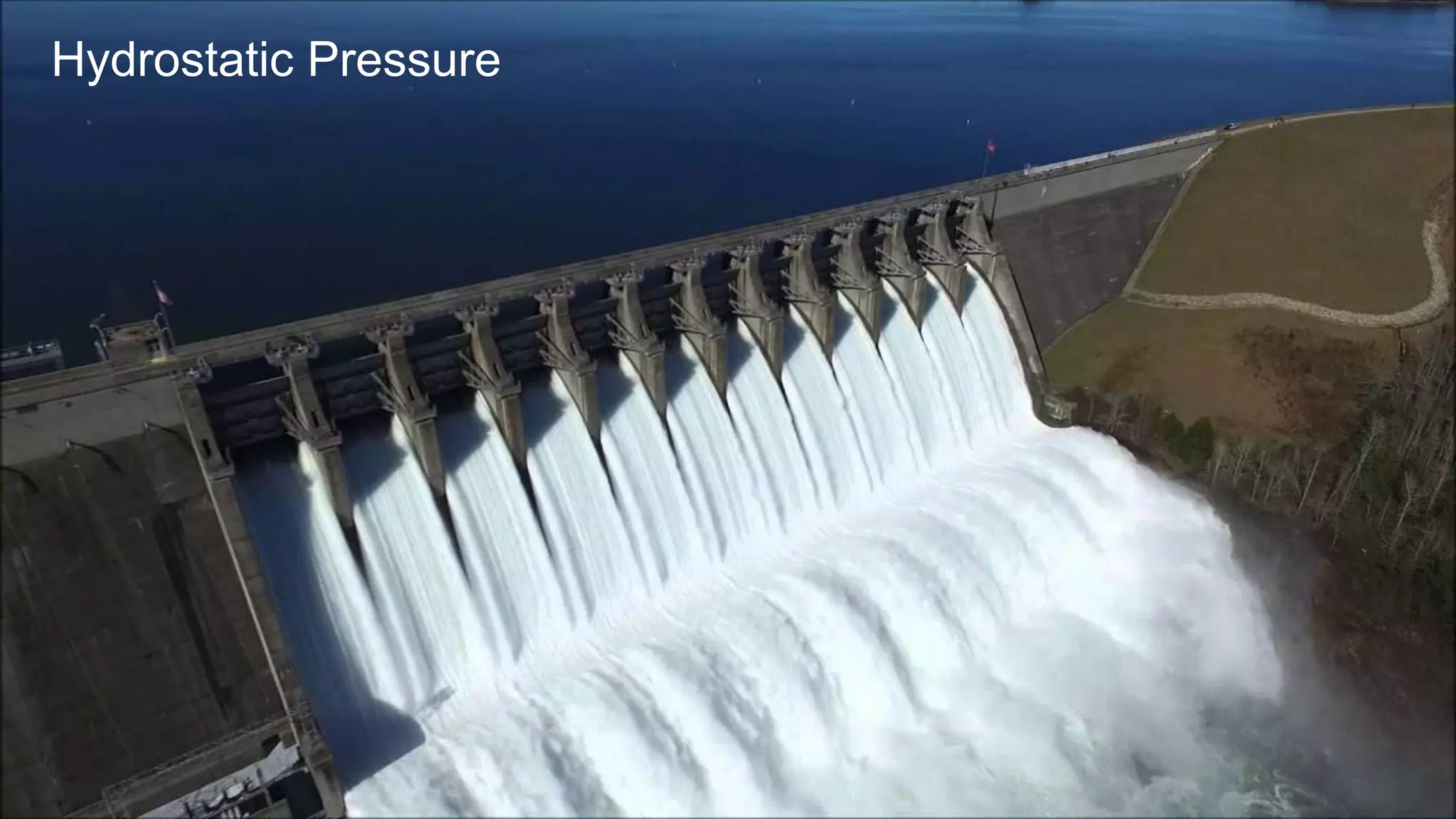
Hydrostatic Pressure
Syllabus
Unit 1: Fluid Statics
CO1: Calculate Pressure and Hydrostatic forces on different plane surfaces
Unit 2: Fluid Kinematics
CO2: Solve the fluid flow problems using Continuity equation.
Unit 3: Fluid Dynamics
CO3: Calculate the discharges through the Venturi meter, Orifice meter and Pitot tube using Bernoulli’s
equation
Unit 4: Flow through Pipes
CO4: Calculate major and minor losses in closed conduits for different connection pattens.
Unit 5: Dimensional Analysis and Hydraulic Similitude
CO5: Apply the concept of Dimensional Analysis for solving the fluid flow problems and Model Analysis.
Unit 6: Boundary Layer Theory
Unit 1: Fluid Statics
1. Introduction (1 Period)
a) Fluid Statics
b) Fluid Kinematics
c) Fluid Dynamics
d) Application of Fluid Mechanics in Civil Engineering
2. Properties of Fluids (3 Periods)
a) Density
b) Specific Weight
c) Specific Volume
d) Specific Gravity
e) Kinematic and Dynamic Viscosity
f) Surface Tension
g) Capillarity
Learning Objectives
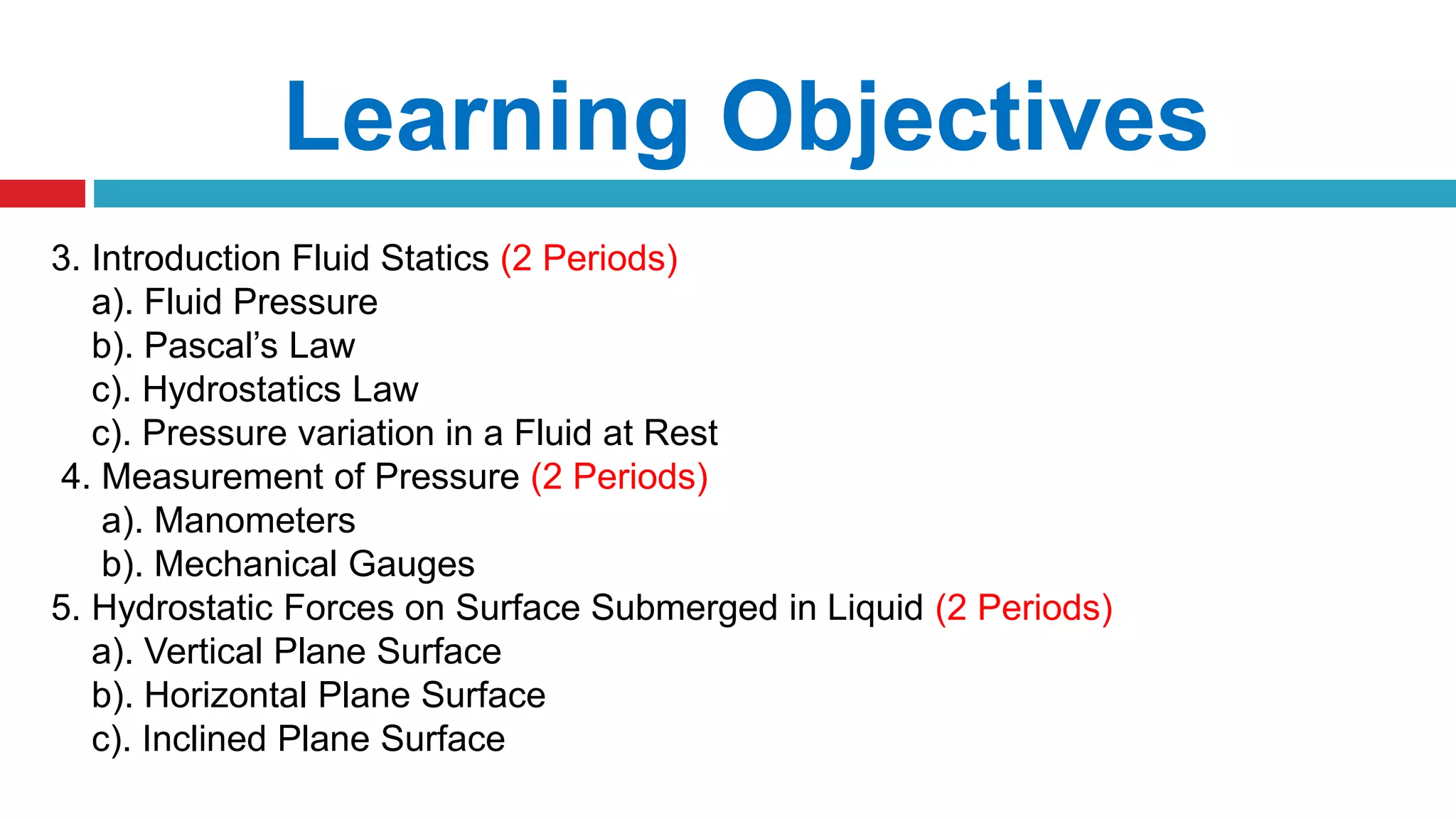
3. Introduction Fluid Statics (2 Periods)
a). Fluid Pressure
b). Pascal’s Law
c). Hydrostatics Law
c). Pressure variation in a Fluid at Rest
4. Measurement of Pressure (2 Periods)
a). Manometers
b). Mechanical Gauges
5. Hydrostatic Forces on Surface Submerged in Liquid (2 Periods)
a). Vertical Plane Surface
b). Horizontal Plane Surface
c). Inclined Plane Surface
Fluid Pressure
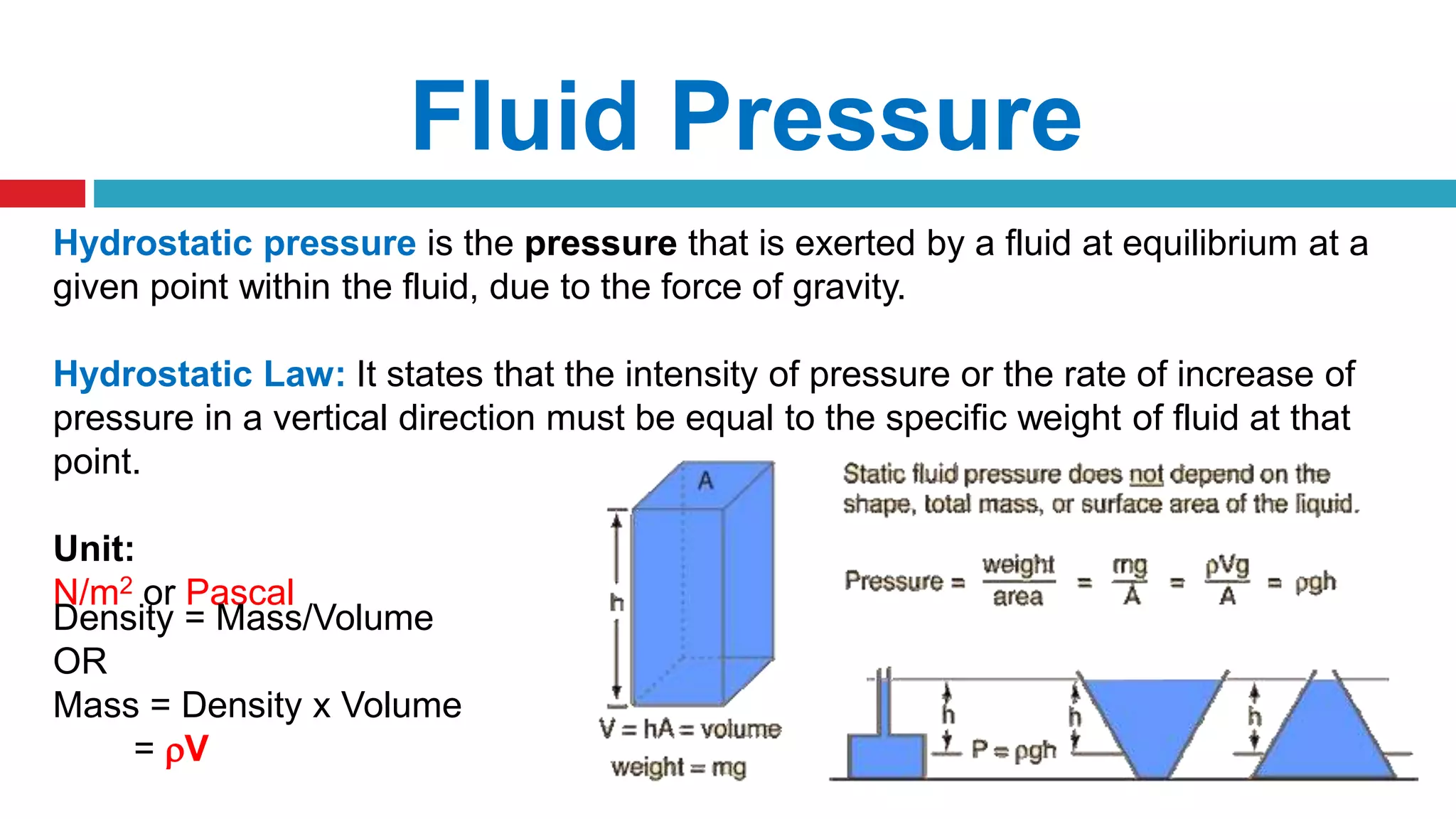
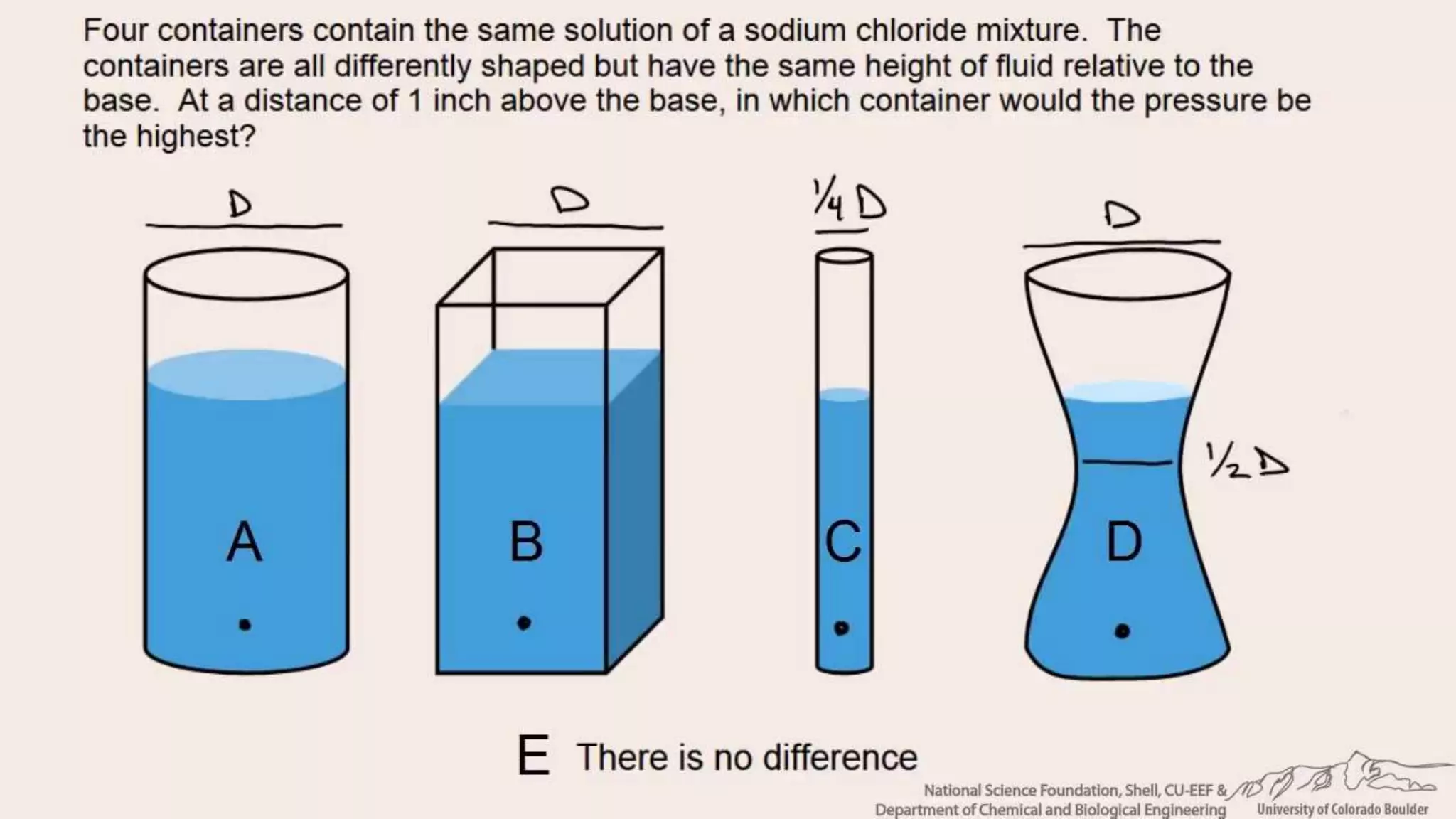
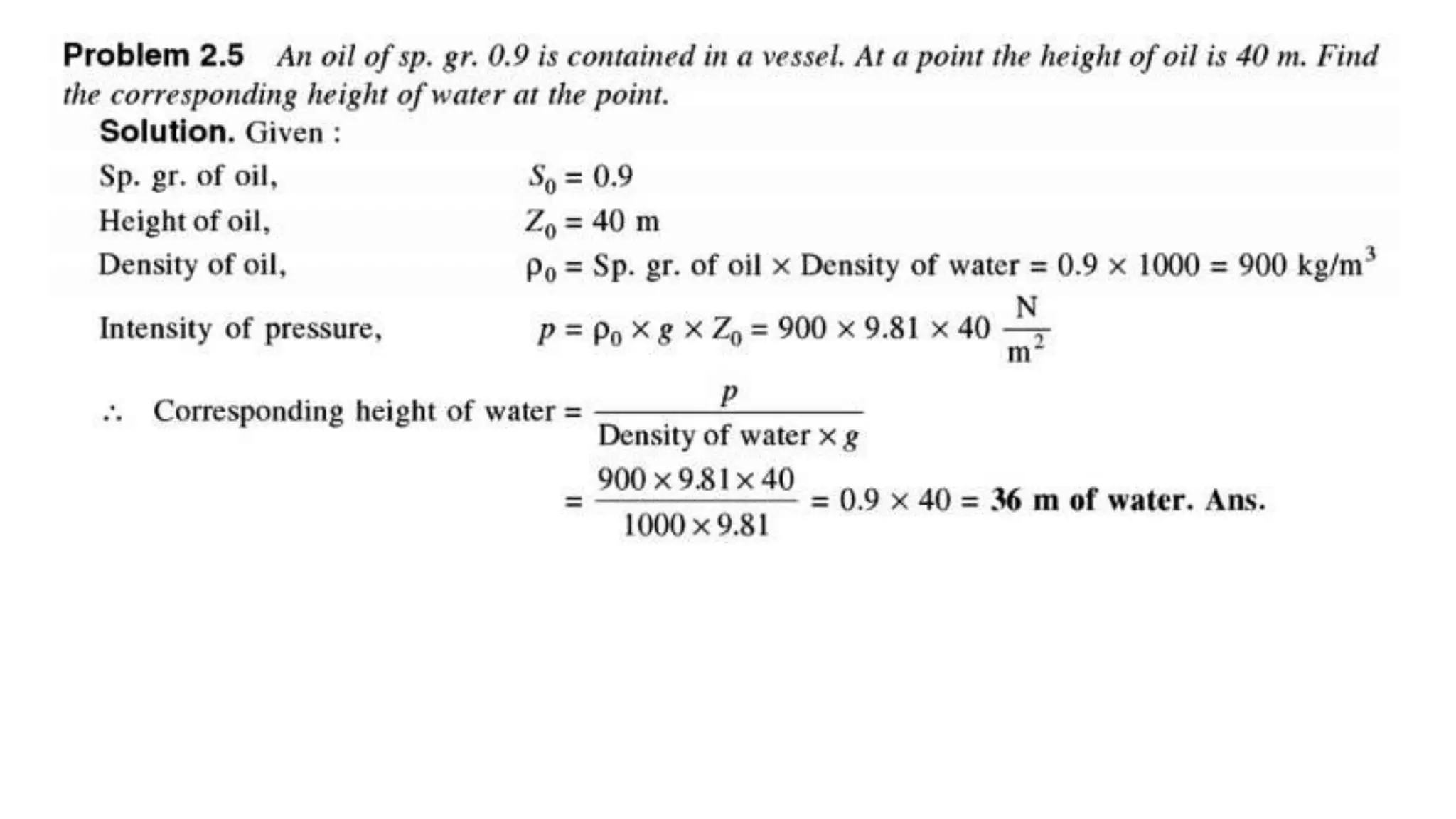
Hydrostatic pressure is the pressure that is exerted by a fluid at equilibrium at a
given point within the fluid, due to the force of gravity.
Hydrostatic Law: It states that the intensity of pressure or the rate of increase of
pressure in a vertical direction must be equal to the specific weight of fluid at that
point.
Unit:
N/m2 or Pascal
Density = Mass/Volume
OR
Mass = Density x Volume
= V
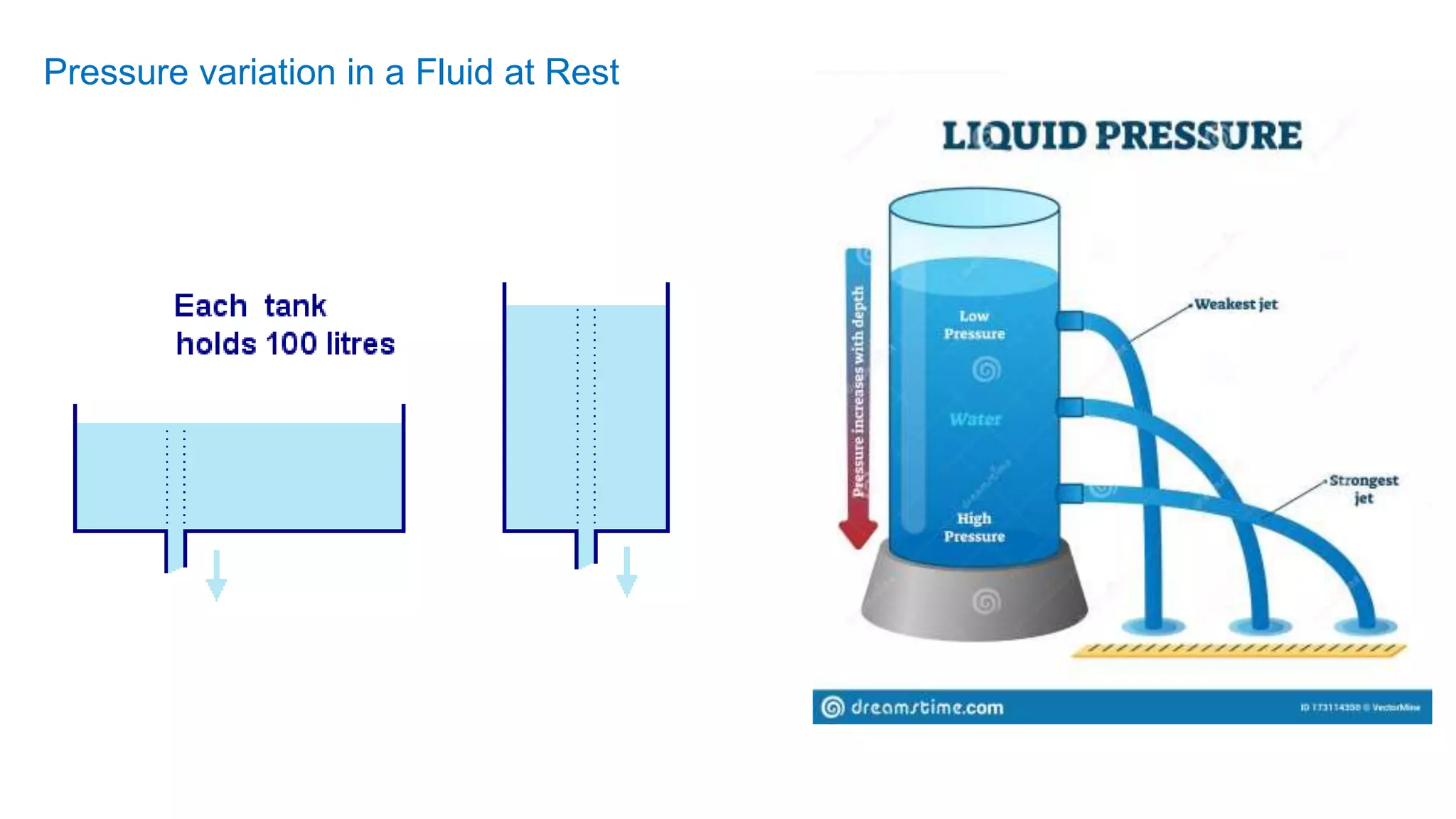
Pressure variation in a Fluid at Rest
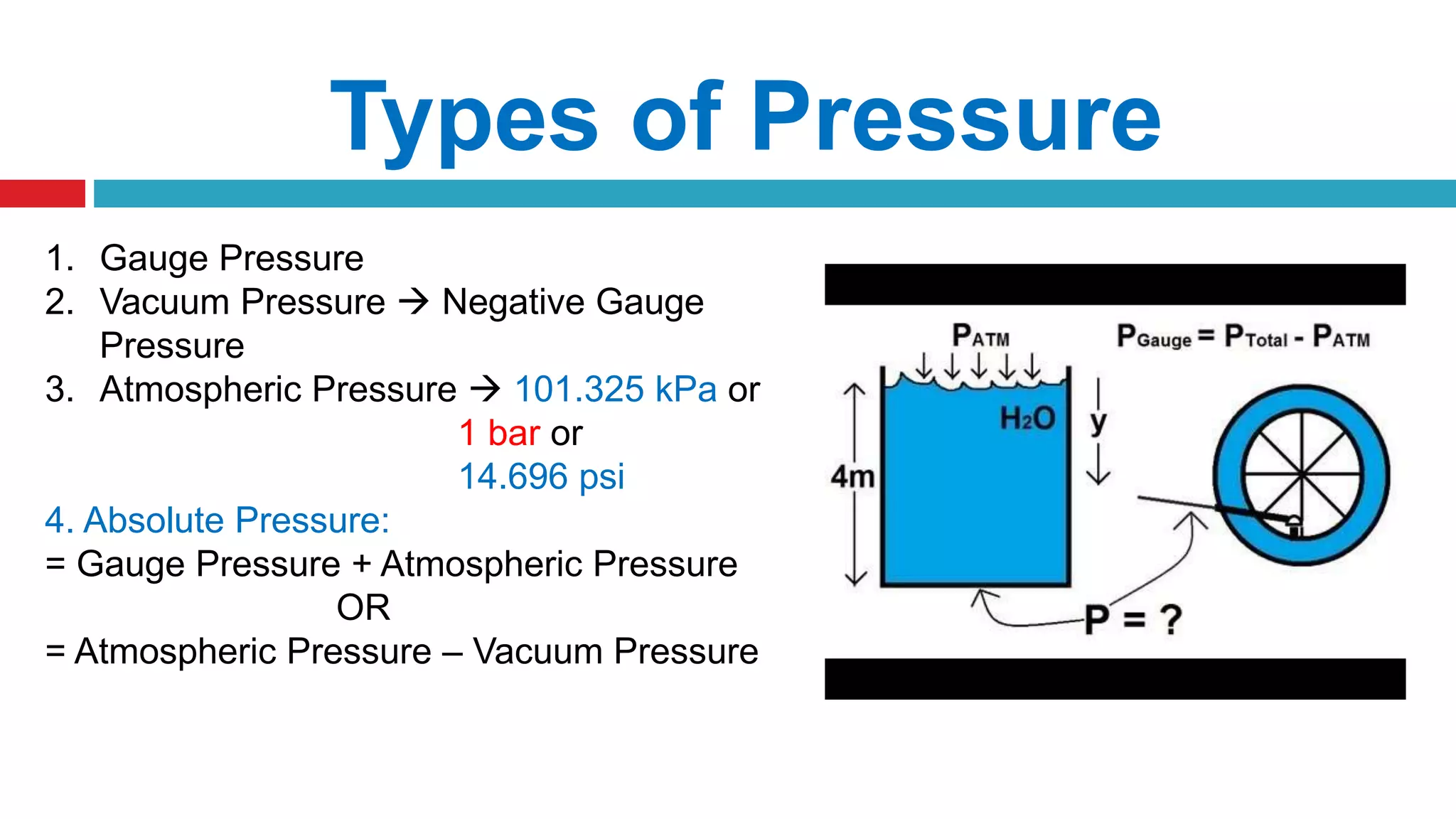
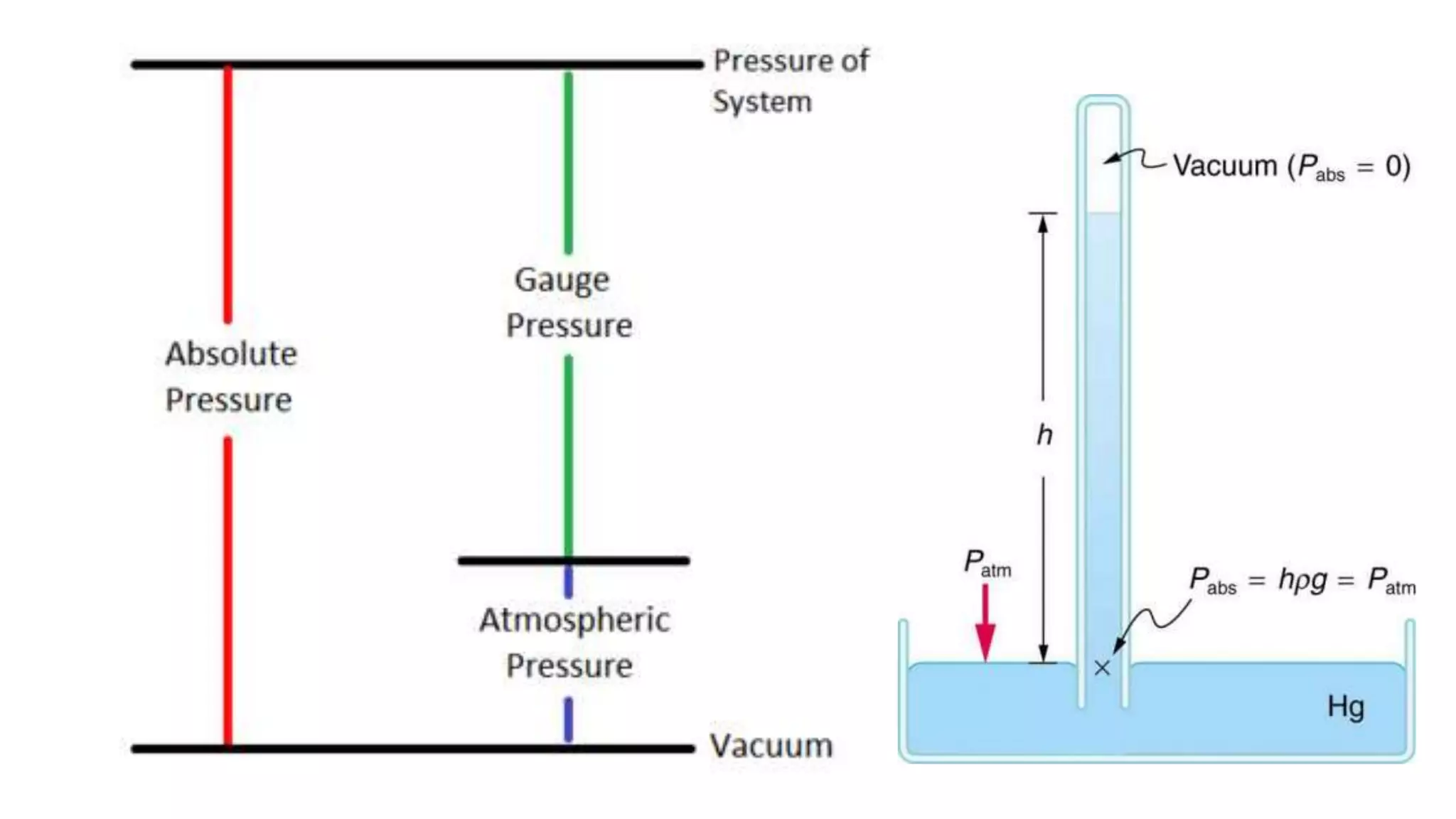
Types of Pressure
1. Gauge Pressure
2. Vacuum Pressure  Negative Gauge
Pressure
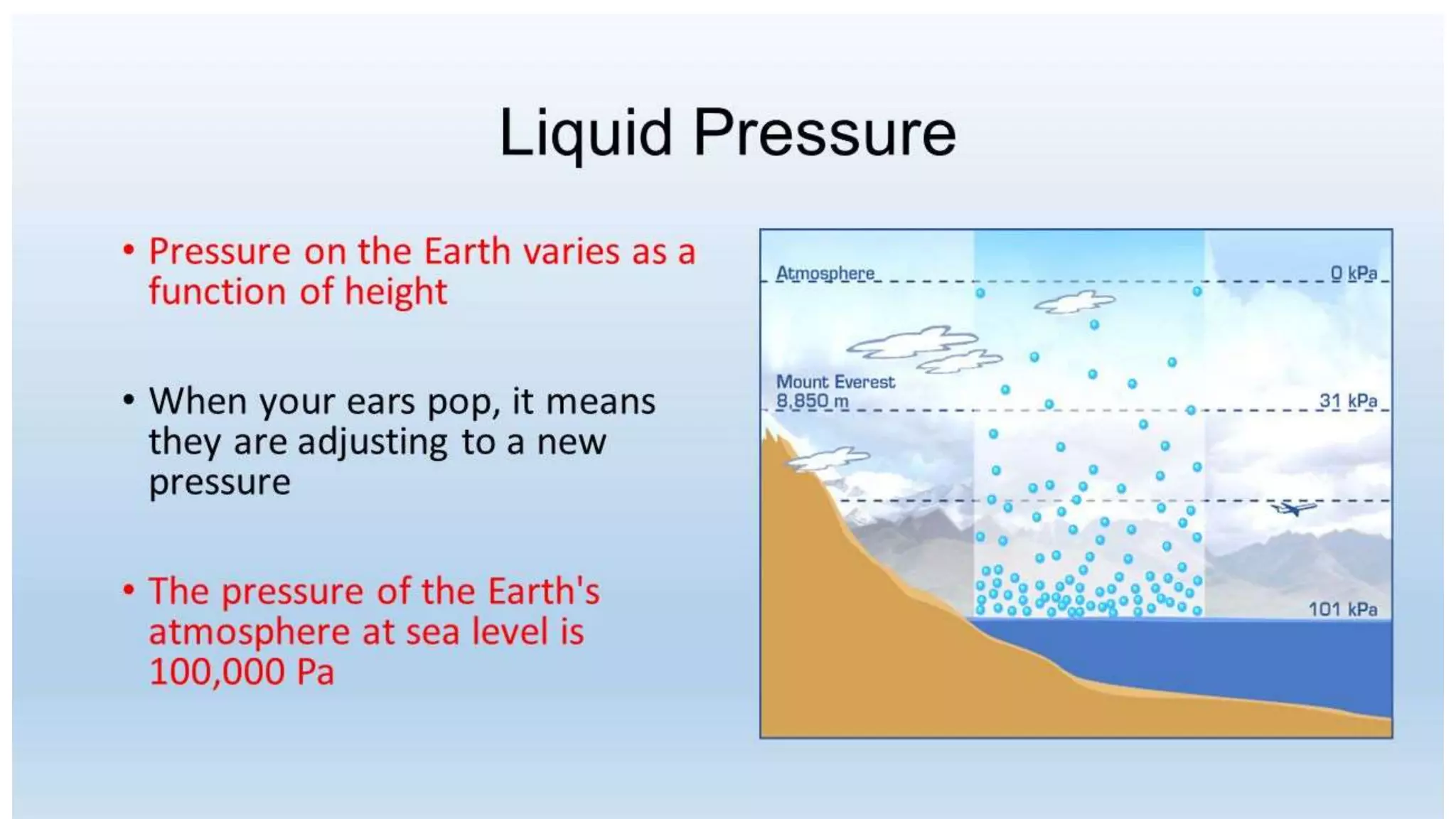
3. Atmospheric Pressure  101.325 kPa or
1 bar or
14.696 psi
4. Absolute Pressure:
= Gauge Pressure + Atmospheric Pressure
OR
= Atmospheric Pressure – Vacuum Pressure
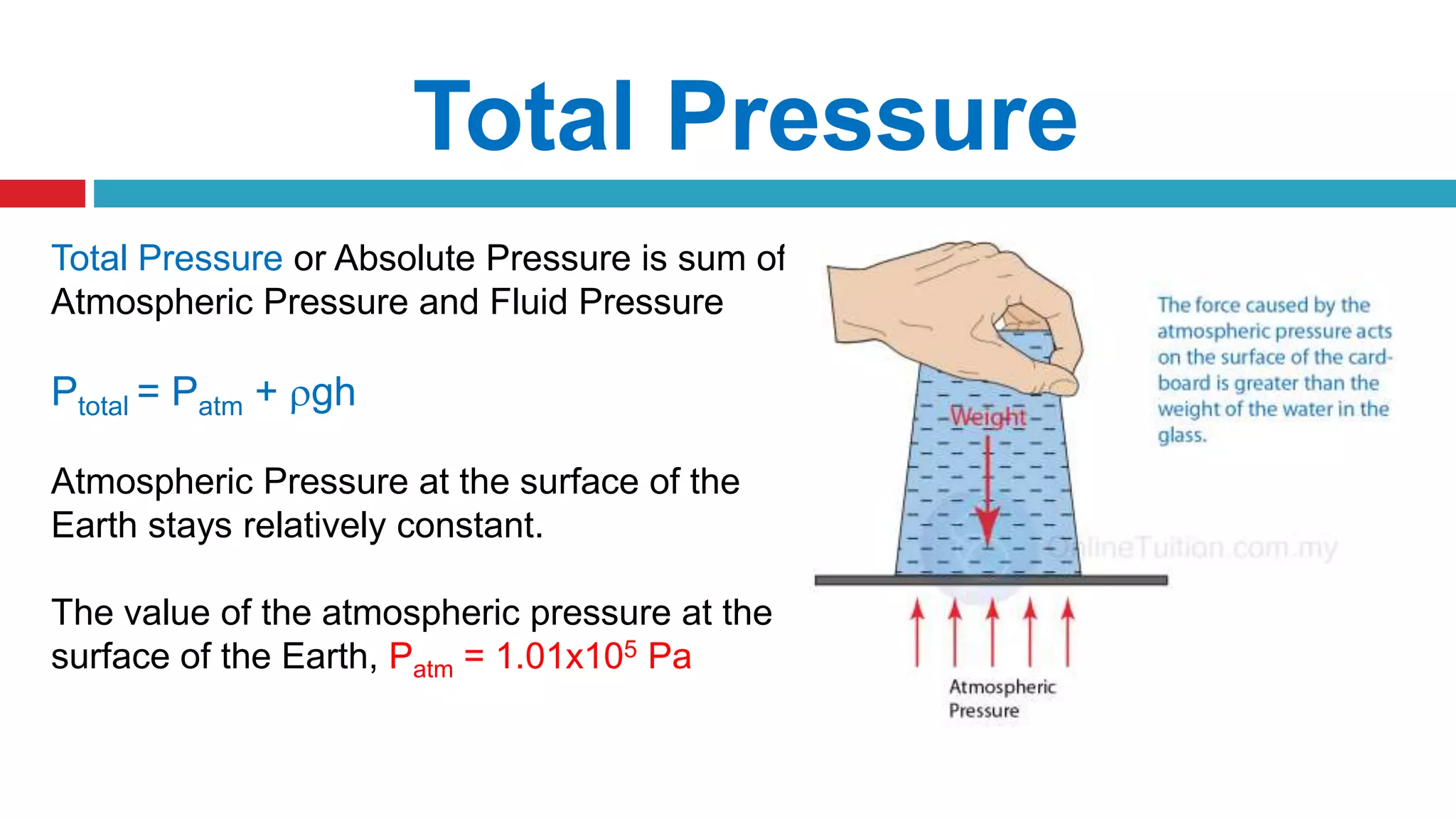
Total Pressure
Total Pressure or Absolute Pressure is sum of
Atmospheric Pressure and Fluid Pressure
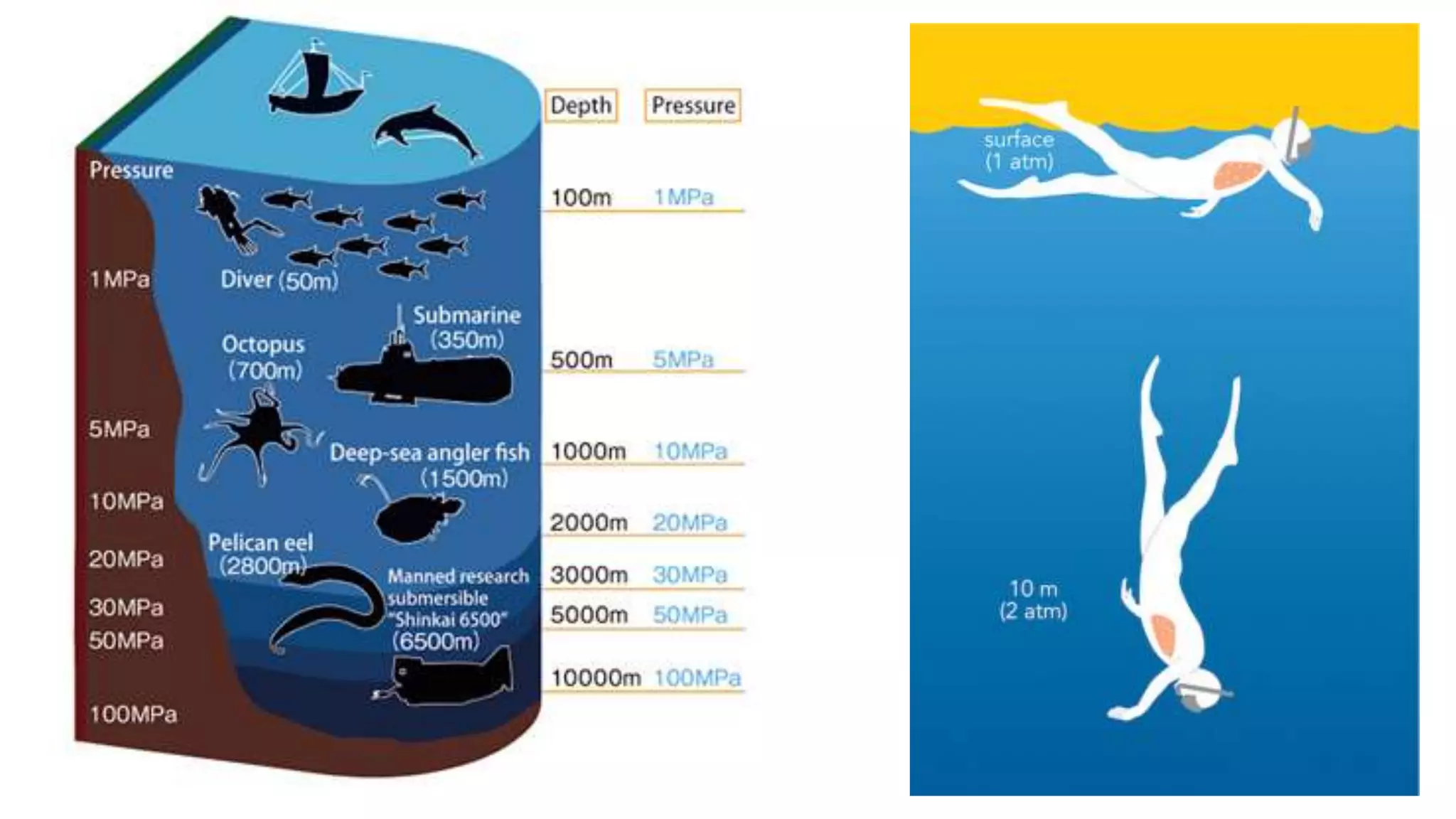
Ptotal = Patm + gh
Atmospheric Pressure at the surface of the
Earth stays relatively constant.
The value of the atmospheric pressure at the
surface of the Earth, Patm = 1.01x10⁵ Pa
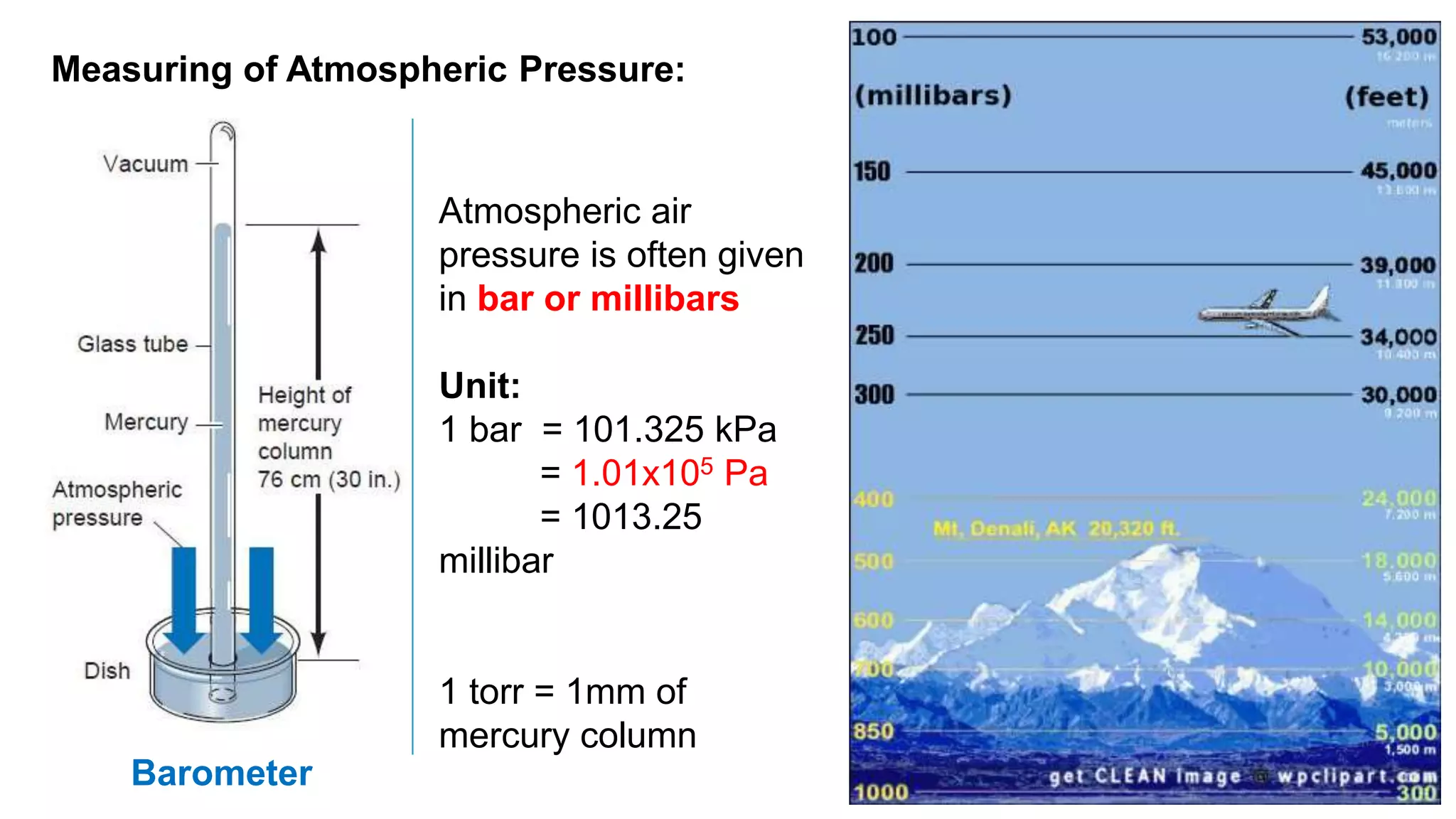
Measuring of Atmospheric Pressure:
Atmospheric air
pressure is often given
in bar or millibars
Unit:
1 bar = 101.325 kPa
= 1.01x10⁵ Pa
= 1013.25
millibar
1 torr = 1mm of
mercury column
Barometer
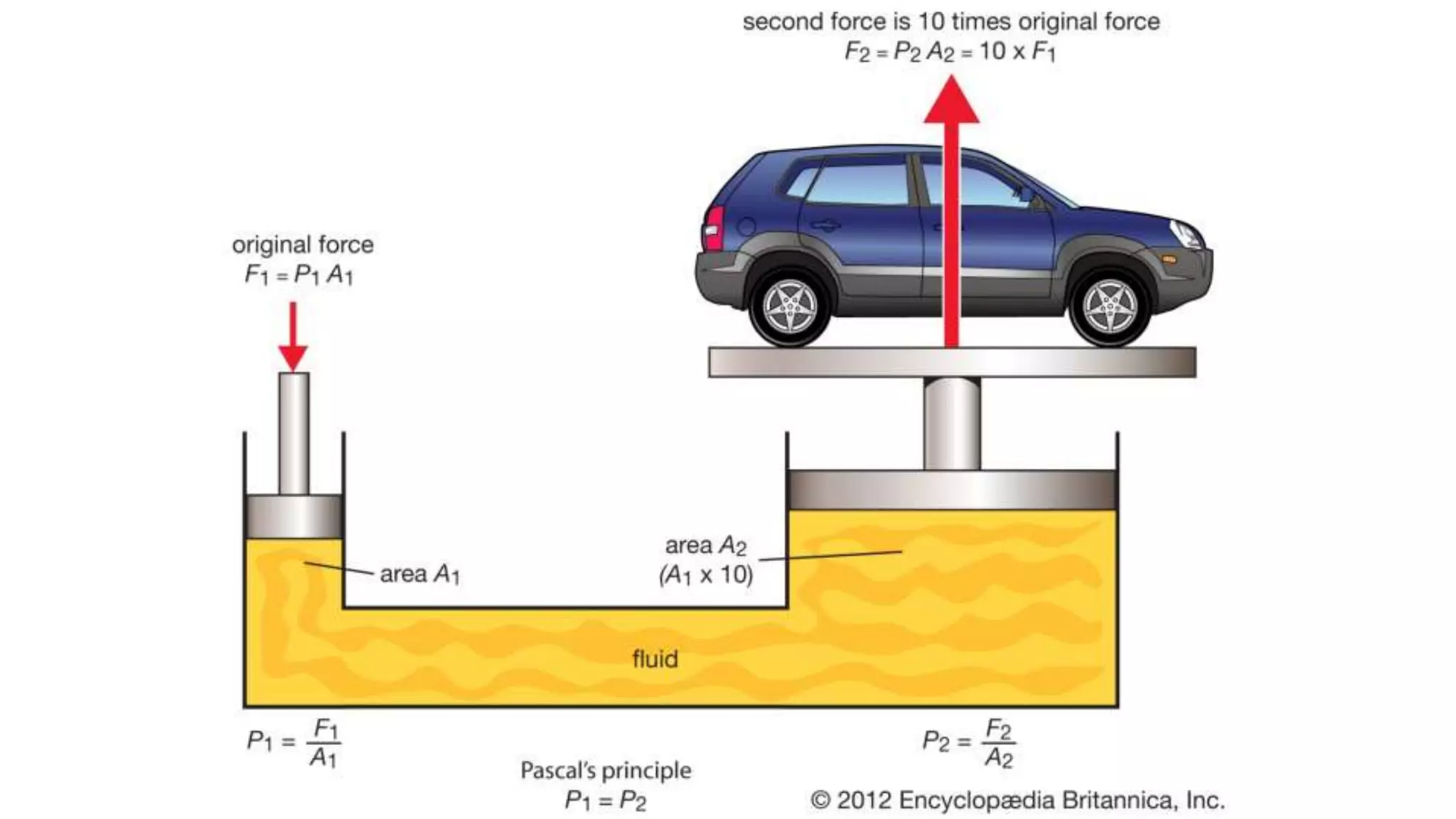
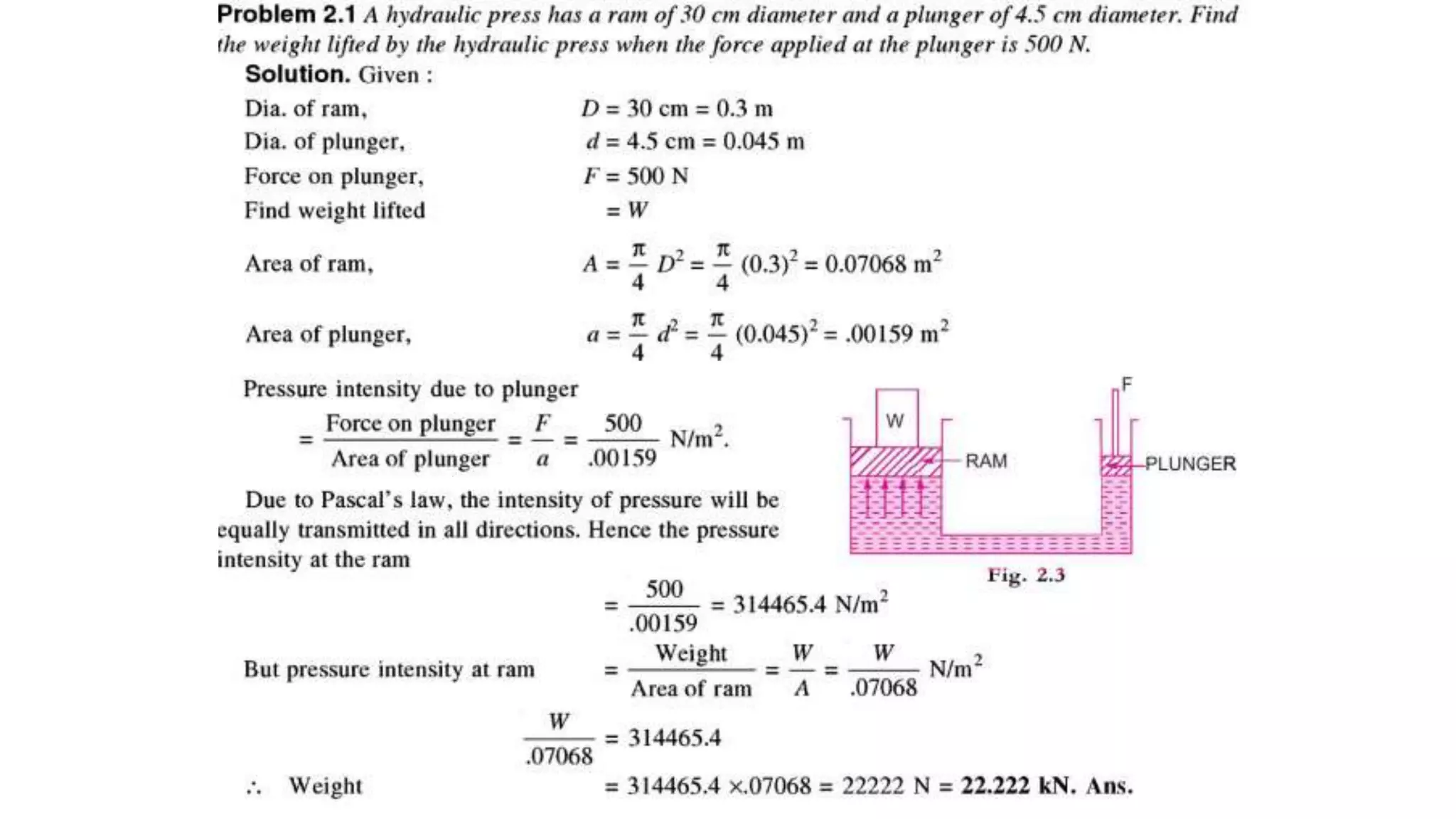
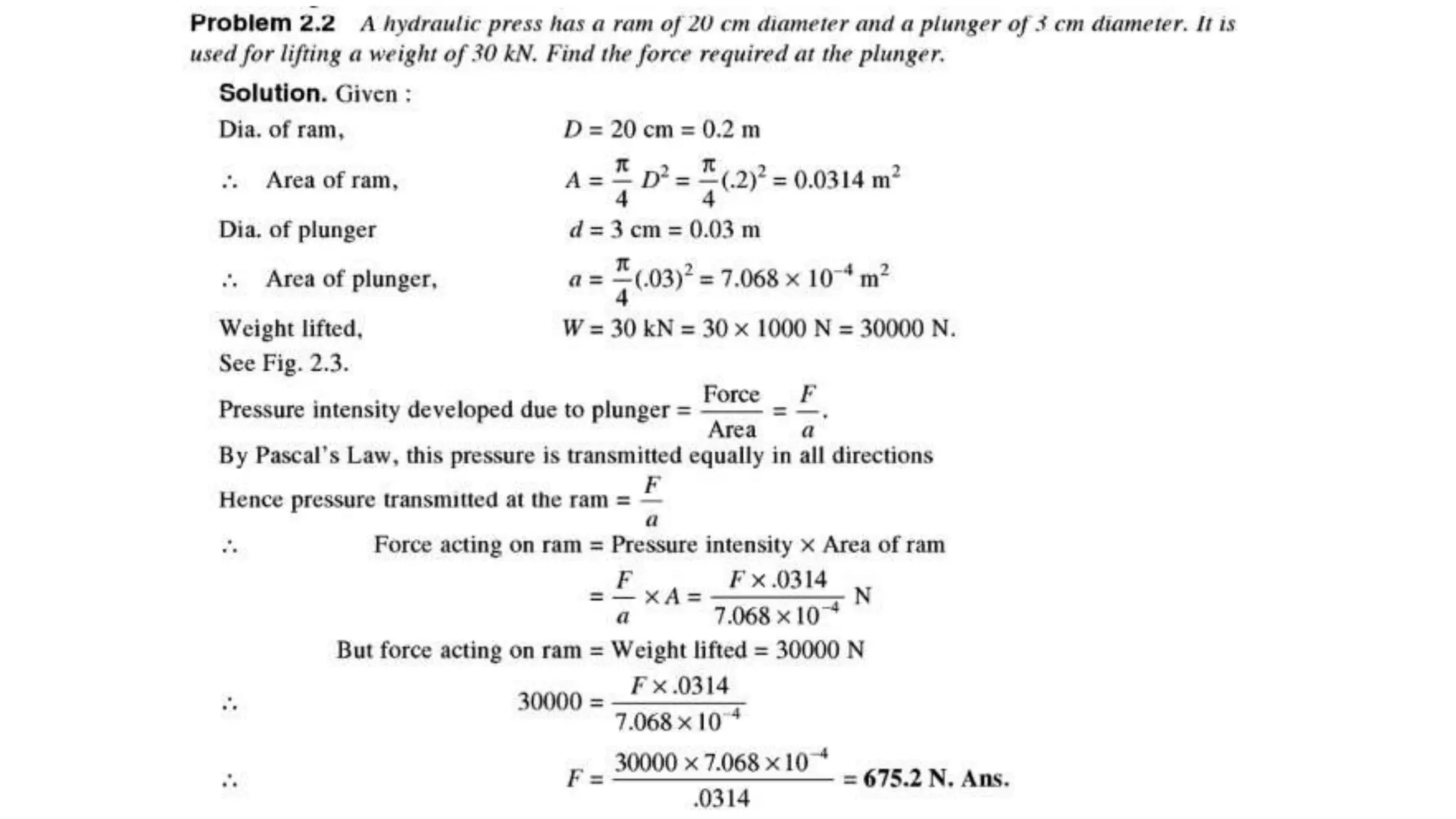
Pascal’s Law
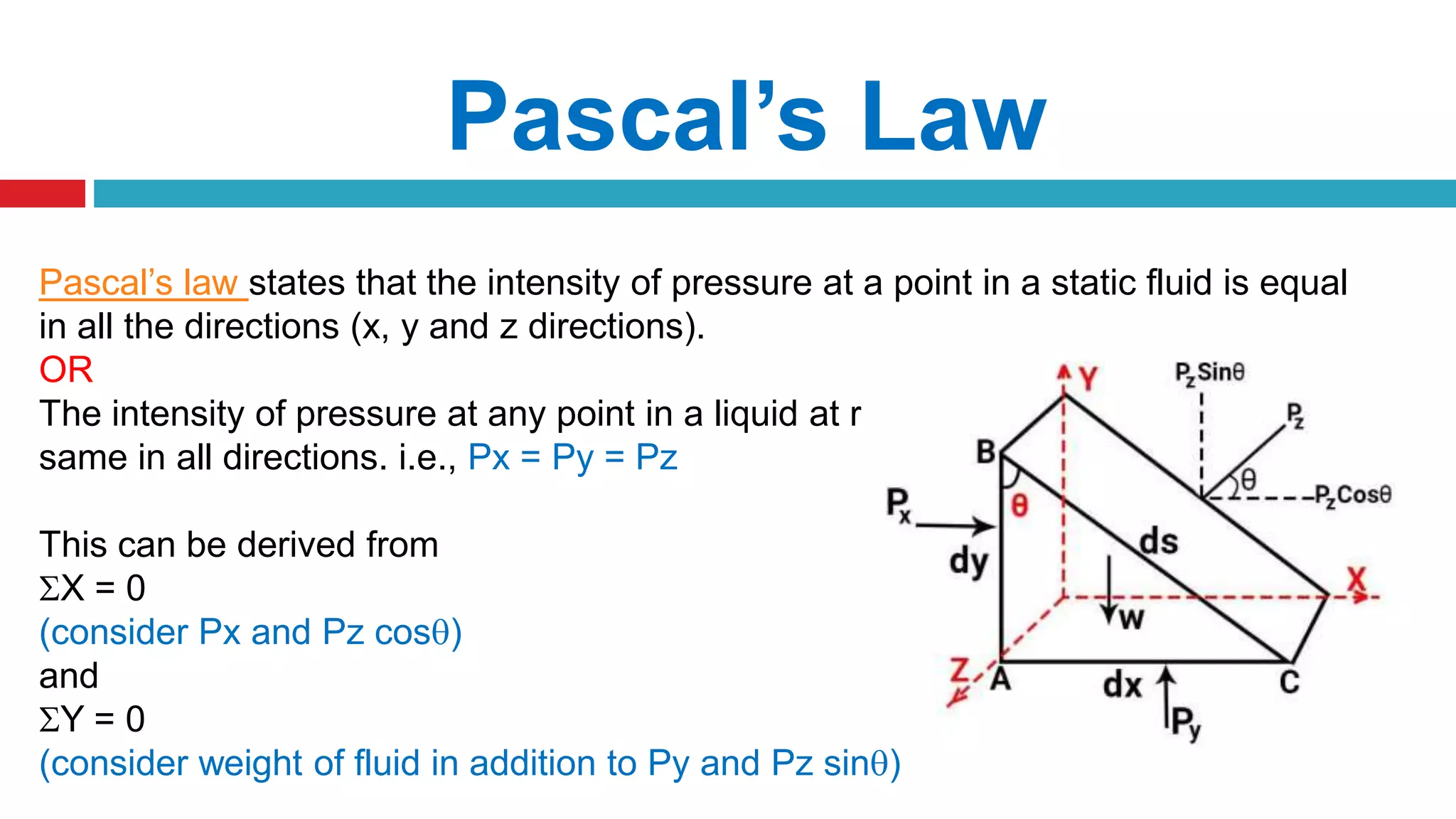
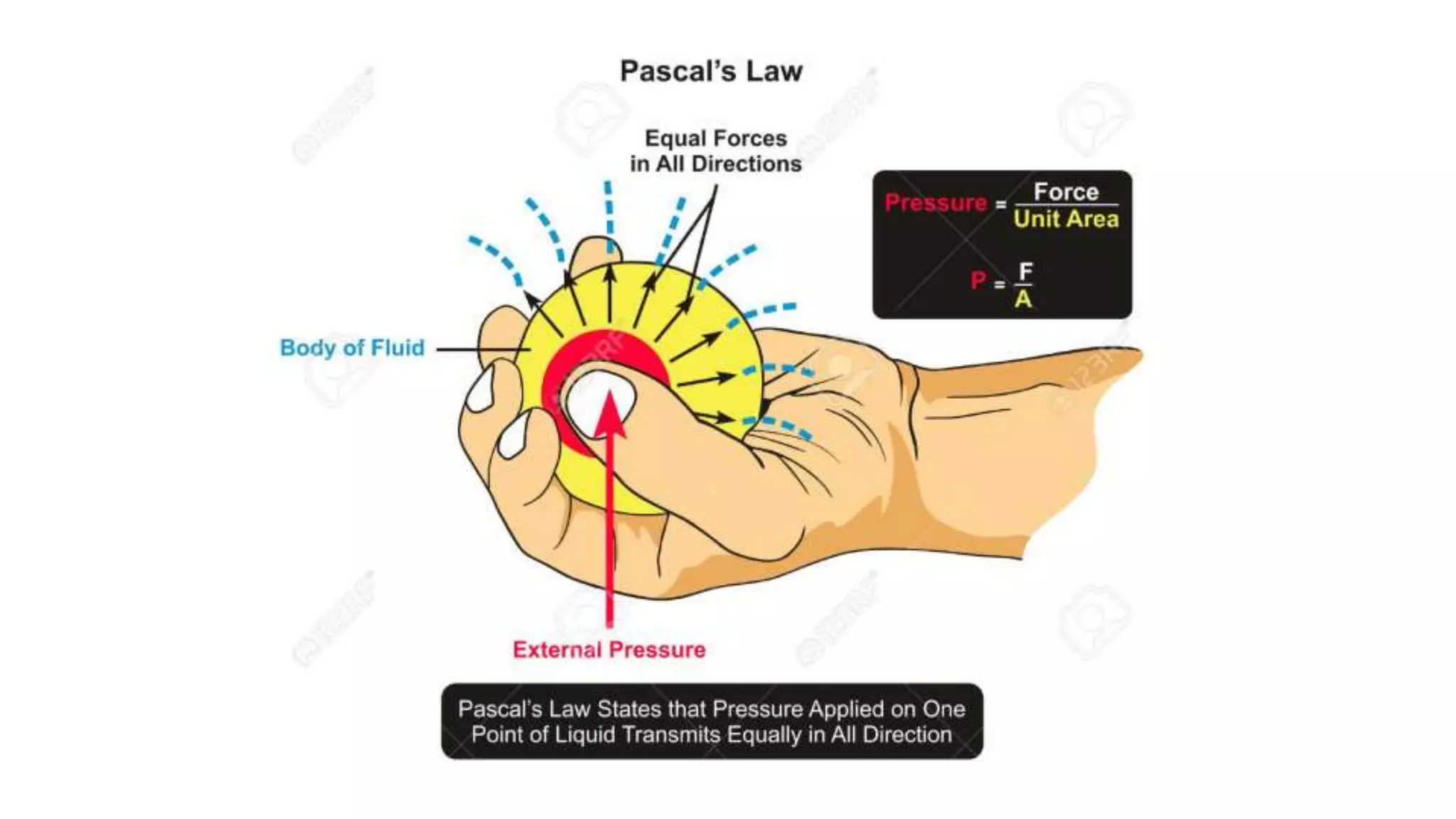
Pascal’s law states that the intensity of pressure at a point in a static fluid is equal
in all the directions (x, y and z directions).
OR
The intensity of pressure at any point in a liquid at rest is
same in all directions. i.e., Px = Py = Pz
This can be derived from
X = 0
(consider Px and Pz cos)
and
Y = 0
(consider weight of fluid in addition to Py and Pz sin)
Measurement of Pressure
The pressure of fluid is measured by the following devices:
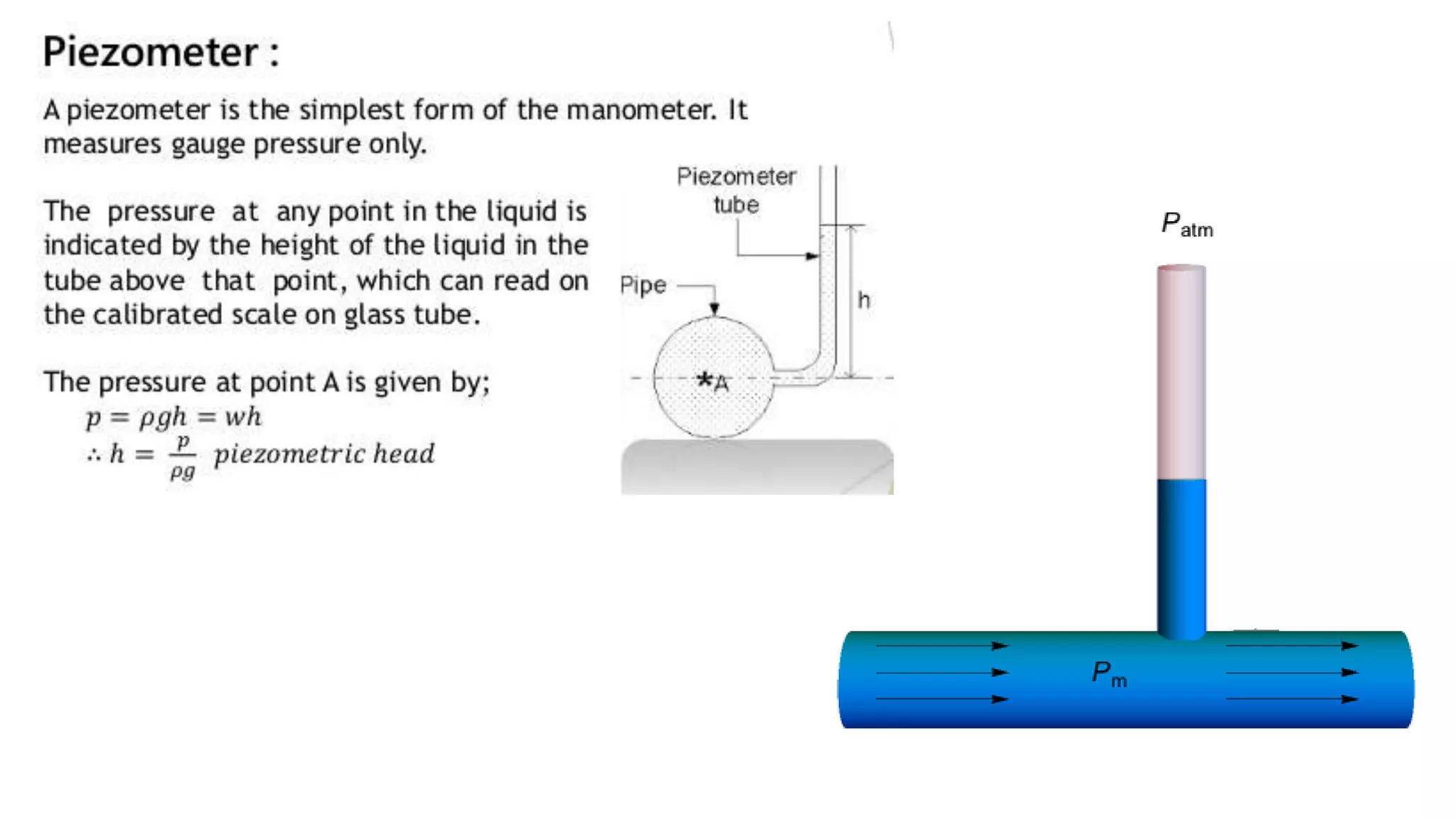
1. Manometers – by balancing the column of fluid by the same or another column of the fluid
a) Simple Manometers
i. Piezometer
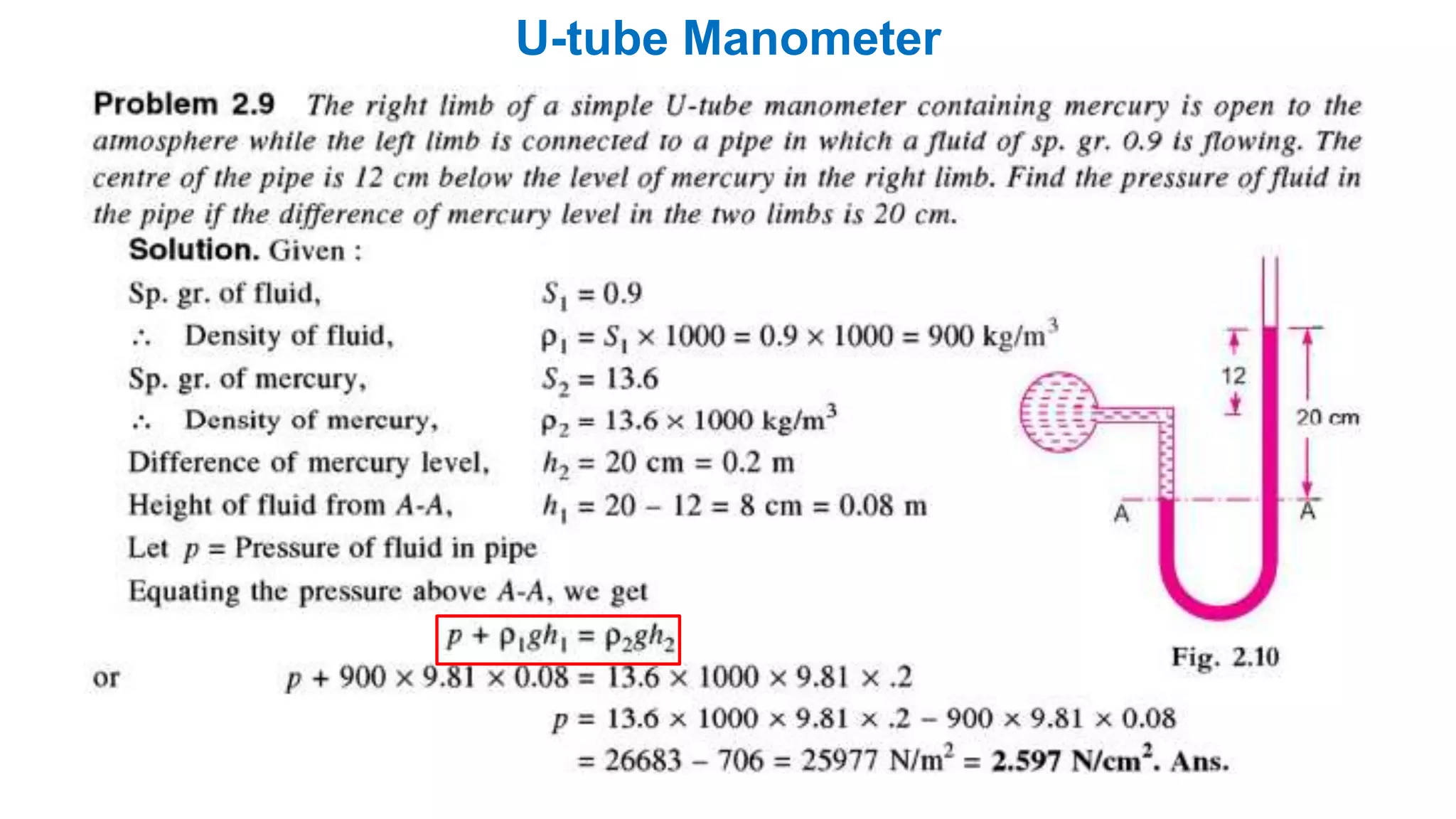
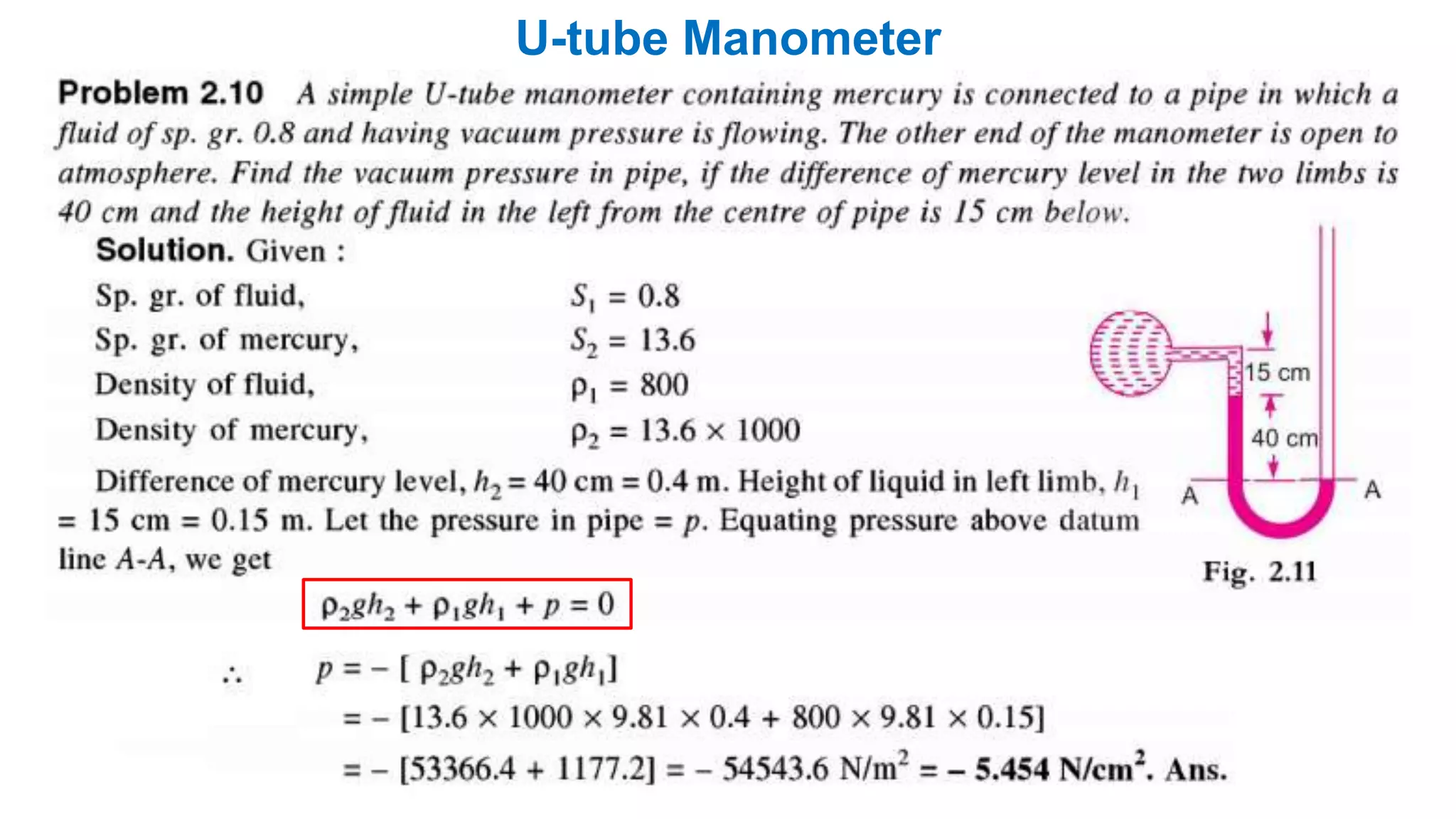
ii. U-tube Manometer
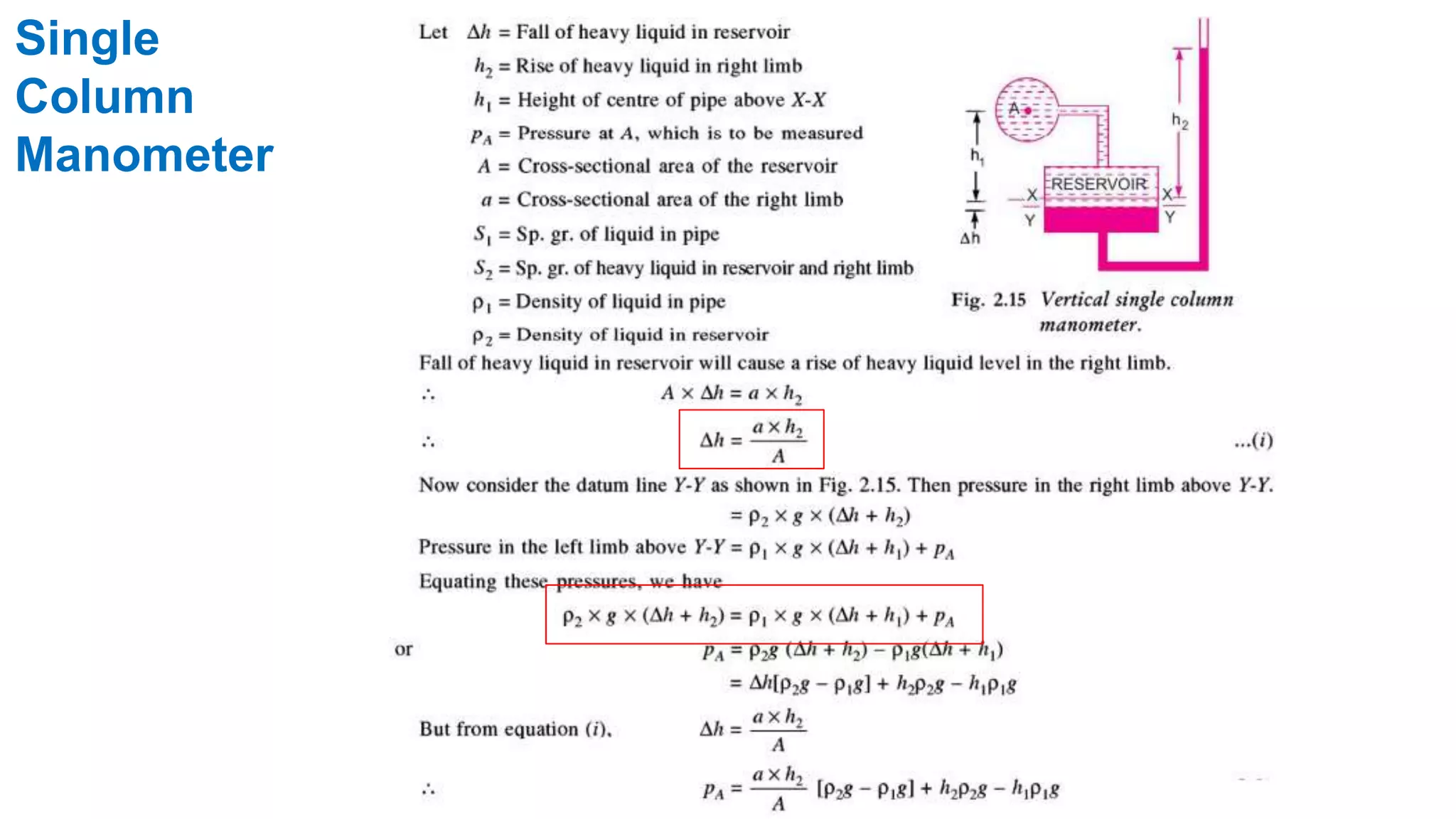
iii. Single Column Manometer
a. Vertical Single Column Manometer
b. Inclined Single Column Manometer
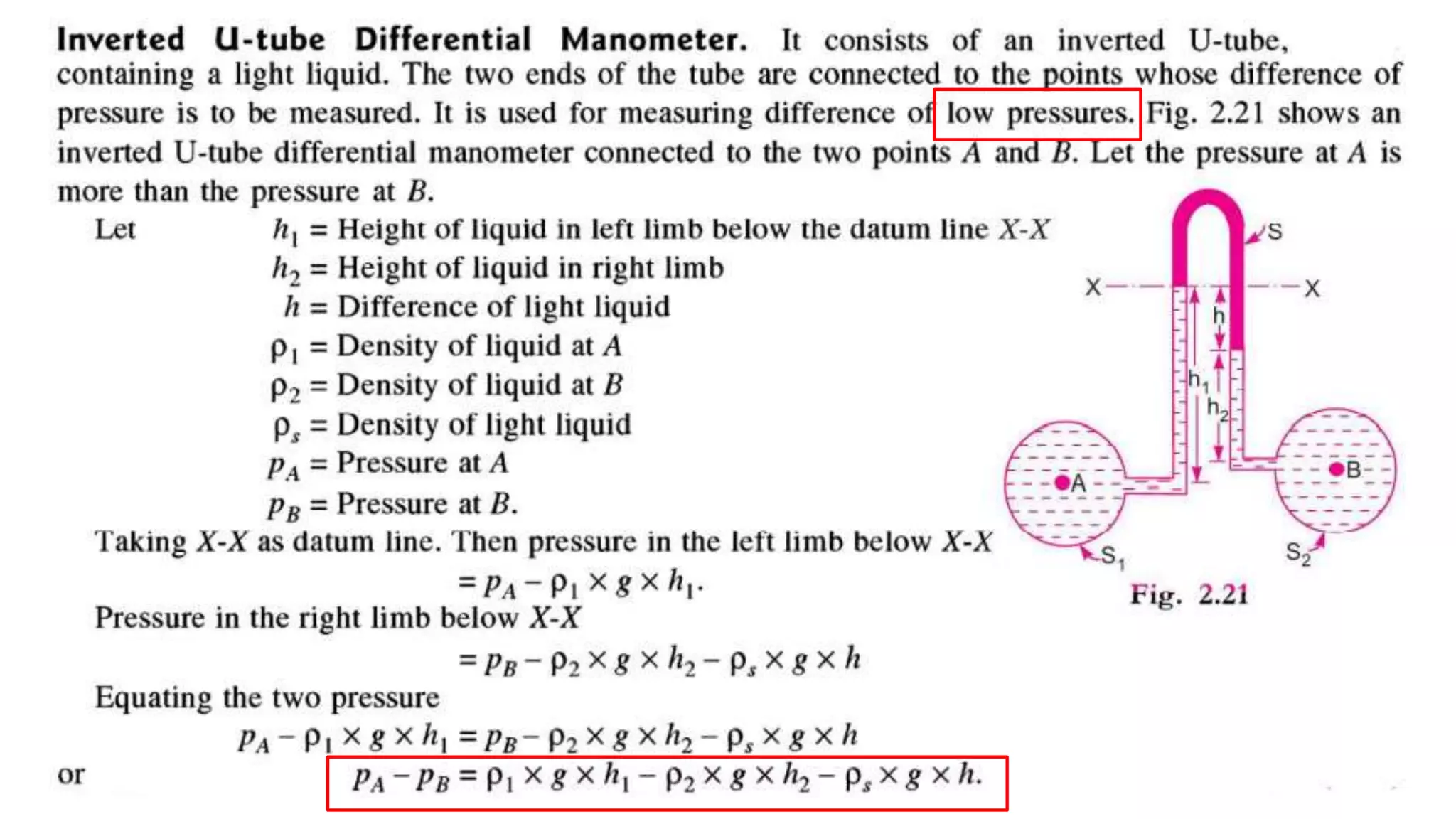
b) Differential Manometers
i. U-tube Differential Manometer
ii. Inverted U-tube Differential Manometer
2. Mechanical Guages – by balancing the column of fluid by the spring or dead weight
a) Diaphragm Pressure Guage b) Bourdon Tube Pressure Guage
c) Dead-weight Pressure Guage d) Bellows Pressure Guage
U-tube Manometer
U-tube Manometer
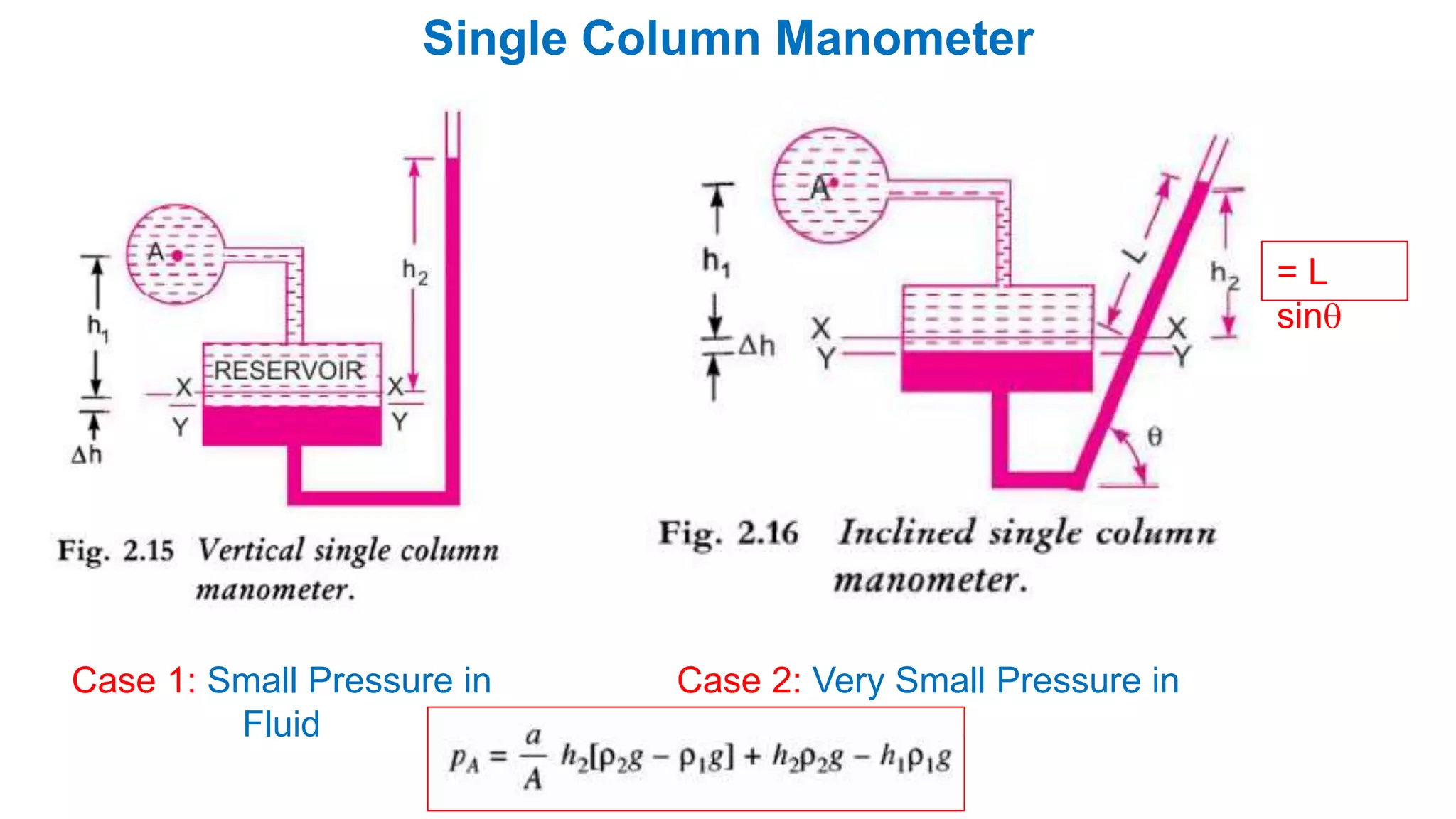
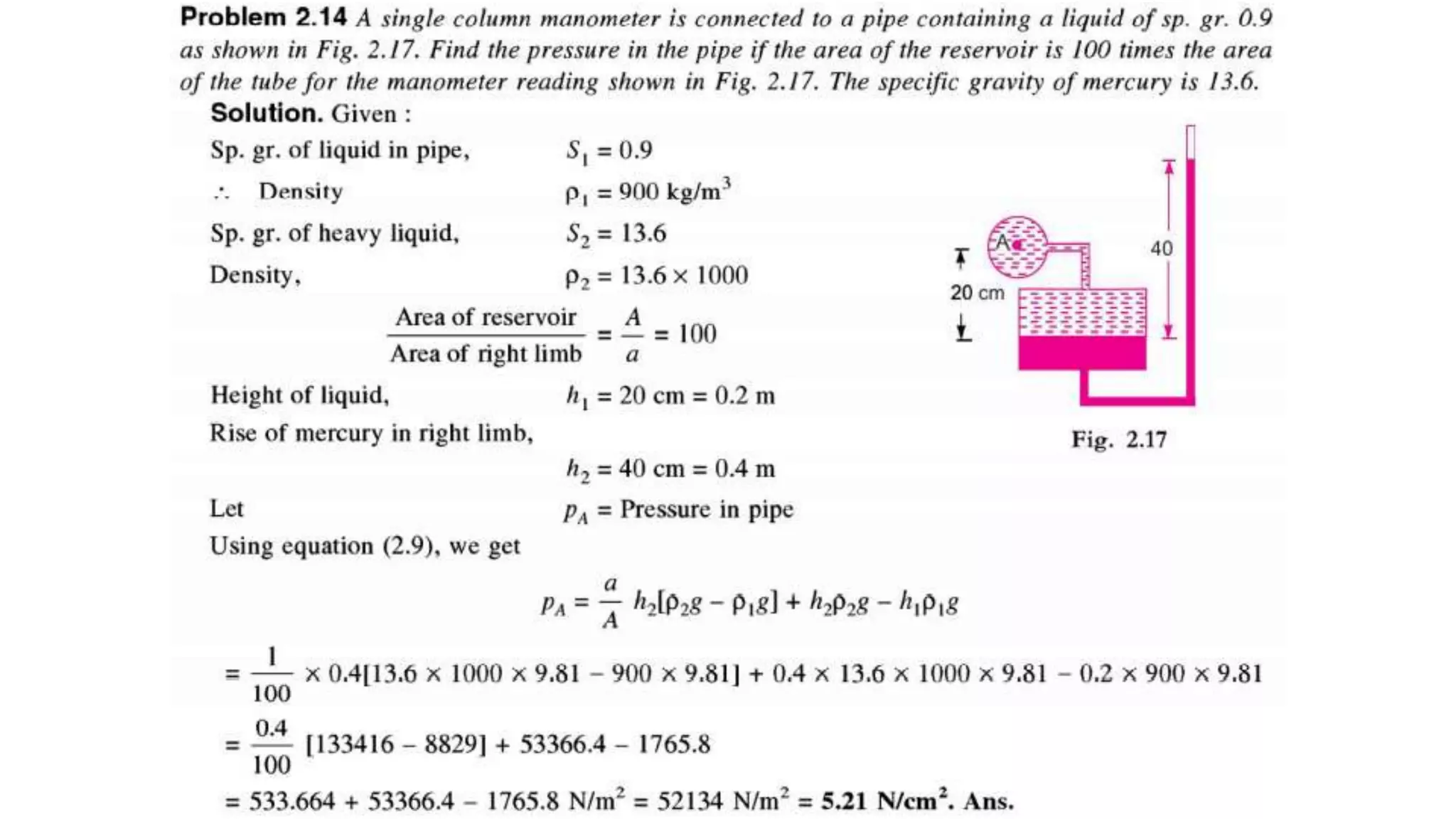
Single
Column
Manometer
Single Column Manometer
Case 1: Small Pressure in
Fluid
Case 2: Very Small Pressure in
Fluid
= L
sin
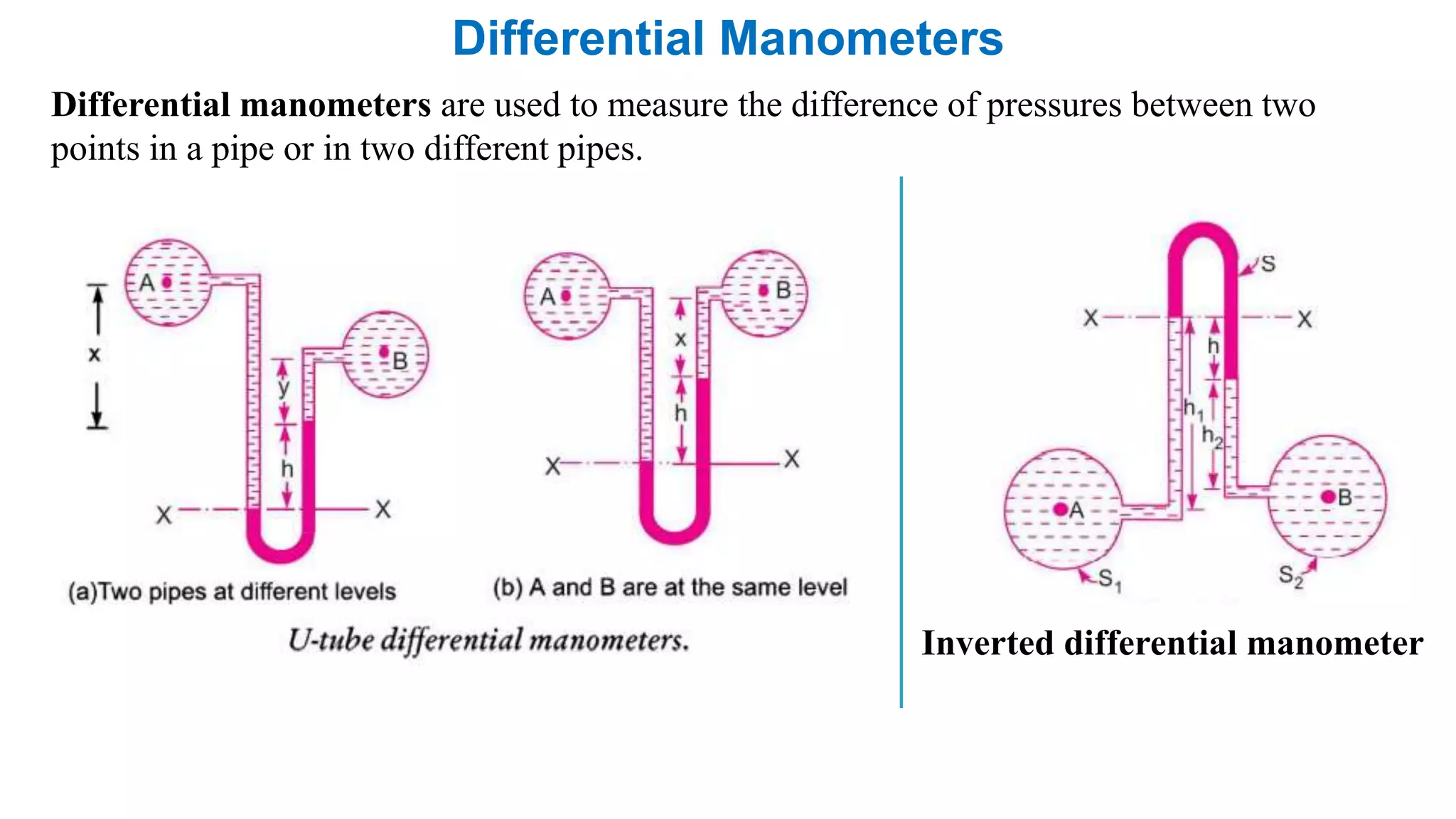
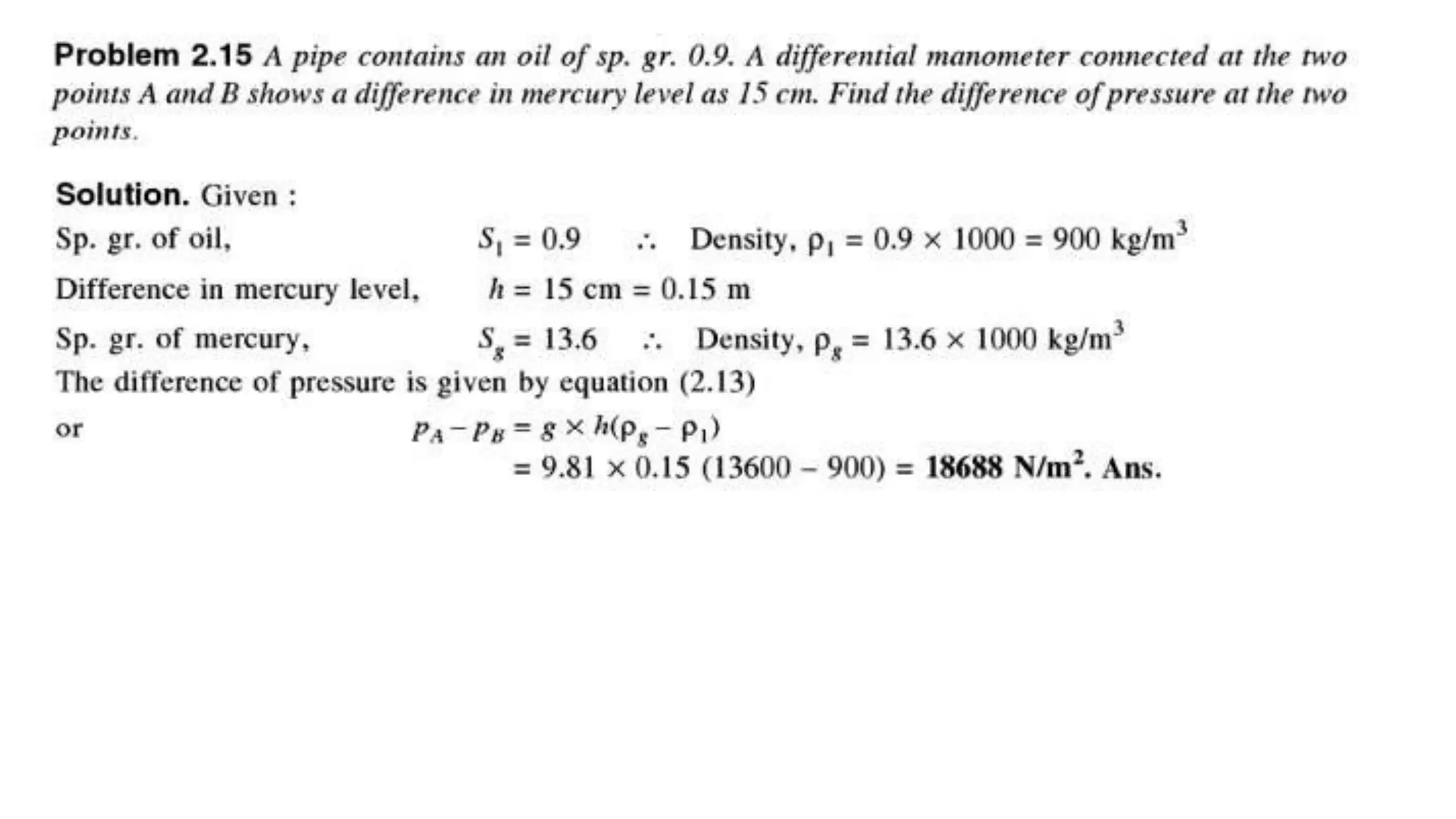
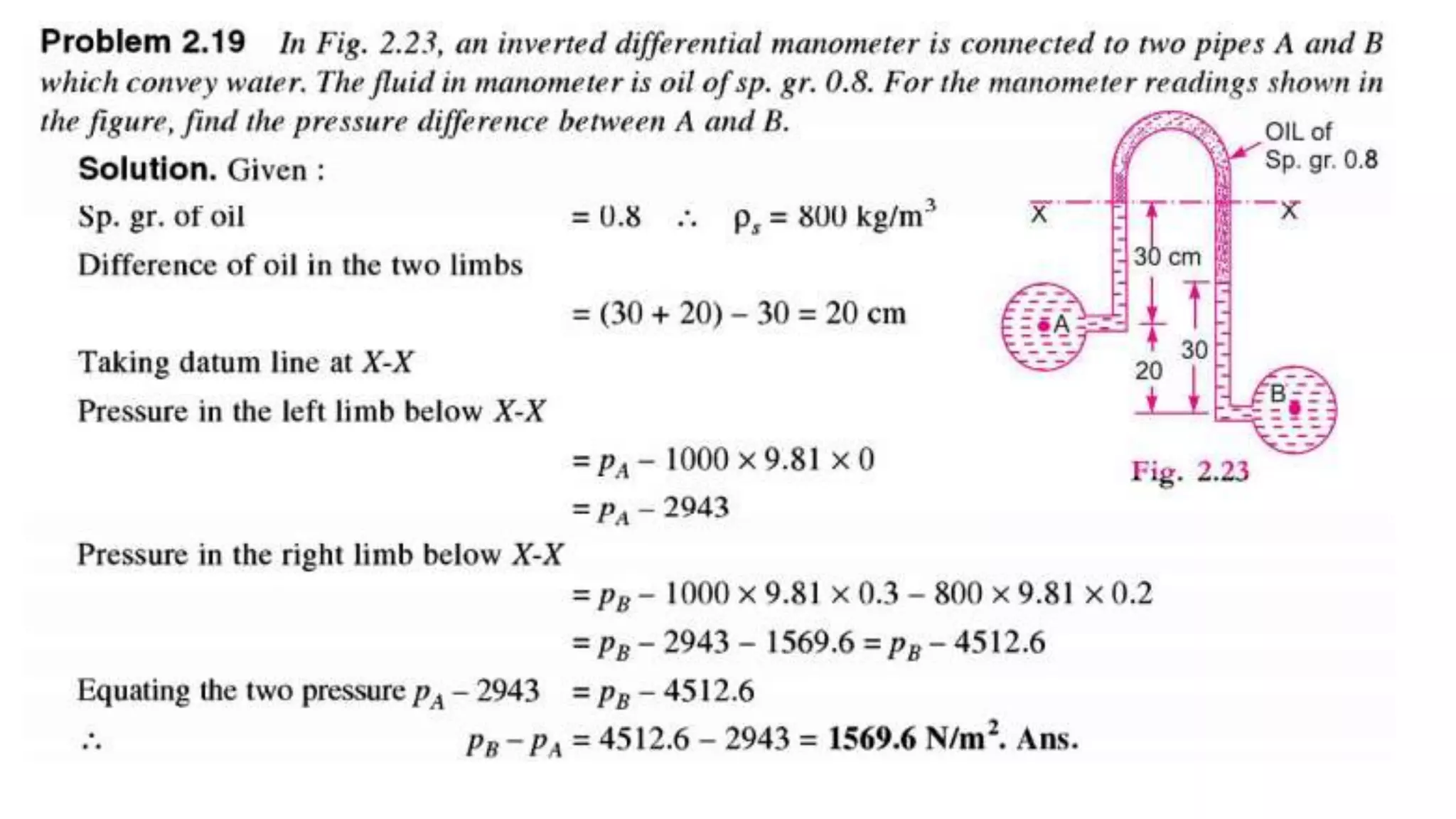
Differential manometers are used to measure the difference of pressures between two
points in a pipe or in two different pipes.
Differential Manometers
Inverted differential manometer
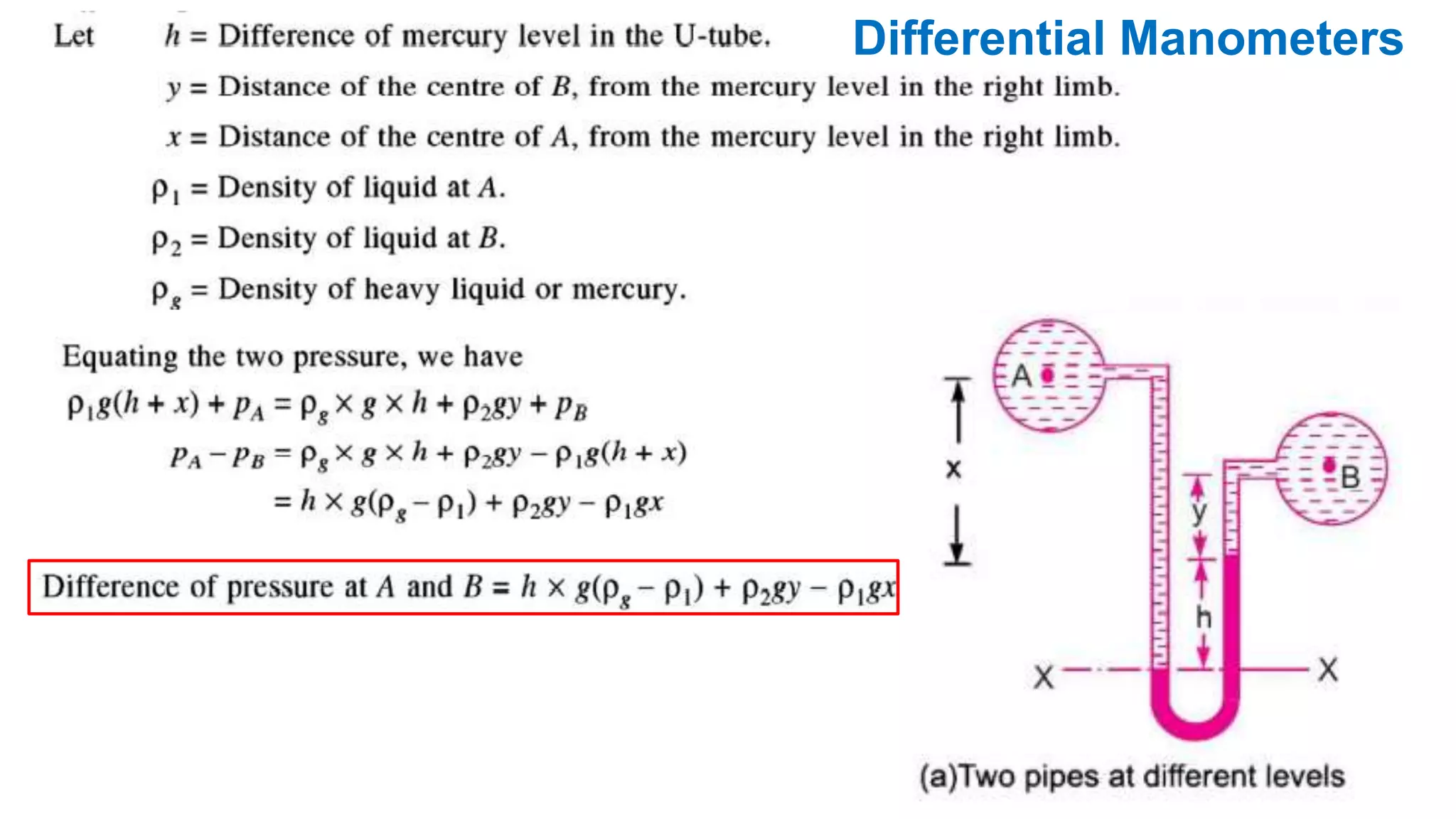
Differential Manometers
Reference
Chapter 1-3
(Page 1- 129)
A Textbook of
Fluid Mechanics and Hydraulic Machines
Dr. R. K. Bansal
Laxmi Publications

Fluid Mechanics - Fluid Pressure and its measurement

  • 1.
    FLUID PRESSURE ANDITS MEASUREMENT (FLUID MECHANICS) UNIT – I Dr. Rambabu Palaka, ProfessorJuly-2020
  • 2.
  • 3.
    Syllabus Unit 1: FluidStatics CO1: Calculate Pressure and Hydrostatic forces on different plane surfaces Unit 2: Fluid Kinematics CO2: Solve the fluid flow problems using Continuity equation. Unit 3: Fluid Dynamics CO3: Calculate the discharges through the Venturi meter, Orifice meter and Pitot tube using Bernoulli’s equation Unit 4: Flow through Pipes CO4: Calculate major and minor losses in closed conduits for different connection pattens. Unit 5: Dimensional Analysis and Hydraulic Similitude CO5: Apply the concept of Dimensional Analysis for solving the fluid flow problems and Model Analysis. Unit 6: Boundary Layer Theory
  • 4.
    Unit 1: FluidStatics 1. Introduction (1 Period) a) Fluid Statics b) Fluid Kinematics c) Fluid Dynamics d) Application of Fluid Mechanics in Civil Engineering 2. Properties of Fluids (3 Periods) a) Density b) Specific Weight c) Specific Volume d) Specific Gravity e) Kinematic and Dynamic Viscosity f) Surface Tension g) Capillarity
  • 5.
    Learning Objectives 3. IntroductionFluid Statics (2 Periods) a). Fluid Pressure b). Pascal’s Law c). Hydrostatics Law c). Pressure variation in a Fluid at Rest 4. Measurement of Pressure (2 Periods) a). Manometers b). Mechanical Gauges 5. Hydrostatic Forces on Surface Submerged in Liquid (2 Periods) a). Vertical Plane Surface b). Horizontal Plane Surface c). Inclined Plane Surface
  • 6.
    Fluid Pressure Hydrostatic pressureis the pressure that is exerted by a fluid at equilibrium at a given point within the fluid, due to the force of gravity. Hydrostatic Law: It states that the intensity of pressure or the rate of increase of pressure in a vertical direction must be equal to the specific weight of fluid at that point. Unit: N/m2 or Pascal Density = Mass/Volume OR Mass = Density x Volume = V
  • 8.
    Pressure variation ina Fluid at Rest
  • 9.
    Types of Pressure 1.Gauge Pressure 2. Vacuum Pressure  Negative Gauge Pressure 3. Atmospheric Pressure  101.325 kPa or 1 bar or 14.696 psi 4. Absolute Pressure: = Gauge Pressure + Atmospheric Pressure OR = Atmospheric Pressure – Vacuum Pressure
  • 11.
    Total Pressure Total Pressureor Absolute Pressure is sum of Atmospheric Pressure and Fluid Pressure Ptotal = Patm + gh Atmospheric Pressure at the surface of the Earth stays relatively constant. The value of the atmospheric pressure at the surface of the Earth, Patm = 1.01x10⁵ Pa
  • 12.
    Measuring of AtmosphericPressure: Atmospheric air pressure is often given in bar or millibars Unit: 1 bar = 101.325 kPa = 1.01x10⁵ Pa = 1013.25 millibar 1 torr = 1mm of mercury column Barometer
  • 15.
    Pascal’s Law Pascal’s lawstates that the intensity of pressure at a point in a static fluid is equal in all the directions (x, y and z directions). OR The intensity of pressure at any point in a liquid at rest is same in all directions. i.e., Px = Py = Pz This can be derived from X = 0 (consider Px and Pz cos) and Y = 0 (consider weight of fluid in addition to Py and Pz sin)
  • 25.
    Measurement of Pressure Thepressure of fluid is measured by the following devices: 1. Manometers – by balancing the column of fluid by the same or another column of the fluid a) Simple Manometers i. Piezometer ii. U-tube Manometer iii. Single Column Manometer a. Vertical Single Column Manometer b. Inclined Single Column Manometer b) Differential Manometers i. U-tube Differential Manometer ii. Inverted U-tube Differential Manometer 2. Mechanical Guages – by balancing the column of fluid by the spring or dead weight a) Diaphragm Pressure Guage b) Bourdon Tube Pressure Guage c) Dead-weight Pressure Guage d) Bellows Pressure Guage
  • 27.
  • 28.
  • 29.
  • 30.
    Single Column Manometer Case1: Small Pressure in Fluid Case 2: Very Small Pressure in Fluid = L sin
  • 32.
    Differential manometers areused to measure the difference of pressures between two points in a pipe or in two different pipes. Differential Manometers Inverted differential manometer
  • 33.
  • 34.
  • 39.
    Reference Chapter 1-3 (Page 1-129) A Textbook of Fluid Mechanics and Hydraulic Machines Dr. R. K. Bansal Laxmi Publications