Introduction to Flood
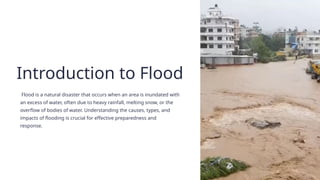
Flood is a natural disaster that occurs when an area is inundated with
an excess of water, often due to heavy rainfall, melting snow, or the
overflow of bodies of water. Understanding the causes, types, and
impacts of flooding is crucial for effective preparedness and
response.
Causes of Flooding
Heavy Rainfall
Intense or prolonged
precipitation can overwhelm
drainage systems and cause
rivers, streams, and lakes to
overflow their banks.
Melting Snow and Ice
Rapid melting of snow and
ice, often due to sudden
temperature changes, can
lead to sudden and
significant water
accumulation.
Dam or Levee Failures
Structural failures in dams,
levees, or other water
control systems can result in
catastrophic flooding in the
surrounding areas.
Types of Floods
1 Riverine Floods
Occur when rivers and streams overflow
their banks due to excessive rainfall or
rapid snowmelt.
2 Coastal Floods
Caused by high tides, storm surges, and
rising sea levels, often affecting low-
lying areas near oceans and large
bodies of water.
3 Flash Floods
Sudden, intense floods that occur
rapidly, typically due to heavy rainfall in
a short period of time.
4 Urban Floods
Occur in developed areas with
inadequate drainage systems, leading to
water accumulation on streets and in
buildings.
Flood Impacts
Damage to Property
Flooding can cause significant damage to
homes, businesses, and infrastructure,
leading to financial losses and disruption.
Threat to Life
Floods can be life-threatening, especially in
the case of flash floods, when people may
become trapped or swept away.
Environmental Damage
Flooding can disrupt ecosystems,
contaminate water supplies, and lead to
the spread of diseases and pests.
Economic Disruption
Floods can cause widespread disruption to
transportation, communication, and other
critical infrastructure, leading to economic
consequences.
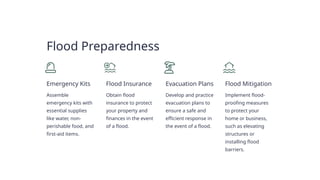
Flood Preparedness
Emergency Kits
Assemble
emergency kits with
essential supplies
like water, non-
perishable food, and
first-aid items.
Flood Insurance
Obtain flood
insurance to protect
your property and
finances in the event
of a flood.
Evacuation Plans
Develop and practice
evacuation plans to
ensure a safe and
efficient response in
the event of a flood.
Flood Mitigation
Implement flood-
proofing measures
to protect your
home or business,
such as elevating
structures or
installing flood
barriers.
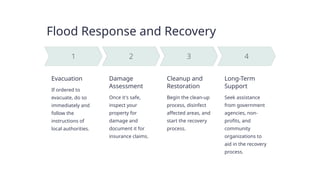
Flood Response and Recovery
Evacuation
If ordered to
evacuate, do so
immediately and
follow the
instructions of
local authorities.
Damage
Assessment
Once it's safe,
inspect your
property for
damage and
document it for
insurance claims.
Cleanup and
Restoration
Begin the clean-up
process, disinfect
affected areas, and
start the recovery
process.
Long-Term
Support
Seek assistance
from government
agencies, non-
profits, and
community
organizations to
aid in the recovery
process.
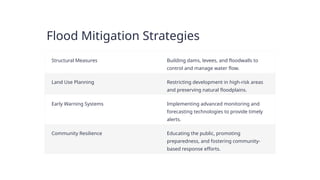
Flood Mitigation Strategies
Structural Measures Building dams, levees, and floodwalls to
control and manage water flow.
Land Use Planning Restricting development in high-risk areas
and preserving natural floodplains.
Early Warning Systems Implementing advanced monitoring and
forecasting technologies to provide timely
alerts.
Community Resilience Educating the public, promoting
preparedness, and fostering community-
based response efforts.
Conclusion and Key Takeaways
1 Understand the Risks
Be aware of the potential causes and
types of floods in your area to better
prepare.
2 Prioritize Preparedness
Take proactive steps to protect your
family, property, and community from
the impacts of flooding.
3 Respond Effectively
Follow emergency instructions,
document damages, and seek support
for long-term recovery.
4 Promote Resilience
Support and participate in community-
based flood mitigation efforts to
enhance overall resilience.
Introduction to Flood (Disaster Preparedness Management)

Introduction to Flood (Disaster Preparedness Management)

  • 2.
    Introduction to Flood Floodis a natural disaster that occurs when an area is inundated with an excess of water, often due to heavy rainfall, melting snow, or the overflow of bodies of water. Understanding the causes, types, and impacts of flooding is crucial for effective preparedness and response.
  • 3.
    Causes of Flooding HeavyRainfall Intense or prolonged precipitation can overwhelm drainage systems and cause rivers, streams, and lakes to overflow their banks. Melting Snow and Ice Rapid melting of snow and ice, often due to sudden temperature changes, can lead to sudden and significant water accumulation. Dam or Levee Failures Structural failures in dams, levees, or other water control systems can result in catastrophic flooding in the surrounding areas.
  • 4.
    Types of Floods 1Riverine Floods Occur when rivers and streams overflow their banks due to excessive rainfall or rapid snowmelt. 2 Coastal Floods Caused by high tides, storm surges, and rising sea levels, often affecting low- lying areas near oceans and large bodies of water. 3 Flash Floods Sudden, intense floods that occur rapidly, typically due to heavy rainfall in a short period of time. 4 Urban Floods Occur in developed areas with inadequate drainage systems, leading to water accumulation on streets and in buildings.
  • 5.
    Flood Impacts Damage toProperty Flooding can cause significant damage to homes, businesses, and infrastructure, leading to financial losses and disruption. Threat to Life Floods can be life-threatening, especially in the case of flash floods, when people may become trapped or swept away. Environmental Damage Flooding can disrupt ecosystems, contaminate water supplies, and lead to the spread of diseases and pests. Economic Disruption Floods can cause widespread disruption to transportation, communication, and other critical infrastructure, leading to economic consequences.
  • 6.
    Flood Preparedness Emergency Kits Assemble emergencykits with essential supplies like water, non- perishable food, and first-aid items. Flood Insurance Obtain flood insurance to protect your property and finances in the event of a flood. Evacuation Plans Develop and practice evacuation plans to ensure a safe and efficient response in the event of a flood. Flood Mitigation Implement flood- proofing measures to protect your home or business, such as elevating structures or installing flood barriers.
  • 7.
    Flood Response andRecovery Evacuation If ordered to evacuate, do so immediately and follow the instructions of local authorities. Damage Assessment Once it's safe, inspect your property for damage and document it for insurance claims. Cleanup and Restoration Begin the clean-up process, disinfect affected areas, and start the recovery process. Long-Term Support Seek assistance from government agencies, non- profits, and community organizations to aid in the recovery process.
  • 8.
    Flood Mitigation Strategies StructuralMeasures Building dams, levees, and floodwalls to control and manage water flow. Land Use Planning Restricting development in high-risk areas and preserving natural floodplains. Early Warning Systems Implementing advanced monitoring and forecasting technologies to provide timely alerts. Community Resilience Educating the public, promoting preparedness, and fostering community- based response efforts.
  • 9.
    Conclusion and KeyTakeaways 1 Understand the Risks Be aware of the potential causes and types of floods in your area to better prepare. 2 Prioritize Preparedness Take proactive steps to protect your family, property, and community from the impacts of flooding. 3 Respond Effectively Follow emergency instructions, document damages, and seek support for long-term recovery. 4 Promote Resilience Support and participate in community- based flood mitigation efforts to enhance overall resilience.