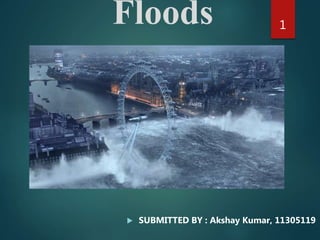
Floods
 SUBMITTED BY : Akshay Kumar, 11305119
1
Over view
 Definitions for disaster and floods
 Objectives
 Types of floods
 Causes of floods
 Floods impacts
 Methodology
2
Disaster
 Disaster is a natural or human ,
caused phenomenon, which causes
serious disruption of the functioning of
a community or a society causing
widespread human, material,
economic and environmental losses
which elicited the ability of the affected
community, society to cope using its
resources.
 Floods are a common feature in the
country that occur every year in many
parts including South India.
3
FLOODS ARE NATURAL PHENOMENA.
FLOODS ARE WATER RELATED DISASTER
FLOODS 4
OBJECTIVE OF STUDY
 To identify the causes of floods
 To describe the overall impact of flooding
5
INTRODUCTION
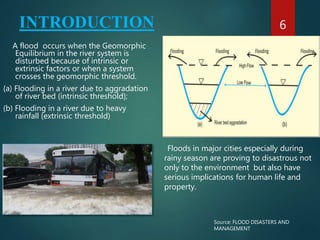
A flood occurs when the Geomorphic
Equilibrium in the river system is
disturbed because of intrinsic or
extrinsic factors or when a system
crosses the geomorphic threshold.
(a) Flooding in a river due to aggradation
of river bed (intrinsic threshold);
(b) Flooding in a river due to heavy
rainfall (extrinsic threshold)
6
Floods in major cities especially during
rainy season are proving to disastrous not
only to the environment but also have
serious implications for human life and
property.
Source: FLOOD DISASTERS AND
MANAGEMENT
TYPES OF FLOODS
 Types of floods
•Flash floods
•River floods
•Coastal Floods
•Urban Flood
 According to their duration flood can be divided into different
•Slow-Onset Floods: Slow Onset Floods usually last for a relatively longer period, it
may last for one or more peeks, or even months.
•Rapid-Onset Floods: Rapid1Onset Floods last for a relatively shorter period, they
usually last for one or two days only.
•Flash Floods: Flash Floods may occur within minutes or a fe1w hours after heavy
rainfall, tropical storm, failure of dams or levees or releases of ice dams. And it
causes the greatest damages to society.
The Deadliest Natural
Disasters ever recorded
 The 1931 China floods or
the 1931 Yellow River
floods were a series of
devastating floods that
occurred in CHINA.
 Estimates of the total death
toll range in between 3.7
million and 4 million.
 China is said to be country
most affected by floods as
per deaths in flood.
8
Causes of floods
FLOODS IMPACTS
 Human Loss
 Property Loss
 Affects the Major Roads
 Disruption of Air / Train / Bus services
 Spread of Water-borne Communicable Diseases
 Communication Breakdown
 Electricity Supply Cut off
 Economic and Social Disruption
 Increase in Air / Water Pollution
11
Flood forecasting
 Anticipating floods before they occur allows for precautions to
be taken and people to be warned so that they can be prepared
in advance for flooding conditions.
 For example,
 Farmers can remove animals from low-lying areas and utility services can
put in place emergency provisions to re-route services if needed. Emergency
services can also make provisions to have enough resources available ahead
of time to respond to emergencies as they occur.
 In order to make the most accurate flood
forecasts for waterways, it is best to have a long time-series of
historical data that relates stream flows to measured past rainfall
events
 Radar estimates of rainfall and general weather
forecasting techniques are also important components of good
flood forecasting.
Flood Control
 In many countries around the world, waterways prone to floods are
often carefully managed. Defences such as levees, bunds, reservoirs,
and weirs are used to prevent waterways from overflowing their banks.
 In the riparian zone near rivers and streams, erosion control measures
can be taken to try and slow down or reverse the natural forces that
cause many waterways to meander over long periods of time.
 Flood controls, such as dams, can be built and maintained over time to
try and reduce the occurrence and severity of floods as well.
Flood benefits
 Floods (in particular more frequent or smaller floods) can also bring
many benefits, such as
 Recharging ground water,
 Making soil more fertile and increasing nutrients in some soils.
 Flood waters provide much needed water resources
in arid and semi-arid regions where precipitation can be very
unevenly distributed throughout the year.
 Freshwater floods particularly play an important role in
maintaining ecosystems in river corridors and are a key factor in
maintaining floodplain biodiversity.
 Flooding can spread nutrients to lakes and rivers, which can lead to
increased biomass and improved fisheries for a few years.
 For some fish species, an inundated floodplain may form a highly
suitable location for spawning with few predators and enhanced
levels of nutrients or food.
Floods in India
 Floods cause damage to houses, industries, public utilities and property
resulting in huge economic losses, apart from loss of lives.
 Though it is not possible to control the flood disaster totally, by adopting
suitable structural and non-structural measures the flood damages can be
minimised.
Parameters Area liable to Floods
(million Ha.)
Total Damage Rs.13,400 million
Area Affected 8.11 million hectare
Crop Area Affected 3.57 million hectare
Human Lives Lost 1579 Nos.
Cattle Lost 95,000 Nos.
NATIONAL PERSPECTIVE
Flood prone zones , areas in
INDIA
17
18

Floods 130611112734-phpapp01

  • 1.
    Floods  SUBMITTED BY: Akshay Kumar, 11305119 1
  • 2.
    Over view  Definitionsfor disaster and floods  Objectives  Types of floods  Causes of floods  Floods impacts  Methodology 2
  • 3.
    Disaster  Disaster isa natural or human , caused phenomenon, which causes serious disruption of the functioning of a community or a society causing widespread human, material, economic and environmental losses which elicited the ability of the affected community, society to cope using its resources.  Floods are a common feature in the country that occur every year in many parts including South India. 3
  • 4.
    FLOODS ARE NATURALPHENOMENA. FLOODS ARE WATER RELATED DISASTER FLOODS 4
  • 5.
    OBJECTIVE OF STUDY To identify the causes of floods  To describe the overall impact of flooding 5
  • 6.
    INTRODUCTION A flood occurswhen the Geomorphic Equilibrium in the river system is disturbed because of intrinsic or extrinsic factors or when a system crosses the geomorphic threshold. (a) Flooding in a river due to aggradation of river bed (intrinsic threshold); (b) Flooding in a river due to heavy rainfall (extrinsic threshold) 6 Floods in major cities especially during rainy season are proving to disastrous not only to the environment but also have serious implications for human life and property. Source: FLOOD DISASTERS AND MANAGEMENT
  • 7.
    TYPES OF FLOODS Types of floods •Flash floods •River floods •Coastal Floods •Urban Flood  According to their duration flood can be divided into different •Slow-Onset Floods: Slow Onset Floods usually last for a relatively longer period, it may last for one or more peeks, or even months. •Rapid-Onset Floods: Rapid1Onset Floods last for a relatively shorter period, they usually last for one or two days only. •Flash Floods: Flash Floods may occur within minutes or a fe1w hours after heavy rainfall, tropical storm, failure of dams or levees or releases of ice dams. And it causes the greatest damages to society.
  • 8.
    The Deadliest Natural Disastersever recorded  The 1931 China floods or the 1931 Yellow River floods were a series of devastating floods that occurred in CHINA.  Estimates of the total death toll range in between 3.7 million and 4 million.  China is said to be country most affected by floods as per deaths in flood. 8
  • 9.
  • 11.
    FLOODS IMPACTS  HumanLoss  Property Loss  Affects the Major Roads  Disruption of Air / Train / Bus services  Spread of Water-borne Communicable Diseases  Communication Breakdown  Electricity Supply Cut off  Economic and Social Disruption  Increase in Air / Water Pollution 11
  • 12.
    Flood forecasting  Anticipatingfloods before they occur allows for precautions to be taken and people to be warned so that they can be prepared in advance for flooding conditions.  For example,  Farmers can remove animals from low-lying areas and utility services can put in place emergency provisions to re-route services if needed. Emergency services can also make provisions to have enough resources available ahead of time to respond to emergencies as they occur.  In order to make the most accurate flood forecasts for waterways, it is best to have a long time-series of historical data that relates stream flows to measured past rainfall events  Radar estimates of rainfall and general weather forecasting techniques are also important components of good flood forecasting.
  • 13.
    Flood Control  Inmany countries around the world, waterways prone to floods are often carefully managed. Defences such as levees, bunds, reservoirs, and weirs are used to prevent waterways from overflowing their banks.  In the riparian zone near rivers and streams, erosion control measures can be taken to try and slow down or reverse the natural forces that cause many waterways to meander over long periods of time.  Flood controls, such as dams, can be built and maintained over time to try and reduce the occurrence and severity of floods as well.
  • 14.
    Flood benefits  Floods(in particular more frequent or smaller floods) can also bring many benefits, such as  Recharging ground water,  Making soil more fertile and increasing nutrients in some soils.  Flood waters provide much needed water resources in arid and semi-arid regions where precipitation can be very unevenly distributed throughout the year.  Freshwater floods particularly play an important role in maintaining ecosystems in river corridors and are a key factor in maintaining floodplain biodiversity.  Flooding can spread nutrients to lakes and rivers, which can lead to increased biomass and improved fisheries for a few years.  For some fish species, an inundated floodplain may form a highly suitable location for spawning with few predators and enhanced levels of nutrients or food.
  • 15.
    Floods in India Floods cause damage to houses, industries, public utilities and property resulting in huge economic losses, apart from loss of lives.  Though it is not possible to control the flood disaster totally, by adopting suitable structural and non-structural measures the flood damages can be minimised. Parameters Area liable to Floods (million Ha.) Total Damage Rs.13,400 million Area Affected 8.11 million hectare Crop Area Affected 3.57 million hectare Human Lives Lost 1579 Nos. Cattle Lost 95,000 Nos. NATIONAL PERSPECTIVE
  • 16.
    Flood prone zones, areas in INDIA
  • 17.
  • 18.