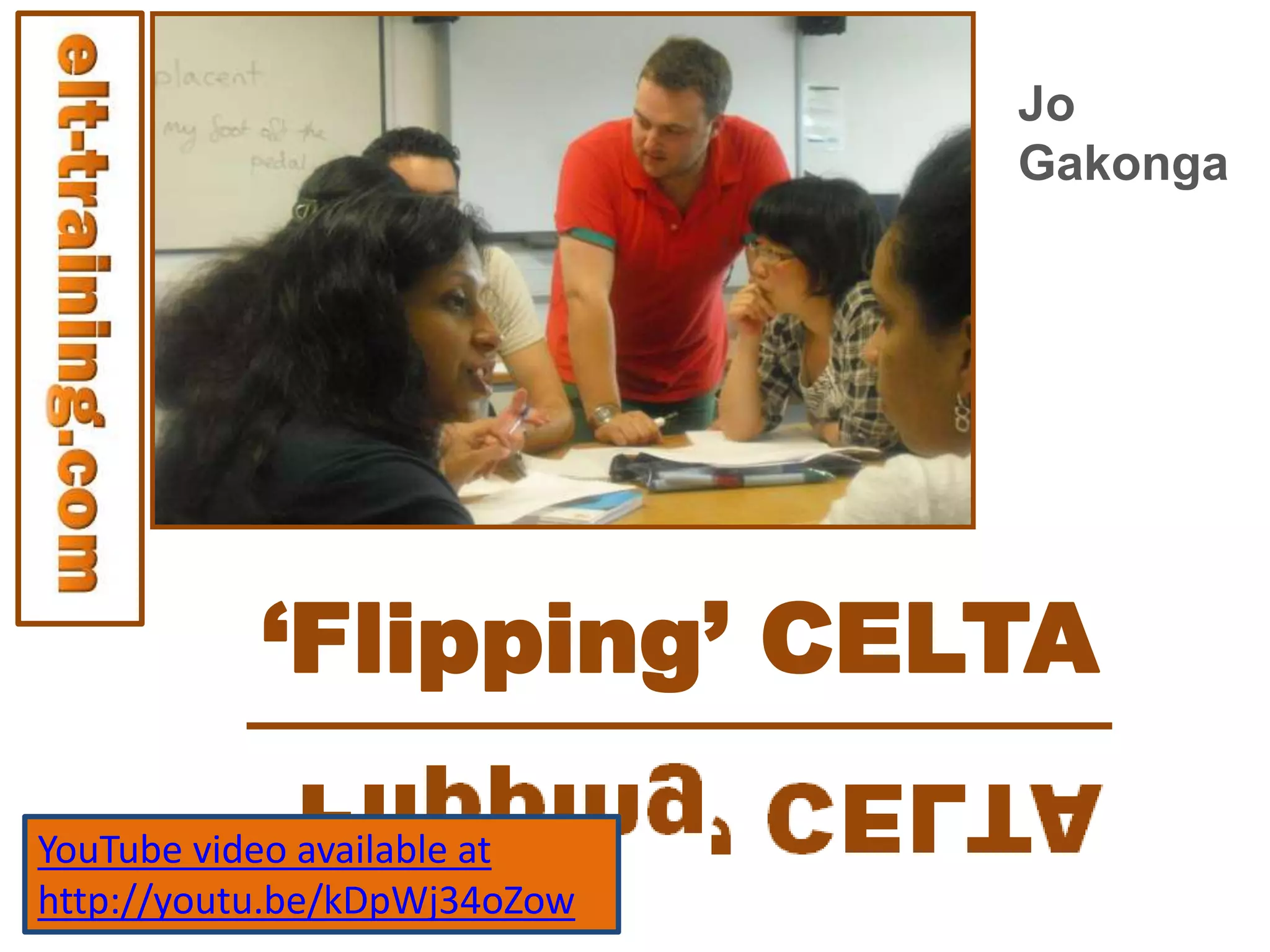
‘Flipping’ CELTA
Jo
Gakonga
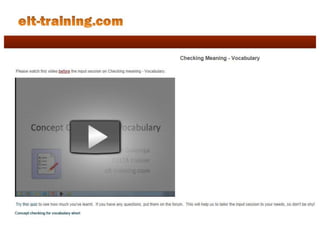
YouTube video available at
http://youtu.be/kDpWj34oZow
What is the
‘flipped’
classroom?
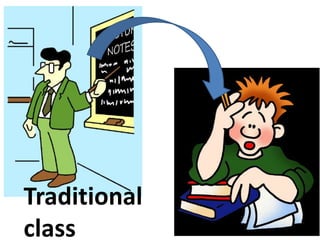
Traditional
class
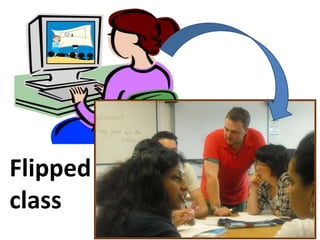
Flipped class
Flipped
class
The theory…..
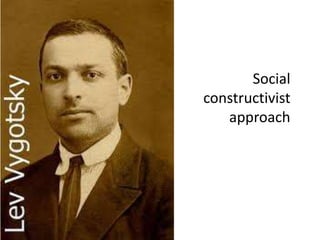
Social
constructivist
approach
Promotes
learner
autonomy
A brief history…..
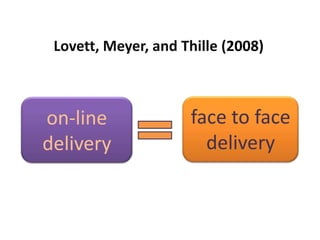
Lovett, Meyer, and Thille (2008)
on-line
delivery
face to face
delivery
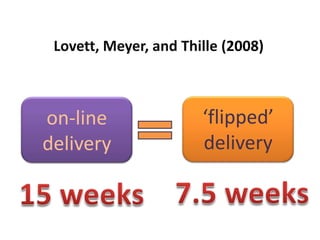
Lovett, Meyer, and Thille (2008)
on-line
delivery
‘flipped’
delivery
Coming to class ready
Bergman and Sams
Salman Khan The Khan Academy
TED.com
What does all this
have to do with
CELTA?…..
Notoriously intensive
Limited time for input
Practical element
often comes before
input
Potential
benefits….
Come to class
‘ready’
‘Frees up’
input time
Preview
and
Revisit
Assignment support
LA assignment
Potential
problems….
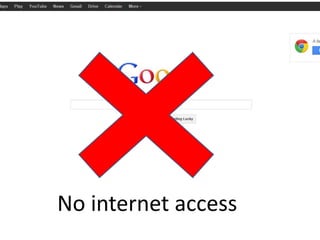
No internet access
They don’t watch the
videos..
More work for tutors…..
The trial….
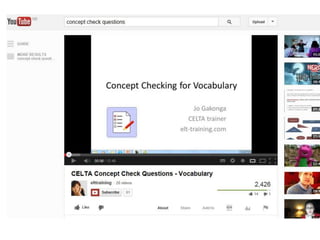
Focus on CCQs and
language analysis
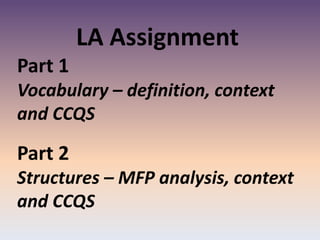
LA Assignment
Part 1
Vocabulary – definition, context
and CCQS
Part 2
Structures – MFP analysis, context
and CCQS
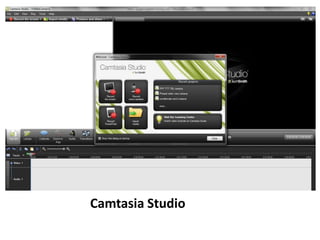
Camtasia Studio
How long?
15 minutes max
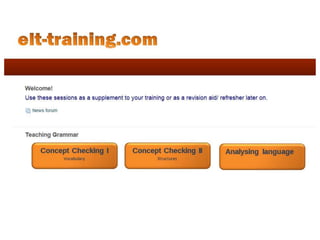
Quizzes
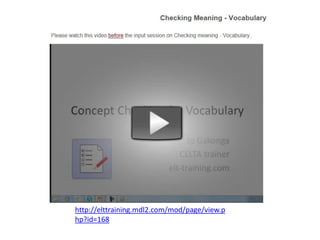
http://elttraining.mdl2.com/mod/page/view.p
hp?id=168
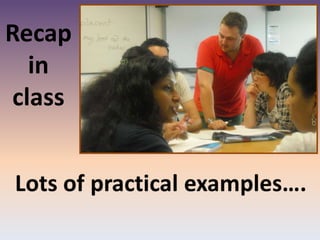
Recap
in
class
The result….
Usually 3 – 4 out of 6 have to
rewrite
This time 6/ 6 in my group did!
So, was this
useless?….
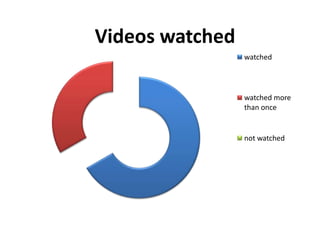
Videos watched
watched
watched more
than once
not watched
It mixes it up a bit from the
rigour/ boredom of books..
..and the content is ’bite-
sized’
‘I found them beneficial as you
can stop & start as you
please….
…...it felt like a 1-2-1 lesson!
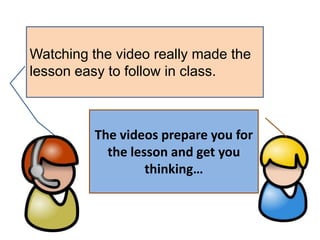
Watching the video really made the
lesson easy to follow in class.
The videos prepare you for
the lesson and get you
thinking…
WOW thank you! I'm just
planning for Day 3 - This
assisted so much as we
have yet to cover this in
training but have been
asked to provide CCQ's in
my lesson - I am forever
in your debt, THANK YOU
THANK YOU THANK YOU!
^-^
Final
thoughts….
Thomas Edison
All materials available free at
www.elt-training.com
(and on YouTube)
Flipping CELTA
Flipping CELTA
Flipping CELTA
Flipping CELTA
Flipping CELTA

Flipping CELTA

Editor's Notes

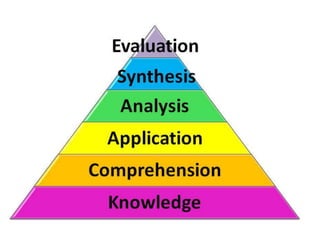
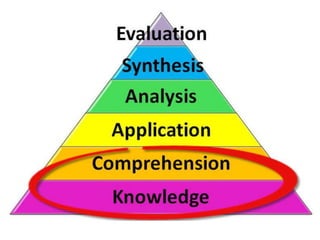
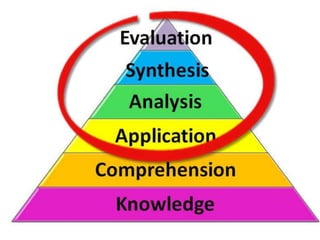
  • #7 In relation to Bloom’s taxonomy (Bloom et al 1956), this allows the class time to be utilised for tasks requiring higher order thinking skills (analysing, evaluation and creation) at a time when the teacher’s help is available.
  • #10 This approach is deeply grounded in social constructivism, Vygotsky contending that education is not imitation, but is the development of higher psychological functions through the use of language to mediate understanding (Vygotsky 1978). Providing opportunities for learners to construct new knowledge and cement understanding of new concepts as they are processed in talk with others is therefore an essential part of learning and is a central tenet of the ‘flipped’ approach.
  • #13  ‘Flipping’ the classroom is an idea rooted in the pedagogy of higher education seminars. Students are given work, typically readings, to do before class and face to face time is spent discussing, debating and critically appraising the material in order to better process and understand it.
  • #14 Introduction of technology has taken it to another level
  • #16 15 weeksone group were taught using only on-line methods and the second were taught using a hybrid methodology, accessing on-line presentations as well as twice weekly 50 minute face to face collaborative sessions, the course being only seven and a half weeks in comparison to the 15 week on-line course. Although both groups of students studied for a similar amount of time per week, the hybrid group did as well or better than their on-line only counterparts, despite the fact that the hybrid group had had only half as much study time, showing a very significant advantage to this form of learning. Additionally, when students were tested six months later, the hybrid group seemed to show better retention of learning
  • #18 . Important pioneers of this movement in the States have been Bergman and Sams (2012) working at Woodland Park High School.
  • #19 Khan’s work in the sphere of maths instruction, now backed by Google and Gates’ Foundation funding has also given the idea both publicity and kudos.
  • #22 The most important input sessions are loaded towards the beginning of the course but with teaching practice being an integral part of the course from the first week, it is inevitable that relevant input lags behind its practical execution by some trainees. This is not necessarily disadvantageous, as trainees often have better schema in input sessions for these particular concepts with some previous experience but feedback at the end of the course often reveals their discomfort at this arrangement.
  • #24 The potential benefits are that the input will be available to the trainees on-line, allowing them to work through the material at their own pace, that the trainees will be able to visit and revisit the input material at any stage in the course, allowing them further opportunities to learn and more support with the assignment. Most importantly, whilst the input sessions currently are quite practical in nature and do include collaborative tasks, removing the presentation aspect of the session will allow more face to face time with a supervising tutor, to practise the new skills. In addition to these points, trainees will have access to important material earlier in the course if they wish to access it. This may be of importance with concept checking and analysing material but will have even further resonance with other sessions such as classroom management, lesson planning, teaching vocabulary or receptive skills.
  • #25 The potential benefits are that the input will be available to the trainees on-line, allowing them to work through the material at their own pace, that the trainees will be able to visit and revisit the input material at any stage in the course, allowing them further opportunities to learn and more support with the assignment. Most importantly, whilst the input sessions currently are quite practical in nature and do include collaborative tasks, removing the presentation aspect of the session will allow more face to face time with a supervising tutor, to practise the new skills. In addition to these points, trainees will have access to important material earlier in the course if they wish to access it. This may be of importance with concept checking and analysing material but will have even further resonance with other sessions such as classroom management, lesson planning, teaching vocabulary or receptive skills.
  • #26 The potential benefits are that the input will be available to the trainees on-line, allowing them to work through the material at their own pace, that the trainees will be able to visit and revisit the input material at any stage in the course, allowing them further opportunities to learn and more support with the assignment. Most importantly, whilst the input sessions currently are quite practical in nature and do include collaborative tasks, removing the presentation aspect of the session will allow more face to face time with a supervising tutor, to practise the new skills. In addition to these points, trainees will have access to important material earlier in the course if they wish to access it. This may be of importance with concept checking and analysing material but will have even further resonance with other sessions such as classroom management, lesson planning, teaching vocabulary or receptive skills.
  • #30 Already stressed and stretched….
  • #31 But once they’re made, they’re reusable and can use mine!
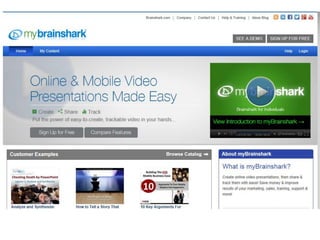
  • #36 How I made the videos – Camtasia but Brainshark or other free screen capture tools could be used.
  • #42 Second trial better but still no better than before
  • #47 I absolutely don’t see this as a replacement for further reading, or even as a comprehensive grammar course – just a help for trainees to get a foot in the door.
  • #48 I absolutely don’t see this as a replacement for further reading, or even as a comprehensive grammar course – just a help for trainees to get a foot in the door.
  • #49 I had people who were novice teachers as well as pre-celta trainees
  • #52  xbns86