Flap classification
Methods of classification
• Composition
  – Skin +/- fascia
  – Muscle (+/- innervation)
  – Bone
  – Omentum / viscera
  – Composite
• Proximity to defect
• Method of movement
• Vascular anatomy
Proximity to defect
•   Local
•   Regional
•   Distant
•   Free
Arterial supply of the skin
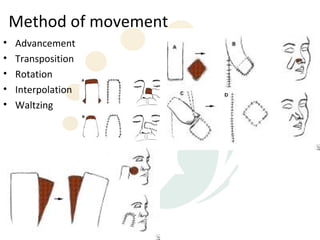
Method of movement
•   Advancement
•   Transposition
•   Rotation
•   Interpolation
•   Waltzing
Fascio/cutaneous flaps
Type A                            Type B                           Type C
Direct cutaneous                  Fasciocutaneous                  Musculocutaneous
pedicle                           pedicle                          pedicle
Deep external pudendal            ALT                              ALT
Digital artery                    Anterior + posterior tibial      Deptopectoral
Dorsal metacarpal                 Deltoid                          Nasolabial
Gluteal                           Dorsalis pedis                   Median forehead
Groin                             Inferior cubital (antecubital)   Thoracoepigastric
Lateral thoracic                  Lateral + medial arm             (transverse abdominal)
Pudendal                          Lateral + medial plantar         Transverse back
Saphenous                         Lateral + medial thigh
Scalp                             Peroneal
Forehead                          Posterior interosseous
Superficial external              Radial + recurrent
pudendal                          Scapular
Superficial inferior epigastric   Ulnar
Sural
Temporoparietal fascia
Musculocutaneous flaps
I One       II Dominant   III Two      IV             V Dominant
vascular    vascular      dominant     Segmental      vascular
pedicle     pedicle +     pedicles     supply         pedicle +
            minor                                     secondary
            pedicle                                   segmental
                                                      pedicles

Colon       Gracilis      Omentum      EDL, EHL,      Fibula
Jejunum     Hamstrings    Gluteus      FDL, FHL       Lat dorsi
                          maximus      Tibialis ant
DCIA        Soleus                                    Pec major
                          Pec minor    Sartorius
Gastrocs    SCM
                          Rectus       External
TFL         Trapezius
Vastus                    Serratus     oblique
                          anterior
lateralis
                          Temporalis

Flap classification

  • 2.
  • 3.
    Methods of classification •Composition – Skin +/- fascia – Muscle (+/- innervation) – Bone – Omentum / viscera – Composite • Proximity to defect • Method of movement • Vascular anatomy
  • 4.
    Proximity to defect • Local • Regional • Distant • Free
  • 5.
  • 6.
    Method of movement • Advancement • Transposition • Rotation • Interpolation • Waltzing
  • 7.
  • 8.
    Type A Type B Type C Direct cutaneous Fasciocutaneous Musculocutaneous pedicle pedicle pedicle Deep external pudendal ALT ALT Digital artery Anterior + posterior tibial Deptopectoral Dorsal metacarpal Deltoid Nasolabial Gluteal Dorsalis pedis Median forehead Groin Inferior cubital (antecubital) Thoracoepigastric Lateral thoracic Lateral + medial arm (transverse abdominal) Pudendal Lateral + medial plantar Transverse back Saphenous Lateral + medial thigh Scalp Peroneal Forehead Posterior interosseous Superficial external Radial + recurrent pudendal Scapular Superficial inferior epigastric Ulnar Sural Temporoparietal fascia
  • 10.
  • 11.
    I One II Dominant III Two IV V Dominant vascular vascular dominant Segmental vascular pedicle pedicle + pedicles supply pedicle + minor secondary pedicle segmental pedicles Colon Gracilis Omentum EDL, EHL, Fibula Jejunum Hamstrings Gluteus FDL, FHL Lat dorsi maximus Tibialis ant DCIA Soleus Pec major Pec minor Sartorius Gastrocs SCM Rectus External TFL Trapezius Vastus Serratus oblique anterior lateralis Temporalis

Editor's Notes

  • #5 Local Flap : When the skin flap is from an area close to the wound, for example, a wound on the lip may be repaired by a flap from the adjacent cheek. Regional Flap : When the skin flap is not from the adjacent area, but is from the same region of the body, for example, a wound on the tip of nose might be repaired with a flap from the forehead. Distant Flap: When a flap is from a different part of the body, for example, a wound on the hand might be repaired with a flap raised in the groin. A local flap repair is usually done in one operation, whereas regional and distant flaps need two or more operations. The second operation is needed to detach one end of the flap at the donor site, when the blood vessels have developed at the other end. Free Flap: This is a distant flap, but the whole procedure is done in one stage by repairing the donor and blood vessels by microsurgery.