ELISA TO Ms.Sannia By Urooj Sabar 4318 5 th  Semester (Morning) Bioinformatics & Biotechnology
Enzyme-Linked Immuno sorbent Assay INTRODUCTION Is a biochemical technique used mainly in  immunology to detect the presence of an antibody or an antigen in a sample. first and most basic test to determine if an individual is positive for a selected pathogen, such as HIV.
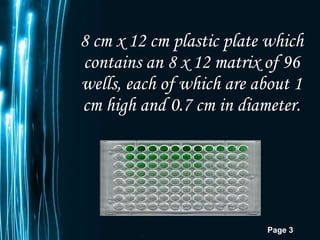
8 cm x 12 cm plastic plate which contains an 8 x 12 matrix of 96 wells, each of which are about 1 cm high and 0.7 cm in diameter.
What To Detect or Measure? ELISA provide a useful measurement of antigen or antibody concentration.  detect the presence of antigens that are recognized by an antibody  test antibodies that recognize an antigen.
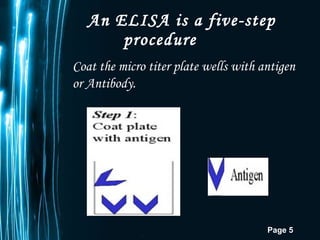
An ELISA is a five-step procedure Coat the micro titer plate wells with antigen or Antibody.
Second step  block all unbound sites to prevent false positive results using the blocking solution.
3 rd  step Add sample to the wells.
add anti-mouse IgG (antibody) conjugated to an enzyme.  enzyme – alkaline phosphatase is used commonly  4 th  step
5 th  step  reaction of a substrate with the enzyme to produce a colored product, thus indicating a positive reaction.
Types Of ELISA Direct ELISA Indirect ELISA Sandwich ELISA Competitive ELISA
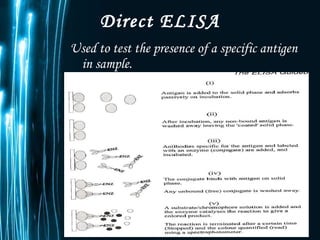
Direct ELISA Used to test the presence of a specific antigen in sample.
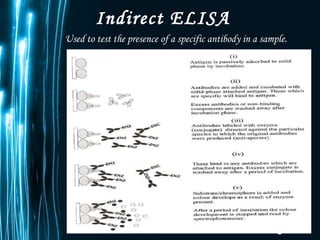
Indirect ELISA Used to test the presence of a specific antibody in a sample.
Direct Sandwich ELISA
Indirect Sandwich ELISA
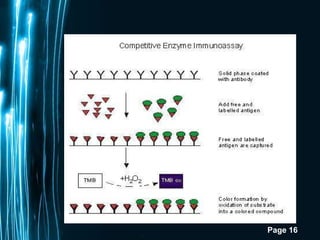
Competitive ELISA The labelled antigen competes for primary antibody binding sites with the sample antigen (unlabeled). The more antigen in the sample, the less labelled antigen is retained in the well and the weaker the signal).
 
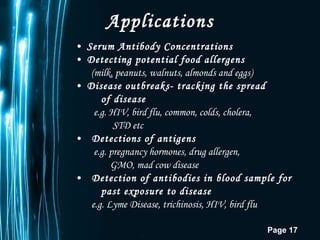
Applications Serum Antibody Concentrations Detecting potential food allergens  (milk, peanuts, walnuts, almonds and eggs) Disease outbreaks- tracking the spread  of disease   e.g. HIV, bird flu, common, colds, cholera,  STD etc Detections of antigens e.g. pregnancy hormones, drug allergen,  GMO, mad cow disease Detection of antibodies in blood sample for  past exposure to disease e.g. Lyme Disease, trichinosis, HIV, bird flu
Any Question?

Elisa

  • 1.
    ELISA TO Ms.SanniaBy Urooj Sabar 4318 5 th Semester (Morning) Bioinformatics & Biotechnology
  • 2.
    Enzyme-Linked Immuno sorbentAssay INTRODUCTION Is a biochemical technique used mainly in immunology to detect the presence of an antibody or an antigen in a sample. first and most basic test to determine if an individual is positive for a selected pathogen, such as HIV.
  • 3.
    8 cm x12 cm plastic plate which contains an 8 x 12 matrix of 96 wells, each of which are about 1 cm high and 0.7 cm in diameter.
  • 4.
    What To Detector Measure? ELISA provide a useful measurement of antigen or antibody concentration. detect the presence of antigens that are recognized by an antibody test antibodies that recognize an antigen.
  • 5.
    An ELISA isa five-step procedure Coat the micro titer plate wells with antigen or Antibody.
  • 6.
    Second step block all unbound sites to prevent false positive results using the blocking solution.
  • 7.
    3 rd step Add sample to the wells.
  • 8.
    add anti-mouse IgG(antibody) conjugated to an enzyme. enzyme – alkaline phosphatase is used commonly 4 th step
  • 9.
    5 th step reaction of a substrate with the enzyme to produce a colored product, thus indicating a positive reaction.
  • 10.
    Types Of ELISADirect ELISA Indirect ELISA Sandwich ELISA Competitive ELISA
  • 11.
    Direct ELISA Usedto test the presence of a specific antigen in sample.
  • 12.
    Indirect ELISA Usedto test the presence of a specific antibody in a sample.
  • 13.
  • 14.
  • 15.
    Competitive ELISA Thelabelled antigen competes for primary antibody binding sites with the sample antigen (unlabeled). The more antigen in the sample, the less labelled antigen is retained in the well and the weaker the signal).
  • 16.
  • 17.
    Applications Serum AntibodyConcentrations Detecting potential food allergens (milk, peanuts, walnuts, almonds and eggs) Disease outbreaks- tracking the spread of disease e.g. HIV, bird flu, common, colds, cholera, STD etc Detections of antigens e.g. pregnancy hormones, drug allergen, GMO, mad cow disease Detection of antibodies in blood sample for past exposure to disease e.g. Lyme Disease, trichinosis, HIV, bird flu
  • 18.