Downloaded 128 times
- 1 / 23

- 2 / 23
 Most read
- 3 / 23
- 4 / 23

- 5 / 23
 Most read
- 6 / 23
 Most read
- 7 / 23
- 8 / 23
- 9 / 23
- 10 / 23
- 11 / 23
- 12 / 23

- 13 / 23

- 14 / 23
- 15 / 23

- 16 / 23

- 17 / 23
- 18 / 23
- 19 / 23
- 20 / 23

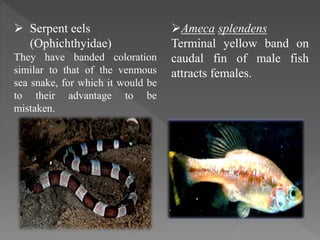


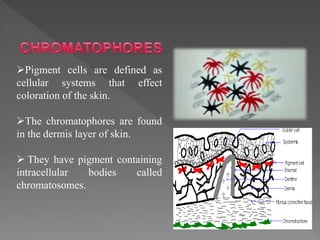
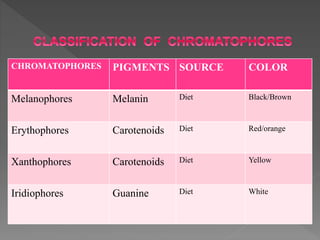
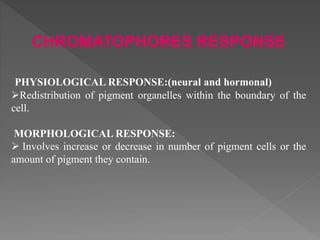
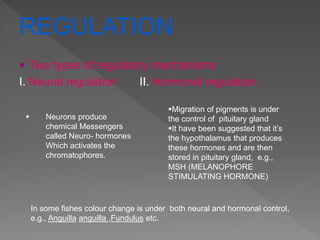
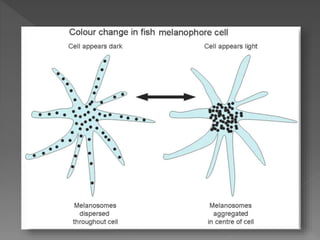
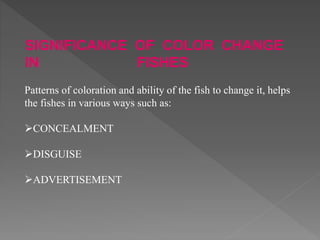
Animal coloration results from the absorption or reflection of light from an animal's surface. In fish, coloration is primarily due to skin pigments in structures called chromatophores. There are four main types of chromatophores that contain different pigments and provide colors like black, brown, red, orange, yellow, and white. Chromatophores can change distribution of pigments within cells in response to neural and hormonal signals as a way for fish to camouflage, communicate, or advertise. Being able to change color allows fish to blend in with backgrounds, disguise their appearance, or reveal traits like warnings or signs of mating.


