Chest Injuries
Dr. Kasongo. J
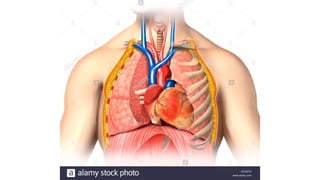
• Chest injuries can be inherently serious, as this area of the body
houses many critical organs, such as the heart, lungs, and great blood
vessels.
• Most chest trauma should receive professional medical attention, and
always consider calling for an ambulance for any potentially serious
chest injury.
• Can either be Open or Closed
Closed Chest Injury
• A common result of trauma to the chest is damage to the victim's rib
cage.
• The curved shape of the rib cage helps to deflect the force of some
injuries, but damage to cartilage or the ribs themselves can still result.
• While a single broken rib can be very painful for the patient, a
number of broken ribs can lead to other complications.
• A victim with broken ribs may take very shallow breaths without even
noticing it, as their body tries to prevent the pain with taking a full
breath
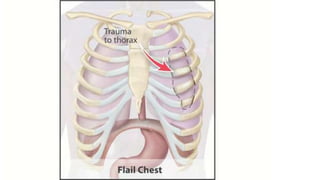
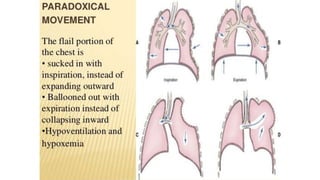
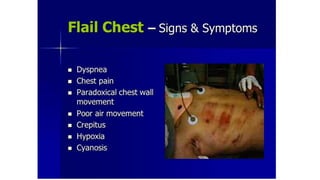
• When many adjoining ribs are broken in different places, a portion of
the rib cage can move in the opposite direction the chest should. This
is known as a "flail" segment, and can make breathing very painful
and less effective
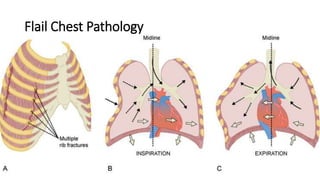
Flail Chest Pathology
Management
• Assess ABCs and intervene as necessary
• Call for an ambulance
• Assist the victim into a position of comfort (typically seated upright,
to avoid fighting gravity)
• Conduct a secondary survey
• Monitor patient's condition carefully
• Be vigilant, keep alert for any changes in condition.
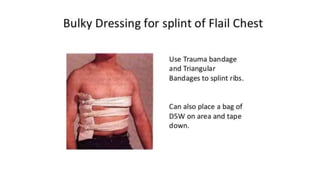
• If a flail segment is suspected, tightly secure a bulky dressing (such as
a tightly folded hand towel or pillow) to help
Open Chest Injuries
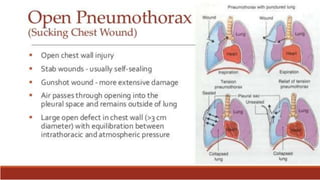
• An open pneumothorax or sucking chest wound: –
• This occurs when the chest wall has been penetrated (by knife, bullet,
falling onto a sharp object
Diagnosis
• An open chest wound – escaping air
• Entrance and possible exit wound (exit wounds are more severe)
• Trouble breathing
• Sucking sound as air passes through opening in chest wall
• Blood or blood-stained bubbles may be expelled with each exhalation
• Coughing up blood
Management
• Assess ABCs and intervene as necessary
• Do not remove any embedded objects
• Call for an ambulance immediately
• Flutter valve over wound, as described below
• Lateral positioning: victim's injured side down
• Treat for shock
• Conduct a secondary survey
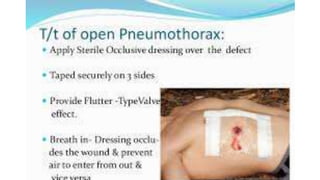
Flutter Valve
• Get some sort of plastic that is bigger than the wound. Ideas: credit
card or similar, Ziploc bag, some first aid kits will have a ready-to-use
valve.
• Tape the plastic patch over the wound on only 3 sides.
• The 4th side is left open, allowing blood to drain and air to escape.
• This opening should be at the bottom (as determined by the victim’s
position).
Chest Injuries.pptx

Chest Injuries.pptx

  • 1.
  • 2.
    • Chest injuriescan be inherently serious, as this area of the body houses many critical organs, such as the heart, lungs, and great blood vessels. • Most chest trauma should receive professional medical attention, and always consider calling for an ambulance for any potentially serious chest injury. • Can either be Open or Closed
  • 5.
    Closed Chest Injury •A common result of trauma to the chest is damage to the victim's rib cage. • The curved shape of the rib cage helps to deflect the force of some injuries, but damage to cartilage or the ribs themselves can still result. • While a single broken rib can be very painful for the patient, a number of broken ribs can lead to other complications. • A victim with broken ribs may take very shallow breaths without even noticing it, as their body tries to prevent the pain with taking a full breath
  • 6.
    • When manyadjoining ribs are broken in different places, a portion of the rib cage can move in the opposite direction the chest should. This is known as a "flail" segment, and can make breathing very painful and less effective
  • 9.
  • 11.
    Management • Assess ABCsand intervene as necessary • Call for an ambulance • Assist the victim into a position of comfort (typically seated upright, to avoid fighting gravity) • Conduct a secondary survey • Monitor patient's condition carefully • Be vigilant, keep alert for any changes in condition. • If a flail segment is suspected, tightly secure a bulky dressing (such as a tightly folded hand towel or pillow) to help
  • 13.
    Open Chest Injuries •An open pneumothorax or sucking chest wound: – • This occurs when the chest wall has been penetrated (by knife, bullet, falling onto a sharp object
  • 14.
    Diagnosis • An openchest wound – escaping air • Entrance and possible exit wound (exit wounds are more severe) • Trouble breathing • Sucking sound as air passes through opening in chest wall • Blood or blood-stained bubbles may be expelled with each exhalation • Coughing up blood
  • 16.
    Management • Assess ABCsand intervene as necessary • Do not remove any embedded objects • Call for an ambulance immediately • Flutter valve over wound, as described below • Lateral positioning: victim's injured side down • Treat for shock • Conduct a secondary survey
  • 17.
    Flutter Valve • Getsome sort of plastic that is bigger than the wound. Ideas: credit card or similar, Ziploc bag, some first aid kits will have a ready-to-use valve. • Tape the plastic patch over the wound on only 3 sides. • The 4th side is left open, allowing blood to drain and air to escape. • This opening should be at the bottom (as determined by the victim’s position).