First Aid at Work   What to do in an emergency
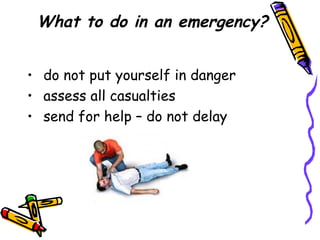
What to do in an emergency? do not put yourself in danger assess all casualties  send for help – do not delay
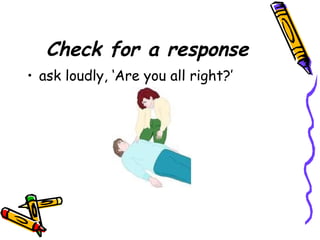
  Check for a response ask loudly, ‘Are you all right?’
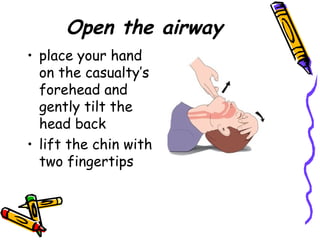
Open the airway place your hand on the casualty’s forehead and gently tilt the head back lift the chin with two fingertips
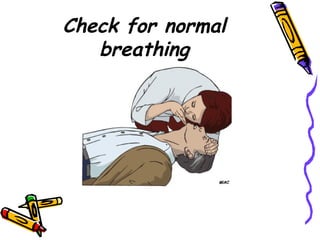
If there is no response check for normal breathing look, listen and feel for normal breathing for no more than 10 seconds look for chest movement listen at the casualty’s mouth for breath sounds feel for air on your cheek
Check for normal breathing
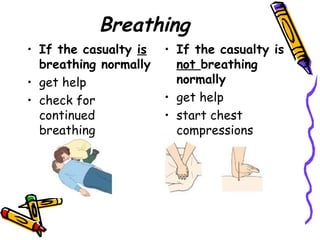
Breathing If the casualty  is  breathing normally get help check for continued breathing If the casualty is  not  breathing normally get help start chest compressions
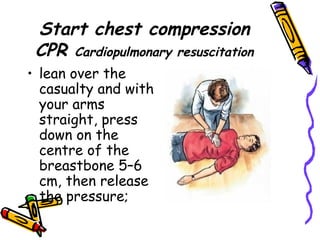
Start chest compression CPR  Cardiopulmonary resuscitation lean over the casualty and with your arms straight, press down on the centre of the breastbone 5–6 cm, then release the pressure;
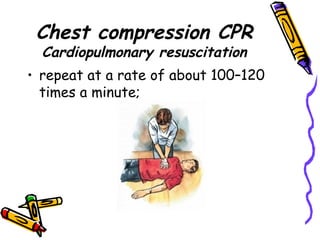
Chest compression CPR  Cardiopulmonary resuscitation repeat at a rate of about 100–120 times a minute;
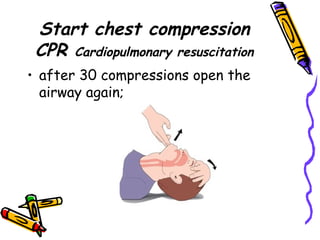
Start chest compression CPR  Cardiopulmonary resuscitation after 30 compressions open the airway again;
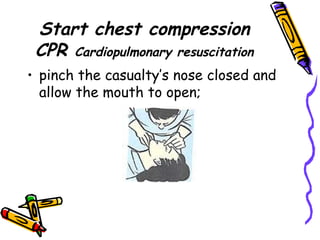
Start chest compression CPR  Cardiopulmonary resuscitation pinch the casualty’s nose closed and allow the mouth to open;
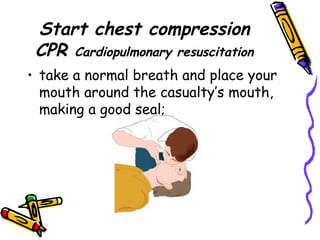
Start chest compression CPR  Cardiopulmonary resuscitation take a normal breath and place your mouth around the casualty’s mouth, making a good seal;
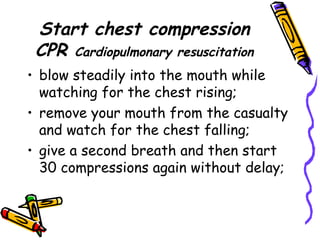
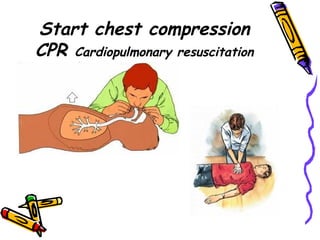
Start chest compression CPR  Cardiopulmonary resuscitation blow steadily into the mouth while watching for the chest rising; remove your mouth from the casualty and watch for the chest falling; give a second breath and then start 30 compressions again without delay;
Start chest compression CPR  Cardiopulmonary resuscitation
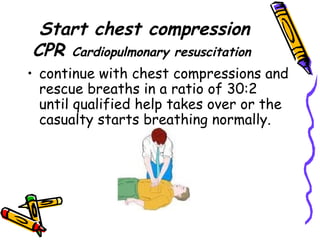
Start chest compression CPR  Cardiopulmonary resuscitation   continue with chest compressions and rescue breaths in a ratio of 30:2 until qualified help takes over or the casualty starts breathing normally.
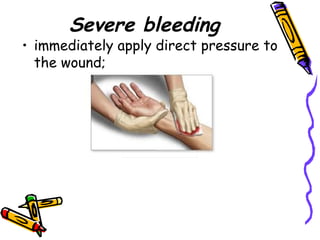
Severe bleeding immediately apply direct pressure to the wound;
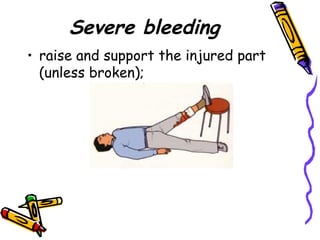
Severe bleeding raise and support the injured part (unless broken);
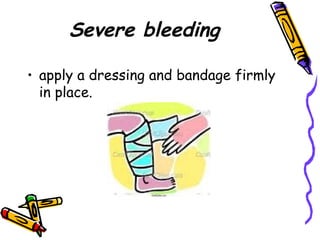
Severe bleeding apply a dressing and bandage firmly in place.
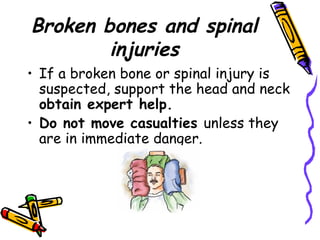
Broken bones and spinal injuries If a broken bone or spinal injury is suspected, support the head and neck  obtain expert help.  Do not move casualties  unless they are in immediate danger.
Burns Burns can be serious so if in doubt, seek medical help.
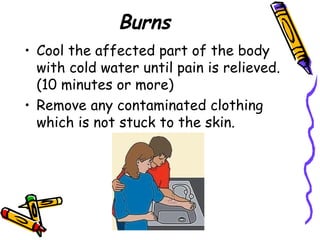
Burns Cool the affected part of the body with cold water until pain is relieved. (10 minutes or more) Remove any contaminated clothing which is not stuck to the skin.
Burns Take the casualty to hospital without delay.
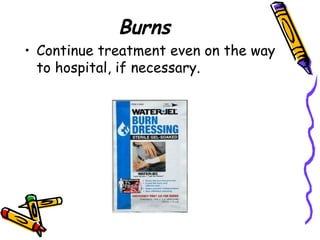
Burns Continue treatment even on the way to hospital, if necessary.
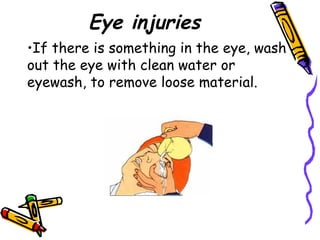
Eye injuries If there is something in the eye, wash out the eye with clean water or eyewash, to remove loose material.
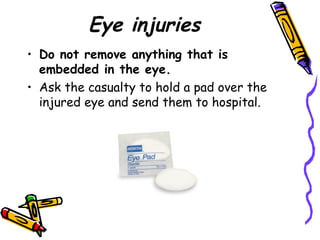
Eye injuries Do not remove anything that is embedded in the eye. Ask the casualty to hold a pad over the injured eye and send them to hospital.
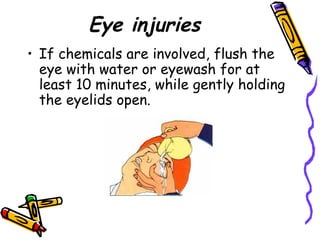
Eye injuries If chemicals are involved, flush the eye with water or eyewash for at least 10 minutes, while gently holding the eyelids open.

First aid at work

  • 1.
    First Aid atWork What to do in an emergency
  • 2.
    What to doin an emergency? do not put yourself in danger assess all casualties send for help – do not delay
  • 3.
    Checkfor a response ask loudly, ‘Are you all right?’
  • 4.
    Open the airwayplace your hand on the casualty’s forehead and gently tilt the head back lift the chin with two fingertips
  • 5.
    If there isno response check for normal breathing look, listen and feel for normal breathing for no more than 10 seconds look for chest movement listen at the casualty’s mouth for breath sounds feel for air on your cheek
  • 6.
  • 7.
    Breathing If thecasualty is breathing normally get help check for continued breathing If the casualty is not breathing normally get help start chest compressions
  • 8.
    Start chest compressionCPR Cardiopulmonary resuscitation lean over the casualty and with your arms straight, press down on the centre of the breastbone 5–6 cm, then release the pressure;
  • 9.
    Chest compression CPR Cardiopulmonary resuscitation repeat at a rate of about 100–120 times a minute;
  • 10.
    Start chest compressionCPR Cardiopulmonary resuscitation after 30 compressions open the airway again;
  • 11.
    Start chest compressionCPR Cardiopulmonary resuscitation pinch the casualty’s nose closed and allow the mouth to open;
  • 12.
    Start chest compressionCPR Cardiopulmonary resuscitation take a normal breath and place your mouth around the casualty’s mouth, making a good seal;
  • 13.
    Start chest compressionCPR Cardiopulmonary resuscitation blow steadily into the mouth while watching for the chest rising; remove your mouth from the casualty and watch for the chest falling; give a second breath and then start 30 compressions again without delay;
  • 14.
    Start chest compressionCPR Cardiopulmonary resuscitation
  • 15.
    Start chest compressionCPR Cardiopulmonary resuscitation continue with chest compressions and rescue breaths in a ratio of 30:2 until qualified help takes over or the casualty starts breathing normally.
  • 16.
    Severe bleeding immediatelyapply direct pressure to the wound;
  • 17.
    Severe bleeding raiseand support the injured part (unless broken);
  • 18.
    Severe bleeding applya dressing and bandage firmly in place.
  • 19.
    Broken bones andspinal injuries If a broken bone or spinal injury is suspected, support the head and neck obtain expert help. Do not move casualties unless they are in immediate danger.
  • 20.
    Burns Burns canbe serious so if in doubt, seek medical help.
  • 21.
    Burns Cool theaffected part of the body with cold water until pain is relieved. (10 minutes or more) Remove any contaminated clothing which is not stuck to the skin.
  • 22.
    Burns Take thecasualty to hospital without delay.
  • 23.
    Burns Continue treatmenteven on the way to hospital, if necessary.
  • 24.
    Eye injuries Ifthere is something in the eye, wash out the eye with clean water or eyewash, to remove loose material.
  • 25.
    Eye injuries Donot remove anything that is embedded in the eye. Ask the casualty to hold a pad over the injured eye and send them to hospital.
  • 26.
    Eye injuries Ifchemicals are involved, flush the eye with water or eyewash for at least 10 minutes, while gently holding the eyelids open.