Personal  Protective  Equipment -  What’s it all about? Written by: Gene Herbest Made available by www.nationalsafetyinc.com
REFERENCES AR 385 Series AR 11-34 TB Med Series DA Pam 385-1 29 CFR 1910 ANSI Z41-1991
Personal Protective Equipment Definition:  Devices used to protect workers from injury or illness resulting from contact with chemical , radiological, physical, electrical, mechanical, or other workplace hazards (AR 385 Series & OSHA) The need for PPE and the type of PPE used is based on hazard present; each situation “ must be”  evaluated independently (Risk Assessment)
Some Caveats PPE is used as a last resort The use of PPE signifies that the hazard could not be controlled by other methods, such as: administrative controls (i.e., shift rotation) engineering or industrial hygiene controls
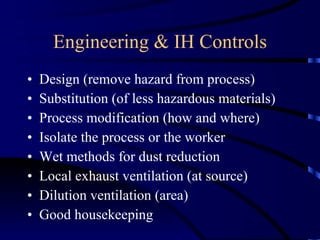
Engineering & IH Controls Design (remove hazard from process) Substitution (of less hazardous materials) Process modification (how and where) Isolate the process or the worker Wet methods for dust reduction Local exhaust ventilation (at source) Dilution ventilation (area) Good housekeeping
Back to the caveats... The use of PPE signals that the hazard still exists in the workplace Unprotected workers in the same area will be exposed Failure of PPE means that the worker “ will be”  exposed PPE can be combined with other controls
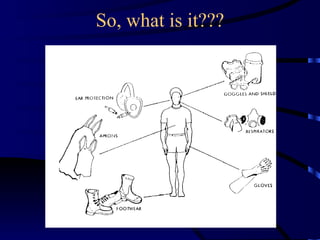
So, what is it???
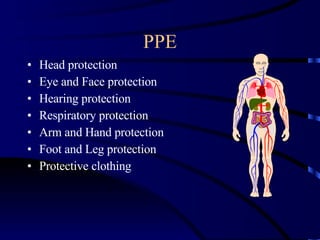
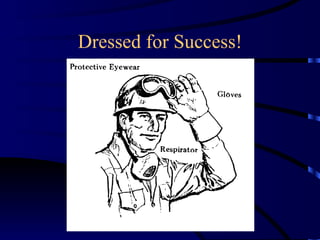
PPE Head protection Eye and Face protection Hearing protection Respiratory protection Arm and Hand protection Foot and Leg protection Protective clothing
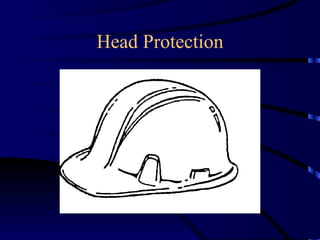
Head Protection
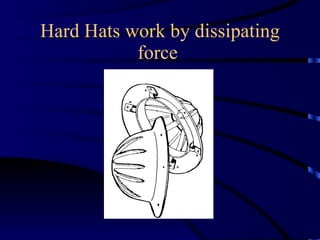
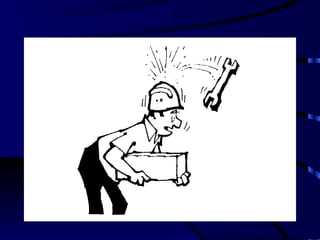
Hard Hats work by dissipating force
 
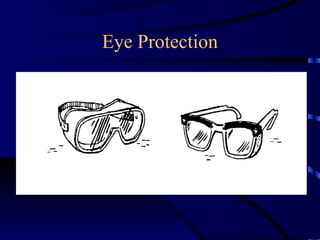
Eye Protection
Eye Protection Common Uses: Impact Protection Grinding Drilling Chemical Hazards Parts washer Spray Painting Radiation Protection welder’s goggles laser goggles UV Infrared
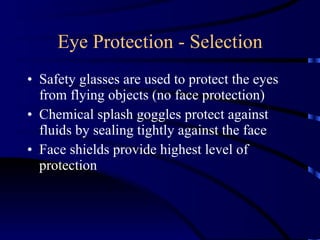
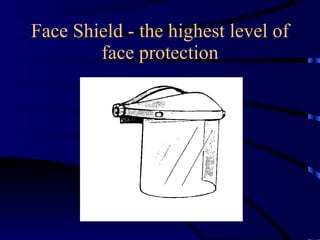
Eye Protection - Selection Safety glasses are used to protect the eyes from flying objects (no face protection) Chemical splash goggles protect against fluids by sealing tightly against the face Face shields provide highest level of protection
Face Shield - the highest level of face protection
Hearing Protection
Hearing Protection Basics Noise induced hearing loss can occur with exposures >90 dBA A hearing conservation program becomes a requirement at exposures >85dBA Higher levels of noise exposure have shorter allowable exposure times
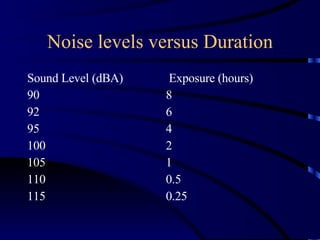
Noise levels versus Duration Sound Level (dBA) 90 92 95 100 105  110 115 Exposure (hours) 8 6 4 2 1 0.5 0.25
Hearing Protection Rule of Thumb - if you cannot carry on a conversation in a normal tone of voice with someone at arm’s length, you are likely near 90dBA All hearing protection devices should have a Noise Reduction Rating (NRR) = # of decibels they will reduce noise levels Be conservative when using NRRs
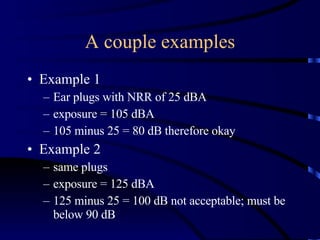
A couple examples Example 1 Ear plugs with NRR of 25 dBA exposure = 105 dBA 105 minus 25 = 80 dB therefore okay Example 2 same plugs exposure = 125 dBA 125 minus 25 = 100 dB not acceptable; must be below 90 dB
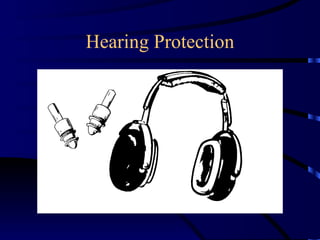
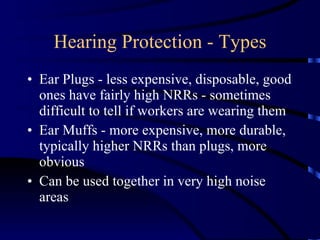
Hearing Protection - Types Ear Plugs - less expensive, disposable, good ones have fairly high NRRs - sometimes difficult to tell if workers are wearing them Ear Muffs - more expensive, more durable, typically higher NRRs than plugs, more obvious Can be used together in very high noise areas
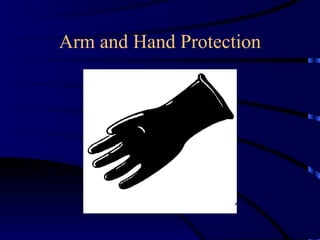
Arm and Hand Protection
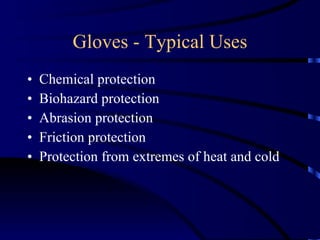
Gloves - Typical Uses Chemical protection Biohazard protection Abrasion protection Friction protection Protection from extremes of heat and cold
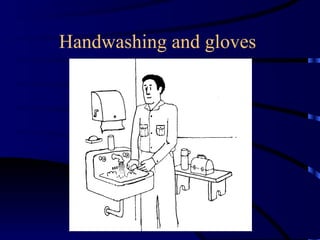
Gloves - more caveats No glove is good against all hazards Gloves have a finite lifespan and must be periodically replaced When donning gloves, examine them for signs of tears, cracks, holes and dry rot Hands should always be washed after removing gloves
Handwashing and gloves
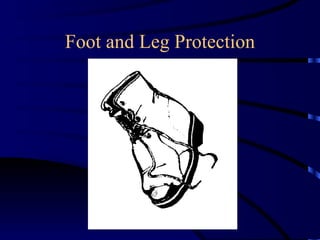
Foot and Leg Protection
Protective Footwear Steel-toed footwear, preferably with metatarsal guards, is used to protect feet from crushing injuries caused by heavy objects  All safety footwear shall comply with ANSI Z41-1991  Rubber boots are often used to protect feet from exposure to liquids Chaps or leggings are used in certain applications (i.e., using a chainsaw)
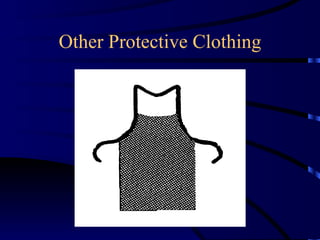
Other Protective Clothing
Other Protective Clothing Used to protect the work uniform from hazards in the workplace Often hazard specific To be considered effective, protective clothing must prevent the contaminant from reaching the clothing or skin of the worker!
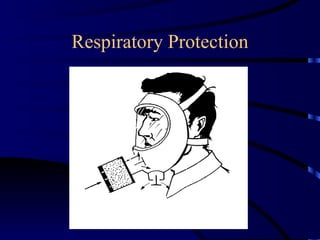
Respiratory Protection
Respiratory Protection Protects users by removing harmful materials that may enter the body via the lungs Inhalation is one of the quickest, most efficient ways to introduce “lethal” levels of hazardous materials into the body
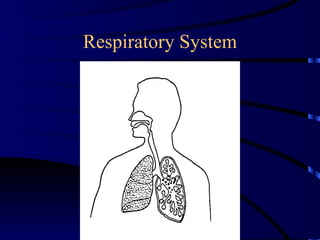
Respiratory System
Respirators - types Air Purifying Respirators (APR) Half-face Full Face Powered Air Purifying Respirators (PAPR) Self Contained Breathing Apparatus (SCBA)
Respirators Does not include: surgical masks dust masks N-95 respirators are a special class of respiratory protection primarily used in the health care field
Respirators - A Big Caveat!!! workers “should not” wear a respirator unless they have been medically cleared to do so! This clearance may take the form of a questionnaire, physical examination, pulmonary function testing, chest X-Ray, or a combination of the above
Why? Respirators put additional resistance against the respiratory system of the wearer workers with undiagnosed respiratory system or cardiovascular problems could trigger a serious medical problem (respiratory distress, asthma, heart attack, etc.) by using a respirator
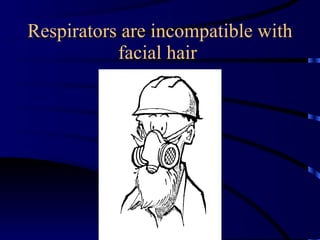
Respirators are incompatible with facial hair
Facial hair… The respirator cannot form a tight seal against the cheeks and chin, resulting in air leaks which can allow airborne contaminants to be inhaled Specially designed PAPR hoods can be used for workers with facial hair  small amounts of facial hair that fit inside of the respirator facepiece are acceptable
PPE Usage PPE that is required to safely conduct work should be purchased/ordered by the work section and/or unit Employers are responsible for ensuring that PPE is “ available and worn” workers  “are”  responsible for wearing & maintaining PPE, and reporting worn or defective PPE to their Employer
Recap PPE is hazard specific; the hazards of each workplace and task “ must be”  evaluated (risk assessment) PPE is used as a last resort when the hazard cannot be controlled by other methods Employers  “are”  responsible to ensure it is available and worn; workers must wear and maintain their PPE
Recap PPE is only considered effective if it prevents the contaminant from reaching the worker Respirators should not be worn by workers unless they have been medically cleared to do so
Dressed for Success!
For additional information on PPE... Contact your Employer Or contact National Safety, Inc. directly
FOOD FOR THOUGHT Asking me to overlook a simple safety violation would be asking me to compromise my entire attitude toward the value of “ your”  life!
QUESTIONS?

Ppe Training

  • 1.
    Personal Protective Equipment - What’s it all about? Written by: Gene Herbest Made available by www.nationalsafetyinc.com
  • 2.
    REFERENCES AR 385Series AR 11-34 TB Med Series DA Pam 385-1 29 CFR 1910 ANSI Z41-1991
  • 3.
    Personal Protective EquipmentDefinition: Devices used to protect workers from injury or illness resulting from contact with chemical , radiological, physical, electrical, mechanical, or other workplace hazards (AR 385 Series & OSHA) The need for PPE and the type of PPE used is based on hazard present; each situation “ must be” evaluated independently (Risk Assessment)
  • 4.
    Some Caveats PPEis used as a last resort The use of PPE signifies that the hazard could not be controlled by other methods, such as: administrative controls (i.e., shift rotation) engineering or industrial hygiene controls
  • 5.
    Engineering & IHControls Design (remove hazard from process) Substitution (of less hazardous materials) Process modification (how and where) Isolate the process or the worker Wet methods for dust reduction Local exhaust ventilation (at source) Dilution ventilation (area) Good housekeeping
  • 6.
    Back to thecaveats... The use of PPE signals that the hazard still exists in the workplace Unprotected workers in the same area will be exposed Failure of PPE means that the worker “ will be” exposed PPE can be combined with other controls
  • 7.
  • 8.
    PPE Head protectionEye and Face protection Hearing protection Respiratory protection Arm and Hand protection Foot and Leg protection Protective clothing
  • 9.
  • 10.
    Hard Hats workby dissipating force
  • 11.
  • 12.
  • 13.
    Eye Protection CommonUses: Impact Protection Grinding Drilling Chemical Hazards Parts washer Spray Painting Radiation Protection welder’s goggles laser goggles UV Infrared
  • 14.
    Eye Protection -Selection Safety glasses are used to protect the eyes from flying objects (no face protection) Chemical splash goggles protect against fluids by sealing tightly against the face Face shields provide highest level of protection
  • 15.
    Face Shield -the highest level of face protection
  • 16.
  • 17.
    Hearing Protection BasicsNoise induced hearing loss can occur with exposures >90 dBA A hearing conservation program becomes a requirement at exposures >85dBA Higher levels of noise exposure have shorter allowable exposure times
  • 18.
    Noise levels versusDuration Sound Level (dBA) 90 92 95 100 105 110 115 Exposure (hours) 8 6 4 2 1 0.5 0.25
  • 19.
    Hearing Protection Ruleof Thumb - if you cannot carry on a conversation in a normal tone of voice with someone at arm’s length, you are likely near 90dBA All hearing protection devices should have a Noise Reduction Rating (NRR) = # of decibels they will reduce noise levels Be conservative when using NRRs
  • 20.
    A couple examplesExample 1 Ear plugs with NRR of 25 dBA exposure = 105 dBA 105 minus 25 = 80 dB therefore okay Example 2 same plugs exposure = 125 dBA 125 minus 25 = 100 dB not acceptable; must be below 90 dB
  • 21.
    Hearing Protection -Types Ear Plugs - less expensive, disposable, good ones have fairly high NRRs - sometimes difficult to tell if workers are wearing them Ear Muffs - more expensive, more durable, typically higher NRRs than plugs, more obvious Can be used together in very high noise areas
  • 22.
    Arm and HandProtection
  • 23.
    Gloves - TypicalUses Chemical protection Biohazard protection Abrasion protection Friction protection Protection from extremes of heat and cold
  • 24.
    Gloves - morecaveats No glove is good against all hazards Gloves have a finite lifespan and must be periodically replaced When donning gloves, examine them for signs of tears, cracks, holes and dry rot Hands should always be washed after removing gloves
  • 25.
  • 26.
    Foot and LegProtection
  • 27.
    Protective Footwear Steel-toedfootwear, preferably with metatarsal guards, is used to protect feet from crushing injuries caused by heavy objects All safety footwear shall comply with ANSI Z41-1991 Rubber boots are often used to protect feet from exposure to liquids Chaps or leggings are used in certain applications (i.e., using a chainsaw)
  • 28.
  • 29.
    Other Protective ClothingUsed to protect the work uniform from hazards in the workplace Often hazard specific To be considered effective, protective clothing must prevent the contaminant from reaching the clothing or skin of the worker!
  • 30.
  • 31.
    Respiratory Protection Protectsusers by removing harmful materials that may enter the body via the lungs Inhalation is one of the quickest, most efficient ways to introduce “lethal” levels of hazardous materials into the body
  • 32.
  • 33.
    Respirators - typesAir Purifying Respirators (APR) Half-face Full Face Powered Air Purifying Respirators (PAPR) Self Contained Breathing Apparatus (SCBA)
  • 34.
    Respirators Does notinclude: surgical masks dust masks N-95 respirators are a special class of respiratory protection primarily used in the health care field
  • 35.
    Respirators - ABig Caveat!!! workers “should not” wear a respirator unless they have been medically cleared to do so! This clearance may take the form of a questionnaire, physical examination, pulmonary function testing, chest X-Ray, or a combination of the above
  • 36.
    Why? Respirators putadditional resistance against the respiratory system of the wearer workers with undiagnosed respiratory system or cardiovascular problems could trigger a serious medical problem (respiratory distress, asthma, heart attack, etc.) by using a respirator
  • 37.
  • 38.
    Facial hair… Therespirator cannot form a tight seal against the cheeks and chin, resulting in air leaks which can allow airborne contaminants to be inhaled Specially designed PAPR hoods can be used for workers with facial hair small amounts of facial hair that fit inside of the respirator facepiece are acceptable
  • 39.
    PPE Usage PPEthat is required to safely conduct work should be purchased/ordered by the work section and/or unit Employers are responsible for ensuring that PPE is “ available and worn” workers “are” responsible for wearing & maintaining PPE, and reporting worn or defective PPE to their Employer
  • 40.
    Recap PPE ishazard specific; the hazards of each workplace and task “ must be” evaluated (risk assessment) PPE is used as a last resort when the hazard cannot be controlled by other methods Employers “are” responsible to ensure it is available and worn; workers must wear and maintain their PPE
  • 41.
    Recap PPE isonly considered effective if it prevents the contaminant from reaching the worker Respirators should not be worn by workers unless they have been medically cleared to do so
  • 42.
  • 43.
    For additional informationon PPE... Contact your Employer Or contact National Safety, Inc. directly
  • 44.
    FOOD FOR THOUGHTAsking me to overlook a simple safety violation would be asking me to compromise my entire attitude toward the value of “ your” life!
  • 45.