
Presentation On
Fire Resistant Fabric
Md Mohayminul Islam
ID: 12132107058
Department Of Textile Engineering
Bangladesh University Of business And Technology(BUBT)
Definition:
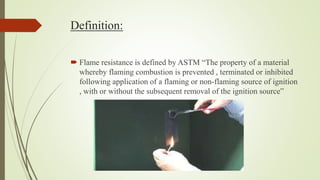
 Flame resistance is defined by ASTM “The property of a material
whereby flaming combustion is prevented , terminated or inhibited
following application of a flaming or non-flaming source of ignition
, with or without the subsequent removal of the ignition source”
Differences among general cloth and fire
resistant cloth:
 These materials are made flame-resistant by the application of flame-retardant
chemicals. A chemical additive in the fiber or treatment on the fabric is used to
provide some level of flame retardancy. During a fire, chemically dependent fabrics
rely on a chemical reaction to extinguish the flame. This reaction is triggered by the
heat of the fire and the amount of time the fabric is exposed to the fire.
 It is very difficult to determine whether protection has been compromised with an
FRT fabric. There are ways to test it. Unfortunately, all of these test methods are
destructive — there really is no way to test a garment to determine what its current
level of flame resistance or arc protection value is, without destroying the garment
in a flame or arc flash test.
Production & Working Method:
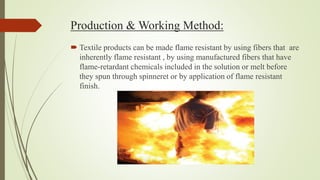
 Textile products can be made flame resistant by using fibers that are
inherently flame resistant , by using manufactured fibers that have
flame-retardant chemicals included in the solution or melt before
they spun through spinneret or by application of flame resistant
finish.
 More thermally stable materials such as asbestos , glass fibers, the
aramids could be called fireproof substances that will not burn.
 Glass fibers has many industrial uses and may be used to limited
extent in households textile product such as window shades or lamp
shades.
 Modacrylic fibers offered adequate flame resistance at a moderate
cost and were used in carpets , curtains , children’s sleepwear and
airline blankets.
 Modacrylic has been largely replaced by polyester that has flame-
retardant chemicals added.
 Phosphorus , nitrogen , halogens , boron and zirconium are
commonly used.
Production & Working Method:
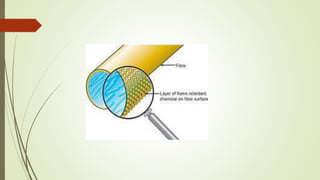
 Durable flame resistant finishes for cotton and cotton and cotton
blend fabric contain phosphorus and nitrogen. They react chemically
with fibers and inhibit the production of compounds that fuel the
flame.
 Commercial flame retardant finishes are Pyrovatex, Proban , and
PyronO
Advantages
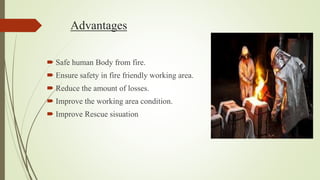
 Safe human Body from fire.
 Ensure safety in fire friendly working area.
 Reduce the amount of losses.
 Improve the working area condition.
 Improve Rescue sisuation
Disadvantages
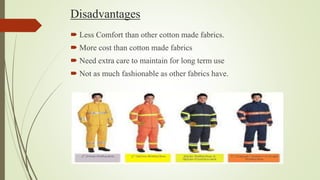
 Less Comfort than other cotton made fabrics.
 More cost than cotton made fabrics
 Need extra care to maintain for long term use
 Not as much fashionable as other fabrics have.
Thanks for
being with me

Fire resistant fabric

  • 1.
  • 2.
    Md Mohayminul Islam ID:12132107058 Department Of Textile Engineering Bangladesh University Of business And Technology(BUBT)
  • 3.
    Definition:  Flame resistanceis defined by ASTM “The property of a material whereby flaming combustion is prevented , terminated or inhibited following application of a flaming or non-flaming source of ignition , with or without the subsequent removal of the ignition source”
  • 4.
    Differences among generalcloth and fire resistant cloth:  These materials are made flame-resistant by the application of flame-retardant chemicals. A chemical additive in the fiber or treatment on the fabric is used to provide some level of flame retardancy. During a fire, chemically dependent fabrics rely on a chemical reaction to extinguish the flame. This reaction is triggered by the heat of the fire and the amount of time the fabric is exposed to the fire.  It is very difficult to determine whether protection has been compromised with an FRT fabric. There are ways to test it. Unfortunately, all of these test methods are destructive — there really is no way to test a garment to determine what its current level of flame resistance or arc protection value is, without destroying the garment in a flame or arc flash test.
  • 5.
    Production & WorkingMethod:  Textile products can be made flame resistant by using fibers that are inherently flame resistant , by using manufactured fibers that have flame-retardant chemicals included in the solution or melt before they spun through spinneret or by application of flame resistant finish.
  • 6.
     More thermallystable materials such as asbestos , glass fibers, the aramids could be called fireproof substances that will not burn.  Glass fibers has many industrial uses and may be used to limited extent in households textile product such as window shades or lamp shades.  Modacrylic fibers offered adequate flame resistance at a moderate cost and were used in carpets , curtains , children’s sleepwear and airline blankets.  Modacrylic has been largely replaced by polyester that has flame- retardant chemicals added.  Phosphorus , nitrogen , halogens , boron and zirconium are commonly used.
  • 7.
    Production & WorkingMethod:  Durable flame resistant finishes for cotton and cotton and cotton blend fabric contain phosphorus and nitrogen. They react chemically with fibers and inhibit the production of compounds that fuel the flame.  Commercial flame retardant finishes are Pyrovatex, Proban , and PyronO
  • 9.
    Advantages  Safe humanBody from fire.  Ensure safety in fire friendly working area.  Reduce the amount of losses.  Improve the working area condition.  Improve Rescue sisuation
  • 10.
    Disadvantages  Less Comfortthan other cotton made fabrics.  More cost than cotton made fabrics  Need extra care to maintain for long term use  Not as much fashionable as other fabrics have.
  • 11.