Heat & Flame
Resistant Clothing
Name & ID
Hasan al Noman
131-23-3461
Dept. of Textile Engineering
Daffodil int. University
What does FR & FRC stand for ?
 FR: Flame Resistant. It refers to the ability of a material to self-
extinguish upon the removal of an ignition source.
 FRC: Flame Resistant Clothing. It is quite common that safety
minded customers refer to Safety Garments or Flame
Resistant Apparel simply as “FRC.”
Who wears Flame Resistant (FR) clothing?
 People who work in hazardous environments that may involve
the following hazards:
 Electric Arc (electricians, electric utility lineman, etc.),
 Flash Fire (refinery, chemical and pharmaceutical workers, etc.)
 Combustible Dust Explosion (workers in the paper and pulp industry,
 food processing, paint, and many more industries).
Plus ANY workers who come in contact with energized electrical
equipment.
FR Clothing Construction
+ + = Maximum
Protection
Base Layer Mid Layer Outer Layer
Base Layer
 Basically cotton garments are used as base “protective”
layer.
 Base layer garments made of inherently FR fibers will
not burn, melt or ignite when exposed to direct flame
and have exceptional electrical resistance.
 These fabrics are comfortable, dry quickly and wick
moisture effectively, even when worn in extreme
conditions.
Base Layer
Mid Layer
 Inherently flame retardant, anti-static, lightweight
long sleeved polo shirt. Ideal as a layering system
for additional
 protection without compromising on comfort,
could also be worn as a lighter weight more
comfortable layer underneath a jacket, fleece or
sweatshirt.
 Made with Protal® Modacrylic fibre.
Outer Layer
 Flame retardant workwear needs to be hard wearing, comfortable,
cost effective and provide suitable protection for the wearer.
 There are lots of different cotton treated FR work wear garments
available on the market
 Heavyweight cotton treated flame retardant and anti-static coverall
with FR reflective tape
FR reflective tapes provides
additional visibility for the
wearer
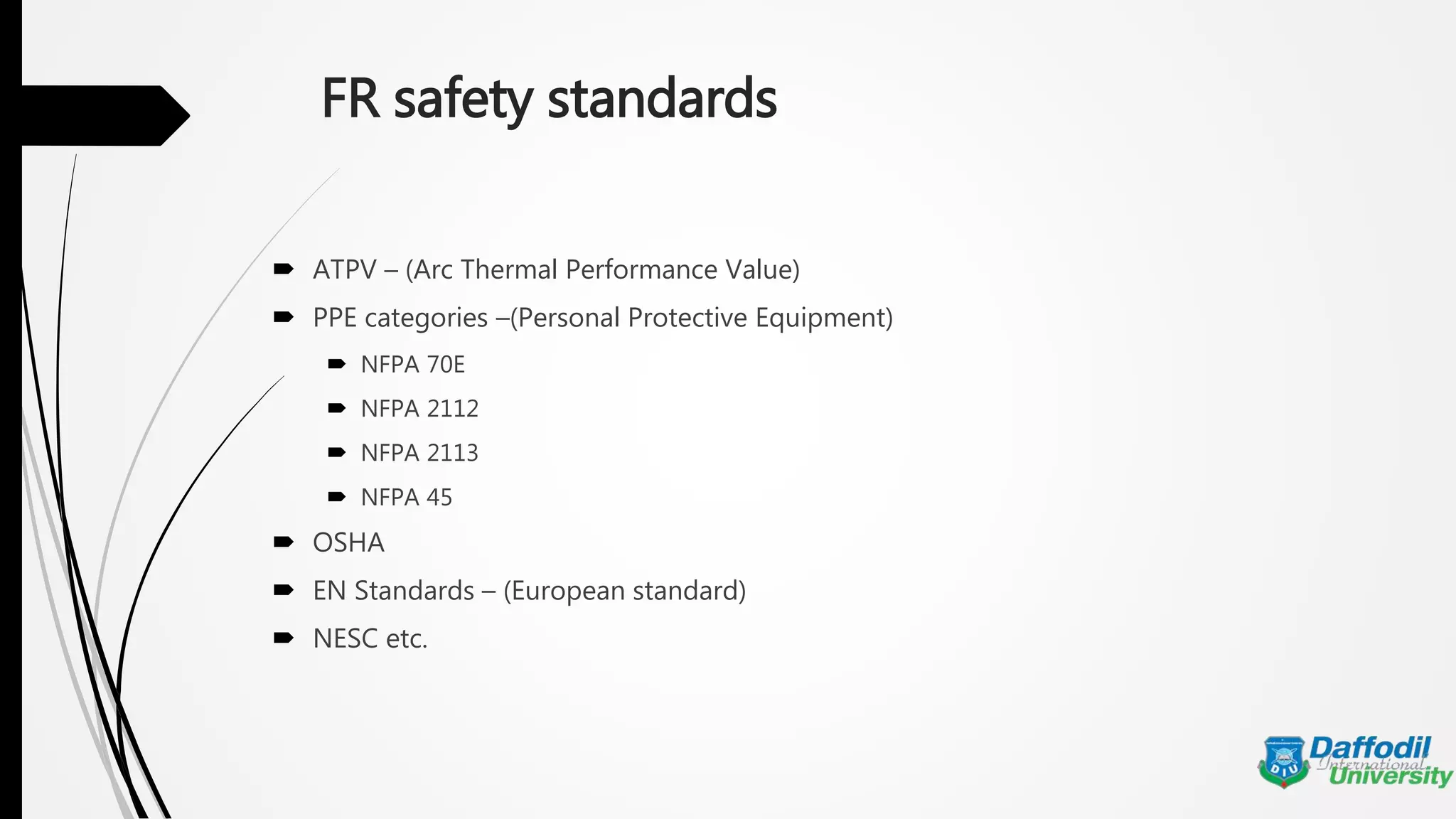
FR safety standards
 ATPV – (Arc Thermal Performance Value)
 PPE categories –(Personal Protective Equipment)
 NFPA 70E
 NFPA 2112
 NFPA 2113
 NFPA 45
 OSHA
 EN Standards – (European standard)
 NESC etc.
The Choice of Fabrics
 There are two main types of fabric used to manufacture flame resistant
(FR) clothing,
 cotton treated : The term “treated” refers to a manufacturing process where a
mix of chemicals are added to a fibre, yarn or finished material to make a new
FR fabric.
 inherent: In inherent FR fabric the FR properties are permanently engineered
into the fibres and cannot be washed or worn out. there are aramids, such as
Nomex® where the FR properties are naturally present in the molecular
structure of the fibre
Care Instructions
 Each garment will have its specific care instructions printed on the garment label;
these will need to be reviewed before garments are laundered.
Laundering
 Ideally wash FR garments separately to avoid damaging
 the luminescent effect or wash them inside out to reduce
the abrasion on other garments.
THANK YOU

Heat and Flame Resistant clothing

  • 1.
  • 2.
    Name & ID Hasanal Noman 131-23-3461 Dept. of Textile Engineering Daffodil int. University
  • 3.
    What does FR& FRC stand for ?  FR: Flame Resistant. It refers to the ability of a material to self- extinguish upon the removal of an ignition source.  FRC: Flame Resistant Clothing. It is quite common that safety minded customers refer to Safety Garments or Flame Resistant Apparel simply as “FRC.”
  • 4.
    Who wears FlameResistant (FR) clothing?  People who work in hazardous environments that may involve the following hazards:  Electric Arc (electricians, electric utility lineman, etc.),  Flash Fire (refinery, chemical and pharmaceutical workers, etc.)  Combustible Dust Explosion (workers in the paper and pulp industry,  food processing, paint, and many more industries). Plus ANY workers who come in contact with energized electrical equipment.
  • 5.
    FR Clothing Construction ++ = Maximum Protection Base Layer Mid Layer Outer Layer
  • 6.
    Base Layer  Basicallycotton garments are used as base “protective” layer.  Base layer garments made of inherently FR fibers will not burn, melt or ignite when exposed to direct flame and have exceptional electrical resistance.  These fabrics are comfortable, dry quickly and wick moisture effectively, even when worn in extreme conditions.
  • 7.
  • 8.
    Mid Layer  Inherentlyflame retardant, anti-static, lightweight long sleeved polo shirt. Ideal as a layering system for additional  protection without compromising on comfort, could also be worn as a lighter weight more comfortable layer underneath a jacket, fleece or sweatshirt.  Made with Protal® Modacrylic fibre.
  • 9.
    Outer Layer  Flameretardant workwear needs to be hard wearing, comfortable, cost effective and provide suitable protection for the wearer.  There are lots of different cotton treated FR work wear garments available on the market  Heavyweight cotton treated flame retardant and anti-static coverall with FR reflective tape FR reflective tapes provides additional visibility for the wearer
  • 10.
    FR safety standards ATPV – (Arc Thermal Performance Value)  PPE categories –(Personal Protective Equipment)  NFPA 70E  NFPA 2112  NFPA 2113  NFPA 45  OSHA  EN Standards – (European standard)  NESC etc.
  • 11.
    The Choice ofFabrics  There are two main types of fabric used to manufacture flame resistant (FR) clothing,  cotton treated : The term “treated” refers to a manufacturing process where a mix of chemicals are added to a fibre, yarn or finished material to make a new FR fabric.  inherent: In inherent FR fabric the FR properties are permanently engineered into the fibres and cannot be washed or worn out. there are aramids, such as Nomex® where the FR properties are naturally present in the molecular structure of the fibre
  • 12.
    Care Instructions  Eachgarment will have its specific care instructions printed on the garment label; these will need to be reviewed before garments are laundered.
  • 13.
    Laundering  Ideally washFR garments separately to avoid damaging  the luminescent effect or wash them inside out to reduce the abrasion on other garments.
  • 14.