Welcome to Our
Presentation
My team name is Phoenix.
Hasibul Hasan
ID: 163-0102-020
Mosfekur Rahman
ID:123-0378-002
Abu Naser Mohd. Muntakim
ID:163-0117-020
Pinki Rani Gope
ID:163-0089-020
Israt Jerin Binte
Hasan
ID:163-0135-020
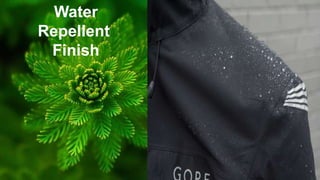
Water
Repellent
Finish
Introduction :
Water repellent are chemical finish.
Resist the penetration of water into the fabric.
Permits the passage of moisture or air through the fabric.
Defination:
water repellent fabrics are those which resist being wetted by water, water drops will
roll off the fabric.
A fabric’s resistance to water will depend on
• the nature of the fiber surface,
• the porosity of the fabric
• the dynamic force behind the impacting water spray.
Water Repellent Finish
Purpose
For certain uses such as Tarpaulin, Umbrella cloth, Rain coat
fabric etc.
It is required to give this type of finish as these type of fabrics
are generally used against the air and water in the normal life.
This finish makes the wearer feel uneasy and uncomfortable as
the air circulation is not there.
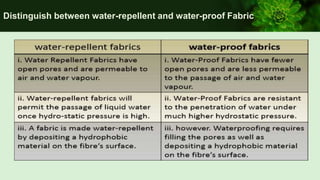
Distinguish between water-repellent and water-proof Fabric
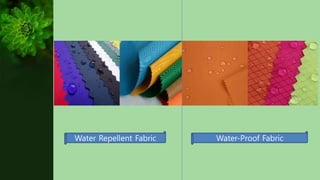
Water Repellent Fabric Water-Proof Fabric
Principal
‘A film on the surface of the fabric should be formed for the prevention of air
and water’.
Water repellent fabric is coated with a finish that is resistant but not imper
vious to penetration by water.
In this finish, there are some micro hole, which is smaller than water, but
bigger than vapors. So water can not passed by this fabric, but vapor can
pass.
Requirements
Purpose and Scope:
• This method of test is especially suitable for screening if any texti
le has been given a water-repellency finishes. It is not intended
for use in measuring the penetration of water through the fabric.
Terminology:
• Water Repellency: in textiles, the characteristic of a fiber,
yarn or fabric to resist wetting.
Mechanism of Water Repellency
Repellent Chemistry
1.Paraffin repellents,
2.Stearic Acid-melamine Repellents,
3.Silicone Water repellent,
4.Fluorocarbon-based repellents,
chemistry of water repellent
1. Mechanical incorporation of the water repellent products in the fiber or fabri
c surface.
Example : Paraffin emulsion.
2. Chemical reaction of the repellent material with the fiber surface. Example :
Fatty acid resins.
3. The formation of a repellent film on the fiber surface.
Example : Silicon and Fluorocarbon products.
4. The final approach is to use special fabric construction.
Like stretched poly tetra flouro ethylene films (Goretex)
Films of hydrophilic polyester (Sympatex).
And micro phorous coating (Hydrophilic modified polyurethanes)
Water repellent finishes
• Water repellents are chemical finishes
• Resist the penetration of water into the fabric
• Permits the passage of moisture or air through the fabric
• There are three types of water repellent finishes:
non-durable finishes,
semi-durable finishes,
durable finishes,
Non-durable finishes
• This type of water repellent finish is usually based on paraffin
wax-aluminum acetate emulsion.
• non-durable finishes are easily removed in laundering or dry-cleaning.
• non-durable finishes do not provide satisfactory resistance to liquids.
• Examples: Aquarol AX, Aridex WP, Dryon, Repelex etc.
Semi-durable finishes
• These are wax or salt solutions.
• They are emulsified off the fabric in laundering.
• They ate resistant to dry-cleaning.
• Examples: Bishopel, Dryon A-B, Nalan W etc.
Durable finishes
• There are several types of durable water repellents, such as
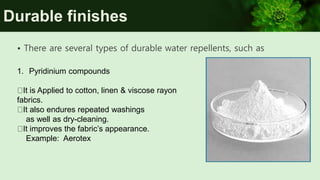
1. Pyridinium compounds
It is Applied to cotton, linen & viscose rayon
fabrics.
It also endures repeated washings
as well as dry-cleaning.
It improves the fabric’s appearance.
Example: Aerotex
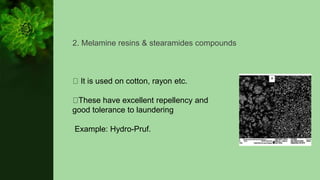
2. Melamine resins & stearamides compounds
It is used on cotton, rayon etc.
These have excellent repellency and
good tolerance to laundering
Example: Hydro-Pruf.
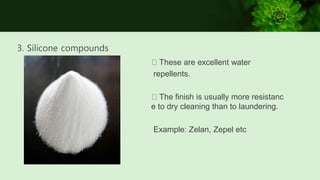
3. Silicone compounds
These are excellent water
repellents.
The finish is usually more resistanc
e to dry cleaning than to laundering.
Example: Zelan, Zepel etc
Several test methods of water repellency
of fabrics
AATCC TM22: Water Repellency-Spray Test
AATCC TM35: Water Resistance: Rain Test
AATCC TM42: Water Resistance: Impact Penetration Test
AATCC TM70: Water Repellency-Tumble Jar Dynamic
Absorption Test
AATCC TM127: Water Resistance: Hydrostatic Pressure Test
# In many tests, Spray test are briefly use.
Working procedure of spray test method
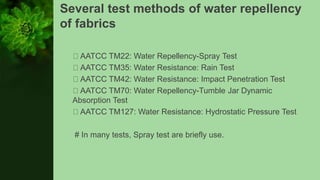
• Step-1: The sample fabric is mounted on a metal hoop.
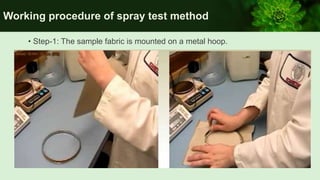
• Step-2: Then the metal hoop attached with sample fabric is fix
ed on the instrument at 45ᵒ angle.
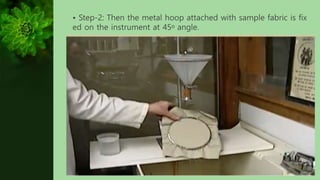
• Step-3: Now the beaker is filled with 250 cc water.
• Step-4: pour the distilled water into the funnel.
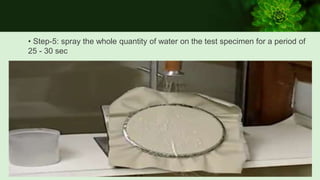
• Step-5: spray the whole quantity of water on the test specimen for a period of
25 - 30 sec
• Step-6: After spraying has finished the sample holder is
removed and the surplus water removed by tapping the
frame 6 times against a solid object.
Assessment technique
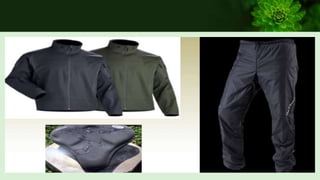
Applications
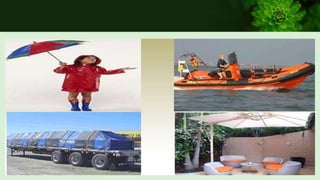
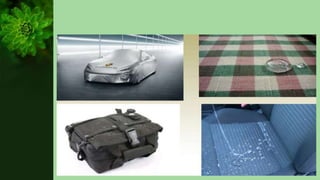
• Umbrella,
• Swimming suites,
• Driver suites,
• Car seat,
• Car cover,
• Special shoes,
• Military bags,
• Garden shade etc.
Conclusion
• Comfort property has become the most prime objective of the
buyer/consumer where breathability of the fabric with water proof
ness has been the primary importance in areas that do not enjoy
the evergreen nature.
• Extensive research is required to understand the relationship bet
ween segmental ventilation and local comfort of the fabric subject
ed to active usage of the person.
Water repellent finish

Water repellent finish

  • 1.
    Welcome to Our Presentation Myteam name is Phoenix. Hasibul Hasan ID: 163-0102-020 Mosfekur Rahman ID:123-0378-002 Abu Naser Mohd. Muntakim ID:163-0117-020 Pinki Rani Gope ID:163-0089-020 Israt Jerin Binte Hasan ID:163-0135-020
  • 3.
  • 4.
    Introduction : Water repellentare chemical finish. Resist the penetration of water into the fabric. Permits the passage of moisture or air through the fabric. Defination: water repellent fabrics are those which resist being wetted by water, water drops will roll off the fabric. A fabric’s resistance to water will depend on • the nature of the fiber surface, • the porosity of the fabric • the dynamic force behind the impacting water spray. Water Repellent Finish
  • 5.
    Purpose For certain usessuch as Tarpaulin, Umbrella cloth, Rain coat fabric etc. It is required to give this type of finish as these type of fabrics are generally used against the air and water in the normal life. This finish makes the wearer feel uneasy and uncomfortable as the air circulation is not there.
  • 6.
  • 7.
    Water Repellent FabricWater-Proof Fabric
  • 8.
    Principal ‘A film onthe surface of the fabric should be formed for the prevention of air and water’. Water repellent fabric is coated with a finish that is resistant but not imper vious to penetration by water. In this finish, there are some micro hole, which is smaller than water, but bigger than vapors. So water can not passed by this fabric, but vapor can pass.
  • 9.
    Requirements Purpose and Scope: •This method of test is especially suitable for screening if any texti le has been given a water-repellency finishes. It is not intended for use in measuring the penetration of water through the fabric. Terminology: • Water Repellency: in textiles, the characteristic of a fiber, yarn or fabric to resist wetting.
  • 10.
  • 11.
    Repellent Chemistry 1.Paraffin repellents, 2.StearicAcid-melamine Repellents, 3.Silicone Water repellent, 4.Fluorocarbon-based repellents,
  • 12.
    chemistry of waterrepellent 1. Mechanical incorporation of the water repellent products in the fiber or fabri c surface. Example : Paraffin emulsion. 2. Chemical reaction of the repellent material with the fiber surface. Example : Fatty acid resins. 3. The formation of a repellent film on the fiber surface. Example : Silicon and Fluorocarbon products. 4. The final approach is to use special fabric construction. Like stretched poly tetra flouro ethylene films (Goretex) Films of hydrophilic polyester (Sympatex). And micro phorous coating (Hydrophilic modified polyurethanes)
  • 13.
    Water repellent finishes •Water repellents are chemical finishes • Resist the penetration of water into the fabric • Permits the passage of moisture or air through the fabric • There are three types of water repellent finishes: non-durable finishes, semi-durable finishes, durable finishes,
  • 14.
    Non-durable finishes • Thistype of water repellent finish is usually based on paraffin wax-aluminum acetate emulsion. • non-durable finishes are easily removed in laundering or dry-cleaning. • non-durable finishes do not provide satisfactory resistance to liquids. • Examples: Aquarol AX, Aridex WP, Dryon, Repelex etc.
  • 15.
    Semi-durable finishes • Theseare wax or salt solutions. • They are emulsified off the fabric in laundering. • They ate resistant to dry-cleaning. • Examples: Bishopel, Dryon A-B, Nalan W etc.
  • 16.
    Durable finishes • Thereare several types of durable water repellents, such as 1. Pyridinium compounds It is Applied to cotton, linen & viscose rayon fabrics. It also endures repeated washings as well as dry-cleaning. It improves the fabric’s appearance. Example: Aerotex
  • 17.
    2. Melamine resins& stearamides compounds It is used on cotton, rayon etc. These have excellent repellency and good tolerance to laundering Example: Hydro-Pruf.
  • 18.
    3. Silicone compounds Theseare excellent water repellents. The finish is usually more resistanc e to dry cleaning than to laundering. Example: Zelan, Zepel etc
  • 19.
    Several test methodsof water repellency of fabrics AATCC TM22: Water Repellency-Spray Test AATCC TM35: Water Resistance: Rain Test AATCC TM42: Water Resistance: Impact Penetration Test AATCC TM70: Water Repellency-Tumble Jar Dynamic Absorption Test AATCC TM127: Water Resistance: Hydrostatic Pressure Test # In many tests, Spray test are briefly use.
  • 20.
    Working procedure ofspray test method • Step-1: The sample fabric is mounted on a metal hoop.
  • 21.
    • Step-2: Thenthe metal hoop attached with sample fabric is fix ed on the instrument at 45ᵒ angle.
  • 22.
    • Step-3: Nowthe beaker is filled with 250 cc water.
  • 23.
    • Step-4: pourthe distilled water into the funnel.
  • 24.
    • Step-5: spraythe whole quantity of water on the test specimen for a period of 25 - 30 sec
  • 25.
    • Step-6: Afterspraying has finished the sample holder is removed and the surplus water removed by tapping the frame 6 times against a solid object.
  • 26.
  • 27.
    Applications • Umbrella, • Swimmingsuites, • Driver suites, • Car seat, • Car cover, • Special shoes, • Military bags, • Garden shade etc.
  • 31.
    Conclusion • Comfort propertyhas become the most prime objective of the buyer/consumer where breathability of the fabric with water proof ness has been the primary importance in areas that do not enjoy the evergreen nature. • Extensive research is required to understand the relationship bet ween segmental ventilation and local comfort of the fabric subject ed to active usage of the person.