
   Overview
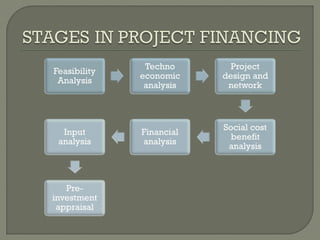
   Stages of Project Financing
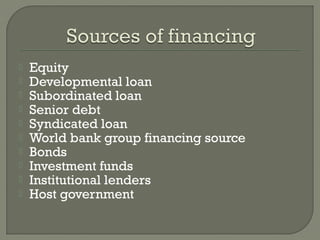
   Sources of financing
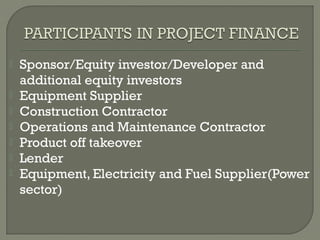
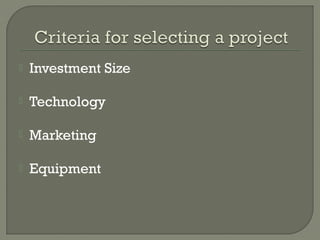
   Participants and Criteria
   Principal Agreements
   Project risk
   Additional problem areas
   Risk Identification – Due Diligence
   Principal Agreements
   Risk management
   “Project is an approval for a capital
    investment to develop facilities, and provide
    goods and services.”
                                    - World Bank.


   Project finance is financing of a facility in
    which a lender looks principally to the cash
    flow generated by the operation of the
    project for the source of funds from which its
    loan will be repaid.
   Creation of a separate project entity
   Very high debt component
   Cash flows are separated
   Debt services depend on project cash
    flows
   Appropriate for projects with high capex
    and risk
   Insulate company’s balance sheet from
    impact of project
Merits
 Non Recourse
 Maximize Leverage
 Off-Balance-Sheet
 Maximize Tax Benefit


Demerits
 Extremely Complex
 High Costs
 More Risk assumed by lenders
 Cost of Capital greater than Traditional
  Finance
   Equity
   Developmental loan
   Subordinated loan
   Senior debt
   Syndicated loan
   World bank group financing source
   Bonds
   Investment funds
   Institutional lenders
   Host government
   Sponsor/Equity investor/Developer and
    additional equity investors
   Equipment Supplier
   Construction Contractor
   Operations and Maintenance Contractor
   Product off takeover
   Lender
   Equipment, Electricity and Fuel Supplier(Power
    sector)
   Investment Size

   Technology

   Marketing

   Equipment
The key objectives of financial management would
 be to:

   • Create wealth for the business
   • Generate cash, and
   • Provide a return on investment keeping in mind

    the risks that the business is taking and the

    resources invested
There are three primary elements to the
 process of financial management

1) Financing   Planning

2) Financial   Control

3) Financial   Decision Making
   The Payback Period
    • Advantages of Payback Period:
    • Disadvantages of payback period:
   Net Present Value
    • Advantages of the net present value method:
   The Discounted Payback Period
   Construction Contract
   Project Description
   Price
   Payment
   Completion Date
   Performance Guarantees
   Feedstock Supply Agreements

   Product Off Take Agreements

   Operations and Maintenance Agreement
   Loan and Security Agreement
   Disbursement Controls
   Progress Reports
   Covenants Not to Amend
   Completion Covenants
   Dividend Restrictions
   Debt and Guarantee Restrictions
   Financial Covenants
   Subordination
   Security
   Project Completion
   Market Risk
   Foreign Exchange Risk
   Macro Economic Convertibility
   Tariff Adjustment for Currency
    Depreciation
   Full Recourse to Non Recourse
   Experts Reports
   Release of Cash Flow
   Accelerated Debt Service
   Lender Liability
   Removal of Limited Recourse
   Abandonment
   Insurance Requirements
   Intercreditor Issues
   Due Diligence is an analysis and appraisal
    of an entity in preparation for establishing a
    relationship with that entity which involves
    business risk.
Objectives:
 Look for overvalued assets/under recorded
  liabilities
 Look at the quality of management
 Look at Tax structure and its impact
 Review projected cash flow
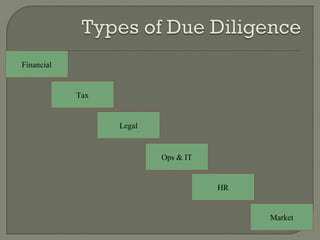
Financial


            Tax


                  Legal


                          Ops & IT


                                     HR


                                          Market
   Construction Phase

    • The Drawdown Phase

    • Role of Technical Advisor

    • Insurance
   Operations Phase

    • Credit Agreement Undertakings


    • Budgets


    • Priority of Accounts

Financing of the Project

  • 2.
    Overview  Stages of Project Financing  Sources of financing  Participants and Criteria  Principal Agreements  Project risk  Additional problem areas  Risk Identification – Due Diligence  Principal Agreements  Risk management
  • 3.
    “Project is an approval for a capital investment to develop facilities, and provide goods and services.”  - World Bank.  Project finance is financing of a facility in which a lender looks principally to the cash flow generated by the operation of the project for the source of funds from which its loan will be repaid.
  • 4.
    Creation of a separate project entity  Very high debt component  Cash flows are separated  Debt services depend on project cash flows  Appropriate for projects with high capex and risk  Insulate company’s balance sheet from impact of project
  • 5.
    Merits  Non Recourse Maximize Leverage  Off-Balance-Sheet  Maximize Tax Benefit Demerits  Extremely Complex  High Costs  More Risk assumed by lenders  Cost of Capital greater than Traditional Finance
  • 7.
    Equity  Developmental loan  Subordinated loan  Senior debt  Syndicated loan  World bank group financing source  Bonds  Investment funds  Institutional lenders  Host government
  • 8.
    Sponsor/Equity investor/Developer and additional equity investors  Equipment Supplier  Construction Contractor  Operations and Maintenance Contractor  Product off takeover  Lender  Equipment, Electricity and Fuel Supplier(Power sector)
  • 9.
    Investment Size  Technology  Marketing  Equipment
  • 10.
    The key objectivesof financial management would be to:  • Create wealth for the business  • Generate cash, and  • Provide a return on investment keeping in mind the risks that the business is taking and the resources invested
  • 11.
    There are threeprimary elements to the process of financial management 1) Financing Planning 2) Financial Control 3) Financial Decision Making
  • 12.
    The Payback Period • Advantages of Payback Period: • Disadvantages of payback period:  Net Present Value • Advantages of the net present value method:  The Discounted Payback Period
  • 13.
    Construction Contract  Project Description  Price  Payment  Completion Date  Performance Guarantees
  • 14.
    Feedstock Supply Agreements  Product Off Take Agreements  Operations and Maintenance Agreement
  • 15.
    Loan and Security Agreement  Disbursement Controls  Progress Reports  Covenants Not to Amend  Completion Covenants  Dividend Restrictions  Debt and Guarantee Restrictions  Financial Covenants  Subordination  Security
  • 16.
    Project Completion  Market Risk  Foreign Exchange Risk  Macro Economic Convertibility  Tariff Adjustment for Currency Depreciation
  • 17.
    Full Recourse to Non Recourse  Experts Reports  Release of Cash Flow  Accelerated Debt Service  Lender Liability  Removal of Limited Recourse  Abandonment  Insurance Requirements  Intercreditor Issues
  • 18.
    Due Diligence is an analysis and appraisal of an entity in preparation for establishing a relationship with that entity which involves business risk. Objectives:  Look for overvalued assets/under recorded liabilities  Look at the quality of management  Look at Tax structure and its impact  Review projected cash flow
  • 19.
    Financial Tax Legal Ops & IT HR Market
  • 20.
    Construction Phase • The Drawdown Phase • Role of Technical Advisor • Insurance
  • 21.
    Operations Phase • Credit Agreement Undertakings • Budgets • Priority of Accounts