MODULE 5
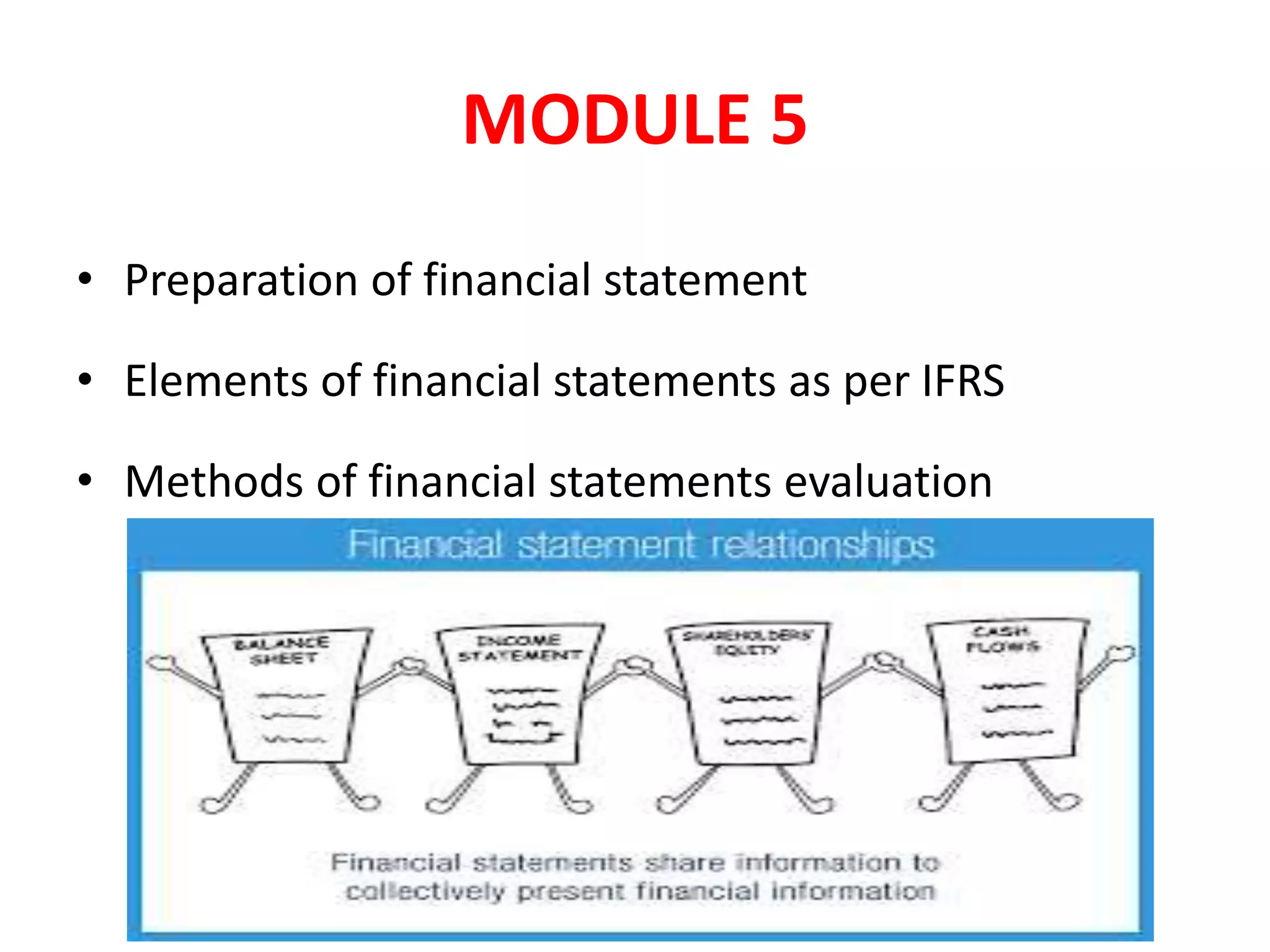
• Preparation of financial statement
• Elements of financial statements as per IFRS
• Methods of financial statements evaluation
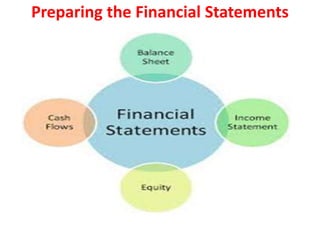
Preparing the Financial Statements
Preparation of financial statements
I. Income statements – accrual basis
Components are revenue, cost of sales, other income,
distribution cost, administrative expenses, other expenses,
finance charges, income tax
• Purpose and use:
- Change in sales revenue over the period in comparison to
industry growth
- Change in gross profit margin, operating profit margin and
net profit margin
- Increase or decrease in NP,OP and GP
- Comparison with other organisation
- Change in earnings per share
- Analysis of working capital in comparison to similar income
elements
- Analysis of interest cover and dividend cover
II. Statement of retained earnings
• Elements / components are
- net P&L attributable to shareholders
- Increase or decrease in share capital reserves
- Dividend payment to shareholders
- Gains or losses recognised directly in equity
- Effect of changes in accounting policies
- Effect of correction of prior period error
- Closing balance
• Purpose and importance – identify the factors
that cause changes in owners equity, gives
information about equity reserves
III. Balance sheet
• Balances of all assets
• Balances of all liabilities
• Capital stock
• Retained earnings
IV. Cash flow statement
• Direct method – subtracting cash disbursement
from cash receipts
• Indirect method – adding or subtracting non cash
items from net income
Basis of preparation – cash in hand, cash at bank, ST
investments, Bank OD
Operating activities
- eliminate non cash expense
- elimination of non cash income
- removal of expense classified elsewhere
- removal of income classified elsewhere
- working capital changes
Investing activities
- cash outflow expended on purchase of
investments and fixed assets
- cash inflow from income from investments
- cash inflow from disposal of investment and
fixed assets
Financing activities
- proceeds from issuance of share capital,
debentures and bank loans
- cash outflow expended on cost of finance
(dividend and interest)
- cash outflow on repurchase of share capital and
repayment of debentures and loans
Purpose And Use
- insights about liquidity and solvency
- use information about historic cash flow to form
projection of future cash flow
- highlights the priority of management
Elements of Financial Statements
Assets
- Tangible and intangible, inventories, trade
receivables, cash and cash equivalents
Liabilities
- Trade liabilities, ST borrowings, LT
borrowings, current tax payable
Future outflow of economic resources
Equity
Methods of Financial Statement
Analysis
• Horizontal Analysis
- $ and % analysis
• Vertical Analysis
• Ratio Analysis
- Liquidity ratio
- Profitability ratio
- Activity ratio
- Capital structure
- Capital market ratio
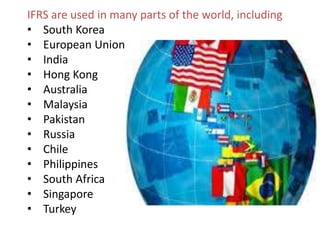
IFRS are used in many parts of the world, including
• South Korea
• European Union
• India
• Hong Kong
• Australia
• Malaysia
• Pakistan
• Russia
• Chile
• Philippines
• South Africa
• Singapore
• Turkey
Thank you

Financial statement analysis

  • 1.
    MODULE 5 • Preparationof financial statement • Elements of financial statements as per IFRS • Methods of financial statements evaluation
  • 2.
  • 3.
    Preparation of financialstatements I. Income statements – accrual basis Components are revenue, cost of sales, other income, distribution cost, administrative expenses, other expenses, finance charges, income tax • Purpose and use: - Change in sales revenue over the period in comparison to industry growth - Change in gross profit margin, operating profit margin and net profit margin - Increase or decrease in NP,OP and GP - Comparison with other organisation - Change in earnings per share - Analysis of working capital in comparison to similar income elements - Analysis of interest cover and dividend cover
  • 4.
    II. Statement ofretained earnings • Elements / components are - net P&L attributable to shareholders - Increase or decrease in share capital reserves - Dividend payment to shareholders - Gains or losses recognised directly in equity - Effect of changes in accounting policies - Effect of correction of prior period error - Closing balance • Purpose and importance – identify the factors that cause changes in owners equity, gives information about equity reserves
  • 5.
    III. Balance sheet •Balances of all assets • Balances of all liabilities • Capital stock • Retained earnings IV. Cash flow statement • Direct method – subtracting cash disbursement from cash receipts • Indirect method – adding or subtracting non cash items from net income Basis of preparation – cash in hand, cash at bank, ST investments, Bank OD
  • 6.
    Operating activities - eliminatenon cash expense - elimination of non cash income - removal of expense classified elsewhere - removal of income classified elsewhere - working capital changes Investing activities - cash outflow expended on purchase of investments and fixed assets - cash inflow from income from investments - cash inflow from disposal of investment and fixed assets
  • 7.
    Financing activities - proceedsfrom issuance of share capital, debentures and bank loans - cash outflow expended on cost of finance (dividend and interest) - cash outflow on repurchase of share capital and repayment of debentures and loans Purpose And Use - insights about liquidity and solvency - use information about historic cash flow to form projection of future cash flow - highlights the priority of management
  • 8.
    Elements of FinancialStatements Assets - Tangible and intangible, inventories, trade receivables, cash and cash equivalents Liabilities - Trade liabilities, ST borrowings, LT borrowings, current tax payable Future outflow of economic resources Equity
  • 9.
    Methods of FinancialStatement Analysis • Horizontal Analysis - $ and % analysis • Vertical Analysis • Ratio Analysis - Liquidity ratio - Profitability ratio - Activity ratio - Capital structure - Capital market ratio
  • 10.
    IFRS are usedin many parts of the world, including • South Korea • European Union • India • Hong Kong • Australia • Malaysia • Pakistan • Russia • Chile • Philippines • South Africa • Singapore • Turkey
  • 11.