LEDGER
• Definition
• Flow Chart of Ledger
• Utilities of ledger
• Format of a Ledger Account
• Distinction between journal &
ledger
• Ledger Posting
- M.Remitha,
MBA, M.Phil
Definition of Ledger
Ledger account is a summary statement of all
the transactions relating to a person, asset, liability,
expense or income which has taken place during a
given period of time and it shows their net effect.
Ledger is known as principal book of accounts.
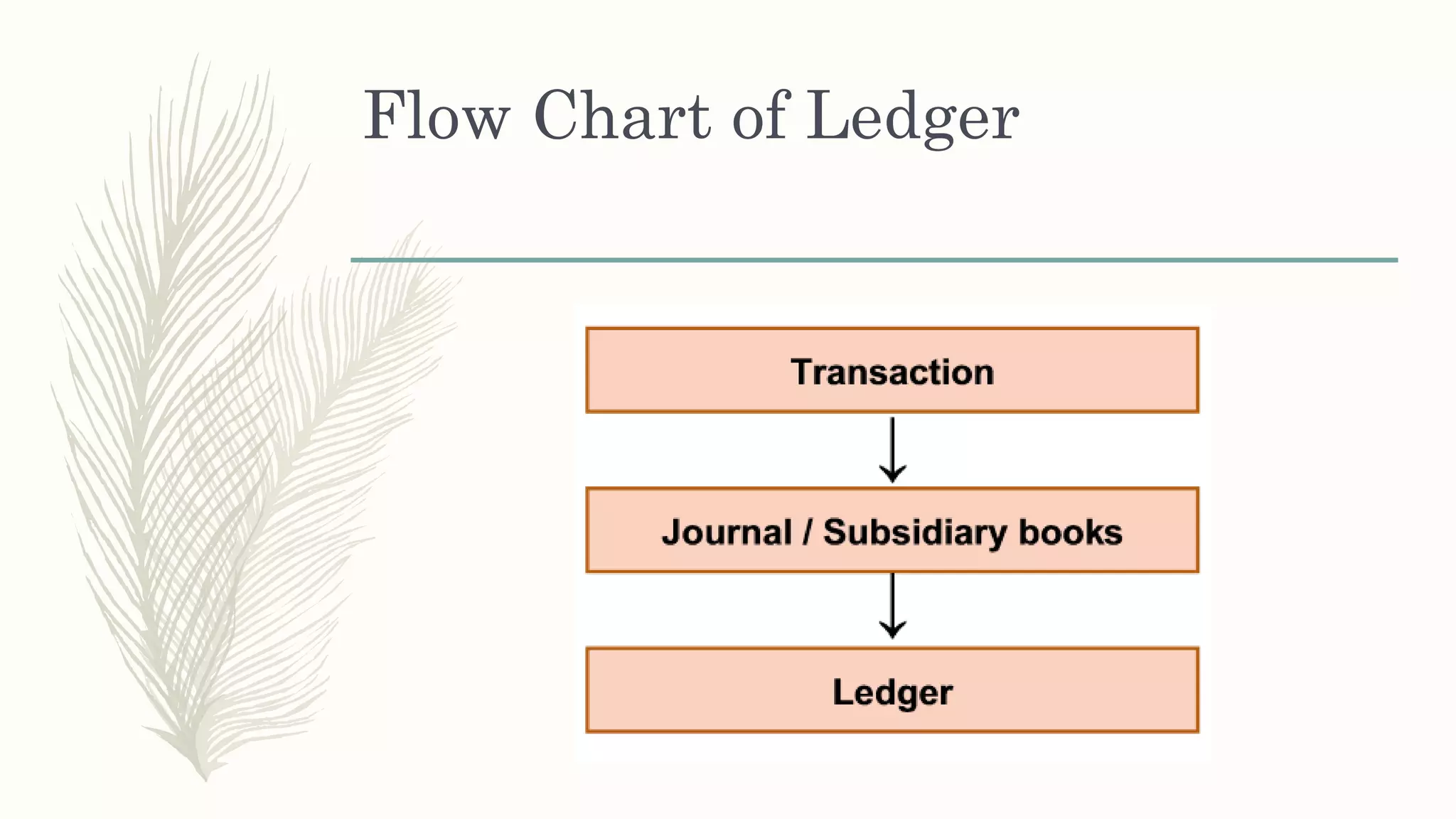
Flow Chart of Ledger
Utilities of ledger
– Quick information about a particular account
– Ledger account helps to get all information about a particular
account like sales, purchases, machinery, etc., at a glance.
– Control over business transactions
– From the ledger balances extracted, a thorough analysis of
account balances can be made which helps to have control over
the business transactions.
Utilities of ledger…
– Trial balance can be prepared
– With the balances of ledger accounts, trial balance can be
prepared to check the arithmetical accuracy of entries made in
the journal and ledger.
– Helps to prepare financial statements
– From the ledger balances extracted, financial statements can be
prepared for ascertaining net profit or loss and the financial
position.
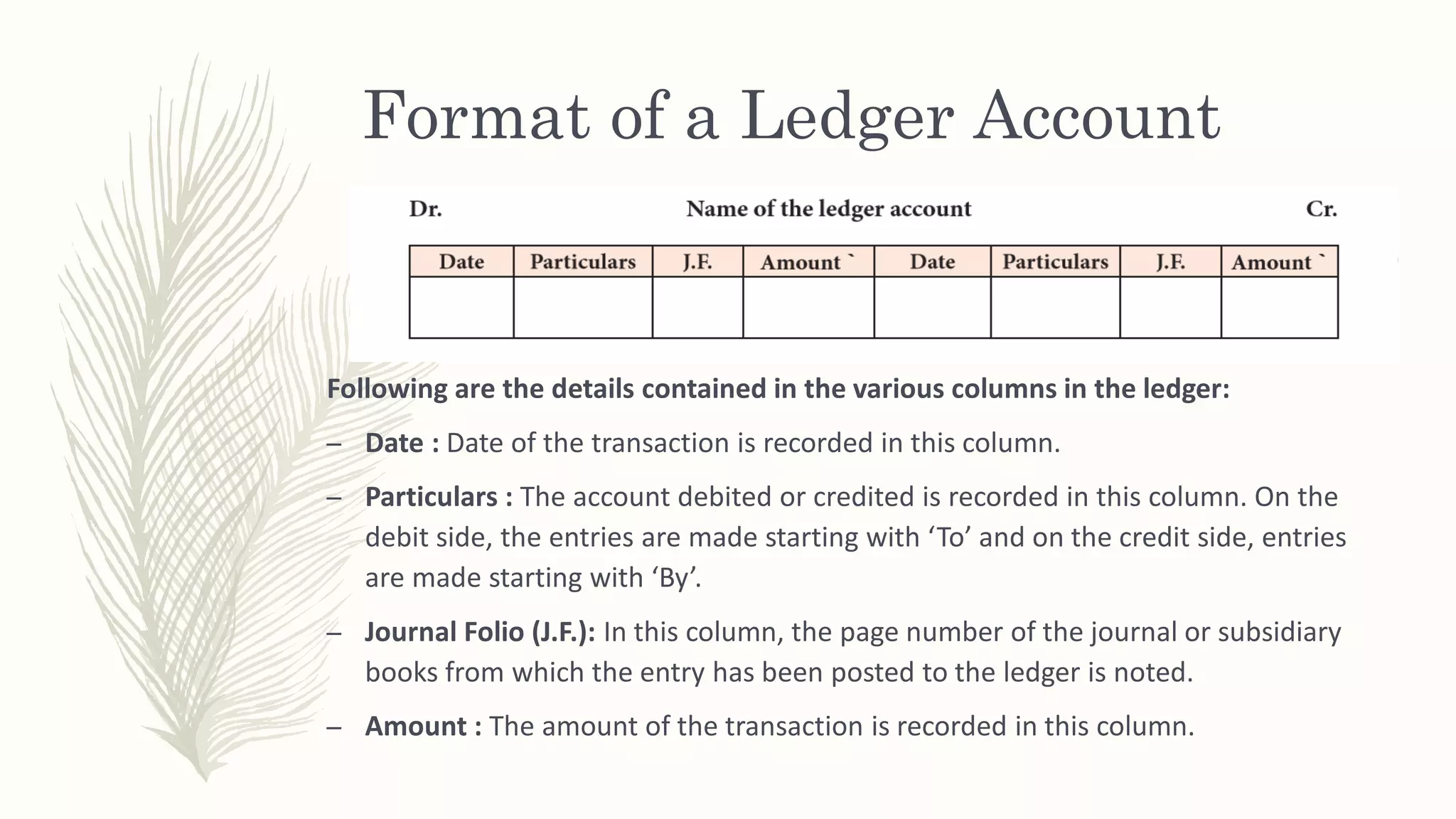
Format of a Ledger Account
Following are the details contained in the various columns in the ledger:
– Date : Date of the transaction is recorded in this column.
– Particulars : The account debited or credited is recorded in this column. On the
debit side, the entries are made starting with ‘To’ and on the credit side, entries
are made starting with ‘By’.
– Journal Folio (J.F.): In this column, the page number of the journal or subsidiary
books from which the entry has been posted to the ledger is noted.
– Amount : The amount of the transaction is recorded in this column.
Distinction between journal and
ledger
Distinction between journal and
ledger …
Procedure for posting
The process of transferring the debit and credit items from the journal to the
ledger accounts is called posting.
The procedure of posting from journal to ledger is as follows:
- Locate the ledger account that is debited in the journal entry.
- Record the date of the transaction in the date column on the debit side of that
account.
- Record the name of the account credited in the journal with the prefix ‘To’ in
particulars column.
- Record the amount of the debit in the ‘amount column’.
- Locate the ledger account that is credited in the journal entry.
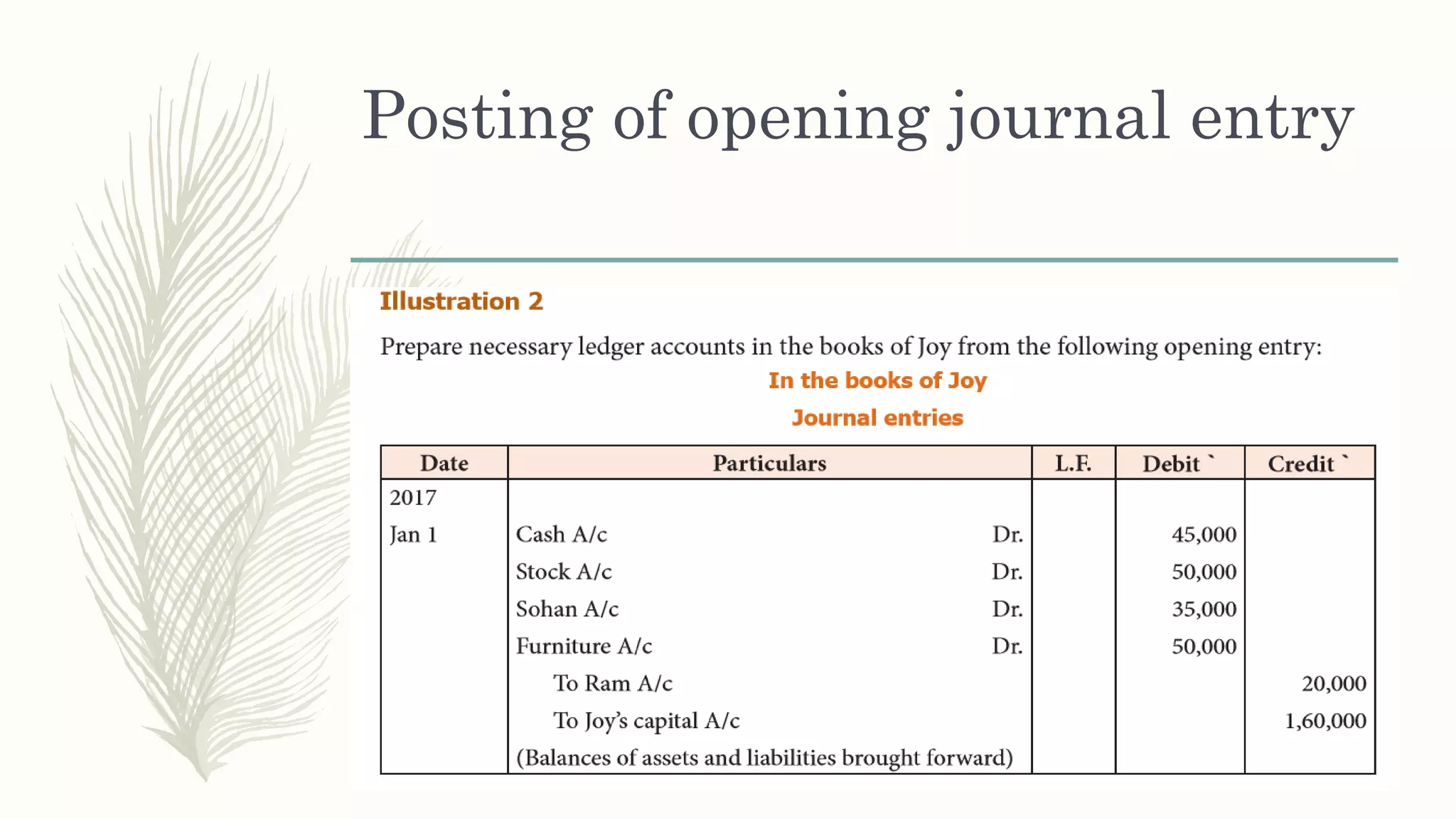
Posting of opening journal entry
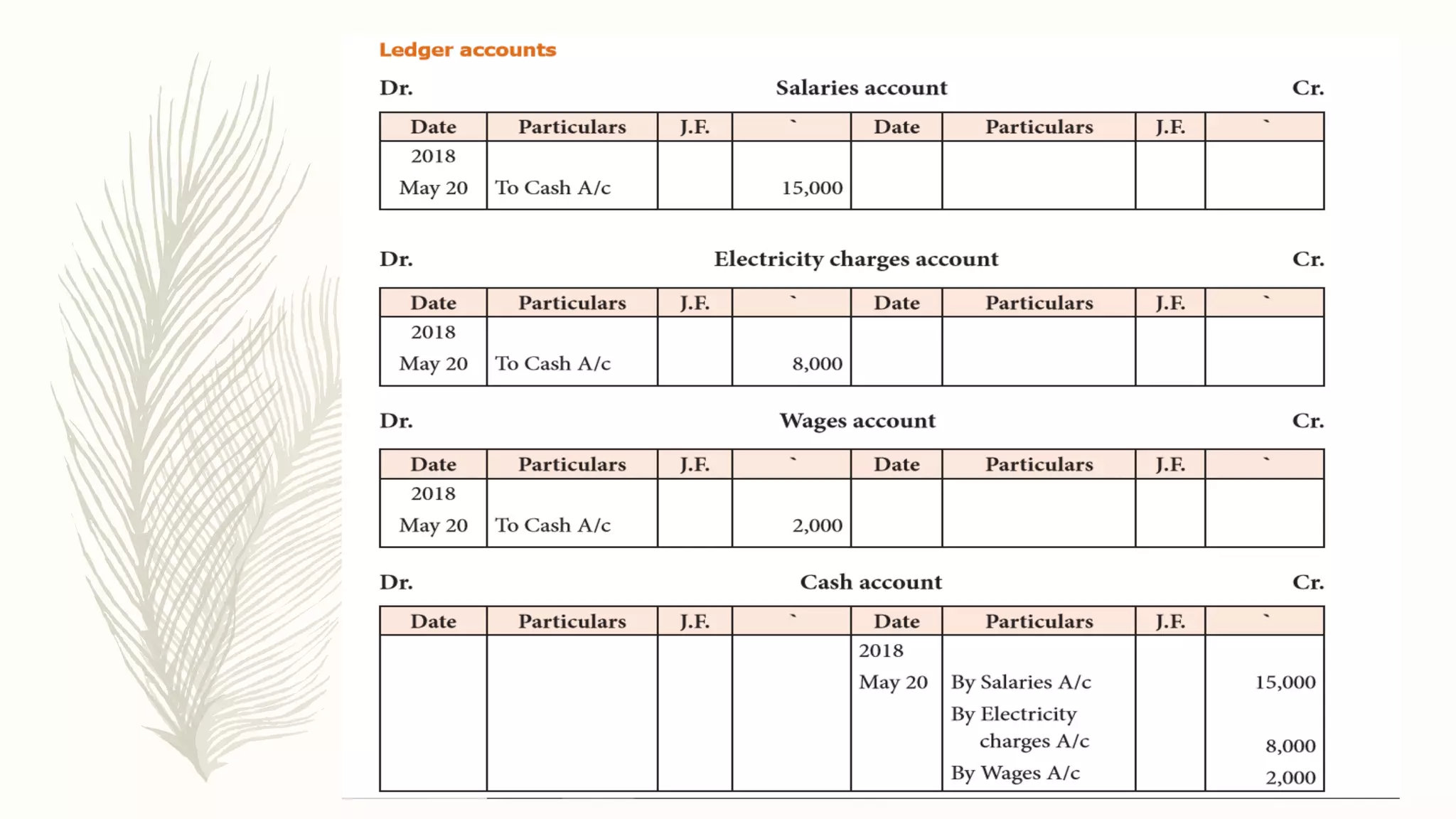
Posting of compound journal
entry
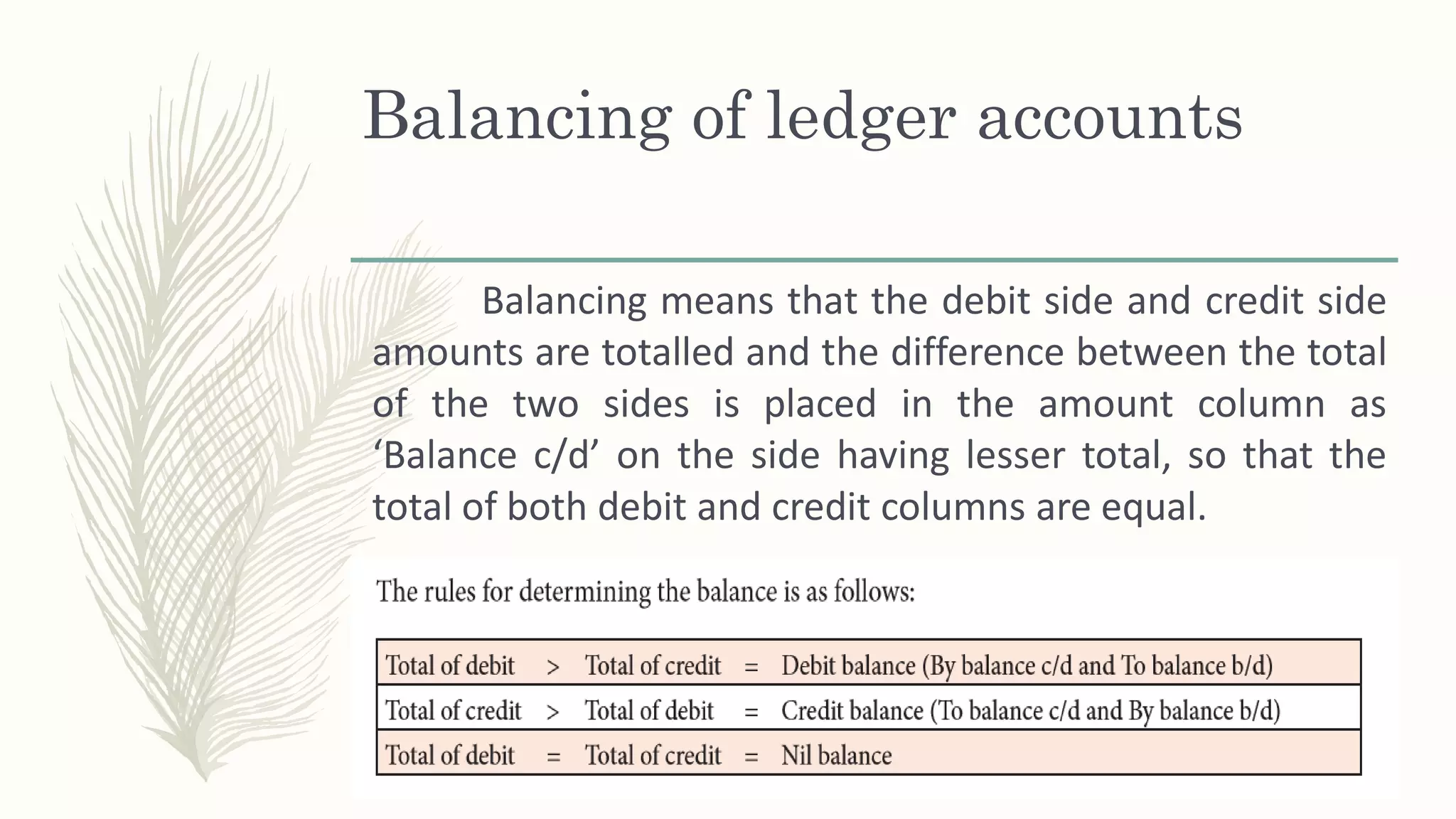
Balancing of ledger accounts
Balancing means that the debit side and credit side
amounts are totalled and the difference between the total
of the two sides is placed in the amount column as
‘Balance c/d’ on the side having lesser total, so that the
total of both debit and credit columns are equal.
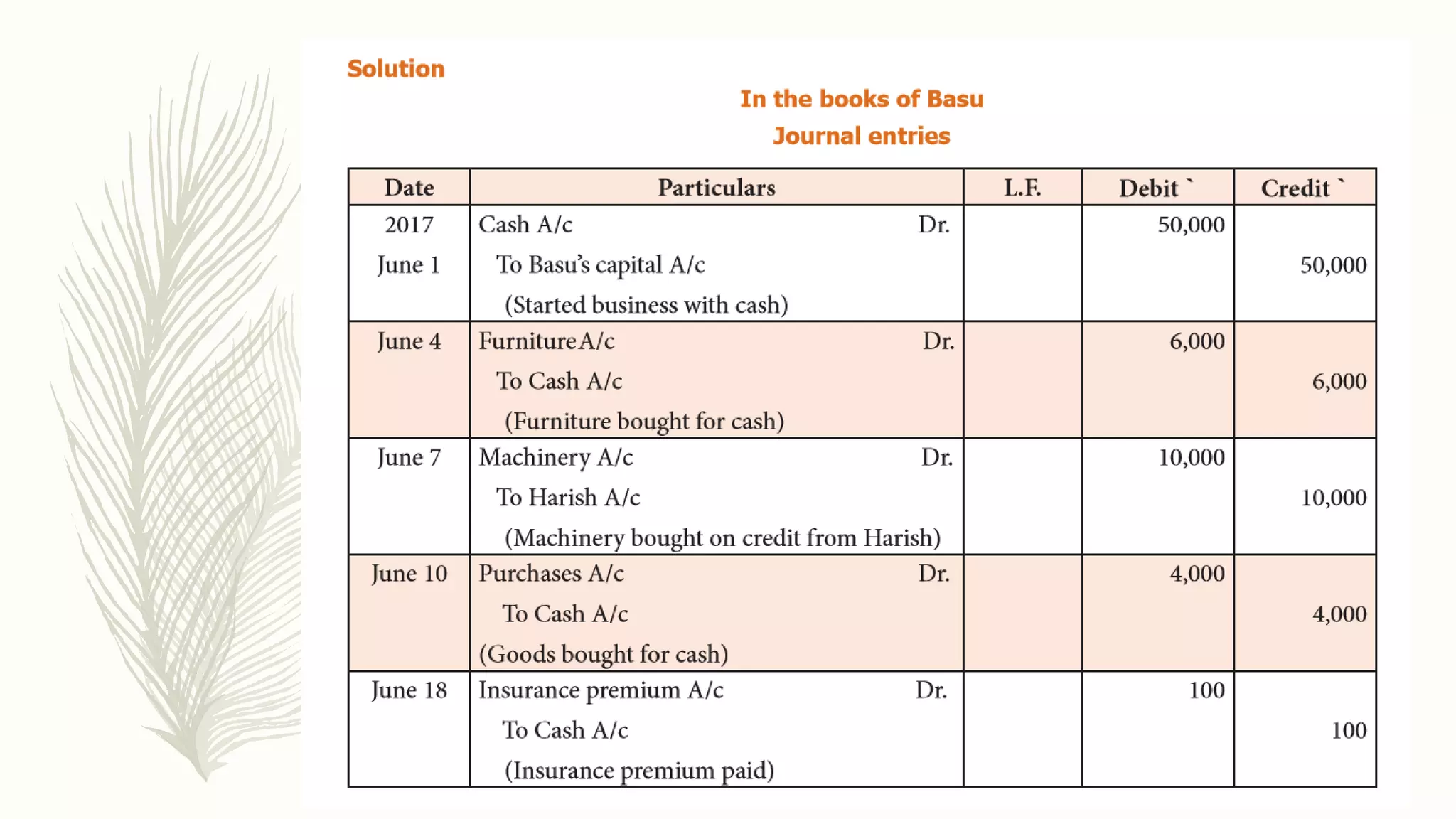
In the books of Thamizhanban
Journal entries
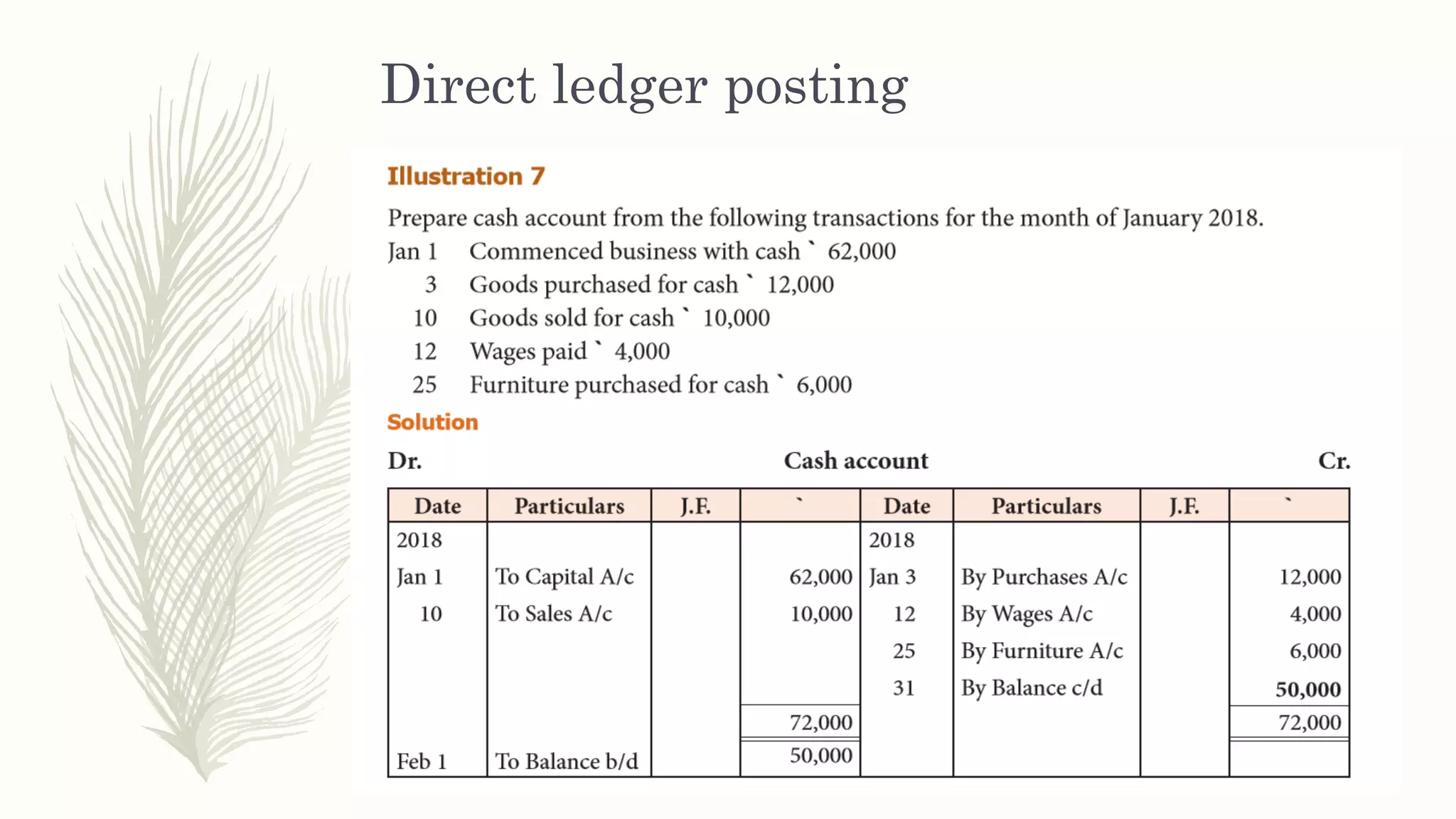
Direct ledger posting
Ledger

Ledger

  • 1.
    LEDGER • Definition • FlowChart of Ledger • Utilities of ledger • Format of a Ledger Account • Distinction between journal & ledger • Ledger Posting - M.Remitha, MBA, M.Phil
  • 2.
    Definition of Ledger Ledgeraccount is a summary statement of all the transactions relating to a person, asset, liability, expense or income which has taken place during a given period of time and it shows their net effect. Ledger is known as principal book of accounts.
  • 3.
  • 4.
    Utilities of ledger –Quick information about a particular account – Ledger account helps to get all information about a particular account like sales, purchases, machinery, etc., at a glance. – Control over business transactions – From the ledger balances extracted, a thorough analysis of account balances can be made which helps to have control over the business transactions.
  • 5.
    Utilities of ledger… –Trial balance can be prepared – With the balances of ledger accounts, trial balance can be prepared to check the arithmetical accuracy of entries made in the journal and ledger. – Helps to prepare financial statements – From the ledger balances extracted, financial statements can be prepared for ascertaining net profit or loss and the financial position.
  • 6.
    Format of aLedger Account Following are the details contained in the various columns in the ledger: – Date : Date of the transaction is recorded in this column. – Particulars : The account debited or credited is recorded in this column. On the debit side, the entries are made starting with ‘To’ and on the credit side, entries are made starting with ‘By’. – Journal Folio (J.F.): In this column, the page number of the journal or subsidiary books from which the entry has been posted to the ledger is noted. – Amount : The amount of the transaction is recorded in this column.
  • 7.
  • 8.
  • 9.
    Procedure for posting Theprocess of transferring the debit and credit items from the journal to the ledger accounts is called posting. The procedure of posting from journal to ledger is as follows: - Locate the ledger account that is debited in the journal entry. - Record the date of the transaction in the date column on the debit side of that account. - Record the name of the account credited in the journal with the prefix ‘To’ in particulars column. - Record the amount of the debit in the ‘amount column’. - Locate the ledger account that is credited in the journal entry.
  • 14.
    Posting of openingjournal entry
  • 17.
    Posting of compoundjournal entry
  • 19.
    Balancing of ledgeraccounts Balancing means that the debit side and credit side amounts are totalled and the difference between the total of the two sides is placed in the amount column as ‘Balance c/d’ on the side having lesser total, so that the total of both debit and credit columns are equal.
  • 21.
    In the booksof Thamizhanban Journal entries
  • 24.