THE TEAM
MEMBERS
HANDLING
DISCIPLINARY
PROBLEM IN THE
CLASSROOM
 At the end of this lesson,
audience would be able to:
-understand ways to handle
disciplinary problems according
to the classroom routine, rules
and procedure
-be aware of implications of
disciplinary problems in the
classroom
 Types of disciplinary problems
 Classroom routines
- What is routine
-Types of routine
 Classroom rules and procedures
-definition of rules
-how to form the rules
-rules and procedures on disciplinary problems
Implications of disciplinary problems
-behavioural problems
Types of Disciplinary Problems
Disruptive
Destructive
Classroom Routines
 ROUTINES?
Procedures for specific actions
Improve the Teaching & Learning
process
 Common Classroom Routines
 Procedures that are usual in a lot of classroom
or for most teachers and students
 Daily Specific Routines
 Procedures that are only established at certain
classrooms or schools that are not similar to
one another
 Occasional Routines
 Procedures that are not happening or done
often or regularly
 Students-Teacher Agreement Routines
 Procedures made after careful deliberation
between students and the teacher that are
squarely accepted
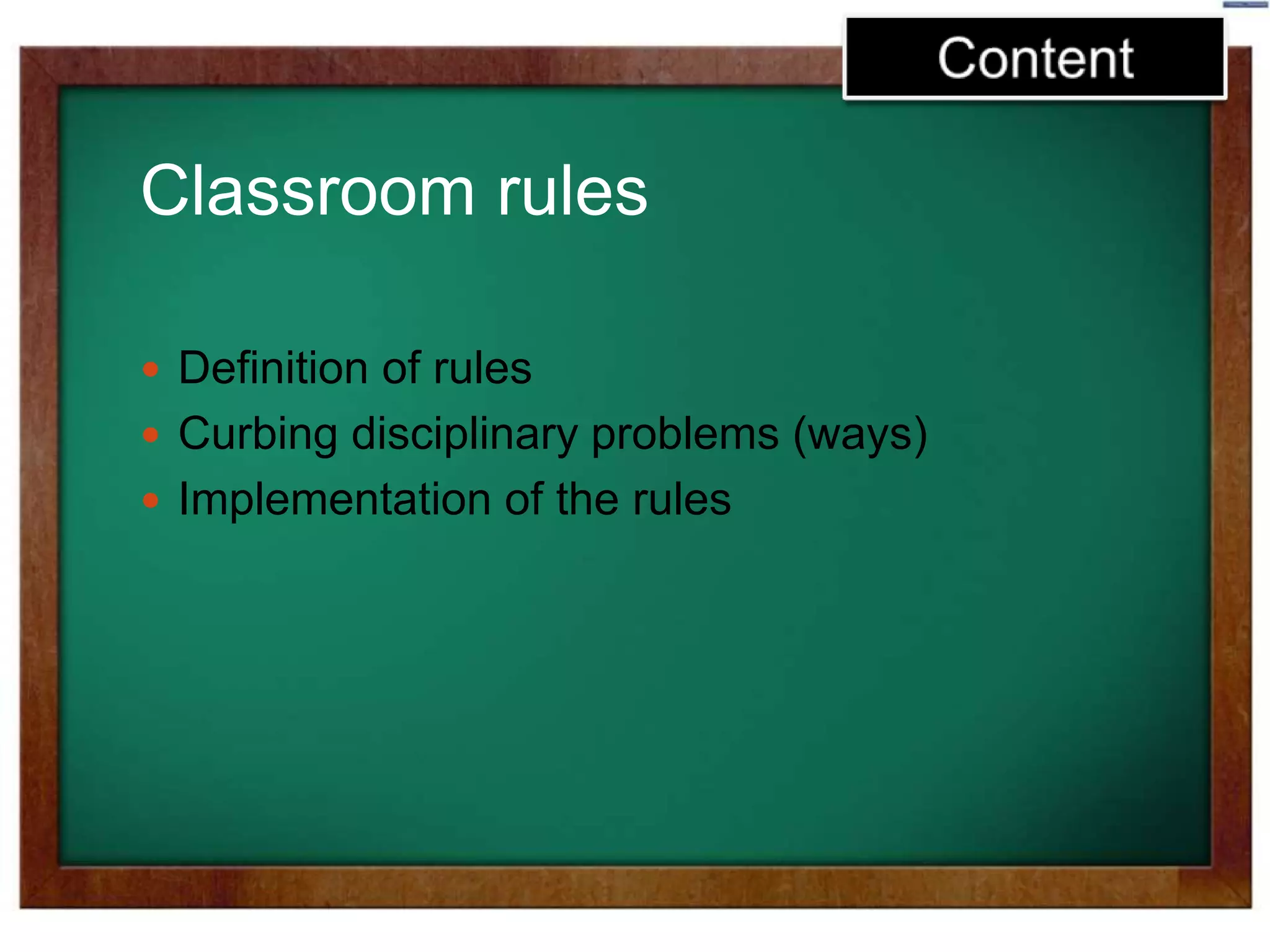
Classroom rules
 Definition of rules
 Curbing disciplinary problems (ways)
 Implementation of the rules
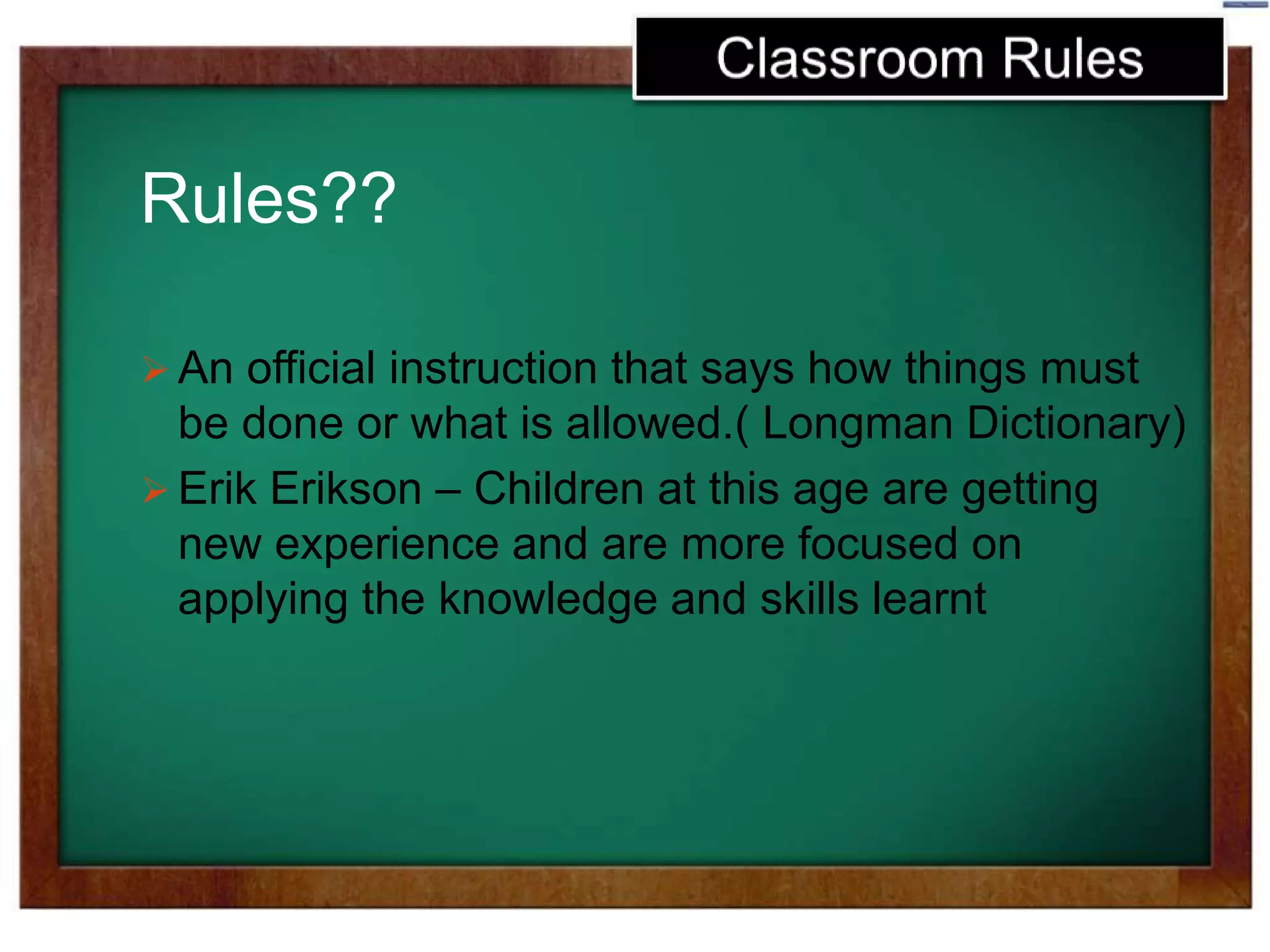
Rules??
 An official instruction that says how things must
be done or what is allowed.( Longman Dictionary)
 Erik Erikson – Children at this age are getting
new experience and are more focused on
applying the knowledge and skills learnt
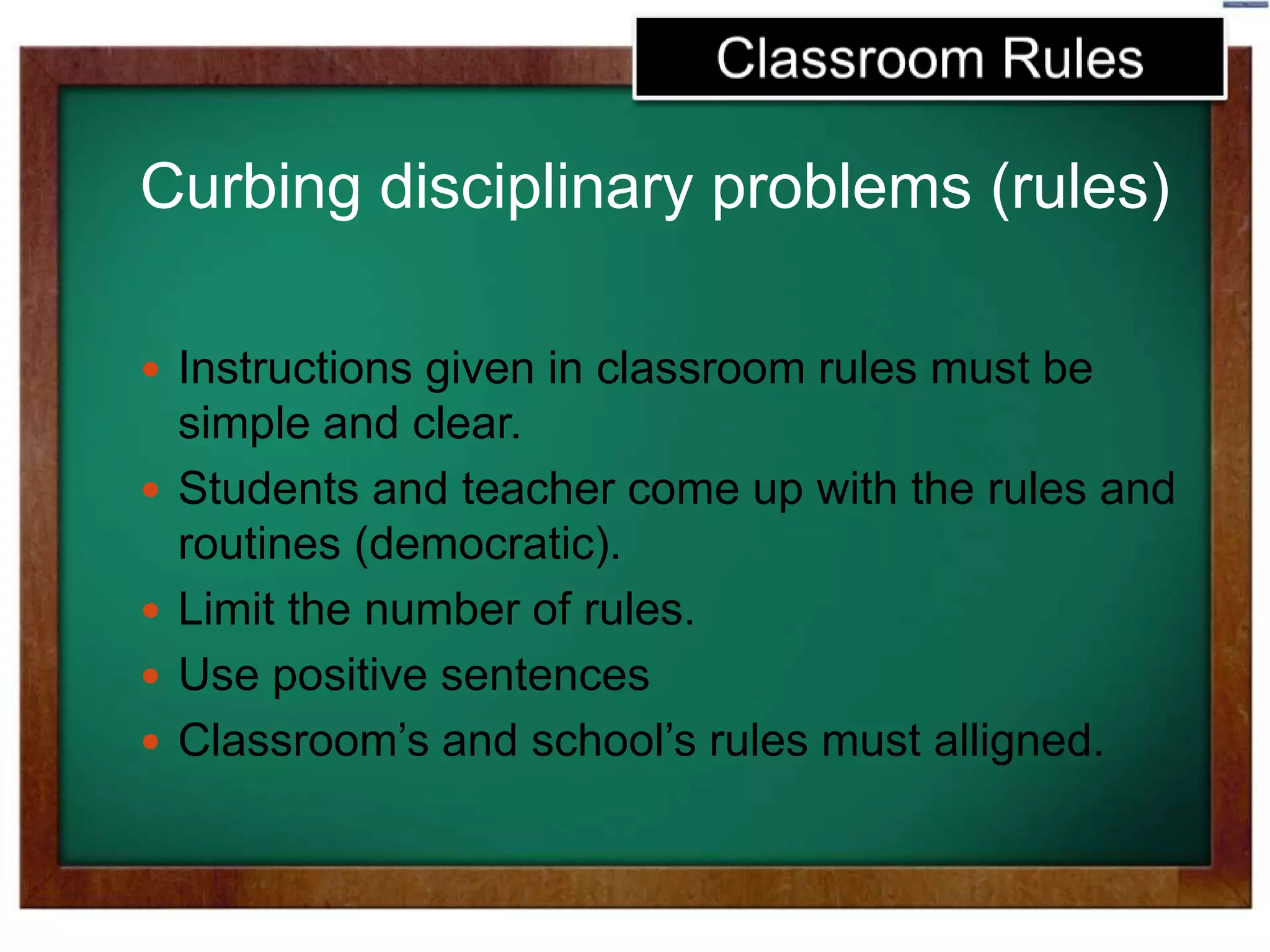
Curbing disciplinary problems (rules)
 Instructions given in classroom rules must be
simple and clear.
 Students and teacher come up with the rules and
routines (democratic).
 Limit the number of rules.
 Use positive sentences
 Classroom’s and school’s rules must alligned.
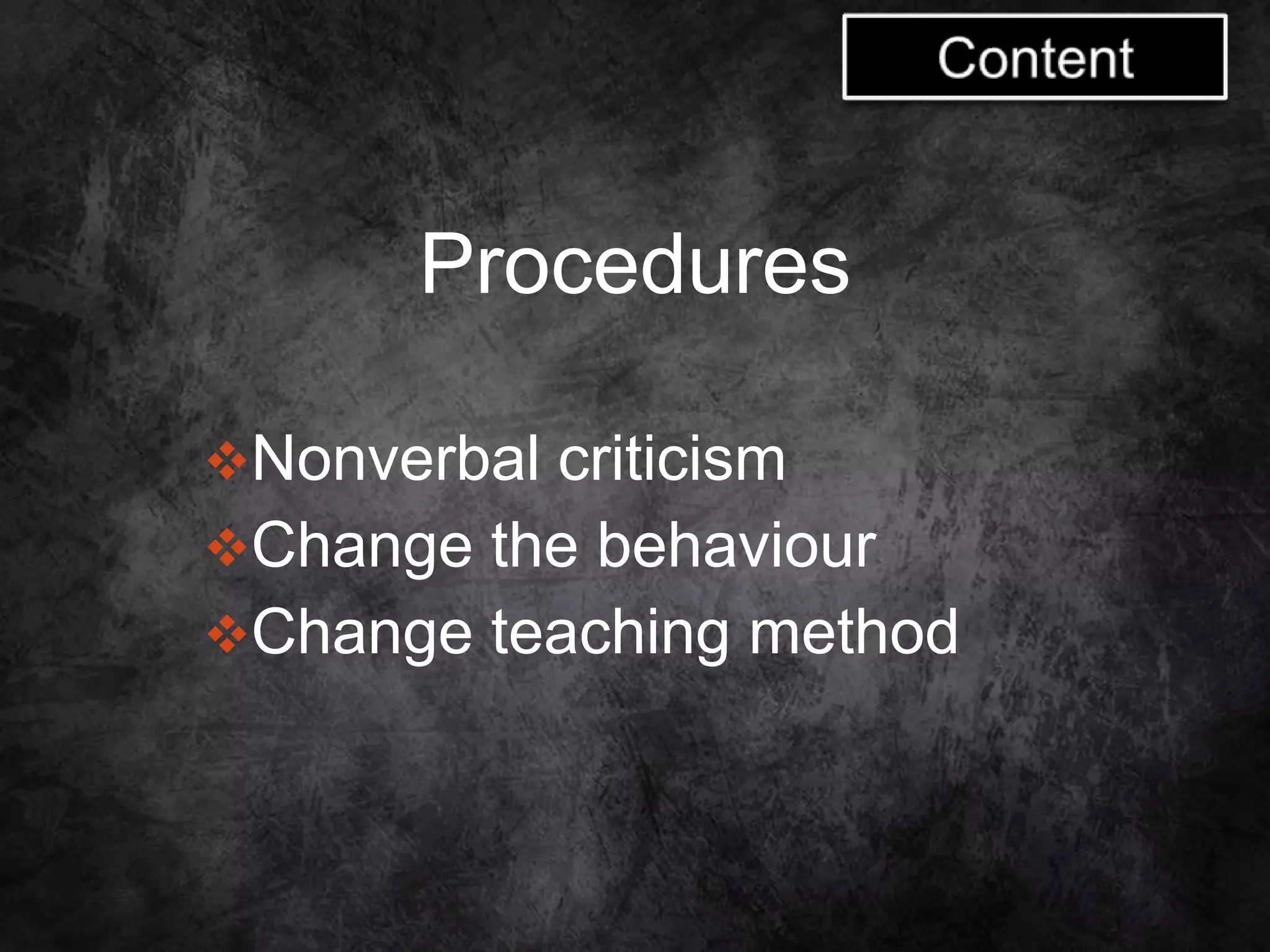
Procedures
Nonverbal criticism
Change the behaviour
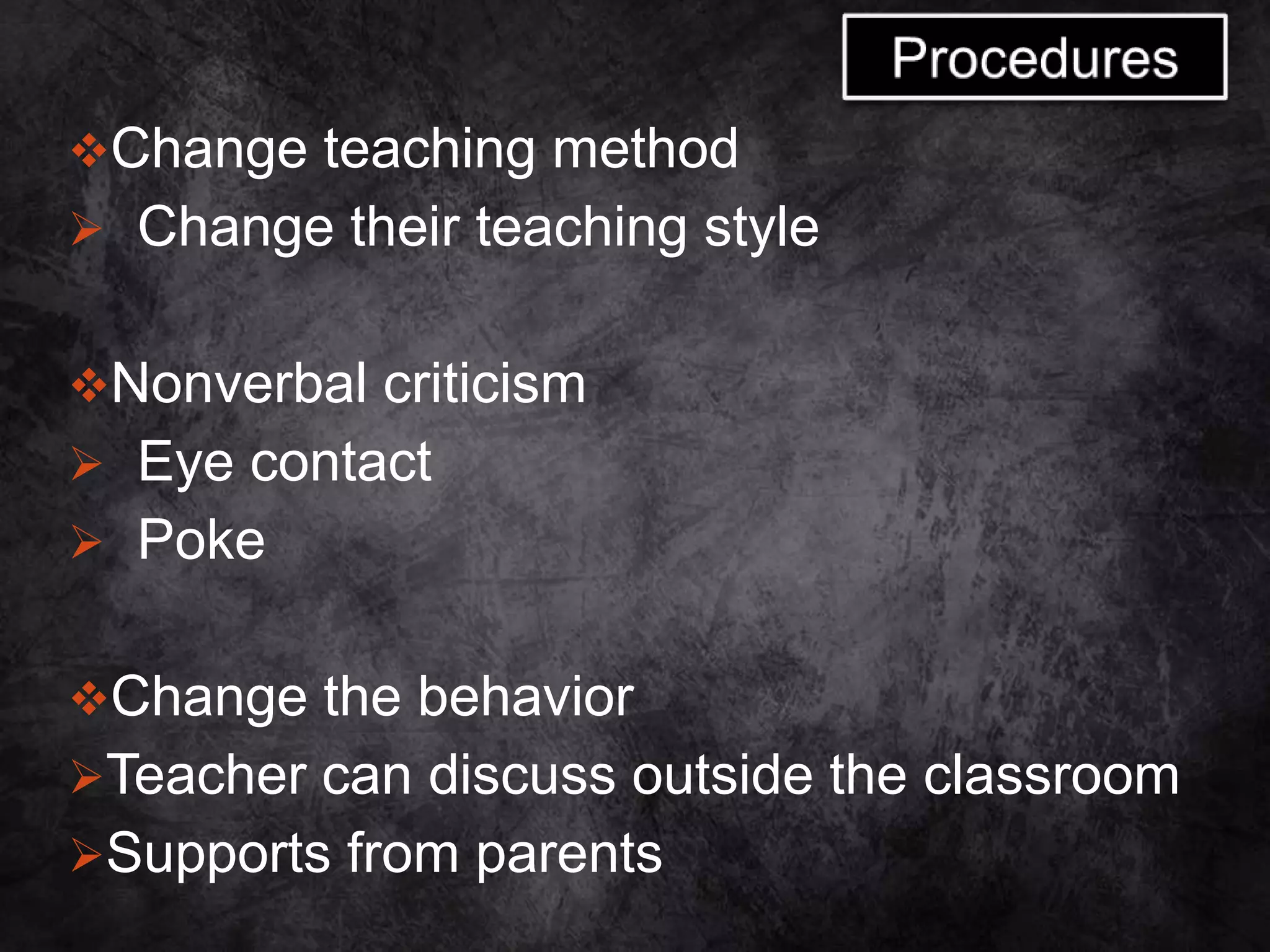
Change teaching method
 Change their teaching style
Nonverbal criticism
 Eye contact
 Poke
Change the behavior
Teacher can discuss outside the classroom
Supports from parents
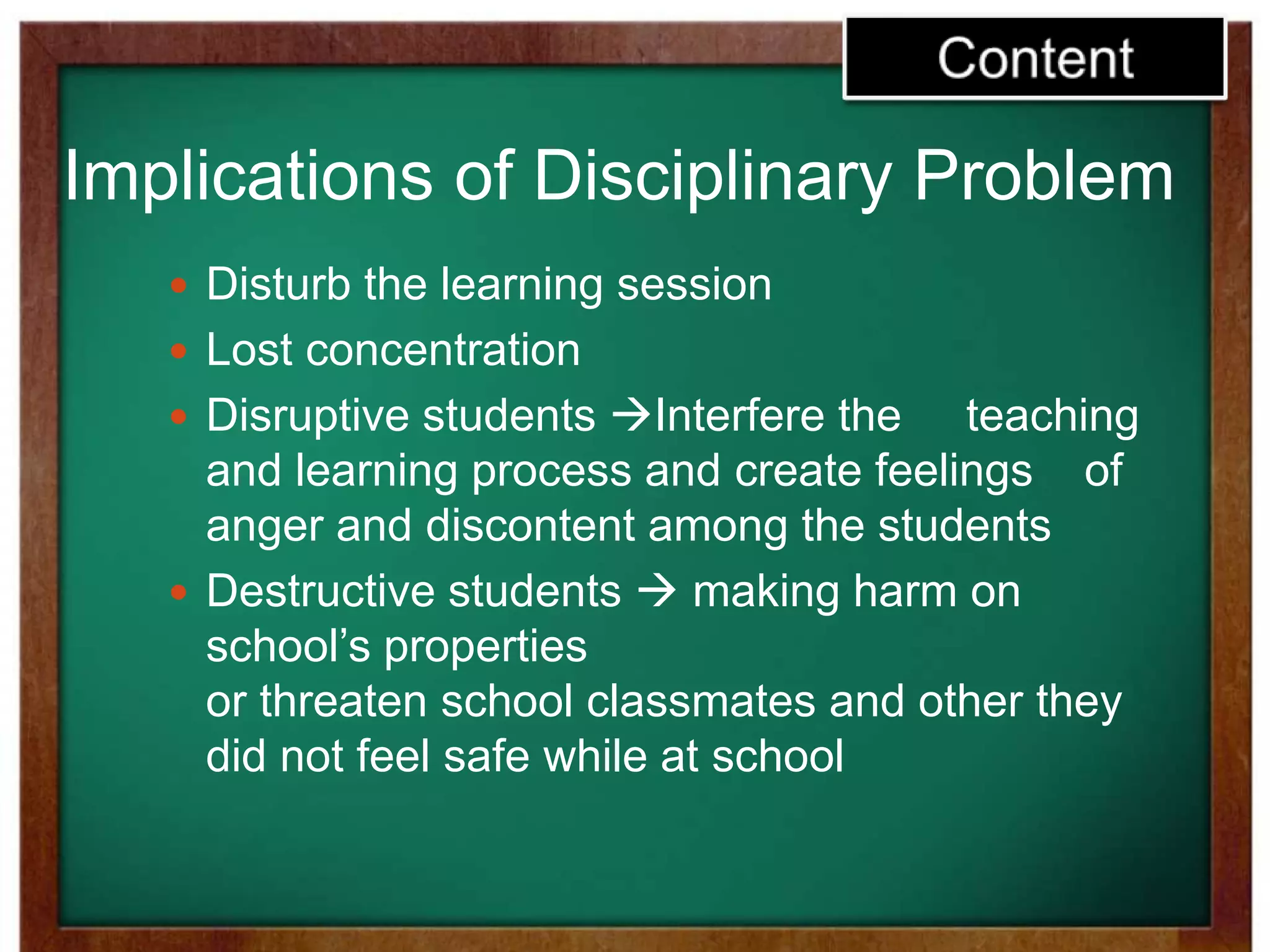
Implications of Disciplinary Problem
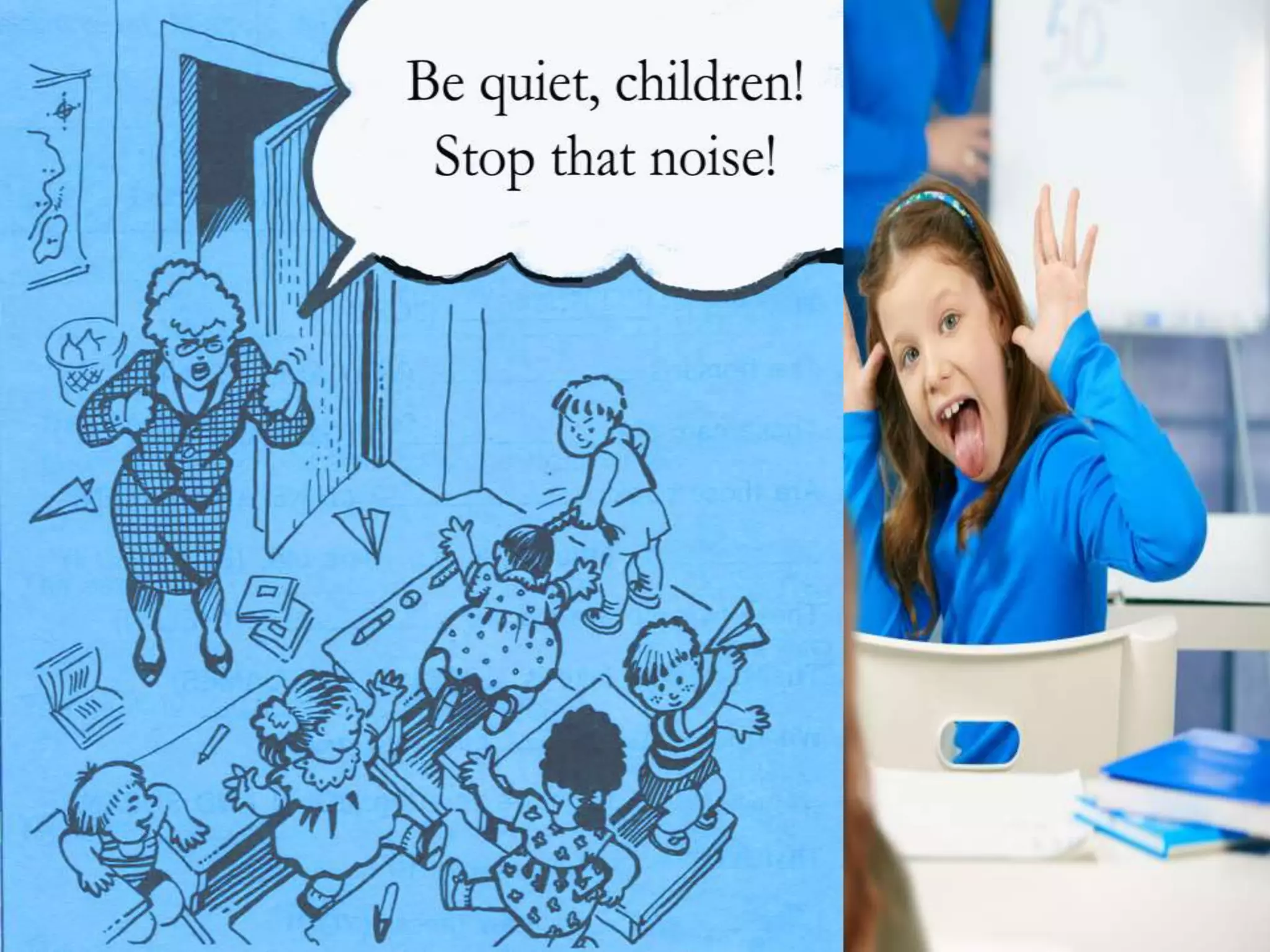
 Disturb the learning session
 Lost concentration
 Disruptive students Interfere the teaching
and learning process and create feelings of
anger and discontent among the students
 Destructive students  making harm on
school’s properties
or threaten school classmates and other they
did not feel safe while at school
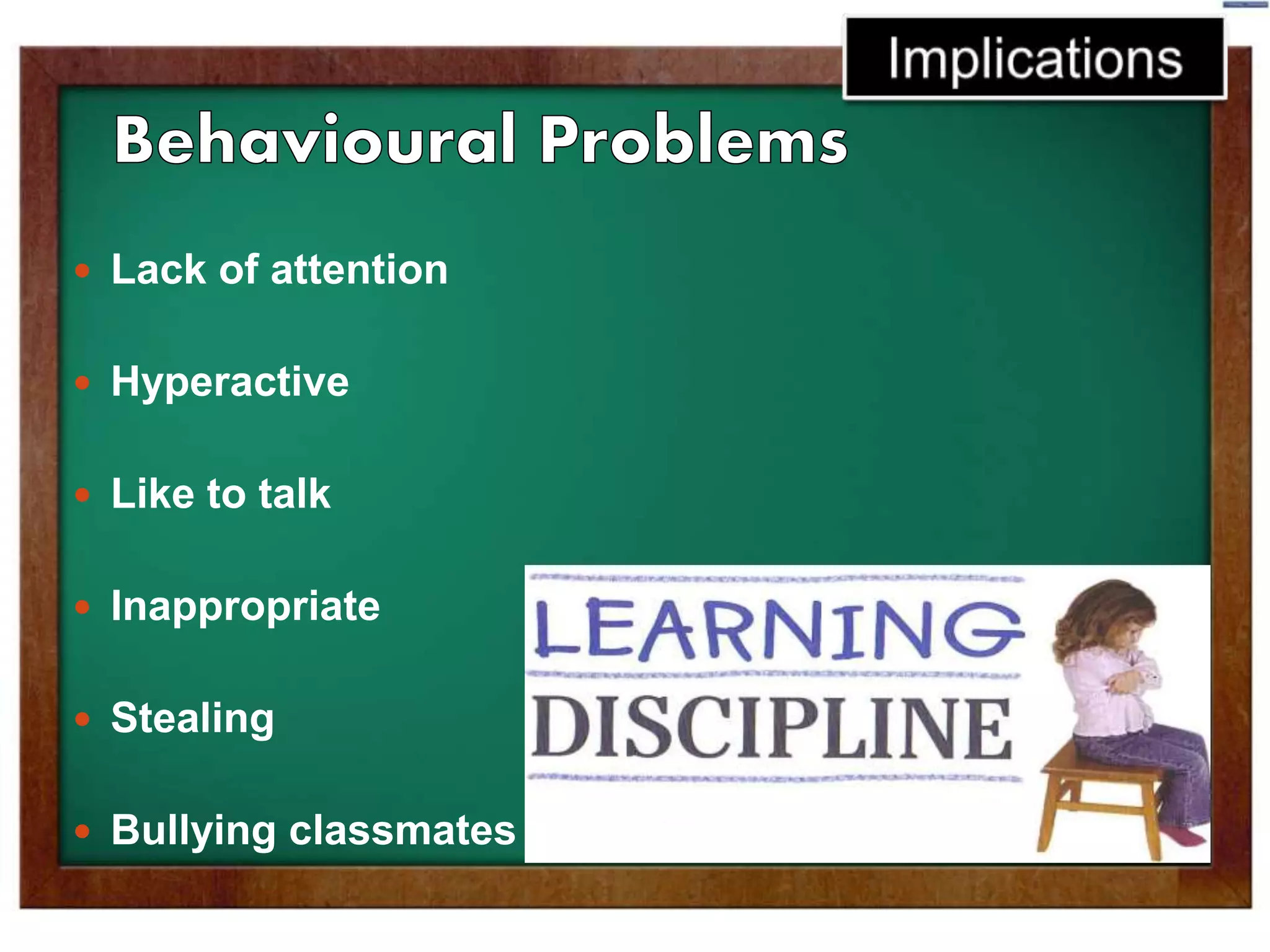
 Lack of attention
 Hyperactive
 Like to talk
 Inappropriate
 Stealing
 Bullying classmates
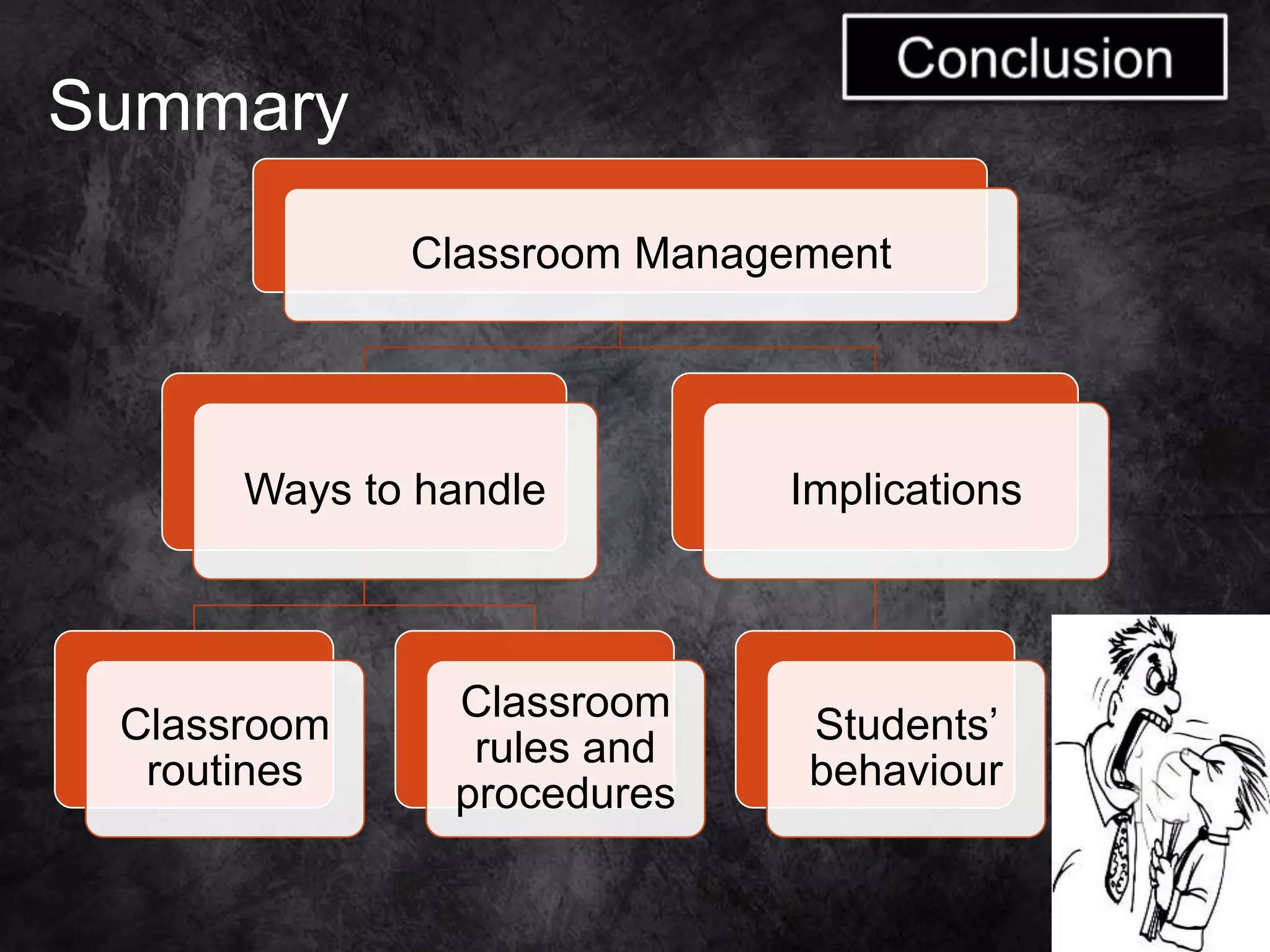
Summary
Classroom Management
Ways to handle
Classroom
routines
Classroom
rules and
procedures
Implications
Students’
behaviour
Video

Handling Disciplinary Problem in the classroom

  • 2.
  • 4.
  • 5.
     At theend of this lesson, audience would be able to: -understand ways to handle disciplinary problems according to the classroom routine, rules and procedure -be aware of implications of disciplinary problems in the classroom
  • 6.
     Types ofdisciplinary problems  Classroom routines - What is routine -Types of routine  Classroom rules and procedures -definition of rules -how to form the rules -rules and procedures on disciplinary problems Implications of disciplinary problems -behavioural problems
  • 7.
    Types of DisciplinaryProblems Disruptive Destructive
  • 8.
    Classroom Routines  ROUTINES? Proceduresfor specific actions Improve the Teaching & Learning process
  • 9.
     Common ClassroomRoutines  Procedures that are usual in a lot of classroom or for most teachers and students  Daily Specific Routines  Procedures that are only established at certain classrooms or schools that are not similar to one another
  • 10.
     Occasional Routines Procedures that are not happening or done often or regularly  Students-Teacher Agreement Routines  Procedures made after careful deliberation between students and the teacher that are squarely accepted
  • 11.
    Classroom rules  Definitionof rules  Curbing disciplinary problems (ways)  Implementation of the rules
  • 12.
    Rules??  An officialinstruction that says how things must be done or what is allowed.( Longman Dictionary)  Erik Erikson – Children at this age are getting new experience and are more focused on applying the knowledge and skills learnt
  • 13.
    Curbing disciplinary problems(rules)  Instructions given in classroom rules must be simple and clear.  Students and teacher come up with the rules and routines (democratic).  Limit the number of rules.  Use positive sentences  Classroom’s and school’s rules must alligned.
  • 14.
    Procedures Nonverbal criticism Change thebehaviour Change teaching method
  • 15.
    Change teaching method Change their teaching style Nonverbal criticism  Eye contact  Poke Change the behavior Teacher can discuss outside the classroom Supports from parents
  • 16.
    Implications of DisciplinaryProblem  Disturb the learning session  Lost concentration  Disruptive students Interfere the teaching and learning process and create feelings of anger and discontent among the students  Destructive students  making harm on school’s properties or threaten school classmates and other they did not feel safe while at school
  • 17.
     Lack ofattention  Hyperactive  Like to talk  Inappropriate  Stealing  Bullying classmates
  • 18.
    Summary Classroom Management Ways tohandle Classroom routines Classroom rules and procedures Implications Students’ behaviour
  • 19.