TOPIC 6 : CLASSROOM
      MANAGEMENT
            PRESENTED BY :
           NUR AMIRA ISMAIL
           NUR DIYANA SHUID
             SUHAIZA SHUIB
(PISMP SCIENCE 1, JANUARY 2011 INTAKE)
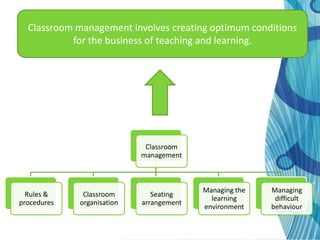
Classroom management involves creating optimum conditions
           for the business of teaching and learning.


                             Classroom
                            management


                                          Managing the   Managing
  Rules &     Classroom        Seating
                                            learning      difficult
procedures   organisation   arrangement
                                          environment    behaviour
RULES
• A rule identifies general expectations or standards for
  behavior.
   – Eg: “Respect other persons and their property”

• covers a large set of behaviors that should always be
  practiced.

• Rules frequently indicate unacceptable behavior as well as
  expected, appropriate behavior, although teachers sometimes
  manage to write rules that are only positively stated
   – Eg:“We ask permission before talking in class”. In such
     instances the unacceptable behavior is implied “Don’t talk
     without permission”).
• In addition to general rules, many teachers will have
  a rule or two governing a specific behavior that could
  become an issue or that they want to prevent
   – Eg :“Gum chewing is allowed,” or “Gum chewing is
     not allowed”
RULES

• There are three steps to construct the rules :
     knows about the school regulation
     plans the classroom rules
     involve students when planning the classroom
    rules
Example of classroom rules :

•   Come to school on time.
•   Bring what you need with you.
•   Listen to the teacher.
•   Follow directions.
•   Be kind to others.
PROCEDURES
• Procedures are the expected students behaviour
  which is applied for specific activities focus on
  achievement of students
• Unlike rules, which can involve students in their
  establishment, procedures are determined by the
  teacher.
• Procedures involve :
     transition to enter and going out from the classroom
     use of area in the classroom
     cooperative group activities
     small group work
PROCEDURE
• Procedures also communicate expectations for
  behaviour.

• They are usually applied in a specific activity, and they
  are usually directed at accomplishing something rather
  than prohibiting some behaviour or defining a general
  standard.

• For example, you will set up procedures with your
  students for collecting assignments, turning in late
  work, participating in class discussions, using the
  bathroom, and so on.
• Some procedures (such as use of equipment
  at a centre) are sufficiently complex or critical
  that you may want to post guidelines in
  addition to discussing them with the students.

• However, many procedures are not written
  because they are very simple or because their
  specificity and frequency of use allow
  students to learn them rapidly.
• Marlene and Lee Canter’s style of assertive discipline that involves
  including the students in the rule writing process.

•    When the teacher is writing the rules, he/she asks the students for input
    and rules that they think would be appropriate for the classroom and then
    compiles a list of these rules to post in the classroom.

• This form of rulemaking establishes a type of responsibility in the
  students.

• It helps the students take ownership in their own behaviour when they
  create the class rules.

• First day of class, held a class meeting to brainstorm about classroom
  rules, in which the students will give their input on the rules they wish to
  see govern their classroom.
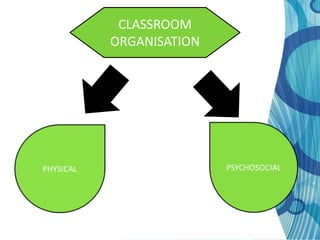
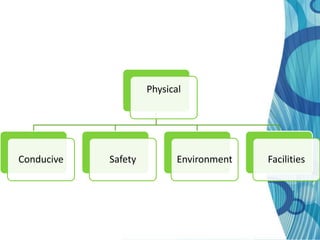
CLASSROOM
ORGANISATION
Physical


Conducive   Safety          Environment   Facilities
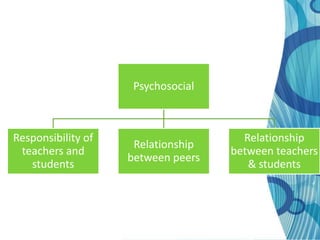
Psychosocial


Responsibility of                     Relationship
                     Relationship
 teachers and                       between teachers
                    between peers
   students                            & students
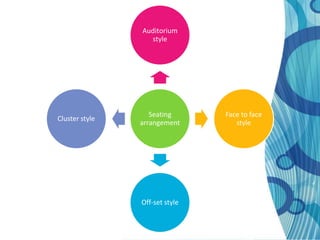
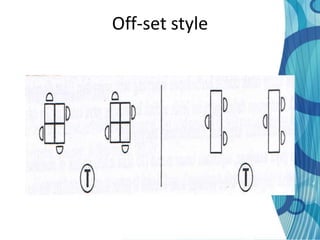
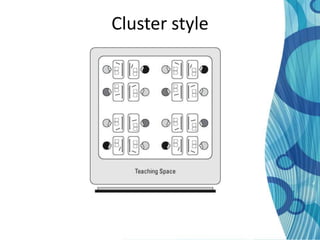
Auditorium
                  style


                   Seating      Face to face
Cluster style
                arrangement        style


                Off-set style
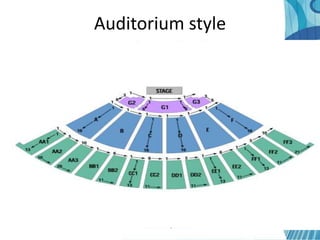
Auditorium style
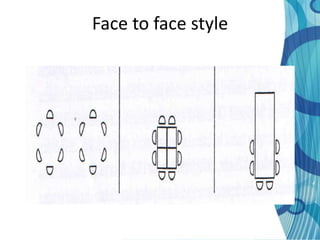
Face to face style
Off-set style
Cluster style
Managing difficult behaviour
Definition

• Ellen C. Frede : “Challenging behaviour is any
  repeated pattern of behaviour that interferes
  with learning or engaging in social interactions’’.
• This includes unresponsiveness to
  developmentally appropriate guidance and
  actions such as prolonged tantrums, physical and
  verbal aggression, disruptive vocal and motor
  behaviour, property destruction, self-injury,
  noncompliance and withdrawal.
Types of behaviour that are most
      challenging in a classroom are:

• Not listening to the teacher
  • Not doing one’s work
  • Distracting others
  • Avoiding homework deliberately
  • Excessive talking with friends
  • Using different tactics to delay class work
• • Roaming about in the class
  • Hitting or teasing
  • Bullying
  • Stealing
  • Lying
  • Leaving notebooks at home
Causes of challenging behaviour
• Not understanding the work that is being done
  • Seeking attention
  • Too many instructions given in the course of
  one lesson
  • Peer pressure
  • Boredom
  • Student is unwell
  • Student has a single parent
  • Problems at home.
• These include:
  1. Fights between parents
  2. A sick parent
  3. A new addition to the family
  4. Economic issues
  5. Being neglected at home
  6. Death in the family
Strategies for dealing with challenging
               behaviour
• Planning - research and plan your approach
  to each class and the individuals that present
  challenging behaviour
• Have your own sets of rules and
  communicate your expectations of the class.
• Follow the schools behaviour policy.
• Keep things light and sidestep minor
  disruption with humour.
• Praise good behaviour.
• Try to keep the pace of the lesson high.
• Put trouble makers outside the door for a
  few moments to cool off.
• Use a reward system.
• Plan stimulating and interesting activities
  into the lesson. Tell interesting stories.
• Build a treat like part of a video or a quiz as a
  reward for getting work done and good
  behaviour.
• Do not get in to arguments with pupils.

classroom management

  • 1.
    TOPIC 6 :CLASSROOM MANAGEMENT PRESENTED BY : NUR AMIRA ISMAIL NUR DIYANA SHUID SUHAIZA SHUIB (PISMP SCIENCE 1, JANUARY 2011 INTAKE)
  • 2.
    Classroom management involvescreating optimum conditions for the business of teaching and learning. Classroom management Managing the Managing Rules & Classroom Seating learning difficult procedures organisation arrangement environment behaviour
  • 3.
    RULES • A ruleidentifies general expectations or standards for behavior. – Eg: “Respect other persons and their property” • covers a large set of behaviors that should always be practiced. • Rules frequently indicate unacceptable behavior as well as expected, appropriate behavior, although teachers sometimes manage to write rules that are only positively stated – Eg:“We ask permission before talking in class”. In such instances the unacceptable behavior is implied “Don’t talk without permission”).
  • 4.
    • In additionto general rules, many teachers will have a rule or two governing a specific behavior that could become an issue or that they want to prevent – Eg :“Gum chewing is allowed,” or “Gum chewing is not allowed”
  • 5.
    RULES • There arethree steps to construct the rules : knows about the school regulation plans the classroom rules involve students when planning the classroom rules
  • 6.
    Example of classroomrules : • Come to school on time. • Bring what you need with you. • Listen to the teacher. • Follow directions. • Be kind to others.
  • 7.
    PROCEDURES • Procedures arethe expected students behaviour which is applied for specific activities focus on achievement of students • Unlike rules, which can involve students in their establishment, procedures are determined by the teacher. • Procedures involve : transition to enter and going out from the classroom use of area in the classroom cooperative group activities small group work
  • 8.
    PROCEDURE • Procedures alsocommunicate expectations for behaviour. • They are usually applied in a specific activity, and they are usually directed at accomplishing something rather than prohibiting some behaviour or defining a general standard. • For example, you will set up procedures with your students for collecting assignments, turning in late work, participating in class discussions, using the bathroom, and so on.
  • 9.
    • Some procedures(such as use of equipment at a centre) are sufficiently complex or critical that you may want to post guidelines in addition to discussing them with the students. • However, many procedures are not written because they are very simple or because their specificity and frequency of use allow students to learn them rapidly.
  • 10.
    • Marlene andLee Canter’s style of assertive discipline that involves including the students in the rule writing process. • When the teacher is writing the rules, he/she asks the students for input and rules that they think would be appropriate for the classroom and then compiles a list of these rules to post in the classroom. • This form of rulemaking establishes a type of responsibility in the students. • It helps the students take ownership in their own behaviour when they create the class rules. • First day of class, held a class meeting to brainstorm about classroom rules, in which the students will give their input on the rules they wish to see govern their classroom.
  • 11.
  • 12.
    Physical Conducive Safety Environment Facilities
  • 13.
    Psychosocial Responsibility of Relationship Relationship teachers and between teachers between peers students & students
  • 14.
    Auditorium style Seating Face to face Cluster style arrangement style Off-set style
  • 15.
  • 16.
  • 17.
  • 18.
  • 19.
  • 20.
    Definition • Ellen C.Frede : “Challenging behaviour is any repeated pattern of behaviour that interferes with learning or engaging in social interactions’’. • This includes unresponsiveness to developmentally appropriate guidance and actions such as prolonged tantrums, physical and verbal aggression, disruptive vocal and motor behaviour, property destruction, self-injury, noncompliance and withdrawal.
  • 21.
    Types of behaviourthat are most challenging in a classroom are: • Not listening to the teacher • Not doing one’s work • Distracting others • Avoiding homework deliberately • Excessive talking with friends • Using different tactics to delay class work
  • 22.
    • • Roamingabout in the class • Hitting or teasing • Bullying • Stealing • Lying • Leaving notebooks at home
  • 23.
    Causes of challengingbehaviour • Not understanding the work that is being done • Seeking attention • Too many instructions given in the course of one lesson • Peer pressure • Boredom • Student is unwell • Student has a single parent • Problems at home.
  • 24.
    • These include: 1. Fights between parents 2. A sick parent 3. A new addition to the family 4. Economic issues 5. Being neglected at home 6. Death in the family
  • 25.
    Strategies for dealingwith challenging behaviour • Planning - research and plan your approach to each class and the individuals that present challenging behaviour • Have your own sets of rules and communicate your expectations of the class. • Follow the schools behaviour policy. • Keep things light and sidestep minor disruption with humour.
  • 26.
    • Praise goodbehaviour. • Try to keep the pace of the lesson high. • Put trouble makers outside the door for a few moments to cool off. • Use a reward system. • Plan stimulating and interesting activities into the lesson. Tell interesting stories.
  • 27.
    • Build atreat like part of a video or a quiz as a reward for getting work done and good behaviour. • Do not get in to arguments with pupils.