Respect Yourself/Respect Others

                  •Etiquette
                   •Access
                    •Law
Digital Access
• Full electronic participation in society

• Many people believe that everyone should
  have equal access to education, health care,
  libraries, etc. This carries over to the idea of
  everyone being able to access the digital
  world.
• Digital access includes having access to
  technology – computers, cell phones, tablets, e-
  readers, etc; high speed internet; wireless internet;
  availability to access in homes, schools,
  communities, and rural areas; access to new
  technology; as well as access to education to learn
  how to use technology.

• We all realize that there are many reasons
                                              why
  people may not have digital access, but we should
  never give up on working to try to make digital
  access possible for everyone.
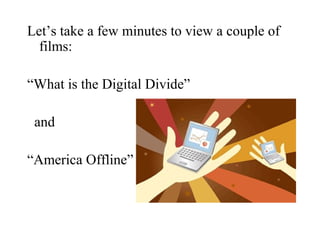
Let’s take a few minutes to view a couple of
  films:

“What is the Digital Divide”

 and

“America Offline”
Digital Law
• As citizens of our city, state and country we are
  expected to follow the law, the same idea applies
  in the digital world
• We are responsible for our behavior and actions
  online
• Stealing or damaging other people’s work,
  identity, or property online is a crime
• We should avoid doing anything that would be
  considered unethical when we are online
• Things that are unethical:
  * Hacking into the information of others
  * Stealing or using someone’s passwords
  * Downloading music illegally
  * Plagiarizing
  * Creating worms, viruses or trojan horses
  * Sending SPAM
  * Stealing someone’s identity or property
Let’s look at 3 films pertaining to Digital
  Law:

“Identity Theft: Phishing”
“Pests on Your PC – Viruses, Trojans and
  Worms”
“Digital Law”
Digital Etiquette
• Sometimes called “Netiquette”
• We are all aware of appropriate behavior
  and we recognize behavior when it is
  inappropriate
• Many times we let people use digital
  devices and we never talk to them or teach
  them digital etiquette or the proper behavior
  for navigating the digital world
What happens when people are
not taught the proper behavior for
        using technology?
• When technology is not used appropriately,
  in the proper place or at the proper time
      -- create rules and regulations regarding
         its use
      -- it gets banned

How would this improve if Digital Etiquette is
 taught to everyone and everyone follows it?
Watch this group of films:
 “Digital Etiquette”
 “Cell Phone Etiquette”
 “Gadget Etiquette”
 “How to Follow Proper Netiquette Rules”
 “Discovering the Internet – Netiquette”
THE
      END

Respect%20 yourself/Respect Others

  • 1.
    Respect Yourself/Respect Others •Etiquette •Access •Law
  • 2.
    Digital Access • Fullelectronic participation in society • Many people believe that everyone should have equal access to education, health care, libraries, etc. This carries over to the idea of everyone being able to access the digital world.
  • 3.
    • Digital accessincludes having access to technology – computers, cell phones, tablets, e- readers, etc; high speed internet; wireless internet; availability to access in homes, schools, communities, and rural areas; access to new technology; as well as access to education to learn how to use technology. • We all realize that there are many reasons why people may not have digital access, but we should never give up on working to try to make digital access possible for everyone.
  • 4.
    Let’s take afew minutes to view a couple of films: “What is the Digital Divide” and “America Offline”
  • 5.
    Digital Law • Ascitizens of our city, state and country we are expected to follow the law, the same idea applies in the digital world • We are responsible for our behavior and actions online • Stealing or damaging other people’s work, identity, or property online is a crime • We should avoid doing anything that would be considered unethical when we are online
  • 6.
    • Things thatare unethical: * Hacking into the information of others * Stealing or using someone’s passwords * Downloading music illegally * Plagiarizing * Creating worms, viruses or trojan horses * Sending SPAM * Stealing someone’s identity or property
  • 7.
    Let’s look at3 films pertaining to Digital Law: “Identity Theft: Phishing” “Pests on Your PC – Viruses, Trojans and Worms” “Digital Law”
  • 8.
    Digital Etiquette • Sometimescalled “Netiquette” • We are all aware of appropriate behavior and we recognize behavior when it is inappropriate • Many times we let people use digital devices and we never talk to them or teach them digital etiquette or the proper behavior for navigating the digital world
  • 9.
    What happens whenpeople are not taught the proper behavior for using technology?
  • 10.
    • When technologyis not used appropriately, in the proper place or at the proper time -- create rules and regulations regarding its use -- it gets banned How would this improve if Digital Etiquette is taught to everyone and everyone follows it?
  • 11.
    Watch this groupof films: “Digital Etiquette” “Cell Phone Etiquette” “Gadget Etiquette” “How to Follow Proper Netiquette Rules” “Discovering the Internet – Netiquette”
  • 12.
    THE END