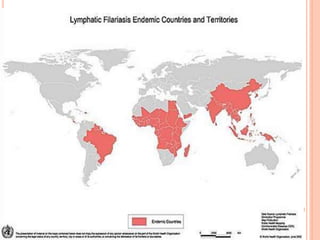
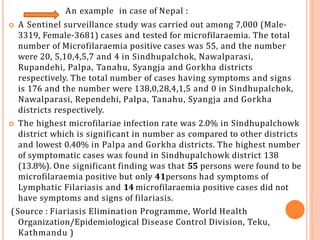
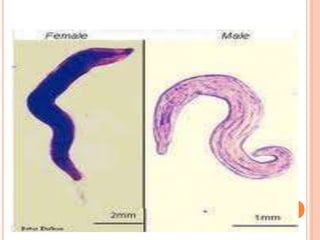
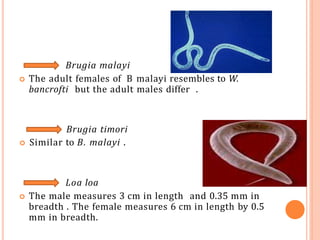
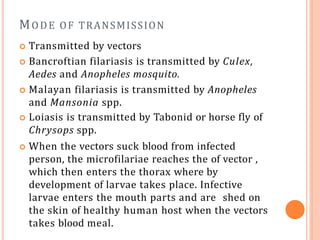
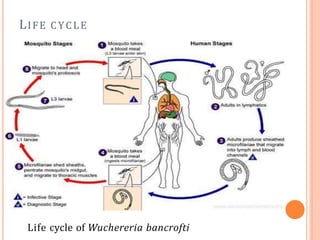
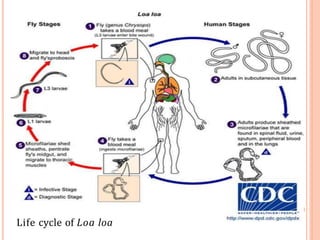
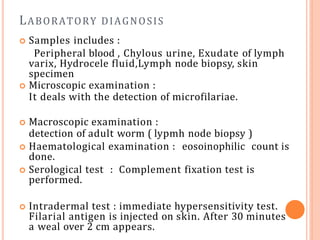
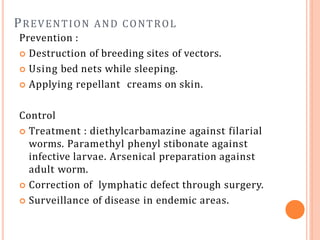
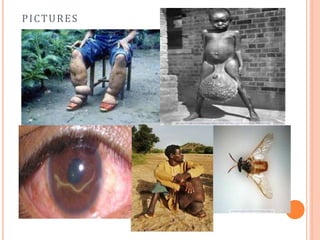
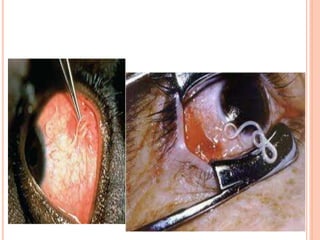
This document provides an overview of filariasis (lymphatic filariasis). It begins with an introduction and outlines the topics to be covered, which include epidemiology, morphology, transmission, life cycle, pathogenesis, diagnosis, prevention and control. It then delves into each topic in detail. Some key points are: lymphatic filariasis is caused by infection with filarial nematodes and transmitted by mosquitoes; it affects over 120 million people globally, with highest prevalence in South and Southeast Asia and Africa; microscopic examination of blood and tissue samples can detect microfilariae and adult worms. Prevention strategies include vector control, bed nets, repellents and mass drug administration, while treatment involves antifilarial drugs