Fight With Cancer Using Nanorobots


      MITCOE E&TC DEPARTMENT
   Introduction
   Nanorobots
   Design of Nanorobot
   Status Of development
   Advantages
   Disadvantages
   Conclusion
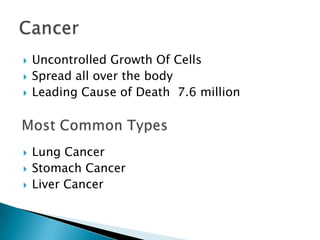
   Uncontrolled Growth Of Cells
   Spread all over the body
   Leading Cause of Death 7.6 million


   Lung Cancer
   Stomach Cancer
   Liver Cancer
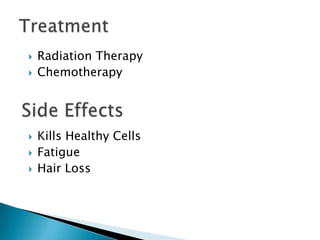
   Radiation Therapy
   Chemotherapy


   Kills Healthy Cells
   Fatigue
   Hair Loss
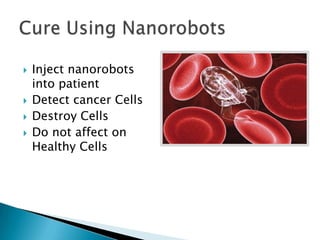
   Inject nanorobots
    into patient
   Detect cancer Cells
   Destroy Cells
   Do not affect on
    Healthy Cells
   Nano
    Infinitesimally Small
    Scale of Manufacturing
    And Fabricating Materials


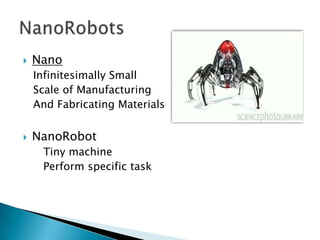
   NanoRobot
     Tiny machine
     Perform specific task
   Sensitive to Biological Element
   Detect body temperature ,fluids or enzymes
   Phosphatidic acid Chemotactic sensor can use
   PH responsive
   Tumor have low PH
   Transducer
   Receive Signal from Nanobiosensor and
    Perform its job


       Contain Highly Concentrated enzymes which
        will be delivered into infected cell
   Cant use conventional sources
   Chemical Energy
       Nanorobots would hold small chemical
    Supply
       Become fuel source when combined
    with blood
   Float freely inside the body
   Detect the tumor effectively


          Bottom-up approach
          Assembling structures atom by atom or
           molecule by molecule
   Typically 0.5 to 3 micron
   1-100 nm parts


   Interior : Vacuum environment
   Exterior : Not affected by chemical liquids of
    our body
▶ 70-nm attack robots
▶ Attaches to the cancerous
  cell's surface
▶ Carry siRNA deactivates
  protein production
▶ Starving malign cell to
  death.                      Tumor   500 nm
   Small Size
   Inexpensive(if mass produced)
   No maintenance
   Automated
   Painless Treatment
   Easily Disposable
   Should be Accurate if not harmful effect
    occurs
   Initial Design Cost high
   Very complicate design
   Recent advancement in the field of
    Nanorobotics gives the hope of the effective
    use of this technology in medical field.
   Thus in future nanoterobots will play an
    important role
   M. Venkatesan,B. Jolad “Nanorobots in
    Cancer Treatment” IEEE 2010
   R.Hariharan , J.Manohar “Nanorobotics As
    Medicament” IEEE 2010
   Adriano Cavalcanti , Bijan Shirinzadeh
    “Nanorobots for Laparoscopic Cancer
    Surgery” IEEE ICIS 2007
Fight with cancer using nanobots

Fight with cancer using nanobots

  • 1.
    Fight With CancerUsing Nanorobots MITCOE E&TC DEPARTMENT
  • 2.
    Introduction  Nanorobots  Design of Nanorobot  Status Of development  Advantages  Disadvantages  Conclusion
  • 3.
    Uncontrolled Growth Of Cells  Spread all over the body  Leading Cause of Death 7.6 million  Lung Cancer  Stomach Cancer  Liver Cancer
  • 4.
    Radiation Therapy  Chemotherapy  Kills Healthy Cells  Fatigue  Hair Loss
  • 5.
    Inject nanorobots into patient  Detect cancer Cells  Destroy Cells  Do not affect on Healthy Cells
  • 6.
    Nano Infinitesimally Small Scale of Manufacturing And Fabricating Materials  NanoRobot Tiny machine Perform specific task
  • 7.
    Sensitive to Biological Element  Detect body temperature ,fluids or enzymes  Phosphatidic acid Chemotactic sensor can use  PH responsive  Tumor have low PH  Transducer
  • 8.
    Receive Signal from Nanobiosensor and Perform its job  Contain Highly Concentrated enzymes which will be delivered into infected cell
  • 9.
    Cant use conventional sources  Chemical Energy Nanorobots would hold small chemical Supply Become fuel source when combined with blood
  • 10.
    Float freely inside the body  Detect the tumor effectively  Bottom-up approach  Assembling structures atom by atom or molecule by molecule
  • 11.
    Typically 0.5 to 3 micron  1-100 nm parts  Interior : Vacuum environment  Exterior : Not affected by chemical liquids of our body
  • 12.
    ▶ 70-nm attackrobots ▶ Attaches to the cancerous cell's surface ▶ Carry siRNA deactivates protein production ▶ Starving malign cell to death. Tumor 500 nm
  • 13.
    Small Size  Inexpensive(if mass produced)  No maintenance  Automated  Painless Treatment  Easily Disposable
  • 14.
    Should be Accurate if not harmful effect occurs  Initial Design Cost high  Very complicate design
  • 15.
    Recent advancement in the field of Nanorobotics gives the hope of the effective use of this technology in medical field.  Thus in future nanoterobots will play an important role
  • 16.
    M. Venkatesan,B. Jolad “Nanorobots in Cancer Treatment” IEEE 2010  R.Hariharan , J.Manohar “Nanorobotics As Medicament” IEEE 2010  Adriano Cavalcanti , Bijan Shirinzadeh “Nanorobots for Laparoscopic Cancer Surgery” IEEE ICIS 2007