WHAT IS INVENTORY TO A COMPANY AND
WHY GIVE IT A VALUE
 Inventory is goods and material that a business
holds for the purpose of resale.
 Inventory is a given value for two main purpose
1.insurance and
2.profit
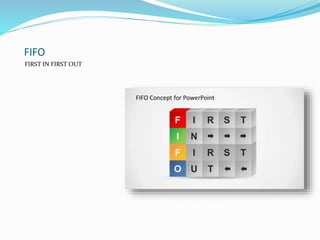
FIFO
FIRST IN FIRST OUT
FIFO : This inventory method matches
sales with inventory by matching revenue
from the first sale with the costs associated
with the first product that was made first in
first out.
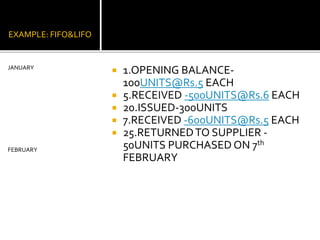
EXAMPLE: FIFO&LIFO
 1.OPENING BALANCE-
100UNITS@Rs.5 EACH
 5.RECEIVED -500UNITS@Rs.6 EACH
 20.ISSUED-300UNITS
 7.RECEIVED -600UNITS@Rs.5 EACH
 25.RETURNEDTO SUPPLIER -
50UNITS PURCHASED ON 7th
FEBRUARY
JANUARY
FEBRUARY
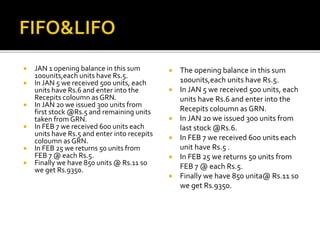
 JAN 1 opening balance in this sum
100units,each units have Rs.5.
 In JAN 5 we received 500 units, each
units have Rs.6 and enter into the
Recepits coloumn as GRN.
 In JAN 20 we issued 300 units from
first stock @Rs.5 and remaining units
taken from GRN.
 In FEB 7 we received 600 units each
units have Rs.5 and enter into recepits
coloumn as GRN.
 In FEB 25 we returns 50 units from
FEB 7 @ each Rs.5.
 Finally we have 850 units @ Rs.11 so
we get Rs.9350.
 The opening balance in this sum
100units,each units have Rs.5.
 In JAN 5 we received 500 units, each
units have Rs.6 and enter into the
Recepits coloumn as GRN.
 In JAN 20 we issued 300 units from
last stock @Rs.6.
 In FEB 7 we received 600 units each
unit have Rs.5 .
 In FEB 25 we returns 50 units from
FEB 7 @ each Rs.5.
 Finally we have 850 unita@ Rs.11 so
we get Rs.9350.
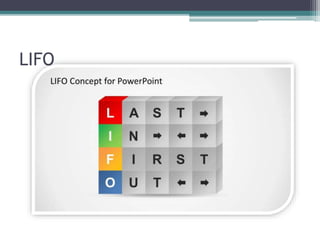
LIFO
 LIFO is a method of accounting for valuing
inventory .This method is based on the
assumption that the last item placed in the
inventory will be sold out first, i.e, reverse
chronological order will be followed in
issuing inventory from the stores.
LIFO
 It represents the oldest stock.
 LIFO shown by the cost of
goods sold.
 Income tax shows minimum
amount, when there is inflation
in the economy.
 In case of deflation, larger
amount of income tax is
shown.
FIFO
 It represents the latest
stock.
 FIFO shown by the cost of
unsold stock.
 In inflationary condition,
income tax shows a higher
amount.
 Reduced income tax will be
shown in deflationary
condition.
CONCLUSION
 Both the methods LIFO and FIFO has
its pros and cons. LIFO does not
inflate profits when the prices of
product are rising, but there are
complications in this method. FIFO is
very simple to understand as well as
to operate.
PRESENTED BY:
DIVYA PRABHA.U
LAVANYA.A

FIFO and LIFO

  • 2.
    WHAT IS INVENTORYTO A COMPANY AND WHY GIVE IT A VALUE  Inventory is goods and material that a business holds for the purpose of resale.  Inventory is a given value for two main purpose 1.insurance and 2.profit
  • 3.
  • 4.
    FIFO : Thisinventory method matches sales with inventory by matching revenue from the first sale with the costs associated with the first product that was made first in first out.
  • 5.
    EXAMPLE: FIFO&LIFO  1.OPENINGBALANCE- 100UNITS@Rs.5 EACH  5.RECEIVED -500UNITS@Rs.6 EACH  20.ISSUED-300UNITS  7.RECEIVED -600UNITS@Rs.5 EACH  25.RETURNEDTO SUPPLIER - 50UNITS PURCHASED ON 7th FEBRUARY JANUARY FEBRUARY
  • 6.
     JAN 1opening balance in this sum 100units,each units have Rs.5.  In JAN 5 we received 500 units, each units have Rs.6 and enter into the Recepits coloumn as GRN.  In JAN 20 we issued 300 units from first stock @Rs.5 and remaining units taken from GRN.  In FEB 7 we received 600 units each units have Rs.5 and enter into recepits coloumn as GRN.  In FEB 25 we returns 50 units from FEB 7 @ each Rs.5.  Finally we have 850 units @ Rs.11 so we get Rs.9350.  The opening balance in this sum 100units,each units have Rs.5.  In JAN 5 we received 500 units, each units have Rs.6 and enter into the Recepits coloumn as GRN.  In JAN 20 we issued 300 units from last stock @Rs.6.  In FEB 7 we received 600 units each unit have Rs.5 .  In FEB 25 we returns 50 units from FEB 7 @ each Rs.5.  Finally we have 850 unita@ Rs.11 so we get Rs.9350.
  • 7.
  • 8.
     LIFO isa method of accounting for valuing inventory .This method is based on the assumption that the last item placed in the inventory will be sold out first, i.e, reverse chronological order will be followed in issuing inventory from the stores.
  • 9.
    LIFO  It representsthe oldest stock.  LIFO shown by the cost of goods sold.  Income tax shows minimum amount, when there is inflation in the economy.  In case of deflation, larger amount of income tax is shown. FIFO  It represents the latest stock.  FIFO shown by the cost of unsold stock.  In inflationary condition, income tax shows a higher amount.  Reduced income tax will be shown in deflationary condition.
  • 10.
    CONCLUSION  Both themethods LIFO and FIFO has its pros and cons. LIFO does not inflate profits when the prices of product are rising, but there are complications in this method. FIFO is very simple to understand as well as to operate.
  • 11.