SHIVAM SINGH
PROJECT ENGINEER

+91-8527199116
shivam.technisys@gmail.com
Overview

Fieldbus is a generic term that describes a new digital
communications network that is being used in industry to replace
the existing 4-20 mA analog signal standard.



The network is a digital, bi-directional, multi-drop, serial-bus
communication network used to link isolated field devices, such
as controllers, transducers, actuators and sensors.



Bi-directional means it is a duplex port; the data can be
transmitted in two directions at the same time.



Multi-drop is also referred to as multi-access and it can be
interpreted as a single bus with many nodes connected to it.



Serial-bus means the data is transmitted serially according to
RS232 or RS485 protocol. Profibus uses RS485 protocol.



Fieldbus works on network structures such as daisy-chain, star,
ring, branch, and tree network topologies.
Overview……

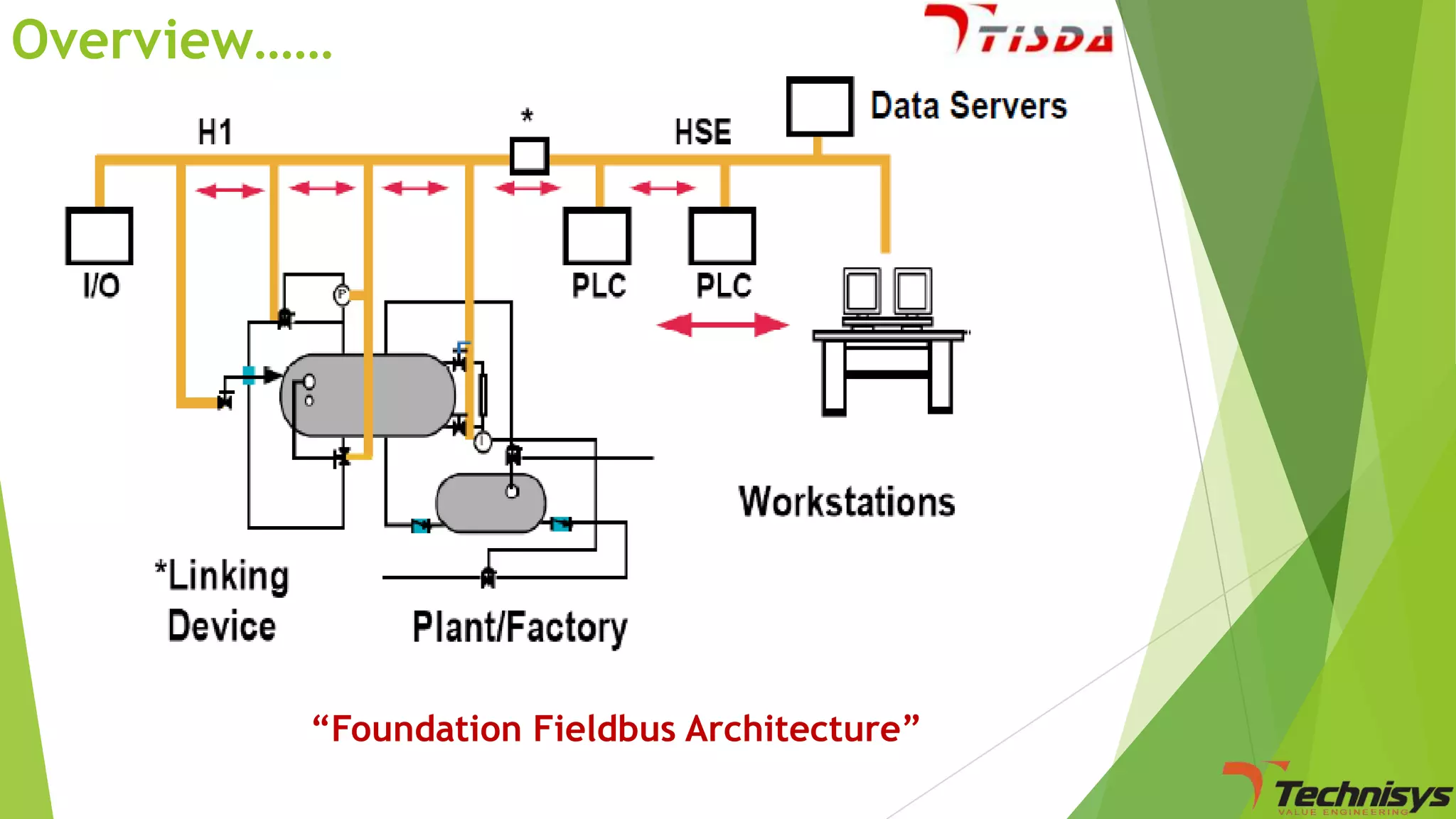
“Foundation Fieldbus Architecture”
Overview……


FOUNDATION fieldbus is an open, integrated total architecture
for information integration. FOUNDATION fieldbus is an alldigital, serial, two-way communication system.



H1 (31.25 Kbit/s) interconnects “field” equipment such as
sensors, actuators and I/O.



HSE (100 Mbit/s) (High Speed Ethernet) provides integration of
high speed controllers (such as PLCs), H1 subsystems (via a
linking device), data servers and workstations.



FOUNDATION fieldbus is the only protocol with the built-in
capability to distribute the control application across the
network .
Integrated Architecture•
•
•
•

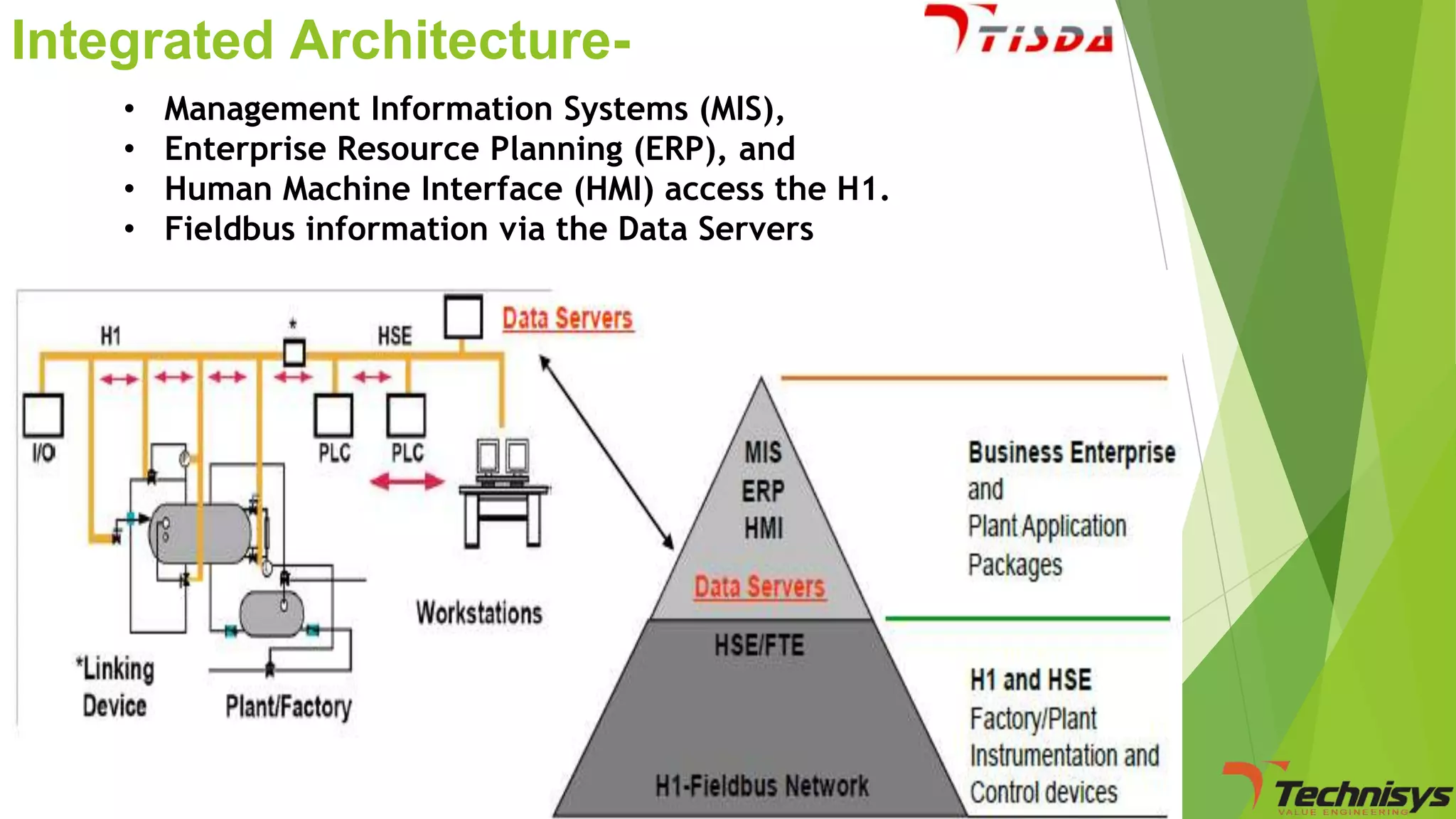
Management Information Systems (MIS),
Enterprise Resource Planning (ERP), and
Human Machine Interface (HMI) access the H1.
Fieldbus information via the Data Servers
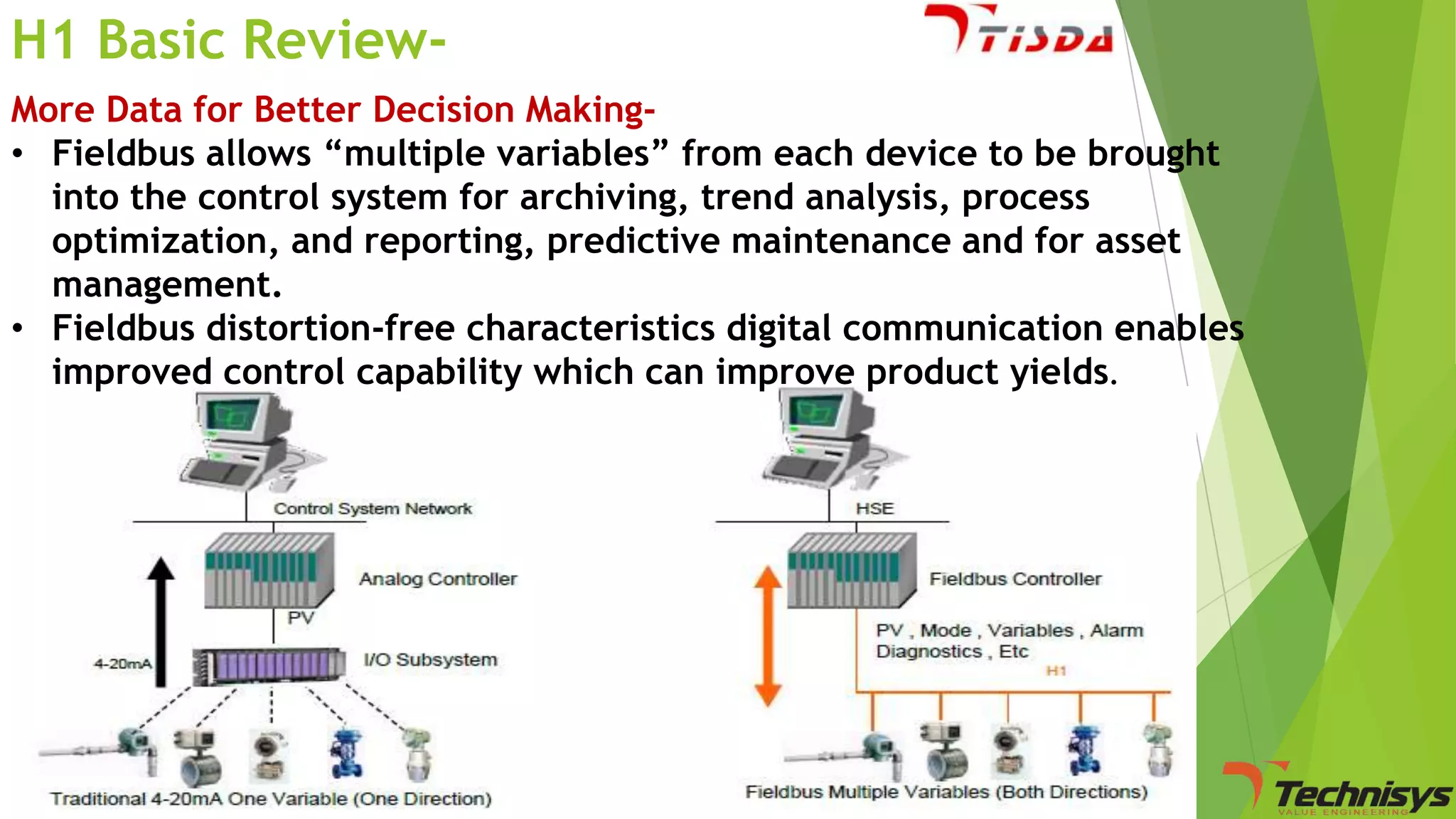
H1 Basic ReviewMore Data for Better Decision Making• Fieldbus allows “multiple variables” from each device to be brought
into the control system for archiving, trend analysis, process
optimization, and reporting, predictive maintenance and for asset
management.
• Fieldbus distortion-free characteristics digital communication enables
improved control capability which can improve product yields.
H1 Basic Review……
Expanded View of Process & Instrument

Self-Diagnostics
and
communication
capabilities
of
microprocessor based fieldbus devices helps reduce downtime
and improve plant safety.



Plant operation and Maintenance personnel can be notified and
corrective actions taken quickly and safely

Wiring saving

The H1 fieldbus allows many devices to be connected to a single
wire pair.



This results in less wire, fewer intrinsic safety barriers and fewer
marshaling cabinets.
H1 Basic Review……

Reduction in System Hardware

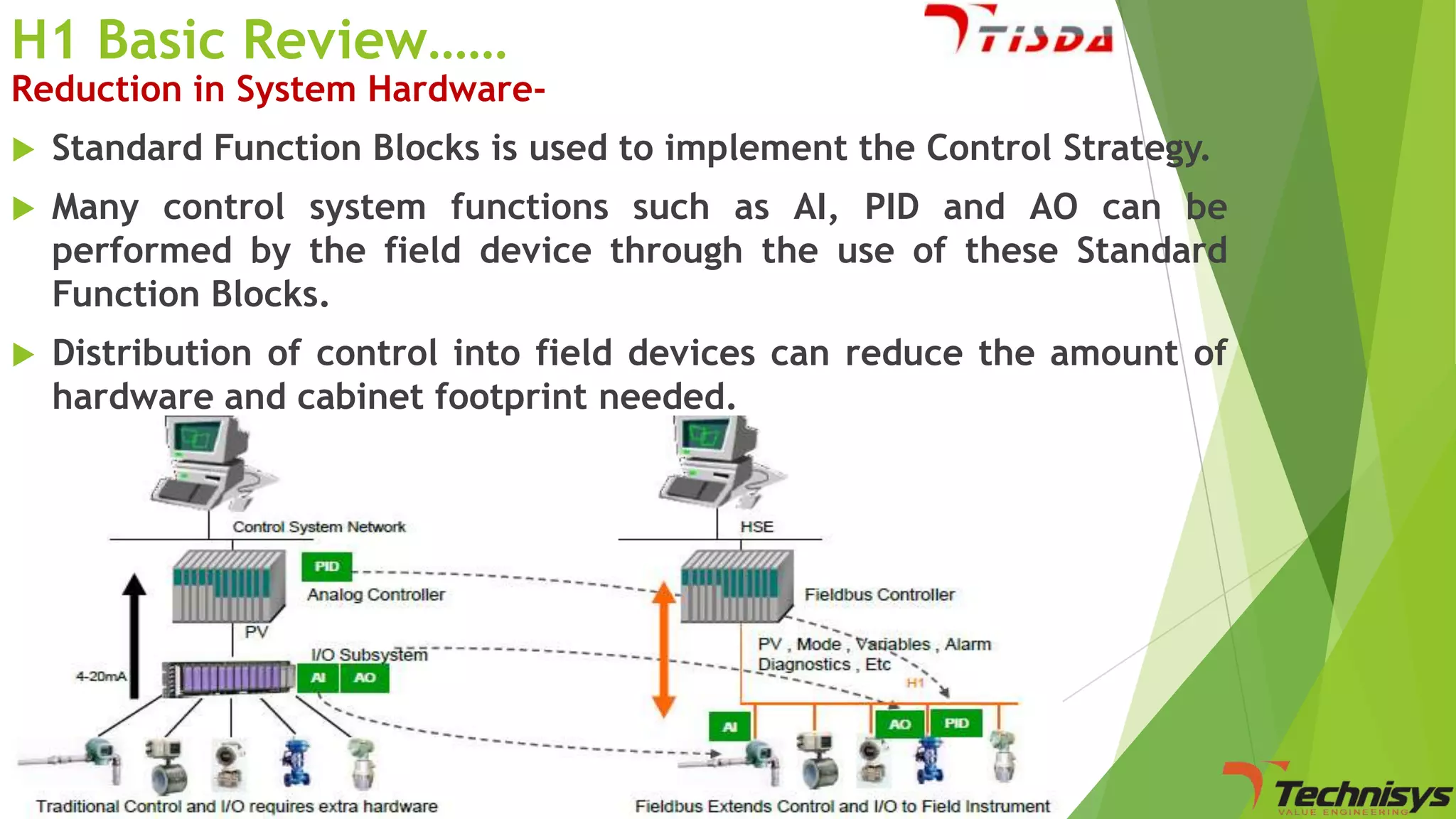
Standard Function Blocks is used to implement the Control Strategy.



Many control system functions such as AI, PID and AO can be
performed by the field device through the use of these Standard
Function Blocks.



Distribution of control into field devices can reduce the amount of
hardware and cabinet footprint needed.
H1 Network Review

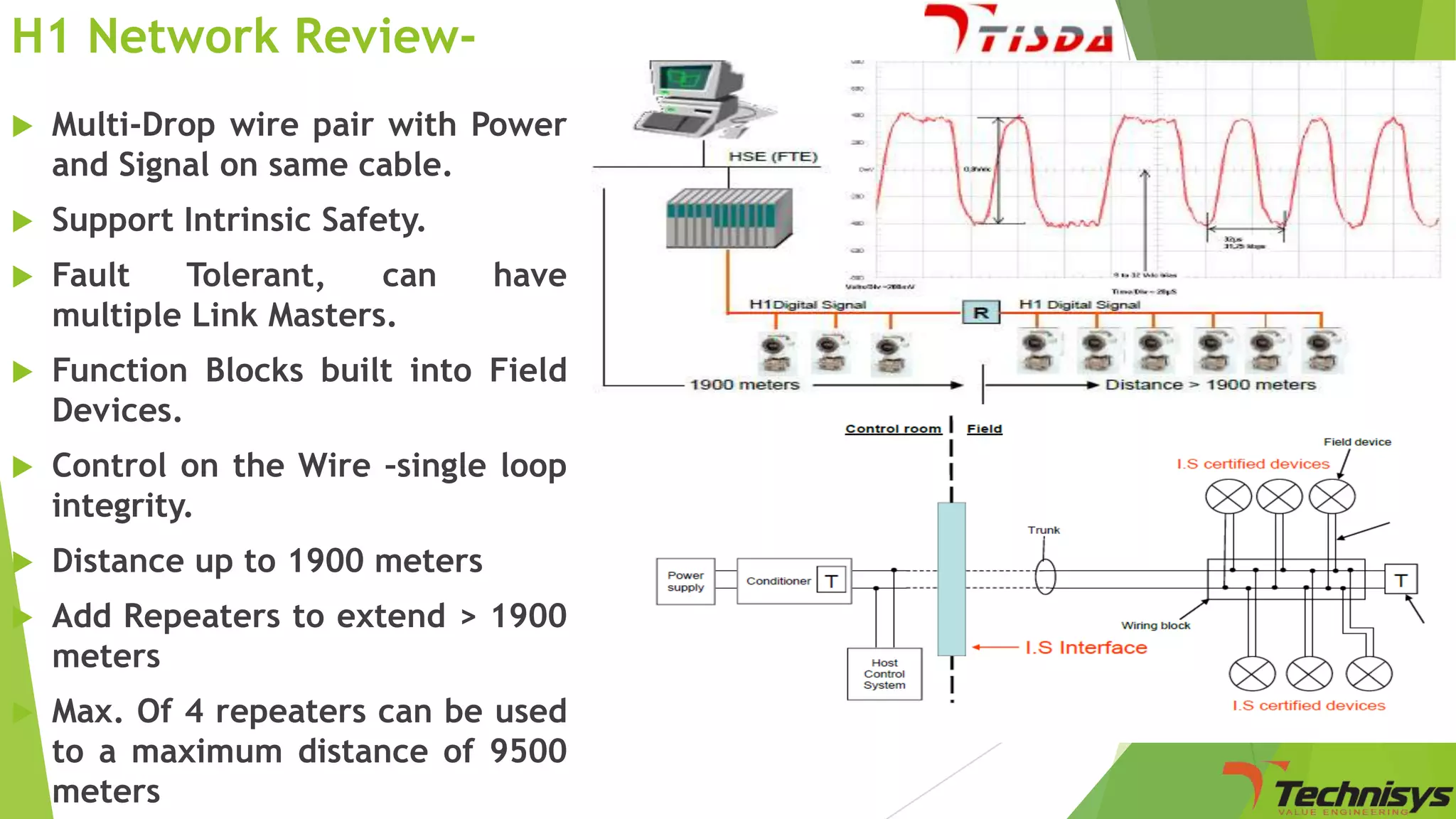
Multi-Drop wire pair with Power
and Signal on same cable.



Support Intrinsic Safety.



Fault
Tolerant,
can
multiple Link Masters.



Function Blocks built into Field
Devices.



Control on the Wire –single loop
integrity.



Distance up to 1900 meters



Add Repeaters to extend > 1900
meters



Max. Of 4 repeaters can be used
to a maximum distance of 9500
meters

have
DD and CFF Files

Field Devices will consist of: Actual Physical Device, Device
Description (DD), & Common File Format (CFF).



DDs and CFFs will be provided by the Device Supplier or Host
Supplier.



Standard parameters present in devices. Option to include specific
manufacturer parameters.



Parameters and Capabilities are defined in device files –DD and CFF.



Device files are key to off-line configuration.



Device Descriptor (DD) File allows operation of devices from
different suppliers on the same fieldbus with single host system.



Common File Format (CFF) is a file which describes the functions
and capabilities of a field device. The CFF file is used in
conjunction with the Device Descriptor file to enable a host system
to configure the system off-line.
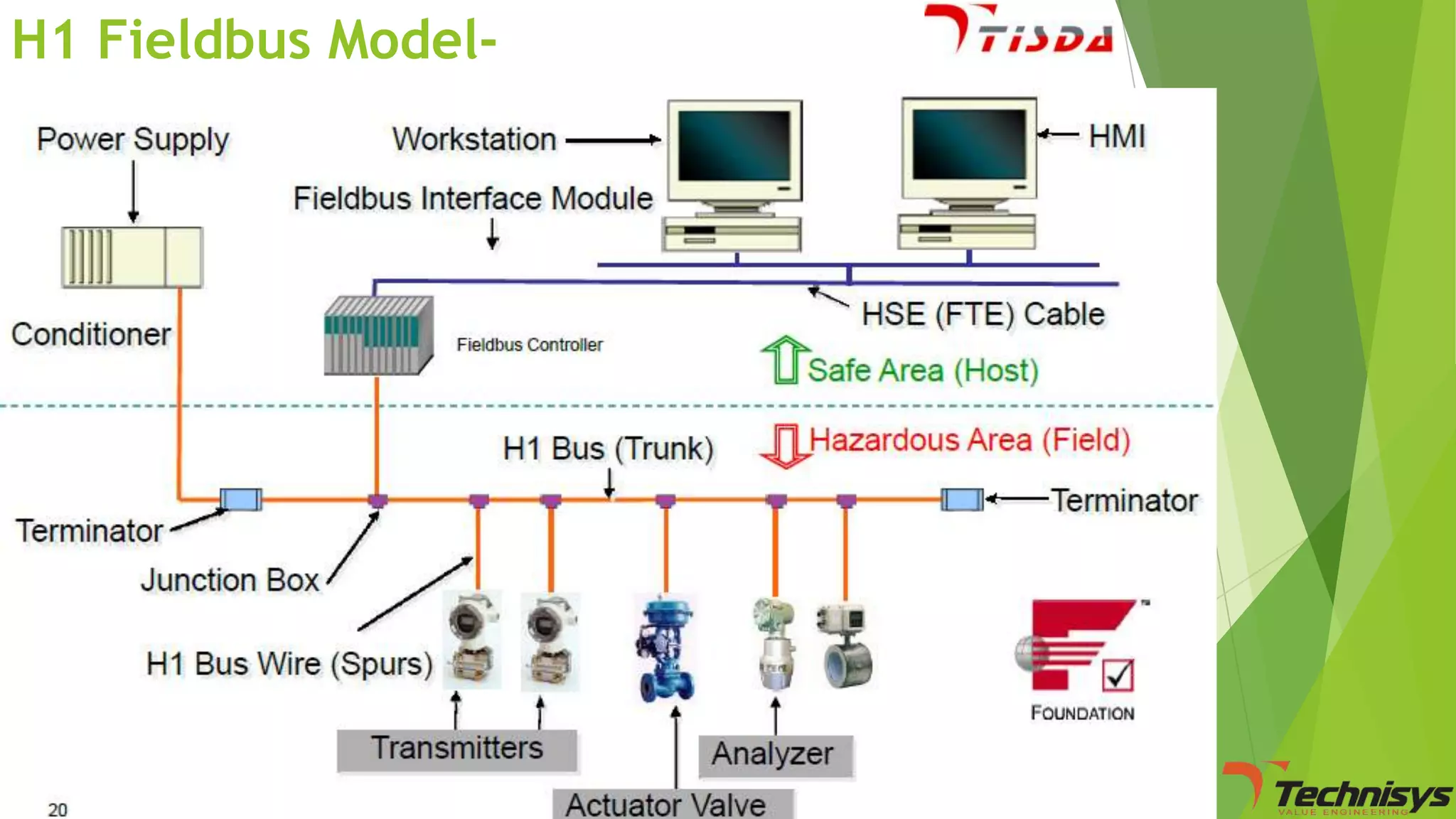
H1 Fieldbus Model-
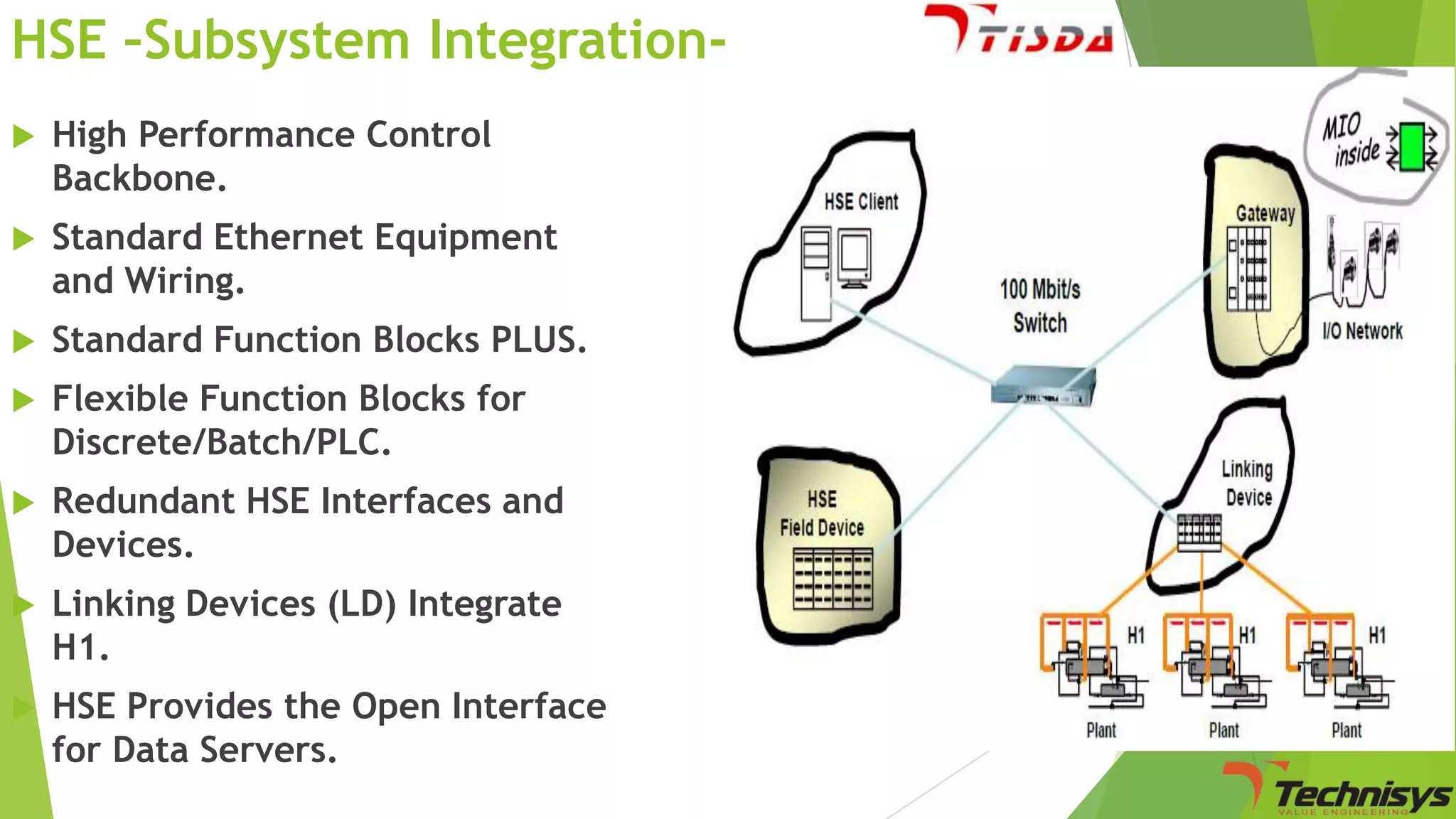
HSE –Subsystem Integration

High Performance Control
Backbone.



Standard Ethernet Equipment
and Wiring.



Standard Function Blocks PLUS.



Flexible Function Blocks for
Discrete/Batch/PLC.



Redundant HSE Interfaces and
Devices.



Linking Devices (LD) Integrate
H1.



HSE Provides the Open Interface
for Data Servers.
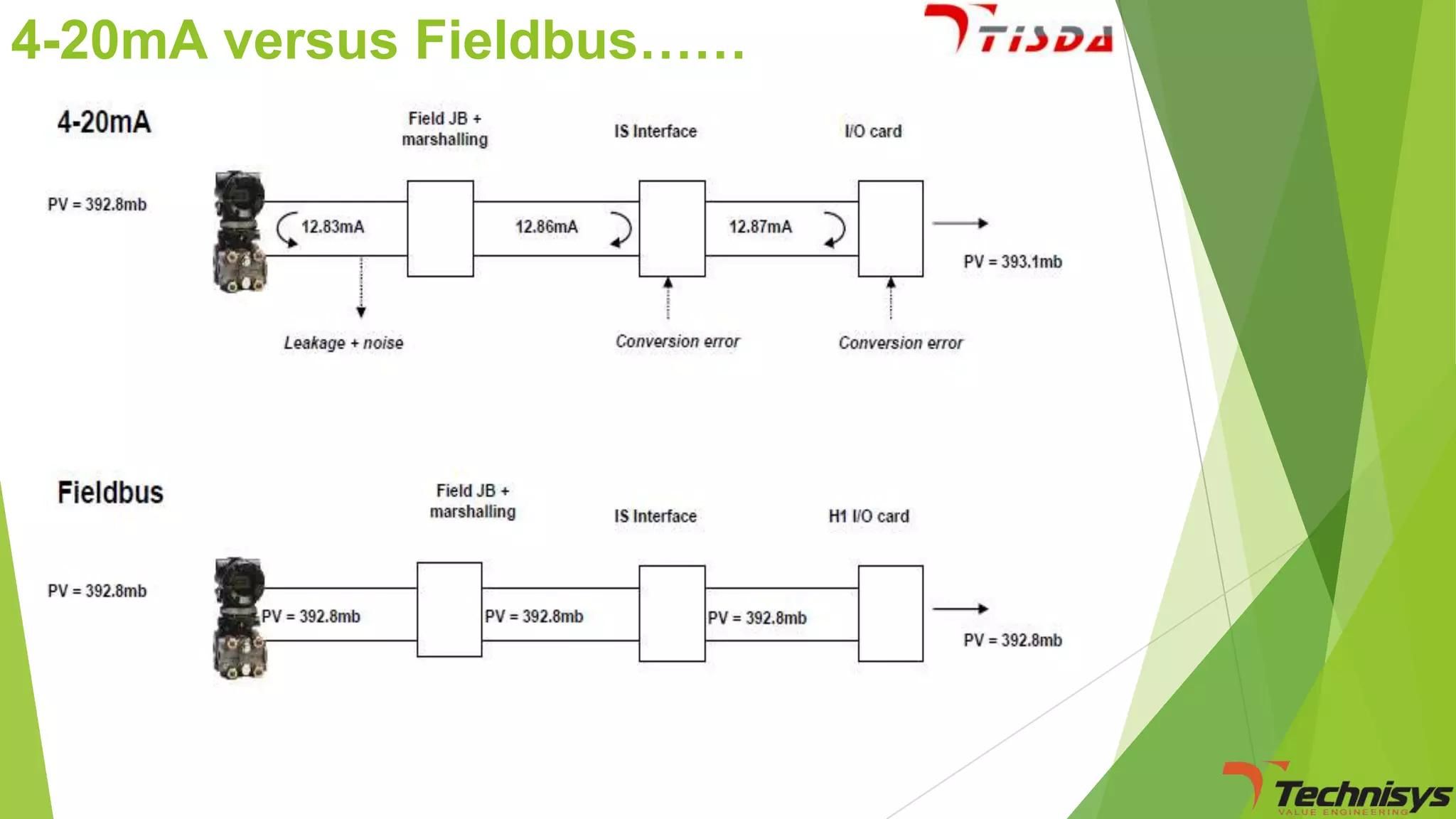
4-20mA versus Fieldbus-

A H1 fieldbus retains and optimizes the desired features of the 420mA analog system:


Single Loop integrity.



A standardized physical interface to the wire.



A bus-powered device on a single wire pair.



Intrinsic safety options.

In addition, FOUNDATION Fieldbus enables:


25 x faster communication speed compared to HART



Increased capabilities (due to full digital communication).



Reduced wiring and terminations (multiple devices on one wire).



Increased selection of suppliers (due to interoperability)



Reduced control room loading (control on wire)



Connection to HSE backbone
4-20mA versus Fieldbus……
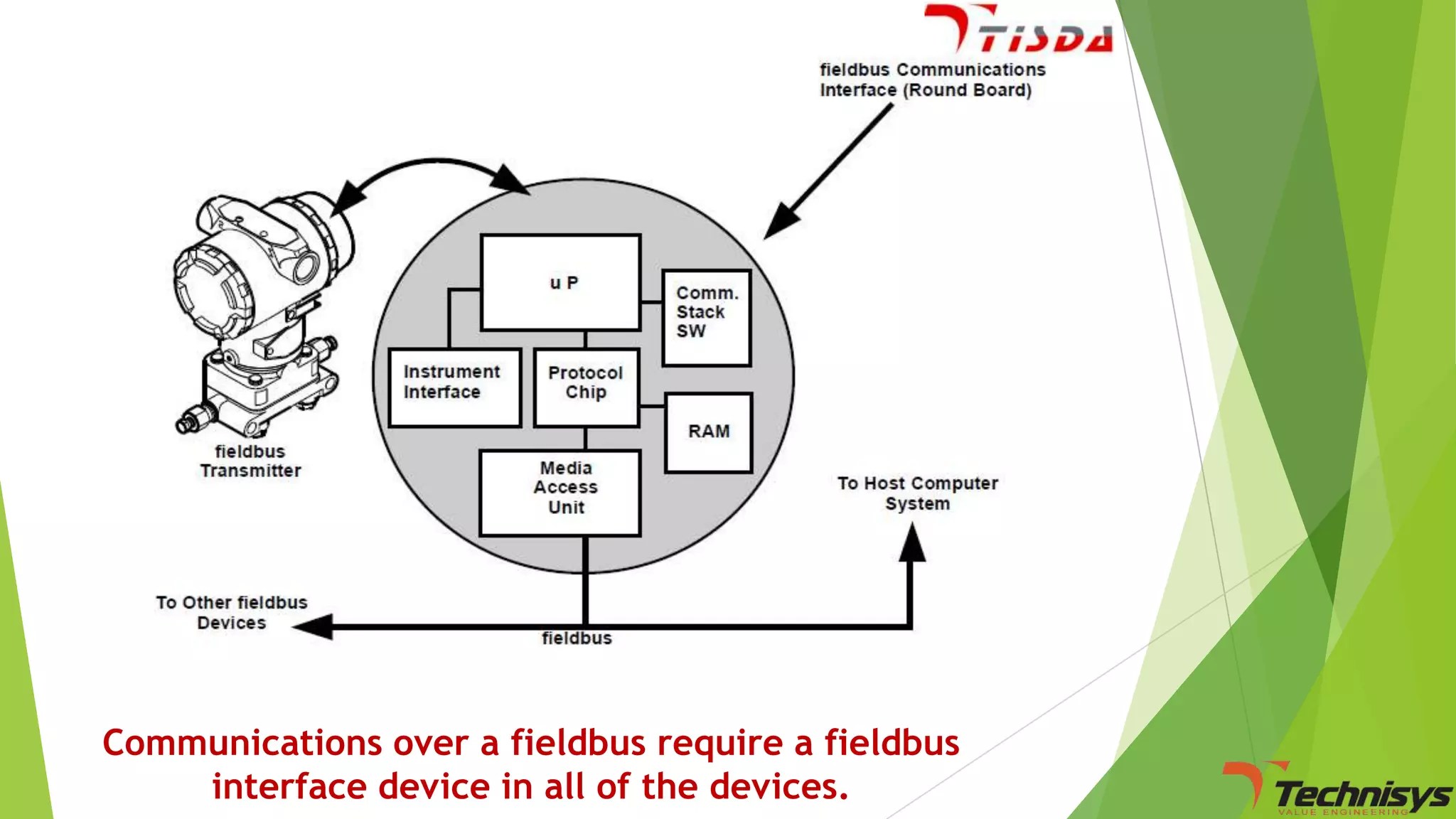
Communications over a fieldbus require a fieldbus
interface device in all of the devices.
Advantages of Fieldbus-



A major advantage of fieldbus is the capital
expenditure (CAPEX) savings associated with cable
elimination; multiple devices share wire-pairs in order
to communicate over the bus network and savings are
also available through speedier commissioning.



Ongoing maintenance and process control system
performance are significantly enhanced through
fieldbus systems, which results in operations expense
savings (OPEX).
Disadvantages of FieldbusDisadvantages of fieldbus compared to the 4-20 mA
analog signal standard:


Fieldbus systems are complex, so more training
needed



The price of fieldbus components is higher



Fieldbus test devices are more complex



Device manufacturers have to offer different versions
of devices due to different fieldbus standards. This can
add to the cost of the devices and increases the
difficultly of device selection.



Standards
may
predominate
or
obsolete, increasing the investment risk.

become
BASICS OF FIELDBUS
BASICS OF FIELDBUS

BASICS OF FIELDBUS

  • 1.
  • 2.
    Overview Fieldbus is ageneric term that describes a new digital communications network that is being used in industry to replace the existing 4-20 mA analog signal standard.  The network is a digital, bi-directional, multi-drop, serial-bus communication network used to link isolated field devices, such as controllers, transducers, actuators and sensors.  Bi-directional means it is a duplex port; the data can be transmitted in two directions at the same time.  Multi-drop is also referred to as multi-access and it can be interpreted as a single bus with many nodes connected to it.  Serial-bus means the data is transmitted serially according to RS232 or RS485 protocol. Profibus uses RS485 protocol.  Fieldbus works on network structures such as daisy-chain, star, ring, branch, and tree network topologies.
  • 3.
  • 4.
    Overview……  FOUNDATION fieldbus isan open, integrated total architecture for information integration. FOUNDATION fieldbus is an alldigital, serial, two-way communication system.  H1 (31.25 Kbit/s) interconnects “field” equipment such as sensors, actuators and I/O.  HSE (100 Mbit/s) (High Speed Ethernet) provides integration of high speed controllers (such as PLCs), H1 subsystems (via a linking device), data servers and workstations.  FOUNDATION fieldbus is the only protocol with the built-in capability to distribute the control application across the network .
  • 5.
    Integrated Architecture• • • • Management InformationSystems (MIS), Enterprise Resource Planning (ERP), and Human Machine Interface (HMI) access the H1. Fieldbus information via the Data Servers
  • 6.
    H1 Basic ReviewMoreData for Better Decision Making• Fieldbus allows “multiple variables” from each device to be brought into the control system for archiving, trend analysis, process optimization, and reporting, predictive maintenance and for asset management. • Fieldbus distortion-free characteristics digital communication enables improved control capability which can improve product yields.
  • 7.
    H1 Basic Review…… ExpandedView of Process & Instrument Self-Diagnostics and communication capabilities of microprocessor based fieldbus devices helps reduce downtime and improve plant safety.  Plant operation and Maintenance personnel can be notified and corrective actions taken quickly and safely Wiring saving The H1 fieldbus allows many devices to be connected to a single wire pair.  This results in less wire, fewer intrinsic safety barriers and fewer marshaling cabinets.
  • 8.
    H1 Basic Review…… Reductionin System Hardware Standard Function Blocks is used to implement the Control Strategy.  Many control system functions such as AI, PID and AO can be performed by the field device through the use of these Standard Function Blocks.  Distribution of control into field devices can reduce the amount of hardware and cabinet footprint needed.
  • 9.
    H1 Network Review Multi-Dropwire pair with Power and Signal on same cable.  Support Intrinsic Safety.  Fault Tolerant, can multiple Link Masters.  Function Blocks built into Field Devices.  Control on the Wire –single loop integrity.  Distance up to 1900 meters  Add Repeaters to extend > 1900 meters  Max. Of 4 repeaters can be used to a maximum distance of 9500 meters have
  • 10.
    DD and CFFFiles Field Devices will consist of: Actual Physical Device, Device Description (DD), & Common File Format (CFF).  DDs and CFFs will be provided by the Device Supplier or Host Supplier.  Standard parameters present in devices. Option to include specific manufacturer parameters.  Parameters and Capabilities are defined in device files –DD and CFF.  Device files are key to off-line configuration.  Device Descriptor (DD) File allows operation of devices from different suppliers on the same fieldbus with single host system.  Common File Format (CFF) is a file which describes the functions and capabilities of a field device. The CFF file is used in conjunction with the Device Descriptor file to enable a host system to configure the system off-line.
  • 11.
  • 12.
    HSE –Subsystem Integration HighPerformance Control Backbone.  Standard Ethernet Equipment and Wiring.  Standard Function Blocks PLUS.  Flexible Function Blocks for Discrete/Batch/PLC.  Redundant HSE Interfaces and Devices.  Linking Devices (LD) Integrate H1.  HSE Provides the Open Interface for Data Servers.
  • 13.
    4-20mA versus Fieldbus- AH1 fieldbus retains and optimizes the desired features of the 420mA analog system:  Single Loop integrity.  A standardized physical interface to the wire.  A bus-powered device on a single wire pair.  Intrinsic safety options. In addition, FOUNDATION Fieldbus enables:  25 x faster communication speed compared to HART  Increased capabilities (due to full digital communication).  Reduced wiring and terminations (multiple devices on one wire).  Increased selection of suppliers (due to interoperability)  Reduced control room loading (control on wire)  Connection to HSE backbone
  • 14.
  • 15.
    Communications over afieldbus require a fieldbus interface device in all of the devices.
  • 16.
    Advantages of Fieldbus-  Amajor advantage of fieldbus is the capital expenditure (CAPEX) savings associated with cable elimination; multiple devices share wire-pairs in order to communicate over the bus network and savings are also available through speedier commissioning.  Ongoing maintenance and process control system performance are significantly enhanced through fieldbus systems, which results in operations expense savings (OPEX).
  • 17.
    Disadvantages of FieldbusDisadvantagesof fieldbus compared to the 4-20 mA analog signal standard:  Fieldbus systems are complex, so more training needed  The price of fieldbus components is higher  Fieldbus test devices are more complex  Device manufacturers have to offer different versions of devices due to different fieldbus standards. This can add to the cost of the devices and increases the difficultly of device selection.  Standards may predominate or obsolete, increasing the investment risk. become