
FIELD TRIP
PRESENTATION
ON
FIELD TRIP
SUBMITTED TO :- SUBMITTED BY:-
DR.PALLAVI PATHANIA KAJAL CHANDEL
ASSOCIATE PROFESSOR M.SC.(N) 1ST YEAR
MEDICAL SURGICAL NURSING ROLL-NO:- 2
PRESENTED TO:
MISS.NEETALI
NURSING TUTOR
OBSTETRIC AND GYNACOLOGY
INDEX
SR.NO CONTENT
1. INTRODUCTION OF FIELD TRIP
2. DEFINITION OF FIELD TRIP
3. PURPOSES OF FIELD TRIP
4. AIMS OF FIELD TRIP
5. GUIDELINES USING FOR FIELD TRIP
6. STEPS TO ORGANIZED A FIELD TRIP
7. ADVANTAGES AND LIMITATION OF FIELD TRIP
INTRODUCTION
 A field trip is a visit to an area outside of the normal
classroom where children can try new things, have
different experiences, and learn valuable life lessons. A
field trip can be to countless locations where students can
see new sights and have hands-on opportunities in a wide
variety of experiences. A field trip may be to a location
right around the corner or may require a bus ride to a
different town. Regardless, the objective of a field trip is
to learn, be exposed to a different environment, and be
able to try new things.
DEFINITION
 Field trip is defined as a planned and supervised visit of a group
of students outside the class room to get the first hand
educational experience. Field trip is an educational procedure
by which the learners obtain first hand information by
observing places, objects, phenomena and processes in their
natural setting.
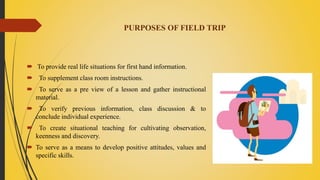
PURPOSES OF FIELD TRIP
 To provide real life situations for first hand information.
 To supplement class room instructions.
 To serve as a pre view of a lesson and gather instructional
material.
 To verify previous information, class discussion & to
conclude individual experience.
 To create situational teaching for cultivating observation,
keenness and discovery.
 To serve as a means to develop positive attitudes, values and
specific skills.
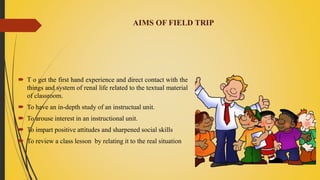
AIMS OF FIELD TRIP
 T o get the first hand experience and direct contact with the
things and system of renal life related to the textual material
of classroom.
 To have an in-depth study of an instructual unit.
 To arouse interest in an instructional unit.
 To impart positive attitudes and sharpened social skills
 To review a class lesson by relating it to the real situation
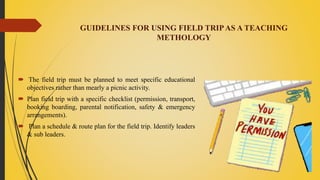
GUIDELINES FOR USING FIELD TRIPAS A TEACHING
METHOLOGY
 The field trip must be planned to meet specific educational
objectives rather than mearly a picnic activity.
 Plan field trip with a specific checklist (permission, transport,
booking boarding, parental notification, safety & emergency
arrangements).
 Plan a schedule & route plan for the field trip. Identify leaders
& sub leaders.
CONTINUE….
 Assign responsibilities to individuals and make them
understand their role.
 Have list of all candidates, contact numbers of people to be
contacted in case of emergency & special needs.
 Submit report on field visit and analyze.
STEPS TO ORGANIZED A FIELD TRIP
 Prepare yourself and student for the trip so as to make specific
observation during the trip.
 Identify the main purpose of the trip.
 Issue specific instruction about the mode of the field trip like the
detailed arrangement.
 Prepare a guide and activity sheet for the educational trip based
upon the prior information about the place of visit.
 Observation discipline and regulation during the trip.
CONTINUE….
 Inform the proper agency about the ensuring of field trip so that
they can contribute their resources for the instructional benefit of
the students.
 Prepare activity and worksheet; distribute the student to collect,
write the information, draw sketches and stick picture postcards.
 Instruct the students regarding safety rules and precautions
agents hazards which can happen during the field trip.
 Take camera, sketch pens, drawing book for recording visual
observation.
 Write report on the same experience.
ADVANTAGES OF FIELD
TRIP
1. Field trips provide accurate information about object, and system in their
real settings.
2. It provides meaningful direct experience and result in lasting learning.
3.Student’s enthusiasm for field’s trip can be easily diverted to effective
learning.
4. Field trips can effectively supplement the classroom learning through
application and review of field trip experiences of students.
5. Field trip develop proper attitudes and social skills among the
children.
6. Help in utilizing all senses for learning.
LIMITATION
1. They can be expensive and out of reach for many disadvantage and poor
children.
2. Field trip require proper and detailed planning.
3. Can be use occasionally.
ASSIGNMENT
 Enlist the profession in which field trip method is used for learning experiences.
SUMMARIZATION
 Field trip is a planned and supervised visit of a group of students outside the class room to get the
first hand educational experience. Field trip is an educational procedure by which the learners
obtain first hand information by observing places, objects, phenomena and processes in their
natural setting.
CONCLUSION
Field trips and excursions allow the students to learn outside of the classroom. Many field trips and
excursions combine educational content with team building activities, such as working together to clean a
stream that has been polluted. Infect, it is often a good idea to go on a excursion early in the school year to
help create a bond between the students. It is a way to bring the students closer together. A good field trip
and excursion supplements the curriculum and it offers the opportunity to teach the students something
new. A field trip and excursion can create a rewarding and exciting learning experience for a student.
BIBLIOGRAPHY
BOOK REFRENCE:-
 Saran Johal Kulvinder A textbook of Nursing Education, Edition-,Pp 72-73.
INTERNET REFRENCE:-
 https://www.wikipedia .com
 https://www.Slideshare.net/Field -trip
 https://www.Field tripideas.com
Field trip

Field trip

  • 1.
  • 2.
    PRESENTATION ON FIELD TRIP SUBMITTED TO:- SUBMITTED BY:- DR.PALLAVI PATHANIA KAJAL CHANDEL ASSOCIATE PROFESSOR M.SC.(N) 1ST YEAR MEDICAL SURGICAL NURSING ROLL-NO:- 2 PRESENTED TO: MISS.NEETALI NURSING TUTOR OBSTETRIC AND GYNACOLOGY
  • 3.
    INDEX SR.NO CONTENT 1. INTRODUCTIONOF FIELD TRIP 2. DEFINITION OF FIELD TRIP 3. PURPOSES OF FIELD TRIP 4. AIMS OF FIELD TRIP 5. GUIDELINES USING FOR FIELD TRIP 6. STEPS TO ORGANIZED A FIELD TRIP 7. ADVANTAGES AND LIMITATION OF FIELD TRIP
  • 4.
    INTRODUCTION  A fieldtrip is a visit to an area outside of the normal classroom where children can try new things, have different experiences, and learn valuable life lessons. A field trip can be to countless locations where students can see new sights and have hands-on opportunities in a wide variety of experiences. A field trip may be to a location right around the corner or may require a bus ride to a different town. Regardless, the objective of a field trip is to learn, be exposed to a different environment, and be able to try new things.
  • 5.
    DEFINITION  Field tripis defined as a planned and supervised visit of a group of students outside the class room to get the first hand educational experience. Field trip is an educational procedure by which the learners obtain first hand information by observing places, objects, phenomena and processes in their natural setting.
  • 6.
    PURPOSES OF FIELDTRIP  To provide real life situations for first hand information.  To supplement class room instructions.  To serve as a pre view of a lesson and gather instructional material.  To verify previous information, class discussion & to conclude individual experience.  To create situational teaching for cultivating observation, keenness and discovery.  To serve as a means to develop positive attitudes, values and specific skills.
  • 7.
    AIMS OF FIELDTRIP  T o get the first hand experience and direct contact with the things and system of renal life related to the textual material of classroom.  To have an in-depth study of an instructual unit.  To arouse interest in an instructional unit.  To impart positive attitudes and sharpened social skills  To review a class lesson by relating it to the real situation
  • 8.
    GUIDELINES FOR USINGFIELD TRIPAS A TEACHING METHOLOGY  The field trip must be planned to meet specific educational objectives rather than mearly a picnic activity.  Plan field trip with a specific checklist (permission, transport, booking boarding, parental notification, safety & emergency arrangements).  Plan a schedule & route plan for the field trip. Identify leaders & sub leaders.
  • 9.
    CONTINUE….  Assign responsibilitiesto individuals and make them understand their role.  Have list of all candidates, contact numbers of people to be contacted in case of emergency & special needs.  Submit report on field visit and analyze.
  • 10.
    STEPS TO ORGANIZEDA FIELD TRIP  Prepare yourself and student for the trip so as to make specific observation during the trip.  Identify the main purpose of the trip.  Issue specific instruction about the mode of the field trip like the detailed arrangement.  Prepare a guide and activity sheet for the educational trip based upon the prior information about the place of visit.  Observation discipline and regulation during the trip.
  • 11.
    CONTINUE….  Inform theproper agency about the ensuring of field trip so that they can contribute their resources for the instructional benefit of the students.  Prepare activity and worksheet; distribute the student to collect, write the information, draw sketches and stick picture postcards.  Instruct the students regarding safety rules and precautions agents hazards which can happen during the field trip.  Take camera, sketch pens, drawing book for recording visual observation.  Write report on the same experience.
  • 12.
  • 13.
    1. Field tripsprovide accurate information about object, and system in their real settings.
  • 14.
    2. It providesmeaningful direct experience and result in lasting learning.
  • 15.
    3.Student’s enthusiasm forfield’s trip can be easily diverted to effective learning.
  • 16.
    4. Field tripscan effectively supplement the classroom learning through application and review of field trip experiences of students.
  • 17.
    5. Field tripdevelop proper attitudes and social skills among the children.
  • 18.
    6. Help inutilizing all senses for learning.
  • 19.
  • 20.
    1. They canbe expensive and out of reach for many disadvantage and poor children.
  • 21.
    2. Field triprequire proper and detailed planning.
  • 22.
    3. Can beuse occasionally.
  • 23.
    ASSIGNMENT  Enlist theprofession in which field trip method is used for learning experiences.
  • 24.
    SUMMARIZATION  Field tripis a planned and supervised visit of a group of students outside the class room to get the first hand educational experience. Field trip is an educational procedure by which the learners obtain first hand information by observing places, objects, phenomena and processes in their natural setting.
  • 25.
    CONCLUSION Field trips andexcursions allow the students to learn outside of the classroom. Many field trips and excursions combine educational content with team building activities, such as working together to clean a stream that has been polluted. Infect, it is often a good idea to go on a excursion early in the school year to help create a bond between the students. It is a way to bring the students closer together. A good field trip and excursion supplements the curriculum and it offers the opportunity to teach the students something new. A field trip and excursion can create a rewarding and exciting learning experience for a student.
  • 27.
    BIBLIOGRAPHY BOOK REFRENCE:-  SaranJohal Kulvinder A textbook of Nursing Education, Edition-,Pp 72-73. INTERNET REFRENCE:-  https://www.wikipedia .com  https://www.Slideshare.net/Field -trip  https://www.Field tripideas.com