Reminder
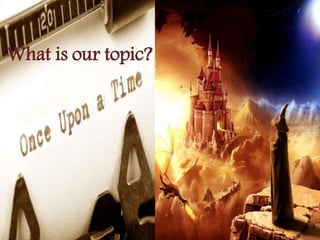
What is our topic?
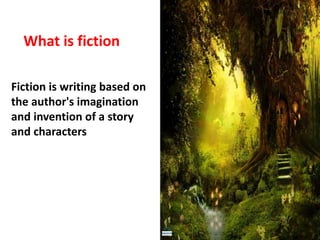
Fiction is writing based on
the author's imagination
and invention of a story
and characters
What is fiction
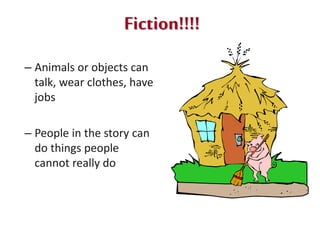
Fiction!!!!
– Animals or objects can
talk, wear clothes, have
jobs
– People in the story can
do things people
cannot really do
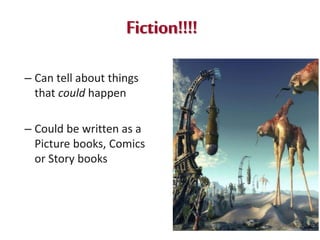
– Can tell about things
that could happen
– Could be written as a
Picture books, Comics
or Story books
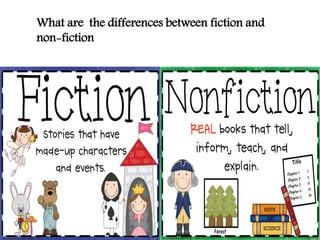
What are the differences between fiction and
non-fiction
• The two main types of fiction are literary and
commercial.
• Commercial fiction attracts a broad audience and may
also fall into any subgenre, like mystery, romance, legal
thriller, western, science fiction, and so on.
• Literary fiction tends to appeal to a smaller, more
intellectually adventurous audience. It is known as
‘Serious Fiction” and focuses on literary merit. It is
featured with complexity of storylines, depth of
characters and high level of language choice.
Main Types of Fiction
Based on Length
Short Stories
Novella
 Long Stories / Novels
The lengths for each aren't fixed, think of them as
general guidelines.
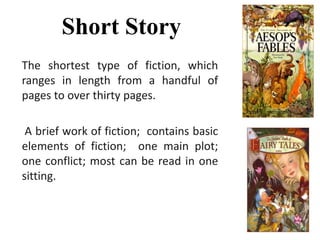
Short Story
The shortest type of fiction, which
ranges in length from a handful of
pages to over thirty pages.
A brief work of fiction; contains basic
elements of fiction; one main plot;
one conflict; most can be read in one
sitting.
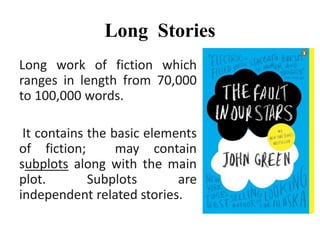
Long work of fiction which
ranges in length from 70,000
to 100,000 words.
It contains the basic elements
of fiction; may contain
subplots along with the main
plot. Subplots are
independent related stories.
Long Stories
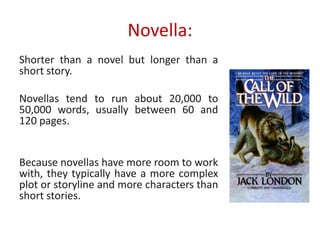
Novella:
Shorter than a novel but longer than a
short story.
Novellas tend to run about 20,000 to
50,000 words, usually between 60 and
120 pages.
Because novellas have more room to work
with, they typically have a more complex
plot or storyline and more characters than
short stories.
Elements of Fiction
• Setting
• Characters
• Plot
• Conflict
• Climax
• Resolution
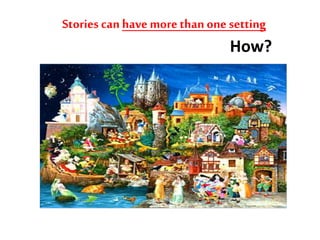
Stories canhave morethan one setting
How?
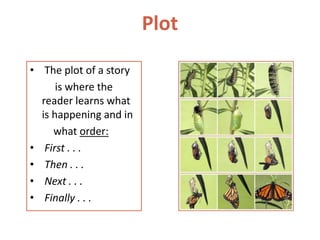
Plot
• The plot of a story
is where the
reader learns what
is happening and in
what order:
• First . . .
• Then . . .
• Next . . .
• Finally . . .
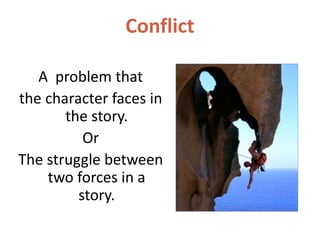
Conflict
A problem that
the character faces in
the story.
Or
The struggle between
two forces in a
story.
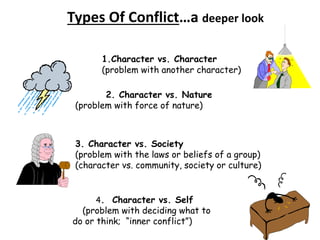
Types Of Conflict…a deeper look
1.Character vs. Character
(problem with another character)
3. Character vs. Society
(problem with the laws or beliefs of a group)
(character vs. community, society or culture)
2. Character vs. Nature
(problem with force of nature)
4. Character vs. Self
(problem with deciding what to
do or think; “inner conflict”)
Teaching Fiction
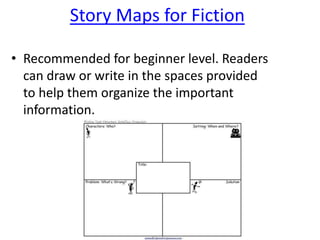
Story Maps for Fiction
• Recommended for beginner level. Readers
can draw or write in the spaces provided
to help them organize the important
information.
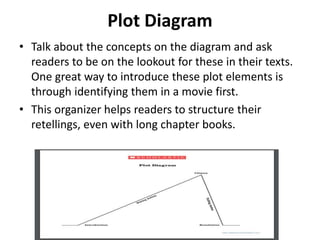
Plot Diagram
• Talk about the concepts on the diagram and ask
readers to be on the lookout for these in their texts.
One great way to introduce these plot elements is
through identifying them in a movie first.
• This organizer helps readers to structure their
retellings, even with long chapter books.
Story Pairs
• Ask your children to write their own stories and invent their own animals for a
magical night zoo.
Shared Writing
• Let your class create a story together, and provide them with an opportunity to
use the word processor at the same time.
How to teach Fiction?
WHY DO WE TEACH FICTION ?
• It puts people back into history
• It promotes multiple perspectives
• Stories open your mind
• Fiction readers build more language
• Creativity((Fictions allows for uncertainty
(where creativity thrives!)
• Pleasure:(( Reading fiction makes you
happier))
Fiction (1)

Fiction (1)

  • 1.
  • 2.
  • 3.
    Fiction is writingbased on the author's imagination and invention of a story and characters What is fiction
  • 4.
    Fiction!!!! – Animals orobjects can talk, wear clothes, have jobs – People in the story can do things people cannot really do
  • 5.
    – Can tellabout things that could happen – Could be written as a Picture books, Comics or Story books
  • 6.
    What are thedifferences between fiction and non-fiction
  • 7.
    • The twomain types of fiction are literary and commercial. • Commercial fiction attracts a broad audience and may also fall into any subgenre, like mystery, romance, legal thriller, western, science fiction, and so on. • Literary fiction tends to appeal to a smaller, more intellectually adventurous audience. It is known as ‘Serious Fiction” and focuses on literary merit. It is featured with complexity of storylines, depth of characters and high level of language choice. Main Types of Fiction
  • 8.
    Main Types ofFiction Based on Length Short Stories Novella  Long Stories / Novels The lengths for each aren't fixed, think of them as general guidelines.
  • 9.
    Short Story The shortesttype of fiction, which ranges in length from a handful of pages to over thirty pages. A brief work of fiction; contains basic elements of fiction; one main plot; one conflict; most can be read in one sitting.
  • 10.
    Long work offiction which ranges in length from 70,000 to 100,000 words. It contains the basic elements of fiction; may contain subplots along with the main plot. Subplots are independent related stories. Long Stories
  • 11.
    Novella: Shorter than anovel but longer than a short story. Novellas tend to run about 20,000 to 50,000 words, usually between 60 and 120 pages. Because novellas have more room to work with, they typically have a more complex plot or storyline and more characters than short stories.
  • 12.
    Elements of Fiction •Setting • Characters • Plot • Conflict • Climax • Resolution
  • 13.
    Stories canhave morethanone setting How?
  • 14.
    Plot • The plotof a story is where the reader learns what is happening and in what order: • First . . . • Then . . . • Next . . . • Finally . . .
  • 15.
    Conflict A problem that thecharacter faces in the story. Or The struggle between two forces in a story.
  • 16.
    Types Of Conflict…adeeper look 1.Character vs. Character (problem with another character) 3. Character vs. Society (problem with the laws or beliefs of a group) (character vs. community, society or culture) 2. Character vs. Nature (problem with force of nature) 4. Character vs. Self (problem with deciding what to do or think; “inner conflict”)
  • 17.
  • 18.
    Story Maps forFiction • Recommended for beginner level. Readers can draw or write in the spaces provided to help them organize the important information.
  • 19.
    Plot Diagram • Talkabout the concepts on the diagram and ask readers to be on the lookout for these in their texts. One great way to introduce these plot elements is through identifying them in a movie first. • This organizer helps readers to structure their retellings, even with long chapter books.
  • 20.
    Story Pairs • Askyour children to write their own stories and invent their own animals for a magical night zoo. Shared Writing • Let your class create a story together, and provide them with an opportunity to use the word processor at the same time. How to teach Fiction?
  • 21.
    WHY DO WETEACH FICTION ? • It puts people back into history • It promotes multiple perspectives • Stories open your mind • Fiction readers build more language • Creativity((Fictions allows for uncertainty (where creativity thrives!) • Pleasure:(( Reading fiction makes you happier))